
滨江集团

Search documents
创业板指半日跌近2%,商业航天、光模块重挫,芯片股走强,分析:高波题材或将降温
21世纪经济报道· 2026-01-20 04:11
Market Overview - On January 20, A-shares experienced a significant drop, with the ChiNext Index falling over 2% at one point, ultimately closing down 1.8% [1] - The Shanghai Composite Index closed down 0.3%, while the Shenzhen Component Index fell by 1.2%, with nearly 3,400 stocks declining [1] Index Performance - The Shanghai Composite Index closed at 4101.62, down 0.30% - The Shenzhen Component Index closed at 14119.95, down 1.22% - The ChiNext Index closed at 1824.62, down 1.43% - The total A-share market index (Wande All A) was at 6743.51, down 0.81% [2] Sector Performance - The chemical sector showed resilience, with stocks like Hongbaoli and Shandong Heda hitting the daily limit [2] - AI application stocks rose, with companies like Jiayun Technology and Yue Media also hitting the daily limit [2] - The storage chip sector remained active, with stocks like Baiwei Storage and Puran Shares reaching new highs, and Baiwei Storage increasing nearly 200% over the last 120 trading days [3] - Retail stocks strengthened, with Shanghai Jiubai and Xinhua Department Store hitting the daily limit, following the National Development and Reform Commission's announcement to develop a strategy for expanding domestic demand from 2026 to 2030 [3] Financing and Market Trends - A-shares' financing balance decreased for the first time in two weeks, with a reported balance of 27,059 billion yuan, down 8.5 billion yuan from the previous day [6][7] - The new financing regulations implemented on January 19 led to a significant drop in margin trading, with the trading volume on that day being the lowest of the year [6] - Key sectors experiencing net selling in financing included electronics, communications, defense, computers, and basic chemicals, each with net selling exceeding 1 billion yuan [7][8] - Analysts suggest that the increase in margin requirements is aimed at cooling down overheated speculative trends, particularly affecting high-volatility sectors [8] Broker Insights - Some brokers reported a shortage of available margin trading quotas due to high market demand [9]


近3400只个股下跌
第一财经· 2026-01-20 04:08
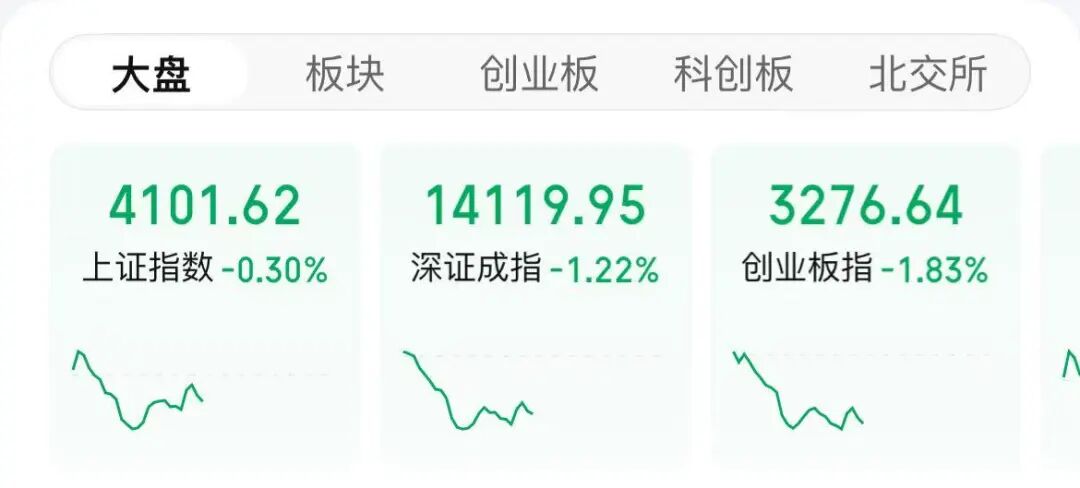
Market Overview - The A-share market showed a decline with the ChiNext index dropping by 1.83% to 3276.64, while the Shanghai Composite Index fell by 0.3% and the Shenzhen Component Index decreased by 1.22% [4][5] - The total trading volume in the Shanghai and Shenzhen markets reached 1.85 trillion yuan, an increase of 568 billion yuan compared to the previous trading day, with nearly 3400 stocks declining [5][6] Sector Performance - The satellite internet, commercial aerospace, and 6G concept sectors experienced significant declines, while the real estate, advanced packaging, cultural media, and retail sectors saw gains [4][5] - The retail sector showed strength with stocks like Xinhua Department Store and Shanghai Jiubai hitting the daily limit, following news from the National Development and Reform Commission about plans for a demand expansion strategy from 2026 to 2030 [5] Individual Stock Movements - Pop Mart saw a rise of over 10% after announcing a share buyback of 2.51 billion Hong Kong dollars, marking its first buyback since early 2024 [8][18] - Hualing Cable opened down over 9% and approached the daily limit down after announcing the termination of its acquisition of Hunan Xingxin Aerospace New Materials Co., Ltd [14] - Yidian Tianxia faced a limit down upon resuming trading [16] Economic Indicators - The People's Bank of China conducted a reverse repurchase operation of 324 billion yuan for 7-day terms at an interest rate of 1.40%, with 358.6 billion yuan of reverse repos maturing today [19]

A股放量调整!三大指数全线下跌
Shen Zhen Shang Bao· 2026-01-20 04:04
Market Overview - On January 20, the A-share market experienced a correction, with all three major indices declining. The Shanghai Composite Index had a maximum intraday drop of 0.82%, the Shenzhen Component Index dropped by 1.82%, and the ChiNext Index fell by 2.25% [1] - After 10:30 AM, the market showed a slight rebound. By the midday close, the Shanghai Composite Index was at 4101.62 points, down 0.30%, the Shenzhen Component Index was at 14119.95 points, down 1.22%, and the ChiNext Index was at 3276.64 points, down 1.83% [1] - The total trading volume in the Shanghai and Shenzhen markets reached 1.85 trillion yuan, an increase of 568 billion yuan compared to the previous trading day. Over 3300 stocks in the market declined [1] Sector Performance - In terms of individual stocks, sectors such as commercial aerospace, non-ferrous metals, Hainan, and computing hardware saw significant declines [3] - AI application stocks continued to rise, with AI marketing and GEO concepts leading the gains. Stocks like Jiayun Technology (300242), Yue Media (002181), and Shitou Co. (600539) hit the daily limit, while stocks like Zhejiang Wenhu (600986) and Tiandi Online (002995) also reached the limit [3] - The real estate sector saw renewed strength, with stocks like Dayue City (000031) and I Love My Home (000560) hitting the daily limit. Previously, City Investment Holdings (600649) also hit the limit, and other companies like China Merchants Shekou (001979) and Poly Development (600048) rose over 5% [3] - The Ministry of Finance and other departments announced the extension of personal income tax incentives for residents purchasing new homes until the end of 2027, allowing taxpayers to enjoy tax refunds based on the transaction amounts of new and old properties [3] Retail Sector - The retail sector experienced a surge, with Shanghai Jiubai (600838) hitting the daily limit, and Xinhua Department Store (600785) also reaching the limit at one point. Other companies like Hebei Group (000417) and Huitong Energy (600605) rose over 6% [4]
——房地产1-12月月报:投资和销售两端承压,政策面积极因素在积累-20260120
Shenwan Hongyuan Securities· 2026-01-20 03:50
Investment Rating - The report maintains a "Positive" rating for quality real estate companies and commercial real estate [2][3]. Core Insights - The real estate sector is experiencing significant pressure on both investment and sales, with a notable decline in investment and sales figures for 2025 [2][3]. - The report anticipates a slow recovery in investment, with adjustments made to the 2026 forecasts for new starts, completions, and overall investment [2][3]. - The sales sector is currently in a bottoming phase, with expectations for policy support to drive demand recovery, although supply constraints may limit this recovery [2][3]. Investment Side Summary - For the year 2025, total real estate development investment reached 828.8 billion yuan, reflecting a year-on-year decline of 17.2%, with December alone showing a drop of 35.8% [3][20]. - New starts decreased by 20.4% year-on-year, while completions fell by 18.1% [3][20]. - The report adjusts the 2026 forecast for new starts to -7.7% (originally -4.6%) and overall investment to -9.1% (originally -7.5%) [2][20]. Sales Side Summary - The total sales area for 2025 was 880 million square meters, down 8.7% year-on-year, with December sales area declining by 15.6% [21][31]. - The average sales price for properties decreased by 4.3% year-on-year, with December's average price showing a 9.5% decline [30][31]. - The report revises the 2026 sales forecast to a decrease of 7.6% for sales area and 9.4% for sales revenue [35][31]. Funding Side Summary - Total funding sources for real estate development in 2025 amounted to 930 billion yuan, down 13.4% year-on-year, with December showing a 26.7% decline [36][37]. - Domestic loans saw a significant drop of 45% in December, while self-raised funds decreased by 15.7% [36][37]. - The report suggests that funding sources are expected to gradually improve due to ongoing policy relaxations [39].


A股午评 | 多空激战4100点! 商业航天继续杀跌 AI应用反弹
智通财经网· 2026-01-20 03:40
Core Viewpoint - The A-share market is experiencing a downturn, with major indices showing weakness and a potential technical correction expected before February. Analysts suggest focusing on fundamental performance rather than speculative trading [1][7]. Market Performance - The A-share market saw the Shanghai Composite Index drop by 0.30%, the Shenzhen Component by 1.22%, and the ChiNext Index by 1.83% during the morning session [1]. - The real estate sector showed resilience, with stocks like Chengdu Investment Holdings and Hefei Urban Construction hitting the daily limit [2]. - AI application stocks rebounded, with companies such as Zhejiang Wenhu and Tiandi Online also reaching the daily limit [3]. - The semiconductor sector experienced a surge, with Zhongwei Semiconductor rising by 20% [1]. - Consumer stocks, particularly in beauty and liquor, were active, while the commercial aerospace sector continued to decline [1]. Sector Insights - Real Estate: The National Bureau of Statistics reported a 0.3% month-on-month decline in new residential sales prices in first-tier cities, indicating a narrowing of the decline. Analysts expect policy adjustments in the first quarter, favoring companies with strong liquidity and product capabilities [2]. - AI Applications: The trend of AI applications is expected to continue, with hardware increasingly penetrating daily life across various sectors, including automotive and smart home devices. The software side is also seeing advancements in model inference capabilities [3]. - Technology Sector: According to Guosen Securities, the spring market is not over, and fluctuations may present good investment opportunities. The technology sector, particularly driven by AI, remains a key focus [4]. Analyst Opinions - Guosen Securities emphasizes that the spring market is ongoing, suggesting a balanced allocation strategy while focusing on technology growth driven by AI applications [4]. - Shenwan Hongyuan notes that while the commercial aerospace and AI sectors have upward trends, excessive trading may lead to a market correction. The A-share market has a foundation for mid-term growth, and patience is advised [5]. - Huatai Securities indicates a shift towards focusing on "performance fundamentals," suggesting adjustments in portfolio structure to avoid irrational speculation [6][7].





中国房地产月度追踪:2025 年收官疲软,2026 年初预期低迷-China Property Monthly Tracker_ Weak close for 2025, low expectations to kick-off 2026
2026-01-20 03:19
Summary of China Property Monthly Tracker Industry Overview - The report focuses on the **Chinese property market**, highlighting significant declines in property sales, construction activities, and investment trends as of December 2025 and forecasts for early 2026. Key Market Indicators - **Primary Sales**: - Volume declined by **-16%** year-over-year (yoy) and value by **-24%** yoy in December 2025, leading to a full-year decline of **-9%** in volume and **-13%** in value [2][10] - **New Starts**: - New construction starts fell by **-19%** yoy in December, with a full-year decline of **-20%** [10][11] - **Completions**: - Completions also saw a decline of **-18%** yoy, which was below expectations [10][11] - **Fixed Asset Investment (FAI)**: - FAI reached its lowest level since 2012, declining by **-36%** yoy in December and **-17%** for the full year [10][11] - **Secondary Transactions**: - Secondary transaction volume in 15 cities dropped by **-30%** yoy in December, leading to a full-year decline of **-2%** [10][11] Price Trends - **Average Selling Price (ASP)**: - The nationwide ASP in December was **-0.4%** month-over-month (mom) and **-9.5%** yoy, indicating continued price weakness [10][24] - **Secondary ASP**: - The secondary ASP index also fell by **-0.7%** mom in December [10][24] Developer Activity - Developers' land acquisition pace slowed significantly, with only **8%** of contract sales allocated to new land purchases in December [11][61] - The average project-level gross profit margins (GPM) for developers was **25%**, with a focus on Tier-1 and Tier-2 cities [11][61] Future Expectations (Jan-Feb 2026) - Continued price weakness is anticipated, with expected declines in sales volume and value in the mid-single digits (MSD) to high-single digits (HSD) yoy [3][12] - Completions and new starts are expected to decline further, reflecting ongoing liquidity challenges for developers [18][19] Policy Considerations - Potential reforms in the Housing Provident Fund and large-scale mortgage interest subsidies are being monitored as they could impact market stability [4][10] - The report highlights the need for policy support to address mortgage delinquencies and stimulate demand through urban renewal programs [4][10] Additional Insights - The report notes a significant decline in developer financing, with new funding sources down **-41%** mom and **-46%** yoy in December [37] - The land market remains under pressure, with land sales volume and value declining by **-12%** and **-11%** yoy, respectively [30][10] Conclusion - The Chinese property market is experiencing significant challenges, with declining sales, construction, and investment activities. The outlook for early 2026 remains cautious, with expectations of continued price weakness and the need for supportive policy measures to stabilize the market.
中国房地产-新房销售重回 2000 年代水平;库存创纪录下降;政策助力成交量-China Property-Dec NBS Back in the 2000s; Record Inv. Drop; Policies to Help Volume
2026-01-20 03:19
Summary of China Property Market Conference Call Industry Overview - **Industry**: China Property Market - **Key Data**: - Real Estate Investment (REI) recorded a significant decline of **-35.8% year-on-year** in December, marking the largest drop since December 2009 [1] - New home prices decreased by **-3.0% year-on-year** in December, while secondary home prices fell by **-6.1% year-on-year** [1] - The overall residential sales volume dropped by **-26% year-on-year** in December [1] Core Insights - **Investment Trends**: - REI for FY25 is projected at **Rmb8.3 trillion**, a **-17.2% year-on-year** decline, falling below residential sales of **Rmb8.4 trillion** [2] - New housing starts are at a **21-year low**, with **588 million sqm** started, down **-20% year-on-year** [2] - The area under construction decreased by **-10%**, reaching **6.6 billion sqm** [2] - **Market Conditions**: - The market is expected to face a structural decline into 2026 unless liquidity improves, with anticipated REI dropping by **-13% year-on-year** [3] - National sales are projected to decline by **-11% year-on-year**, with new home average selling prices expected to fall by **-3% year-on-year** [3] - **Policy Impacts**: - Recent government policies aim to stabilize the market, including a reduction in the down payment for commercial properties from **50% to 30%** and extending tax refunds for home sellers [4] - The easing measures are seen as risk control rather than a direct boost to the market [4] Additional Important Points - **Sales and Earnings Outlook**: - Weak sales and earnings downgrades are anticipated, with a potential short-lived rebound in share prices driven by policy expectations [5] - The luxury retail sector showed positive same-store sales growth in Q4, but December results were below expectations [5] - **Land Sales**: - Land sales in 300 cities decreased by **-9% in area** and **-23% in value**, reaching an 18-year low [2] - The government land revenue for the first 11 months of 2025 was down **-11%** [1] - **Macro Economic Indicators**: - China's GDP growth for FY25 is projected at **+5.0% year-on-year**, with a slight deceleration in retail sales growth to **+0.9% year-on-year** in December [1] This summary encapsulates the critical insights and data points from the conference call regarding the current state and future outlook of the China property market.
房地产板块再度拉升 大悦城、我爱我家双双涨停
2 1 Shi Ji Jing Ji Bao Dao· 2026-01-20 03:12
Core Viewpoint - The real estate sector experienced a significant rally, with several companies reaching their daily price limits following the announcement of an extension of tax incentives for home purchases until the end of 2027 [1] Group 1: Market Reaction - Major real estate stocks such as Dayuecheng and Wo Ai Wo Jia hit their daily price limits, indicating strong investor confidence [1] - Other companies like China Merchants Shekou, Binjiang Group, Poly Development, and China Enterprises saw their stock prices increase by over 5% [1] Group 2: Policy Announcement - The Ministry of Finance and two other departments announced the continuation of personal income tax incentives for residents purchasing new homes after selling their existing properties [1] - The policy allows taxpayers to receive a tax refund based on the ratio of the transaction amounts of the old and new homes, provided the new purchase occurs within one year of the sale [1]



房地产板块再度拉升 大悦城涨停
Xin Lang Cai Jing· 2026-01-20 03:07
房地产板块盘中再度拉升,大悦城封涨停,此前城投控股涨停,招商蛇口、滨江集团、保利发展、中华 企业均涨超5%。 ...

投资延续控增量,市场仍在筑底中
HTSC· 2026-01-20 02:50
Investment Rating - The report maintains an "Overweight" rating for the real estate development and real estate services sectors [7]. Core Insights - The industry is still in a bottoming phase, with a focus on stabilizing the real estate market as indicated by the central economic work conference. The formation of a monetary easing environment through interest rate cuts and reserve requirement ratio reductions is expected to provide better macroeconomic support for the industry [2][4]. - The report recommends focusing on real estate companies with strong credit, good city locations, and quality products, referred to as the "three good" real estate stocks. Companies such as China Resources Land, China Overseas Development, and Longfor Group are highlighted as key investment opportunities [2][8]. - The cash flow situation of real estate companies remains a concern, with a significant year-on-year decline in funds received, particularly from personal mortgage loans and domestic loans [5][42]. Summary by Sections Real Estate Development - In December, real estate development investment saw a year-on-year decline of 36%, marking the largest monthly drop of the year. The annual investment amount decreased by 17% compared to the previous year [3]. - New construction and completion areas showed a narrowing decline, with new starts down 19% year-on-year in December, a reduction of 8 percentage points from November [3]. Sales Performance - December saw a 16% year-on-year decline in sales area and a 24% drop in sales amount, with cumulative annual declines of 9% and 13%, respectively. The average sales price for the year fell by 4.3% [4]. - The price index for new homes in 70 cities decreased by 3.0% year-on-year in December, while the second-hand housing price index fell by 6.1% [4]. Cash Flow Situation - In December, the funds received by real estate companies decreased by 27% year-on-year, with personal mortgage loans down by 39%. Domestic loans saw a significant decline of 45% [5][42]. - The report emphasizes the need for improvement in cash flow management among real estate companies, as the current situation remains challenging [5].
