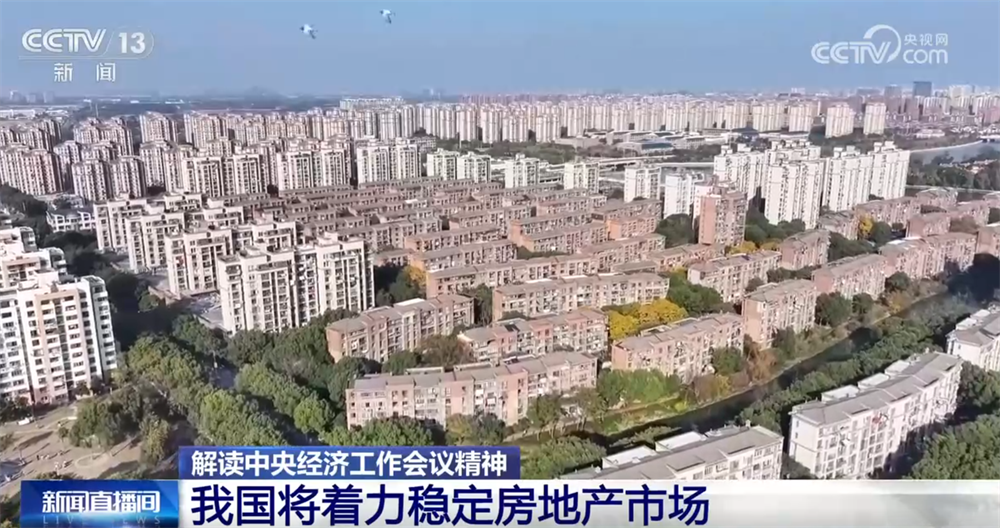
控增量

Search documents
3月楼市销售数据及市场趋势解读
2026-04-01 09:59
Summary of Real Estate Market Conference Call Industry Overview - The conference call discusses the real estate market in March 2026, focusing on the performance of the Top 100 real estate companies and the overall market trends [1][2][3][4][5][6][7][8][9][10][11][12]. Key Points Market Performance - In March 2026, the Top 100 real estate companies saw a month-on-month increase in operational amounts by approximately 118%, although year-on-year, there was a decline of 15.1% [1][2]. - The cumulative operational amount for the first quarter of 2026 decreased by 23.8% year-on-year [2]. - The sales performance of the top three companies showed a smaller decline of 6.2% year-on-year, while companies ranked 50 to 100 experienced a decline of only 5.5% [2]. New Housing Market - The new housing market showed signs of weak recovery with a month-on-month increase in transaction area of 89% in March, but a year-on-year decrease of 32% [3]. - The supply of new homes in 50 key cities decreased significantly, with a year-on-year drop of nearly 60%, leading to constrained transaction volumes [3][4]. - The first quarter's cumulative supply saw a year-on-year decline of 42% [3]. Second-Hand Housing Market - The second-hand housing market outperformed the new housing market, with a month-on-month increase of 117% in transaction area and a year-on-year increase of 6% in March [8]. - The overall first quarter saw a 4% year-on-year increase in second-hand housing transactions [8]. - In major cities, second-hand housing transactions accounted for 60% to 70% of total transactions, indicating a shift in buyer preference towards more affordable options [8]. City-Level Analysis - The performance of different city tiers showed significant differentiation. Third and fourth-tier cities experienced a smaller year-on-year decline of 9%, while first-tier cities faced declines exceeding 30% [4]. - Major cities like Beijing, Shanghai, and Shenzhen saw significant drops in transaction volumes, while Guangzhou remained relatively stable [4]. Land Market Trends - The land market showed an increase in transaction scale and amount, with a month-on-month increase of 21% and a year-on-year increase of 2% as of March 25, 2026 [9]. - However, the overall enthusiasm for land auctions has declined, with companies focusing on high-quality land in core cities [9]. Policy Direction - Future policies are expected to focus on "controlling growth, reducing inventory, and optimizing supply," moving away from strong stimulus measures [11][12]. - Specific measures may include reforms to the housing provident fund system and targeted subsidies for first-time buyers and families with multiple children [11][12]. Market Sentiment - Despite weak macro data, there are signs of improved market sentiment, with increased foot traffic in sales offices in cities like Guangzhou and Changsha [6][7]. - The market is expected to stabilize and gradually recover, particularly in the second-hand housing sector, as inventory levels decrease and viewing activity increases [9]. Investment Strategies - Leading real estate companies are focusing their investments on high-quality land in core cities, while also exploring urban renewal projects [12]. - The cautious investment attitude reflects the ongoing market stabilization phase and the competitive landscape in core urban areas [12]. Additional Insights - The differentiation in market performance is not only evident between city tiers but also within projects in the same city, highlighting a significant structural divide [5][6]. - The overall market is expected to continue its bottoming process, with the second quarter of 2026 being a critical observation period for confirming market stability [9].



投资延续控增量,市场仍在筑底中
HTSC· 2026-01-20 02:50
Investment Rating - The report maintains an "Overweight" rating for the real estate development and real estate services sectors [7]. Core Insights - The industry is still in a bottoming phase, with a focus on stabilizing the real estate market as indicated by the central economic work conference. The formation of a monetary easing environment through interest rate cuts and reserve requirement ratio reductions is expected to provide better macroeconomic support for the industry [2][4]. - The report recommends focusing on real estate companies with strong credit, good city locations, and quality products, referred to as the "three good" real estate stocks. Companies such as China Resources Land, China Overseas Development, and Longfor Group are highlighted as key investment opportunities [2][8]. - The cash flow situation of real estate companies remains a concern, with a significant year-on-year decline in funds received, particularly from personal mortgage loans and domestic loans [5][42]. Summary by Sections Real Estate Development - In December, real estate development investment saw a year-on-year decline of 36%, marking the largest monthly drop of the year. The annual investment amount decreased by 17% compared to the previous year [3]. - New construction and completion areas showed a narrowing decline, with new starts down 19% year-on-year in December, a reduction of 8 percentage points from November [3]. Sales Performance - December saw a 16% year-on-year decline in sales area and a 24% drop in sales amount, with cumulative annual declines of 9% and 13%, respectively. The average sales price for the year fell by 4.3% [4]. - The price index for new homes in 70 cities decreased by 3.0% year-on-year in December, while the second-hand housing price index fell by 6.1% [4]. Cash Flow Situation - In December, the funds received by real estate companies decreased by 27% year-on-year, with personal mortgage loans down by 39%. Domestic loans saw a significant decline of 45% [5][42]. - The report emphasizes the need for improvement in cash flow management among real estate companies, as the current situation remains challenging [5].


盘活存量优化增量,依然是楼市主线
2 1 Shi Ji Jing Ji Bao Dao· 2026-01-19 22:45
Core Viewpoint - The real estate market in China continues to experience a downward adjustment, but signs of stabilization are emerging after four years of decline, with a notable reduction in the year-on-year decline rates for sales, new construction, and price indices [2][3]. Sales Performance - In 2025, new home sales reached 881 million square meters, a year-on-year decrease of 8.7%, while residential sales were 733 million square meters, down 9.2%. This marks a significant improvement compared to the 12.9% decline in 2024 [2]. - The total sales amount for new homes was 8.39 trillion yuan, down 12.6% year-on-year, with residential sales at 7.33 trillion yuan, a decrease of 13.0% [2][3]. - The decline in sales amount is greater than the decline in sales area, indicating developers are adopting a "price reduction promotion" strategy, with the average price of new homes dropping by 4.1% [3]. Development Activity - New construction area for homes in 2025 was 588 million square meters, down 20.4% year-on-year, with residential new construction at approximately 430 million square meters, a decrease of 19.8% [3][4]. - The reduction in new construction reflects a proactive approach to "de-inventory" in response to the adjustments in sales [4]. Inventory and Supply - The growth of new home inventory has slowed significantly, with a year-on-year increase of only 1.6% in 2025, compared to an average annual growth of 13.4% from 2022 to 2024 [4]. - The reduction in inventory is attributed to both proactive de-inventory efforts by the industry and market self-adjustment, which helps stabilize market expectations [4]. Price Trends - The price index for new homes and second-hand homes in 70 cities fell by 3.0% and 6.1% respectively in 2025, with declines significantly smaller than those in 2024 [4]. - The stabilization of prices is crucial for the housing market, influenced by the "control increment" policy and structural reforms in supply [4]. Investment Trends - Real estate development investment decreased by 17.2% in 2025, reflecting a transition from rapid urbanization to a more stable phase of urban development [5]. - The decline in investment is seen as a natural progression, with potential for revitalizing existing stock to open new opportunities in the industry [5][6]. Stock Market Dynamics - Approximately 30% of existing homes are over 20 years old, indicating a significant demand for upgrades and renovations in the stock market [6]. - The increase in transactions of second-hand homes, particularly in mid-to-low price segments, reflects a shift in demand and supports a positive market cycle [6].


土地月报|成交规模如期迎来年末放量,平均溢价率延续低位(2025年12月)
克而瑞地产研究· 2026-01-14 07:22
Core Viewpoint - The long-term supply-demand relationship in the real estate market is improving, with more signs of stabilization expected in 2026 [1][6]. Group 1: Supply and Demand - The supply side continues to control growth, with a significant month-on-month increase in transactions, while year-on-year figures continue to decline. The supply area for December was 66.74 million square meters, down 26% year-on-year. Transaction volume reached 270 million square meters, up 190% month-on-month, but down 7% year-on-year [4][10]. - The average premium rate for land transactions in December was 2.1%, a decrease of 1.5 percentage points month-on-month. The heat of land auctions remains concentrated in a few cities and specific sectors, with high premium land sales in cities like Shenzhen, Guangzhou, and Nanjing [5][22]. - The supply of land is expected to be further optimized in 2026, with a focus on controlling new land supply and promoting the construction of quality housing [14]. Group 2: Market Heat - The average premium rate for December was at a low of 2.1%, indicating a decline in market heat. However, some high-quality plots still achieved high premiums, such as those in Guangzhou and Shenzhen, with Nanjing setting a new city price record [22][30]. - The land auction failure rate was 8%, remaining at a near-low level. Specific cities like Chengdu and Guangzhou experienced land that failed to sell due to uncertain future sales prospects or insufficient bids [25]. Group 3: Key Plots - The highest total price for land transactions in December was for a plot in Beijing's Haidian District, sold for 8.456 billion yuan, with a premium of 0.4%. Other notable transactions included high-premium plots in Shenzhen and Guangzhou [31][32]. - The average floor price for land in Beijing's second ring was 81,000 yuan per square meter, indicating high demand in prime locations [34].
2026年楼市:控增量、去库存、优供给
Xin Hua Wang· 2025-12-26 00:19
Core Viewpoint - The recent Central Economic Work Conference emphasizes a policy approach of "controlling increment, reducing inventory, and optimizing supply" in the real estate sector, which has been further detailed in the National Housing and Urban-Rural Development Work Conference [1][2]. Group 1: Policy Implementation - The principle of "city-specific policies" is fundamental for stabilizing the market, recognizing the significant regional differences in real estate markets across cities and districts [1]. - Experts suggest that local governments should implement precise controls based on core data such as population trends, housing inventory, and second-hand housing listings, adhering to the "people-land-house-money" coordination principle [1][2]. - The shift towards a stock-dominated real estate market is seen as a necessary evolution rather than a temporary fluctuation, with the majority of demand now coming from improvement needs through a "buy-sell" replacement model [2]. Group 2: Supply-Side Measures - The focus on "controlling increment" aims to limit new real estate land in cities with excess supply, promoting urban renewal and the revitalization of existing land [2]. - The "reducing inventory" initiative is not merely about clearing stock but involves a systematic approach that balances market stability, public welfare, and urban upgrades [2][3]. - The acquisition of existing residential properties for use as affordable housing can alleviate market pressure and broaden the supply channels for affordable housing, thus achieving dual objectives of "reducing inventory" and "supplying guarantees" [3]. Group 3: Long-term Development - The optimization of supply is crucial for long-term market stability, focusing on enhancing housing quality to meet diverse needs [3][4]. - The "five good" requirements—good standards, good design, good materials, good construction, and good maintenance—are emphasized to promote the construction of quality housing and improve living conditions [3]. - The integration of "controlling increment, reducing inventory, and optimizing supply" forms a complete logical chain for supply-side reform in real estate, aiming for a dynamic balance in market supply and demand [4].
控增量、去库存、优供给
Xin Lang Cai Jing· 2025-12-25 18:25
Core Viewpoint - The recent Central Economic Work Conference emphasizes a policy of "controlling increment, reducing inventory, and optimizing supply" in the real estate sector, with a focus on adapting strategies to local conditions [1][2]. Group 1: Policy Implementation - The approach of "controlling increment" is fundamental for stabilizing the market, as the real estate market exhibits significant regional characteristics and varying supply-demand dynamics across different areas [1]. - Experts suggest that local governments should implement precise controls based on core data such as population trends, housing inventory, and second-hand housing listings, adhering to the principle of "people-land-housing-money" coordination [1]. - The shift to a stock-dominated real estate market is seen as a necessary evolution rather than a temporary fluctuation, with the majority of demand now coming from improvement needs through a "buy-sell" replacement model [2]. Group 2: Inventory Reduction - The key to "reducing inventory" lies in achieving a basic balance between supply and demand, addressing the mismatch between excess stock and effective housing demand [2]. - Measures to control new real estate land supply in cities with excess inventory and to encourage the renovation of old housing are expected to play a crucial role in stabilizing market expectations [2]. - The initiative to acquire existing residential properties for use as affordable housing aims to quickly alleviate market inventory and broaden the supply channels for affordable housing [3]. Group 3: Supply Optimization - The focus on "optimizing supply" is seen as a long-term strategy for market stability, emphasizing the need to enhance housing quality and meet diverse housing demands [3]. - Improving the precision and effectiveness of housing guarantees is essential, with a push towards high standards in design, materials, and construction to lower costs and promote the construction of quality housing [3]. - The integration of "controlling increment, reducing inventory, and optimizing supply" forms a complete logical chain for the supply-side reform of the real estate sector, aiming for a dynamic balance in market supply and demand [4].
2026年房地产市场会有哪些变化?一场会议给出答案
Sou Hu Cai Jing· 2025-12-25 11:22
Core Insights - The recent Central Economic Work Conference has significantly impacted the real estate sector, indicating a shift in market dynamics by 2026, which could lead to substantial financial implications for buyers and sellers alike [1] Group 1: Policy Direction - The conference emphasized a tailored approach to real estate policies, focusing on "controlling growth, reducing inventory, and optimizing supply," moving away from a one-size-fits-all strategy [4] - Cities with high inventory, particularly third and fourth-tier cities, are likely to see relaxed policies such as lower down payments and interest rates to facilitate sales [4] - In contrast, first and second-tier cities will focus on optimizing supply by promoting quality properties in desirable locations, highlighting the importance of careful selection to avoid less desirable properties [4] Group 2: Opportunities for Stakeholders - The proposal to encourage the acquisition of existing second-hand homes as affordable housing presents significant benefits for two groups: homeowners with older properties and first-time buyers [5] - Homeowners with older or suburban properties may find new avenues for selling through government buyback programs, alleviating concerns about property depreciation [5] - First-time buyers will have more affordable housing options, as government initiatives aim to provide lower-priced housing alternatives [5] Group 3: Enhancements in Home Buying Experience - Upcoming optimizations in the housing provident fund system are expected to simplify the loan process, making home buying more accessible and efficient [6] - The focus on constructing "better homes" will enhance living conditions through improved design, community environments, and amenities [6] Group 4: Market Stability - The real estate sector is moving away from high leverage and debt, which should reduce the risks of project failures and enhance market stability [8] - The shift towards a more sustainable development model is anticipated to lead to a more rational market outlook, with a focus on the intrinsic value of properties rather than speculative investments [8] Group 5: Strategic Recommendations - The overarching theme for the real estate market in 2026 is stability, with no extreme fluctuations expected [9] - Different stakeholders are advised to adapt their strategies: first-time buyers should act based on genuine needs and policy changes, homeowners should stay informed about local buyback policies, and those looking to upgrade should focus on quality locations [9]

控增量、去库存,11月末商品房库存环比再减301万平方米
Bei Ke Cai Jing· 2025-12-15 15:08
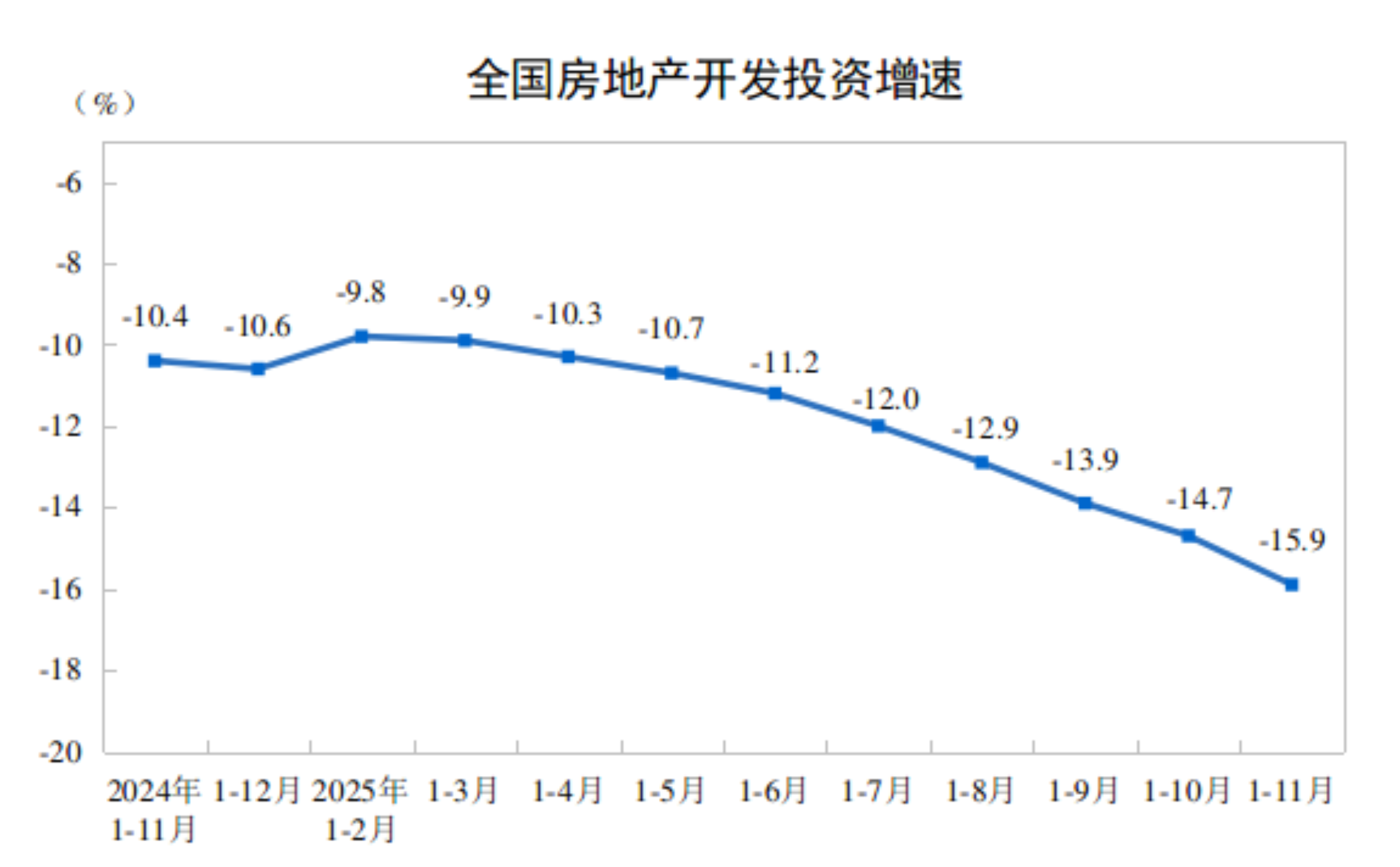
Core Viewpoint - The national real estate market in China is experiencing significant declines in investment and sales, but a reduction in unsold housing inventory is seen as a positive sign for future market stabilization [1][2][11]. Group 1: Investment and Sales Data - From January to November, national real estate development investment reached 7.86 trillion yuan, a year-on-year decrease of 15.9% [5]. - New residential property sales amounted to 7.51 trillion yuan, down 11.1% year-on-year, with sales area decreasing by 7.8% [10]. - The construction area for real estate projects fell to 6.56 billion square meters, a decline of 9.6% year-on-year, with new construction area down 20.5% [5]. Group 2: Inventory and Market Dynamics - As of the end of November, the unsold housing inventory was 7.53 billion square meters, a reduction of 301 million square meters from the end of October, marking nine consecutive months of decline [1][11]. - The reduction in unsold inventory is viewed as a sign of improving supply-demand dynamics, which may eventually benefit the second-hand housing market [2][11]. - The ongoing decline in new construction and investment is seen as a necessary adjustment to alleviate inventory pressure and stabilize prices [6]. Group 3: Policy and Future Outlook - Local governments are implementing policies to revitalize existing resources, such as optimizing housing usage and improving loan conditions [10]. - The central economic work conference emphasized controlling new supply and reducing inventory, indicating a tightening supply signal [11]. - Projections for 2026 suggest a continued decline in new housing sales and construction, but at a slower rate, indicating potential structural opportunities in favorable markets [11].
2026年房地产市场将迎来哪些变化?记者解读新表述背后的“稳”“优”“进”
Yang Shi Wang· 2025-12-12 08:02
Core Viewpoint - The Central Economic Work Conference has made clear deployments for the real estate work in the coming year, emphasizing the need to "stabilize the real estate market," indicating a shift in policy focus and approach compared to the previous year [1] Policy Objectives - The policy objective has shifted from "continuously promoting the stabilization of the real estate market" to "focusing on stabilizing the real estate market," highlighting a stronger commitment to maintaining stability [1] - In the first eleven months, while development investment has decreased, the housing market has entered a phase of stock, with the proportion of second-hand housing transactions reaching 45% of total transactions [1] - The decline in housing prices is narrowing, with some major cities experiencing year-on-year growth in transaction volumes for both new and second-hand homes [1] Policy Direction - The policy direction has changed from emphasizing "reasonable control of new land" and "promoting the disposal of existing properties" to clearly stating "controlling increments, reducing inventory, and optimizing supply" as core directions [3] - The term "optimizing supply" is introduced for the first time, indicating a coordinated approach to address inventory issues while considering "livelihood security" and optimizing the structure of land supply [3] Policy Tools - The reform of housing provident funds and the construction of "good houses" have been identified as new policy focuses for the coming year [5] - The coverage for flexible employment individuals to contribute to housing provident funds will be expanded, allowing for withdrawals for rental purposes even if they do not purchase a home [5] - The orderly advancement of "good house" construction signifies a shift from quantity-driven housing products to quality-driven ones [5] Urban Renewal - The term "urban renewal" has been prioritized, moving from a secondary position to a key focus area in the first part of the economic work, indicating an increased emphasis and intensity in promoting urban renewal efforts [7]