
陶氏公司

Search documents
X @Bloomberg
Bloomberg· 2025-11-04 05:20
A group of Dow investors filed a lawsuit at the end of August accusing the chemical manufacturer of failing to properly disclose the impact of tariffs on its business https://t.co/kq2YBCKRrM ...
陶氏发布第三季度财务报告
Zhong Guo Hua Gong Bao· 2025-11-04 03:05
Core Insights - Dow Inc. reported a net sales figure of $10 billion for Q3 2025, reflecting an 8% year-over-year decline across all operating segments [1] - Sequentially, net sales decreased by 1%, with growth in industrial intermediates and infrastructure operations not compensating for declines in packaging, specialty plastics, functional materials, and coatings [1] Sales Performance - Year-over-year sales volume decreased by 1%, with growth in the U.S., Canada, and Asia-Pacific partially offsetting declines in Europe, the Middle East, Africa, and India [1] - Sequentially, sales volume increased by 1%, attributed to the startup of new facilities along the U.S. Gulf Coast [1] Segment Analysis - Lower sales in hydrocarbons led to an overall decline in the packaging and specialty plastics segment, which was partially offset by growth in industrial intermediates and infrastructure operations [1] Management Commentary - The CEO of Dow Inc., Jim Fitterling, noted that despite ongoing industry pressures, the company achieved sequential revenue growth and improved cash flow in Q3 [1] - The company is actively engaging with governments to maintain product flow and ensure a fair trade environment, believing it is well-positioned to address current challenges [1] - Dow Inc. capitalized on strong market demand through new polyethylene and alkoxylation facilities along the U.S. Gulf Coast, resulting in sequential growth in volume and earnings in key end markets with higher margins [1]

英伟达Vera Rubin芯片首秀,AI算力爆炸背后的产业链分析
DT新材料· 2025-11-02 14:42
Core Insights - The article discusses the significant advancements in AI chip architecture by NVIDIA, particularly the introduction of the Rubin architecture, which is expected to revolutionize AI computing power and thermal management solutions [4][5][7]. Group 1: NVIDIA's Rubin Architecture - NVIDIA's next-generation AI chip architecture, Rubin, is set to deliver a performance increase of 3.3 times compared to the current GB300 model, enabling the training of trillion-parameter models in just two weeks instead of three months [5][8]. - The Rubin architecture will feature CPU-GPU heterogeneous integration and utilize HBM4 memory along with the sixth generation of NVLink, targeting high-end AI infrastructure [5][8]. - The expected market share for Rubin in 2026 is projected to reach 20%-30%, positioning it as a leader in the trillion-parameter model training market [5]. Group 2: Liquid Cooling Technology - The Rubin platform will push the power of a single rack to 600kW, making traditional air cooling inadequate and necessitating the widespread adoption of liquid cooling solutions [7][10]. - The liquid cooling system market, driven by NVIDIA's ecosystem, is estimated to reach 200 billion RMB to meet the cooling demands of 20 million GPUs [10]. Group 3: Key Component Suppliers - Siquan New Materials has upgraded from a cold plate manufacturer to a core materials supplier, with expected revenue from related businesses to exceed 1 billion RMB by 2025 [11]. - Dow Chemical is a key partner for NVIDIA's GB300 liquid metal interface technology, with a monthly production capacity of 50 tons, covering 60% of global demand [12]. - 3M's phase change material (PCM) series plays a crucial role in cooling GB300 memory modules, achieving a temperature reduction of 12°C compared to traditional thermal pads [13]. Group 4: Industry Players and Market Dynamics - Inspur Information has captured over 30% of the market share in liquid-cooled servers, showcasing strong competitiveness in the field [19]. - Industrial Fulian, as the exclusive supplier of GB200 liquid-cooled cabinets, is projected to contribute approximately 12 billion USD in revenue by 2025 [20]. - Vertiv has developed a hybrid cooling system that combines liquid cooling and immersion cooling, capable of cooling data centers with IT power up to 200kW [21].



'I Still Can't Believe It's Around': Cramer Rips Plug Power
Benzinga· 2025-10-29 11:54
Group 1: Sempra - Sempra is recommended as a buy by Jim Cramer, supported by Wells Fargo analyst Shahriar Pourreza who initiated coverage with an Overweight rating and a price target of $115 [1] Group 2: Pfizer - Pfizer announced initial results from the HER2CLIMB-05 clinical trial for a new treatment for metastatic breast cancer (MBC) positive for HER2 [1] - Pfizer shares fell 1.1% to settle at $24.50 [6] Group 3: Dow Inc. - Dow reported a lower-than-expected third-quarter loss, with an adjusted loss of 19 cents per share, beating the projected 29-cent loss [2] - Revenue for Dow fell 8% year over year to $9.97 billion, missing the estimate of $10.23 billion [2] - Dow shares fell 1.4% to close at $25.38 [6] Group 4: Plug Power Inc. - Plug Power's stock fell over 20% after announcing a warrant inducement agreement to raise $370 million, raising concerns about shareholder dilution [3] - Plug Power shares dipped 5.7% to settle at $2.79 [6]



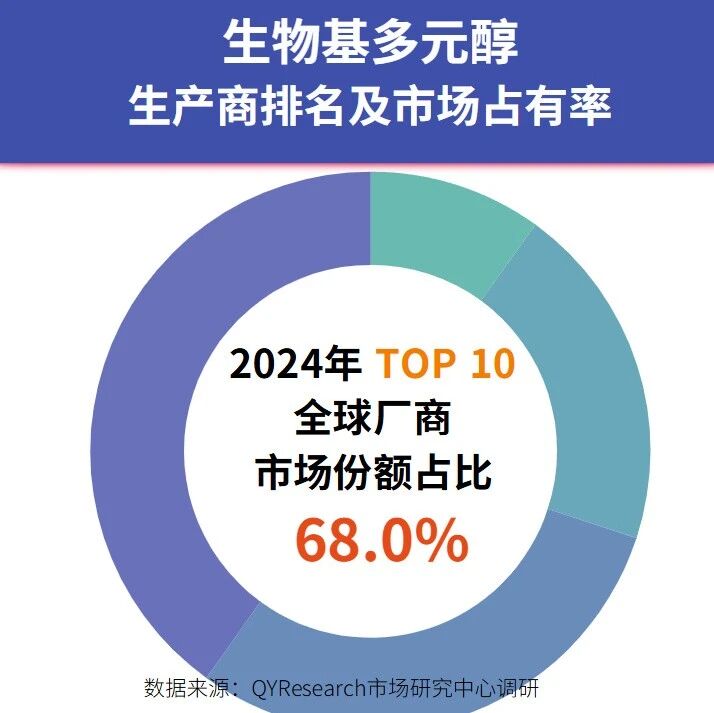
行业聚焦:全球生物基多元醇市场头部企业份额调研(附Top 10 厂商名单)
QYResearch· 2025-10-29 02:52
Core Viewpoint - The bio-based polyols market is projected to reach $2.2 billion by 2031, with a compound annual growth rate (CAGR) of 7.7% from 2025 to 2031, driven by sustainability and environmental concerns [3]. Market Overview - Bio-based polyols are derived from renewable natural resources like vegetable oils, offering advantages such as sustainability, low carbon footprint, and environmental friendliness compared to traditional petroleum-based polyols [1]. - The market is primarily divided into two categories: polyether polyols and polyester polyols, with polyether polyols dominating the market due to their superior reactivity and mechanical properties [1][10]. Raw Materials and Supply Chain - Key raw materials for bio-based polyols include soybean oil, castor oil, canola oil, and palm oil, sourced from major suppliers like ADM, IOI Group, and Wilmar, ensuring a stable supply chain [5]. - The average product gross margin for bio-based polyols typically ranges from 15% to 30% depending on product type and application [5]. Applications and Market Segmentation - The automotive sector is the largest application area for bio-based polyols, accounting for approximately 28.1% of the market share, followed by furniture, construction, and packaging industries [14]. - Polyether polyols represent about 78% of the market share, with castor oil polyols expected to hold around 38% of the market by 2024 due to their unique performance advantages [10]. Geographic Distribution - North America is the largest consumer market for bio-based polyols, holding a 42% share, supported by advanced technology and policy frameworks [16]. - The growth of the market is fueled by increasing global environmental awareness and the demand for sustainable materials, particularly in the automotive and construction sectors [16]. Market Drivers - The rising emphasis on reducing greenhouse gas emissions and achieving carbon neutrality is driving the adoption of bio-based polyols [17]. - Government policies promoting renewable chemicals and green materials are facilitating industry growth [17]. - Continuous demand for polyurethane foams in various sectors is propelling the bio-based polyols market [17]. Market Challenges - Production costs for bio-based polyols are generally higher than those for petroleum-based alternatives, limiting widespread adoption [19]. - Raw material price volatility due to climate change and crop yield fluctuations adds uncertainty to production costs [20]. - Performance consistency issues compared to traditional petroleum products may hinder their use in high-end applications [20]. - The supply chain and infrastructure for bio-based chemicals are still underdeveloped in some regions, affecting market expansion [21].

CORRECTION: Securities Fraud Class Action Against KinderCare Learning Companies, Inc.
Prnewswire· 2025-10-29 00:33
Core Viewpoint - A class action securities fraud lawsuit has been filed against KinderCare Learning Companies, Inc. to recover losses for investors affected by alleged securities fraud related to the company's initial public offering in October 2024 [2][4]. Group 1: Lawsuit Details - The lawsuit alleges that KinderCare made false statements and concealed incidents of child abuse, neglect, and harm at its facilities [3]. - It is claimed that KinderCare failed to provide the "highest quality care possible" and did not meet minimum standards in the child care industry, exposing the company to undisclosed risks of lawsuits and reputational damage [3]. Group 2: Investor Information - Investors who suffered losses in KinderCare stock during the relevant time frame are encouraged to seek information about their rights to recovery, with no cost or obligation to participate [4].


Lightning Round: Dow can go higher, says Jim Cramer
CNBC Television· 2025-10-28 23:58
Investment Recommendations & Analysis - The analyst acknowledges a viewer's diversified portfolio with 83 individual positions [1][2] - The analyst discusses Pfizer, noting its 7% yield and acquisition of CGEN, but acknowledges the struggles of drug stocks [3] - The analyst expresses continued belief in Jeff Martz's ability to lead a company, even after a bad quarter [4] - The analyst questions the viability of Plug Power, given its negative year-over-year revenue growth and continued losses [5][6] - The analyst suggests Dow Inc is performing well, particularly highlighting Jim Fiddling's contribution to a good quarter [7] - The analyst recommends Solstice, a recent spin-off, anticipating a positive market debut [7] Market Commentary & Events - The segment is called "Lightning Round" and is sponsored by Charles Schwab [1][8] - The analyst encourages viewers to follow Jim Kramer on X (formerly Twitter) and provides contact information for questions [8][9]

Law Offices of Frank R. Cruz Encourages Baxter International, Inc. (BAX) Shareholders to Inquire About Securities Fraud Class Action
Businesswire· 2025-10-28 16:06
Core Viewpoint - A class action lawsuit has been filed against Baxter International, Inc. for securities fraud, related to safety issues with its Novum IQ Large Volume Pump, which has led to significant stock price decline and investor losses [1][5][6]. Summary by Sections Lawsuit Announcement - The Law Offices of Frank R. Cruz are encouraging Baxter shareholders to inquire about a class action lawsuit filed on behalf of investors who purchased Baxter common stock between February 23, 2022, and July 30, 2025 [1][2]. Safety Issues - On April 7, 2025, a Missouri news outlet reported serious safety concerns regarding Baxter's Novum IQ Large Volume Pump, citing a whistleblower who claimed the pumps were unsafe for patient treatment [3]. - Following this, Baxter issued warning letters about potential underinfusion risks, later revealing 79 reports of serious injuries and two patient deaths associated with the device [4]. Stock Price Impact - On July 31, 2025, Baxter announced a voluntary pause on shipments and installations of the Novum LVP, resulting in a stock price drop of $6.24, or 22.4%, closing at $21.61 per share [5]. Allegations in the Lawsuit - The lawsuit alleges that Baxter made materially false and misleading statements and failed to disclose critical information about the Novum LVP's systemic defects, which posed risks of serious injury or death to patients [6][7]. - Specific allegations include the company's knowledge of device malfunctions, inadequate remedial measures, and misleading positive statements about its business prospects [7].


Tuesday’s Top 10 Wall Street Analyst Upgrades and Downgrades: Crowdstrike, Starbucks, Constellation Energy, McDonalds and More
Yahoo Finance· 2025-10-28 13:44
Market Overview - Futures are trading higher, driven by positive news regarding a potential trade agreement with China and the TikTok issue resolution [1] - Wall Street is anticipating a significant number of earnings reports this week, particularly from technology giants in the Magnificent 7 [1] - Strong retail participation and new overseas investments are contributing to the momentum towards the S&P 500 reaching 7000 [1] Treasury Yields - Yields are mixed, with shorter maturities trading modestly lower and longer maturities, such as the 30-year and 20-year bonds, showing small gains [2] - The Treasury Market and Wall Street are pricing in a near 100% chance of a 25-basis-point cut this week [2] Oil & Gas - West Texas Intermediate (WTI) and Brent Crude started the week slightly lower after a rally that pushed WTI above $60 [3] - OPEC+ production increases are identified as the main reason for recent pricing dislocation [3] - Analysts expect a jump in gasoline demand as prices drop nationwide heading into the holidays [3] - Natural Gas prices increased over 4%, closing at $3.44 [3] Gold Market - Gold prices fell below $4,000 per ounce after a significant rally, with analysts noting improved risk appetite and profit-taking [4] - A potential correction in Gold prices could last for months, although Central Bank buying may provide support [4] - Some analysts are projecting Gold prices to reach $5,000 and Silver to $60 [4] Analyst Ratings - CrowdStrike Holdings (CRWD) upgraded to Buy with a target price of $706 [5] - Southern Copper (SCCO) target price raised from $89 to $115, but maintains a Sell rating [5] - DTE Energy (DTE) initiated with an Overweight rating and a $157 target price [6] - McDonald's Corporation (MCD) started with a Neutral rating and a target price of $300 [6] - Starbucks Corporation (SBUX) initiated with a Neutral rating and a target price of $84 [6] - Constellation Energy (CEG) initiated with an Overweight rating and a $478 target price [6] - Fox Corporation (FOXA) upgraded to Buy with a target price of $97 [6] - BioMarin Pharmaceutical (BMRN) target price lowered from $90 to $80 while maintaining a Buy rating [6] - Dow Inc. (DOW) target price raised from $24 to $27 while keeping a Neutral rating [6] - Brinker International (EAT) initiated with an Outperform rating and a target price of $155 [6]


全球主要塑料生产商:新兴经济体将是塑料行业重要增长点
Zhong Guo Hua Gong Bao· 2025-10-28 02:56
Core Insights - The plastic industry is currently facing a prolonged downturn characterized by weak demand and overcapacity, with global polyethylene (PE) and polypropylene (PP) prices under pressure as the market enters its fourth year of decline [1][2] - Despite the challenges, emerging economies are seen as a significant growth opportunity for the plastic sector, with expectations of robust demand growth in regions like South Asia and Southeast Asia [1][3] Group 1: Market Conditions - The global PE market remains oversupplied, but optimism is growing due to the shutdown of several production facilities this year, which may aid in industry recovery [1] - The report indicates that PE demand in South Asia is expected to grow at a compound annual growth rate (CAGR) of 7.6% from 2024 to 2029, while Southeast Asia is projected to grow at 5.1% [1] - The PP market is anticipated to see a modest demand growth of 3.6% in 2024, reaching 95.7 million tons, despite a bearish outlook for prices until at least 2027 [2] Group 2: Future Growth Drivers - Emerging markets are identified as key growth drivers for the plastic industry, with increasing demand for polymers fueled by population trends and end-use applications [3] - The demand for composite materials in clean energy sectors, such as wind and solar, is expected to surge, contributing to the overall growth of the plastic market [3] - The International Energy Agency (IEA) highlights that by 2030, the share of petrochemical feedstocks in crude oil consumption is projected to rise from 15.8% to 17.4%, driven by increased plastic demand [3] Group 3: Regional Consumption Trends - Industrialized countries account for 12% of the global population but represent 40% of global plastic demand, while emerging markets have seen a 177% increase in plastic consumption since 2000 [4] - The growth in emerging markets is linked to faster GDP and population growth, with projections indicating a global GDP growth of 3.0% to 3.1% from 2025 to 2026 [4] - As urbanization and industrialization continue in emerging markets, the gap in per capita plastic consumption compared to the U.S. and Europe is expected to narrow [4]