
天合光能

Search documents
天合光能:曾与SpaceX在其火箭发射场的地面光伏电站有合作关系
Ge Long Hui· 2026-02-05 07:38
格隆汇2月5日丨天合光能(688599.SH)在互动平台表示,公司曾与SpaceX在其火箭发射场的地面光伏电 站有合作关系。 ...

特高压指数下跌2%,成分股多数走低
Xin Lang Cai Jing· 2026-02-05 07:10
Group 1 - The ultra-high voltage index declined by 2% on February 5, indicating a downward trend in the sector [1] - Most constituent stocks experienced a drop, with Hengtong Optic-Electric, Zhongtian Technology, Changgao Electric, and Jinpan Technology all falling over 4% [1] - Trina Solar also saw a decrease, with its stock down by 3% [1]


储能行业系列报告:容量电价政策发布,储能有望打开成长空间
Bank of China Securities· 2026-02-05 02:46
Investment Rating - The report maintains an "Outperform" rating for the energy storage industry, indicating expected performance above the market benchmark over the next 6-12 months [2][44]. Core Insights - During the "14th Five-Year Plan" period, China is expected to face increased carbon reduction pressures while experiencing a slowdown in new energy installation growth. The introduction of a national capacity pricing policy in January 2026 is anticipated to open up new installation space for renewable energy and support high-yield investment opportunities for power companies [2][4][12]. - The demand for energy storage is projected to grow significantly, with new energy storage installations expected to reach 66.43 GW and 189.48 GWh in 2025, representing year-on-year increases of 52% in power scale and 73% in energy scale [31][37]. Summary by Sections Investment Recommendations - The report suggests prioritizing investments in leading companies involved in energy storage integration and upstream battery cells, recommending firms such as Sungrow Power Supply, Trina Solar, LONGi Green Energy, JinkoSolar, CATL, and EVE Energy. It also advises monitoring companies like Haibo Technology, Sungrow Electric, Canadian Solar, and Penghui Energy [4][37]. Policy Impact - The national capacity pricing policy aims to stabilize investment returns for energy storage projects, potentially increasing project profitability to over 8% under favorable conditions. This policy is seen as a crucial element for driving investment enthusiasm among state-owned enterprises in the energy sector [4][23][37]. Market Dynamics - The report highlights that the share of energy storage in new energy installations is expected to rise, with energy storage becoming a core investment direction for power state-owned enterprises during the "15th Five-Year Plan" period. The report anticipates a shift in demand for energy storage beyond just the northern regions of China, with central and eastern provinces also likely to see increased demand [22][24][37]. Growth Projections - The energy storage market is expected to experience high growth, with projections indicating that from 2026 to 2027, domestic energy storage installations will maintain a high level of activity. The report emphasizes the importance of energy storage in supporting the stability of renewable energy sources like wind and solar [31][37].
亚玛顿20260204
2026-02-05 02:21
Summary of Yamaton's Conference Call Company Overview - **Company**: Yamaton - **Industry**: Photovoltaic Glass Manufacturing Key Points Financial Performance - In 2025, Yamaton's revenue benefited from the energy storage market, with solar roof tiles and energy storage door glass contributing approximately 192 million RMB. However, the company still incurred a loss of 100 to 120 million RMB, primarily due to low photovoltaic glass prices and rising raw material costs, resulting in a negative gross margin [2][6] - The company's glass sales volume in 2025 was approximately 150 million square meters, with a focus on securing supply for mainstream customers rather than blindly accepting orders to avoid losses and accounts receivable risks [4][18] - Despite a positive gross margin for 1.6 mm photovoltaic glass, the net profit remained negative due to overall market conditions [19] Market Position and Product Offering - Yamaton holds over 50% market share in the 1.6 mm photovoltaic glass segment, but there is no significant premium pricing compared to 2.0 mm products [4][19] - Major clients include Trina, Jinko, and Longi, with applications primarily in overseas residential photovoltaic scenarios [9] - The company is a supplier of traditional technology route photovoltaic glass for Tesla's 3.2 mm single-sided components [10] Strategic Initiatives - To address the demand from Tesla and uncertainties in US-China relations, Yamaton plans to build a 500,000-ton photovoltaic glass production capacity in the UAE, with a total investment of approximately 250 million USD, expected to be operational by mid-2027 [2][5] - The UAE site was chosen for its favorable relations with both China and the US, low energy costs, and a 5% tariff on exports to the US, enhancing product competitiveness [5][12] Technological Capabilities - The UAE facility will have the capability to produce various thickness specifications of photovoltaic glass, ranging from 1.6 mm to 3.2 mm, with no significant technical challenges anticipated [11] - Yamaton has a history of technological innovation, being a pioneer in products such as coated glass and ultra-thin double glass [3] Future Outlook - The profitability outlook for the photovoltaic glass industry in 2026 is uncertain, heavily dependent on price trends. The first half of 2026 may see challenges in profitability due to already low prices [20] - Yamaton is positioned to support Tesla's expansion plans, which aim for a capacity of 100 GW, and is expected to become a preferred supplier [17] Competitive Landscape - The company faces competition from both domestic and international markets, with overseas products priced approximately 2.3 to 2.6 USD per square meter higher than domestic products, providing Yamaton with a pricing advantage [15] - The overall photovoltaic glass market is experiencing overcapacity, which may lead to price pressures in the future [22] Operational Challenges - Yamaton has made provisions for bad debts and asset impairments, primarily due to the closure of its Changzhou production base, which lacked cost advantages [26][27] - The company is also exploring partnerships with other overseas component manufacturers interested in its production capacity [12] Conclusion Yamaton is navigating a challenging market environment with strategic expansions and partnerships, particularly with Tesla, while managing financial losses and operational adjustments. The company's focus on innovation and cost-effective production in the UAE may position it favorably for future growth in the photovoltaic glass sector.

“马斯克团队调研”消息引爆太空光伏概念!多家公司回应
Sou Hu Cai Jing· 2026-02-05 02:17
Core Viewpoint - The news highlights the recent interest in space photovoltaic technology sparked by Elon Musk's teams from SpaceX and Tesla conducting research on Chinese photovoltaic companies, leading to significant stock price movements in related A-share companies. Group 1: Market Reactions - The space photovoltaic index saw increases of 7.48% and 5.10% on February 3 and 4, respectively, with companies like JinkoSolar and Zhonglai Co. hitting the 20% daily limit up [4]. - Several companies, including JinkoSolar and Trina Solar, experienced significant stock price increases, with JinkoSolar's stock reaching a closing price of 22.09, up 8.93% [2][4]. Group 2: Company Responses - JinkoSolar issued a statement clarifying that while there were rumors of contact with Musk's team, no formal agreements or orders have been established, and the technology is still in the exploratory phase [4][5]. - High Measurement Co. confirmed it has not engaged in any space photovoltaic business or collaborations with Musk's teams, emphasizing the uncertainty surrounding the commercialization of space photovoltaic technology [5][6]. - Other companies like Guosheng Technology and Shuangliang Energy also stated they have not been approached by Musk's team and are not involved in space photovoltaic projects, reiterating the exploratory nature of the technology [8][9]. Group 3: Industry Insights - Space photovoltaic energy refers to harnessing solar energy in outer space and transmitting it wirelessly to Earth or powering satellites and space stations, positioning it as a strategic solution for commercial space and high-end applications [9]. - According to research from China International Capital Corporation, the demand for space photovoltaic technology is expected to grow significantly, potentially reaching a market size of hundreds of billions by 2030, particularly as low Earth orbit satellites become more prevalent [10].


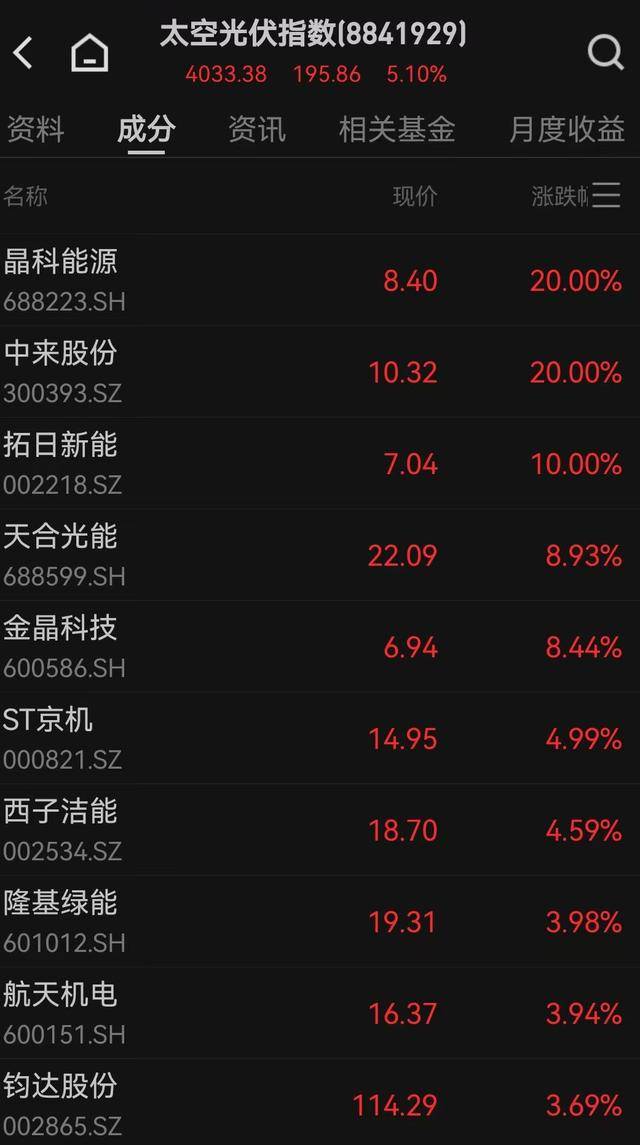
A股异动丨行业协会“泼冷水”,太空光伏股集体回调,金辰股份跌停,晶科能源跌超8%
Ge Long Hui A P P· 2026-02-05 01:40
Core Viewpoint - The A-share market for space photovoltaic concept stocks has experienced a collective pullback, with significant declines in several key companies, despite initial excitement driven by research from Elon Musk's team [1] Group 1: Market Reaction - Major stocks such as JunDa Co., JinChen Co., and JinkoSolar saw sharp declines, with JunDa Co. and JinChen Co. hitting the daily limit down of 10%, while JinkoSolar fell over 8% [1] - The overall market sentiment was influenced by the recent hype around space photovoltaic technology, which has attracted attention from both the capital market and the tech sector [1] Group 2: Industry Insights - Liu Yiyang, Executive Secretary of the China Photovoltaic Industry Association, stated that space photovoltaic technology is still in the exploratory and verification stages, making it premature to determine a clear technological direction [1] - The association highlighted that while the concept has gained traction, the realization of any technology will depend on mature, replicable manufacturing capabilities and long-term reliability verification systems [1] Group 3: Technology Comparison - Gallium Arsenide (GaAs) batteries remain the mainstream choice for commercial aerospace and space stations due to their high conversion efficiency and excellent radiation resistance, despite their high costs [2] - In contrast, the market's enthusiasm for heterojunction (HJT) and perovskite technologies is largely based on cost-reduction logic proposed by certain financial institutions, with actual products still in the early stages of laboratory or verification processes [2]


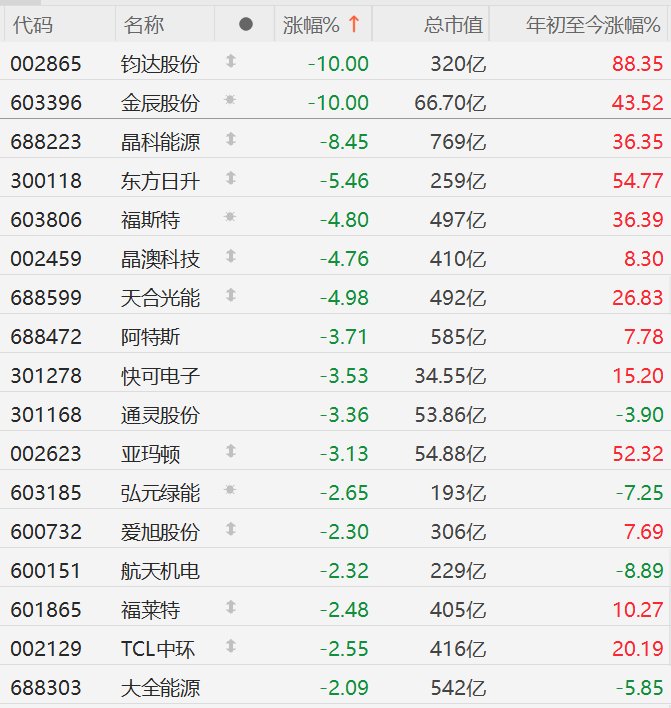
晶科能源确认接触马斯克团队,光伏ETF(159857)昨日申购近2亿份,标的指数大涨超3%
Xin Lang Cai Jing· 2026-02-05 01:37
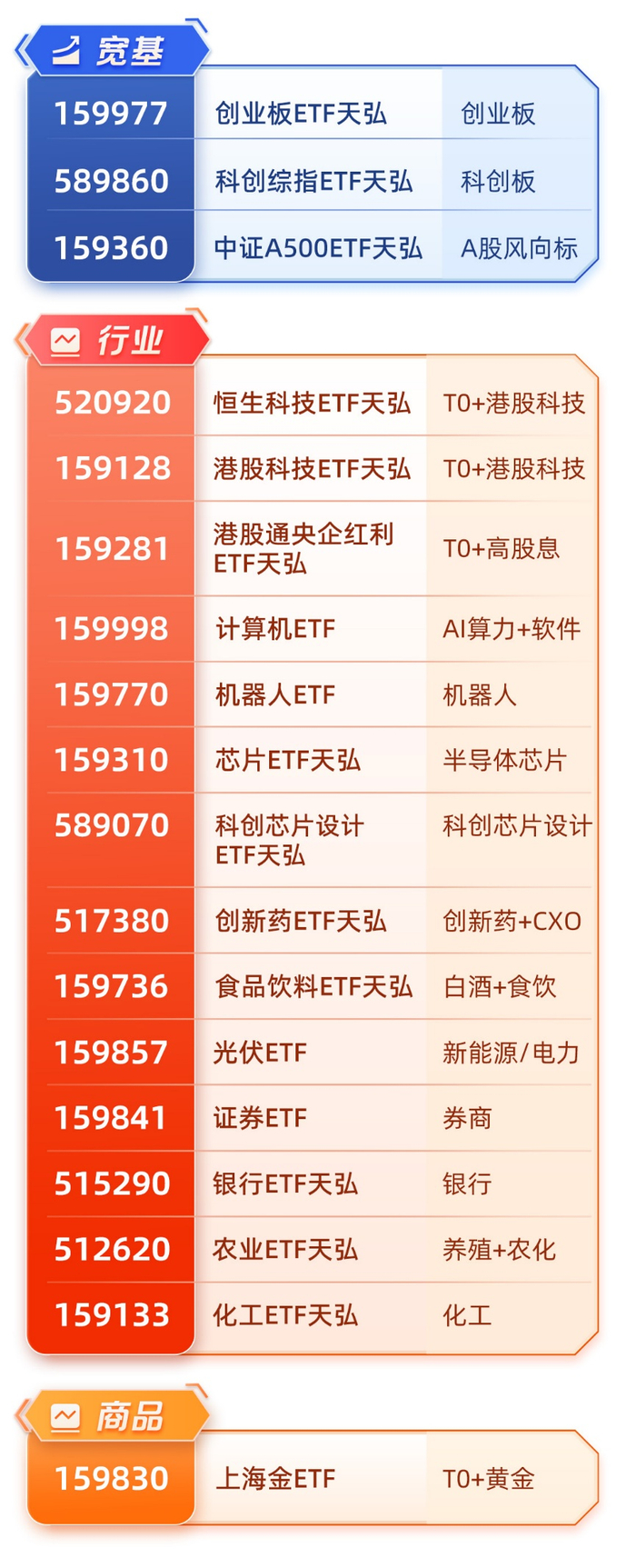
Group 1 - The core viewpoint of the news highlights the significant inflow of funds into the photovoltaic ETF (159857), with nearly 200 million shares subscribed and a turnover rate of 21.17%, indicating active market trading [1] - The tracking index, the CSI Photovoltaic Industry Index (931151), saw a strong increase of 3.24%, with key component stocks such as JinkoSolar rising by 20.00%, Jinglong Technology by 12.97%, and TCL Zhonghuan by 9.99% [1] - As of February 4, the latest scale of the photovoltaic ETF reached 2.367 billion yuan, marking a new high in nearly a month, with a significant increase of 18.5 million shares over the past two weeks [1] Group 2 - The net inflow of funds into the photovoltaic ETF was 25.11 million yuan, with 7 out of the last 10 trading days showing net inflows totaling 142 million yuan [1] - The photovoltaic industry is expected to experience a fundamental recovery, with positive sentiment indicating a potential turning point for the sector [1] - Notable events include Elon Musk's team conducting research on Chinese photovoltaic companies, with JinkoSolar confirming contact with Musk's team [1] Group 3 - Fulin Precision and CATL have reached a strategic cooperation agreement to jointly increase capital in their subsidiary, Jiangxi Shenghua, with Fulin converting 500 million yuan of debt into equity and CATL investing 747 million yuan in cash [2] - According to a report by CICC, the booming commercial aerospace sector is driving the development of space photovoltaic technology, which is entering a new phase of technological upgrades and industrial delivery [2] - The report suggests that the deployment of low-orbit satellite constellations and the exploration of new application scenarios for space computing power should be closely monitored for potential industry-wide changes [2]
科创新能源ETF(588830)开盘跌3.04%,重仓股晶科能源跌7.14%,阿特斯跌2.76%
Xin Lang Cai Jing· 2026-02-05 01:37
Group 1 - The core viewpoint of the article highlights the performance of the Kexin New Energy ETF (588830), which opened down by 3.04% at 1.689 yuan on February 5 [1] - Major holdings in the Kexin New Energy ETF experienced significant declines, with JinkoSolar down 7.14%, Canadian Solar down 2.76%, and Trina Solar down 4.03% [1] - The ETF's performance benchmark is the Shanghai Stock Exchange Sci-Tech Innovation Board New Energy Index, managed by Penghua Fund Management Co., with a return of 73.85% since its establishment on July 31, 2024, and an 18.90% return over the past month [1] Group 2 - Other notable stock performances within the ETF include Rongbai Technology up 0.10%, Daqo New Energy down 1.90%, Xiamen Tungsten down 1.02%, and Gotion High-Tech down 0.90% [1] - The article emphasizes the volatility in the new energy sector, as indicated by the mixed performance of the ETF's holdings [1]


马斯克团队光伏调研引爆A股
3 6 Ke· 2026-02-05 01:18
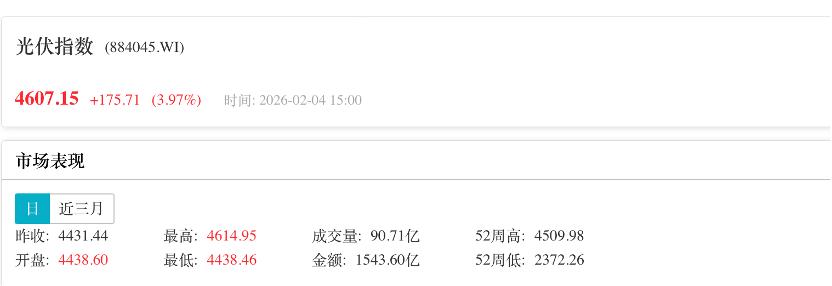
特斯拉创始人埃隆·马斯克团队秘访中国光伏企业的消息持续发酵,引发资本市场对光伏板块的高度关注。2月4日,万 得光伏指数大涨3.97%,成交额超1540亿元,市场情绪显著升温。 | 光伏指数 (884045.WI) | | | | | --- | --- | --- | --- | | 4607.15 +175.71 (3.97%) | 时间:2026-02-04 15:00 | | | | 市场表现 | | | | | 目 近三月 | | | | | 昨收:4431.44 | 最高:4614.95 | 成交量: 90.71亿 | 52周高:4509.98 | | 开盘:4438.60 | 最低:4438.46 | 金额:1543.60亿 | 52周低:2372.26 | 据今日智通财经报道,上周马斯克团队已对包括TCL中环、晶科能源、晶盛机电等在内的多家中国光伏企业开展调 研,考察覆盖设备、硅片、电池组件等多个环节,并重点关注异质结(HJT)、钙钛矿等前沿技术路线。 《科创板日报》记者就此向多家公司核实,高测股份表示有接触马斯克团队,另有多家企业表示已布局太空光伏领 域。 部分光伏企业确认已和马斯克团队接触 ...

全球产业竞速 太空光伏叩响商业化大门
Zhong Guo Jing Ji Wang· 2026-02-04 23:38
Core Viewpoint - The space photovoltaic sector is gaining significant attention due to the increasing demand for space resources and advancements in technology, with the Wande Space Photovoltaic Concept Index rising by 34.07% since 2026 [1] Group 1: Market Dynamics - The space photovoltaic market is driven by the rigid demand from downstream applications, with major space-faring nations applying for frequency resources for tens of thousands of low-Earth orbit satellites, indicating long-term potential demand [3] - The expected launch of over 70,000 satellites in the next five years, along with advancements in solar wing technology, is anticipated to propel the space photovoltaic market into a phase of substantial growth [3] - The market for space photovoltaics is projected to reach a scale of hundreds of billions in the near term, with potential to escalate to trillions if space computing enters an optimistic deployment phase post-2030 [4] Group 2: Technological Developments - Space photovoltaics, which include solar components on satellites and the wireless transmission of solar energy back to Earth, have been in development for over half a century, with most spacecraft now equipped with photovoltaic cells [2] - Current technological pathways include gallium arsenide batteries, which have high performance but are costly, and perovskite batteries, which are lightweight but require further validation for mass production and stability in space [7][8] - The p-type heterojunction battery is seen as the optimal solution for commercial transition due to its advantages in radiation resistance and lightweight design [8] Group 3: Industry Competition - Global companies are rapidly entering the space photovoltaic market, with China's industry structure comprising national research institutions, leading photovoltaic firms, and specialized material equipment manufacturers [5] - Major companies like Trina Solar are accelerating the commercialization of perovskite technology, while Longi Green Energy collaborates with space research institutions to validate advanced energy technologies in space [6] - The competitive landscape is characterized by differentiated strategies based on resource endowments, with the U.S. leveraging reusable rockets for cost advantages and Europe maintaining a stronghold in traditional high-end markets [6] Group 4: Challenges and Future Outlook - Despite the enthusiasm in capital markets, the industry remains cautious, recognizing that the true industrial pull for space photovoltaics will require significant time and development [7] - Key challenges include high production costs, the need for batch manufacturing capabilities, and the establishment of a standardized supply chain and quality control systems [8] - The current phase of space photovoltaics is critical for transitioning from engineering productization to large-scale industrialization, necessitating collaborative efforts across technology, engineering, manufacturing, and system integration [8]