
Temu

Search documents
巴西电商2025年预计增长10%;中国激光设备占全球市场56.6%,稳居首位;TTS、Temu备战黑五|一周出海参考
Tai Mei Ti A P P· 2025-11-17 12:42
Group 1: Dubai Commercial City - Dubai Commercial City (DCC) has achieved an occupancy rate of approximately 98%, driven by strong demand from technology, artificial intelligence, and e-commerce companies [1] - To enhance capacity, the free zone plans to launch a new e-commerce fulfillment center by Q3 2026 to meet the rapid growth of digital trade businesses [1] - The introduction of automated robotic systems has significantly improved order fulfillment efficiency, with annual order processing volume increasing by 158% [1] Group 2: Saudi Real Estate Regulations - Saudi Arabia's Real Estate General Authority (REGA) announced new property ownership regulations allowing foreign individuals and companies to purchase residential or commercial properties in designated areas starting January 2026 [2] - The new regulations require foreign buyers to hold registered properties and fully disclose relevant information [2] - Five categories of non-Saudis or entities are eligible to purchase properties, including foreign individuals and companies with foreign shareholders [2] Group 3: E-commerce Platforms Dynamics - TikTok Shop is launching a global campaign from November 13 to December 2, with a focus on content empowerment and a significant investment in exposure resources exceeding 10 billion [3] - Temu is implementing a 51-day promotional period with a focus on low prices and large-scale subsidies, allowing sellers to participate with minimal inventory requirements [4] - Shopee is adapting regional policies with local warehouse support, aiming to deepen its presence in Southeast Asia and parts of Europe and America [5][6] Group 4: Employment and Logistics in E-commerce - Amazon announced the addition of 7,500 temporary positions in Brazil, doubling last year's numbers to meet the demand for the Black Friday shopping season [9] - The logistics sector is enhancing cross-border shipping stability, with partnerships to secure shipping resources and expedite inventory replenishment [5] Group 5: Global Market Trends - Global smartphone panel shipments are projected to reach 586 million units in Q3 2025, marking an 8.1% quarter-over-quarter increase, driven by new product launches [12] - Brazil's e-commerce is expected to grow by 10% in 2025, with a shift towards replenishment shopping becoming a mainstream driver [13] - China's laser equipment market holds a 56.6% share of the global market, with exports continuing to expand [14] Group 6: International Energy and Investment - The International Energy Agency reports that global data center investments are expected to exceed oil supply investments for the first time, reaching $580 billion in 2025 [15] - The collaboration between Etihad Cargo and SF Airlines aims to enhance logistics capacity to meet the growing demand in cross-border e-commerce and pharmaceuticals [16] Group 7: Regulatory Changes in E-commerce - Vietnam is implementing new regulations to combat counterfeit goods in e-commerce, with a projected industry growth rate of 25-27% by 2025 [20] - France is considering a €2 tax on fast fashion imports, with potential additional environmental taxes on low-cost retailers [21] - The European Council plans to impose taxes on low-value parcels entering the EU, eliminating the current exemption for goods valued under €150 [22]
多线对战,Shopee 的增长变得更贵了
3 6 Ke· 2025-11-17 09:52
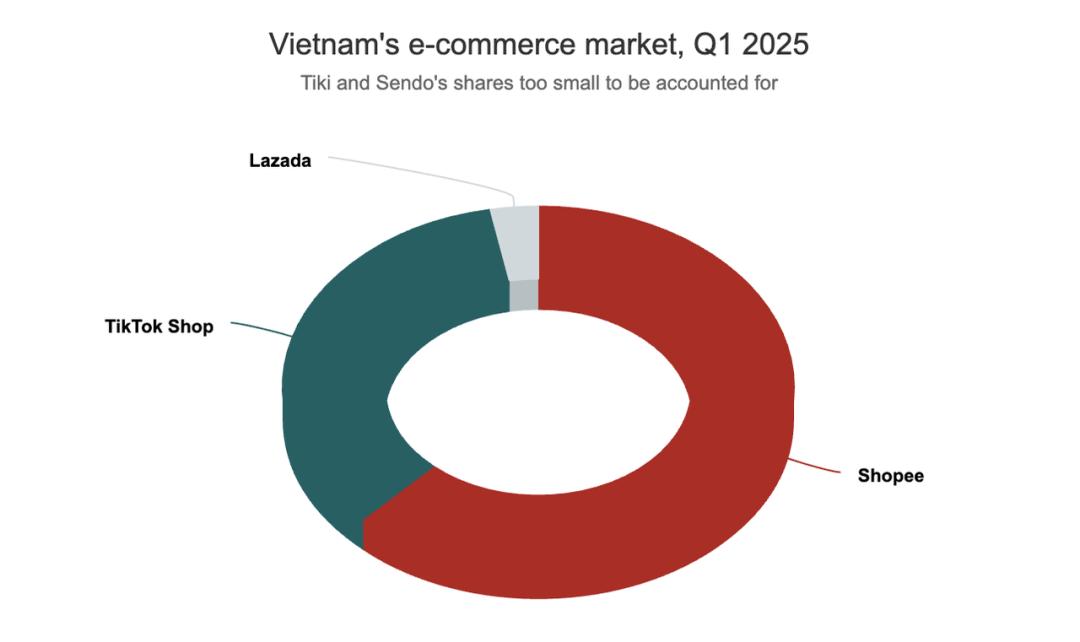
Core Viewpoint - Sea's stock price dropped over 8% after the release of its financial report, marking three consecutive days of decline, despite showing significant revenue and profit growth in Q3 [1] Group 1: Financial Performance - Sea's Q3 revenue was approximately $6 billion, a year-on-year increase of about 38.3%, with a net profit of $375 million, up 114.62% year-on-year [1] - Shopee's Q3 revenue reached $4.3 billion, reflecting a year-on-year growth of 34.9%, while adjusted EBITDA was $186.1 million [1] - Total operating expenses for Sea increased by 28% year-on-year to $2.12 billion, with sales and marketing expenses rising to $1.15 billion, a 30.9% increase [1] Group 2: Competitive Landscape in Southeast Asia - Shopee is facing intense competition from TikTok Shop and Alibaba in the Southeast Asian e-commerce market, leading to significant marketing and user acquisition expenditures [1] - TikTok Shop's market share in Vietnam increased from 23% to 35%, while Shopee's share decreased from 68% to 62% [3] - A Cube Asia survey indicated that consumer spending on TikTok Shop has increased, while spending on Shopee decreased by 51% in Indonesia, Thailand, and the Philippines [5] Group 3: Strategic Initiatives - To counter the competition from TikTok, Shopee has been actively promoting content e-commerce, including live streaming and partnerships with platforms like YouTube and Facebook [6] - Shopee reported a 65% increase in orders from live sellers, and a 400% year-on-year growth in video product transaction volume [6] - Shopee launched a "Daily Star Live" event during the Double Eleven shopping festival to leverage celebrity influence and enhance live streaming impact [7] Group 4: Latin America Market Dynamics - Latin America is currently the fastest-growing e-commerce market globally, with retail e-commerce sales projected to grow by 12.2% this year, reaching $191.25 billion [10] - Shopee has established a significant presence in Brazil, with a projected GMV of approximately 60 billion reais by 2024, which is double that of Amazon and 40% of Mercado Livre's revenue [11] - Due to increased competition from platforms like Temu and TikTok, Shopee exited the Colombian and Chilean markets, focusing on Brazil as its primary battleground [12] Group 5: Logistics and Infrastructure Challenges - In Brazil, Shopee is investing heavily in logistics to compete with Mercado Livre's established infrastructure, which boasts a 73% same-day delivery rate in São Paulo [12][13] - Shopee's average delivery time in Brazil has improved by two days compared to the previous year, but it still lags behind Mercado Livre [13] - Temu's aggressive pricing and user acquisition strategies pose additional challenges for Shopee in the Brazilian market [13]


德国要步美国后尘了?欧盟准备对华商品征税,零关税时代即将结束
Sou Hu Cai Jing· 2025-11-16 09:08
根据欧盟最新数据显示,每年超过46亿件小额包裹涌入欧盟市场,其中91%源自中国的电子商务平台,如SHEIN、Temu等。这些平台凭借价格优势、迅速 的物流体系,迅速占据了欧洲消费者的心智。然而,正是这种占领,使得欧洲本土制造业和零售行业感受到了前所未有的压力,促使他们在政策上采取措施 来反击。 没有人会否认,中国的跨境电商发展迅猛,然而这场商业风暴背后,却是深刻的产业结构危机。德国及其他欧洲国家的传统制造业面临着成本上升的问题, 同时又要面对来自中国制造的激烈竞争,这使得保护主义的声音愈加响亮。 在全球经济的复杂舞台上,德国内部的焦虑和西方国家对中国崛起的防范再次爆发。德国副总理兼财政部长拉尔斯·克林拜尔日前的激烈言辞:"我们不想要 中国垃圾",不仅引起了媒体的关注,更是对中欧经济关系的一次强烈冲击。这句看似简单的话,实际上道出了欧洲国家面对中国低价商品日益增长的担 忧,也揭示了他们在国际贸易中的保护主义倾向。 更为严重的是,若欧盟各国真的如愿以偿地实施这一政策,消费者的支出成本将大幅上升,最终收益的也许并不是本土企业,而是继续受到影响的普通民 众。例如,美国在实施类似政策后,消费者平均承担了每年超过110亿 ...

France found Wish, Temu, AliExpress, eBay, Joom sold illicit products, Le Parisien reports
Reuters· 2025-11-14 18:13
Core Insights - French consumer watchdog identified six online platforms, including Chinese fast-fashion retailer Shein, selling illicit products in France [1] Group 1: Regulatory Findings - The French Commerce Minister, Serge Papin, announced the findings of the consumer watchdog regarding the sale of illicit products [1] - The investigation revealed that Shein was not the only platform involved, as five other online retailers were also implicated [1]


欧盟取消150欧元以下包裹免税!中国电商迎来严峻挑战
Sou Hu Cai Jing· 2025-11-14 18:11
欧盟成员国一致同意取消150欧元以下小包裹的免税政策,这项被称为"针对中国电商的税收新政"将提前至2026年实施。 一直以来,价值低于150欧元的小包裹享受免税进入欧盟的特权,但这扇便利之门即将关闭。2025年11月13日,欧盟成员国达成一致,决定取消这项免税政 策。 欧盟贸易专员马罗什·谢夫乔维奇对此表示,这一决定"发出了一个强烈信号,表明欧洲对公平竞争是认真的"。 01 新政背景:46亿小包裹涌入欧盟,91%来自中国 欧盟之所以急于改革小包裹税收政策,源于近年来爆炸性增长的跨境电商包裹流量。 2024年,高达46亿件低价值包裹进入欧盟,相当于每秒超过145个包裹-7,其中91% 来自中国。 欧盟贸易发言人奥洛夫·吉尔承认:"近年来我们看到了电子商务的指数级增长"。 这种增长主要由总部设在中国的电商平台推动,如Shein和Temu,它们建立了直接向欧洲消费者发货的商业模式。 02 新政内容:免税门槛取消,新增处理费 欧盟此次税收改革包括两个核心措施: 取消150欧元以下包裹的关税豁免。 今后,从第一欧元开始,所有包裹都需缴纳关税。 征收小额包裹处理费。 欧盟委员会在2025年5月已提出对每个小包裹收取2欧元 ...

中国消费品企业大举进入巴西市场
36氪· 2025-11-14 13:36
Core Viewpoint - Chinese consumer brands are increasingly entering the Brazilian market, capitalizing on the growing middle class and consumer demand, while also facing some local resistance due to competitive pressures [4][11][15]. Group 1: Market Entry and Expansion - Chinese brands like Meituan, Didi, and Mixue Ice City are expanding their presence in Brazil, with Mixue planning to open numerous stores and invest 3.2 billion reais (approximately 4.235 billion yuan) by 2030 [5][8]. - Meituan's overseas brand "Keeta" is set to invest 5.6 billion reais in the next five years, starting its services in the suburbs of São Paulo [7]. - Didi is doubling its investment in Brazil to 2 billion reais by 2026 to expand its food delivery service [8]. Group 2: Consumer Perception and Brand Image - Brazilian consumers are increasingly favoring Chinese products, with over 60% expressing a preference for Chinese goods in the tech sector, surpassing the 30% favoring American products [10]. - The perception of Chinese brands as offering "low prices and high performance" is becoming entrenched in Brazil, driven by the success of companies like BYD [11]. Group 3: Economic and Political Context - The strengthening political ties between China and Brazil are enhancing the investment environment, encouraging Chinese companies to target Brazilian consumers directly [8][12]. - Brazil's economic landscape, characterized by a population exceeding 200 million and a growing middle class, presents significant opportunities for Chinese brands [8]. Group 4: Local Resistance and Competitive Pressure - There are emerging concerns in Brazil regarding the competitive pressure from Chinese companies, particularly in light of the entry of cross-border e-commerce platforms like Temu and SHEIN [15]. - Local businesses are advocating for measures to counter the impact of Chinese brands, including adjustments to import tax policies [15].

突发,提前两年征税,低价红利在欧洲市场终结了
3 6 Ke· 2025-11-14 12:14
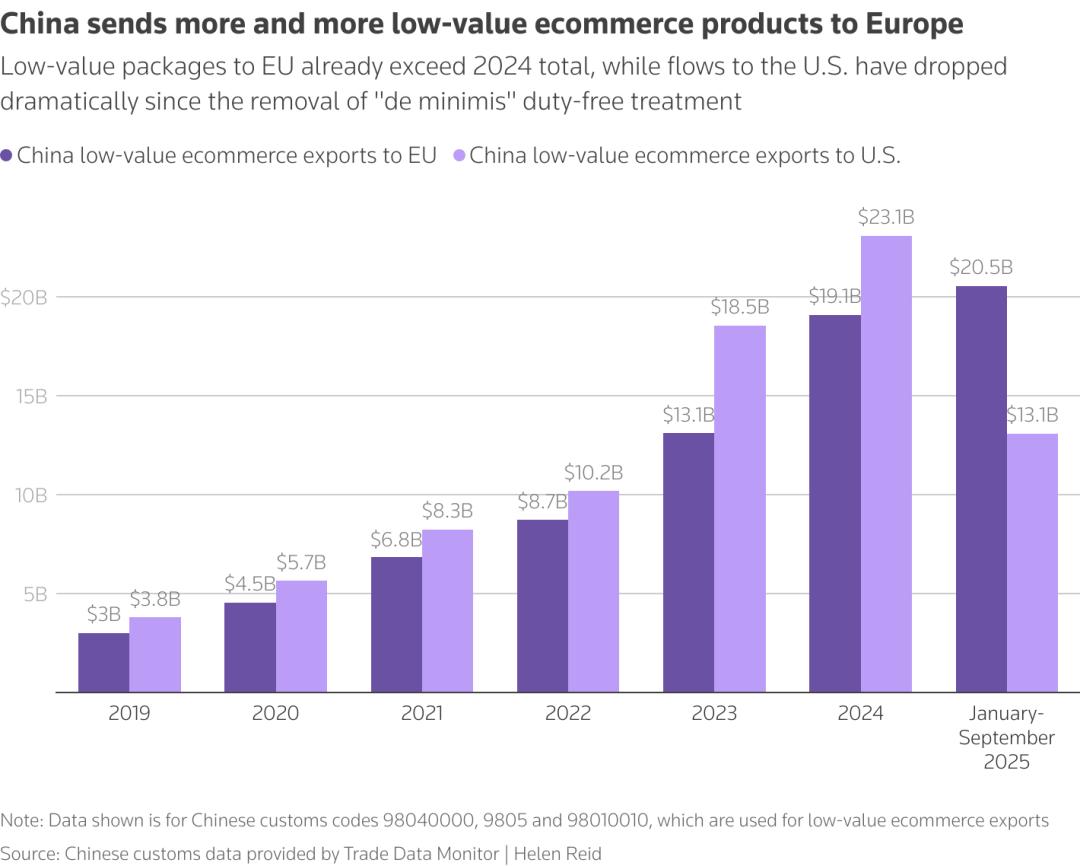
Core Points - The EU has reached an agreement to eliminate the tax exemption for packages valued under €150 by 2026, two years earlier than previously proposed [1][2] - A simplified transitional plan will be introduced starting in 2026, which includes a proposed fee of approximately €2 per small package [1][2] - The agreement is expected to be formalized in legal terms at the next European finance ministers' meeting on December 12 [2] Group 1: Industry Reactions - The early cancellation of the tax exemption has received broad support from European businesses, with German online retailer Zalando and the Italian fashion industry emphasizing the importance of this change for their sectors [3] - However, some retail representatives criticize the €2 fee, arguing it will not significantly deter consumers or alter market dynamics [4] - The Belgian individual entrepreneurs' association suggests a higher tax rate of €20 would be more effective in influencing consumer behavior [4] Group 2: Market Dynamics - The number of low-value e-commerce packages arriving in the EU has doubled to 4.6 billion, with over 90% originating from China, prompting pressure on the EU to act [4] - In 2024, China's low-priced e-commerce exports to the EU are projected to reach $19.1 billion, surpassing exports to the US, which are expected to be $23.1 billion [5] - Following the US's cancellation of its tax exemption, platforms like Temu and SHEIN have shifted focus to the European market, increasing their advertising expenditures significantly [8] Group 3: Strategic Shifts - Temu has rapidly expanded in the EU, covering 25% of the population within two years, with projected growth rates of 60%-100% in 2024-2025 [9] - SHEIN is also reallocating resources to Europe, with expectations that its revenue in Europe will exceed that in the US for the first time, growing by 30.7% to $17.9 billion [10] - The cancellation of the tax exemption will challenge the low-price strategies of these platforms, necessitating a shift towards localization and differentiation in product offerings [13][14]
2025Temu 卖家必看:怎样提高店铺安全与运营效率
Sou Hu Cai Jing· 2025-11-14 09:11
Core Insights - Temu's unique semi-managed model offers low barriers to entry and high potential for sellers, distinguishing it from traditional platforms like Amazon [3] - The platform's ultra-low pricing strategy, stemming from direct supply from manufacturers, significantly enhances price competitiveness for budget-conscious sellers [3] - Regulatory support from China and the U.S. tariff exemption for goods under $800 further reduces operational costs for Temu sellers, expanding profit margins [3] Group 1: Product Selection and Supply Chain - Temu's product catalog spans 29 categories, allowing sellers to quickly identify high-demand items through selection tools [4] - Emphasis on quality is crucial; sellers are advised to prioritize suppliers with stable logistics to maintain user experience, as fast delivery is a core competitive advantage [4] Group 2: Policy Benefits - Temu's 90-day return policy and 7-day delivery commitment necessitate standardized after-sales processes for sellers [5] - Sellers should stay updated with platform announcements to adjust strategies, such as leveraging holiday discounts to boost order volume [5] Group 3: Account Security - For Temu sellers, account security is paramount; using a dedicated cross-border e-commerce browser can mitigate risks associated with shared network environments [6] - The browser provides a secure environment that enhances account registration success rates and overall security [6] Group 4: Resource Allocation - Temu's semi-managed model alleviates warehousing costs, but sellers must still allocate funds wisely, focusing on product optimization, advertising, and user engagement [8] - Adopting a just-in-time procurement model improves cash flow efficiency, allowing sellers to concentrate on enhancing product quality and service [8] - The competitive landscape in 2025 emphasizes the importance of safety and efficiency for sellers in the cross-border e-commerce sector [8] Conclusion - Successful sellers on Temu in 2025 will focus on product alignment, understanding platform policies, and utilizing effective tools [9] - A reliable cross-border e-commerce browser not only secures seller accounts but also enhances operational efficiency, ultimately increasing profit margins [9]
直指中国廉价电商 欧盟计划对小额包裹征税
Sou Hu Cai Jing· 2025-11-13 22:31
Core Points - The EU is set to impose higher tariffs on e-commerce platforms like Shein, Temu, and AliExpress, as it plans to eliminate the current €150 import tax exemption [1][3][8] - The decision aims to control the influx of cheap Chinese packages into the European market, with over 90% of small parcels entering from China [4][10][16] Group 1: Tariff Changes - The EU finance ministers have voted to remove the €150 import tax exemption, which will now apply to all imported goods, regardless of their price [3][8] - The EU Commission aims to accelerate the implementation of this tariff change, proposing to advance the removal of the "minimum threshold" for tariffs to the first quarter of 2026, two years earlier than initially planned [5][6][15] Group 2: Impact on E-commerce Platforms - The new measures are specifically targeting online platforms like Shein and Temu, indicating a commitment from the 27 EU member states to protect local businesses [9][10] - The number of low-cost packages entering the EU doubled last year to 4.6 billion, with a significant portion coming from China, prompting pressure from European businesses to curb this trend [10][11] Group 3: Member State Responses - Some EU member states are considering their own handling fees for low-cost packages, which could complicate the unified market [12][14] - Romania has proposed a handling fee of 25 lei (approximately $5.73), while Italy plans to introduce a tax by the end of the year to protect its fashion industry [13][14]
X @外汇交易员
外汇交易员· 2025-11-13 02:57
Regulatory Focus - Chinese tax authorities are requiring e-commerce giants like Amazon, AliExpress, Temu, and Shein to provide sales data [1] - This action aims to combat tax evasion by merchants conducting cross-border transactions on online platforms [1] - Tax authorities in Beijing, Guangdong, Fujian, and Sichuan are publicly addressing cases of unreported overseas income, urging taxpayers to self-inspect, rectify, and pay taxes [1] Potential Tax Implications - Sellers who adjust their declared data to match platform data may face up to 13% in value-added tax (VAT) and corporate income tax [1] - Companies with annual sales exceeding 5 million yuan are required to pay a maximum of 13% VAT according to the "Value Added Tax Law" [1]