
智元机器人

Search documents
春晚机器人凉了?2026年,机器人要少跳舞,多干活
3 6 Ke· 2026-01-29 08:53
Core Insights - The Chinese robotics industry is experiencing a shift from showcasing technical capabilities to focusing on practical applications and commercial viability, as investors and customers demand tangible results rather than mere demonstrations [1][2][3] Group 1: Industry Trends - The 2026 outlook report emphasizes that the industry no longer wants to see robots performing tricks but rather engaging in useful tasks, indicating a paradigm shift towards commercial deployment [2][3] - The report highlights a significant disparity between soaring valuations and actual sales, with humanoid robot shipments only increasing by 17% despite a 300% rise in valuations, signaling a potential bubble [2][3] - As the number of robots deployed increases, companies are becoming less tolerant of flashy capabilities and more focused on reliability, predictability, and total cost of ownership [3][4] Group 2: Investment Dynamics - Investment logic is shifting, with a concentration of capital towards a few companies deemed to have commercial validation capabilities, as evidenced by the fact that 88% of funding in 2024-2025 went to large deals [4][5] - The report predicts that only 3-4 companies will emerge as clear winners in the humanoid robot sector, while others may face acquisition or closure due to an inability to balance high technical uncertainty with limited commercial validation [4][5] Group 3: Evaluation Metrics - The evaluation criteria for robots are evolving, with a focus on investment payback periods, task-switching capabilities, and operational data rather than just technical prowess [5][6] - Companies are now required to demonstrate clear task lists, performance metrics, and verifiable operational times before procurement, moving away from vague future potential descriptions [9][10] Group 4: Market Dynamics - The report notes a significant trend towards leasing and Robot-as-a-Service (RaaS) models, with 50% of companies preferring leasing to mitigate upfront costs and risks associated with technology [11][15] - The shift in decision-making power from technical teams to financial and operational departments reflects a growing demand for comprehensive total cost of ownership analyses [11][12] Group 5: Future Predictions - The report forecasts a major reshuffling in the investment landscape, with a predicted doubling of IPOs in the robotics sector in 2026, indicating a rush to lock in valuations before a potential downturn [12][24] - The report identifies a critical opportunity for Chinese companies in the global supply chain, as they possess a complete robotics industry chain despite facing policy barriers in overseas markets [14][15] Group 6: Safety and Standards - The establishment of safety standards is anticipated to be a crucial factor in the industry, with the potential to significantly impact market dynamics and competitive advantages [17][18] - Companies that participate in the development of these standards are likely to gain a first-mover advantage, while those that wait may find their technologies non-compliant [18][24]

2026年,机器人要少跳舞,多干活
Xin Lang Cai Jing· 2026-01-29 08:36
文|融中财经 2025年春晚,宇树机器人的一支秧歌舞点燃了资本狂热。2026年春晚,各家又在争夺这个难得的表演名 额。这一年,为了吸引眼球,你方唱罢我登场的戏码层出不穷,观众似乎早已审美疲劳,无非是从跑 步,到跳舞到武打,"大号玩具"的论调此起彼伏。 回顾这一年,在成绩与彷徨中,各家独角兽公司不断摸索与试错。人形机器人在公开场合完成了几乎所 有"可视化"的动作:跑步、跳舞、翻滚、对打……这些动作一次次刷新视频平台的播放量,却也同步降 低了它们在产业语境中的含金量。 真正的拐点在于:当所有公司都能表演,表演就不再是竞争力。 资本市场已经率先感受到这种变化。估值快速抬升的同时,订单、交付和规模化数据却明显滞后,技术 进展与商业兑现之间出现了越来越难以忽视的剪刀差。 这也是为什么,"泡沫"开始频繁出现在行业讨论中——并非因为技术停滞,而是因为衡量成功的标准, 已经悄然发生变化。 当炫技失效 在这场标准重塑的过程中,中国市场并非孤立。一份来自全球机器人产业一线的年度调研报告,提供了 一个有价值的参照坐标。 1月26日,在中国刚刚官宣上春晚的机器人名单时,The Robot Report发布的《2026年机器人行业展望 ...

马斯克:全力押注Optimus,冲刺百万年产能
Robot猎场备忘录· 2026-01-29 04:14
Core Viewpoint - Tesla's Q4 financial report showed a decline in revenue and profit, but exceeded expectations in gross margin and earnings per share, leading to a nearly 4% increase in stock price post-announcement [2] - Elon Musk focused on AI, Robotaxi, and the humanoid robot Optimus during the earnings call, indicating a strategic shift away from traditional automotive discussions [2] Group 1: Tesla's Financial Performance - Q4 revenue and profit decreased, but gross margin and earnings per share were higher than expected [2] - The stock price reacted positively, increasing by nearly 4% after the earnings report [2] Group 2: Optimus Robot Development - Musk announced that Optimus V3 will be released in a few months, showcasing significant improvements over V2.5 [2] - Production of Model S and Model X is expected to cease as the Fremont factory is repurposed for Optimus production, with a long-term goal of achieving an annual production capacity of one million robots [2] Group 3: T Chain Developments - T Chain companies have seen a mix of positive news, including contracts and project confirmations, but overall performance has been weak due to a lack of significant catalysts [3] - Recent downward trends in T Chain stocks were noted, particularly on January 26, with some stocks hitting their daily limits [3] Group 4: Market Sentiment and Future Outlook - The market is awaiting the release of Optimus V3 as a potential catalyst for T Chain stocks [5] - Key T Chain companies are focusing on North American communications and have received positive feedback from recent engagements [5][6]



我们不需要100万台“跳舞机器人”
创业邦· 2026-01-29 03:54
来源丨腾讯科技(ID:qqtech) 作者丨 苏扬 以下文章来源于腾讯科技 ,作者值得关注的 腾讯科技 . 腾讯新闻旗下腾讯科技官方账号,在这里读懂科技! 编辑丨 徐青阳 图源丨Midjourney "过去一个月,网上流传着很多关于我司2025年出货量的不实信息。"1月22日,宇树科技在一则回 应公告中写道。 宇树的这条回应,矛头直指Omdia此前公布的"人形机器人出货量榜单"。 Omdia此前公布的数据显示, 2025年,人形机器人出货前三名:智元机器人、宇树科技、优必选 , 对应出货量分别为5168台,4200台和1000台。 另外,市场机构Counterpoint日前披露的数据也显示,智元、宇树和优必选三家企业占据人形机器人 市场份额前三名,分别为30.4%、26.4%、5.2%。 两份榜单虽然口径不一致,但对应头部前三名的排序高度一致。 这种情况下,宇树科技强调2025年人形机器人实际出货量超5500台,外部流传数据不实, 字里行间 都在表达"宇树科技才是人形机器人出货量的第一名。" 不过,也有轮式人形机器人创业者表示, 这份榜单覆盖了绝大部分双足产品,但没有覆盖到轮式 ,"我们出货量也能排上名次,但 ...

从秀场到职场,机器人出厂“打工”
Xin Jing Bao· 2026-01-29 01:13
Core Insights - The article emphasizes the rapid development and integration of robotics in various sectors, particularly in household cleaning and industrial applications, driven by advancements in AI technology [1][2][3] Group 1: Robotics in Household Applications - The household sector is identified as the primary battlefield for consumer-grade robots, with cleaning robots achieving significant market penetration [4][5] - Products like window cleaning robots and floor cleaning robots have gained popularity due to their ability to meet user needs effectively, with sales expected to grow over 30% by 2025 on platforms like Tmall [4][5] - The competitive edge in the market is shifting towards automation and integrated solutions, with companies focusing on user-friendly designs and safety features [5] Group 2: Industrial Robotics - The industrial sector is witnessing a shift as robots become integral to manufacturing and smart management, with companies like Tianyi Robotics and others deploying robots for material handling and sorting tasks [7][8] - Major orders for humanoid robots are anticipated in 2025, indicating a significant move towards automation in manufacturing [8][10] - The core value of robots in factories lies in their ability to gather data and improve algorithms, which can enhance productivity and address labor shortages [8][10] Group 3: Market Dynamics and Challenges - Chinese brands dominate the Southeast Asian market for cleaning robots, holding over 80% market share, highlighting the competitive landscape [6] - The industry faces challenges in scaling up applications, with many robots still in the trial phase and primarily performing simple tasks [13][14] - Reliability and efficiency remain critical concerns, with current robots not yet surpassing human efficiency in many tasks, although they can maintain consistent performance over extended periods [13][14] Group 4: Future Outlook - The robotics industry is projected to grow significantly, with estimates suggesting the market could exceed $100 billion by 2028 [17] - The competition will increasingly focus on the ability to deploy robots in real-world scenarios and continuously optimize their performance through data feedback [17][18] - Companies are urged to be cautious about large orders that may not translate into immediate deliveries, as many are framework agreements rather than binding contracts [18]
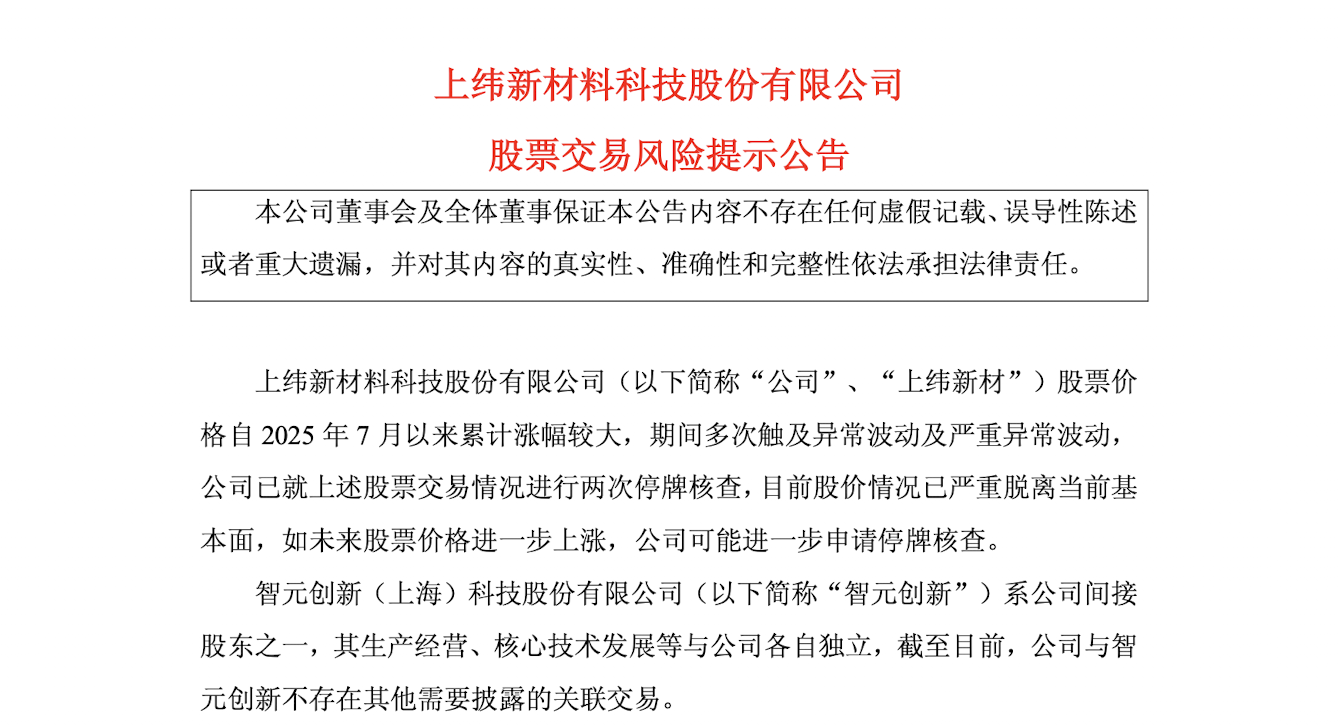
上纬新材再“预警”:股价严重脱离基本面,具身智能业务尚未形成营收
Guo Ji Jin Rong Bao· 2026-01-28 12:30
Core Viewpoint - The company, Shangwei New Materials, is undergoing significant changes due to a planned acquisition by Zhiyuan Robotics, which is expected to impact its market position and stock performance significantly [2][3][4]. Company Overview - Shangwei New Materials, established in 2000 and headquartered in Shanghai, specializes in the research, production, and sales of environmentally friendly high-performance corrosion-resistant materials, wind turbine blade materials, and new composite materials [2]. - The company's main products include vinyl ester resins, specialty unsaturated polyester resins, infusion resins for wind turbine blades, and safety materials for rail transportation [2]. Financial Performance - As of January 27, 2026, Shangwei New Materials has a price-to-earnings (P/E) ratio of 680.31, with a rolling P/E ratio of 716.67, significantly higher than the industry average rolling P/E of 32.48 [2]. - The company went public on the Sci-Tech Innovation Board in September 2020 with a market capitalization threshold of 1 billion CNY, raising only 108 million CNY, marking the lowest IPO record on the board [2]. Acquisition Details - Zhiyuan Robotics plans to acquire a total of 63.62% of Shangwei New Materials' shares through agreement transfers and a tender offer, which will change the controlling shareholder to Shanghai Zhiyuan Hengyue Technology Partnership [3]. - The actual controller will be Zhiyuan Robotics' Chairman and CEO, Deng Taihua, along with key team members including co-founder and CTO, "Zhihui Jun" Peng Zhihui [3]. Market Reaction - The announcement of the acquisition led to a strong market response, with expectations that if the transaction is completed, Zhiyuan Robotics could become the first company in the Sci-Tech Innovation Board focused on embodied intelligence [4]. - Following the announcement, Shangwei New Materials' stock price surged, reaching a peak increase of 519.41% from 7.78 CNY to 48.19 CNY between July 9 and July 22, 2025, and a cumulative increase of 1537.15% by December 31, 2025 [4]. Management and R&D Focus - Peng Zhihui, in his dual role as the new chairman of Shangwei New Materials and co-founder of Zhiyuan Robotics, has been under scrutiny for his involvement in product promotion, but the company clarified that he is not involved in R&D activities [6]. - The company maintains that its core business remains stable and unchanged, focusing on the research, production, and sales of new materials while establishing a team for the development of embodied intelligent robots [6].
从春晚看,具身智能从炫技到落地的关键一年
3 6 Ke· 2026-01-28 10:54
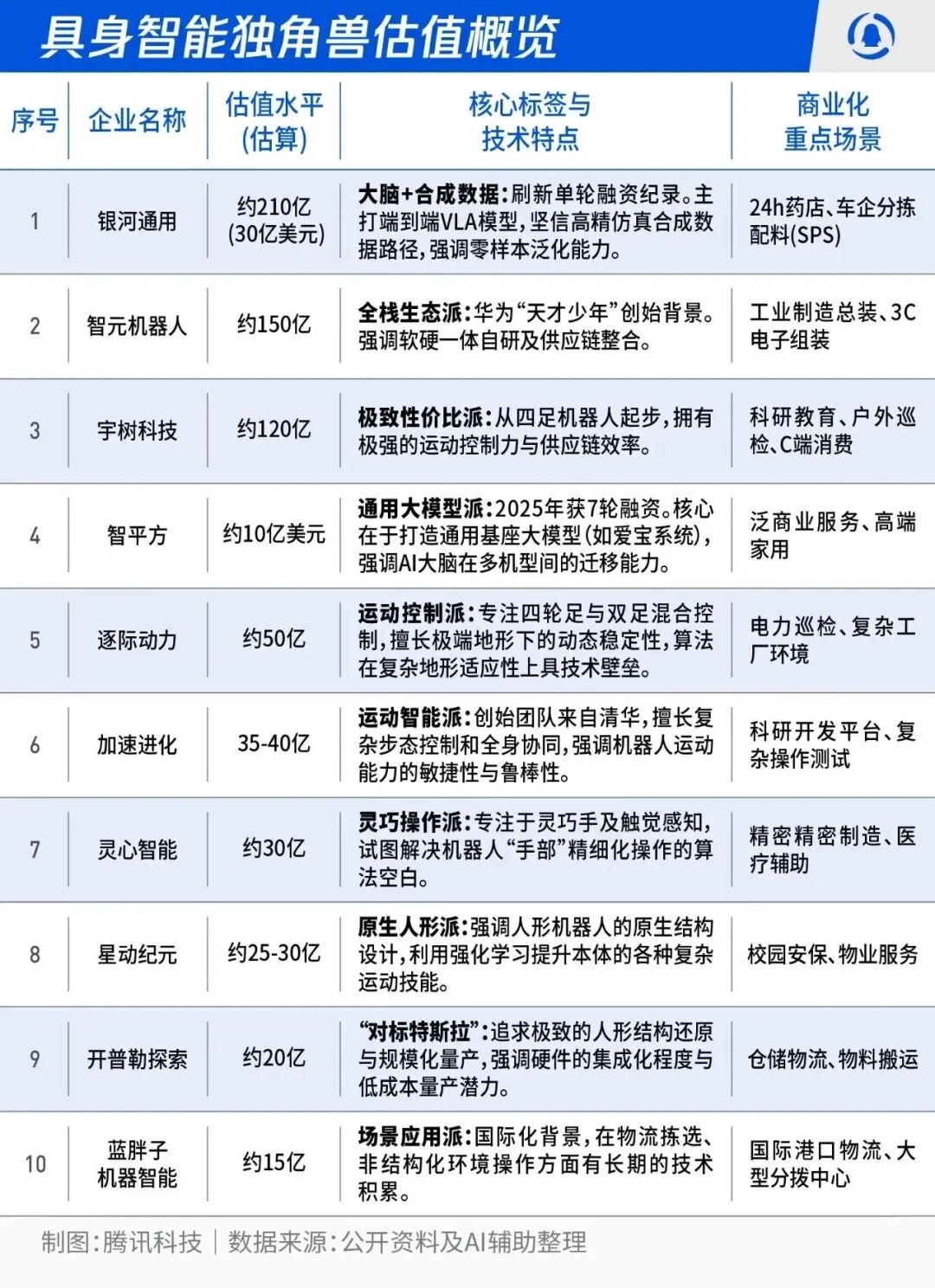
说到机器人,很多人的第一印象大概就是2025年春晚舞台上转手绢的宇树机器人了。 谁在争夺春晚的流量放大器? 今年春晚,值得我们期待的是,不光亮相的机器人企业数量会增多,玩法也将会从单纯的跳舞转变为"智能交互"上。 以目前官宣的银河通用机器人为例,据介绍,将重点展示在复杂场景中的自主决策能力与高效协作水平,这意味着观众将看到的不是预设程序的重复动 作,而是具备环境感知、即时反应与"温暖服务"体验的智能体。 追觅科技也会着重展示互动与感知能力。据悉,追觅科技旗下品牌首驱,具备环境感知、自主决策与精准执行能力的智能出行机器人,将作为科技元素亮 相舞台。 春晚是品牌的放大器,这点不需要多说,但对机器人这个行业来说,选择春晚,背后透露出的,是整个赛道的野心与焦虑——首先,他们期待能复刻宇树 科技的现象级破圈。 宇树的爆红,让广大普通民众通过屏幕直观感受到了机器人的存在。此后王兴兴更是出现在座谈会,和马化腾、任正非等大佬同为座上客,成为抢眼的科 技新贵。这种"被看见"的价值直接转化为市场应用价值。 不过相比起去年宇树的一枝独秀,今年春晚的机器人含量会更高。 目前,已有魔法原子、银河通用、宇树科技、追觅四家具身智能相关企业 ...
“人形机器人第一股”做LP
FOFWEEKLY· 2026-01-28 10:10
导读: 又一机器人公司躬身入局,VC圈再添新玩家。 作者丨FOFWEEKLY 又有机器人公司闯入VC圈,这次是作为LP出手。 " 人形机器人第一股" 做LP 2025年12月19日,慕华科创与智元创新(上海)科技股份有限公司联合多方产业资本,正式发布 了"慕华·智元具身智能产业基金"。这是继去年9月与高瓴资本联手布局后,智元在产业投资领域 的又一重要举措。 作为国内具身智能领域的头部初创企业,智元机器人的资本运作与生态布局始终保持高频节奏。自 成立以来,这家"华为系"背景的企业便以产业与资本双轮驱动的模式,快速构建生态壁垒。 一则公告, 让头部机器人公司以新身份重返创投圈主角。 日前,港股"人形机器人第一股"优必选宣布与柳州产控基金及柳州产业引导基金订立合伙协议。 根据优必选发布的公告,该合伙企业全称为"机器人产业并购基金",全体合伙人的出资总额为人 民币6.6亿元,其中柳州产控基金出资人民币500万元,柳州产业引导基金出资人民币3.55亿元, 优必选出资人民币3亿元。柳州产控基金担任合伙企业的普通合伙人及基金管理人。 公告显示,该合伙企业的目的是以智能机器人产业链为核心,依托柳州市现有产业基础,投资于上 下 ...

仙工智能董事长赵越入选“2025年度机器人行业十大杰出人物”
Sou Hu Cai Jing· 2026-01-28 06:19
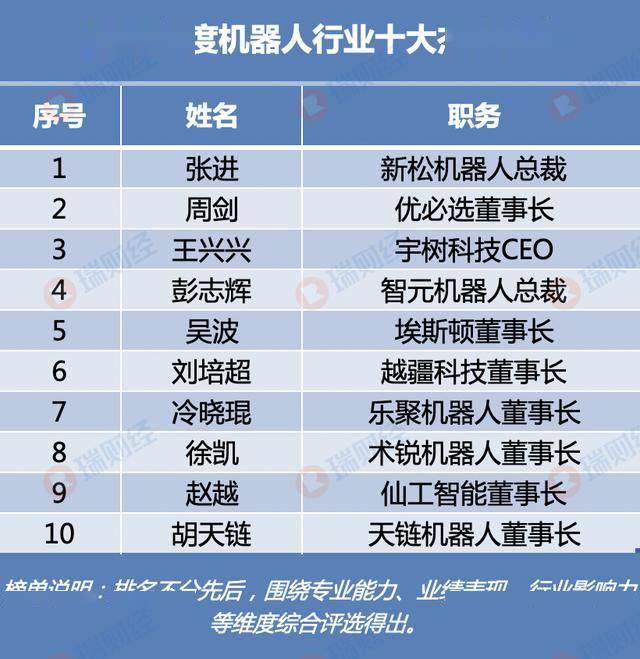
"2025年度机器人行业十大杰出人物"榜单围绕专业能力、业绩表现、行业影响力等维度综合评选得出。 赵越,36岁,于2020年4月及2020年9月分别获委任为仙工智能董事及董事长,2025年5月调任为执行董 事。其自2020年6月起担任公司首席执行官,亦于集团若干附属公司担任多个职位,负责集团整体战略 规划及重大业务与运营决策。赵越在机器人及智能技术领域拥有丰富经验。2015年4月至2015年12月, 其担任福物(上海)机器人科技有限公司总经理。其后于2016年1月至2020年5月,其担任上海仙知机器人 科技有限公司董事长兼总经理。赵越分别于2011年7月及2015年3月在中国获得浙江大学电子信息工程学 士学位及 控制科学与工程硕士学位。 2025年,赵越带领仙工智能实现AI技术与机器人深度融合,强化机器人自主运行能力,在多行业应用 中展现技术领先优势。 瑞财经1月28日,由瑞财经推出的"2025年度机器人行业十大杰出人物"榜单揭晓,仙工智能董事长赵越 入选。 | 序号 | 姓名 | 职务 | | --- | --- | --- | | T | 张讲 | 新松机器人总裁 | | 2 | 周剑 | 优必选董事长 ...
乐聚机器人董事长冷晓琨入选“2025年度机器人行业十大杰出人物”
Sou Hu Cai Jing· 2026-01-28 06:19
Group 1 - The "Top Ten Outstanding Figures in the Robotics Industry for 2025" list was announced, with Leng Xiaokun, Chairman of Leju Robotics, being selected [2] - The selection criteria for the list included professional ability, performance, and industry influence [2] - Leng Xiaokun, born in September 1992, is also a researcher at Harbin Institute of Technology and the Deputy Director of the Intelligent Robotics Research Center [2] Group 2 - In 2025, Leju Robotics, under Leng Xiaokun's leadership, will collaborate with Huawei and China Mobile to achieve real-time control over a distance of 1200 kilometers, supporting complex tasks [3]