罗氏

Search documents
2026美股生物科技板块怎么投资?杰富瑞:关注6大首选、7大潜力和5大并购目标
Zhi Tong Cai Jing· 2025-12-24 13:30
Core Insights - Jefferies recently released a report on the outlook for the U.S. biotech industry in 2026, focusing on preferred investment targets, undervalued potential companies, and potential acquisition opportunities. The report highlights that the biotech sector will see multiple key clinical trial data disclosures, new drug approvals, and policy developments in 2026, with companies in niche segments likely to achieve value re-evaluation through technological breakthroughs and commercialization progress [1]. Preferred Investment Targets - Jefferies identified six core recommended companies for 2026 based on market catalysts and valuation potential: - **Dianthus Therapeutics**: Target price of $66, focusing on the drug claseprubart for various neuromuscular diseases, with peak revenue estimated at $2 billion. Key milestones include mid-analysis of Phase III trials for CIDP and initiation of trials for gMG in 2026 [1]. - **Taysha Gene Therapies**: Target price of $11, with TSHA-102 for Rett syndrome showing significant market potential (peak revenue of $2 billion). Phase III trial data is expected by the end of 2026 [2]. - **Tyra Biosciences**: Target price of $32, with the drug dabogratinib showing disruptive potential in bladder cancer and achondroplasia. Key data is expected next year [2]. - **Tango Therapeutics**: Target price of $14, exploring a combination therapy for pancreatic cancer with expected data release in mid-2026 [2]. - **ORIC Pharmaceuticals**: Target price of $23, with two key assets targeting prostate cancer and lung cancer. Key data updates are anticipated next year [3]. - **Solid Biosciences**: Target price of $15, focusing on gene therapy for Duchenne muscular dystrophy, with critical meetings with the FDA planned for 2026 [3]. Undervalued Companies - The report highlights seven undervalued companies with significant catalysts and potential for value re-evaluation: - **Ultragenyx Pharmaceutical**: Target price of $114, with a current undervalued stock price. Key catalysts include Phase III data for setrusumab expected in late 2025 to early 2026, potentially driving a 100% stock price increase [4]. - **Beam Therapeutics**: Target price of $41, focusing on gene editing with promising data updates expected in early 2026 [5]. - **Aurinia Pharmaceuticals**: Target price of $21, with steady growth in lupus nephritis treatment and new drug development expected to drive growth [5]. - **Kodiak Sciences**: Target price of $39, with three Phase III trial data readouts expected in 2026 [6]. - **Intellia Therapeutics**: Target price of $45, with key data for hereditary angioedema therapy expected in mid-2026 [6]. - **Compass Therapeutics**: Target price of $8, with upcoming data for cholangiocarcinoma therapy expected in early 2026 [6]. - **KalVista Pharmaceuticals**: Target price of $38, with a first-in-class oral treatment for hereditary angioedema expected to drive rapid growth [7]. Potential Acquisition Targets - Jefferies identified five companies that may become acquisition targets in 2026 due to their unique assets or market positions: - **Arrowhead Pharmaceuticals**: Strong RNAi product line in cardiovascular metabolism and new obesity targets [8]. - **Celcuity**: Unique efficacy of gedatolisib in PIK3CA wild-type breast cancer [8]. - **ORIC Pharmaceuticals**: High-value prostate and lung cancer projects [8]. - **Travere Therapeutics**: Potential market expansion in rare kidney diseases if FSGS indication is approved [8]. - **KalVista Pharmaceuticals**: First-mover advantage and strong growth in oral HAE treatment [8].
医保新篇章,检测新里程丨PIK3CA/AKT1/PTEN靶点药物可及,吉因加为乳腺癌精准治疗护航
Quan Jing Wang· 2025-12-23 10:47
Group 1 - The National Healthcare Security Administration and the Ministry of Human Resources and Social Security released the updated drug directories, marking a significant step in improving the accessibility of innovative drugs and reducing patient burdens in China [1] - Two important new drugs targeting the PAM/PI3K signaling pathway for HR-positive/HER2-negative advanced breast cancer have been included in the updated directory: Roche's Inalyse tablets and AstraZeneca's Capivasertib tablets [1] - Inalyse is indicated for use in combination with Palbociclib and Fulvestrant for adult patients with HR-positive, HER2-negative locally advanced or metastatic breast cancer who have developed resistance to endocrine therapy [1] - Capivasertib is indicated for use in combination with Fulvestrant for adult patients with HR-positive, HER2-negative locally advanced or metastatic breast cancer who have progressed after at least one endocrine therapy [1] Group 2 - Geneplus, a leader in tumor precision testing, provides reliable and comprehensive testing solutions, ensuring coverage of key mutations in PIK3CA, AKT1, and PTEN for clinical decision-making [2] - The Geneplus Jizhi® intelligent analysis system enables efficient local closed-loop testing, ensuring rapid delivery of results within 24 hours to facilitate timely patient treatment [2] - Geneplus aims to advance breast cancer diagnosis and treatment towards a more standardized and individualized era, benefiting patients from national policies and technological advancements [2]


493亿!中国市场创新药“销冠”诞生
Xin Lang Cai Jing· 2025-12-22 04:16
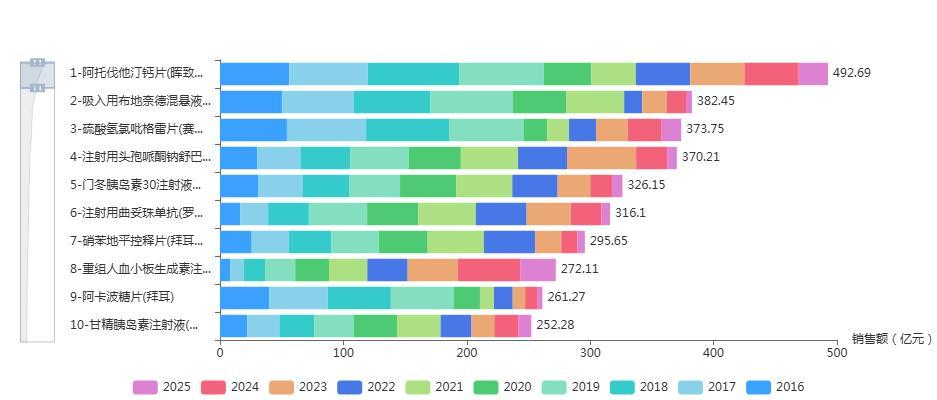
Core Insights - The article highlights that Pfizer's Atorvastatin Calcium Tablets have achieved a cumulative sales figure of 492.7 billion yuan, making it the top-selling innovative drug in China's public medical institutions over the past decade [1][13][15] - Atorvastatin's market share is approximately 15% of the total sales in the top 10 innovative drugs, significantly surpassing the second-place inhaled Budesonide suspension by 110 billion yuan [2][15] Sales Performance Analysis - From 2016 to 2019, Atorvastatin experienced a golden growth period, with sales increasing from 5.612 billion yuan to 6.854 billion yuan, peaking at 7.405 billion yuan in 2018 [4][17] - In 2020, sales dropped to 3.847 billion yuan due to national procurement policies, but stabilized between 4.3 billion and 4.4 billion yuan from 2021 to 2024, with a forecast of 4.1 billion yuan for 2025 [4][19] - The drug's resilience in the market post-policy adjustments is evident, with 2.375 billion yuan in sales achieved in the first half of 2025 [4][19] Market Dynamics - The success of Atorvastatin is attributed to the large patient base suffering from cardiovascular diseases, which have high incidence and mortality rates, necessitating long-term management [5][18] - The demand for lipid-lowering medications is driven by the rising prevalence of dyslipidemia, with a reported 35.6% prevalence among adults over 18 years old in China [5][18] - The innovative drug market in China is heavily influenced by chronic diseases, with cardiovascular and metabolic drugs dominating the top 10 sales list, accounting for 59.9% of total sales [20][21] Competitive Landscape - The top 10 innovative drugs list is predominantly occupied by foreign pharmaceutical companies, which hold a market share of 92%, showcasing their strong market position due to patent protections and established marketing strategies [22] - The only domestic product in the top 10 is the recombinant human thrombopoietin injection, which has shown significant growth, increasing from 849 million yuan in 2016 to an expected 5.076 billion yuan in 2024 [22] Future Outlook - The article speculates that the next leading drug could emerge from the oncology or autoimmune sectors, with advancements in ADCs, bispecific antibodies, and cell therapies showing promise [24][25] - Chronic disease management, particularly with GLP-1 receptor agonists, is expected to gain traction, potentially replicating or surpassing the market trajectory of Atorvastatin [24][25]

九洲药业20251221
2025-12-22 01:45
Key Points Summary of 九州药业 Conference Call Company Overview - 九州药业 is transitioning from generic drugs to innovative drug services, established in 1973 and entered the pharmaceutical sector in 1985. The company began its CDMO (Contract Development and Manufacturing Organization) business in 2008 and went public in 2014 [3][4]. Industry and Business Structure - The company has achieved synergy in domestic and international production through acquisitions and self-built capabilities, including the establishment of an overseas management headquarters in Singapore and R&D platforms in Japan and Germany [2][3]. - The core revenue source is the CDMO business, which generated revenue of 22.91 billion yuan in the first half of 2025, representing a year-on-year growth of 16.27% with a gross margin of 41% [2][3]. Project Pipeline and Clientele - The project pipeline has increased from 378 in 2019 to 1,214 as of the first half of 2025, including 38 commercialized products [2][3]. - Major clients include multinational corporations (MNCs) such as Novartis, Roche, and Pfizer, with Novartis accounting for over 60% of the revenue [2][5]. Financial Performance - In the first half of 2025, the raw material drug business generated revenue of 5.23 billion yuan, maintaining a gross margin of 23% despite industry competition and price declines [2][5]. - The company expects a net profit growth of around 15% over the next three years, with a revenue increase of 4.92% and a net profit increase of 18.51% year-on-year in the first three quarters of the current year [4][5]. New Business Initiatives - The establishment of the Prince Division aims to develop new molecular types such as peptides, conjugated drugs, and small nucleic acids, creating a second growth curve [2][5]. - The company is advancing commercial production capacity for these new initiatives, including three peptide conjugation platforms and capabilities for small nucleic acid research in both China and the U.S. [5]. Market Outlook and Valuation - The company is projected to maintain a net profit growth rate of approximately 15% over the next three years, with a target price of 27 yuan based on a 21x P/E ratio for 2026 [4][5]. - The current stock price reflects a P/E ratio of about 12x for 2027, indicating a favorable investment opportunity considering the rebound in raw material prices and healthy development in small molecule CDMO [5].

创新药周报:礼来口服SERD imlunestrant III期数据更新-20251221
Huachuang Securities· 2025-12-21 13:23
Investment Rating - The report does not explicitly state an investment rating for the industry or specific companies involved in the development of oral SERDs for breast cancer treatment. Core Insights - The report highlights the recent FDA approval of Imlunestrant, an oral SERD developed by Eli Lilly, for the treatment of ER+/HER2–/ESR1 mutant advanced or metastatic breast cancer, marking it as the second oral SERD approved after Elacestrant [18][19] - The EMBER-3 trial results indicate that Imlunestrant significantly improves progression-free survival (PFS) compared to standard endocrine therapy, with a median PFS of 5.5 months versus 3.8 months for standard therapy [23] - Giredestrant, developed by Roche, has shown positive results in the III phase evERA trial, demonstrating significant benefits in PFS compared to standard treatment in patients previously treated with CDK4/6 inhibitors [27] - Camizestrant, another oral SERD from AstraZeneca, has shown promising efficacy in the SERENA-6 trial, with a median PFS of 16.6 months when combined with CDK4/6 inhibitors [33] Summary by Sections Section 1: Focus on Innovative Drugs - The report reviews the advancements in innovative drugs, particularly in the field of breast cancer treatment, emphasizing the importance of oral SERDs [2][5] Section 2: Current Status of ER+ Breast Cancer Therapies - The report discusses the current landscape of therapies for ER+ breast cancer, including the mechanisms of action for various anti-estrogen therapies and the challenges of resistance faced by patients [10][8] Section 3: Clinical Development of New Oral SERDs - The report details the clinical development progress of several new oral SERDs, including Imlunestrant, Giredestrant, and Camizestrant, highlighting their respective phases and trial outcomes [12][11][33] Section 4: Market Dynamics and Company Performance - The report provides insights into the market dynamics of the biotech sector, including stock performance of key companies involved in the development of innovative cancer therapies [46][49]


Nine drugmakers strike deals with Trump, with more to come
BusinessLine· 2025-12-21 05:11
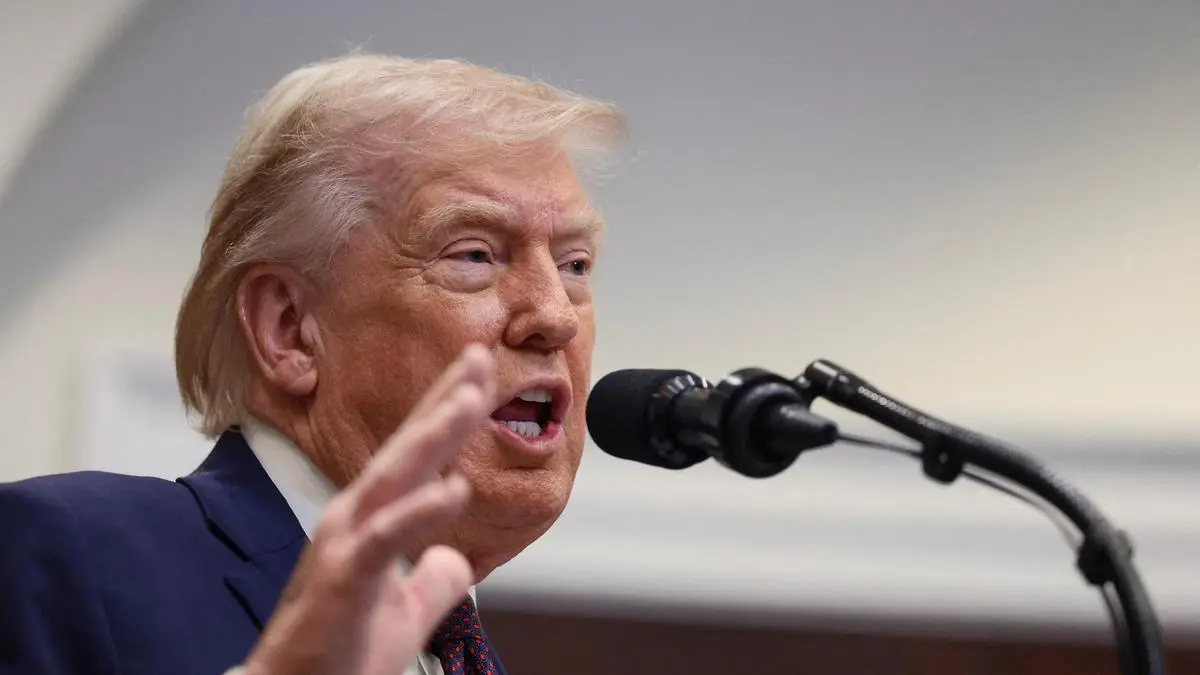
Core Points - US President Donald Trump announced agreements with nine pharmaceutical companies aimed at lowering drug prices for Americans in exchange for a three-year delay on threatened tariffs [1][2] - A total of 14 out of 17 targeted drugmakers have agreed to lower prices for the Medicaid program, sell discounted drugs directly to consumers, and align US drug prices with those abroad [2][3] - Companies such as Roche, Novartis, Bristol-Myers Squibb, Gilead, and others have negotiated agreements, while AbbVie, Johnson & Johnson, and Regeneron are still in talks [3][4] Drug Pricing Agreements - Bristol-Myers Squibb will provide its blood-thinner Eliquis for free to the Medicaid program, and Gilead will reduce the price of its hepatitis C drug Epclusa to under $2,500 [7] - Many medications highlighted by the administration are already available at discounted prices through patient assistance programs or have cheaper generic alternatives [8] Insurance Industry Impact - Trump's announcements led to declines in health insurance stocks, including UnitedHealth Group, Elevance Health, and CVS Health [10] - The insurance industry trade group AHIP stated that premiums reflect medical care costs and welcomed discussions on cost reduction [10][11] Manufacturing and Supply Chain - Companies like Merck, Bristol-Myers, and GSK agreed to donate six months' worth of raw drug materials to a national stockpile and commit to manufacturing finished medicines in emergencies [12] Political and Regulatory Context - Democrats are seeking more transparency regarding the potential savings from these tariff relief deals, as the agreements remain confidential [13]
Roche CEO points to higher future drug prices in Switzerland after US deal
Reuters· 2025-12-20 21:41
Core Insights - Deals between pharmaceutical companies and the U.S. government aimed at reducing drug prices are expected to increase the cost of new drugs in Switzerland, according to the CEO of Roche [1] Group 1: Impact on Drug Pricing - The agreements in the U.S. to lower medicine prices may lead to higher costs for new pharmaceuticals in Switzerland [1]
The Trump Market Medley: Tariffs, Dividends, and the Pharma Paradox
Stock Market News· 2025-12-20 18:00
Group 1: Drug Pricing Agreements - President Trump announced "historic" drug pricing agreements with nine major pharmaceutical companies, including Amgen, Bristol Myers Squibb, and Merck, aimed at reducing prices for Medicaid and direct-to-consumer sales through TrumpRx.gov [2][3] - The agreements are intended to align U.S. drug costs with the lowest prices paid by other developed nations, a concept known as "most-favored-nation" pricing [2] Group 2: Market Reactions to Drug Pricing - Despite the price cuts, pharmaceutical stocks saw gains, with GSK rising 1%, Merck gaining 1%, and Gilead Sciences surging approximately 3% [3] - The rally in stock prices is attributed to tariff exemptions secured by these companies in exchange for their pricing agreements, which alleviated potential tariff burdens [3][4] Group 3: Tariff Impacts - The U.S. effective tariff rate increased from 2.4% to 16.8%, the highest since 1935, contradicting claims that tariffs would reduce costs [5] - Market reactions to tariff announcements have been volatile, with significant drops in major indices following threats of tariff increases, such as a 2.7% decline in the S&P 500 on October 11, 2025 [6][8] Group 4: Economic Analysis of Tariffs - Analysts from Goldman Sachs warned that increased tariffs could significantly impact growth, estimating a reduction of nearly 0.7 percentage points from China's growth in 2025 [8] - The Tax Foundation labeled Trump's tariffs as the "largest tax hike since 1993," estimating an average increase of $1,100 per U.S. household in 2025 [8] Group 5: Warrior Dividend Announcement - President Trump announced a "$1,776 'warrior dividend'" for U.S. military personnel, funded by tariffs, totaling an estimated $2.6 billion [9][10] - Reports clarified that these payments were not new funds from tariffs but repurposed from existing military housing supplements, indicating a rebranding of existing funds rather than a new financial initiative [10][11] Group 6: Overall Economic Environment - The unpredictable nature of Trump's economic policies has led to erratic market behavior, with investors needing to navigate through rhetoric and actual economic impacts [12] - The combination of drug pricing agreements, tariff threats, and the warrior dividend illustrates the complex interplay of policy and market reactions in the current economic landscape [12]
US President Donald Trump to announce new deals to lower drug prices, White House says
The Economic Times· 2025-12-20 16:25
The announcement is scheduled for 1 p.m. ET at the White House. AbbVie, Bristol Myers Squibb, Gilead Sciences, and Merck are among major drugmakers expected to announce deals to cut prices on some medicines, according to sources familiar with the matter. Swiss drugmakers In July, Trump sent letters to leaders of 17 major pharmaceutical companies, outlining how they should provide so-called most-favored-nation prices to the U.S. government's Medicaid health program for low-income people, and guarantee th ...


突然,集体跳水!特朗普,最新宣布!
券商中国· 2025-12-20 11:06
Core Viewpoint - President Trump's recent statements pose a negative outlook for insurance companies, as he plans to convene them to discuss price reductions due to their substantial profits [1][2][3]. Group 1: Impact on Insurance Companies - Trump announced he will meet with large insurance companies to advocate for price reductions, suggesting they could cut prices by 50% to 70% given their high profits [3]. - Following Trump's comments, stock prices of major health insurance companies, including UnitedHealth Group, Cigna, and Humana, experienced significant declines, with UnitedHealth Group dropping nearly 1% after initially rising [2][3]. - The American Health Insurance Plans association stated that premiums reflect medical costs and that insurance companies are working hard to protect Americans from rising healthcare costs [4]. Group 2: Drug Pricing Agreements - Trump announced agreements with nine pharmaceutical companies aimed at lowering drug prices for Americans in exchange for a three-year delay on tariffs [6]. - Fourteen out of the largest seventeen pharmaceutical companies have agreed to significantly reduce drug prices, which Trump claims is a major victory for patient affordability [6][7]. - The agreements are intended to provide certainty in drug pricing policies while avoiding high tariffs for pharmaceutical companies [7]. Group 3: Broader Economic Context - Rising healthcare costs and other consumer price increases have heightened public dissatisfaction with the economy, potentially influencing upcoming elections [4]. - Republican lawmakers are pushing for bipartisan healthcare reforms to protect voters in swing districts ahead of the midterm elections [4].