
上汽集团

Search documents
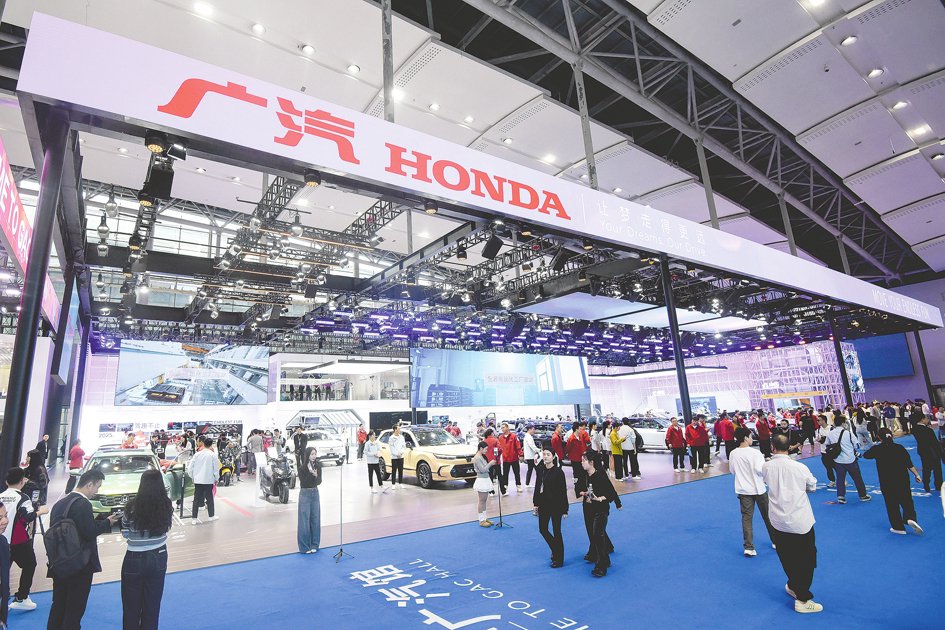
1月车市燃油车销量“抬头”多款车型价格降幅高于30%
Mei Ri Jing Ji Xin Wen· 2026-02-12 02:35
Core Viewpoint - The domestic automotive market is witnessing a shift as fuel vehicles are increasingly adopting intelligent features to compete with electric vehicles, driven by consumer demand for smart driving capabilities and the rising market share of electric vehicles [1][5]. Group 1: Market Trends - Consumers are showing a preference for fuel vehicles equipped with advanced intelligent configurations, leading to a notable change in purchasing behavior [1]. - The new Honda Fit, dubbed the "people's supercar," sold out its initial 3,000 units within 20 days, indicating a strong demand for competitively priced fuel vehicles [2]. - Many fuel vehicle models have seen price reductions of 30% to 40%, with some luxury models experiencing even greater discounts [2][3]. Group 2: Sales Performance - In January, fuel vehicle sales showed significant growth, with SAIC Group selling 242,000 units, a year-on-year increase of 19.19% [6]. - Geely's fuel vehicle sales reached 134,400 units in January, with over 100,000 units coming from the "Chinese Star" series [6]. - GAC Toyota also reported positive sales growth in January, with the Camry model achieving a 17% year-on-year increase [6]. Group 3: Strategic Initiatives - The "Oil-Electricity Co-Intelligence" strategy has been adopted by major automakers, aiming to enhance the competitiveness of fuel vehicles by integrating smart technologies [5][6]. - Companies like FAW-Volkswagen plan to launch multiple new models equipped with intelligent cockpit and driving assistance systems by 2026, showcasing the potential for fuel vehicles to be equally intelligent [6][7]. - The top five brands in the fuel vehicle market have increased their market share from 29% in 2020 to 37% in 2025, indicating a strengthening of leading brands in the sector [7].


800现金流ETF汇添富(563680)开盘跌0.30%
Xin Lang Cai Jing· 2026-02-12 01:37
声明:市场有风险,投资需谨慎。本文基于第三方数据库自动发布,不代表新浪财经观点,任何在本文 出现的信息均只作为参考,不构成个人投资建议。如有出入请以实际公告为准。如有疑问,请联系 biz@staff.sina.com.cn。 800现金流ETF汇添富(563680)业绩比较基准为中证800自由现金流指数收益率,管理人为汇添富基金 管理股份有限公司,基金经理为何丽竹,成立(2025-04-30)以来回报为33.75%,近一个月回报为 5.42%。 来源:新浪基金∞工作室 2月12日,800现金流ETF汇添富(563680)开盘跌0.30%,报1.337元。800现金流ETF汇添富(563680) 重仓股方面,中国海油开盘涨0.55%,上汽集团跌0.14%,格力电器跌0.21%,中远海控涨0.07%,牧原 股份跌0.48%,中国铝业跌0.45%,TCL科技跌0.21%,宝钢股份跌0.14%,长城汽车涨0.29%,正泰电器 涨0.13%。 ...
历史性时刻!出口乘用车中新能源占比首次超一半
Di Yi Cai Jing· 2026-02-12 01:03
Group 1 - In January 2026, China's automobile exports reached 681,000 units, marking a year-on-year increase of 44.9% [1] - Passenger car exports accounted for 589,000 units, with a year-on-year growth of 48.9%, while commercial vehicle exports were 93,000 units, up 23.6% [1] - The export of new energy vehicles (NEVs) significantly contributed to this growth, with 302,000 units exported, representing a year-on-year increase of 100% [1] Group 2 - The structure of NEV exports showed that pure electric vehicle exports were 202,000 units, doubling year-on-year, while plug-in hybrid vehicle exports reached 99,000 units, up 97.3% [1] - The shift in the export landscape indicates a historic change, with NEVs now dominating over traditional fuel vehicles in terms of export volume [1] - The report from the China Passenger Car Association highlighted that plug-in hybrid vehicles are becoming a new growth point for exports, particularly in the pickup segment [2] Group 3 - Among the top ten automobile exporters in January, nine companies reported positive growth, with Chery leading at 119,000 units, followed by BYD (100,000 units) and SAIC (97,000 units) [3] - The overall export volume for Chinese automobiles is projected to reach 8.32 million units in 2025, reflecting a year-on-year increase of 30% [3] - The growth is attributed to enhanced overseas market presence and brand investment by Chinese automakers, alongside improvements in the domestic supply chain [3] Group 4 - Recent trends indicate strong performance in automobile exports to regions such as Central and South America, Southeast Asia, and the Middle East, with expectations for continued growth as international market conditions stabilize [4]

历史性时刻!出口乘用车中,新能源占比首次超一半
Di Yi Cai Jing· 2026-02-12 00:48
Group 1 - In January, China's new energy vehicle (NEV) exports reached 302,000 units, a year-on-year increase of 100%, with new energy passenger car exports at 295,000 units, accounting for over 50% of total passenger car exports, marking a 111% increase year-on-year [1] - The overall automobile exports in January were 681,000 units, representing a year-on-year growth of 44.9%, with passenger car exports at 589,000 units (up 48.9%) and commercial vehicle exports at 93,000 units (up 23.6%) [1] - The export structure of NEVs shows that pure electric vehicle exports were 202,000 units (up 100%), while plug-in hybrid vehicle exports were 99,000 units (up 97.3%) [1] Group 2 - The export growth of plug-in hybrid vehicles has been significant, with expectations for 2025 indicating that plug-in hybrids and hybrids will become new growth points, particularly in the pickup segment [2] - Chinese plug-in hybrid vehicles are rapidly gaining market share due to technological advantages and cost competitiveness, especially in the European market where they face lower tariffs compared to pure electric vehicles [2] - Despite potential trade policy disruptions, the growth of Chinese automobile exports has shown resilience, with a projected total export of 8.32 million vehicles in 2025, reflecting a 30% year-on-year increase [3] Group 3 - In January, among the top ten vehicle exporters, nine companies reported positive growth, with Chery leading at 119,000 units, followed by BYD (100,000 units), SAIC (97,000 units), Geely (77,000 units), and Tesla (51,000 units) [3] - The Chinese automotive industry has seen a significant increase in export volume since 2021, with a strong focus on building overseas channels and brand investments [3] - The export performance has shifted towards regions like Central and South America and Europe, with strong growth expected as long as the international market environment remains stable [4]
众捷汽车:已经与全球新能源汽车龙头比亚迪、长城汽车、上汽集团等建立了直接的业务合作关系
Ge Long Hui· 2026-02-11 14:37
Core Viewpoint - The company, Zhongjie Automotive, has established significant relationships with major multinational automotive parts suppliers and is actively expanding its presence in the domestic new energy vehicle market [1] Group 1: Major Clients - The company's primary clients include well-known multinational Tier 1 automotive parts suppliers such as Mahle, Modine, Hanon, Marelli, and ContiTech [1] - The products supplied by the company cover a wide range of international automotive brands, including Mercedes-Benz, BMW, Audi, Porsche, Volkswagen, Skoda, Ferrari, Maserati, Fiat, Tesla, Rivian, Canoo, Ford, General Motors, Chrysler, Dodge, Renault, Citroën, Volvo, Jaguar, Land Rover, Toyota, Subaru, Honda, Nissan, Mazda, Suzuki, Hyundai, Kia, MAN, DAF, Scania, and Iveco [1] Group 2: Domestic Market Expansion - The company is actively expanding into the domestic new energy vehicle market and has established direct business cooperation with leading global new energy vehicle manufacturers such as BYD, Great Wall Motors, and SAIC Motor [1]

众捷汽车(301560.SZ):已经与全球新能源汽车龙头比亚迪、长城汽车、上汽集团等建立了直接的业务合作关系
Ge Long Hui· 2026-02-11 14:25
Core Viewpoint - The company, Zhongjie Automotive, has established itself as a key player in the automotive supply chain, serving major multinational Tier 1 suppliers and expanding its presence in the domestic new energy vehicle market [1] Client Base - The company's main clients include renowned multinational Tier 1 automotive parts suppliers such as Mahle, Modine, Hanon, Marelli, and ContiTech [1] - The product offerings cover a wide range of international automotive brands including Mercedes-Benz, BMW, Audi, Porsche, Volkswagen, Skoda, Ferrari, Maserati, Fiat, Tesla, Rivian, Canoo, Ford, General Motors, Chrysler, Dodge, Renault, Citroën, Volvo, Jaguar, Land Rover, Toyota, Subaru, Honda, Nissan, Mazda, Suzuki, Hyundai, Kia, MAN, DAF, Scania, and Iveco [1] Domestic Market Expansion - The company is actively expanding into the domestic new energy vehicle market and has established direct business partnerships with leading global electric vehicle manufacturers such as BYD, Great Wall Motors, and SAIC Motor [1]
新飞度遭“疯抢”背后:1月车市燃油车销量回暖
Mei Ri Jing Ji Xin Wen· 2026-02-11 14:01
Core Viewpoint - The domestic automotive market is witnessing a shift as fuel vehicles are increasingly adopting intelligent features to compete with electric vehicles, driven by consumer demand for smart driving capabilities and the rising market share of electric vehicles [1][10]. Group 1: Market Trends - Consumers are showing a preference for fuel vehicles equipped with advanced intelligent configurations, leading to a notable change in purchasing behavior [1]. - Sales personnel from a dealership reported a shift in customer interest, with fewer customers exclusively seeking electric models [3]. - The new Honda Fit, priced at 66,800 yuan, sold out its initial 3,000 units within 20 days, indicating strong demand for competitively priced fuel vehicles [4][5]. Group 2: Pricing Strategies - The resurgence of fuel vehicles is significantly driven by aggressive pricing strategies, with many models seeing price reductions of around 30% to 40% [7][9]. - The average discount for fuel vehicles in January reached 23.7%, a year-on-year increase of 1.8 percentage points, with 10 models experiencing price cuts [9]. Group 3: Intelligent Features - Fuel vehicles are increasingly incorporating advanced technologies such as driver assistance systems and smart cockpit features, aiming to shed the perception of being less intelligent than electric vehicles [10][11]. - Major automakers, including Volkswagen and Geely, are implementing the "oil-electric intelligence" strategy, showcasing that fuel vehicles can also be equipped with smart features [10]. Group 4: Sales Performance - In January 2026, fuel vehicle sales showed a significant increase, with SAIC Group selling 242,000 units, a year-on-year growth of 19.19% [12]. - Geely's fuel vehicle sales reached 134,400 units, with the "China Star" series contributing over 100,000 units to this figure [12]. - The market share of the top five fuel vehicle brands increased from 29% in 2020 to 37% in 2025, indicating a strengthening position for leading brands in the fuel vehicle segment [13].

1月车市销量同比下降3.2% 新能源汽车仅增长0.1%
Jing Ji Guan Cha Wang· 2026-02-11 13:44
2月11日,中国汽车工业协会发布2026年1月汽车行业运行数据。数据显示,1月汽车销售234.6万辆,环比下降28.3%,同比下降3.2%。其中,乘用车销售 198.8万辆,环比下降30.2%,同比下降6.8%。与上月相比,四大类乘用车品种销量均下降;与去年同期相比,SUV车型销量微增,其他三大类销量均下降。 另外,1月汽车出口延续良好增长态势,共出口68.1万辆,同比增长44.9%。其中,新能源汽车出口表现突出,出口30.2万辆,同比增长1倍,这主要得益于 新能源乘用车的增长。1月,新能源乘用车出口29.5万辆,同比增长1.1倍;新能源商用车出口0.6万辆,同比下降1.4%。 1月中国品牌乘用车市场占有率出现下降,本月共销售132.9万辆,同比下降8.9%,占乘用车销售总量的66.9%,该数值比去年同期降低1.5个百分点。 在主要外国品牌中,与上月相比,五大主要品牌销量均呈两位数下降;与去年同期相比,美系品牌销量实现两位数增长,其他四大主要品牌销量均有不同程 度下降。 从企业端来看,1月汽车销量排名前十位的企业(集团)共销售196.2万辆,占汽车销售总量的83.6%。在排名前十的企业中,与去年同期相比,上汽 ...
众捷汽车接待2家机构调研,包括睿远基金等
Jin Rong Jie· 2026-02-11 12:54
调研情况显示,众捷汽车在投资者调研中详细介绍了公司海外基地布局,包括在墨西哥、西班牙设立生 产基地,在美国、英国建立销售中心,并积极推进国际化布局,加强北美等海外市场的团队建设。 公司主要客户为马勒、摩丁、翰昂、马瑞利、康迪泰克等知名大型跨国一级汽车零部件供应商,产品覆 盖奔驰、宝马、奥迪、保时捷、特斯拉等众多国际品牌,同时积极拓展国内新能源整车市场,已与比亚 迪、长城汽车、上汽集团等建立直接业务合作关系。在液冷领域,公司主要产品为数据中心液冷芯板, 已成功拓展与全球热管理解决方案领导者Boyd宝德集团的合作。 天眼查资料显示,苏州众捷汽车零部件股份有限公司成立于2010年02月10日,是一家以从事汽车制造业 为主的企业。截至2026年01月09日,众捷汽车股东户数9614户,较上次减少84户,户均持股市值47.11 万元,户均持股数量1.26万股。 2026年02月11日,众捷汽车披露接待调研公告,公司于02月10日接待睿远基金等2家机构调研。 参与此次调研的睿远基金是一家以价值投资、研究驱动和长期投资风格为主的长期价值投资机构,聚焦 于权益投资和固定收益投资领域。截至目前,管理基金数量为5只,其中睿远成长 ...
Factbox-EU tariffs on imports of China-made EVs
Yahoo Finance· 2026-02-11 11:53
Group 1 - The European Commission has imposed additional duties on imported electric vehicles from China starting in 2024, but allows carmakers to negotiate tariff exemptions for specific models [1] - Volkswagen's Cupra brand received approval for its Tavascan SUV coupe to be exempt from import tariffs in exchange for a minimum price and annual quota model [1][8] - Chinese automakers are seeking similar tariff exemption deals for their electric vehicle models intended for the European market [2] Group 2 - The EU has reduced proposed final tariffs on China-made Tesla cars and slightly adjusted rates for other manufacturers following submissions during its anti-subsidy investigation [2] - The additional tariffs are in addition to the EU's standard 10% import duty on cars [2] - Specific countervailing duties have been set for various Chinese automakers, with rates such as 18.8% for Geely Group and 17% for BYD Auto [3][4]

