
中广核电力

Search documents
中广核电力(01816) - 执行董事兼总裁及授权代表退休、委任总裁、董事调任及核安全委员会的组成变...
2025-12-11 11:14
本公告由中國廣核電力股份有限公司(「本公司」)根據香港聯合交易所有限公司 (「香港聯交所」)證券上市規則(「上市規則」)第13.51(2)條作出。 執行董事兼總裁及授權代表退休 本公司董事(「董事」)會(「董事會」)於2025年12月11日接獲執行董事兼總裁高立 剛先生(「高先生」)遞交的書面辭呈。高先生因達退休年齡,向董事會辭去本公司 執行董事、董事會核安全委員會委員及總裁(「總裁」)職務,以及上市規則第3.05 條項下之本公司授權代表(「授權代表」)職務。 根據相關法律、法規、其他規範性文件和《中國廣核電力股份有限公司章程》 (「《公司章程》」)的規定,高先生的辭任自其辭職報告送達董事會時生效。自2025 年12月11日起,高先生不再擔任本公司任何職務。 香港交易及結算所有限公司及香港聯合交易所有限公司對本公告的內容概不負責,對其準確性 或完整性亦不發表任何聲明,並明確表示,概不對因本公告全部或任何部份內容而產生或因依 賴該等內容而引致的任何損失承擔任何責任。 CGN Power Co., Ltd.* 中國廣核電力股份有限公司 (在中華人民共和國註冊成立的股份有限公司) (股份代號:1816) 執行董事兼 ...
中广核电力(01816.HK)获中信证券资管增持2362万股
Ge Long Hui A P P· 2025-12-10 23:08
| 豪格序號 | 大股東/董事/最高行政人員名稱 作出披露的 買入 / 賣出或涉及的股 每股的平均價 | | | | 持有權益的股份數目 佔已發行的 有關事 | | | --- | --- | --- | --- | --- | --- | --- | | | 份數目 | 原因 | | | (請參閱上述*註解) 有投票權股 (日/月 | | | | | | | | 份百分比 | | | | | | | | 96 ) | | | CS20251210E00015 | 中信证券资产管理有限公司 | 1101(L) | 23,620,000(L) | HKD 3.0178 | 1.908.550.000(L) | 17.10(L)09/12/ | | 股份代號: | 01816 | | --- | --- | | 上市法國名稱: | 中國廣核電力股份有限公司 - H股 | | 日期 (日 / 月 / 年): | 11/11/2025 - 11/12/2025 | 格隆汇12月11日丨根据联交所最新权益披露资料显示,2025年12月9日,中广核电力(01816.HK)获中信证券资产管理有限公司在场内以每股均价3.01 ...



西子洁能:公司已取得民用核二三级制造许可证
Zheng Quan Ri Bao· 2025-12-10 11:38
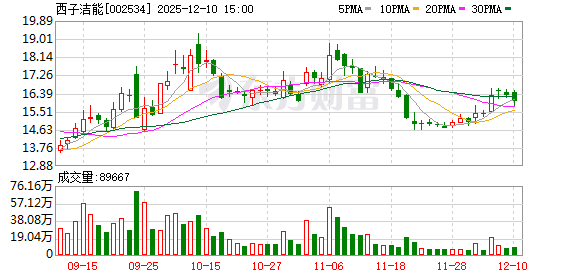
证券日报网讯 12月10日,西子洁能在互动平台回答投资者提问时表示,公司在核电领域已有20多年的 深耕与发展,已取得民用核二三级制造许可证。同时,公司具有丰富的项目经验,与中广核集团等建立 了长期战略合作,产品质量可靠。近年来,公司聚焦核岛关键设备的研发生产制造,积极拓展核电设备 国内外合作,加快向三代核电、四代核电,积极对接国内可控核聚变实验项目争取切入机会。公司拥有 核级制造车间,具备成型工艺、机械加工、核级焊接、核级无损检测、热处理及水压试验等完整的核级 设备制造能力。目前,公司已具备核聚变装置冷却水系统三级回路设备的全流程供货能力。未来,公司 将立足现有技术优势,积极拓展业务边界,力争承接二级回路设备供货项目,并同步拓展杜瓦结构的生 产制造能力,为我国核聚变工程提供更全面、可靠、高质量的装备支撑。 (文章来源:证券日报) ...

中信证券资管增持中广核电力2362万股 每股作价约3.02港元
Zhi Tong Cai Jing· 2025-12-10 11:30
香港联交所最新资料显示,12月9日,中信证券资产管理有限公司增持中广核电力(01816)2362万股,每 股作价3.0178港元,总金额约为7128.04万港元。增持后最新持股数目约为19.09亿股,最新持股比例为 17.10%。 ...
中信证券资管增持中广核电力(01816)2362万股 每股作价约3.02港元
智通财经网· 2025-12-10 11:21
智通财经APP获悉,香港联交所最新资料显示,12月9日,中信证券资产管理有限公司增持中广核电力 (01816)2362万股,每股作价3.0178港元,总金额约为7128.04万港元。增持后最新持股数目约为19.09亿 股,最新持股比例为17.10%。 ...
电投产融即将问鼎“核电第三极”
Zhong Guo Dian Li Bao· 2025-12-10 09:55
Core Viewpoint - The restructuring of State Power Investment Corporation's financial and nuclear power assets marks a significant step towards transforming into a focused nuclear power platform, aligning with national energy transition goals [1][3][6]. Group 1: Restructuring Details - State Power Investment Corporation plans to exchange its 100% stake in State Power Investment Capital Holdings for a 100% stake in State Power Nuclear Energy, valued at 553.94 billion yuan, with a cash difference of 402.85 billion yuan to be paid through the issuance of shares at 3.36 yuan per share [3][4]. - The total number of shares to be issued is 11.99 billion, with State Power Nuclear receiving 7.58 billion shares and China Life Insurance receiving 4.41 billion shares [3][4]. - The company will also raise up to 5 billion yuan from no more than 35 specific investors to fund the construction of units 3 and 4 of the Shandong Haiyang Nuclear Power Station [3]. Group 2: Strategic Focus Shift - The restructuring signifies a shift from a dual business model of "energy + finance" to a clear focus on nuclear power integration, responding to national clean energy development strategies [6][10]. - The decision to divest financial operations and concentrate on nuclear power is driven by both strategic positioning and regulatory pressures, enhancing operational efficiency within the nuclear sector [6][10]. - Performance compensation agreements have been established, with commitments for net profits of no less than 3.375 billion yuan, 3 billion yuan, and 3.587 billion yuan for the years 2025 to 2027, ensuring shareholder interests are protected [7]. Group 3: Nuclear Power Development - As of September 2023, State Power Investment Corporation operates and is constructing eight nuclear power units, with a total installed capacity of approximately 18.81 million kilowatts [9]. - The Shandong Haiyang Nuclear Power Station is a key project, with units 1 and 2 having generated over 130 billion kilowatt-hours, while units 3 and 4 are in the installation phase and expected to be operational by 2027 [9]. - The restructuring is expected to facilitate the aggregation of quality resources towards advantageous industries, further supporting the company's commitment to carbon neutrality goals [9][10].

东吴证券晨会纪要-20251210
Soochow Securities· 2025-12-10 00:43
Macro Strategy - The report highlights a shift in policy focus from "preventing and mitigating risks in key areas and external shocks" to "better coordinating domestic economic work and international economic struggles," indicating a more proactive approach to external economic conditions [1][15] - There is a transition from stabilizing asset prices to stabilizing microeconomic entities, emphasizing the importance of employment, enterprises, markets, and expectations over real estate and stock markets [2][15] - The policy language has evolved from "extraordinary counter-cyclical adjustments" to "increasing counter-cyclical and cross-cyclical adjustment efforts," reflecting a balance between short-term stimulus and long-term economic structure considerations [2][15] Industry Insights - The food and beverage industry strategy for 2026 emphasizes stock selection based on certainty, focusing on growth and turnaround opportunities, particularly in leading snack companies and quality retail chains [9] - The report suggests a keen interest in the health products sector, driven by an aging population and expanding young consumer demographics, with a focus on innovation and iteration in product offerings [9] - In the phosphoric chemical industry, companies with phosphate iron and phosphate rock resources are recommended, highlighting the significant cost contribution of phosphate sources to phosphate iron production [10] - The non-ferrous metals sector is experiencing price increases, with copper prices rising due to supply tightening and demand fluctuations, while aluminum prices are also on the rise amid stable production [11][12]
高盛调研中国核电产业链:装机前景向好,技术与出海成核心看点
Zhi Tong Cai Jing· 2025-12-09 13:46
Core Insights - The core conclusion from Goldman Sachs' virtual research on China's nuclear power industry is that the installation trajectory for nuclear power is becoming increasingly positive, while the outlook for the solar power sector appears relatively weak. Additionally, four key opportunities in the nuclear power field have been identified [1]. Group 1: Installation Growth - The installed capacity of nuclear power in China is expected to double within the next decade, driven by favorable policy directions. The target for nuclear power's share of electricity generation is set to increase from 4% in 2024 to 10% by 2035, indicating a high double-digit compound growth rate in nuclear power generation from 2024 to 2035. This corresponds to an annual new installation capacity of 8-10 GW, compared to the 1-4 GW annual average from 2019 to 2024, marking a significant increase [2]. Group 2: Technological Development - The future technological roadmap for China's nuclear power over the next thirty years has been clarified, with different generations of technology playing distinct roles in achieving carbon neutrality goals. The three main technologies include: 1. The third-generation large reactor, Hualong One, which is crucial for meeting the 2035 nuclear power targets, with 41 units approved and 7 already operational. Each unit has an annual generation capacity exceeding 10 billion kWh and a design life of 60 years, extendable to 80 years [3]. 2. The third-generation small modular reactor, Linglong One, expected to be operational by 2026, which, despite higher capital costs, offers multi-purpose capabilities and an annual generation capacity exceeding 1 billion kWh [3]. 3. Fourth-generation reactors, including high-temperature gas-cooled reactors and molten salt reactors, which aim to meet high-temperature energy demands and reduce reliance on imported uranium [3][4]. Group 3: International Expansion - China's nuclear power sector possesses significant advantages in international markets, including production capacity, cost, and supply chain stability. The domestic annual capacity for nuclear reactors is estimated at 12 units, while domestic demand is only 8-10 units, allowing for export potential. The market strategy involves promoting Hualong One technology in emerging markets along the Belt and Road Initiative and targeting developed markets with Linglong One technology [5][6]. Group 4: Profitability Disparities - There will be notable differences in profitability across the nuclear power industry chain. Downstream operators like CGN Power and China National Nuclear Power expect that, despite growth in installed capacity, their profit growth will lag behind revenue growth due to declining grid electricity prices resulting from market reforms. In contrast, upstream supply chain companies are anticipated to have higher profit elasticity due to high entry barriers in the nuclear sector, with potential for increased order volumes and profitability [6].

江苏广东发布2026年电力市场交易通知,攀西特高压交流工程核准 | 投研报告
Zhong Guo Neng Yuan Wang· 2025-12-09 04:02
Core Viewpoint - The recent report from Dongwu Securities highlights the upcoming electricity market trading arrangements in Jiangsu and Guangdong for 2026, along with the approval of the Panzhixi High Voltage AC Project to enhance power supply in the region [1] Group 1: Electricity Market Trading - Jiangsu and Guangdong have released notifications for the 2026 electricity market trading, detailing the annual trading arrangements [1] - In Guangdong, the annual trading will occur in phases from December 5 to December 22, including bilateral negotiations, competitive trading, and green electricity trading [1] - Jiangsu's annual negotiation trading is scheduled for December 12, 15, and 16, with auction trading on December 11 and 17 [1] Group 2: Infrastructure Development - The Panzhixi High Voltage AC Project has been approved to meet the power transmission needs of the Panzhixi clean energy base and to optimize the 500 kV grid structure in southern Sichuan [1] - The total investment for the project is approximately 2.32 billion yuan, with 463.53 million yuan as capital, accounting for 20% of the total investment [1] Group 3: Industry Data Tracking - The national average electricity purchase price decreased by 2% year-on-year and increased by 2.8% month-on-month as of November 2025 [2] - The price of thermal coal at Qinhuangdao was 785 yuan per ton, down 31 yuan week-on-week as of December 5, 2025 [2] - The total electricity consumption from January to October 2025 reached 8.62 trillion kWh, a year-on-year increase of 5.1% [2] Group 4: Investment Recommendations - The report suggests focusing on renewable energy companies like Longyuan Power and China Three Gorges Energy, as the market conditions for green electricity are improving [3] - For thermal power, companies like Huaneng International and Huadian International are recommended due to their reliability and flexibility [3] - Hydropower companies such as Yangtze Power are highlighted for their low costs and strong cash flow [3] - Nuclear power companies like China National Nuclear Power and China General Nuclear Power are recommended for their growth potential and increasing dividends [3] - Companies involved in solar assets and charging stations are expected to see a revaluation of their assets [3]
我国首台(套)热耦合海水制氢装置稳定运行超500小时
Ke Ji Ri Bao· 2025-12-09 02:19
Core Insights - The first 110 kW seawater direct electrolysis hydrogen production system in China has passed expert review, marking a significant breakthrough in the engineering application of this global strategic technology [1][2] - The system has achieved over 500 hours of continuous stable operation, demonstrating its reliability and effectiveness [1][2] Group 1: Technological Advancements - The system addresses critical technical bottlenecks in seawater electrolysis, such as calcium and magnesium deposition, chloride ion corrosion, and short lifespan of equipment [2] - It utilizes low-grade waste heat from nearby industrial processes, allowing for efficient and stable conversion of seawater into high-purity green hydrogen [1][2] Group 2: Economic and Environmental Impact - The project enables the direct use of natural seawater for hydrogen production without complex pretreatment, significantly reducing hydrogen production costs and engineering complexity [2] - It supports the development of a distributed energy network that captures waste heat and produces green hydrogen locally, aligning with China's coastal industrial layout [2][3] Group 3: Future Directions - The project team plans to accelerate the development of new technologies for seawater electrolysis, contributing to the transformation of traditional industries and supporting China's dual carbon goals [3]