
苏州银行

Search documents
A股银行股普涨,建设银行涨超2%
Ge Long Hui· 2025-12-18 05:24
Core Viewpoint - The A-share market has seen a broad increase in bank stocks, indicating positive market sentiment towards the banking sector [1] Group 1: Stock Performance - Suzhou Bank, Xiamen Bank, Shanghai Bank, Hangzhou Bank, Jiangyin Bank, China Construction Bank, and Chongqing Rural Commercial Bank all experienced gains exceeding 2% [1] - Zhangjiagang Bank, Nanjing Bank, Jiangsu Bank, Qilu Bank, Changsha Bank, Qingdao Bank, and Chongqing Bank saw increases close to 2% [1]

ETF盘中资讯 | 中金公司:2026年银行迎来黄金配置期!银行盘中发力,建行涨超2%,规模最大银行ETF(512800)涨近1%
Sou Hu Cai Jing· 2025-12-18 04:11
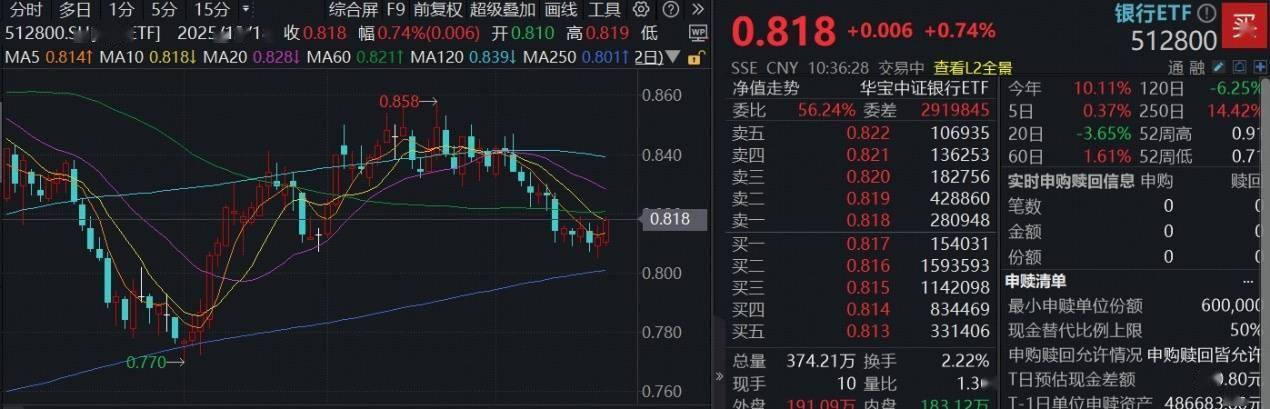
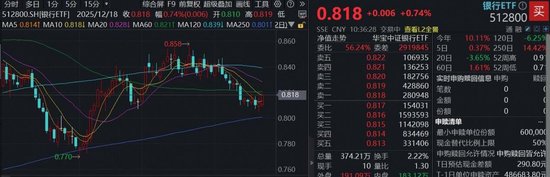
Group 1 - The banking sector showed strength on December 18, with 39 out of 42 bank stocks rising, led by China Construction Bank which increased by over 2% [1] - The largest bank ETF (512800) saw its price rise nearly 1% during trading, currently up 0.74% [1] Group 2 - The Financial Supervision Administration announced a reduction in risk factors for insurance companies holding stocks from the CSI 300 and the CSI Low Volatility 100 indices, from 0.3 to 0.27 for holdings over three years [3] - This adjustment aims to enhance the long-term investment management capabilities of insurance companies and is expected to increase capital allocation to the A-share market, particularly in the banking sector, with a potential inflow of up to 214.61 billion yuan [3] - According to a report by China International Capital Corporation, the banking sector is transitioning from a "cyclical game" to a "configuration dividend" phase, with high dividend investment becoming a core strategy [3] - The report forecasts that the valuation of the banking sector could increase by 15%-20% by 2026, suggesting a favorable investment window at the end of the year [3] Group 3 - The bank ETF (512800) and its linked funds are designed to track the performance of the CSI Bank Index, which includes 42 listed banks in A-shares, making it an efficient investment tool for the banking sector [4] - The bank ETF has a high trading volume, with an average daily turnover exceeding 800 million yuan this year, making it the largest and most liquid among the 10 bank ETFs in A-shares [4]


中金公司:2026年银行迎来黄金配置期!银行盘中发力,建行涨超2%,规模最大银行ETF(512800)涨近1%
Xin Lang Cai Jing· 2025-12-18 02:55
Core Viewpoint - The banking sector is experiencing a positive trend, with significant gains in bank stocks and the largest bank ETF showing an increase, driven by regulatory changes and a shift towards long-term investment strategies [1][3][5]. Group 1: Market Performance - As of December 18, 42 bank stocks saw 39 increase and 3 remain flat, with China Construction Bank leading with over 2% gain [1][5]. - The largest bank ETF (512800) reached a peak increase of nearly 1%, currently up 0.74% [1][5]. Group 2: Regulatory Changes - The Financial Supervision Administration announced a reduction in risk factors for insurance companies holding stocks from the CSI 300 and the CSI Low Volatility 100 indices, from 0.3 to 0.27 for holdings over three years [3][7]. - This adjustment aims to enhance the long-term investment management capabilities of insurance companies and is expected to increase capital flow into the A-share market, particularly in the banking sector [3][7]. Group 3: Investment Outlook - According to Galaxy Securities, if 30% of insurance premiums are invested in A-shares, the potential inflow into the banking sector could reach 214.61 billion [3][7]. - CICC's latest report indicates that the banking sector is transitioning from "cyclical speculation" to a "configuration dividend" phase, with high dividend investment becoming a core strategy [3][7]. - The valuation of the banking sector is projected to increase by 15%-20% by 2026, suggesting a favorable investment window at the end of the year [3][7]. Group 4: ETF Characteristics - The bank ETF (512800) passively tracks the CSI Bank Index, encompassing 42 listed banks in A-shares, making it an efficient investment tool for the banking sector [8]. - The ETF has a high trading volume, with an average daily turnover exceeding 800 million, making it the largest and most liquid among the 10 bank ETFs in A-shares [8].
苏州银行涨2.11%,成交额2.24亿元,主力资金净流出923.83万元
Xin Lang Cai Jing· 2025-12-18 02:55
Group 1 - The core viewpoint of the news is that Suzhou Bank's stock has shown a modest increase, with a year-to-date rise of 7.01% and a recent uptick of 2.11% in a single trading session [1] - As of December 18, Suzhou Bank's stock price is reported at 8.24 yuan per share, with a total market capitalization of 36.838 billion yuan [1] - The bank's main business areas include corporate banking, personal banking, funding operations, and other services, and it is categorized under the banking sector as a city commercial bank [1] Group 2 - For the fiscal year ending September 2025, Suzhou Bank achieved operating revenue of 9.477 billion yuan, reflecting a year-on-year growth of 2.02%, and a net profit attributable to shareholders of 4.477 billion yuan, which is a 7.12% increase compared to the previous year [1] - The bank has distributed a total of 7.626 billion yuan in dividends since its A-share listing, with 5.226 billion yuan paid out over the last three years [2] - As of September 30, 2025, the top ten circulating shareholders of Suzhou Bank include Hong Kong Central Clearing Limited and Southern CSI 500 ETF, with both showing a decrease in shareholding compared to the previous period [2]
上市银行中期分红进入高峰期,银行ETF指数(512730)中长期配置价值凸显
Xin Lang Cai Jing· 2025-12-18 02:41
Group 1 - The China Banking Index (399986) increased by 0.73% as of December 18, 2025, with notable gains from major banks such as China Construction Bank (up 2.24%) and Suzhou Bank (up 1.73%) [1] - The Bank ETF Index (512730) rose by 0.60%, reaching a latest price of 1.67 yuan, and has accumulated a 14.05% increase over the past year as of December 17, 2025 [1] - Six state-owned banks are expected to distribute over 200 billion yuan in cash dividends, indicating stable profitability and capital resilience among listed banks [1] Group 2 - The Bank ETF Index closely tracks the China Banking Index and serves as an analytical tool for investors, categorizing the sample into various industry levels [2] - As of November 28, 2025, the top ten weighted stocks in the China Banking Index accounted for 65.3% of the index, including major banks like China Merchants Bank and Industrial and Commercial Bank of China [2]

锚定2026年!这些银行,提前布局!
券商中国· 2025-12-17 23:34
Core Viewpoint - Commercial banks are proactively preparing for the 2026 credit season by focusing on project reserves and customer management, indicating a strategic shift to enhance their operational foundations in a complex environment [1][2][3]. Group 1: Credit Strategy and Project Preparation - Several listed banks have begun to lay out their credit strategies for 2026, with some starting as early as the second half of 2025 to ensure a robust project reserve [2][3]. - Banks are conducting investor surveys to discuss their "early bird" strategies, credit focus areas, and measures to manage net interest margins and funding costs [3][4]. - Suzhou Bank and Jiangsu Bank have initiated project reserves and are aligning their credit strategies with regional economic transformations and key sectors [3][4]. Group 2: Net Interest Margin and Profitability Outlook - Analysts expect a positive trend in net interest margins for 2026, with many banks indicating that the pressure on margins is likely to ease, leading to a recovery in net interest income [2][6][7]. - Institutions like Ping An Securities predict that net interest income growth will rise to 4% due to improved pricing dynamics and reduced funding costs [6]. - The overall financial performance of listed banks is anticipated to surpass that of 2025, driven by a combination of interest margin stabilization and improved non-interest income [6][7]. Group 3: Sectoral Focus and Competitive Landscape - The "14th Five-Year Plan" is expected to guide banks towards focusing on manufacturing, technological innovation, and green finance, with a significant emphasis on digital infrastructure and sustainable energy [7][8]. - There is a notable divergence in the competitive landscape, with state-owned banks benefiting from their scale and lower funding costs, while joint-stock banks face increasing pressure from both state-owned and city commercial banks [8].




斥资2100万元,浙商银行高管的超额增持
Hua Er Jie Jian Wen· 2025-12-17 13:57
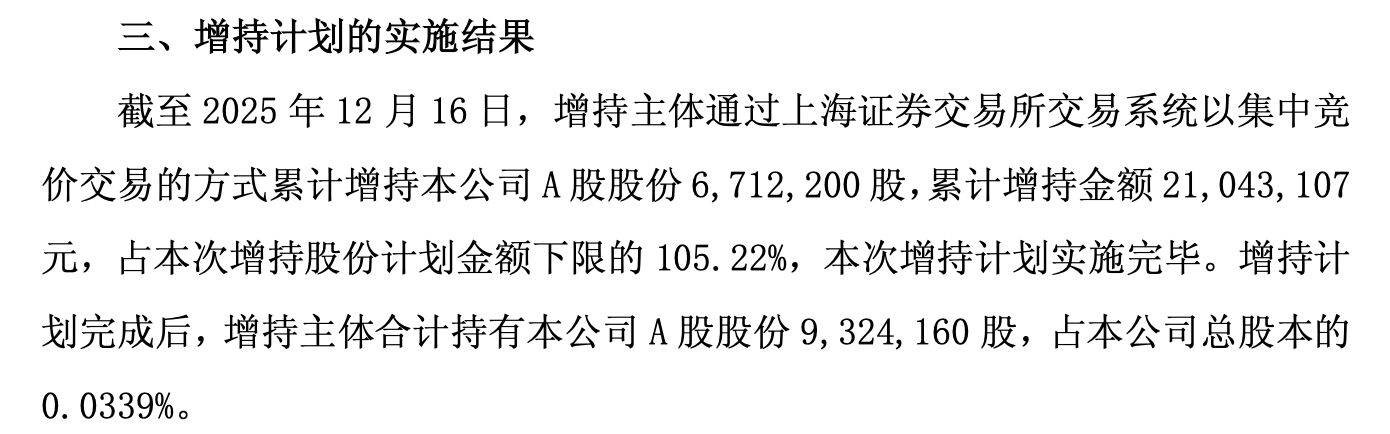
Core Viewpoint - Zhejiang Commercial Bank's management team has exceeded its share buyback plan, indicating confidence in the company's value and future prospects amidst challenging performance conditions [1][3]. Group 1: Management Actions - As of the previous day's close, the bank's directors and supervisors have cumulatively increased their holdings by 6.7122 million A-shares, amounting to 21.0431 million yuan, which is 105.22% of the planned minimum amount [1]. - The management team had previously announced a minimum buyback amount of 20 million yuan in early April [1]. Group 2: Financial Performance - In the first three quarters of 2023, the bank experienced a decline in revenue and profit by 6.78% and 9.59%, respectively, ranking 41st among 42 A-share banks [3]. - The bank's revenue and net profit figures from 2015 to 2018 show a trend of growth, but recent performance indicates a shift due to external pressures [4][6]. Group 3: Strategic Direction - The management has stated that the overall performance aligns with the established operational strategy of consolidating results, solidifying foundations, and optimizing structures [6]. - The new president, Chen Haiqiang, emphasized a shift away from pursuing rapid scale growth and short-term profits, focusing instead on long-term strategic decisions [6][7]. Group 4: Market Context - The bank's performance challenges are attributed to a declining net interest margin and fluctuations in the bond market, with management actively addressing these issues [6]. - Despite the bank's strategic shift, it faces intense competition from regional peers, which have shown higher growth rates in net profit [7].

苏州举办跨境人民币创新实践对接会赋能中阿园区建设
Su Zhou Ri Bao· 2025-12-17 00:36
Core Insights - The event "Gathering Financial Resources to Nourish the China-Arab Park" was held to promote high-quality development of Jiangsu's overseas cooperation parks and enhance international competitiveness [1][2] - A total of 21 enterprises signed cooperation agreements with over ten financial institutions, covering key industries such as high-end manufacturing, new energy, new materials, and digital technology [2] - The People's Bank of Suzhou has implemented various measures to enhance cross-border RMB operations, achieving significant results, including a cumulative cross-border RMB settlement volume of 11.2 trillion yuan, a year-on-year increase of 14.89% [3] Group 1 - The event aimed to deepen financial services and empower the development of the China-Arab demonstration park [1] - Financial institutions introduced cross-border financial products and services focused on China-Arab cooperation, providing diversified solutions for enterprises [2] - The People's Bank of Suzhou has conducted extensive outreach, visiting over 1,100 enterprises and holding more than 50 promotional events for cross-border RMB policies [3] Group 2 - The event facilitated cooperation consensus and multi-party collaboration, further promoting cross-border RMB business innovation [2] - The People's Bank of Suzhou has enhanced the transaction banking capabilities of corporate banks and improved cross-border settlement efficiency [3] - The initiative aims to inject more "Suzhou momentum" into the internationalization of the RMB, particularly in the Middle East and countries involved in the Belt and Road Initiative [4]
寻找科技金融“新密钥”:江苏金融创新给出科创企业融资N种解法
Mei Ri Jing Ji Xin Wen· 2025-12-16 12:23
Core Insights - The article discusses the challenges and innovations in financing technology-driven enterprises, particularly in Jiangsu Province, where traditional credit models struggle to meet the unique needs of these companies [1][4]. Group 1: Innovation in Financing - Jiangsu Province is leading in regional innovation capabilities, moving away from traditional collateral-based lending to a system using "Su Chuang Points" to evaluate innovation [2][4]. - The "Su Chuang Points Loan" product has been developed to assist enterprises in their growth, particularly in the biomedicine sector, which has high funding demands and long development cycles [3][11]. Group 2: Financial Products and Support - Since its establishment in December 2024, the Nanjing Biomedicine Sub-center has facilitated project financing totaling 225 million yuan, collaborating with banks to create tailored credit products for university research projects [3]. - By the end of Q3 2025, nearly 40,000 enterprises were classified as "priority support" or "recommended support," with a loan balance of 381.2 billion yuan under the "Su Chuang Points Loan" program [5]. Group 3: Digital Financial Innovations - Digital financial tools are enhancing the capabilities of technology finance, with banks creating comprehensive profiles and scoring systems for enterprises based on their innovation capabilities [6][7]. - The China Bank Jiangsu Branch has developed a digital financial platform that provides real-time insights into industry chains and pre-approval credit limits for technology enterprises [7]. Group 4: Policy Support and Collaboration - The People's Bank of China is working with the Jiangsu Provincial Science and Technology Department to introduce special support policies for technology finance, addressing the mismatch between traditional credit models and the needs of tech enterprises [4][8]. - The "Su Chuang Rong" product has supported technology SMEs with loans totaling 397.8 billion yuan by the end of Q3 2025, demonstrating the effectiveness of policy-driven financial support [8]. Group 5: Tailored Services for Startups - Local banks are focusing on small and micro enterprises, emphasizing non-credit services such as equity financing and resource matching to better meet the needs of early-stage technology companies [9][10]. - The establishment of specialized banking teams with expertise in finance, industry, and risk management is crucial for effectively serving technology enterprises [9]. Group 6: Comprehensive Financial Service Systems - A comprehensive financial service system has been established in Suzhou, integrating digital credit platforms and specialized financial products to support innovation and technology-driven enterprises [13][14]. - The "Innovation Index" has been developed to help financial institutions better understand and support the operational needs of innovative companies [13].
2025年金融机构不良处置提速:多渠道协同筑牢资产质量防线
Jin Rong Jie· 2025-12-16 09:27
Core Insights - The transfer of non-performing loans (NPLs) is gaining momentum, becoming a crucial strategy for financial institutions to mitigate asset risks by 2025 [1][2] - The pace of asset disposal has accelerated significantly in 2025, with both the scale and frequency of disposals showing marked increases [2][4] - Consumer finance institutions are actively participating in the NPL market, contributing to the overall asset disposal efforts [3][4] Group 1: NPL Transfer Activities - The Silver Transfer Center reported nearly 60 NPL transfer announcements within three days, with major banks like China Construction Bank and Postal Savings Bank participating [1] - In the first quarter of 2025, the batch transfer of personal NPLs reached 37.04 billion yuan, a staggering increase of 761.4% year-on-year, with personal consumption loans making up over 70% of this figure [2] - Several banks, including Ping An Bank and Zhongyuan Bank, have initiated significant NPL transfer projects, with outstanding principal and interest amounts reaching 762 million yuan and 522 million yuan respectively [2] Group 2: Market Dynamics and Challenges - The pressure on asset quality is evident, with rising non-performing loan ratios among various banks, such as Chongqing Bank's ratio climbing to 6.23% [4] - The financial environment, characterized by macroeconomic fluctuations, is impacting the repayment capabilities of individuals and businesses, leading to increased NPLs [4] - The Silver Transfer Center's report indicates that the pressure for NPL disposal will persist throughout 2025 [4] Group 3: Regulatory and Technological Support - Regulatory policies are providing robust support for NPL disposal efforts, with calls for increased asset disposal and capital replenishment [5] - Financial institutions are leveraging technology to enhance risk management and improve the efficiency of NPL disposals, with initiatives like "smart disposal" platforms being developed [5][6] - Institutions like Agricultural Bank of China and China Bank are emphasizing digital transformation to strengthen risk control and reduce new NPLs [5]

