陕西煤业

Search documents
华夏红利量化选股股票A:2025年第四季度利润21.08万元 净值增长率2.47%
Sou Hu Cai Jing· 2026-01-23 01:29
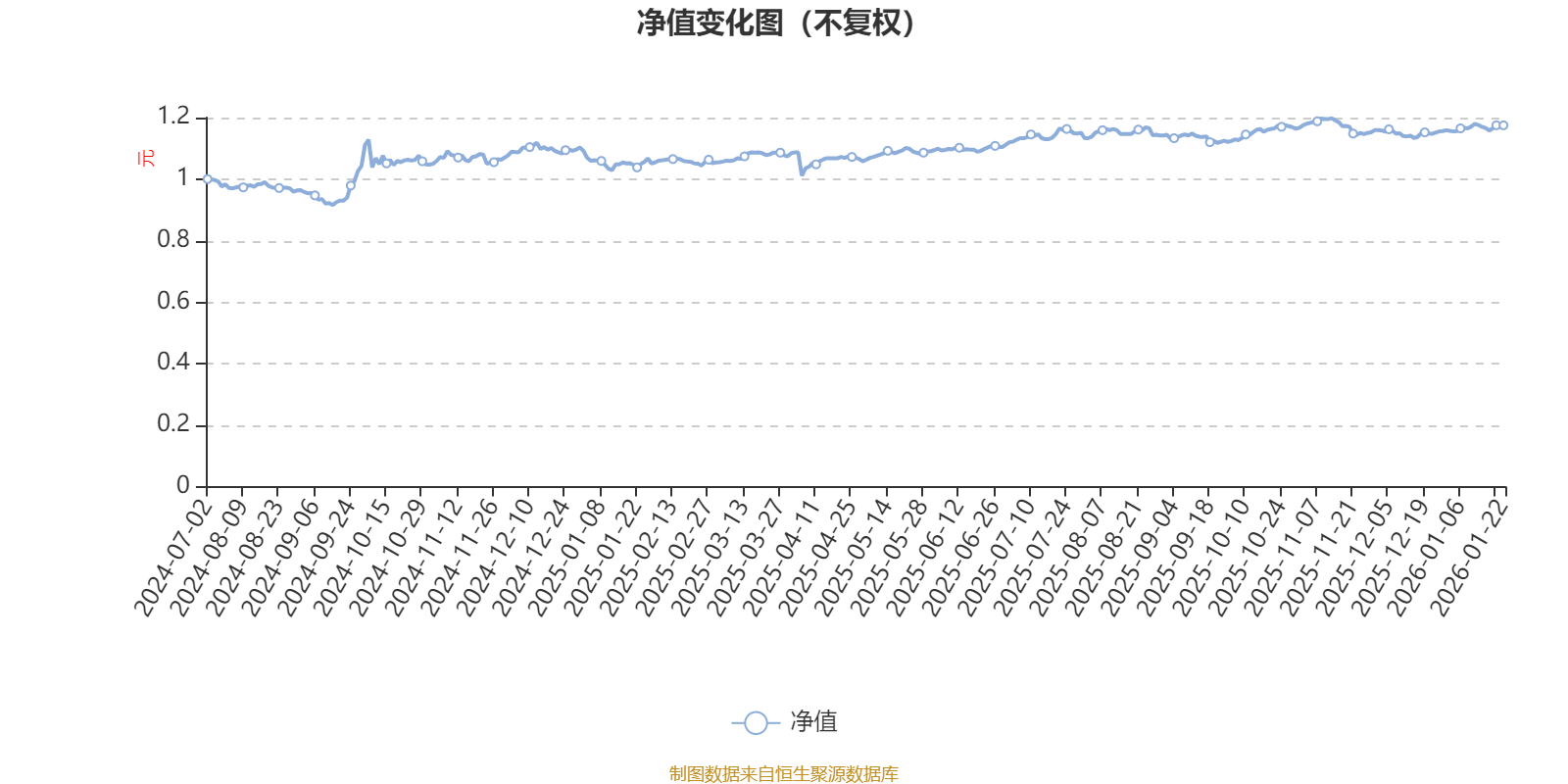
通过所选区间该基金净值增长率分位图,可以观察该基金与同类基金业绩比较情况。图为坐标原点到区间内某时点的净值增长率在同类基金中的分位数。 AI基金华夏红利量化选股股票A(021570)披露2025年四季报,第四季度基金利润21.08万元,加权平均基金份额本期利润0.0185元。报告期内,基金净值增 长率为2.47%,截至四季度末,基金规模为1358.84万元。 该基金属于标准股票型基金。截至1月22日,单位净值为1.175元。基金经理是孙然晔,目前管理9只基金。其中,截至1月22日,华夏创业板综合ETF近一年 复权单位净值增长率最高,达50.28%;华夏鼎淳债券A最低,为3.06%。 基金管理人在四季报中表示,四季度,A 股市场企稳,结构性行情明显。行业间分化较大:通信、石油石化、有色金属等行业表现相对较好,而房地产、传 媒、计算机等行业表现较差。红利类权益资产整体走势相对平淡,与市场涨幅相当,基金持仓继续保持红利类资产均衡配置,期间量化策略整体表现较为稳 定。 截至1月22日,华夏红利量化选股股票A近三个月复权单位净值增长率为0.82%,位于同类可比基金106/121;近半年复权单位净值增长率为0.86%,位 ...

泓德红利优选混合(LOF)A:2025年第四季度利润249.87万元 净值增长率3.66%
Sou Hu Cai Jing· 2026-01-22 13:41
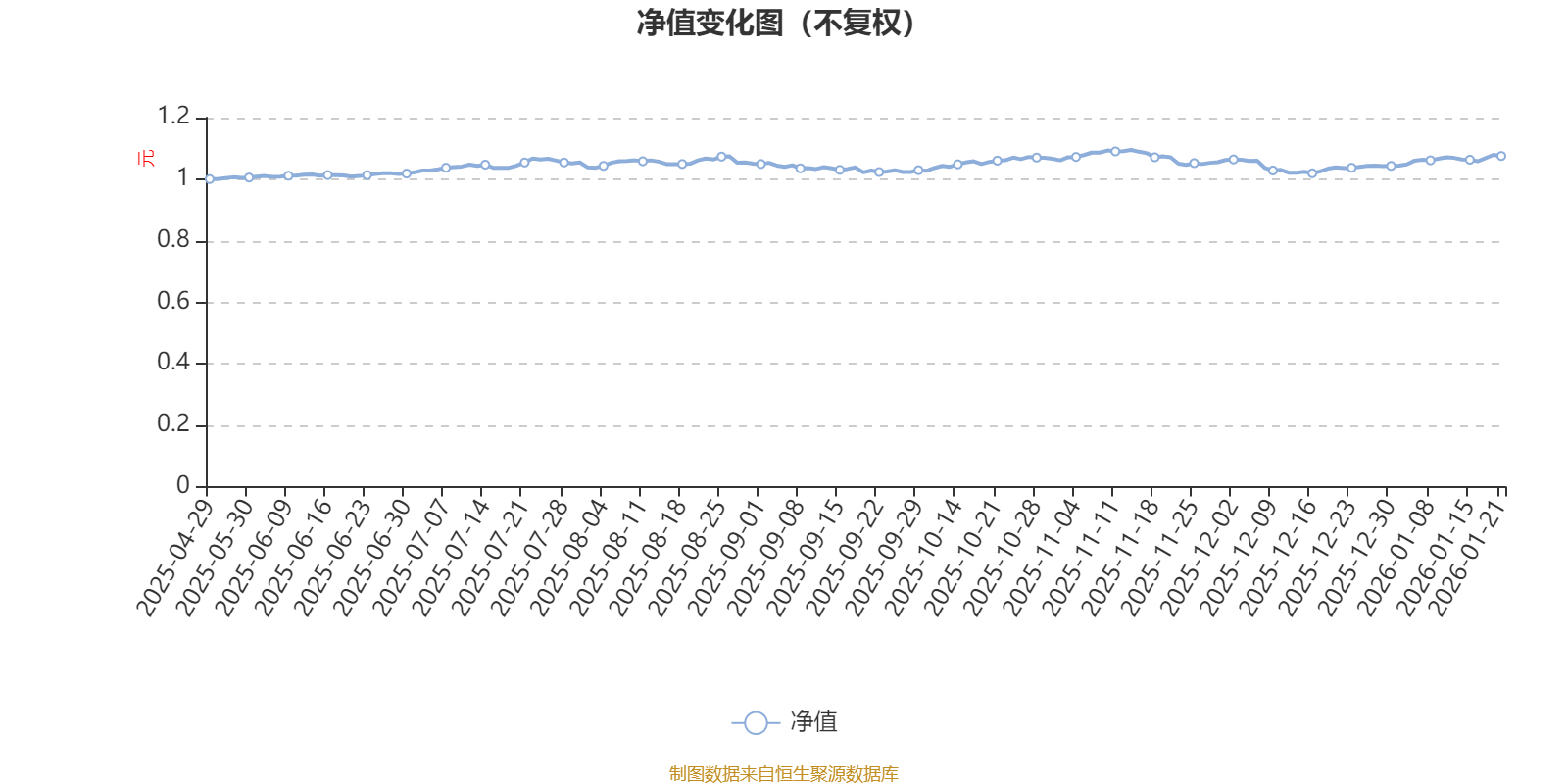
Core Viewpoint - The AI Fund Hongde Dividend Preferred Mixed (LOF) A (501227) reported a profit of 2.4987 million yuan for Q4 2025, with a weighted average profit per fund share of 0.0155 yuan. The fund's net value growth rate was 3.66%, and the fund size reached 206 million yuan by the end of Q4 2025. The fund manager anticipates a continued structural performance in the A-share market driven by technological innovation and long-term capital inflows, focusing on sectors with high growth and performance improvement [3][11]. Fund Performance - As of January 21, the unit net value was 1.075 yuan. The fund's three-month cumulative net value growth rate was 3.30%, ranking 507 out of 621 comparable funds, while the six-month growth rate was 5.90%, ranking 563 out of 621 [3]. - The fund's Sharpe ratio since inception was 0.1791 as of December 31 [4]. - The maximum drawdown since inception was 5.15%, occurring in Q4 2025 [7]. Investment Strategy - The fund maintains an average stock position of 71.83% since inception, compared to the peer average of 85.83%. The highest stock position reached 90.44% at the end of 2025, while the lowest was 51.24% at mid-2025 [10]. - The fund's top ten holdings include Jizhong Energy, Sichuan Road and Bridge, Hu Nong Commercial Bank, Shangfeng Cement, Yuntianhua, Shanghai Bank, Yunnan Agricultural Commercial Bank, Shaanxi Coal and Chemical Industry, COSCO Shipping Holdings, and Yanzhou Coal Mining [14].
强势股追踪 主力资金连续5日净流入88股
Zheng Quan Shi Bao Wang· 2026-01-22 09:44
Core Viewpoint - The report highlights the significant inflow of main capital into various stocks, with specific companies showing remarkable performance in terms of net capital inflow and stock price changes [1][2]. Group 1: Main Capital Inflow - A total of 88 stocks have experienced a net inflow of main capital for five consecutive days or more, indicating strong investor interest [1]. - Hangzhou Bank leads with 16 consecutive days of net inflow, followed by Yunnan Baiyao with 14 days [1]. - Midea Group has the highest total net inflow amounting to 1.582 billion yuan over seven days, while Hangzhou Bank follows closely with 1.489 billion yuan over 16 days [1]. Group 2: Performance Metrics - The stock with the highest net inflow ratio relative to trading volume is Fenglong Co., which has surged by 359.76% over the past 16 days [1]. - Other notable stocks include Guotai Junan Securities with a net inflow of 1.109 billion yuan over 11 days and China Ping An with 1.074 billion yuan over six days, although their stock prices have seen declines of 2.46% and 3.28% respectively [1]. - The report includes a detailed table of stocks with their respective net inflow amounts, inflow ratios, and cumulative price changes, providing a comprehensive overview of market trends [1][2].





超200股已跌破“924”!千亿市值权重占一成,这些板块临近行情起点
Xin Lang Cai Jing· 2026-01-21 09:28
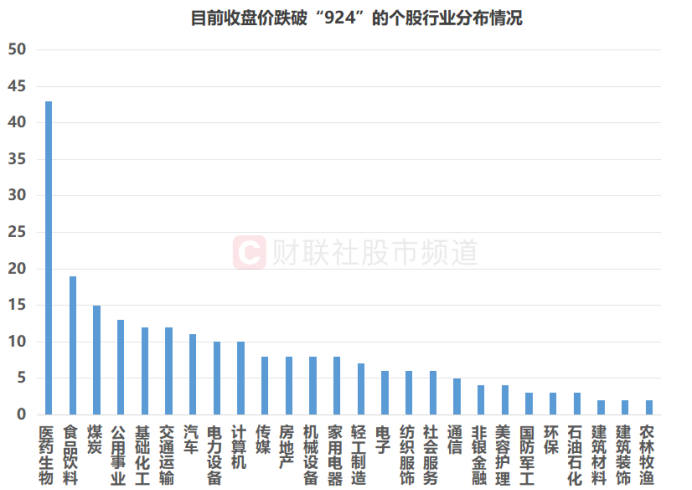
Core Viewpoint - The A-share market has shown overall stability, but nearly 230 stocks have seen their closing prices fall below the level recorded on September 24, 2024, accounting for approximately 4.3% of the total market [1]. Industry Analysis - The pharmaceutical sector has the highest number of stocks below the September 24 closing price, making up 18.7% of the total. Other sectors with significant representation include food and beverage, coal, public utilities, basic chemicals, and transportation, each exceeding 10% [2]. - Among the sub-sectors, stocks in the liquor, traditional Chinese medicine, thermal coal, coking coal, and residential development categories are the most affected, with a notable presence of chemical preparations, in vitro diagnostics, and medical consumables [2]. Market Capitalization Insights - The average total market capitalization of the over 200 stocks currently below the September 24 closing price is approximately 43.6 billion, with a median market capitalization of 10.8 billion. Stocks with a market capitalization below 5 billion account for nearly 30%, while those above 100 billion represent close to 10% [5]. - Notably, China Mobile, the only stock with a market capitalization exceeding 1 trillion, has seen a decline of about 3.7% from its September 24 closing price, currently fluctuating around 96 yuan [5]. Performance of Major Stocks - Key large-cap stocks that have fallen below the September 24 closing price include China Petroleum, Yangtze Power, China Telecom, Wuliangye, and others. Six stocks, including Pizaihuang and Daqin Railway, have experienced declines exceeding 10% [7]. - The performance of the dividend index has lagged behind the broader market, with a cumulative increase of only 5.9% since September 24, while other indices have shown more substantial gains [8]. Index Performance Overview - As of January 21, all 31 first-level industry indices are above their September 24 levels, with an average increase of approximately 58.12% and a median increase of 53.42%. The communication, non-ferrous metals, electronics, and comprehensive sectors have seen increases exceeding 130% [10]. - Conversely, sectors such as coal, food and beverage, public utilities, banking, and transportation have shown relatively lower growth, with the coal sector only increasing by 0.6% [10].





3415.44万元主力资金今日抢筹煤炭板块
Zheng Quan Shi Bao Wang· 2026-01-21 09:23
Market Overview - The Shanghai Composite Index rose by 0.08% on January 21, with 18 out of the 28 sectors experiencing gains. The top-performing sectors were non-ferrous metals and electronics, with increases of 2.79% and 2.62% respectively [1] - The coal industry saw a decline of 1.57%, ranking second in terms of the largest drop [1] Capital Flow - The net inflow of capital in the two markets was 11.98 billion yuan, with 14 sectors experiencing net inflows. The electronics sector led with a net inflow of 16.37 billion yuan, followed by the non-ferrous metals sector with a net inflow of 7.29 billion yuan [1] - In contrast, 17 sectors experienced net outflows, with the power equipment sector leading at a net outflow of 6.69 billion yuan, followed by the defense and military industry with a net outflow of 2.91 billion yuan [1] Coal Industry Analysis - Within the coal industry, there were 37 stocks, of which 4 rose and 30 fell. The net inflow of capital for the coal sector was 34.15 million yuan [2] - The top three stocks with the highest net inflow were Shaanxi Coal and Chemical Industry with 102 million yuan, followed by China Shenhua and Yanzhou Coal with net inflows of 37.21 million yuan and 28.83 million yuan respectively [2] - The stocks with the largest net outflows included Yongtai Energy, Electric Power Investment Energy, and Dayou Energy, with net outflows of 67.19 million yuan, 39.60 million yuan, and 37.50 million yuan respectively [2] Individual Stock Performance - The performance of individual stocks in the coal sector showed significant declines, with Dayou Energy dropping by 8.31% and Yongtai Energy by 1.20% [3] - Other notable declines included Zhengzhou Coal Electricity at -4.05% and Shaanxi Black Cat at -3.54% [3]


煤炭开采板块1月21日跌1.77%,大有能源领跌,主力资金净流入1.36亿元
Zheng Xing Xing Ye Ri Bao· 2026-01-21 09:08
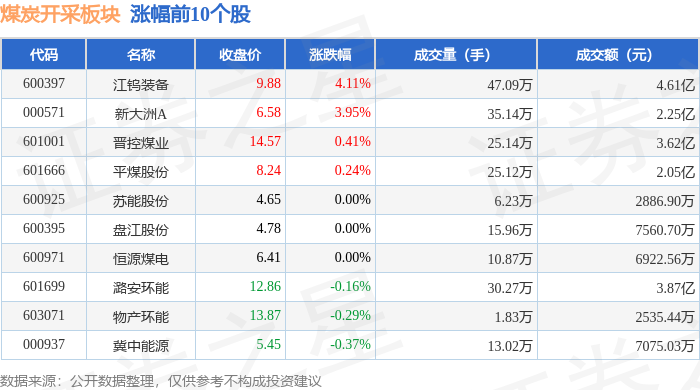
Group 1 - The coal mining sector experienced a decline of 1.77% on January 21, with Dayou Energy leading the drop [1] - The Shanghai Composite Index closed at 4116.94, up 0.08%, while the Shenzhen Component Index closed at 14255.12, up 0.7% [1] - Key stocks in the coal mining sector showed varied performance, with Jiangte Equipment rising by 4.11% and Dayou Energy falling by 8.31% [1][2] Group 2 - The coal mining sector saw a net inflow of 136 million yuan from institutional investors, while retail investors experienced a net outflow of 257 million yuan [2] - Major stocks like Shaanxi Coal and China Shenhua had significant net inflows from institutional investors, indicating potential interest despite overall sector decline [3] - The trading volume for Dayou Energy was 953,600 shares, with a transaction value of 649 million yuan, reflecting its significant market activity despite the price drop [2][3]



142股连续5日或5日以上获主力资金净买入
Zheng Quan Shi Bao Wang· 2026-01-21 03:24
Core Viewpoint - As of January 20, a total of 142 stocks in the Shanghai and Shenzhen markets have experienced net buying from major funds for five consecutive days or more, indicating strong investor interest in these stocks [1] Group 1: Stocks with Significant Net Buying - The stock with the longest consecutive net buying days is Fenglong Co., which has seen net buying for 15 consecutive trading days [1] - Other notable stocks with significant net buying days include Anhui Heli, *ST Guohua, Kangchen Pharmaceutical, Jiuding Investment, Shaanxi Coal and Electricity, Yili Co., Microelectrophysiology, and Gansu Expressway [1]





朝闻国盛:“天量”居民存款到期,影响几何?
GOLDEN SUN SECURITIES· 2026-01-21 00:09
Group 1: Macro Insights - The report highlights that in 2026, the scale of maturing medium- and long-term deposits for households and enterprises is estimated to be 58.3 trillion, an increase of 5.6 trillion compared to 2025, with household deposits reaching 37.9 trillion, marking the highest level in five years [3] - A significant portion of these deposits, over 54%, will mature in the first quarter of 2026, which is expected to alleviate pressure on bank interest margins and potentially reduce banks' liability costs by approximately 550 billion [3] - The influx of maturing household deposits is anticipated to provide incremental funds to the equity market, particularly benefiting the stock market during the expected "spring rally" [3] Group 2: Industry Performance - In the basic chemical sector, SiC prices have stabilized at a low point, with the transition to 8-inch wafers improving supply-demand dynamics [4] - The coal industry saw a slight production increase in 2025, with a projected domestic coal production increase of only 2 to 3 million tons in 2026, reaching 385 million tons, which is a year-on-year growth of about 0.6% [5][6] - The report indicates that coal imports in December 2025 increased by 11.94% year-on-year, totaling 58.6 million tons, while the total coal imports for the year decreased by 9.6% [6] Group 3: Energy Sector - The total electricity consumption in 2025 is projected to grow by 5%, with December's electricity consumption reaching 908 billion kWh, a year-on-year increase of 2.77% [12] - The report notes that the decline in thermal power generation has narrowed, with a year-on-year decrease of 3.2% in December, which is an improvement compared to previous months [7] - Recommendations include focusing on high-dividend thermal power leaders and companies with stable electricity prices and coal-electric integration [13] Group 4: Company-Specific Insights - Anta Sports is expected to maintain stable operations in 2025, with a projected net profit of 13.194 billion to 14.035 billion yuan, corresponding to a PE ratio of 15 times for 2026 [14] - Tonghuashun's annual performance is expected to exceed expectations, with a projected net profit of 2.735 billion to 3.282 billion yuan for 2025, reflecting a year-on-year increase of 50% to 80% [15] - Yanjing Beer anticipates a net profit of 1.584 billion to 1.742 billion yuan for 2025, with a growth rate of 50% to 65% year-on-year [17]
能源企业 筹措资源 提前部署 力保能源供应安全稳定
Shang Hai Zheng Quan Bao· 2026-01-20 18:53
Group 1: Energy Supply and Demand - A new cold wave has led to a significant increase in electricity load across multiple regions, with Jiangsu's peak load reaching 128 million kilowatts, an increase of 18.5% from the previous day [2] - Shandong's electricity load set a winter record, reaching 111.09 million kilowatts and 115.995 million kilowatts on consecutive days [2] - Hebei's maximum load also hit a winter high of 52.294 million kilowatts due to adverse weather conditions [2] Group 2: Energy Supply Measures - Energy companies are intensifying efforts to ensure stable power supply, including enhanced inspections and maintenance of grid facilities [2] - Shenergy Group has updated over 2400 kilometers of aging gas pipelines in Shanghai to ensure reliable gas supply [3] - The Zhejiang Anji Power Plant, with a total capacity of 1686 megawatts and an efficiency of 64.15%, has commenced full operation to support winter electricity demand [3] Group 3: Fuel Production and Supply - In December 2025, China's industrial raw coal production reached 4.83 billion tons, a year-on-year increase of 1.2%, indicating a relatively loose supply-demand relationship [4] - Major coal companies are ramping up coal production and transportation to ensure supply [4] Group 4: Natural Gas Supply - The natural gas demand for the current heating season is projected to be between 206.1 billion and 210.1 billion cubic meters, a year-on-year increase of 3.2% to 5.2% [5] - China Petroleum's Longqing Oilfield is supplying over 16 million cubic meters of natural gas daily to meet demand in over 50 cities [6] - Intelligent monitoring systems are being utilized to enhance the safety and efficiency of gas supply during extreme weather conditions [6]

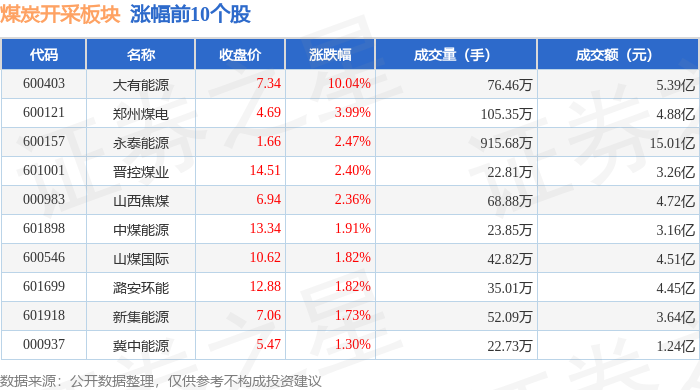
煤炭开采板块1月20日涨1.28%,大有能源领涨,主力资金净流入3.71亿元
Zheng Xing Xing Ye Ri Bao· 2026-01-20 08:59
Group 1: Market Performance - The coal mining sector increased by 1.28% compared to the previous trading day, with Dayou Energy leading the gains [1] - The Shanghai Composite Index closed at 4113.65, down 0.01%, while the Shenzhen Component Index closed at 14155.63, down 0.97% [1] Group 2: Individual Stock Performance - Dayou Energy (600403) closed at 7.34, up 10.04% with a trading volume of 764,600 shares and a transaction value of 539 million [1] - Zhengzhou Coal Power (600121) closed at 4.69, up 3.99% with a trading volume of 1,053,500 shares [1] - Yongtai Energy (600157) closed at 1.66, up 2.47% with a trading volume of 9,156,800 shares [1] - Other notable stocks include Jinkong Coal Industry (601001) at 14.51, up 2.40%, and Shanxi Coking Coal (000983) at 6.94, up 2.36% [1] Group 3: Capital Flow Analysis - The coal mining sector saw a net inflow of 371 million from main funds, while retail funds experienced a net outflow of 143 million [2] - Dayou Energy had a main fund net inflow of 176 million, representing 32.63% of its trading volume, while retail funds saw a net outflow of 112 million [3] - Yongtai Energy recorded a main fund net inflow of 141 million, with a retail net outflow of 64.86 million [3]