
ASML

Search documents
全球半导体:《芯片法案 3》,中国资本支出持续增长,尽管面临挑战,迁移仍在推进Global Semis_ CHIPS Act 3_ China capex continues to grow; migration ongoing despite challenges
2025-08-28 02:12
Summary of Semiconductor Industry Conference Call Industry Overview - The conference call focuses on the **semiconductor industry in China**, particularly in the context of the **CHIPS Act** and its implications for capital expenditures (capex) and technology development [1][4][5]. Key Points Capital Expenditures (Capex) - China's semiconductor capex is projected to increase to **US$43 billion to US$46 billion** for the period **2025-2030**, up from previous estimates of **US$40 billion to US$44 billion** [4][16]. - A strong investment of **US$41 billion** was recorded in **2024**, representing a **19% year-over-year increase** [4][16]. - The investment focus is expected to shift towards **memory** and **advanced node technologies**, with local suppliers anticipated to contribute **26%** of wafer fabrication equipment procurement in **2025**, increasing to **36%** by **2030** [4][16]. Demand and Supply Chain Migration - The semiconductor supply chain in China is undergoing significant migration, with expansions in **CIS**, **automotive chips**, and **AI chips** [5]. - Local foundries and OSATs are enhancing their manufacturing technologies, driven by structural technology innovations and better services [5]. Lithography Demand - An estimated **2,261 additional lithography systems** will be required by **2035** to meet the projected chip demand in China, necessitating an investment of approximately **US$110 billion** [6][39]. - The breakdown of required lithography systems includes **212 EUVs**, **843 immersion DUVs**, and **2,564 dry DUV/UV systems** [39]. Market Dynamics - The semiconductor market in China is expected to see a **5% to 1%** growth in capex from **2025 to 2030**, driven primarily by foundries and memory players, which will account for about **80%** of the capex [16][22]. - Chinese semiconductor manufacturers are projected to capture **17%** of the semiconductor demand value in **2024**, increasing to **37%** by **2030** [33]. Equipment Market - The Wafer Fabrication Equipment (WFE) market in China is expected to reach **US$41 billion** by **2026**, with local suppliers increasing their market share from **17%** in **2024** to **36%** by **2027** [28][32]. - The growth in WFE revenues is attributed to the increasing semiconductor spending, with China expected to account for **37% to 38%** of global WFE spending in **2025-2027** [28]. Implications for Global Suppliers - US suppliers are expected to maintain a strong market share in China's WFE spending, despite facing challenges from local manufacturers and export controls [45]. - Japanese SPE manufacturers may see a gradual decline in their market share in China, although they will still benefit from the high capex environment [49]. Additional Insights - The semiconductor industry in China is characterized by a robust local ecosystem supported by ongoing technology development and a large home market [1][4]. - The demand for lithography systems is critical for meeting future chip production needs, highlighting the importance of investment in R&D and local manufacturing capabilities [6][39]. This summary encapsulates the key insights and projections regarding the semiconductor industry in China, emphasizing the growth in capital expenditures, the demand for advanced technologies, and the evolving dynamics of the supply chain.




赢不了中国了?特朗普换了新打法:美企必须交出在华收入,推行芯片国企化,美国还是不甘心
Sou Hu Cai Jing· 2025-08-19 03:40
Group 1 - The U.S. government is shifting its strategy in the semiconductor industry from tariffs to revenue extraction, targeting companies like NVIDIA and AMD for a 15% revenue share from their sales in China [2][3] - The semiconductor market in China is highly profitable, with NVIDIA and AMD expected to generate a combined revenue of $15.8 billion by 2025, making it a lucrative target for U.S. government revenue [3][4] - The U.S. government's approach is seen as a move towards "state capitalism," with implications for the operational independence of companies and potential impacts on innovation [4][5] Group 2 - The U.S. semiconductor industry is facing increased operational costs due to government interventions, which may hinder technological advancements and competitiveness against Asian manufacturers [5][7] - The global semiconductor supply chain is becoming increasingly fragmented, with the U.S., Europe, and China forming distinct blocs, leading to potential inefficiencies and increased costs for U.S. consumers [7][9] - The U.S. government's policies may ultimately undermine its own technological leadership, as companies shift focus from innovation to political lobbying in response to regulatory pressures [9]



空翻多!“大空头”做多中国
中国基金报· 2025-08-16 14:38
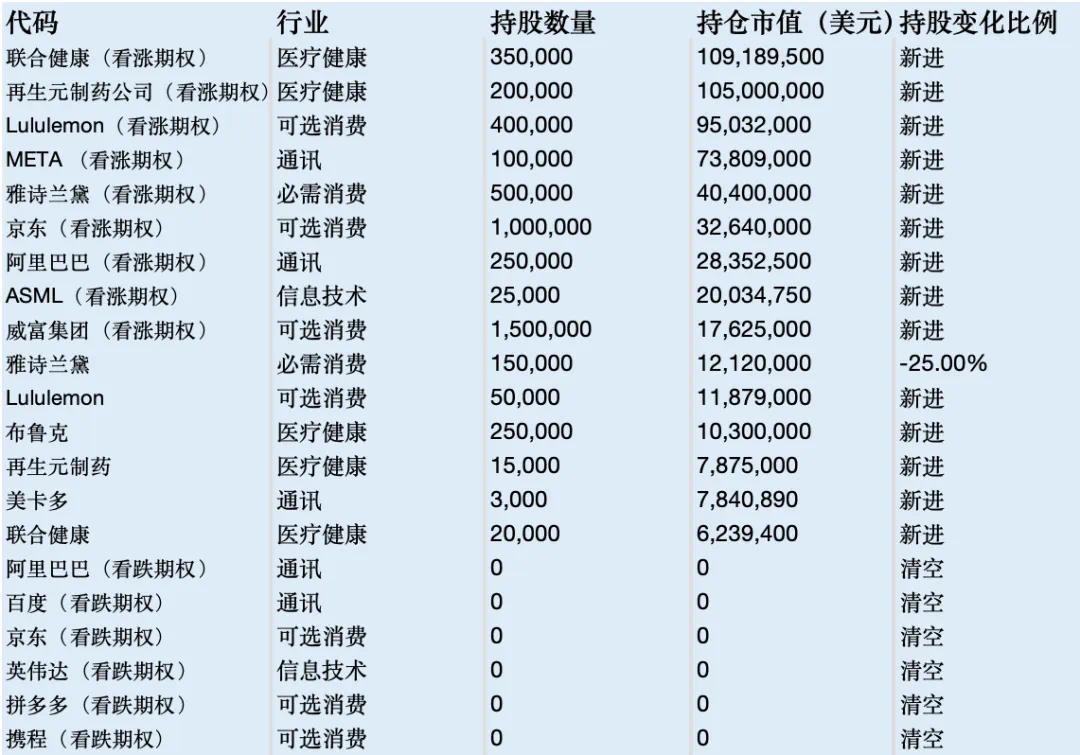
Core Viewpoint - Michael Burry has made a significant shift in his investment strategy, moving from bearish to bullish on Chinese stocks, particularly by selling put options and buying call options on companies like Alibaba and JD.com [2][5][9]. Summary by Sections Investment Strategy Changes - In Q2 2025, Michael Burry's Scion Asset Management cleared its put options on Alibaba, Baidu, JD.com, Pinduoduo, and Ctrip, and instead purchased call options on Alibaba and JD.com, indicating a complete turnaround in his stance on Chinese stocks [5][9]. - As of the end of Q2, Burry's portfolio was heavily concentrated, with a market value of $578 million, where the top ten holdings accounted for 92.37% of the total [2]. Key Holdings - The largest positions in Burry's portfolio included call options on UnitedHealth and Regeneron Pharmaceuticals, with respective values of $109.19 million and $105 million, both newly initiated [3]. - Other notable new positions included call options on Lululemon ($95.03 million), Meta ($73.81 million), Estée Lauder ($40.4 million), JD.com ($32.64 million), and Alibaba ($28.35 million) [3]. Historical Context - Michael Burry gained fame for predicting the U.S. housing market crash and profiting significantly from it, which was depicted in the film "The Big Short" [6]. - In Q1 2024, Burry had already increased his stakes in JD.com and Alibaba by 80% and 66.67%, respectively, indicating a growing confidence in these companies [7]. Market Reactions - Following the "9·24" policy announcement, which positively impacted the stock market, Burry's aggressive accumulation of Chinese stocks yielded substantial returns [7]. - In Q2 2025, while some investors like David Tepper took profits from their Chinese stock holdings, Burry's renewed bullishness on Alibaba and JD.com suggests a divergence in market sentiment [12].

空翻多,“大空头”做多中国
Zhong Guo Ji Jin Bao· 2025-08-16 13:24
Group 1 - Michael Burry has made a significant shift in his investment strategy, moving from bearish to bullish on Chinese stocks, clearing his put options and buying call options instead [1][3][6] - As of the end of Q2, Burry's Scion Asset Management held a total market value of $578 million in U.S. stocks, with the top ten holdings accounting for 92.37% of the portfolio [1] - The largest positions in Burry's portfolio include call options on UnitedHealth and Regeneron Pharmaceuticals, indicating a focus on healthcare [2][3] Group 2 - Burry's recent investments include new positions in companies such as Lululemon, Meta, and Alibaba, reflecting a diversified approach across various sectors [2][3] - In Q1 2024, Burry significantly increased his holdings in JD.com and Alibaba by 80% and 66.67% respectively, demonstrating confidence in these Chinese tech stocks [6][9] - The overall sentiment towards Chinese stocks has been mixed among global institutions, with some choosing to take profits while others continue to invest [8][9]


空翻多!“大空头”做多中国
Zhong Guo Ji Jin Bao· 2025-08-16 13:07
Core Viewpoint - Michael Burry has made a significant shift in his investment strategy, moving from bearish to bullish on Chinese stocks, clearing out put options and heavily investing in call options for various companies [1][4]. Group 1: Investment Strategy - As of the end of Q2, Michael Burry's Scion Asset Management held a market value of $578 million in U.S. stocks, with the top ten holdings accounting for 92.37% of the portfolio [2]. - Burry's strategy includes a combination of options and stocks, with the largest positions being call options on UnitedHealth and Regeneron Pharmaceuticals [3][4]. - In Q2 2025, Burry cleared out put options for Alibaba, Baidu, JD.com, Pinduoduo, and Ctrip, while buying call options for Alibaba and JD.com, alongside new investments in Lululemon [4][6]. Group 2: Holdings and Changes - The top new positions include: - UnitedHealth (350,000 shares, $109.19 million) - Regeneron Pharmaceuticals (200,000 shares, $105 million) - Lululemon (400,000 shares, $95.03 million) - META (100,000 shares, $73.81 million) - Estée Lauder (500,000 shares, $40.4 million) [3]. - Burry's previous holdings in Alibaba (put options) and other Chinese stocks were completely liquidated, indicating a complete turnaround in his investment outlook [4][6]. Group 3: Market Context - In Q1 2024, while other investors were pessimistic about Chinese stocks, Burry significantly increased his positions in JD.com and Alibaba by 80% and 66.67%, respectively [6]. - Following the "9·24" policy announcement in 2024, Burry's investments in Chinese stocks benefited from a strong market rebound [6][10]. - By Q2 2025, there was a divergence in views among global institutions regarding Chinese stocks, with some choosing to take profits while others continued to increase their positions [10].
帮主郑重:应用材料一夜蒸发1500亿!美国芯片制裁的“七伤拳”打爆自己人
Sou Hu Cai Jing· 2025-08-16 05:35
Core Insights - The semiconductor industry is facing significant challenges due to a combination of weak demand, export controls, and increasing domestic competition, leading to substantial revenue declines for major companies like Applied Materials [2][3]. Group 1: Financial Impact - Applied Materials reported a Q4 revenue forecast of only $6.7 billion, falling short of the expected $7.3 billion, primarily due to increased uncertainty in the Chinese market and a $400 million revenue loss from U.S. export controls [2]. - Competitors KLA Corp and Lam Research experienced stock price drops of 8.4% and 7.3%, respectively, resulting in a combined market value loss of $152.3 billion [2]. - China's contribution to Applied Materials' revenue has decreased from 45% to 25% due to these policies, highlighting the self-inflicted damage from U.S. sanctions [2]. Group 2: Demand Challenges - The automotive chip sector is severely impacted, with major companies like Infineon and ON Semiconductor reporting revenue declines exceeding 10% and inventory levels surpassing 150 days [2]. - The consumer electronics market is also struggling, with weak demand for smartphones and PCs leading to a drop in semiconductor equipment orders, as Applied Materials warned of oversupply in mature process chips [3]. Group 3: Consequences of Sanctions - Export controls have resulted in a backlog of export licenses for Applied Materials, with no approvals expected for the next quarter [3]. - Allied companies are also suffering; ASML has €3.4 billion in unsold lithography equipment due to restrictions on sales to China, and Tokyo Electron, which derives 23% of its revenue from China, faces similar challenges [3]. Group 4: Domestic Competition - China's self-sufficiency in chip production is projected to exceed 50% by 2025, with Huawei's Ascend chips capturing 20% of the market and SMIC achieving a 99% yield rate for 28nm processes [3]. - The trend of "de-Americanization" in equipment is gaining momentum, with Northern Huachuang's etching machines capturing a 17% market share and domestic companies advancing in 5nm etching technology [3]. Group 5: Emerging Opportunities - The packaging technology sector is seeing advancements, with domestic companies targeting the HBM market through CoWoS technology, addressing storage challenges [4]. - The demand for AI and storage chips is surging, with companies like Jiangbolong reporting a 600% increase in enterprise storage revenue, and the HBM market expected to double in size within the year [4]. - Continued government support in the form of increased funding for equipment and materials, along with tax incentives for R&D, is expected to bolster the industry [4].


Tekne's Kothari shares his bull case for Chinese equities
CNBC Television· 2025-08-15 21:13
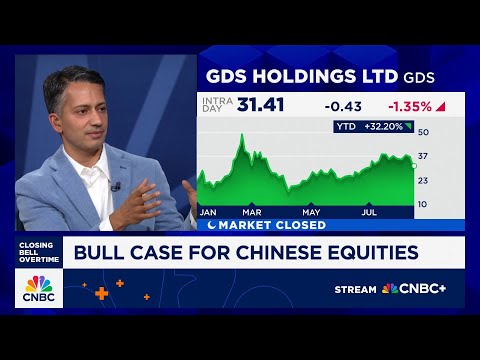
Market Trends & Investment Opportunities - Chinese stock market is experiencing a bull market, with the Shanghai Composite reaching highs not seen since 2021 and several major indices showing positive trends [1][3] - The Hong Kong IPO market is having its best year since 2021, raising more capital than any other market [3] - AI is identified as a significant growth area in China, with the market being in its early stages compared to the US [4][5] - Data centers, particularly companies like GDS (the landlord of AI in China), are highlighted as potential investment opportunities in the Chinese AI sector [6] - Bullish sentiment towards the Chinese supply chain, especially semiconductor companies, due to the decoupling trend between the US and China [9] Company Specifics & Financials - NRAC and other Chinese semiconductor companies have market caps significantly lower than their US counterparts, suggesting potential for equalization over the next 5 years [10] - DDI is identified as a company to watch, currently the largest company on the pink sheets with a market cap of $20-30 billion, anticipating a potential IPO [11][12] Risk Factors & Geopolitical Considerations - Tariffs are viewed as a distraction, with the focus shifting towards China's technological independence [8] - The emphasis is on investing in Chinese companies that supply to the Chinese technology sector [9]
全球半导体-半导体关税(232 条款)担忧是否已成为过去Global Semiconductors-Are Semi Tariff (Section 232) Concerns Now Behind Us
2025-08-08 05:02
Summary of Key Points from the Conference Call on Semiconductor Tariffs Industry Overview - **Industry**: Global Semiconductors - **Key Companies Mentioned**: TSMC, Samsung, AMD, NVIDIA, Micron, Texas Instruments, Intel, SK Hynix, GlobalFoundries, Amkor Technology, ASE Technology Core Insights and Arguments 1. **Tariff Exemptions for TSMC and Samsung**: The newly announced semiconductor tariffs are expected to provide significant relief for TSMC and Samsung, as they are likely to receive tariff exemptions, which could positively impact tech spending and demand in the U.S. [1][1][1] 2. **Section 232 Tariff Implications**: President Trump's comments indicate a 100% tariff on all chips and semiconductors entering the U.S., but companies that commit to building or are in the process of building in the U.S. will be exempt. This approach aims to encourage domestic manufacturing while potentially increasing chip costs [2][2][2]. 3. **Market Reaction**: The market's response to the tariff news has been positive for U.S.-listed semiconductor stocks, suggesting that investors are pricing in a low likelihood of the tariffs being implemented. However, there is uncertainty regarding the applicability of tariffs for companies that build in the U.S. but still import chips [3][3][3]. 4. **Impact on Investment Plans**: TSMC maintains a $165 billion capital expenditure plan for U.S. operations by 2030, while other companies like Amkor are beginning their investments in the U.S. [10][10][10]. 5. **Reshoring Effects**: Reshoring to the U.S. is expected to increase wafer fabrication equipment (WFE) intensity above the recent average of 15%, with the U.S. consuming approximately 30-35% of semiconductors but only 10-15% of WFE [21][21][21]. Additional Important Insights 1. **Investor FAQs**: Key questions from investors include the specifics of tariff exemptions for TSMC, the potential need for increased U.S. capital expenditures, and the implications for tech product tariff exemptions [11][11][11]. 2. **Strategic Investments by Samsung and SK Hynix**: Both companies are heavily investing in U.S. manufacturing, with Samsung's investments in Texas exceeding $47 billion and SK Hynix planning a $3.8 billion investment in Indiana [30][30][30][32][32][32]. 3. **Potential Challenges for Non-U.S. Manufacturers**: Companies without U.S. manufacturing plans may face significant challenges and uncertainties due to the tariffs, particularly those in Greater China [26][26][26]. 4. **Long-term Market Dynamics**: The overall sentiment suggests that while immediate tariff impacts may be mitigated for some companies, the long-term landscape will require strategic adjustments to manufacturing and supply chains to adapt to geopolitical and economic changes [20][20][20]. This summary encapsulates the critical points discussed in the conference call regarding the implications of semiconductor tariffs and the strategic responses from key industry players.

Comstock Inc.: Betting On Batteries And Biofuels
Seeking Alpha· 2025-08-07 15:05
Group 1 - Comstock Inc. is transitioning from traditional mining to clean energy, focusing on lithium-ion battery recycling and biofuel production [1] - The company aims to capitalize on the growing demand for clean energy solutions in the post-COVID era [1] - The analyst has experience in evaluating various companies across multiple industries, enhancing the ability to identify investment opportunities [1]


X @Balaji
Balaji· 2025-08-06 08:35
Demographics & Influence - The Internet's ideological roots trace back to American libertarianism and progressivism [1] - Asian Americans and Asia, in general, exert a significant demographic influence on the Internet [1] - Tech industry demographics, including Persians and Eastern Europeans, also heavily influence the Internet [1] - Russians (Yandex, Vkontakt, Telegram) and Chinese have had an enormous influence on the Internet [2] Cultural Perspective - The culture of the Internet is undeniably American libertarianism [2]