
拓维信息

Search documents
华为欧拉概念下跌1.16%,8股主力资金净流出超5000万元
Zheng Quan Shi Bao Wang· 2025-11-05 08:46
Group 1 - Huawei Euler concept declined by 1.16%, ranking among the top declines in the concept sector as of November 5 [1] - The concept sector saw a net outflow of 1.461 billion yuan, with 41 stocks experiencing net outflows, and 8 stocks seeing outflows exceeding 50 million yuan [2] - The stocks with the largest net outflows included Runhe Software, China Software, and Tuo Wei Information, with outflows of 391 million yuan, 154 million yuan, and 146 million yuan respectively [2][3] Group 2 - The top gainers in the Huawei Euler concept included Rongke Technology, Leizhi Group, and Zhengyuan Dixin, with increases of 3.74%, 1.46%, and 0.62% respectively [1] - The overall market performance showed that 7 stocks within the Huawei Euler concept experienced price increases, while the majority faced declines [1][2] - The trading volume for stocks in the Huawei Euler concept varied, with some stocks like Runhe Software showing a turnover rate of 6.71% [2][3]


拓维信息跌2.02%,成交额4.44亿元,主力资金净流出5831.56万元
Xin Lang Cai Jing· 2025-11-05 02:18
Core Viewpoint - The stock of Tuowei Information has experienced fluctuations, with a notable decline of 2.02% on November 5, 2023, despite an overall increase of 82.58% year-to-date [1] Group 1: Stock Performance - As of November 5, 2023, Tuowei Information's stock price is 33.43 CNY per share, with a market capitalization of 42.116 billion CNY [1] - The stock has seen a net outflow of 58.32 million CNY in principal funds, with significant selling pressure observed [1] - Year-to-date, the stock has risen by 82.58%, but it has declined by 4.10% in the last five trading days and 7.50% in the last twenty days [1] Group 2: Financial Performance - For the period from January to September 2025, Tuowei Information reported a revenue of 2.078 billion CNY, a decrease of 29.43% year-on-year, while the net profit attributable to shareholders increased by 852.03% to 105 million CNY [2] - The company has not distributed any dividends in the last three years, with a total payout of 138 million CNY since its A-share listing [3] Group 3: Shareholder Structure - As of September 30, 2025, the number of shareholders has increased to 459,100, with an average of 2,495 shares held per shareholder, a decrease of 1.19% [2] - Among the top ten circulating shareholders, notable changes include a decrease in holdings by the Southern CSI 500 ETF and an increase by the Hong Kong Central Clearing Limited [3]
2025年中国智慧考场行业发展历程、产业链、发展现状、重点企业经营情况及未来趋势研判:信息技术飞速发展,智慧考场带来教育新体验[图]
Chan Ye Xin Xi Wang· 2025-11-05 01:28
Core Insights - The smart examination room is transforming traditional examination models towards intelligent, automated, and fair systems, leveraging technologies like AI, big data, and cloud computing to enhance the integrity, security, and efficiency of the examination process [1][11] - The smart examination room market is rapidly growing globally, with significant advancements in Asia, particularly in China, where the market size is projected to increase from 1.668 billion yuan in 2017 to 4.575 billion yuan in 2024, reflecting a compound annual growth rate (CAGR) of 11.86% [1][11] - The increasing number of candidates for national examinations, such as the college entrance examination, is driving the demand for smart examination solutions, which are essential for improving examination governance and maintaining educational fairness [1][9] Industry Overview - The smart examination room utilizes advanced technologies such as image processing, facial recognition, voice analysis, and behavior analysis to create a comprehensive monitoring system that identifies and alerts against cheating behaviors throughout the examination process [4] - The construction of smart examination rooms involves upgrading existing computer examination facilities with intelligent monitoring systems and robots, enhancing the anti-cheating capabilities and service efficiency of the examination system [4] Market Dynamics - The smart examination room industry is characterized by a multi-faceted ecosystem involving traditional educational examination institutions, technology innovation companies, and research institutions, all contributing to the development and implementation of smart examination solutions [11] - Key players in the smart examination room market include companies like Tuowei Information, Jiafa Education, and Keda Xunfei, which provide comprehensive solutions encompassing intelligent monitoring, identity verification, and cheating prevention [12][11] Industry Challenges - The smart examination room industry faces several challenges, including technological bottlenecks in AI applications for monitoring and automated scoring, as well as data security and privacy concerns related to the handling of personal information and examination data [15][16] - High construction and operational costs pose a barrier for smaller examination institutions, necessitating strategies to reduce expenses while maintaining quality and effectiveness [17] Future Trends - The future of the smart examination room industry is expected to see deeper integration of edge computing and IoT technologies, enhancing device interconnectivity and data processing capabilities [20] - There will be a shift towards personalized services in smart examination systems, allowing for tailored examination environments based on individual candidate profiles [21] - The application scenarios for smart examination rooms are anticipated to expand beyond traditional education to include vocational skills certification and corporate talent assessment, with advancements in remote monitoring technologies supporting international examination standards [22]





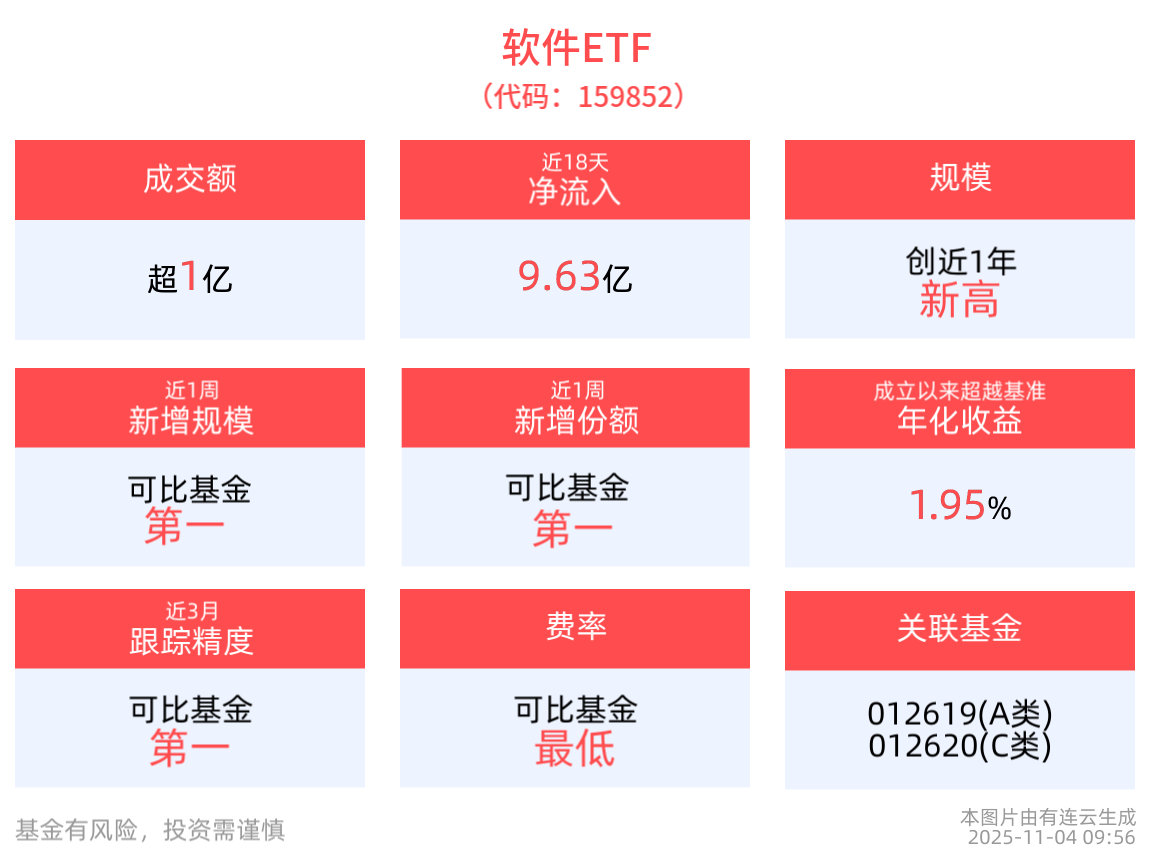
软件行业3季度业绩表现亮眼,软件ETF(159852)最新资金净流入1.36亿元,规模创成立以来新高!
Sou Hu Cai Jing· 2025-11-04 02:33
Group 1: Software ETF Performance - The Software ETF has a turnover rate of 2.14% during trading, with a transaction volume of 1.26 billion yuan. Over the past week, the average daily transaction volume reached 600 million yuan, ranking first among comparable funds [2] - The latest scale of the Software ETF has reached 5.936 billion yuan, marking a new high since its inception and also ranking first among comparable funds. In the past week, the ETF's shares increased by 80 million, achieving significant growth and leading among comparable funds [2] - The Software ETF has recorded a net inflow of 136 million yuan recently. Over the past 18 trading days, it has attracted a total of 963 million yuan [2] - As of November 3, the net value of the Software ETF has increased by 12.40% over the past three years. The highest monthly return since inception was 39.35%, with the longest consecutive monthly increase being three months and a maximum increase of 69.40%. The average return during the rising months was 10.06% [2] Group 2: Computer Sector Insights - According to Open Source Securities, the computer sector has seen improvements in revenue and profit in the first three quarters of 2025, with a year-on-year revenue growth of 3.10% and a net profit growth of 3.93%. The non-recurring net profit increased by 0.42%. This indicates a recovery in revenue growth while many companies in the sector have initiated cost-cutting and efficiency-enhancing strategies, leading to significant profit recovery [3] - Longjiang Securities highlights that in the context of intensified technological competition, achieving complete autonomy and control in key areas is essential for China's technological development. The domestic software systems have gradually developed the capability for domestic substitution [3] - As of October 31, 2025, the top ten weighted stocks in the CSI Software Service Index include iFLYTEK, Kingsoft Office, Tonghuashun, and others, collectively accounting for 63.09% of the index [3]





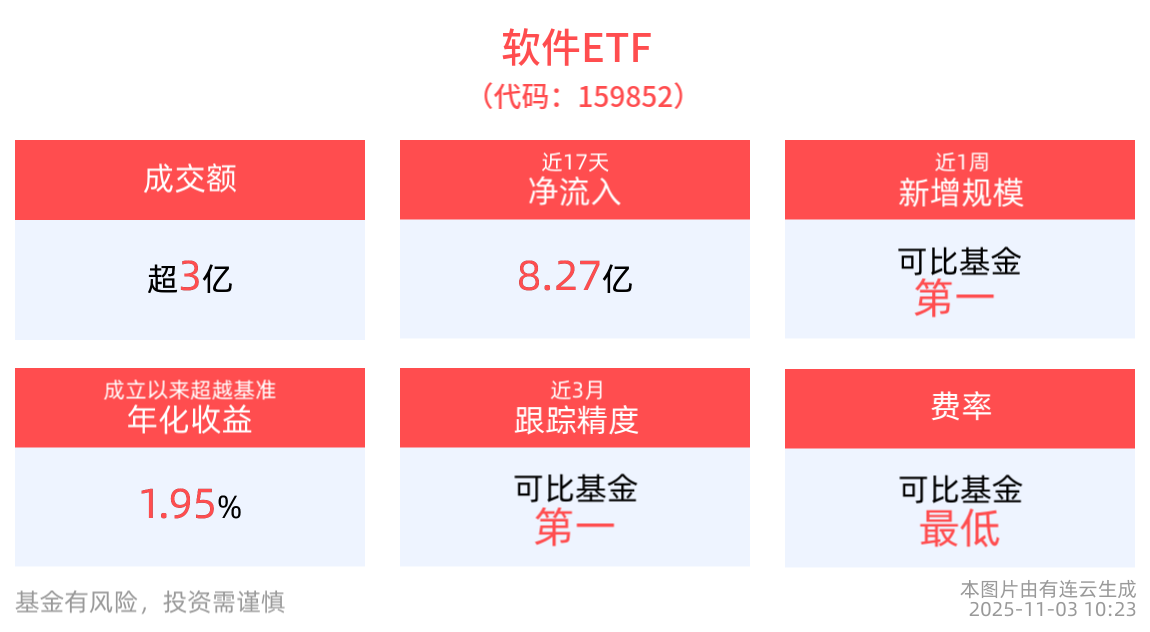
高层定调加快基础软件等关键领域突破,软件ETF(159852)近17个交易日净流入8.27亿元
Xin Lang Cai Jing· 2025-11-03 02:49
Group 1: Liquidity and Scale of Software ETF - The software ETF had an intraday turnover of 6.26% and a transaction volume of 366 million yuan [1] - Over the past month, the software ETF's average daily transaction volume reached 569 million yuan, ranking first among comparable funds [1] - In the past week, the software ETF's scale increased by 19.89 million yuan, also ranking first among comparable funds [1] - Over the last 17 trading days, the software ETF attracted a total of 827 million yuan in inflows [1] Group 2: Performance and Returns - As of October 31, the software ETF's net value has increased by 10.46% over the past three years [1] - The highest monthly return since inception was 39.35%, with the longest consecutive monthly gains being three months and the longest cumulative gain reaching 69.40% [1] - The average return during the months of increase was 10.06% [1] Group 3: Policy and Industry Outlook - The 20th Central Committee's Fourth Plenary Session emphasized high-level technological self-reliance as a key development goal [1] - In the context of major power technology competition, the trend towards domestic core software and hardware is expected to accelerate [1] - The "Suggestions" highlight the need for "extraordinary measures" to promote breakthroughs in key areas such as integrated circuits and foundational software [1] - Collaborative innovation between emerging technologies and foundational software is anticipated to be a significant driver of high-quality technological development during the 14th Five-Year Plan period [1] Group 4: Major Stocks in Software Service Index - As of October 31, 2025, the top ten weighted stocks in the CSI Software Service Index include iFlytek, Kingsoft Office, and Tonghuashun, collectively accounting for 63.09% of the index [2] - The weightings of the top stocks are as follows: iFlytek (13.80%), Tonghuashun (8.49%), Kingsoft Office (7.78%), and others [4] - Investors can also access AI software investment opportunities through the software ETF linked fund (012620) [4]
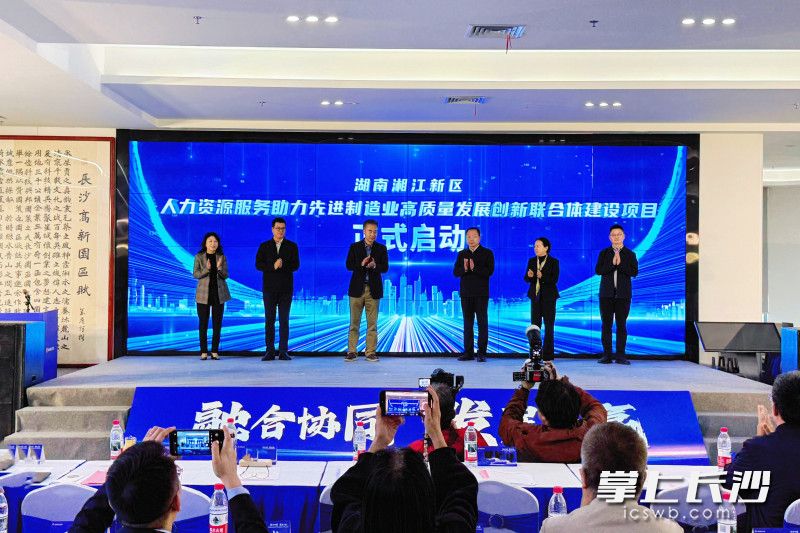
湖南省首个人力资源领域“政校企研服”创新联合体启动建设
Chang Sha Wan Bao· 2025-11-01 10:05
Core Points - The establishment of the Human Resources Service Empowering Advanced Manufacturing High-Quality Development Innovation Consortium in Hunan Xiangjiang New Area aims to enhance collaboration among government, academia, and industry [1][3] - This initiative is the first of its kind in Hunan province, focusing on integrating human resources services with advanced manufacturing to address talent mismatches and service homogenization [3][4] Group 1: Objectives and Structure - The consortium seeks to break down barriers between government, schools, enterprises, research, and services, ensuring that human resources services align more closely with industry needs [4][6] - A comprehensive plan has been developed to implement the consortium's objectives in three phases, promoting regular, institutionalized, and standardized operations [4][6] Group 2: Key Activities and Collaborations - The consortium will focus on five key areas: building a collaborative development platform, enhancing service supply capabilities, creating a multi-level talent training system, facilitating technology transfer, and organizing brand activities [6] - Several human resources service agencies and vocational training institutions have signed strategic cooperation agreements with advanced manufacturing enterprises to align talent training with actual business needs [6][7] Group 3: Economic Impact and Growth - The Hunan Xiangjiang New Area has set a target for its advanced manufacturing output to exceed 60% of the total industrial output by 2024, indicating a solid industrial foundation [4] - The human resources service industry in the area is projected to generate nearly 10 billion yuan in revenue in 2024, contributing approximately 185 million yuan in taxes and supplying over 1 million talents to various enterprises [7]

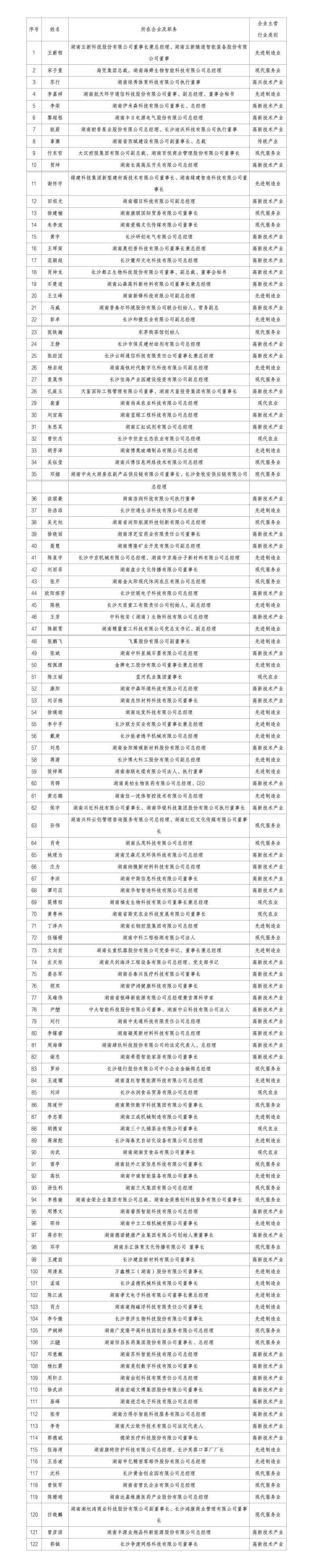
快讯|2025年第五届长沙“企业家日”活动举行
Chang Sha Wan Bao· 2025-11-01 02:09
Core Points - The fifth "Entrepreneur Day" event in Changsha was held on November 1, 2025, with the theme "Salute to Entrepreneurs, New Future of Star City," aimed at promoting entrepreneurial spirit and optimizing the business environment [1] - The event showcased typical cases of collaboration between state-owned and private enterprises, digital innovation transformation, and talent attraction to promote employment [1] Group 1: Collaboration between State-owned and Private Enterprises - Ten typical cases of collaboration were presented, including projects like the electric vortex damper development by Hunan Xiaozhen Engineering Technology Co., Ltd. and Changsha Urban Development Group Co., Ltd. [2] - Other notable projects include the construction of the Changsha Ring Film and Television Cultural Industry Park and the integrated demonstration project of new energy "light-storage-charging-inspection" [2] Group 2: Digital Innovation Transformation - Ten typical cases of digital innovation transformation were highlighted, such as the intelligent factory for electric vehicle motors by Bosch Automotive Parts (Changsha) Co., Ltd. [3] - Other projects include the smart factory for aerial work platforms by Hunan Xingbang Intelligent Equipment Co., Ltd. and the digital transformation project by Changsha Baitong New Materials Technology Co., Ltd. [3] Group 3: Talent Attraction and Employment Promotion - Ten typical cases of talent attraction and employment promotion were introduced, including a new model for high-level talent introduction and industry-university-research collaboration by Weisheng Group Co., Ltd. [3] - Other initiatives focus on dual-driven talent services for employment and entrepreneurship by Tuo Wei Information System Co., Ltd. and the establishment of a precise employment service platform by Changsha Yunyan Network Technology Co., Ltd. [3] Group 4: Changsha Young Entrepreneurs Cultivation Program - The list of the "Changsha Young Entrepreneurs - Evergreen Tree Cultivation Program" for 2026-2030 was released, featuring individuals from various industries such as advanced manufacturing and modern services [4][5]
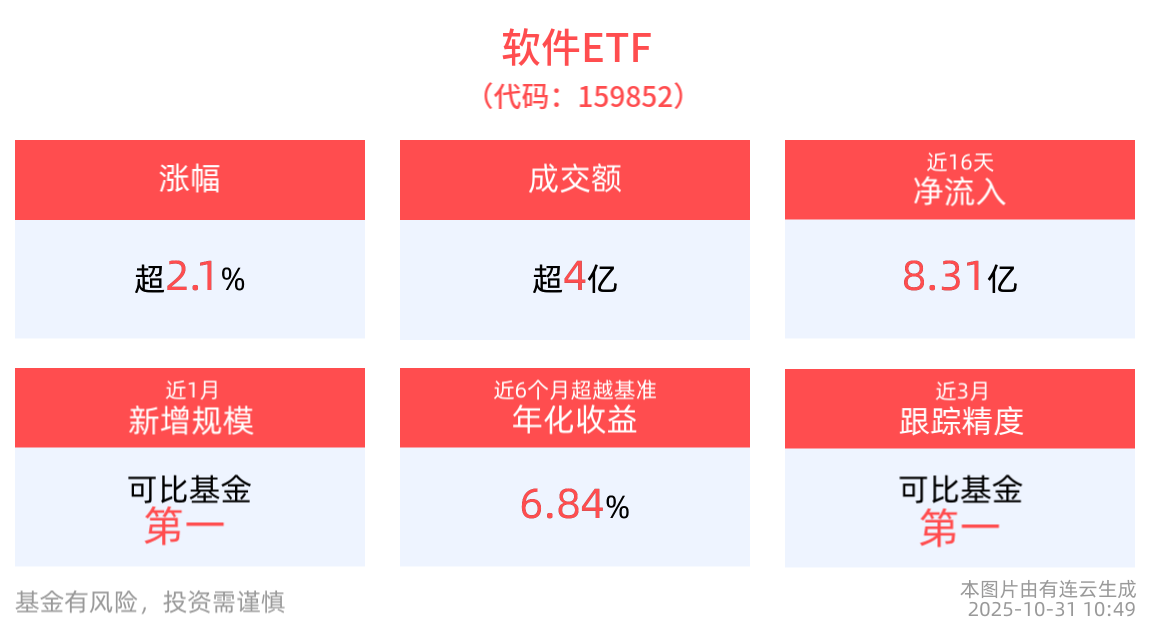
软件ETF(159852)盘中涨超2.1%,机构:信创产业加速发展国产操作系统创新
Sou Hu Cai Jing· 2025-10-31 03:37
Group 1: ETF Performance and Market Trends - The software ETF experienced a turnover of 7.16% during trading, with a transaction volume of 410 million yuan [3] - Over the past month, the software ETF's scale increased by 615 million yuan, indicating significant growth [3] - In the last 16 trading days, the software ETF attracted a total of 831 million yuan in inflows [3] - As of October 30, the software ETF's net value has risen by 12.61% over the past three years [3] - The highest monthly return since inception was 39.35%, with the longest consecutive monthly gains being three months and a maximum increase of 69.40% [3] - The average return during the months of increase was 10.06% [3] Group 2: Software Industry Performance - According to the Ministry of Industry and Information Technology, the software and information technology service industry in China showed a positive performance in the first three quarters of 2025, with software business revenue reaching 1111.26 billion yuan, a year-on-year increase of 13.0% [3] - The total profit of the software industry was 143.52 billion yuan, reflecting a year-on-year growth of 8.7% [3] - Software business exports amounted to 45.94 billion USD, marking a year-on-year increase of 6.6% [3] - Software product revenue maintained stable growth, reaching 238.54 billion yuan in the first three quarters, a year-on-year increase of 10.9%, accounting for 21.5% of the total industry revenue [3] - Basic software product revenue was 13.83 billion yuan, up 11.2% year-on-year, while industrial software product revenue was 23.59 billion yuan, reflecting a 9.8% increase [3] Group 3: Future Outlook and Investment Opportunities - Longjiang Securities noted that in the context of intensified Sino-U.S. technology competition, achieving complete autonomy in key areas is essential for China's technological development [4] - The domestic software systems have gradually developed innovative capabilities, transitioning from "usable" to "user-friendly" [4] - As key policy assessment years (such as 2025 and 2027) approach, the domestic chip and operating system industries related to the Xinchuang industry are expected to benefit [4] - As of September 30, 2025, the top ten weighted stocks in the CSI Software Service Index included companies like iFLYTEK, Tonghuashun, and Kingsoft Office, collectively accounting for 62.41% of the index [4] - Investors can also consider the software ETF linked fund (012620) to capitalize on AI software investment opportunities [4]



社保基金持仓动向:三季度新进187股
Zheng Quan Shi Bao Wang· 2025-10-31 01:52
Core Insights - The Social Security Fund has made significant adjustments to its stock holdings in Q3, with 187 new positions, 156 increases, and 181 reductions in holdings across 615 stocks [1][2] Summary by Category New Positions - The Social Security Fund established new positions in 187 stocks during Q3, with notable entries including China Metallurgical Group, holding 100.36 million shares, and Longi Green Energy, with 79.08 million shares [1][2] - The highest ownership percentage among new positions is in Weilon Co., at 5.60%, followed by Huabao New Energy at 4.96% [1][2] Performance Metrics - Among the new positions, 113 companies reported year-on-year net profit growth, with Huazheng New Materials showing the highest increase of 1042.19% [2] - The average performance of new stocks since October has seen a decline of 1.71%, underperforming the Shanghai Composite Index [2] Notable Stocks - The best-performing new stock is Beifang Changlong, with a cumulative increase of 33.21%, followed by Shengyi Technology and Dongfang Tieta, which rose by 28.66% and 26.50%, respectively [2] - The largest decline was observed in Lexin Technology, which fell by 23.60% [2] Sector Distribution - The new positions span various sectors, including machinery, electric power equipment, basic chemicals, and pharmaceuticals, indicating a diversified investment strategy by the Social Security Fund [1][2]





社保基金持仓动向:三季度新进153股
Zheng Quan Shi Bao Wang· 2025-10-30 02:11
Core Insights - The third quarter report reveals that the social security fund has newly invested in 153 stocks, with a total of 4,277 companies having disclosed their quarterly results [1] - The social security fund is present in 489 stocks, with movements including 124 increases, 141 decreases, and 71 stocks remaining unchanged in holdings [1] - The stocks with the highest new holdings by the social security fund include Jiuzhoutong, Jiangsu Jinzu, and Dongfang Tieta, with holdings of 70.84 million shares, 45.65 million shares, and 45.31 million shares respectively [1] Investment Activity - The social security fund's new investments include 92 companies that reported year-on-year net profit growth, with Huazheng New Materials showing the highest increase of 1,042.19% [2] - The average increase of newly invested stocks since October is 0.22%, underperforming the Shanghai Composite Index [2] - Notable performers among the newly invested stocks include Beifang Changlong with a cumulative increase of 41.55%, followed by Shengyi Technology and Dongfang Tieta with increases of 28.32% and 23.29% respectively [2] Stock Holdings Overview - The top new stocks held by the social security fund include: - Weilon Co., Ltd. with 858.76 million shares, representing 5.60% of circulating shares [2] - Huabao New Energy with 378.08 million shares, representing 4.96% [2] - Changhua Chemical with 259.07 million shares, representing 4.85% [2] - Other significant holdings include Dongfang Tieta with 45.31 million shares and Jiankong Coal with 44.67 million shares, both representing over 2% of circulating shares [2][3] Performance Metrics - The net profit growth leaders among newly invested stocks include: - Huazheng New Materials with a net profit of 62.61 million yuan, a year-on-year increase of 1,042.19% [2] - Tuowei Information and Sanyou Medical with increases of 852.03% and 623.19% respectively [2] - The stock with the largest decline is Hainan Huatie, which has decreased by 23.24% [2]


