
LVMH

Search documents
CNBC's The China Connection newsletter: Losing the Chinese shopper could soon have global consequences
CNBC· 2025-10-22 07:12
Core Insights - The article discusses the ongoing interest of U.S. brands in the Chinese consumer market, particularly through cross-border e-commerce initiatives, despite existing trade tensions [2][3]. Group 1: U.S. Brands and Chinese Market - A joint event hosted by Tmall Global and WPIC Marketing + Technologies in Los Angeles attracted 50 representatives from U.S. consumer brands, highlighting their desire to tap into the Chinese market [2]. - Jacob Cooke, co-founder and CEO of WPIC, emphasized that cross-border e-commerce is the most effective way to enter the Chinese market, noting resilient demand for high-quality U.S. products [3]. Group 2: Alibaba's AI Integration - Alibaba introduced new AI tools during its Singles Day launch in Shanghai, which can enhance product targeting by 25% and allow for more complex shopper profiles [4]. - The company has reportedly recouped its AI investments in the online shopping sector, indicating successful integration of AI into its business model [5]. Group 3: Retail Trends in China - China's retail sales grew by only 3% in September year-over-year, indicating a slowdown compared to pre-pandemic levels [7]. - LVMH's flagship store "The Louis" in Shanghai has attracted significant foot traffic, with about 2,500 daily visitors, suggesting a successful strategy to engage consumers in a challenging market [8]. Group 4: Market Dynamics - LVMH reported an improvement in domestic consumer spending in China, with growth in the mid-to-high single digits, reinforcing Asia as its largest market by revenue [9]. - The competitive landscape indicates that brands are reluctant to exit the Chinese market, as losing market share there could have global repercussions [10].



Birkin手袋受美国消费者追捧,爱马仕三季度销售增长9.6% | 财报见闻
Hua Er Jie Jian Wen· 2025-10-22 07:02
Core Insights - Hermès International continues to demonstrate strong performance in the luxury goods sector, with third-quarter sales showing robust growth driven by the demand for Birkin bags among affluent consumers [1] Financial Performance - In the third quarter, Hermès reported a revenue increase of 9.6% year-on-year, reaching €3.88 billion (approximately $4.52 billion), slightly above analysts' expectations of a 9.3% increase [1] - The U.S. market showed particularly strong performance, with quarterly revenue growth of 14.1%, alleviating concerns regarding the impact of tariff policies on consumer spending [1] - The company's stock has declined by 3.1% year-to-date, similar to the performance of LVMH [1] Business Strategy - Hermès employs a scarcity strategy, managing product availability to maintain resilience in the luxury market, achieving a stable annual growth rate of 6%-7% [2] - The core business segment of leather goods and saddlery saw a sales increase of 13.3%, although this was slightly below expectations [2] Market Trends - There are signs of improvement in the Chinese market, with Hermès noting "slight improvement" in the Greater China region during the third quarter, attributed to stabilizing real estate prices and positive stock market trends [3] - This cautious optimism aligns with observations from other major brands like LVMH and L'Oréal, which have also reported similar recovery signs [3] - Despite the positive outlook, Hermès has not yet observed a significant change in trends for the current quarter [3]
Birkin Bag Maker Hermes's Sales Accelerate as Hopes of Luxury Rebound Mount
WSJ· 2025-10-22 06:38
Core Insights - The acceleration in sales at Hermes indicates a positive trend in the luxury goods market, following improved sales growth reported by LVMH, the owner of Louis Vuitton [1] Company Summary - Hermes has experienced a notable increase in sales, suggesting strong consumer demand for luxury products [1] - LVMH's recent performance also reflects a broader recovery in the luxury sector, which may benefit other companies in the industry [1] Industry Summary - The luxury goods market is showing signs of growth, with both Hermes and LVMH reporting improved sales figures, indicating a potential rebound in consumer spending [1]


关注三季报业绩向好标的,LVMH25Q3超预期,带动奢侈品板块表现回升
Haitong Securities International· 2025-10-21 14:42
Investment Rating - The report rates the industry as "Overweight" [1] Core Insights - The Q3 performance of brand apparel and textile manufacturing continues to show a trend of differentiation, with a focus on companies with improving performance metrics. LVMH's Q3 revenue exceeded expectations, leading to a rebound in the luxury goods sector [1][3][48] - The report emphasizes the importance of identifying strong alpha investment opportunities, particularly in the brand and manufacturing segments, amidst tariff disturbances affecting demand [3][48] Summary by Sections Q3 Performance Preview - Brand apparel is expected to see sequential revenue improvement, with profit growth remaining divergent. Men's wear brands like HLA Group and Biem.L.Fdlkk are projected to achieve stable revenue growth, while women's wear leader Shenzhen Ellassay Fashion is anticipated to continue its strong performance [5][6][48] - Home textiles, particularly Shanghai Shuixing Home Textile, are expected to achieve double-digit revenue and profit growth, while Samsonite International's revenue is projected to decline slightly year-over-year [5][6][48] Market Review - The textile and apparel sector saw a slight decline of 0.31% in the A-share market, outperforming the broader market by 1.91 percentage points. The textile manufacturing segment fell by 2.73%, while the apparel and home textile segment rose by 0.41% [8][11] Industry Data Tracking - Retail sales in August 2025 for clothing, shoes, and textiles grew by 3.1%, while textile and apparel exports in September 2025 decreased by 1.45% year-over-year. The overall retail sales growth for social consumer goods was 3.4% [20][23] - Cotton prices have shown a slight decline, with the China 3128B cotton price index dropping by 0.74% to 14,679 RMB per ton [24][27]
始祖鸟增长变难
21世纪经济报道· 2025-10-21 03:32
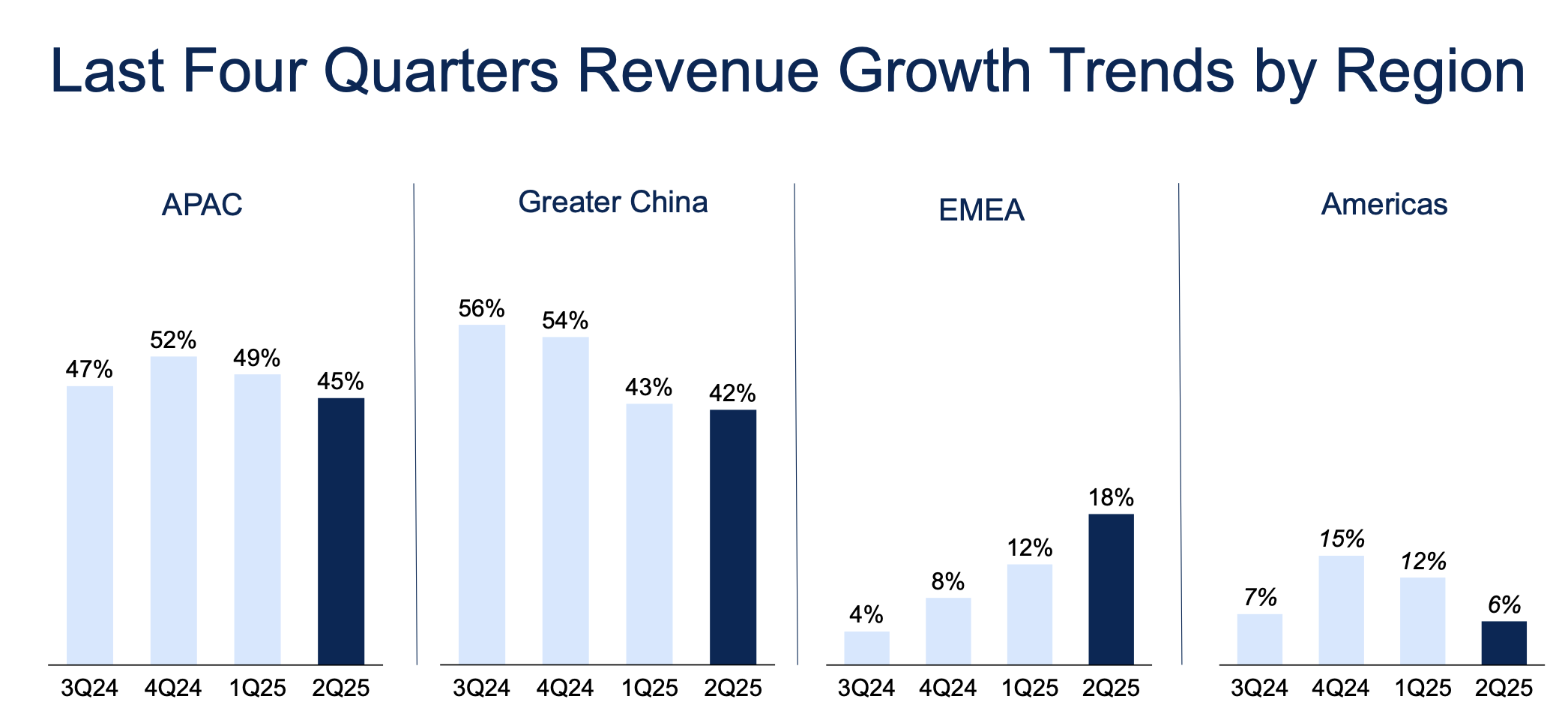
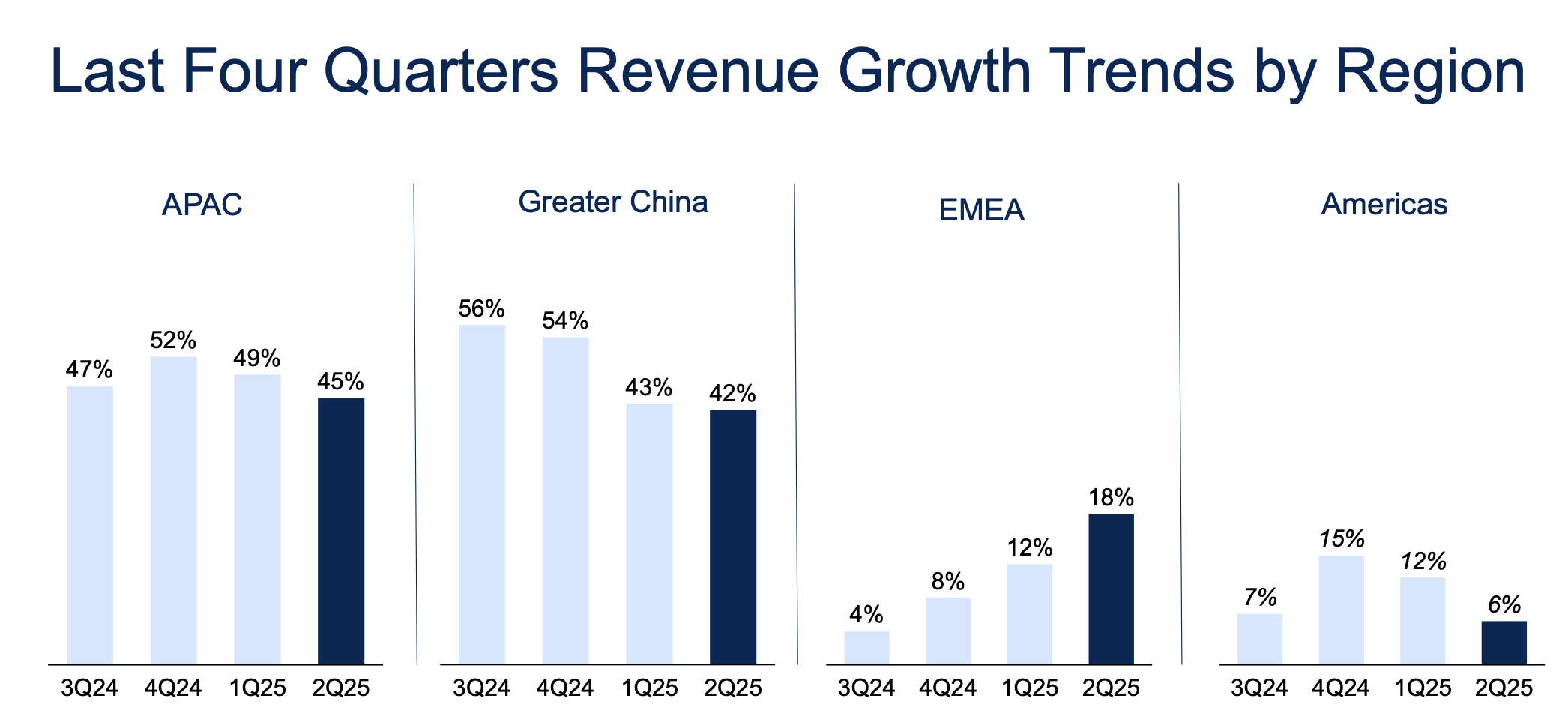
Core Viewpoint - The leadership change at Arc'teryx China reflects the company's strategic adjustments in a competitive market, with significant implications for its growth trajectory in the region [1][4]. Group 1: Leadership Changes - Ivan She, the General Manager of Arc'teryx China, has left the company, with Jeffery Ma temporarily taking over the role [1]. - Jeffery Ma, previously the General Manager of Zhongqiao Sports, joined Amer Sports in July and has a background in major brands like Belle and Adidas [1]. - This marks the second executive change in the Greater China region within a year, indicating potential instability in leadership [1]. Group 2: Market Performance - The Greater China region has become Amer Sports' largest market, with a 42% year-on-year revenue increase to $410 million (approximately 2.92 billion RMB) in Q2 [4]. - Arc'teryx is a key growth driver for Amer Sports, with its Technical Apparel segment seeing a 23% revenue increase to $510 million [4]. - The Outdoor Performance segment, primarily driven by Arc'teryx, grew by 35% to $410 million, highlighting the brand's importance in the company's portfolio [4]. Group 3: Competitive Landscape - The Chinese sports market is becoming increasingly competitive, with domestic brands like Anta and Li Ning rapidly gaining market share [8]. - In 2024, the top four brands in the Chinese sports footwear and apparel market are Nike, Anta, Li Ning, and Adidas, indicating a shift in market dynamics [8]. - The market growth is becoming more challenging, as evidenced by the financial struggles of brands like Peak, which reported significant losses in its domestic sales [9]. Group 4: Challenges Ahead - Arc'teryx is expected to close stores in China by 2025, reflecting the need for strategic repositioning amid fierce competition [10]. - The brand's absence from the Tmall Double 11 outdoor sales ranking contrasts sharply with its previous performance, suggesting a decline in market presence [10]. - The competitive environment and recent controversies may necessitate a thorough review of Arc'teryx's strategies in the Chinese market [10].

高管离职背后:始祖鸟,增长变难
2 1 Shi Ji Jing Ji Bao Dao· 2025-10-21 00:36
Core Insights - The Greater China region has become the largest market for Amer Sports, with a significant revenue increase of 42% year-on-year in Q2, reaching $410 million (approximately 2.92 billion RMB) [5][9] - The brand Arc'teryx is identified as a key growth driver for Amer Sports, contributing to the overall performance of the company [5][9] Financial Performance - In Q2, Amer Sports' revenue from the Greater China region grew to $410 million, while EMEA and North America saw growth rates of 18.5% and 6.3%, respectively [5] - The Technical Apparel segment, which includes Arc'teryx, reported a 23% increase in revenue to $510 million, while Outdoor Performance and Ball & Racquet segments also showed positive growth [5][6] Market Dynamics - The competitive landscape in the Chinese sports market is intensifying, with local brands like Anta and Li-Ning rapidly gaining market share [10][12] - The outdoor sports market in China is becoming a focal point for competition, with major brands like Nike increasing their focus on this segment [14] Management Changes - Ivan She, the General Manager of Arc'teryx Greater China, has left the company, and Jeffery Ma is currently acting in this role [2][3] - This marks the second executive change in the Greater China region within a year, indicating potential instability in leadership [2][3] Strategic Challenges - The high-end market, where Arc'teryx operates, is facing challenges, with luxury brands reporting mixed performance in China [13] - Amer Sports anticipates a net store closure for Arc'teryx in China by 2025, reflecting the need for strategic adjustments in response to market conditions [15][16] Consumer Behavior - Recent sales data indicates a decline in Arc'teryx's visibility in the Chinese market, as it did not appear on the Tmall Double 11 outdoor sales leaderboard, contrasting sharply with its previous performance [17][18]
高管离职背后:始祖鸟,增长变难丨消费快评
2 1 Shi Ji Jing Ji Bao Dao· 2025-10-21 00:33
Core Insights - The leadership change at Arc'teryx China, with Ivan She leaving and Jeffery Ma stepping in as interim manager, reflects ongoing adjustments within Amer Sports' management structure in the Greater China region [1][4] - The Greater China market has become the largest for Amer Sports, with a significant revenue increase of 42% year-on-year in Q2, reaching $410 million (approximately 2.92 billion RMB) [4][6] - Arc'teryx has been a key growth driver for Amer Sports, with its Technical Apparel segment seeing a 23% revenue increase to $510 million [4][6] Company Performance - Arc'teryx's revenue in China has shown remarkable growth, with a compound annual growth rate (CAGR) of 58% from 2019 to 2022 [6] - The brand's global revenue CAGR exceeded 30% from 2020 to 2022, indicating strong overall performance [6][7] - The average store size for Arc'teryx in China increased from 217 m² to 313 m² between Q4 2020 and Q4 2023, reflecting a strategic focus on premium retail locations [5] Market Dynamics - The competitive landscape in China's sports market is intensifying, with domestic brands like Anta and Li Ning rapidly gaining market share [8][9] - The outdoor sports market is becoming a focal point for competition, with major brands like Nike increasing their presence [10][11] - Recent sales data indicates a decline in Arc'teryx's visibility in the market, as it did not appear on the Tmall Double 11 outdoor sales leaderboard, contrasting sharply with its previous performance [15][16] Strategic Challenges - Amer Sports is expected to close stores in China by 2025, indicating a need for strategic repositioning in response to market pressures [13][14] - The high-end market, where Arc'teryx operates, is facing challenges, with luxury brands reporting mixed performance in China [10][11] - The company must reassess its strategies in the Chinese market to address competitive pressures and changing consumer preferences [16]
2025年第41周:服装行业周度市场观察
艾瑞咨询· 2025-10-21 00:06
Market Overview - The recent surge in international gold prices has led to a price increase among various gold brands, with some brands like Chow Sang Sang raising their gold jewelry prices to 1100 yuan per gram, and others like Laopuhuang increasing prices by up to 15% [3][4] - Major fast fashion brands such as Gap, Zara, and H&M are entering the beauty industry due to sluggish clothing sales, with LVMH and other fashion brands also expanding their beauty lines [5] - The Chinese sportswear market is witnessing intensified competition among major players like Anta and Li Ning, with Anta leading in revenue and profit, while Li Ning focuses on brand rejuvenation and Olympic sponsorship [6] Industry Environment - The rise of Laopuhuang has prompted other brands like Baolan and Junpei to adopt high-end strategies, launching products priced above 10,000 yuan, despite the price hikes not dampening consumer enthusiasm [3][4] - The beauty sector's performance remains uncertain, as many luxury brands are experiencing declines in beauty sales, leading to a preference for licensing rather than acquisitions [5] - Anta's revenue reached 38.5 billion yuan in the first half of the year, 1.4 times that of its competitors combined, while Li Ning is focusing on Olympic-related marketing to enhance its brand image [6] Retail Trends - H&M has reopened its largest flagship store in China, covering nearly 3,000 square meters, as part of a strategy to enhance brand presence amid a reduction in the number of stores [7] - The Milan Fashion Week saw the opening of 15 new international brand stores, reinforcing Milan's status as a fashion capital [8] Emerging Brands - New brands in the sneaker market are gaining traction by emphasizing innovative design and functionality, with EMPTYBEHAVIOR being a notable example [9] - The high-end down jacket market is evolving with the introduction of a "six-dimensional standard" to enhance product quality and consumer satisfaction [10] Golf Market - Several overseas golf brands are accelerating their entry into the Chinese market, targeting younger consumers through trendy collaborations and social media marketing [11][12] - Malbon Golf is establishing a presence in China, focusing on lifestyle branding and community engagement to attract a diverse audience [16][19] Competitive Landscape - UR has emerged as a leading fast fashion brand in China, aiming for global expansion with a target of opening 200 overseas stores in five years [13] - Bosideng is innovating in the down jacket sector by integrating technology and fashion, launching a three-in-one jacket designed for varying temperatures [14] - FILA is strengthening its position in the tennis market by renewing sponsorships and targeting the growing Chinese tennis audience [15] Challenges in Established Brands - Lululemon is facing declining sales and profitability, with a significant drop in stock price, attributed to over-expansion and a shift in consumer preferences [21]

Louis Vuitton Earnings Show Luxury Bull Market Isn't Done Yet
MarketBeat· 2025-10-20 21:39
Core Insights - The luxury market, particularly high-end brands like Louis Vuitton, is experiencing robust sales growth, outpacing mid-to-low tier brands as affluent consumers continue to spend significantly [2][5][9] Group 1: Market Dynamics - Precious metals, including gold and silver, have reached new all-time highs, contributing to a favorable investment environment for luxury brands [1] - The divergence in consumer spending trends indicates that affluent consumers are less affected by tariffs and high-interest rates compared to lower-income consumers, which benefits luxury brands [9] Group 2: Company Performance - LVMH reported Q3 sales exceeding $21 billion, reflecting a 1% year-over-year organic growth, with notable performance improvements across all five divisions [6][7] - The Fashion and Leather Goods division experienced a 2% year-over-year decline, which was better than the anticipated 4% drop, indicating a recovery from a previous 9% decline [6] - The Perfumes and Cosmetics and Selective Retailing divisions showed better-than-expected growth, contributing to overall positive sentiment among analysts [6][7] Group 3: Geographical Insights - Sales in China are nearing positive year-over-year growth after a prolonged period of stagnation, highlighting a potential recovery in this key market [7][10] Group 4: Stock Performance - LVMH's stock has risen over 25% in the last three months, with technical indicators suggesting a bullish trend, including the formation of a Golden Cross [11][14] - The stock has shown momentum after breaking above key moving averages, indicating a potential shift in investor sentiment [12][14]

European Stocks Close On Firm Note Amid Slightly Easing U.S.-China Trade Tensions
RTTNews· 2025-10-20 17:31
Market Overview - European stocks closed higher, with the pan-European Stoxx 600 gaining more than 1% [2] - The U.K.'s FTSE 100 climbed 0.52%, Germany's DAX surged 1.8%, and France's CAC 40 gained 0.39% [2] - Defense stocks led the gains amid geopolitical concerns, particularly regarding Israel and Hamas [1] Company Performance - BAE Systems, Rio Tinto, Prudential, Burberry Group, Informa, Relx, St. James's Place, and Intertek Group closed notably higher [4] - Rheinmetall surged 5.8% and Infineon gained about 5% in the German market [5] - Kering climbed nearly 5% after agreeing to sell its beauty division to L'Oréal for €4 billion [5] - Airbus Group gained more than 1.5% after receiving an order for 30 aircraft from India's IndiGo [6] - BNP Paribas tumbled nearly 8% after a US jury held the bank responsible for damages related to Sudan's regime [7] Economic Indicators - Germany's producer prices decreased 1.7% year-on-year in September, following a 2.2% drop in August [7] - Month-on-month, producer prices slid 0.1%, contrary to expectations of a 0.1% increase [8]
