
高鑫零售

Search documents
高鑫零售(06808.HK)盈警:预计中期净亏损约1.1亿元至1.4亿元
Ge Long Hui· 2025-10-20 13:25
Core Viewpoint - The company, Gao Xin Retail, anticipates a net loss of approximately RMB 110 million to RMB 140 million for the six months ending September 30, 2025, compared to a net profit of RMB 186 million in the same period last year [1] Revenue and Profit Analysis - Revenue is under pressure due to intensified market competition and weak consumer demand, leading to a decline in average transaction value and product prices [1] - The company experienced a double-digit year-on-year revenue decline, exacerbated by the calendar effect of the combined Mid-Autumn Festival and National Day [1] - Profitability is impacted by multiple factors, including a significant cost reduction initiative that offset revenue declines, and one-time impacts such as revenue drops during store adjustments and approximately RMB 150 million loss attributed to organizational optimization in the Central China region and reduced interest income [1] - Despite the pressure on net profit, the company's net cash position remains better than the same period last year [1]
高鑫零售:上半年净亏损初步数据大约1.10-1.40亿元
Xin Lang Cai Jing· 2025-10-20 13:16
Core Insights - Gao Xin Retail reported a preliminary net loss of approximately RMB 110 million to RMB 140 million for the first half of the year, compared to a net profit of RMB 186 million and a profit attributable to shareholders of RMB 206 million in the same period last year [1] Financial Performance - The company's net loss for the first half of the year is estimated to be between RMB 110 million and RMB 140 million [1] - In contrast, the previous year's net profit was RMB 186 million, indicating a significant decline in financial performance [1] - The profit attributable to the company's shareholders was RMB 206 million last year, further highlighting the downturn [1]
高鑫零售(06808)发盈警 预计中期股东应占亏损约1.4亿元
Xin Lang Cai Jing· 2025-10-20 13:16
Core Viewpoint - The company anticipates a net loss of approximately RMB 110 million to RMB 140 million for the six months ending September 30, 2025, compared to a net profit of RMB 186 million in the same period last year, primarily due to increased market competition and weak consumer demand [1] Group 1: Financial Performance - The expected net loss is attributed to a decline in revenue caused by intensified market competition and weak consumer spending, leading to a decrease in average transaction value and a double-digit year-on-year revenue decline [1] - The profit decline is influenced by multiple factors, including a significant reduction in costs and efficiency measures that offset the revenue drop, alongside a one-time impact from store adjustments and a decrease in interest income [1] Group 2: Operational Strategy - The company's online B2C business continues to show low single-digit positive growth, reflecting its operational advantages and resilience [2] - The company is steadily advancing its three-year strategic plan, focusing on enhancing product strength, optimizing supply chain efficiency, adjusting existing stores, creating community living centers, expanding new stores, and piloting front warehouse models [2] - The company aims to deepen strategic execution to gradually improve operational performance [2]
高鑫零售发盈警 预计中期股东应占亏损约1.4亿元
Zhi Tong Cai Jing· 2025-10-20 13:14
Core Viewpoint - The company anticipates a net loss of approximately RMB 110 million to RMB 140 million for the six months ending September 30, 2025, compared to a net profit of RMB 186 million in the same period last year, primarily due to increased market competition and weak consumer demand [1] Group 1: Financial Performance - The expected net loss is attributed to a decline in revenue caused by intensified market competition and weak consumer spending, leading to a decrease in average transaction value and sales volume [1] - The company reported a significant drop in revenue, with a double-digit year-on-year decline influenced by the combined impact of the Mid-Autumn Festival and National Day [1] - Despite the pressure on net profit, the company's net cash position remains better than the same period last year [1] Group 2: Operational Strategy - The online B2C business continues to achieve low single-digit positive growth, demonstrating the company's operational resilience and advantages in online operations [2] - The company is steadily advancing its three-year strategic plan, focusing on enhancing product strength, optimizing supply chain efficiency, adjusting existing stores, creating community living centers, expanding new stores, and piloting front warehouse models [2] - The company aims to deepen strategic execution and drive gradual recovery in operational performance [2]
高鑫零售(06808) - 盈利预警
2025-10-20 13:04
SUN ART RETAIL GROUP LIMITED 香港交易及結算所有限公司及香港聯合交易所有限公司對本公告的內容概不負責,對其準確性 或完整性亦不發表任何聲明,並明確表示,概不對因本公告全部或任何部份內容而產生或因倚 賴該等內容而引致的任何損失承擔任何責任。 高鑫零售有限公司 (於香港註冊成立之有限公司) (股份代號:06808) 盈利預警 本公告乃由高鑫零售有限公司(「本公司」,連同其附屬公司,統稱為「本集團」)根 據《香港聯合交易所有限公司證券上市規則》(「《上市規則》」)第13.09(2)條及《證 券及期貨條例》(香港法例第571章)第XIVA部的內幕消息條文(定義見《上市規 則》)刊發。 本公司董事會(「董事會」)謹此通知本公司股東(「股東」)及潛在投資者,根據本 集團截至二零二五年九月三十日止六個月未經審核綜合管理帳目之初步審閱,預 期於有關期間內,按照香港財務報告準則計算本集團錄得淨虧損及本公司擁有人 應佔虧損同為約人民幣1.1億元至人民幣1.4億元(未經審計),而去年同期淨利潤 及歸屬於本公司擁有人應佔溢利分別為人民幣1.86億元及人民幣2.06億元。 預期淨虧損及本公司擁有人應佔虧損主 ...
高鑫零售(06808) - 董事会召开日期
2025-10-20 09:00
香港交易及結算所有限公司及香港聯合交易所有限公司對本公告的內容概不負責,對其準確性 或完整性亦不發表任何聲明,並明確表示,概不對因本公告全部或任何部份內容而產生或因倚 賴該等內容而引致的任何損失承擔任何責任。 承董事會命 高鑫零售有限公司 執行董事兼首席執行官 沈輝 香港,二零二五年十月二十日 於本公告日期,本公司董事為: SUN ART RETAIL GROUP LIMITED 高鑫零售有限公司 (於香港註冊成立之有限公司) (股份代號:06808) 董事會召開日期 高鑫零售有限公司(「本公司」)董事會(「董事會」)茲通告謹定於二零二五年十一 月十一日(星期二)舉行董事會會議,其目的如下: 執行董事: 沈輝 (首席執行官) 非執行董事: 華裕能 (主席) 王冠男 梅夢雪 獨立非執行董事: 張挹芬 陳尚偉 葉禮德 (i) 考慮及批准本公司及其附屬公司截至二零二五年九月三十日止六個月之中期 業績及其發佈,及; (ii) 考慮派發中期股息之建議(如有),以及; (iii) 處理其他事項。 ...
城记 | 一场苏河畔的财智盛宴,激活上海国际金融中心建设“灵感源”
Zhong Guo Jin Rong Xin Xi Wang· 2025-10-19 13:49
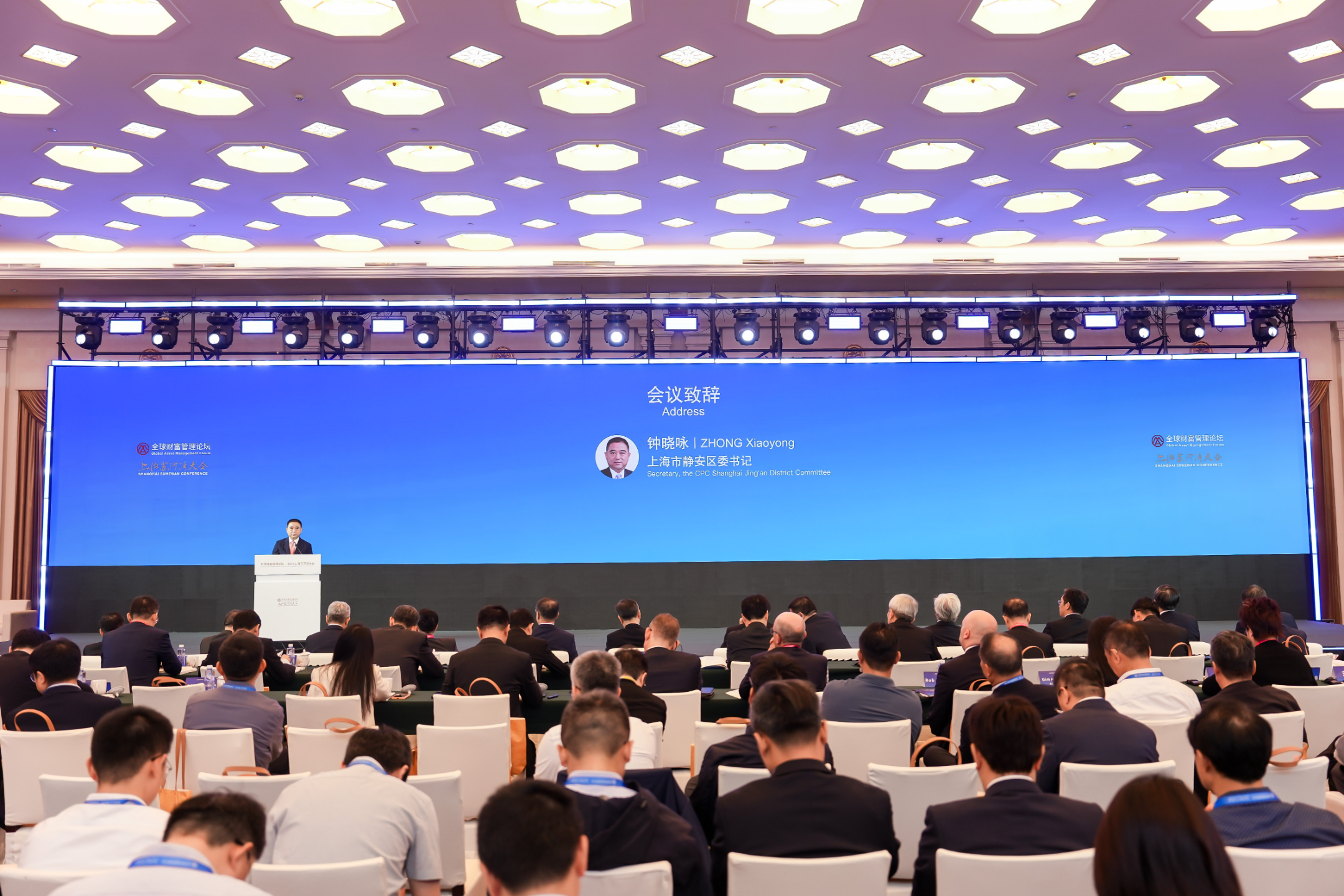
Core Insights - The Global Wealth Management Forum 2025 held in Shanghai focused on topics such as digital transformation, technological benefits, global financial cooperation, and investment outlooks, showcasing Shanghai's financial innovation and openness [1][2]. Group 1: Investment Trends - AI and gold emerged as hot topics during discussions, with experts highlighting the importance of AI for business competitiveness and the historical correlation between inflation and gold prices [5][6]. - The Shanghai financial market saw a trading total of 2967.83 trillion yuan from January to September, marking a 12.7% year-on-year increase, with stock market capitalization and bond market size ranking among the top globally [6]. Group 2: Financial Ecosystem Development - Shanghai's Jing'an District reported a financial services industry value-added of 28.817 billion yuan in the first half of the year, indicating robust growth and a well-developed financial ecosystem [8]. - The establishment of the Shanghai AI-FI Laboratory was a notable outcome of the forum, aiming to integrate AI into financial services, with various financial institutions launching innovative AI-driven tools [11][13]. Group 3: Policy and Infrastructure - The forum emphasized the need for continuous dialogue among industry practitioners, institutional investors, and policymakers to navigate complex market conditions and seize emerging trends [6][7]. - Jing'an District has been proactive in enhancing its financial environment, establishing services like a comprehensive financing service center and a cross-border financial service center to facilitate international investments [9][10].


从高端论坛到产业崛起,静安金融如何解锁创新发展“密码”?
Guo Ji Jin Rong Bao· 2025-10-18 08:49
Core Insights - The Global Wealth Management Forum 2025 was held in Shanghai, focusing on high-end asset management dialogue and communication [1][3] - The forum gathered over a hundred prominent guests to discuss topics such as digital transformation, technological benefits, global financial cooperation, and investment outlooks [3] Group 1: Technological Integration in Finance - Tim Cook, CEO of Apple, discussed the integration of AI and digital technology in financial innovation, emphasizing how technology can expand financial services and wealth management [4] - The establishment of the "Shanghai AI-FI Laboratory" aims to promote the deep integration of AI technology with the financial industry, focusing on key issues in the "AI+Finance" sector [4][6] Group 2: Financial Growth in Jing'an District - Jing'an District reported a financial services industry value-added of 28.817 billion yuan in the first half of the year, maintaining a leading growth rate in Shanghai [8] - The district has seen significant developments with global asset management firms establishing a presence, including the full acquisition of private equity firms and the completion of new rounds of capital increase by foreign public funds [8] Group 3: Investment and Mergers - Jing'an District has actively engaged in the equity investment sector, establishing the Shanghai Jing'an Capital Investment Operation Company to enhance investments in strategic emerging industries [9] - The district has witnessed notable mergers and acquisitions, including the acquisition of a controlling stake in a major retail company and the control of a beverage company by KKR Group [9] Group 4: Financial Technology Ecosystem - The integration of financial and technological sectors is being accelerated in Jing'an, with various technology service providers supporting the digital transformation of financial institutions [11] - The district has implemented a talent policy to attract high-level financial professionals, enhancing its international financial talent ecosystem [11][12] Group 5: Future Development Goals - Jing'an District aims to leverage the influence of the Suhewan Conference to strengthen its international financial position and promote deeper, higher-quality financial innovation [12]
零售巨头转身,自有品牌能否再造大润发?
Guan Cha Zhe Wang· 2025-10-17 09:05
Core Insights - The article discusses the strategic shift of RT-Mart towards private label brands in response to the challenges faced in the retail industry, particularly during a downturn in consumer spending [1][5][6] Group 1: Company Strategy - RT-Mart is launching a "Private Label Festival" in October 2025, featuring nearly 500 private label products across various categories, aiming to balance cost control and quality experience [5][10] - The private label strategy includes two main series: "Super Savings," which focuses on cost-effective products, and "RT-Mart Selection," which emphasizes quality and local specialties [5][10] - The company aims to leverage its supply chain to ensure quality control and competitive pricing, moving away from traditional brand partnerships [10][11] Group 2: Market Context - The traditional supermarket model is under pressure from online platforms and new retail formats, leading to a significant decline in the number of physical stores and sales [6][11] - Consumer behavior has shifted towards value-driven purchasing, with a growing demand for high-quality, cost-effective products [6][11] - The retail industry is transitioning from a "channel dividend" to a "supply chain dividend," necessitating a focus on supply chain integration and brand storytelling [11][16] Group 3: Financial Performance - Financial data indicates a decline in revenue for RT-Mart's parent company, with a drop from approximately 83.66 billion yuan to 71.55 billion yuan between 2023 and 2025 [7][10] - The gross profit also decreased slightly, from 20.58 billion yuan to 17.24 billion yuan during the same period [7] Group 4: Competitive Landscape - RT-Mart faces competition from established private label brands like Walmart's "Great Value" and Sam's Club's "Member's Mark," which have already gained market recognition [13][14] - The rise of hard discount chains and online platforms offering low-priced products poses additional challenges to RT-Mart's market position [14][15] - The company must quickly innovate and adapt to consumer preferences to remain competitive in a crowded market [15][16]

2025居家套餐行业简析报告
Jia Shi Zi Xun· 2025-10-14 14:16
Investment Rating - The report indicates a strong growth potential for the in-home dining industry, with a projected market size exceeding 6 trillion yuan by 2024, reflecting a compound annual growth rate (CAGR) of 11.5% from 2018 to 2024 [28][23]. Core Insights - The in-home dining market is primarily composed of three segments: ready-to-eat or ready-to-cook meal products, fresh ingredients for home cooking, and food delivery services [11][5]. - The industry has evolved from individual private chef services to a comprehensive dining system that integrates meal preparation and delivery, driven by the rise of the "宅经济" (stay-at-home economy) and enhanced food safety regulations [19][15]. - Urbanization and increasing disposable income are significant drivers for the industry's expansion, with China still having considerable room for growth compared to developed countries [23][84]. Summary by Sections Industry Definition - The in-home dining service consists of three main categories: fresh ingredients for home cooking, meal delivery services, and ready-to-eat meal products [5][11]. Industry Development - The industry has transitioned through various phases, from early exploration with private chefs to a more structured and regulated market that includes meal delivery and ready-to-eat products [15][22]. Industry Outlook - The potential for market expansion is substantial, supported by urbanization and rising disposable income, which are expected to drive growth in the dining sector [23][84]. Industry Scale - The overall market size for in-home dining surpassed 5 trillion yuan in 2022 and is projected to exceed 6 trillion yuan by 2024, with a CAGR of 11.5% [28][29]. Industry Growth Drivers - Key growth drivers include advancements in food industrialization, improvements in cold chain logistics, and a shift towards higher consumer spending on food [32][36]. Industry Value Chain - The industry value chain encompasses upstream raw material supply, midstream production and processing, and downstream sales channels, with cold chain logistics being crucial for maintaining product quality [39][42]. Upstream Trends - The prices of meat have shown a downward trend, while rice prices remain stable, and vegetable prices exhibit seasonal fluctuations [43][44]. Midstream Dynamics - The industry is characterized by a fragmented market structure, with a few leading players like锅圈 (Guoquan) establishing a strong presence [47][49]. Downstream Channels - The distribution channels for in-home dining products are diverse, including both online and offline platforms, supported by cold chain logistics to ensure product freshness [53][56]. Company Spotlight: Guoquan - Guoquan has emerged as a leading brand in the in-home dining sector, focusing on a wide range of meal products and expanding its retail network significantly [59][61].