
光证资管

Search documents
全部撤回!券商资管申请公募牌照,排队队伍清零!
Zheng Quan Shi Bao Wang· 2025-11-29 03:29
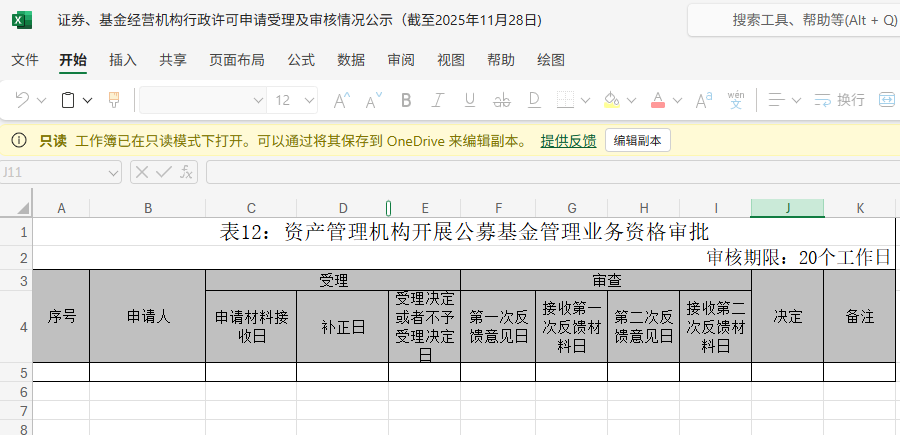
Core Viewpoint - The application for public fund management licenses by several brokerage asset management subsidiaries has completely ceased, indicating a significant shift in the industry as the deadline for compliance with new regulations approaches [2][3][6]. Group 1: License Application Status - As of November 28, no brokerage asset management companies are in line to apply for public fund licenses, marking a complete withdrawal of applications [3][6]. - Initially, four companies, including Guotai Junan Asset Management, were in the queue for public licenses, but all have now withdrawn their applications [2][6]. - The regulatory environment has shifted, with indications that no new public fund licenses will be granted to brokerage asset management firms [6][8]. Group 2: Regulatory Background - The asset management industry is under pressure to complete the transformation of "public collective" products to comply with regulations by the end of 2025 [7][9]. - The 2018 regulations required brokerage asset management products to align with public fund management standards, leading to a rush for licenses following the easing of restrictions in 2022 [5][7]. Group 3: Industry Response and Future Directions - With the deadline approaching, brokerage asset management firms are exploring various paths, including changing management, liquidation, or transitioning to private fund management [9][10]. - Some firms are transferring their collective products to affiliated public fund companies, while others are opting for private asset management plans [10][11]. - Notably, there are instances of cross-industry management changes, where firms without affiliated fund companies are engaging unrelated fund management firms [10][11].

券商资管“公募热”退潮:年内三家撤回,仅剩国金等批文;多家基金公司撤销监事会 | 券商基金早参
Mei Ri Jing Ji Xin Wen· 2025-11-28 01:05
Group 1 - The enthusiasm for public fund licenses among securities asset management companies has significantly cooled, with three institutions withdrawing their applications this year, leaving only Guojin Asset Management in the queue for approval [1] - This trend reflects a rational return to the industry regarding public fund licenses, potentially leading to a greater focus on active management capabilities and promoting differentiated competition among firms [1] - The reduction in new entrants may alleviate homogenization pressure in the public fund industry, prompting existing institutions to strengthen their core competitiveness [1] Group 2 - The total scale of cross-border mergers and acquisitions (M&A) has doubled year-on-year, with Chinese enterprises disclosing 182 outbound M&A events totaling 177.25 billion, of which 142 events occurred in 2025 alone, amounting to 156.85 billion [2] - Major securities firms are actively seizing opportunities in cross-border M&A, with firms like CICC and CITIC Securities enhancing their service offerings and team structures to capture market share [2] - Despite the growth, many Chinese securities firms still lack the capability to handle complex cross-border transactions, which remains a shortcoming in the industry [2] Group 3 - The number of newly established index-enhanced funds has surged over 400% year-on-year, with 160 new products launched this year, driven by policy support, improved index systems, and increased investor demand [3] - This explosive growth indicates a strong market preference for passive investment strategies, leading to intensified competition among public fund institutions [3] - The trend may reshape the asset management industry landscape, concentrating funds further into leading index products and enhancing overall market pricing efficiency [3] Group 4 - Several fund companies have begun to abolish their supervisory boards, following Yingda Fund's lead, with firms like Yimin Fund and Fangzheng Fubang Fund also making this move to streamline operations and reduce costs [4] - The decision to eliminate supervisory boards reflects an internal optimization strategy within the legal framework, aimed at enhancing efficiency and lowering operational costs [4] - This trend may support stock prices of small and medium-sized public companies and accelerate industry consolidation, indicating a shift towards more refined operational practices in the financial sector [4]
券商资管“公募热”退潮:年内三家撤回 仅剩国金等批文
Guo Ji Jin Rong Bao· 2025-11-27 15:12
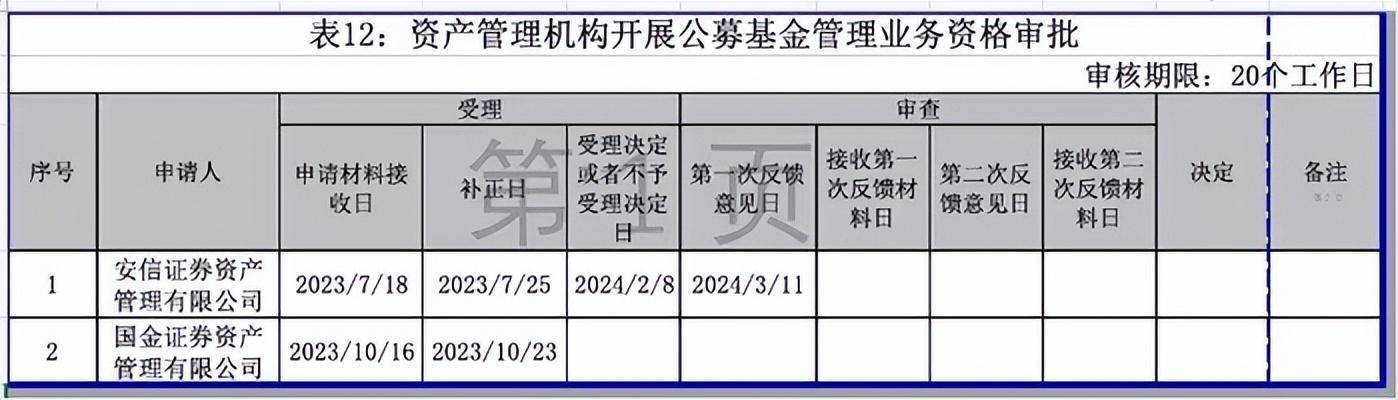
Core Viewpoint - The once-booming competition among brokerage asset management firms for public fund licenses is clearly retreating, with several firms withdrawing their applications, indicating a shift in strategy and market conditions [1][2][5]. Group 1: Withdrawal of Applications - The recent trend shows a significant number of brokerage asset management firms, including Guotai Junan Asset Management, Guangfa Asset Management, and Guosen Asset Management, have suspended their applications for public fund licenses, leaving only Guojin Asset Management in the queue [1][2]. - Guosen Asset Management submitted its application in October 2023 but has not received any feedback, highlighting the uncertainty in the approval process [3]. Group 2: Market Environment and Strategic Choices - The collective withdrawal from public fund license applications reflects a more cautious strategic choice by brokerage asset management firms in the current market environment, rather than a fundamental devaluation of public fund licenses [5]. - The tightening of regulations and intense competition in the public fund industry has led some asset management firms to reassess their cost-benefit ratios, opting to withdraw if they lack sufficient resources or competitive advantages [5][6]. Group 3: Regulatory Context and Future Implications - The approval process for public fund licenses has slowed significantly since the initial surge in applications in 2023, with only a few firms receiving approvals, indicating a potential "zero release" situation in 2024 [3][4]. - The impending deadline for brokerage firms to complete the transformation of their collective asset management products by the end of 2025 adds pressure, prompting some firms to seek alternative solutions to alleviate transformation stress [6][7].
券商资管“公募热”退潮:年内三家撤回,仅剩国金等批文
Guo Ji Jin Rong Bao· 2025-11-27 15:05
Group 1 - The trend of brokerage asset management firms withdrawing applications for public fund licenses is evident, with several firms like Guotai Junan Asset Management and Guangfa Asset Management halting their applications, leaving only Guojin Asset Management in the queue [1][2][4] - The approval process for public fund licenses has significantly slowed down after a surge in applications in 2023, with only a few firms receiving approvals, indicating a stark contrast to the previous year's enthusiasm [4][5] - The collective withdrawal from public fund license applications reflects a more cautious strategic choice by brokerage asset management firms in the current market environment, rather than a fundamental devaluation of public fund licenses [6][7] Group 2 - The tightening of regulations and intense competition in the public fund industry have led some asset management firms to reassess their cost-benefit ratios, resulting in a more rational decision to withdraw from applications [6][7] - The impending deadline for the transformation of brokerage collective asset management products into public offerings by the end of 2025 adds pressure on firms, prompting them to seek alternative solutions to alleviate transformation stress [7][8] - Some firms have begun transferring their collective asset management products to affiliated fund management companies as a strategy to comply with regulatory requirements while awaiting public fund license approvals [8]
券商资管转型生变:“参公”产品变更管理人 公募牌照申请退潮
2 1 Shi Ji Jing Ji Bao Dao· 2025-11-27 13:01
Core Viewpoint - The transition period for the transformation of "publicly offered collective products" is nearing its end, prompting several brokerage firms to change the management of their collective products to avoid liquidation and successfully convert them into public fund products [1][4]. Group 1: Changes in Management of Collective Products - As of November, at least 25 publicly offered collective products have officially changed their management to public fund companies, with notable changes including products from Guangfa Fund, Huafu Fund, and others [1][3]. - The process for changing management involves obtaining approval from the China Securities Regulatory Commission (CSRC) and holding a meeting for product holders to vote on the change [3][4]. - The changes not only involve the management but may also affect product names, investment strategies, and fee structures [3][4]. Group 2: Shift in Focus for Brokerage Asset Management - Brokerage asset management firms are increasingly abandoning the pursuit of public fund licenses, with several firms like Guangfa Asset Management and Guotou Securities Asset Management withdrawing their applications [6][7]. - The reasons for this shift include the lengthy wait for license approval, high initial investment costs for establishing independent operations, and the competitive landscape of the public fund industry [7][9]. - Firms are now focusing on differentiated strategies in private asset management and wealth management, which are seen as more advantageous compared to the public fund sector [2][8]. Group 3: Strategic Implications of the Transition - The transition to changing management for collective products is viewed as a necessary response to regulatory compliance requirements, allowing firms to retain clients and avoid fund liquidation [4][5]. - The current trend indicates a move away from "license worship" towards a more rational understanding of the profitability challenges associated with public fund operations [7][9]. - Brokerage firms are now concentrating on creating value-driven products that cater to specific client needs, emphasizing absolute returns and tailored investment strategies [10].




撤回!券商资管申请公募牌照,退潮!
券商中国· 2025-11-26 10:58
Core Viewpoint - The application for public fund licenses by securities asset management companies has significantly cooled down after a two-year policy relaxation, shifting from a rush to apply to a more rational withdrawal of applications [1][2]. Group 1: License Application Trends - Initially, four securities asset management subsidiaries, including GF Asset Management, Guangfa Asset Management, and Guozheng Asset Management, applied for public fund licenses, but by November, three of them had withdrawn their applications, leaving only Guojin Asset Management still in the queue [1][2]. - In 2023, six securities asset management companies submitted applications for public fund licenses, but only two, China Merchants Asset Management and Xingsheng Asset Management, were granted licenses. The approval of new licenses has nearly stagnated in 2024 [2][4]. Group 2: Regulatory Environment - The "One Participation, One Control" policy, which relaxed the restrictions on the number of public fund licenses, was implemented in May 2022, prompting many securities firms to seek additional licenses [2]. - Recent regulatory signals indicate that no new public fund licenses will be issued to securities asset management companies, leading to speculation that Guojin Asset Management may also withdraw its application [4]. Group 3: Transition to Public Fund Management - According to the asset management regulations established in 2018, securities firms must complete the public transformation of their "participating public collective" products by the end of 2025. Firms without public fund licenses must choose to liquidate, extend, or change management for their related products upon expiration [5][6]. - As the deadline approaches, the industry is entering a critical transition phase, with many firms opting to transfer management of their public collective products to affiliated public fund companies or to shift towards private asset management [6][7].

国证资管撤回公募牌照申请,多家券商资管已撤回公募牌照申请
Sou Hu Cai Jing· 2025-11-03 11:02
Core Viewpoint - The recent disclosure from the China Securities Regulatory Commission indicates that Guotou Securities Asset Management Co., Ltd. has been removed from the list of institutions approved for public fund management business, reflecting a tightening of public fund license approvals in the industry [1] Group 1: Industry Dynamics - Several asset management firms, including GF Securities Asset Management and Guangfa Securities Asset Management, have withdrawn their applications for public fund licenses, leaving only Guojin Securities Asset Management in the queue [1] - As of the end of the third quarter, a total of 3 securities firms and 11 asset management institutions have been granted public fund licenses, managing nearly 600 billion yuan in non-monetary fund scale [1] - The industry is experiencing a "Matthew Effect," where a few firms dominate the market, leading to intensified competition among similar companies [1] Group 2: Financial Impact - The tightening of public fund license approvals aligns with the current industry landscape, where smaller fund companies are facing revenue pressures due to a backdrop of fee reductions [1] - Some securities asset management firms are reconsidering their strategies regarding entering the public fund space in light of these challenges [1]
公募牌照凉了?头部券商曾经抢破头,如今撤资跑路,只剩两家硬扛
Sou Hu Cai Jing· 2025-10-18 13:25
Core Viewpoint - The withdrawal of Guangfa Asset Management and Guangzheng Asset Management from the public fund management license application process indicates a shift in the industry from a focus on obtaining licenses to emphasizing operational capabilities and differentiation in product offerings [1][12][16] Group 1: License Application and Market Dynamics - Guangzheng Asset Management withdrew from the application process after waiting over two years, similar to Guangfa Asset Management, which manages over 250 billion in assets [1] - The urgency in obtaining licenses is driven by regulatory requirements mandating that certain products must complete public offering transformations by the end of 2025, or face liquidation or conversion to private funds [3][5] - The time-consuming nature of the application process has led firms to seek alternative strategies, such as transferring products to affiliated fund companies that already hold public licenses [5][6] Group 2: Cost-Benefit Analysis of Obtaining Licenses - The costs associated with obtaining a public fund license, including building research teams and compliance systems, can reach millions annually, making it less attractive for firms [8][10] - The competitive landscape for public fund management is saturated, with 164 firms vying for market share, making it difficult for new entrants to achieve significant scale [10] - In contrast, private fund strategies, such as FOF and alternative investments, offer higher profit margins and quicker returns, appealing more to leading firms [10] Group 3: Industry Evolution and Future Outlook - The industry is transitioning from a "license acquisition" mindset to one focused on "capability competition," where firms must demonstrate unique value propositions rather than simply holding licenses [12][14] - Regulatory scrutiny has increased, with a focus on differentiation among firms, as evidenced by feedback received by firms like Guozheng Asset Management [12][16] - The withdrawal from the license application process is seen as a rational decision, allowing firms to concentrate on their core competencies and deliver better products to investors [14][16]
三季度资管机构调研热情下降 科技和医药医疗股受青睐
2 1 Shi Ji Jing Ji Bao Dao· 2025-10-17 00:04
Core Insights - Asset management institutions have shown a decline in enthusiasm for researching listed companies in Q3, with a 24.8% decrease in the number of companies surveyed compared to the previous quarter [1] - In contrast, during Q2, there was a significant increase of 49.31% in the number of companies surveyed as the market experienced a period of stagnation [1] - The focus of asset management institutions remains on technology stocks, with a growing interest in pharmaceutical and medical stocks [2] Group 1: Research Activity - In the first three quarters, insurance asset management companies conducted 7,687 surveys on 5,850 individual stocks, with a majority focused on Shenzhen Main Board and Sci-Tech Innovation Board, accounting for 26.92% and 25.91% respectively [2] - The most active insurance asset management company, Taikang Asset, surveyed 860 companies, focusing primarily on the Shanghai Main Board [2] - Broker asset management companies surveyed 4,216 times, with 3,321 individual stocks, showing a preference for high-growth potential and technology-intensive companies [2][3] Group 2: Sector Preferences - In Q3, the Sci-Tech 50 index rose by 49.02%, significantly outperforming the Shanghai and Shenzhen 300 index, which increased by 17.9% [4] - Insurance asset management companies surveyed 600 companies on the Sci-Tech Innovation Board in Q3, making it the most surveyed sector, followed by the Shenzhen Main Board [4] - The most favored stocks among research institutions in Q3 included Mindray Medical, with 538 institutions conducting surveys, followed by Huichuan Technology and Maiwei Biomedical [5]



三季度资管机构调研热情下降,科技和医药医疗股受青睐
2 1 Shi Ji Jing Ji Bao Dao· 2025-10-16 12:41
Group 1 - The enthusiasm of asset management institutions for researching listed companies has decreased in the third quarter, with a 24.8% decline in the number of research activities compared to the previous quarter [1][5] - In the second quarter, during a period of market stagnation, asset management institutions increased their research activities by 49.31% [1] - The focus of asset management institutions remains on technology stocks, with a growing interest in pharmaceutical and medical stocks in the third quarter [2][3] Group 2 - Insurance asset management companies conducted a total of 7,687 research activities on 5,850 individual stocks in the first three quarters, with a significant focus on Shenzhen Main Board and Sci-Tech Innovation Board stocks [2] - The most active insurance asset management company was Taikang Asset, which conducted 860 research activities on 566 stocks, primarily on the Shanghai Main Board [2] - The research frequency of brokerage asset management subsidiaries was slightly lower, with 4,216 research activities on 3,321 stocks, showing a preference for high-growth potential and technology-intensive companies [3] Group 3 - Wealth management companies conducted over 2,100 research activities on more than 1,700 listed companies in the first three quarters, with a notable preference for Shenzhen Main Board and Sci-Tech Innovation Board companies [4] - Trust companies showed less enthusiasm compared to other asset management institutions, with 1,580 research activities on 1,337 stocks [4] - The overall investment ratio of wealth management companies in equities remains low, but their management scale reached 27.48 trillion yuan by the end of June [3] Group 4 - The Sci-Tech 50 index rose by 49.02% in the third quarter, significantly outperforming the broader market, with the CSI 300 index increasing by 17.9% [7] - Insurance asset management companies focused on 600 Sci-Tech Innovation Board companies in the third quarter, which, along with Shenzhen Main Board stocks, accounted for 53.57% of their research activities [7] - The most researched stock in the third quarter was Mindray Medical, with 538 institutions conducting research, followed by Huichuan Technology and Maiwei Biological-U [8]
