
库卡

Search documents
机器人的上限在北京,生死在广东
3 6 Ke· 2025-11-28 10:14
Core Insights - The Chinese robotics industry is experiencing a shift from a focus on advanced algorithms to practical manufacturing challenges, particularly in the context of commercializing humanoid robots [1][3][19] - The Pearl River Delta region, particularly the 50-kilometer industrial belt from Shenzhen to Foshan, is emerging as a critical area for the practical application and production of robotics, leveraging its engineering capabilities and supply chain advantages [2][18] Group 1: Industry Trends - The initial phase of investment in robotics was characterized by a belief in software-driven solutions, but recent developments indicate a need for more durable and cost-effective physical implementations [1][3] - The "Sim2Real" gap highlights the challenges of transferring algorithms from simulation to real-world applications, necessitating physical feedback and robust manufacturing processes [5][19] Group 2: Regional Advantages - Shenzhen is recognized for its rapid validation environment, where policies and market dynamics foster quick iterations and product development [6][9] - Dongguan is positioned as a key area for scaling production, with a focus on reducing costs and increasing capacity to meet market demands [10][12][13] - Foshan serves as a practical testing ground for robotics applications, emphasizing the importance of real-world performance metrics like MTBF and ROI for industrial clients [14][16] Group 3: Future Outlook - The integration of advanced algorithms with robust manufacturing capabilities is essential for the future of embodied intelligence in robotics [19] - The collaboration between top research teams in Beijing and Shanghai and the manufacturing prowess of the Pearl River Delta is seen as a vital strategy for advancing China's robotics industry towards a trillion-dollar market [18][19]



场景型创新:具身智能产业突围的顺德探索
2 1 Shi Ji Jing Ji Bao Dao· 2025-11-27 04:11
Core Insights - The global robotics market is projected to exceed $120 billion by 2025, with an annual growth rate of over 25% [1] - China holds over 30% of the global market share and is expected to see a growth rate of more than 25% annually, becoming a key driver in the industry [1] - Human-shaped robots are anticipated to account for half of the global production, although challenges such as "technology-scene disconnection" and "complex working conditions adaptation" remain prevalent [1] Group 1: Industry Development - Shunde is exploring a new pathway for the robotics industry through "scene-based innovation," embedding robotics in local manufacturing scenarios from inception [1] - The region has a natural "demand pool" supported by large-scale industrial clusters in home appliances, home furnishings, and equipment manufacturing [1] - In August, Tiantai Robotics secured the largest global order for human-shaped robots, aiming to deliver over 10,000 home care robots by 2026 to address aging society needs [1] Group 2: Technological and Collaborative Mechanisms - The closed-loop mechanism of "scene defining technology, technology feeding back to scene" enhances the market penetration of Shunde's technological breakthroughs [2] - Shunde has established a "scene-industry-policy" symbiotic ecosystem, including a multi-modal large model training facility to address local challenges in embodied intelligence [2] - The government is facilitating collaboration by creating quality service stations and innovation consortia to alleviate R&D challenges for SMEs [2] Group 3: Industrial Ecosystem - The industrial ecosystem is characterized by leading companies like Midea and KUKA, alongside specialized firms like Tiantai and Jiateng, which can rapidly respond to scene demands [2] - Continuous operation of the embodied intelligence training facility and ongoing optimization of supply-demand matching mechanisms are expected to unlock "scene dividends" [2] - Shunde aims to establish a trillion-level robotics industry cluster and provide a replicable model for overcoming "implementation difficulties" in China's robotics sector [2]

市场化展览上,21个国家和地区456家企业将携最新产品亮相
Nan Jing Ri Bao· 2025-11-27 02:32
Group 1 - The 2025 World Intelligent Manufacturing Conference will be held from November 27 to 29 at the Nanjing International Expo Center, featuring a total exhibition area of 55,000 square meters and attracting 456 companies from 21 countries and regions [1][4] - The exhibition includes a dedicated robot hall where companies like KUKA, Hyundai, and Yuzhu Technology showcase their industrial and humanoid robots [1][2] - A humanoid robot from Jiangsu Ruantong Technology can create a portrait in just seven to eight minutes using algorithms to analyze uploaded images [2][3] Group 2 - Nanjing Estun Automation Co., Ltd. presents its second-generation humanoid robot CODROID 02, which serves as a welcoming figure at their booth [2] - Jiangsu Jicui Intelligent Manufacturing Technology Research Institute showcases a smart comprehensive strength training robot that can cover over 80% of gym equipment, suitable for home and office use [3] - JD.com is participating in the exhibition, attracting numerous leading brands in the industry and focusing on various application scenarios such as future life assistants, education, and industrial solutions [3][4]
科创赋能产业,古镇唤醒江南!青浦区“十四五”成果惊艳长三角
Guo Ji Jin Rong Bao· 2025-11-26 12:16
Group 1: Economic Development in Qingpu District - Qingpu District's GDP is projected to reach 182.5 billion yuan in 2024, representing a 150% increase compared to the end of the 13th Five-Year Plan [1] - The district is characterized by its vibrant urban image, emphasizing innovation and warmth, as it embarks on its 14th Five-Year Plan [1] Group 2: Midea's Global Innovation Park - Midea's Global Innovation Park in Qingpu is a significant investment exceeding 7 billion yuan, covering an area of 400,000 square meters and focusing on advanced technologies such as AI, new energy, and robotics [6] - The park integrates low-carbon and digital technologies, featuring a self-developed iBUILDING digital platform for real-time energy monitoring and response [6] - Midea has transformed from a traditional home appliance company to a leader in industrial robotics, with revenue surpassing 300 billion yuan in 2021 and projected to exceed 400 billion yuan in 2024 [6] Group 3: Industrial Ecosystem and Collaboration - Qingpu has developed a robust industrial ecosystem, attracting major companies like Huawei and NetEase, with the new generation information technology industry expected to exceed 100 billion yuan this year [17] - The district has implemented a "business response" mechanism to enhance service efficiency for enterprises and foster collaborative innovation, exemplified by Midea's partnership with HiSilicon [17] Group 4: Cultural and Tourism Development - The Panlong New World project revitalizes Qingpu's cultural heritage, becoming a new lifestyle landmark in West Shanghai and is set to be recognized as a national-level tourism and leisure district by March 2025 [18] - The project has attracted over 47 million visitors since its opening, with daily foot traffic reaching 150,000 during holidays and over a million during peak periods [30] - Panlong New World features nearly 200 brand tenants, focusing on cultural experiences and outdoor activities, contributing to the local economy [23]
江苏南京:相约十年,让制造更聪明
Nan Jing Ri Bao· 2025-11-26 02:24
Core Insights - The 2025 World Intelligent Manufacturing Conference will be held from November 27 to 29, marking its tenth anniversary and showcasing the achievements of Nanjing's intelligent manufacturing industry [3][4] - The conference has evolved into a global "barometer" for intelligent manufacturing, reflecting China's deep involvement in global collaboration and the high-quality development of Jiangsu's manufacturing sector [4][6] - Nanjing aims to transition from a "manufacturing city" to a "smart manufacturing powerhouse," leveraging the conference to highlight its urban transformation and development [3][19] Event Highlights - The upcoming conference will feature a record exhibition area of 55,000 square meters, with participation from 456 companies across 21 countries, including major international players like Phoenix, Honeywell, and Dassault [7][8] - The event will introduce an international invited exhibition area in collaboration with the Stuttgart Exhibition Group, enhancing its global engagement [6][8] - Over the past decade, the conference has attracted more than 10,000 industry elites and facilitated over 100 high-level exchange platforms, significantly contributing to technological innovation and industrial upgrades in intelligent manufacturing [8][19] Industry Developments - The conference will focus on themes such as "Digital Intelligence Driving New Quality Leadership," emphasizing international collaboration and market-oriented approaches [8][10] - Nanjing has established a comprehensive industrial ecosystem in intelligent manufacturing, with nearly 200 related enterprises and a significant increase in robot production capacity, positioning itself as a leader in the sector [10][12] - The city has implemented a three-year action plan for the digital transformation of manufacturing, achieving a digital integration development level of 74.3, surpassing national and provincial averages [16][18] Technological Innovations - The conference will showcase cutting-edge technologies, including a humanoid robot designed for intelligent manufacturing scenarios, which integrates advanced AI and reinforcement learning [10][11] - Nanjing's intelligent manufacturing sector has seen substantial growth, with local companies like Estun Robotics leading the market with a 10.5% share and a production capacity of 120,000 industrial robots annually [10][12] - The city is also focusing on AI-driven solutions to enhance manufacturing efficiency, with significant cost reductions reported in various industrial applications [12][18] Future Outlook - Nanjing is committed to building a global intelligent manufacturing hub, continuously improving its industrial foundation and ecosystem to support high-quality development [19] - The city aims to integrate advanced technologies and foster collaboration among government, enterprises, and academia to address challenges and opportunities in digital transformation [11][14] - The upcoming conference is expected to further solidify Nanjing's position in the global intelligent manufacturing landscape, paving the way for the next decade of growth and innovation [19]

打造产业创新“策源地” 搭建国际合作“交汇场”
Nan Jing Ri Bao· 2025-11-21 02:20
Core Insights - The 2025 World Intelligent Manufacturing Conference will be held in Nanjing from November 27 to 29, marking its tenth anniversary since its inception in 2016, with a theme of "Digital Intelligence Drives New Quality Leadership" [1][2] - The conference aims to create a high-end, international platform for global intelligent manufacturing exchange and cooperation, showcasing the latest achievements in the field and discussing the integration of technological breakthroughs with industrial transformation [1][2] Group 1: Event Highlights - The conference will feature a main conference, a market-oriented exhibition, and 12 specialized activities, with participation from major companies like Dassault and JD.com, as well as 16 industry ecosystem activities [1][2] - Approximately 2000 attendees are expected, including nearly 200 important guests from domestic and international institutions, such as academicians and industry leaders [2][3] Group 2: Specialized Activities - The main conference will include the appointment ceremony for the new National Intelligent Manufacturing Committee, the release of the 2025 Intelligent Manufacturing Blue Book, and the announcement of the top ten technological advancements in intelligent manufacturing for the year [3][4] - A market-oriented exhibition will cover 55,000 square meters, featuring 452 companies from 18 countries and regions, with a focus on robotics, smart factories, industrial software, and intelligent equipment [4][5] Group 3: International Collaboration - The exhibition will introduce an international invited exhibition area for the first time, showcasing leading intelligent manufacturing technologies and solutions from global companies [5] - A series of specialized activities, including financial roadshows and technology exchanges, will be held to facilitate cooperation and win-win outcomes across the industry chain [5]



互为引擎 彼此成就 机器人与汽车智造“双向奔赴”
Zhong Guo Qi Che Bao Wang· 2025-11-17 08:46
Core Insights - The integration of industrial robots and AI in the automotive industry is driving a significant transformation in manufacturing processes, enhancing efficiency, quality, and flexibility [2][9][10] Group 1: Industrial Robot Production and Demand - In September 2023, the production of industrial robots in China reached 76,300 units, marking a year-on-year increase of 28.3%, with a cumulative production of 595,000 units from January to September, surpassing the total for the previous year [2] - The automotive industry is a key driver of demand for industrial robots, as the sector increasingly adopts robotic solutions to improve production methods and meet rising efficiency and quality standards [3][4] Group 2: Technological Advancements and Product Launches - ProRobot has launched the industrial-grade wheeled robot "Dabai" 2.0, which has undergone comprehensive upgrades across over 300 performance points, following the successful deployment of its 1.0 version in various manufacturing scenarios [3] - The introduction of standardized end-effectors by ProRobot aims to address flexible production challenges, covering nearly 40% of core manufacturing processes and enhancing compatibility with various robotic systems [3][4] Group 3: Human-Robot Collaboration - The automotive sector is moving beyond simple automation to a "human-robot collaboration" model, where robots handle high-precision tasks while human workers focus on complex operations, thus improving overall production efficiency [5][8] - The collaboration between robots and humans is expected to alleviate labor shortages in specific roles, particularly those requiring high precision and repetitive tasks [7][8] Group 4: Future Trends and Challenges - The automotive manufacturing landscape is evolving towards greater flexibility, intelligence, and deep human-robot collaboration, with a focus on meeting the demands of customized production [9][10] - Challenges remain in achieving the required precision and stability in robotic operations, as well as adapting to rapid changes in production lines and ensuring safe human-robot interactions [9][10] Group 5: Broader Implications for Innovation - The role of robots in the automotive industry is shifting from being mere manufacturing tools to becoming innovative partners that contribute to product design and development processes [11] - The potential for robots to influence the entire value chain of automotive manufacturing signifies a transformative shift that could redefine industry standards and practices [11]

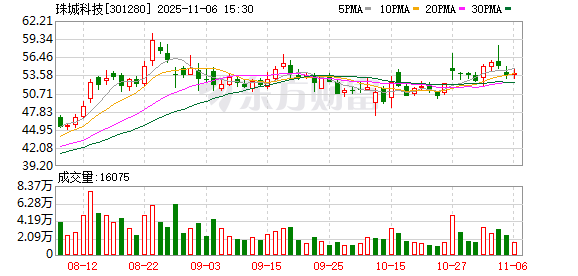
珠城科技:公司此次和库卡的合作将带动公司工业连接器占比逐步提升
Zheng Quan Ri Bao· 2025-11-06 14:13
Group 1 - The core viewpoint of the article highlights that the collaboration between the company and KUKA will gradually increase the proportion of industrial connectors, enhancing revenue elasticity in emerging sectors [2] - The company is continuously increasing investment in research and development, focusing on core processes, materials, and protective structures [2] - In terms of management and supply chain, the company aims to improve product delivery capability and consistency through intelligent manufacturing and joint development mechanisms, thereby strengthening its industrial customer base [2]
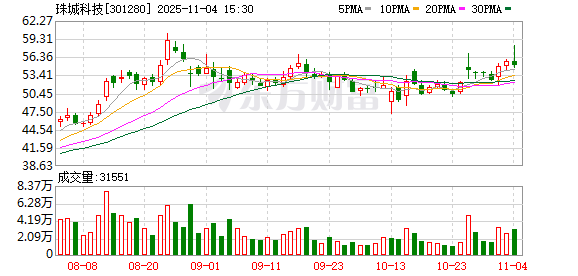
珠城科技:公司已形成机器人连接器产品线
Zheng Quan Ri Bao· 2025-11-04 13:39
Core Insights - Zhu Cheng Technology has developed a product line for robot connectors, primarily used in robot control systems, grounding, and EMC protection [2] - The products have been applied to clients such as KUKA and UBTECH [2] - The company has established a new subsidiary, "Yueqing Zhu Cheng BiXuan Robot Technology Co., Ltd.," to promote collaborative development within the robotics industry chain [2]
珠城科技(301280.SZ):公司已形成机器人连接器产品线
Ge Long Hui A P P· 2025-11-04 09:45
Group 1 - The company has developed a product line for robot connectors, primarily used for robot control system connections, grounding, and EMC protection [1] - The products have been applied to clients such as KUKA and UBTECH [1] - The company has established a new subsidiary, "Yueqing Zhucheng UBTECH Robot Technology Co., Ltd.," to promote collaborative development within the robotics industry chain [1]