
Rokid

Search documents
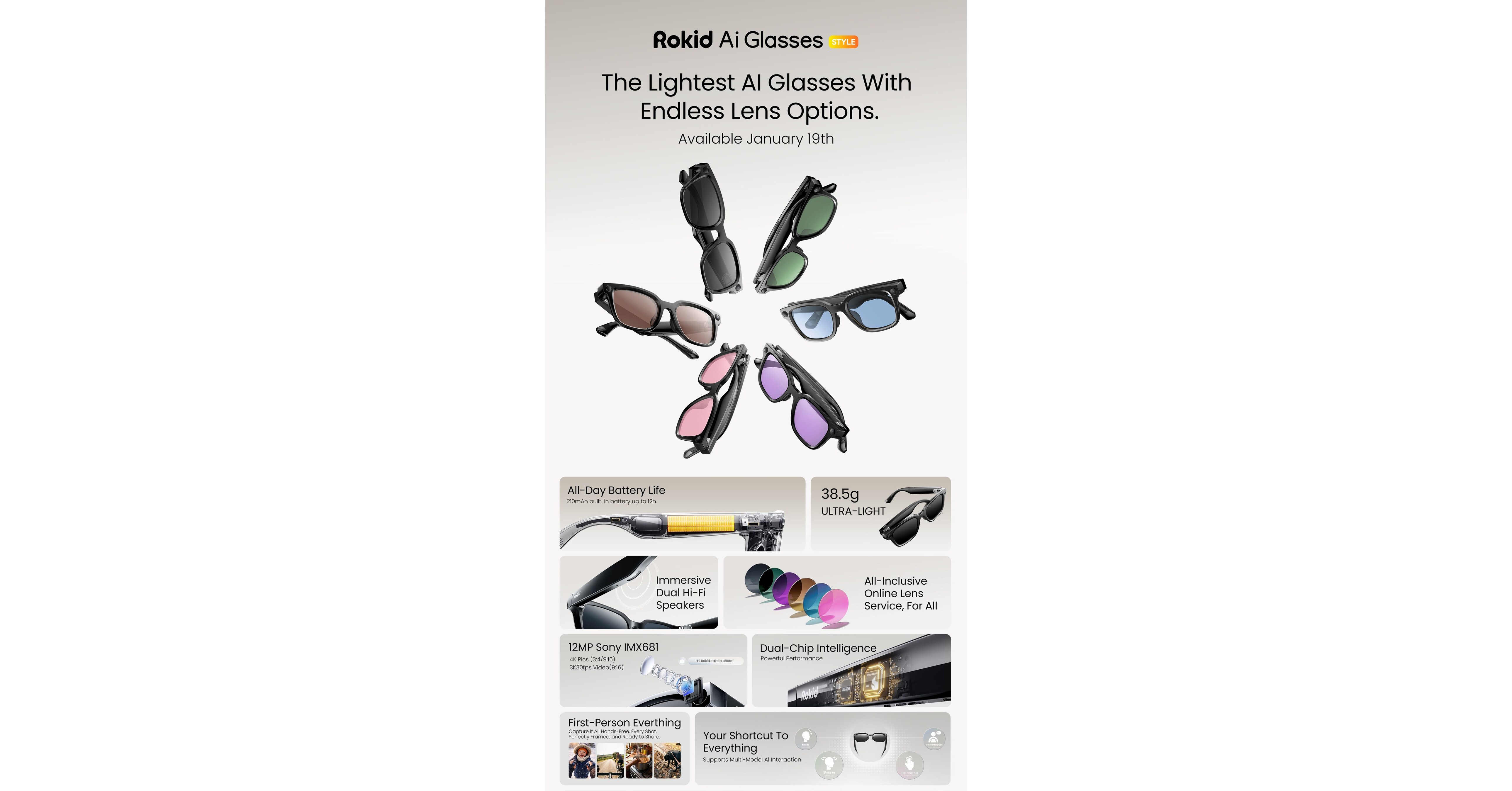
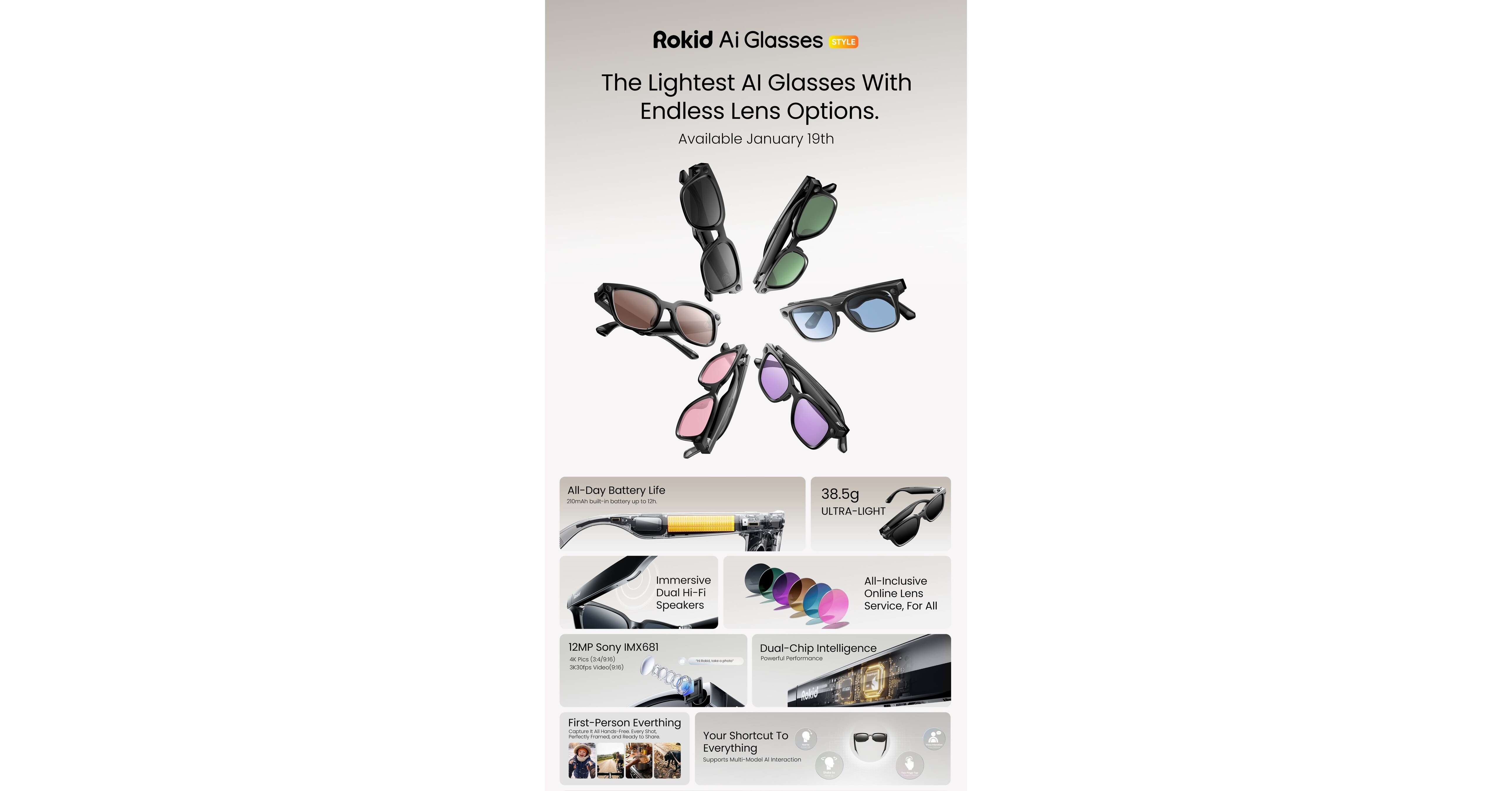
Die Rokid Ai-Brille Style ist nun weltweit erhältlich.
Prnewswire· 2026-01-24 16:17
Core Insights - Rokid has launched the world's first AI glasses with an open ecosystem, designed for vision correction and compatible with various AI services, starting at a price of $299 [1][2][3] Group 1: Product Features - The Rokid Ai Glasses Style weigh 38.5 grams, making them one of the lightest AI glasses available, and offer a battery life of up to 12 hours with a standby time of 24 hours [3] - The glasses feature a dual-chip architecture with NXP RT600 and Qualcomm AR1, and support voice interaction in 12 languages with translation capabilities in 89 languages [8] - Users can upload their prescriptions through Rokid's global online platform and receive customized lenses within 7 to 10 days, accommodating various vision needs [9] Group 2: Market Positioning - Rokid aims to position AI glasses as the primary platform for human-technology interaction, believing that they will replace smartphones in this role due to their comfort and longer battery life [5] - The company operates one of the largest developer communities for XR and wearable AI, with over 20,000 registered developers and numerous corporate partners globally [7] Group 3: Strategic Approach - Rokid's strategy focuses on an open AI ecosystem, allowing access to multiple AI services and models, enabling developers to create localized and cross-market applications [6] - The company continues its "Leave Nobody Behind" initiative, offering additional subsidies for visually impaired users, enhancing accessibility [11]

Les lunettes Rokid Ai Style sont désormais disponibles dans le monde entier
Prnewswire· 2026-01-24 16:15
Core Insights - Rokid has officially launched its Rokid Ai Style smart glasses, marking a significant step in the adoption of AI glasses for the general public, with a starting price of $299 [2][10] - The glasses weigh 38.5 grams, making them one of the lightest AI glasses on the market, and offer up to 12 hours of daily use and 24 hours of standby [2][7] Product Features - The Rokid Ai Style glasses feature an open AI ecosystem, providing a comprehensive prescription solution for everyday consumers [2][5] - They support multiple AI services and models, allowing developers to create localized and vertical applications on Rokid's wearable platform [5][6] - The glasses include innovations such as a dual-chip architecture, voice interaction in 12 languages with translation in 89 languages, and multimodal AI interaction [7] Prescription and Customization - Users can upload their prescriptions online and receive custom lenses within 7 to 10 days, accommodating a range of prescriptions from plano to ±15.00D [8][10] - The glasses offer dynamic photochromic lenses that transition from clear indoors to sunglasses outdoors in approximately 25 seconds [9] Pricing and Availability - The initial price for the Rokid Ai Style glasses is set at $299, with a premium option available for $398 that includes photochromic prescription lenses [10] - The glasses are available for purchase on Rokid's official website and on Amazon in the US and Germany, with a new gray translucent version set to launch in March 2026 [10] Company Background - Founded in 2014, Rokid is a global pioneer in augmented reality and AI, focusing on creating human-centered smart glasses that integrate intelligence into daily life [11] - The company has built one of the largest XR developer communities in the world, with over 20,000 registered developers and numerous global business partners [6][11]
有的发新品 有的停项目 AI眼镜赛道为何有进有退
Shang Hai Zheng Quan Bao· 2026-01-23 18:12
Group 1 - The AI glasses industry is experiencing a dichotomy between rapid product launches and project suspensions, reflecting the tension between technological prospects and commercial realities as seen with brands like Xuanjing and Vivo [1] - Major tech companies such as Google and Apple are set to release significant AI glasses products in 2026, while Vivo has reportedly halted its AI glasses project, raising discussions about the industry's future [1] - The industry faces challenges of homogenization and competition barriers, with many products lacking differentiation in performance and pricing, which may have contributed to Vivo's decision to pause its project [1][2] Group 2 - The low entry barriers and high degree of product similarity in the AI glasses market are highlighted, with a significant price range from several thousand yuan for branded AI glasses to a few hundred yuan for unbranded ones [2] - The convergence of supply chains has led to a lack of innovation in product design, resulting in a uniform appearance that fails to excite consumers [2] - To overcome hardware homogenization, a customized supply chain upgrade is necessary, which requires a substantial market volume to support the development of unique components [2] Group 3 - AI technology empowerment is becoming the core competitive advantage in the AI glasses sector, shifting the industry dynamics towards companies with strong AI capabilities like Alibaba and ByteDance [3] - The current players in the market are categorized into three groups: internet and AI model giants, smartphone manufacturers, and startup smart glasses companies, with AI model companies gaining market favor [3] - Startups are showing resilience and innovation, with companies like XREAL and Rokid presenting new products at CES 2026, focusing on niche market segments for differentiation [3] Group 4 - The AI hardware sector is expected to undergo structural changes by 2026, driven by the integration of multimodal large model technologies with hardware, which will enhance content ecosystems and application scenarios [4]
雷鸟、Rokid、阿里集体出击:中国AI眼镜天团决战放量前夜
3 6 Ke· 2026-01-23 11:12
Core Insights - The AI glasses market is experiencing a significant transformation, similar to the early days of smartphones, with various Chinese manufacturers aiming to make AI glasses mainstream through diverse pricing and branding strategies [2][4][15]. Market Trends - According to IDC, global shipments of smart glasses are projected to reach 4.065 million units in the first half of 2025, marking a year-on-year growth of 64.2%, with China expected to surpass 1 million units, capturing 26.6% of the global market share [2][19]. - The AR smart glasses market is also growing, with China holding a 57.3% market share in the first half of 2025 [7]. Competitive Landscape - Meta currently dominates the smart glasses market with a 75.7% share, but Chinese companies like Xiaomi, RayBird, Xreal, and Viture are emerging as key players [5][19]. - The CES showcased numerous AI glasses from Chinese manufacturers, highlighting their technological advancements and market ambitions [9][12]. Technological Innovations - New AI glasses are focusing on lightweight designs and multi-modal AI interactions, with products like Rokid Style weighing only 38.5 grams and offering advanced features [9][10]. - Companies are developing products that integrate AR displays with AI assistants, aiming for a seamless user experience [14][15]. Industry Dynamics - The AI glasses sector is becoming a strategic battleground for various tech companies, with significant investments being made to capture market share [15][28]. - The supply chain for smart glasses is heavily concentrated in China, which produces about 80% of the necessary components, making it a critical hub for the industry [19][29]. Future Projections - The global smart glasses market is expected to see a compound annual growth rate (CAGR) of 55.6% in China, with projections of over 40 million units shipped by 2029 [31]. - By 2030, the AI glasses market could potentially reach 80 million units, representing a significant opportunity within the $150 billion traditional eyewear market [32][33].

国泰海通证券每日报告精选-20260122
GUOTAI HAITONG SECURITIES· 2026-01-22 07:40
Group 1: Strategy Observation - The report highlights the strengthening of AI hardware demand and the continuation of technology manufacturing overseas, with the semiconductor industry experiencing further improvement due to increased AI penetration and export growth in power equipment [4] - Prices of lithium carbonate have surged significantly due to supply constraints and improved downstream demand expectations, while pork prices have also seen improvements supported by consumption policies [4] - Traditional real estate and durable goods sectors continue to face pressure, with a notable decline in retail sales of passenger vehicles [5] Group 2: Industry Tracking - Consumer Electronics - Domestic companies are making breakthroughs in powder metallurgy processes, particularly in nuclear fusion materials, which are expected to benefit from a surge in downstream demand [8] - Tian Gong International, a leader in powder metallurgy, has set ambitious performance targets, indicating strong growth confidence [8] - The company is focusing on high-boron steel and advanced low-activation steel for nuclear fusion applications, leveraging its powder metallurgy technology for cost advantages [9] Group 3: Industry Research - Cement Manufacturing - Uganda is identified as a key market for cement exports, with a rapidly growing economy and increasing cement demand driven by urbanization [12] - The country has a favorable supply structure with only three clinker production lines, leading to a competitive market landscape [13] - Despite high cement prices, profitability remains challenging due to high production costs and logistical issues [14] Group 4: Industry Research - Consumer Discretionary - The smart glasses industry is entering a growth phase, with companies like Mingyue Lens expected to benefit from collaborations with leading brands [16] - The introduction of new smart glasses models, such as Ray-Ban Meta, is anticipated to enhance user experience and expand market applications [17] - The supply chain for AI glasses is broadening, with various players from different sectors entering the market, indicating a significant expansion of the industry [18] Group 5: Company Coverage - BAIC Blue Valley - The company is positioned as a pioneer in China's new energy vehicle sector, with a dual-brand strategy driving revenue growth [21] - Projected revenues for 2025, 2026, and 2027 are estimated at 290 billion, 582 billion, and 889 billion CNY respectively, with a focus on autonomous driving technology [21][22] - The company has seen a significant increase in sales volume, with expectations for continued growth through new model launches [23] Group 6: Company Tracking - Hikvision - The company is expected to achieve a net profit of 141.88 billion CNY in 2025, reflecting a year-on-year growth of 18.46% [40] - Hikvision's strategic shift towards high-quality, sustainable profit growth has led to improved operational efficiency and profitability [41] - The integration of AI into its product offerings is anticipated to drive long-term growth [42] Group 7: Company Tracking - Anfu Technology - The company is focusing on expanding its market presence in the semiconductor sector while maintaining strong performance in its core battery business [45] - Projected earnings per share for 2025 to 2027 are expected to show significant growth, driven by strategic acquisitions and market expansion [45] - The company is leveraging its established brand to enhance its competitive position in the charging market [46] Group 8: Overseas Report - Netflix - The company is projected to achieve revenues of 51.1 billion, 57.6 billion, and 64.6 billion USD from 2026 to 2028, with a focus on expanding its content offerings [48] - Netflix's advertising revenue is expected to double, contributing significantly to its overall financial performance [51] - The acquisition of Warner Bros. is anticipated to enhance content diversity and production capabilities [51]




从“杭州六小龙”到“上海五朵金花”——AI企业批量上市潮背后的培育逻辑之变
Xin Hua Cai Jing· 2026-01-21 08:09
Core Insights - The beginning of 2026 marks a significant surge in the AI industry in Shanghai, with five major AI companies going public within a month, showcasing a comprehensive industrial chain from GPU chips to biomedicine [1] - Unlike the "spot explosion" seen in Hangzhou's AI cluster, Shanghai's IPO wave demonstrates a rare depth and systemic collaboration across various sectors [1] - Three of the five IPO companies are from the Lingang Group's industrial park, which has gathered over 1,600 AI enterprises, achieving an industry scale exceeding 100 billion yuan [1] Group 1 - The AI industry in Shanghai is experiencing a concentrated explosion, with five companies including Wallen Technology and TianShu ZhiXin successfully listing [1] - The previous notable AI cluster was the "Six Little Dragons" in Hangzhou, but Shanghai's listing wave covers a complete industrial chain, indicating systemic collaboration [1] - The Lingang Group's industrial park has been pivotal in nurturing these companies, focusing on long-term development rather than chasing fleeting trends [2][4] Group 2 - The success of AI companies like TianShu ZhiXin and Wallen Technology is attributed to a decade-long systematic layout in the integrated circuit industry, initiated around 2013 [5] - The park has strategically attracted leading companies in various fields, forming a robust semiconductor industry cluster that avoids low-level homogenization [5] - The focus on high-value upstream design and downstream application scenarios has led to a clear industrial structure, with successful IPOs reflecting years of concentrated effort [5] Group 3 - The growth of companies is not linear; their needs evolve through different stages, from initial support to market validation and global talent acquisition [6] - The Lingang Group has established a full lifecycle nurturing system to support companies at various growth stages, providing tailored resources and assistance [6] - Wallen Technology's journey illustrates the importance of timely support from the park, which helped the company navigate financial challenges and achieve significant milestones [6] Group 4 - MiniMax, a young AI company, has rapidly established itself, breaking industry norms with its strategic positioning and market approach [7][8] - The company has achieved notable success with its open-source text model, becoming a leading product in the global market [7] - The entrepreneurial culture in the Caohejing area fosters collaboration and resource sharing among companies, enhancing growth opportunities [8] Group 5 - The Caohejing area is becoming a hub for AI innovation, with significant investments from leading companies like Chery and Mihayou, focusing on AI applications in various sectors [9][10] - The collaboration between traditional leaders and new AI companies is facilitated by the park's ecosystem, promoting mutual growth and innovation [10] - The shift in focus from mere policy incentives to providing real-world testing environments is reshaping the competitive landscape for industrial parks [11] Group 6 - The Lingjing Lab in Caohejing exemplifies the transformation of industrial parks into practical testing grounds for AI technologies, fostering innovation through collaboration [11][12] - The park is also developing a unique spatial computing platform that integrates advanced models, supporting the digital economy and regional development [13] - The park's commitment to using its own facilities for testing and validating technologies helps reduce market trial costs for companies [13]
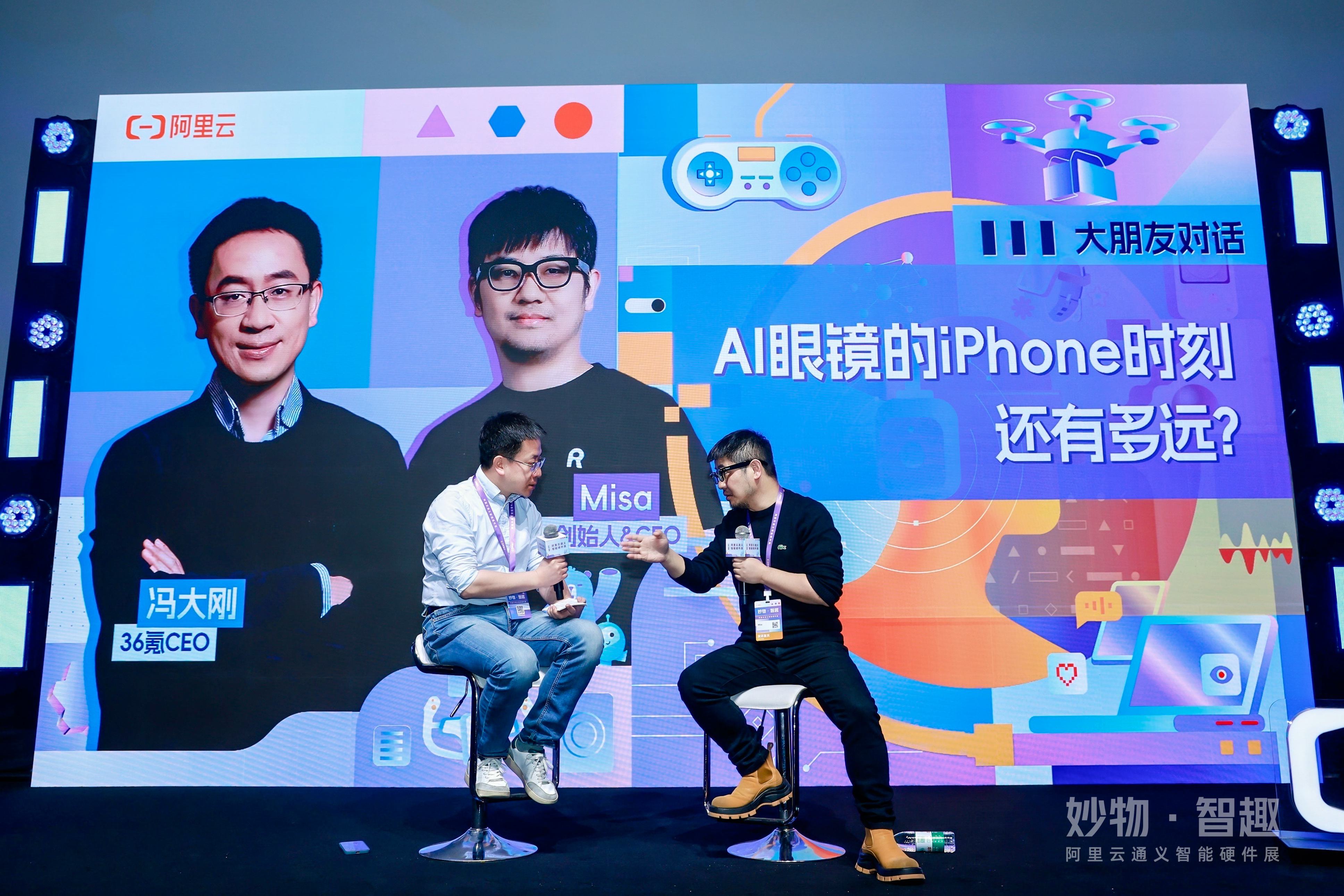
冯大刚对话Rokid创始人Misa:为什么五年后,手机可能变成眼镜的配件?
3 6 Ke· 2026-01-20 07:45
Core Insights - The AI hardware sector has regained prominence in the tech industry over the past year, with various hardware manufacturers striving to integrate AI capabilities into their devices [1] - AI glasses are emerging as a significant player in the next generation of human-computer interaction, offering features like real-time information access, navigation, and AI assistance without the need to use a smartphone [2][3] - Rokid is positioning itself as a leader in the AI glasses market, focusing on creating a comprehensive AI experience rather than just adding limited AI functionalities to existing designs [3][6] Industry Trends - The smart glasses market is showing a clear trend of differentiation, with some products following a "light AI" approach while Rokid aims to develop full-stack AI glasses with multi-modal interaction capabilities [3][6] - The conversation around AI glasses has shifted towards their potential to become high-frequency devices, similar to how watches are used daily, emphasizing the importance of daily usage scenarios [6][8] - The industry is entering a new phase where large companies are leveraging channels and subsidies, while long-term players like Rokid focus on changing user habits from novelty to necessity [8] Market Dynamics - In 2025, the global sales of AI glasses are projected to reach approximately 5 million units, with Rokid expected to maintain a significant market share of over 50% [14] - Rokid's sales are anticipated to grow from 20,000 units last year to between 80,000 and 100,000 units this year, indicating a 400% increase [15][22] - The demand for AI glasses is driven by their ability to provide natural and immediate AI services, such as capturing moments, information reminders, and navigation assistance [19][20] Competitive Landscape - The market is characterized by a mix of entertainment-focused glasses, light AI glasses, and full-function AI glasses, with Rokid being a prominent player in the latter category [16][22] - The competition between large tech companies and startups like Rokid is shaped by the latter's ability to focus on product quality and user experience, while larger firms may struggle with resource allocation [24][25] - The potential for a price war exists, but it is believed that large companies will not engage in unsustainable pricing strategies that could harm the industry [26] Future Outlook - The industry is expected to see significant growth, with projections indicating that the market could reach over 10 million units sold in the near future [22][28] - The evolution of AI glasses is closely tied to advancements in AI models, which have recently matured, providing the necessary capabilities for these devices to succeed [22][29] - The Chinese market presents a unique opportunity for AI glasses due to higher rates of myopia, leading to a greater demand for all-day wear [28]
东方证券:智能眼镜是端侧AI落地重要场景 看好AI应用产业叙事
智通财经网· 2026-01-16 03:48
Core Insights - The report from Dongfang Securities highlights the growing importance of smart glasses as a key application for edge AI, particularly following CES and Meta's plans for production expansion [1] Group 1: Smart Glasses Market Trends - Smart glasses emerged as a hot topic at CES 2026, with over 90% of the core exhibition area occupied by Chinese brands, including more than 50 companies such as Thunderbird, XREAL, INMO, Rokid, and Meizu [1][2] - The global shipment of smart glasses (including audio, photography, and display features) is projected to increase from 9.93 million units in 2025 to 86.9 million units by 2030, with the market size expected to grow from 19.7 billion yuan to 161.2 billion yuan, reflecting a CAGR of 50% [3] Group 2: Key Product Innovations - Thunderbird launched the world's first dual-lens full-color AR glasses with eSIM functionality, enabling independent operation without a smartphone [2] - Rokid introduced the AI glasses Rokid Style, weighing only 38.5 grams, targeting overseas markets [2] - XGIMI unveiled its smart glasses brand MemoMind, featuring the Memo Air Display with a weight of just 28.9 grams [2] Group 3: Industry Dynamics - The report emphasizes that smart glasses are standardized products, requiring collaboration with eyewear companies to customize for individual consumer needs [3] - Weight is a critical factor influencing consumer decisions, making companies that can produce ultra-thin lenses and master fitting technology vital in the supply chain [3] - Consumer education for smart glasses heavily relies on offline channels, highlighting the importance of retail eyewear stores with strong distribution networks [3] Group 4: Notable Companies at CES - Anker Innovations showcased flagship products across various fields, winning four CES Innovation Awards [4] - Ugreen Technology presented a new smart ecosystem with high-performance hardware configurations and local AI capabilities in its NAS series [4] - Huabao New Energy introduced a comprehensive consumer-grade solar storage strategy with multiple new products [4]

中国首个!支付宝携手千问App、淘宝闪购等发布AI商业协议ACT
Xin Lang Cai Jing· 2026-01-16 03:18
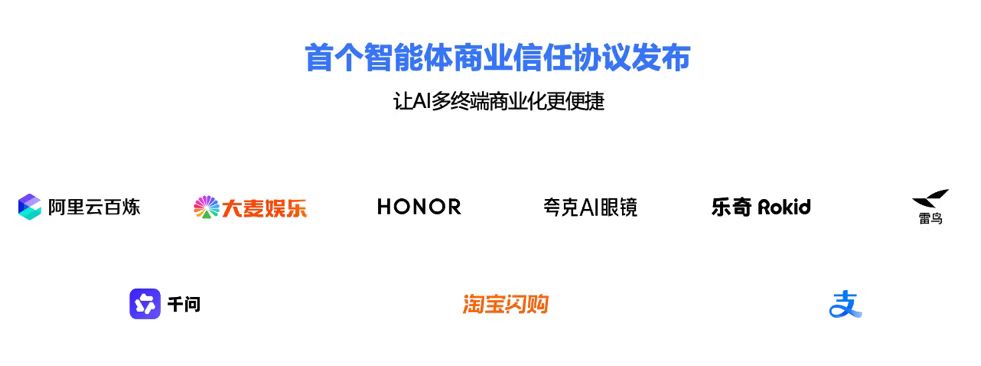
Core Insights - Alipay, in collaboration with partners including Qianwen App, Taobao Flash Purchase, Rokid, Damai, and Alibaba Cloud, has officially launched the ACT Protocol (Agentic Commerce Trust Protocol), which is China's first open technical protocol framework designed for agent commercial needs [1][4]. Group 1: ACT Protocol Overview - The ACT Protocol aims to create a "universal language" for the collaboration between AI and e-commerce, food delivery, and other service platforms, facilitating more convenient and efficient execution of AI tasks across different terminals, systems, and platforms [1][4]. Group 2: Practical Application - An example of the ACT Protocol in action is the Qianwen App, which successfully integrates Taobao Flash Purchase with Alipay AI payment. Users can simply instruct Qianwen to order a drink, and the app will intelligently recommend nearby products based on the user's location, while also handling price comparisons and automatic coupon redemption [3][6]. - The entire shopping process is streamlined into a conversational, automated experience without switching platforms, with Qianwen acting as a dedicated "shopping assistant" to manage complex operations [3][6]. Group 3: Infrastructure and Security - Alipay has established four core infrastructure standards: "Delegated Authorization Domain," "Commercial Interaction Domain," "Payment Service Domain," and "Trust Service Domain," ensuring that AI operations are fully traceable and verifiable [3][6]. - Unlike traditional payment models, under the ACT Protocol, AI only executes the order placement, while the payment process remains under the user's control or authorization, significantly saving time for users while ensuring fund security [3][6]. Group 4: Benefits for Merchants - For merchants, integrating AI-native applications will be simplified as they only need to configure a unified interface according to the protocol standards, allowing for seamless multi-channel access without the need for complex API development, thus greatly reducing integration costs [3][6].
东方证券:端侧AI落地场景明朗 智能眼镜与AI赋能跨境电商成双主线
智通财经网· 2026-01-16 02:14
Core Insights - The report from Dongfang Securities highlights the growing importance of smart glasses as a key application for edge AI, with a positive outlook for the eyewear industry chain and leading cross-border e-commerce companies driven by new product innovations [1][2] Group 1: Smart Glasses Market - The CES 2026 showcased smart glasses as a major trend, with over 90% of the core exhibition area occupied by Chinese brands, including more than 50 companies like Thunderbird, XREAL, INMO, and Rokid [2] - Key highlights from CES include the launch of the world's first dual-lens AR glasses with eSIM functionality by Thunderbird, Rokid's lightweight AI glasses for overseas markets weighing only 38.5 grams, and the MemoMind smart glasses by XGIMI, which weigh just 28.9 grams [2][3] - Global smart glasses shipments are projected to increase from 9.93 million units in 2025 to 86.9 million units by 2030, with the market size expected to grow from 19.7 billion yuan to 161.2 billion yuan, reflecting a CAGR of 50% [3] Group 2: Industry Dynamics - The report emphasizes that smart glasses are standardized products, requiring collaboration with eyewear companies to customize for individual consumer needs, as consumer preferences vary widely [3] - Weight is a critical factor influencing consumer decisions, making companies that can produce ultra-thin lenses and master fitting technology vital in the supply chain [3] - Consumer education for smart glasses relies heavily on offline channels, highlighting the importance of retail eyewear stores with strong distribution networks [3] Group 3: Investment Recommendations - Recommended investment targets in the smart glasses sector include companies like KANAT, Doctor Glasses, Mingyue Lenses, Aishide, and Tianyin Holdings [5] - In the cross-border e-commerce space, notable companies include Anker Innovations and Ugreen Technology, which are also highlighted for their innovative product launches at CES [5]