迈瑞医疗

Search documents
脑机接口的“身份证”来了?新晋顶流,最强马斯克概念!
Jin Rong Jie· 2026-01-09 06:34
Core Insights - The announcement of the first non-invasive brain-computer interface (BCI) medical device registration in China marks a significant shift from laboratory research to clinical and market applications, indicating a new growth trajectory for the industry [1][2] - The medical device sector is experiencing a surge, with companies like Dean Diagnostics and Kingmed Diagnostics hitting their upper trading limits, reflecting strong market interest in BCI technologies [1][3] - The BCI sector is seen as a promising investment opportunity, with a clean chip structure and lower entry points compared to other tech sectors like satellites and chips [1] Industry Developments - The Chinese government has included BCI in its new five-year plan as a key future industry, signaling ongoing support for research and approval processes [2][3] - Major players in the industry are accelerating their efforts, with Neuralink announcing plans for large-scale production by 2026 and significant investments being made domestically [2][3] - Technological advancements in China, such as the ability for paralyzed patients to drink water using their thoughts, demonstrate the country's leadership in BCI technology [2] Market Dynamics - The BCI technology is categorized under medical devices, which are essential for addressing real and painful issues faced by patients, such as stroke recovery and spinal cord injuries [3][4] - The medical device index ETF (159898) includes approximately 24% of companies with substantial BCI business operations, providing an efficient investment vehicle for this emerging sector [3][4] - The medical device sector, which has faced declines over the past four years, is expected to see a turnaround driven by advancements in BCI technology [4]

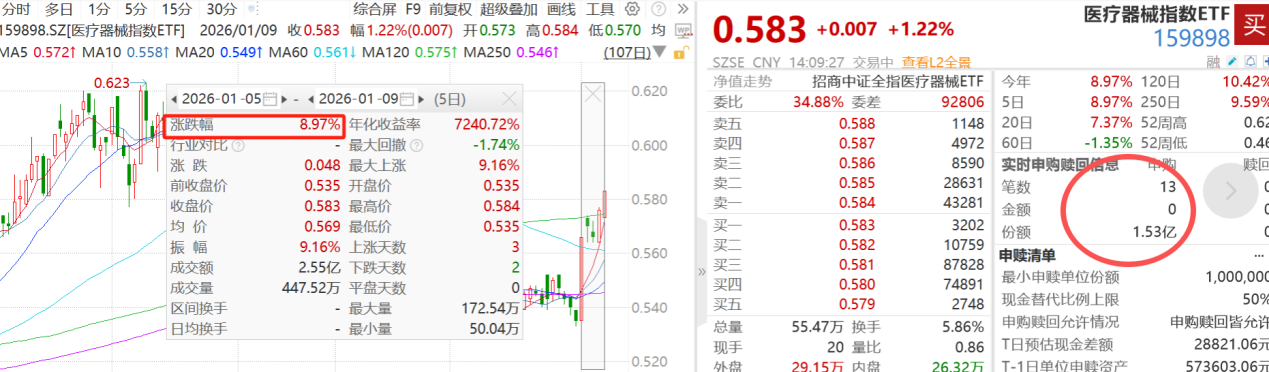
国内首张非侵入式脑机接口证出炉!医疗器械指数ETF(159898)午后拉升、标的指数“含脑量”约24%
Sou Hu Cai Jing· 2026-01-09 06:21
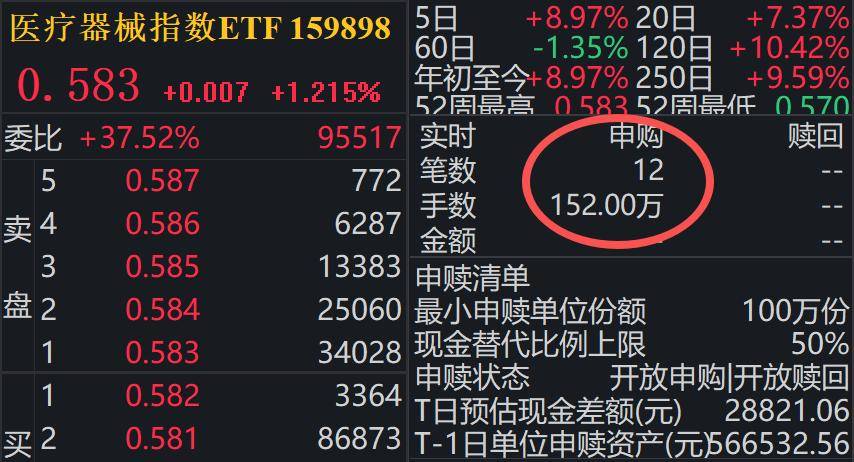
Group 1 - The medical device sector is experiencing a significant rally, with the Medical Device Index ETF (159898) seeing a net inflow of over 88 million yuan during intraday trading on January 8, following a previous inflow of over 116 million yuan [1] - Key stocks such as Di'an Diagnostics and Kingmed Diagnostics reached their daily limit, while others like Anbiping and Xiangsheng Medical saw gains exceeding 10% and 9% respectively [1] - The Medical Device Index ETF (159898) has a current scale of 659 million yuan, with approximately 24% of its holdings related to the brain-computer interface (BCI) concept [2][3] Group 2 - The brain-computer interface industry is highlighted as a key development area in the new five-year plan, with supportive policies for clinical trials, registration, and pricing [1] - Strong Brain Technology, a leading BCI company, recently completed a financing round of about 2 billion yuan, marking it as the second-largest financing in the BCI field globally, after Neuralink [2] - The Medical Device Index ETF (159898) includes several companies with substantial involvement in the BCI sector, making it a convenient and efficient tool for investment in this emerging field [3]
年终最新净值仅剩六毛,交银施罗德明星基金经理韩威俊遭遇黑色时刻
Sou Hu Cai Jing· 2026-01-09 04:04
Core Insights - The 2025 public fund rankings concluded with a notable performance from the champion fund, while several funds, including those managed by prominent fund managers, reported negative returns, highlighting the challenges faced in the market [2] Group 1: Fund Performance - Han Weijun, a well-known fund manager at Jiaoyin Fund, managed six funds that all recorded negative returns in 2025, with the worst performer being the Jiaoyin Domestic Demand Growth One-Year Holding Mixed Fund, which ranked in the bottom fifty out of approximately 4,400 funds [2] - The net value of the poorly performing fund is approximately 0.6127 yuan, reflecting a floating loss of about 40% [2] - The highest annual gain among the top ten holdings in Han Weijun's fund was only about 41%, with the best-performing stock being Nongfu Spring, which was held since the second quarter of the previous year [3] Group 2: Stock Selection and Strategy - The second-best performing stock in the fund, Yanjinpuzi, had an annual gain of only about 11%, and no other major holdings exceeded a 10% gain for the year [3] - The largest decline among the fund's holdings was seen in the pet economy stock, Guibao Pet, which fell by 16.42% over the year, despite being held for four consecutive quarters [3] - Han Weijun indicated a shift in strategy for the fourth quarter of 2025, focusing on traditional consumer stocks with high dividend rates and low valuations, while also considering increasing exposure to Hong Kong consumer stocks [3][4] Group 3: Other Fund Managers - Among the "Old Three Swordsmen" of Jiaoyin Fund, He Shuai achieved the best performance with a fund returning approximately 43%, ranking around 1,300 among peers, while other funds he managed saw growth between 20% and 30% [5] - The "New Three Swordsmen" faced challenges, with Yang Hao's sole fund achieving a net value growth rate of only 5.92%, ranking in the bottom third of 2,262 funds [6] - Wang Chong, managing two funds, had both rank outside the top 4,000, with one fund showing a mere 2.79% growth rate [6] Group 4: Manager Changes - Liu Peng, a prominent manager among the "New Three Swordsmen," left the firm in September 2023, while Tian Yilong had already departed by June 2024, leaving only Yang Jinjing with over five years of management experience [7]

脑机接口量产临界,医疗器械指数ETF(159898)连续4日获资金净流入、规模站上新高
Sou Hu Cai Jing· 2026-01-09 03:24
Group 1 - The core viewpoint of the article highlights the increasing market and funding attention towards brain-computer interfaces (BCIs), which are seen as a cutting-edge technology with significant future industry potential [2] - The medical device index ETF (159898) has seen a net inflow of over 170 million yuan in the last four trading days, with a single-day inflow exceeding 116 million yuan on January 8, marking a new high in its scale [2] - The medical device index ETF (159898) includes approximately 24% of companies with substantial involvement in the BCI sector, making it a convenient and efficient tool for investment in this emerging field [2][3] Group 2 - BCIs are interdisciplinary technologies that integrate neuroscience, computer science, and medicine, enabling direct communication between the brain and external devices [4] - Current applications of BCI technology are primarily in medical rehabilitation, particularly for patients recovering from strokes and spinal cord injuries, with potential future applications in education, entertainment, and industry [4] - The BCI sector is expected to experience strong growth driven by simultaneous advancements in policy, industry, and technology, with significant milestones anticipated by 2026 [7] Group 3 - The domestic BCI "unicorn" company, Qiangnao Technology, recently completed approximately 2 billion yuan in financing, becoming the second-largest financing in the BCI field globally, following Neuralink [7] - The Chinese government is actively supporting the BCI industry through various policies, emphasizing its importance as a key development area in the new five-year plan [7] - Recent breakthroughs in domestic BCI technology include successful clinical trials of fully implanted, wireless BCI products, indicating rapid advancements in the field [9] Group 4 - China's BCI market size grew from approximately 1 billion yuan in 2020 to about 1.73 billion yuan in 2023, representing a 12.5% share of the global BCI market [10] - Different institutions have varying growth forecasts for the BCI industry, with estimates suggesting the global market could reach 7.63 billion USD by 2029 [11] - The global BCI market is projected to grow to approximately 12.4 billion USD by 2034, with a compound annual growth rate (CAGR) of 17% from 2025 to 2034 [14] Group 5 - BCIs are considered a potential key catalyst for driving upward trends in the medical device sector, supported by innovation and policy backing [15] - The medical device index ETF (159898) tracks the entire A-share medical device sector, with a pure representation of the industry and a 24% inclusion of BCI concepts, making it suitable for capturing opportunities in this emerging market [15]
研判2025!中国细胞计数仪行业产业链、市场现状、企业格局及未来趋势分析:技术迭代加速传统手动设备淘汰,前沿领域需求推动多功能智能分析仪发展[图]
Chan Ye Xin Xi Wang· 2026-01-09 01:57
Core Insights - The cell counter industry in China is projected to reach a market size of approximately 11.24 billion yuan in 2024, with a year-on-year growth of 6.30% [1][6][8] - Traditional manual or semi-automatic counting devices are being rapidly phased out in favor of multifunctional intelligent cell analyzers that can monitor live cells and possess fluorescence analysis capabilities [1][6][8] Industry Overview - Cell counters are laboratory devices used to accurately measure the number of cells in liquid samples and analyze cell characteristics such as viability, size, morphology, and fluorescence labeling [2] - They are widely applied in fields such as biology, medicine, pharmaceuticals, cell culture, clinical diagnostics, drug screening, and cell therapy, characterized by efficiency, precision, and reduced human error [2] Industry Chain - The upstream of the cell counter industry includes raw materials and components such as lenses, filters, lasers, LED light sources, sensors, chips, and precision mechanical parts [4] - The midstream involves the production and manufacturing of cell counters, while the downstream applications span clinical diagnostics, scientific research, biopharmaceuticals, and environmental monitoring [4] Market Size - The cell counter market is a fundamental tool in the in vitro diagnostics (IVD) sector, which is expected to reach a market size of approximately 120 billion yuan in 2024, growing by 1.27% year-on-year [6] - The demand for fully automated cell counters is increasing due to the push for laboratory automation upgrades, particularly in the context of new healthcare projects [7] Key Companies - The market is characterized by a concentration of leading companies, with products from companies like Ruiwo De and Highpoint Bio being highly recognized [8] - Shenzhen Mindray Biomedical Electronics Co., Ltd. has made significant technological advancements in flow cytometry, enhancing its market position [10] Industry Development Trends 1. The technology is moving towards high integration and intelligence, evolving from mere counting tools to comprehensive intelligent analysis systems [12] 2. Market demand is shifting from general-purpose instruments to specialized solutions tailored for specific applications, leading to a more segmented market [13] 3. The industry is undergoing structural adjustments, with a focus on high-quality products and domestic alternatives gaining traction in the mid-to-high-end market [14]


马斯克量产预告 脑机接口迎商业化元年?
Sou Hu Cai Jing· 2026-01-09 01:31
Core Viewpoint - Elon Musk's Neuralink plans to start mass production of brain-machine interfaces by 2026, marking a significant step towards the commercialization of this technology [2] Industry Developments - The brain-machine interface sector in China is accelerating, with the country becoming the second to enter clinical trials for invasive brain-machine interfaces after the United States [2] - In 2025, there were 24 financing events in the domestic brain-machine interface field, a 30% year-on-year increase [3] - Hubei Province has set a price for invasive brain-machine interface medical services at approximately 6,552 yuan, indicating a move towards making this technology more accessible [3] Technology and Market Segmentation - Brain-machine interfaces serve as a bridge between the brain and external devices, with three main technological approaches: invasive, non-invasive, and semi-invasive [4][5] - The largest market segment for brain-machine interfaces is currently in healthcare, accounting for over 56% of applications, particularly for neurological diseases like epilepsy and Parkinson's [6] - McKinsey predicts that the global market for medical applications of brain-machine interfaces could reach $40 billion by 2030 and $145 billion by 2040 [6] Investment Opportunities - While the brain-machine interface sector shows promise, most companies are still far from profitability, with significant time needed for medical applications to gain approval [7] - Instead of focusing on individual companies, it may be more prudent to consider the broader medical device industry, particularly through medical device ETFs that encompass leading firms in this space [8]
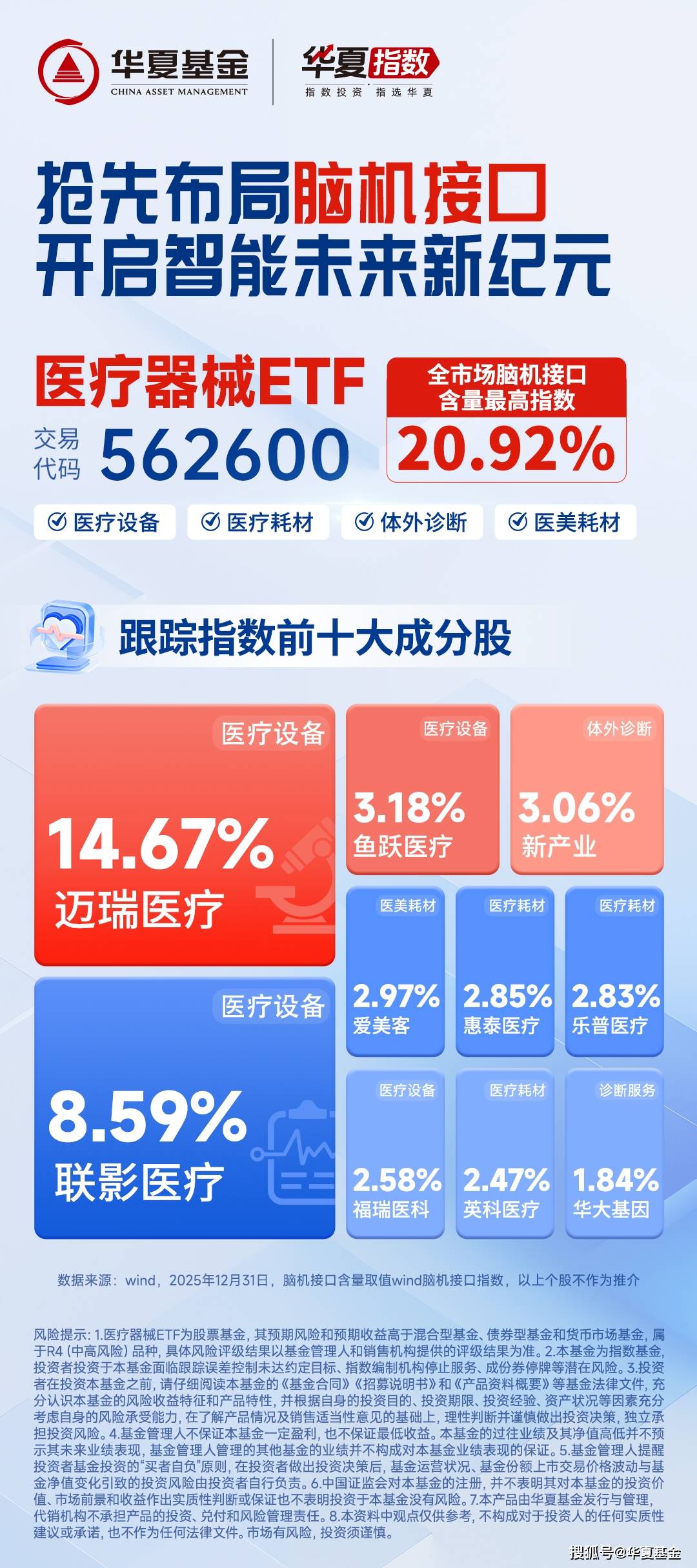
强脑科技完成20亿元融资,马斯克按下脑机接口“量产键”!同类费率最低档的医疗器械ETF基金(159797)再涨超1%!
Sou Hu Cai Jing· 2026-01-08 09:37
Core Viewpoint - The brain-computer interface (BCI) sector is experiencing significant growth, driven by technological advancements, increased investment, and supportive policies, indicating a promising future for the industry [3][6][9]. Market Performance - The Shanghai Composite Index recorded a 15-day consecutive rise, with the brain-computer interface concept continuing to surge, and the medical device ETF (159797) rising by 1.26% [1]. - The medical device ETF has seen a net inflow of over 27 million yuan in the past 20 days [1]. Investment and Financing - Strong Brain Technology has completed approximately 2 billion yuan in financing, becoming the second-largest financing project in the global BCI field [3]. - Neuralink, led by Elon Musk, plans to initiate large-scale production this year, with 12 severely paralyzed patients already implanted with their devices [3]. - Neuralink raised 650 million USD in a recent funding round, with plans to advance a "full-brain interface program" by 2028 [3]. Policy Developments - Sichuan Province has set clear pricing for BCI medical services, with the highest implantation fee at 6,583 yuan per procedure [4]. - The Chinese government is increasingly prioritizing brain science, with various policies being introduced to support the BCI industry [9]. Industry Growth Projections - The BCI market in China is projected to reach 3.2 billion yuan in 2024 and exceed 5.5 billion yuan by 2027 [11]. - Globally, the BCI market in the medical application sector is expected to reach 40 billion USD by 2030 and surpass 145 billion USD by 2040 [11]. Company Developments - Domestic companies are actively entering the BCI market, with over 200 firms reported, including Shanghai Ladder Medical and Beijing Brain Science Institute, which have made significant advancements in clinical trials [10]. - The medical device ETF (159797) covers a wide range of sectors, including high-value consumables and diagnostic equipment, with the top ten weighted stocks accounting for 45.04% of the fund [11].

制造业上市公司高质量发展研究报告
中国信通院· 2026-01-08 07:47
Investment Rating - The report does not explicitly provide an investment rating for the manufacturing industry or specific companies within it [2]. Core Insights - The manufacturing sector is a key component of the national economy and plays a crucial role in technological innovation and high-quality economic development [7]. - The report identifies a group of top 100 manufacturing companies that demonstrate strong operational quality, innovation capabilities, and industry leadership, serving as a benchmark for advanced development models in China's manufacturing sector [8][9]. - The report highlights the need for manufacturing companies to transition from scale-driven growth to quality and efficiency-oriented development, responding to both domestic and international challenges [18][19][20]. Summary by Sections 1. New Situations Facing High-Quality Development of Manufacturing Listed Companies - The domestic development environment is shifting from scale-driven growth to a focus on quality and efficiency [18]. - The international environment is increasingly characterized by intensified competition and geopolitical risks, affecting the global competitiveness of manufacturing companies [19]. - New requirements for high-quality development are emerging, necessitating a comprehensive assessment of the current state and challenges faced by manufacturing listed companies [20]. 2. Overall Development Overview of Manufacturing Listed Companies - The A-share market continues to expand, with a stable structure and an increasing number of manufacturing listed companies [22]. - Manufacturing companies are experiencing steady growth in scale, assets, and R&D investment, although profitability is under pressure [22][29]. 3. Analysis of the Top 100 High-Quality Development Manufacturing Companies - The top 100 companies have established a solid leading position in terms of scale, innovation, and industry influence, although structural disparities remain [39]. - These companies exhibit strong operational resilience and superior financial stability compared to the industry average [39]. - Innovation activities among the top 100 companies are increasingly systematic and efficient, contributing to their high-quality development [39][46]. 4. Existing Issues - There is a significant disparity in innovation capabilities among manufacturing companies of different sizes, with larger firms concentrating more resources on innovation [41]. - Some companies still rely on scale expansion and cost-driven strategies, lacking in value transformation and enhancement capabilities [41]. - The internationalization of manufacturing companies faces rising uncertainties and external pressures, necessitating improved risk management and compliance capabilities [41]. 5. Policy Recommendations - Recommendations include enhancing the innovation system, optimizing capital market functions, guiding leading companies to drive industry development, and promoting high-quality internationalization of manufacturing [9].
脑机接口燃爆市场!医疗器械指数ETF(159898)含“脑”量24%、盘中获大额净流入
Sou Hu Cai Jing· 2026-01-08 06:36
Core Viewpoint - The brain-computer interface (BCI) sector is experiencing significant growth, driven by technological advancements and increased investment, particularly in the A-share market, with related stocks showing strong performance [1][5]. Group 1: Market Performance - The medical device index ETF (159898) has seen a rise of over 1.94%, with approximately 37 million yuan in net inflow as of the report [1]. - Key stocks in the BCI sector include Kewei Medical, which surged over 19%, and Shuoshi Bio, which increased over 13%, among others [3]. Group 2: Industry Growth - The global BCI market has grown from $1.2 billion in 2019 to nearly $2 billion in 2023, with a compound annual growth rate (CAGR) exceeding 13% [5]. - Projections indicate that the global BCI industry could reach $7.63 billion by 2029, with a CAGR of over 25% from 2024 to 2029 [5]. Group 3: Investment Opportunities - The BCI sector is positioned at a critical juncture with strong policy support, rapid technological iteration, and accelerated commercialization, making it a promising area for investment [8]. - The medical device index ETF (159898) tracks a broad range of medical device sectors, with leading companies like Mindray Medical and United Imaging Healthcare, providing a pure representation of the A-share medical device sector [8][9].


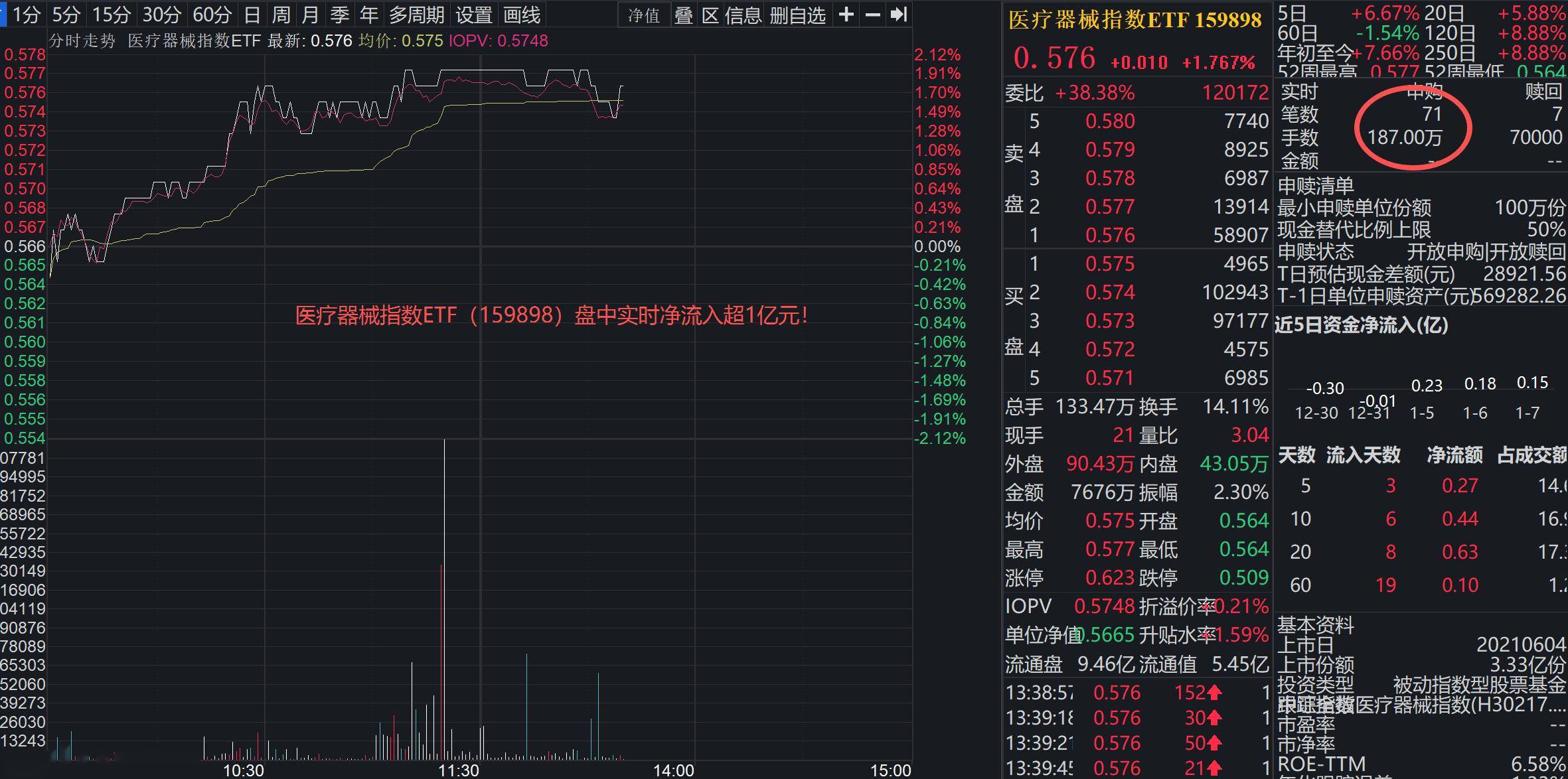
脑机接口概念引爆!含“脑”量24%的医疗器械指数ETF(159898)盘中获超1亿元净流入!
Sou Hu Cai Jing· 2026-01-08 06:01
Core Viewpoint - The brain-computer interface (BCI) concept is significantly driving market interest, with notable stock price increases in related companies and a substantial inflow of funds into the medical device index ETF. Group 1: Market Performance - Companies such as Kefu Medical and Shuoshi Bio saw stock price increases of over 16% and 12% respectively, while several others rose by more than 6% [1] - The medical device index ETF (159898), which has a 24% exposure to the BCI concept, experienced a net inflow of over 100 million yuan during trading [1] Group 2: Industry Growth - The global BCI market size grew from $1.2 billion in 2019 to nearly $2 billion in 2023, with a compound annual growth rate (CAGR) exceeding 13% [3] - Forecasts suggest that the global BCI industry could reach $7.63 billion by 2029, with a projected CAGR of over 25% from 2024 to 2029 [3] Group 3: Investment Opportunities - The BCI sector is positioned as a key future industry, driven by technological breakthroughs, policy support, and collaboration within the robotics ecosystem [6] - The medical device index ETF tracks the CSI All-Share Medical Device Index, with significant holdings in leading companies like Mindray Medical, which has a 14.67% weight in the index [2][6]