拜耳

Search documents
REGN Stock Up on Q3 Earnings Beat, Eylea HD Sales Increase
ZACKS· 2025-10-28 20:05
Core Insights - Regeneron Pharmaceuticals reported Q3 2025 adjusted EPS of $11.83, exceeding the Zacks Consensus Estimate of $9.44, but down 5% from $12.46 in the previous year due to higher expenses [1][8] - Total revenues increased by 1% year over year to $3.7 billion, driven by higher sales of Eylea HD and increased profits from Dupixent, surpassing the Zacks Consensus Estimate of $3.6 billion [1][8] Revenue Breakdown - Eylea sales in the U.S. fell 41% year over year to $681 million, primarily due to increased competition and market share loss, missing the Zacks Consensus Estimate of $686 million [4] - Eylea HD generated $431 million in the U.S., up 10% year over year, exceeding the Zacks Consensus Estimate of $414 million [6] - Dupixent sales surged 27% year over year to $4.86 billion, contributing significantly to total revenues [10] - Total collaboration revenues reached $2 billion, an increase of 18.6% from the previous year, surpassing the Zacks Consensus Estimate of $1.8 billion [9] Cost and Margin Analysis - Gross margin on net product sales decreased to 86% from 89% due to ongoing investments in manufacturing operations [12] - Adjusted R&D expenses rose 18% year over year to $1.3 billion, reflecting advancements in the company's pipeline [12] - Adjusted SG&A expenses decreased by 12% to $541 million [12] Pipeline and Regulatory Updates - The FDA approved a label expansion for Libtayo as an adjuvant treatment for high-risk adult patients with cutaneous squamous cell carcinoma [16] - A positive opinion was adopted by the EMA for Dupixent for chronic spontaneous urticaria treatment in the EU, with a decision expected soon [14] - Regeneron plans to submit an application for a new pre-filled syringe manufacturing filler for Eylea HD by January 2026 [15] - A phase III study of cemdisiran met its primary and key secondary endpoints, with a regulatory submission planned for Q1 2026 [17] Market Performance - Regeneron's shares have increased following the better-than-expected quarterly results, although they have lost 17.8% year to date compared to the industry's growth of 10.3% [2]



Novartis Lags Q3 Earnings, Announces $12B Avidity Biosciences Acquisition
ZACKS· 2025-10-28 15:16
Core Insights - Novartis AG reported core earnings per share of $2.25 in Q3, missing the Zacks Consensus Estimate by a penny but up from $2.06 a year ago, driven by sales growth [1][7] - Revenues reached $13.9 billion, an 8% increase year-over-year, slightly beating the Zacks Consensus Estimate [1][2] Sales Performance - On a constant currency basis, sales increased by 7%, supported by strong performances from Kisqali, Kesimpta, Scemblix, and Pluvicto, which offset the negative impact of generic competition for Promacta, Tasigna, and Entresto [2][4] - Core operating income rose 7% to $5.5 billion [2] Key Drug Performance - Kisqali sales surged 68% to $1.33 billion, driven by growth in the United States [8] - Kesimpta sales increased 44% to $1.2 billion, exceeding estimates [9] - Pluvicto sales grew 45% to $564 million, benefiting from expanded indications [11] - Entresto sales decreased 1% to $1.9 billion due to generic competition, missing estimates [5][6] - Cosentyx sales were down 1% to $1.7 billion, impacted by a one-time revenue adjustment [6] Strategic Developments - Novartis announced the acquisition of Avidity Biosciences for $12 billion to enhance its neuroscience pipeline, focusing on genetic neuromuscular diseases [18][19] - The company expects net sales to grow in high single digits and core operating income to grow in the low teens by 2025 [17] Other Updates - Novartis received FDA approval for remibrutinib as a treatment for chronic spontaneous urticaria [21] - The company is advancing its pipeline with new drug approvals and collaborations, including a licensing agreement with Arrowhead Pharmaceuticals for a preclinical-stage therapy targeting Parkinson's disease [27]

投资吸引力下降,内外部压力重重,巨量资金转移海外引德国担忧
Huan Qiu Shi Bao· 2025-10-27 22:55
Core Insights - The article highlights the alarming trend of German companies increasingly relocating investments overseas, with over €200 billion leaving Germany annually over the past five years, primarily due to high energy costs, external competition, and U.S. tariff policies [1][6][7]. Group 1: Investment Trends - 70% of energy-intensive companies in Germany are shifting investments abroad, with 31% actively moving production outside Europe and 42% preferring to invest in other European countries rather than Germany [1][4]. - The total outflow of investments from Germany has reached €34.52 billion over the past decades, with an average annual outflow exceeding €200 billion [6][7]. Group 2: Economic Challenges - The German economy is facing stagnation, with GDP expected to remain flat from the end of 2021 to the end of 2024, primarily due to a 4.2% decline in exports from 2022 to 2024 [2][3]. - The chemical giant Bayer reported a sixfold increase in net losses in Q2, amounting to €199 million, reflecting the broader struggles within the German industrial sector [2]. Group 3: Factors Influencing Investment Decisions - High energy costs driven by EU climate policies and rising carbon certificate prices are significant burdens for companies, leading to calls for the cancellation of CO2 fees [4][5]. - Political uncertainty and a lack of confidence in government reforms are causing businesses to hesitate in investing domestically, with 80% of surveyed companies expressing pessimism about improvements in the business environment [4][5]. Group 4: Global Competition - The U.S. tariff policies under the Trump administration are exerting additional pressure on Germany's energy-intensive industries, with companies like Schott adjusting their investment strategies to favor locations outside Germany [5][8]. - The competitive landscape is shifting, with emerging markets like China and India becoming more attractive for investment, as evidenced by BASF's new production facility in Guangdong, China [8].


一万元七星总统套房床品下放!小贵但太舒服了
凤凰网财经· 2025-10-27 13:05
Core Viewpoint - The article emphasizes the luxurious experience of using OETKER's bedding products, particularly the Dralon fiber bedding, which is marketed as providing a high-end sleep experience comparable to that of seven-star hotels [5][60][64]. Group 1: Product Features - The OETKER bedding is made from high-quality Dralon fiber, which is known for its excellent warmth retention and comfort, with a thermal insulation rate of 86.3% [45][75]. - The bedding is certified by OEKO-TEX, meeting A-class standards suitable for infants and sensitive skin [45][95]. - The product features a unique double T-shaped thermal lock cross-section, enhancing its ability to retain body heat [41][42]. Group 2: Market Positioning - OETKER is positioned as a luxury brand, serving high-profile clients including royalty and celebrities, and is known for its exclusive bedding used in presidential suites [7][58]. - The article highlights the competitive pricing of OETKER's bedding, which is significantly lower than typical luxury hotel rates, making it accessible to a broader audience [114]. Group 3: Consumer Experience - Users report a transformative sleep experience, describing the bedding as feeling like sleeping on a "heating cloud," which enhances comfort during winter [17][19]. - The article suggests that the bedding's design and materials contribute to a hassle-free experience, making it easy to maintain and use [91][102]. Group 4: Brand Authenticity - The article warns consumers about counterfeit products, emphasizing the importance of purchasing from authorized sources that can provide proof of authenticity [22][25][27]. - OETKER's bedding is distinguished by its unique import documentation and anti-counterfeit labels, ensuring customers receive genuine products [34][54].

中国药促会宋瑞霖:如果手机价格被管控 就不会有今天的华为
经济观察报· 2025-10-27 11:25
Core Viewpoint - The key to the pharmaceutical industry's leap lies in improving market mechanisms, as highlighted by the comparison with successful companies like Huawei and BYD [2]. Group 1: Market Mechanism and International Comparison - The U.S. has successfully attracted significant investments from major pharmaceutical companies by establishing price benchmarks and tariff threats, leading to 60% of their profits coming from the U.S. market [2]. - In contrast, Europe’s social welfare policies have led to a "decentralization" of the pharmaceutical industry, with major companies like Roche and Novartis choosing to launch new drugs in the U.S. due to its larger and more attractive market [2][3]. - China's per capita spending on innovative drugs is significantly lower than that of Japan, with Japan's per capita spending being 24.4 times higher despite having a GDP 3.9 times that of China [3]. Group 2: Challenges in China's Pharmaceutical Industry - China excels in the invention and transformation stages of the pharmaceutical chain but struggles in the commercialization phase, often acting merely as a "project provider" [4]. - The current pricing negotiation process for innovative drugs in China begins with price reductions, unlike the U.S., where there is a stable pricing period post-launch [3]. Group 3: Recommendations for Improvement - The first recommendation is to reform the approval and evaluation mechanisms for innovative drug reimbursement, suggesting a direct connection between drug approval and insurance coverage [5]. - A proposed solution includes allowing innovative drugs to enter the insurance system at the price of similar existing drugs, with subsequent evaluations based on real-world data to adjust reimbursement prices accordingly [6]. - The second recommendation emphasizes the development of commercial health insurance, which could potentially raise significant funds if the middle class participates [6][7]. Group 4: Financial Implications and Social Equity - If 350 million middle-class individuals in China each spend 800 yuan monthly on commercial insurance, it could generate over 3.4 trillion yuan annually, surpassing current health insurance funding [7]. - Concerns about commercial insurance benefiting only the wealthy are addressed by comparing it to private cars versus public transport, suggesting that it could enhance basic medical coverage for those in greater need [7]. - Achieving reimbursement levels similar to Japan could position the pharmaceutical industry as a true economic pillar, allowing companies to contribute more in taxes and better support public welfare [7].

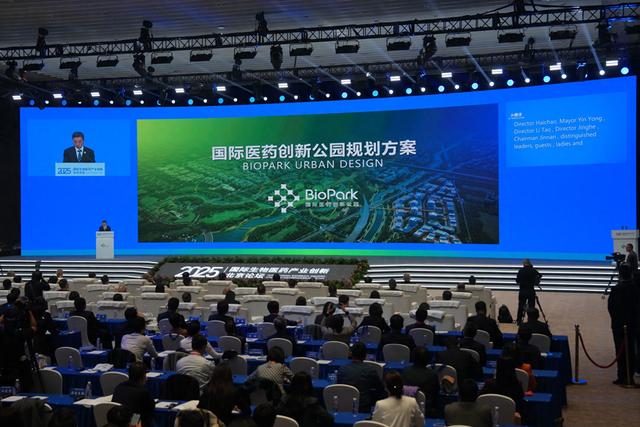
BioPark打造全球医药健康创新合作新枢纽
Xin Jing Bao· 2025-10-27 11:05
Core Insights - BioPark in Beijing Economic-Technological Development Area is becoming a global hub for pharmaceutical and health collaboration, attracting major multinational companies and local innovators [1][2][3] - AstraZeneca has announced a $2.5 billion investment to establish its sixth global strategic R&D center in Beijing, highlighting the area's appeal for international pharmaceutical investments [1][2] - The park covers approximately 5.5 square kilometers and includes four functional zones to support various stages of pharmaceutical development, from R&D to large-scale production [1][2] Group 1 - BioPark is home to multinational giants like AstraZeneca, Eli Lilly, Pfizer, Bayer, and Medtronic, with upcoming projects from Johnson & Johnson, Philips, and Bristol-Myers Squibb [1] - The park's design includes extensive green spaces, making up over half of its area, and aims to create a friendly environment for talent through a slow-moving system connecting the functional zones [2] - The Beijing Economic-Technological Development Area plans to enhance BioPark's infrastructure by integrating education, research, and medical resources, including an AI application pilot base and a world-class health education base [2][3] Group 2 - Over the past year, BioPark has transitioned from concept to reality, receiving support from global partners and attracting participation from 62 renowned international firms in its planning [3] - The development plan for BioPark is set to be accelerated, with a focus on creating a high ground for the pharmaceutical industry, a startup hub for medical talent, and a demonstration area for AI applications [3]


中国药促会宋瑞霖:如果手机价格被管控 就不会有今天的华为
Jing Ji Guan Cha Bao· 2025-10-27 09:50
Core Viewpoint - The key to the pharmaceutical industry's growth in China lies in improving market mechanisms, as highlighted by the comparison with successful companies like Huawei and BYD in other sectors [1]. Group 1: International Comparisons - The U.S. has successfully attracted significant investments from major pharmaceutical companies by establishing price benchmarks and tariff threats, with 60% of their profits coming from the U.S. market [1]. - In contrast, Europe’s social welfare policies have led to a "decentralization" of the pharmaceutical industry, with major companies like Roche and Novartis choosing to launch new drugs in the U.S. due to its larger and more attractive market [1][2]. - The UK's exit from the EU has resulted in reduced market attractiveness, causing large pharmaceutical companies to reconsider their investments [1]. Group 2: Current State of China's Pharmaceutical Industry - China's innovation drug industry is currently mismatched with its market potential, as evidenced by the low per capita spending on innovative drugs compared to Japan, where per capita spending is 24.4 times higher despite a GDP that is only 3.9 times greater [2]. - The pricing logic for innovative drugs differs significantly between China and the U.S., with China initiating price negotiations at the outset, leading to immediate price reductions upon market entry [2]. Group 3: Challenges in Commercialization - While China excels in the invention and transformation stages of the pharmaceutical chain, it struggles in the commercialization phase, often acting merely as a "project provider" due to insufficient market support [3]. Group 4: Recommendations for Improvement - Two core recommendations were proposed: 1. Reform the entry and evaluation mechanisms for innovative drug insurance, suggesting a direct connection between drug approval and insurance coverage, with a two-year evaluation period based on real-world data [4]. 2. Develop commercial health insurance significantly, with a proposed model that could generate over 3.4 trillion yuan annually if 350 million middle-class individuals contribute 800 yuan monthly [5]. Group 5: Economic Impact - If China's innovative drug payment system could reach the level of Japan's, the pharmaceutical industry could become a true economic pillar, allowing companies to pay more taxes and better support public welfare [5].
揭秘:多数人不知道的“伟哥”背后的商业故事——被误读的药,被利用的名字,和被忽视的风险
Di Yi Cai Jing· 2025-10-27 00:03
Core Insights - The article discusses the confusion and risks surrounding the purchase of erectile dysfunction (ED) medications, particularly focusing on the brand "Viagra" and its generic name "Sildenafil Citrate" [2][4][12] - It highlights the cultural significance of the "blue pill" and how it has become a symbol in popular culture, while also being a serious medical treatment [2][4] - The article emphasizes the importance of proper medical guidance and the dangers of self-medication in a market filled with counterfeit and misleading products [10][11][12] Group 1: Market Confusion - The term "伟哥" (Wei Ge) has become a generic term in China, leading to significant brand confusion and a proliferation of counterfeit products [3][6][7] - Data from the Black Cat Complaints platform indicates that approximately 28% of complaints related to "伟哥" involve false advertising, while 20% pertain to product discrepancies, and nearly 19% involve counterfeit or unregulated products [1][6] - The commercialization of "伟哥" has led to a market where legitimate products are often indistinguishable from fake ones, creating a high-risk environment for consumers [5][8] Group 2: Regulatory and Legal Issues - The trademark status of "伟哥" has led to legal disputes, with the National Intellectual Property Administration ruling that it retains its distinctiveness and does not constitute a generic term [6][7] - Pfizer's claim that "伟哥" is a well-known trademark was not supported by the Beijing First Intermediate People's Court, further complicating the brand's legal standing in China [7] - The division of trademark rights across different regions (e.g., Hong Kong, Taiwan, and mainland China) has contributed to the confusion and legal complexities surrounding the brand [6][7] Group 3: Health Risks and Consumer Education - The article stresses the necessity for consumers to recognize the difference between prescription medications and over-the-counter products, emphasizing that PDE-5 inhibitors like Sildenafil should only be used under medical supervision [10][11] - Consumers are advised to verify the legitimacy of medications by checking for proper approval numbers and ensuring they are purchased from regulated channels [10][11] - The prevalence of illegal products that masquerade as health supplements poses serious health risks, particularly due to uncontrolled dosages and potential harmful ingredients [11][12]
国际医药创新公园规划方案在北京亦庄发布
Zhong Guo Xin Wen Wang· 2025-10-26 02:31
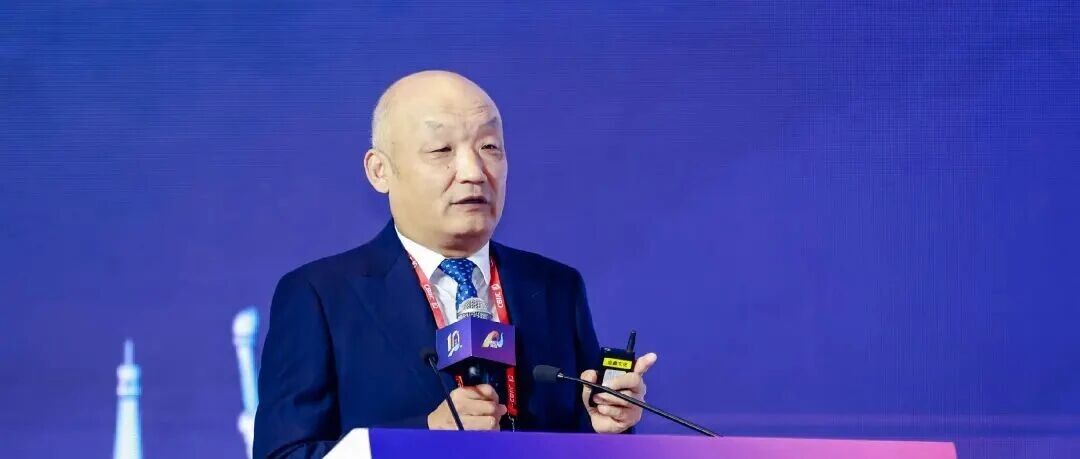
"我们打造'源头创新链',构建产教医研协同创新引擎。"孔磊透露,园区承接了国家人工智能应用 中试基地落地,建设超级算力底座、数据标注基地、医疗健康及药品行业可信数据空间等关键基础设 施,瞄准AI+医药制造、精准诊疗两大方向,培育AI医疗健康产业集群;将建设世界一流的生命健康产 教融合基地,联合清华、北大、北航、首医等知名高校,筹建北京生命健康产业创新研究院,布局国家 生命学院等五大研究中心,构筑生物数据银行等六大赋能平台,推动有组织的产业创新、人才培养和成 果转化;还将建设国际临床医学研究中心,建设以医学研究为中心、创新转化为导向的国际一流临床研 究型医院。 在构建"活力人才链"方面。BioPark创新设计了"基因艺廊、共享智廊、生态趣廊"三条廊道,串联 起四大产业功能区,形成公园景观、社交场所与产业空间交织互联的活力人文体系。同时正在加快推进 中小学校、高端人才公寓、德茂生活片区等配套设施建设,为国内外人才提供居住、商业、娱乐等多功 能融合的生活环境。 中新网北京10月26日电 在25日举行的2025国际生物医药产业创新北京论坛全体大会上,北京经济 技术开发区工委书记孔磊发布国际医药创新公园(BioPark ...
投资25亿美元!阿斯利康全球战略研发中心落地北京
Bei Jing Ri Bao Ke Hu Duan· 2025-10-25 13:01
Core Insights - AstraZeneca has officially launched its sixth global strategic R&D center in the BioPark located in Beijing Economic and Technological Development Area [1][3] - The new center is AstraZeneca's second global strategic R&D center in China, aimed at accelerating the development of next-generation innovative drugs by leveraging Beijing's advanced scientific ecosystem and strengths in artificial intelligence [3][6] - The center will collaborate with AstraZeneca's Shanghai R&D center to lead new drug discovery and clinical development, while also expanding partnerships with local clinical trial institutions, universities, and biotech companies [3][6] Investment and Development - In March, AstraZeneca signed an agreement with Beijing's Science and Technology Commission and other local authorities to invest $2.5 billion in establishing the R&D center and high-standard industrialization projects in Beijing [5][6] - The establishment of the R&D center marks a significant step in AstraZeneca's collaboration with Beijing, focusing on R&D innovation, local partnerships, and regional headquarters [6] Ecosystem and Collaboration - The BioPark is attracting major multinational companies such as Eli Lilly, Pfizer, Bayer, and Medtronic, as well as local innovative enterprises, aiming to create a new global hub for pharmaceutical and health cooperation [8] - Future collaborations will strengthen the connection between Beijing and the University of Cambridge, leveraging the resources of both locations to enhance innovation and industrial ecosystems [8] - The biotechnology and health industry in Beijing Yizhuang has a market value of nearly 90 billion yuan, accounting for a significant portion of the city's economy, with 156 innovative drug candidates in clinical stages [8]