
众安在线

Search documents
四轮融资后,暖哇科技递表港交所!上半年营收超4亿,累计亏损7亿
Sou Hu Cai Jing· 2025-09-25 09:48
Core Viewpoint - The insurance technology sector is experiencing a new wave of IPOs, with companies like Nuwa Technology submitting applications to list on the Hong Kong Stock Exchange, indicating a growing interest and potential in this market [2][3]. Company Overview - Nuwa Technology focuses on providing AI underwriting and claims solutions, with key systems named "Alamos" and "Lop Nur" [2][3]. - The company reported revenues of approximately 1 billion RMB in the previous year, serving top insurance firms like PICC and China Life [2]. - Despite revenue growth, the company has not yet achieved profitability, accumulating losses exceeding 700 million RMB since its inception [2][5]. Financial Performance - Revenue figures for Nuwa Technology from 2022 to 2025 are as follows: 340 million RMB in 2022, 655 million RMB in 2023, 944 million RMB in 2024, and 431 million RMB in the first half of 2025, showing a growth trend [3][4]. - The gross margin has been declining, with figures of 57.7% in 2022, 58.3% in 2023, 49.8% in 2024, and 51.0% in the first half of 2025 [3]. - The company has faced significant losses: 223 million RMB in 2022, 240 million RMB in 2023, and 155 million RMB in 2024, with a loss of about 100 million RMB in the first half of 2025 [5][6]. Capital Structure and Investment - Nuwa Technology has undergone multiple rounds of financing, with significant investments from entities like Longfor and Liberty, although some investors have exited prior to the IPO [10][11][14]. - The company has a substantial liquidity issue, with current liabilities rising from 941 million RMB in 2022 to 1.696 billion RMB by mid-2025, while current assets were only 651 million RMB [6][8]. Market Position and Strategy - The company has positioned itself in the health insurance sector, which is increasingly reliant on technology for transformation, and aims to provide comprehensive solutions to insurance firms [22][24]. - Nuwa Technology has developed a new AI risk control product named "Tianjian," enhancing its offerings in the health insurance market [22][25]. - The company has seen a decrease in revenue contribution from its major shareholder, ZhongAn Online, indicating a diversification of its client base [21]. Management Team - The leadership team, including CEO Lu Min and co-CEO Cai Jianwei, brings extensive experience from the insurance technology sector, which is crucial for navigating the challenges of the industry [16][20].


懂代码不懂金融,懂金融不会建模:应届生秋招如何破局?
Tai Mei Ti A P P· 2025-09-25 04:05
Group 1 - Financial technology positions are once again the focus of the job market for the 2025 autumn recruitment season, with banks, brokerages, insurance companies, and internet financial institutions actively hiring, but facing structural contradictions in supply and demand [1] - Major state-owned banks are prioritizing financial technology recruitment, with positions such as "Artificial Intelligence+" at Industrial and Commercial Bank of China and a plan to hire 491 for technology roles at Agricultural Bank of China, emphasizing a need for candidates with a dual background in finance and computer science [2][3] - Salaries in the banking sector show a "steady premium," with average annual salaries for technology positions in state-owned banks ranging from 250,000 to 350,000 yuan, while internet financial institutions offer higher compensation [2] Group 2 - Brokerages are intensifying their focus on quantitative and AI roles, with firms like GF Securities expanding recruitment by 30% for quantitative positions, but facing a shortage of qualified candidates [3] - The insurance industry is urgently seeking talent for its digital transformation, with China Life offering 127 financial technology positions, a 50% increase in demand for roles like intelligent underwriting and image recognition engineers [4] - Internet financial companies are emerging as winners in the talent competition, with positions at Ant Group and Tencent offering annual salaries between 500,000 and 800,000 yuan, but facing high competition and turnover rates [4][5] Group 3 - A significant mismatch exists in the job market, with 66.4% of financial institutions urgently needing AI talent, yet 84.2% cite a lack of relevant work experience as a major hiring challenge [6] - The recruitment landscape is polarized, with top firms offering salaries in the millions while smaller institutions struggle to attract suitable candidates, leading to a cycle of "unable to hire/unable to retain" [7] - The CGFT certification program launched in Shanghai aims to bridge the skills gap, with over 40,000 trained and 2,000 certified, but practical project experience remains crucial for hiring [8][9] Group 4 - The demand for compliance technology and cross-border financial roles is increasing, with positions for data compliance engineers at WeBank seeing an 80% year-on-year growth [5][9] - The financial technology talent standard is evolving from "programmers" to "financial algorithm engineers," with a growing need for professionals who can apply technical skills in real-world financial scenarios [9][12] - Companies are actively working to bridge the supply-demand gap by implementing joint training programs and adjusting educational curricula to better prepare graduates for the job market [11][12]
进入“百元保百万”时代 杠杆率改变能否重构重疾险市场?
Bei Jing Shang Bao· 2025-09-24 15:27
Core Viewpoint - The critical point of the articles is that critical illness insurance, once a leading product in the health insurance market, is now facing marginalization due to the rise of affordable alternatives like "Hui Min Bao" and million-dollar medical insurance, prompting the introduction of short-term critical illness insurance products with high leverage and low premiums [1][2]. Group 1: Market Dynamics - The emergence of short-term critical illness insurance products, such as those offering coverage of one million yuan for a premium of around 100 yuan, represents a significant shift in the market, aiming to attract consumers with lower costs and higher coverage [2][3]. - The transition to new definitions of critical illness insurance in 2021 led to a sharp decline in sales, indicating a challenging environment for traditional long-term products [1][2]. Group 2: Product Comparison - Long-term critical illness insurance typically offers coverage for 20 to 30 years or even a lifetime, while short-term products are generally annual, leading to differences in pricing, coverage responsibilities, and target demographics [4][5]. - Short-term critical illness insurance can alleviate the cost issue associated with traditional products, making insurance more accessible to a broader audience, particularly younger individuals or those with specific health concerns [3][4]. Group 3: Future Outlook - Industry experts believe that while short-term critical illness insurance has price advantages, it is unlikely to replace traditional long-term products due to limitations in coverage and the uncertainty of renewals as individuals age [6][7]. - Long-term critical illness insurance remains essential for families seeking comprehensive health coverage, especially in the context of an aging population and rising healthcare costs [6][7].
进入“百元保百万”时代,杠杆率改变能否重构重疾险市场?
Bei Jing Shang Bao· 2025-09-24 13:05
Core Viewpoint - The critical shift in the critical illness insurance market is highlighted by the emergence of short-term high-leverage products, which are challenging the traditional long-term critical illness insurance due to their lower premiums and broader coverage [1][3]. Group 1: Market Dynamics - The critical illness insurance market has experienced a significant downturn since the introduction of new definitions in 2021, leading to a sharp decline in sales and a loss of market dominance [3][4]. - New products, such as short-term critical illness insurance with high coverage for low premiums, are being launched by various internet insurance platforms in collaboration with insurance companies [4][5]. - The rise of affordable products like "惠民保" and "百万医疗险" has intensified competition, pushing traditional critical illness insurance to the margins [1][3]. Group 2: Product Characteristics - Short-term critical illness insurance typically offers high coverage at low premiums, with examples showing a monthly premium of only 79 yuan for a 1 million yuan coverage plan [4][5]. - These products are designed to alleviate the high cost of traditional critical illness insurance, making coverage accessible to a broader audience [4][6]. - The main distinction between short-term and long-term critical illness insurance lies in their duration, pricing, coverage responsibilities, and target demographics [5][6]. Group 3: Consumer Considerations - Long-term critical illness insurance is more suitable for individuals with stable financial situations and higher health risk needs, while short-term options cater to younger individuals or those with specific coverage needs [6][7]. - The uncertainty of renewability and increasing premiums with age are significant drawbacks of short-term critical illness insurance, making it less appealing for long-term risk management [6][7]. - Industry experts believe that while short-term products may serve as entry-level coverage, long-term critical illness insurance remains essential for comprehensive health risk management [7][8].

70岁也可投保!众安健康福百万重疾险覆盖多年龄段,创新分段赔付方式
Bei Jing Shang Bao· 2025-09-24 11:33
与传统重疾险确诊后一次性赔付不同,健康福百万重疾采用更灵活且持续的分段赔付方式:首次确诊重 疾后,可一次性获赔100%基本保额,之后1年内,住院且因重疾接受手术治疗或因重度恶性肿瘤接受放 化疗/肿瘤免疫疗法/质子重离子疗法,按月可获赔10%基本保额,最多可赔10个月,基本覆盖首年治疗 期。例如,消费者选择了100万的保障方案,此后不幸罹患保障范围内的重疾,经过保险公司审核确认 后,首次赔付50万元,后续一年中住院且接受特定治疗,每个月赔付5万元,累计最高50万元,总计可 赔付最高100万。分段赔付机制,也是该产品能够实现高性价比的关键。 中国社会科学院保险与经济发展研究中心主任郭金龙指出,受人身险预定利率下调影响,长期重疾险价 格普遍上涨,消费者获取同等保额需支付更高费用,这使得保障杠杆率相应降低。重疾险分段赔付不仅 提升了产品性价比,还让不同经济条件的消费者都能享受到适宜的保障,极大增强了产品的普惠属性。 这种创新赔付方式,为重疾险市场的长远发展提供了极具价值的借鉴,有望推动行业在产品设计和服务 模式上不断革新,以更好契合消费者日益多元的保障需求。 去年10月,多家保司在蚂蚁保平台率先推出"健康福"成人长期 ...
暖哇科技赴港IPO:近半收入依赖大股东 3年半累计亏超7亿元
Xin Jing Bao· 2025-09-24 07:24
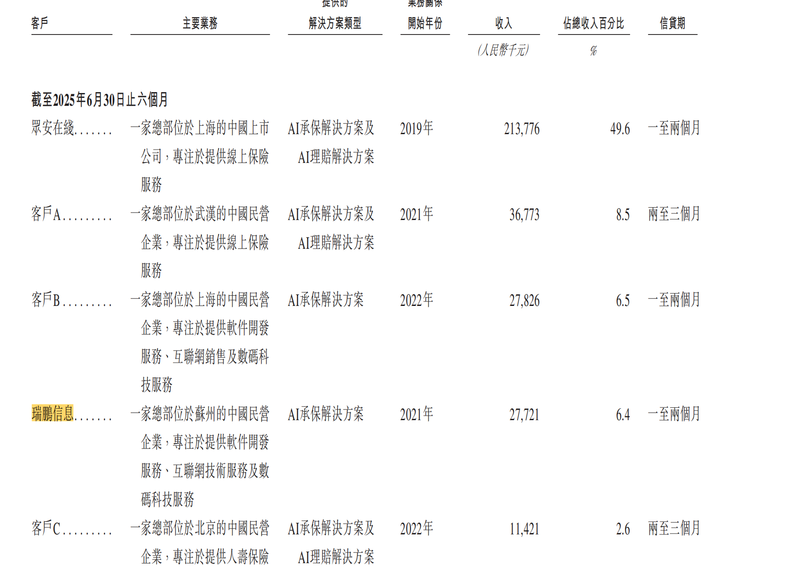
Core Viewpoint - Warmwa Technology has submitted its IPO application to the Hong Kong Stock Exchange, aiming to raise funds for technological development and market expansion while facing significant financial losses and high customer concentration risks [1][2][5]. Financial Performance - Since its establishment in October 2018, Warmwa Technology has facilitated a total first-year premium payment of 10.7 billion RMB by June 30, 2025 [1]. - The company has reported continuous net losses, accumulating over 700 million RMB in losses over three and a half years, with gross margins declining from 57.7% in 2022 to 51.0% in the first half of 2025 [1][5]. - Revenue figures for 2022 to 2025 are as follows: 345 million RMB, 655 million RMB, 944 million RMB, and 431 million RMB, with corresponding net losses of 223 million RMB, 240 million RMB, 155 million RMB, and 99 million RMB [5][6]. Customer Concentration - The top five customers contribute a significant portion of the company's revenue, accounting for 92.3%, 82.9%, 78.9%, and 73.6% of total revenue from 2022 to 2025 [2]. - The largest customer, which is also a major shareholder, is Zhong An Online, contributing 49.6% of revenue in the first half of 2025 [2][4]. Use of IPO Proceeds - Approximately 30% of the funds raised from the IPO will be allocated to enhancing research and development and technological infrastructure, another 30% for geographic expansion and product diversification, and 30% for strategic investments in insurtech-related businesses [1]. Research and Development - R&D expenditures from 2022 to 2025 are reported as 68.1 million RMB, 69.3 million RMB, 94 million RMB, and 44.2 million RMB, with a decreasing percentage of revenue allocated to R&D from 19.7% in 2022 to 7.9% in the first half of 2025 [10][12]. Strategic Acquisitions - In October 2023, Warmwa Technology completed the acquisition of Jiangsu Daotai, which is expected to enhance its customer base and operational capabilities [6][7].
平均赔付率45%,你买的短期健康险真的赔到了吗?
Jing Ji Guan Cha Bao· 2025-09-24 02:45
Core Viewpoint - The current state of short-term health insurance in China shows a low comprehensive claims ratio, indicating insufficient consumer protection and trust in insurance companies [2][3][8]. Group 1: Claims Ratio Analysis - The median comprehensive claims ratio for short-term health insurance among 120 insurance companies is only 42.12%, with an average of 45% after excluding extreme values [2][5]. - A claims ratio between 50% and 70% is considered reasonable for both consumer satisfaction and sustainable insurance company operations [4][10]. - The claims ratio for life insurance companies has increased from 38.83% in 2023 to 42.12% in the first half of 2025, while property insurance companies saw an increase from 38.70% to 42.30% [5]. Group 2: Company Performance - Few insurance companies achieve a claims ratio above 60%, with only 23 out of 120 companies falling within this range [5]. - Companies like China Life, Ping An Health, and Taikang Life have claims ratios above 50%, while others like Zhong An Insurance have a significantly lower ratio of 30.7% [8][9]. - Some companies report negative claims ratios due to low business volume, while others exceed 100% due to specific claims situations [6]. Group 3: Market Dynamics - The high operational costs associated with online customer acquisition and marketing are squeezing the claims payout space for insurance companies [9][14]. - The shift towards digital marketing has increased competition and customer acquisition costs, impacting the overall claims ratio [9][15]. - The importance of commercial health insurance is growing as basic medical insurance faces increasing financial pressure, highlighting the need for better integration and product offerings [11][12]. Group 4: Future Outlook - There is a recognized need to improve the claims ratio by at least 20 percentage points to enhance consumer experience and trust [13]. - Expanding the range of coverage and improving service efficiency are seen as critical paths to increasing the claims ratio and consumer satisfaction [15]. - Recent policy changes in Shanghai encouraging the use of personal medical accounts for group health insurance may open new avenues for growth in the commercial health insurance sector [15].
平均赔付率45%,你买的短期健康险真的赔到了吗?
经济观察报· 2025-09-24 02:30
Core Viewpoint - The comprehensive claim ratio of short-term health insurance in the industry is low, with a median of 42.12% and an average of 45%, indicating insufficient consumer protection and trust in insurance companies [1][3][4]. Summary by Sections Comprehensive Claim Ratio - The comprehensive claim ratio is a crucial indicator of insurance product protection, with a higher value indicating more payouts to consumers [4]. - The current ratio of around 45% is considered low, with industry professionals suggesting a more reasonable range of 50%-70% for better consumer experience and sustainable operations [4][11]. Trends Over Time - From 2023 to the first half of 2025, the median claim ratio for life insurance companies increased from 38.83% to 42.12%, while for property insurance companies, it rose from 38.70% to 42.30% [6]. - Among the insurers reporting data, 11 had negative claim ratios, and 9 exceeded 100%, with 44 companies falling between 0%-40% and 33 between 40%-60% [6]. Company Performance - Major insurers like China Life, Ping An Health, and others have claim ratios above 50%, while companies like Zhong An Insurance and Tai Kang Online have significantly lower ratios [11]. - The disparity in claim ratios among companies is influenced by their product focus, with those offering broader coverage typically having higher ratios [14]. Cost Structure and Profitability - Low claim ratios do not necessarily equate to high profits for insurance companies, as high operational costs can offset potential gains [13]. - The competitive landscape for acquiring customers, especially through digital channels, has led to increased costs, impacting claim ratios [13]. Market Dynamics - The importance of commercial health insurance is growing, especially with reforms in payment methods that open new opportunities for development [16]. - The current short-term health insurance products primarily cover out-of-pocket expenses after basic insurance reimbursements, often with high deductibles [16]. Future Outlook - There is a recognized need to improve the claim ratio by at least 20 percentage points to enhance consumer satisfaction and trust [16]. - Strategies to increase consumer engagement and expand coverage are being explored, including targeting sub-healthy and sick populations [18][19]. - Government initiatives to support group health insurance purchases may provide a significant boost to the commercial health insurance market [20].





平均赔付率45% 你买的短期健康险真的赔到了吗?
Jing Ji Guan Cha Bao· 2025-09-24 02:16
Core Viewpoint - The current state of short-term health insurance in China shows a low comprehensive claims ratio, indicating insufficient consumer protection and trust in insurance companies [2][3][8]. Claims Ratio Analysis - The median comprehensive claims ratio for short-term health insurance from 2023 to mid-2025 has increased from 38.83% to 42.12% for life insurance companies, and from 38.70% to 42.30% for property insurance companies [4]. - A total of 120 insurance companies reported a median claims ratio of 42.12%, with an average of 45% after excluding outliers [2][4]. - Only 19.1% of the companies reported a claims ratio between 60% and 100%, indicating that achieving a higher claims ratio is challenging [4]. Company Performance - Companies like China Life, Ping An Health, and Taikang Life have reported claims ratios above 50%, while others like ZhongAn Insurance and Taikang Online have much lower ratios, indicating a disparity in performance among insurers [8][9]. - Some companies reported negative claims ratios due to low business volume, while others exceeded 100% claims ratios, highlighting the variability in the market [5][8]. Market Dynamics - The low claims ratios are attributed to high operational costs, including online marketing and distribution expenses, which compress the space for actual claims payouts [9][10]. - The insurance market is seeing a shift towards digital marketing and the need for companies to adapt to changing consumer behaviors and expectations [9][14]. Future Outlook - There is a consensus among industry experts that the ideal claims ratio for short-term health insurance should be between 50% and 70% to ensure consumer satisfaction and company sustainability [3][12]. - The increasing pressure on basic medical insurance funds highlights the growing importance of commercial health insurance, especially with the implementation of new payment methods [10][11]. - Innovations in insurance products and expanding coverage to include more health-related services are seen as necessary steps for improving claims ratios and consumer trust [13][14].
“健康险+AI”赛道窗口期 暖哇科技冲刺港股
Zhong Guo Jing Ying Bao· 2025-09-23 13:11
Core Viewpoint - The insurance AI technology company, Warmwa Technology, has submitted its listing application to the Hong Kong Stock Exchange, focusing on the health insurance market and leveraging AI technology to enhance underwriting and claims processes [1][2]. Group 1: Company Overview - Warmwa Technology was established in 2018 and is recognized as a leading AI technology company in China's health insurance sector, with comprehensive risk analysis capabilities [1]. - The company is primarily owned by ZhongAn Online, which holds a 31.65% stake and is also its largest customer [1][2]. - The management team includes experienced professionals from the insurance and technology sectors, enhancing the company's operational expertise [2]. Group 2: Business Model and Financials - Warmwa Technology operates as a technology service provider, generating revenue mainly through AI system integration in underwriting and claims processes, with a performance-based pricing model [2]. - The company's revenue grew from 345 million yuan in 2022 to 944 million yuan in 2024, with a compound annual growth rate of 65.5% [4]. - Despite revenue growth, the company has not achieved sustainable profitability, reporting net losses of 223 million yuan, 240 million yuan, and 155 million yuan from 2022 to 2024 [4]. Group 3: Product Offerings and Innovations - In July, Warmwa Technology launched a comprehensive intelligent risk control product called "Tianjian," aimed at new health insurance products, achieving an average loss reduction of approximately 25% for partners [3]. - The company has collaborated with seven major insurance companies to introduce 14 insurance products for patients with pre-existing conditions, covering 21 conditions and nine innovative therapies [3]. Group 4: Market Position and Growth Potential - The Chinese health insurance AI technology market is projected to grow from 23.1 billion yuan in 2024 to 65.3 billion yuan by 2029, with a compound annual growth rate of 23.1% [6]. - Warmwa Technology has processed over 204 million underwriting and claims review cases, contributing to 10.7 billion yuan in first-year premiums [6]. - The company aims to reduce reliance on ZhongAn Online by expanding partnerships with other leading insurance companies and enhancing its market position [5]. Group 5: Competitive Landscape - The competition in the insurance AI sector is intensifying, with traditional insurance companies increasing their technology investments and numerous tech firms entering the insurance space [7]. - The industry is focusing on the application of generative AI in actuarial pricing while balancing innovation with data security and privacy [7].