艾力斯

Search documents
2亿元卖早期资产 加科思“舍小保大”
经济观察报· 2025-10-17 11:22
Core Viewpoint - The article discusses the strategic moves of 加科思 (Gakosi) in the biopharmaceutical sector, particularly focusing on its divestment of a cardiovascular project to 海松资本 (Haisong Capital) and the subsequent reinvestment into its core oncology pipeline, especially the development of a Pan-KRAS inhibitor [2][4][9]. Group 1: Transaction Details - 加科思 announced a capital increase and equity transfer involving a cardiovascular treatment project, previously held by its subsidiary 加科瑞康 (Gakosi Ruikang), to 海松资本, which will acquire 80% of the subsidiary [2][4]. - The transaction includes an initial payment of 125 million yuan and a milestone payment of 75 million yuan, totaling 200 million yuan, which will be used for the development, production, and commercialization of its core oncology pipeline [2][3][4]. Group 2: Strategic Focus - Following the divestment of non-core assets, 加科思 aims to concentrate on the oncology field, enhancing its cash flow and retaining a 10% stake in 加科瑞康 for potential future benefits [4][6]. - The company has a strong focus on the Pan-KRAS inhibitor, which is a significant target in its pipeline, as KRAS mutations are linked to a high percentage of cancer cases [11][13]. Group 3: Clinical Development Plans - 海松资本 plans to leverage China's clinical advantages to expedite the development of the pipeline, with intentions to submit an IND application in the first half of next year, aiming to enter clinical trials [7][9]. - The Pan-KRAS inhibitor is currently undergoing I/IIa phase clinical trials in China and the U.S., with results expected to be announced in mid-2026 [14][15]. Group 4: Market Context - The article highlights the competitive landscape for Pan-KRAS inhibitors, noting that other companies like Pfizer and BeiGene are also advancing similar projects in clinical stages [15]. - 加科思's leadership emphasizes the potential of iADC (immune-stimulating antibody-drug conjugates) as a high-risk but high-reward area, indicating a broader strategy in innovative cancer therapies [15].


加科思药业20251016
2025-10-16 15:11
Summary of the Conference Call for 嘉克斯 (JiaKesi) Industry and Company Overview - 嘉克斯 is focused on the biopharmaceutical industry, particularly in oncology and cardiovascular projects. The company has made significant strides in drug development, especially in the KRAS pathway and antibody-drug conjugates (ADCs) [2][4][16]. Key Points and Arguments 1. **Cardiovascular Asset Sale**: 嘉克斯 sold an early-stage cardiovascular project to 海通资本 for a total of 1.25 billion RMB upfront and an additional 75 million RMB in milestone payments, retaining a 10% equity stake. This transaction demonstrates 嘉克斯's ability to generate revenue from early-stage projects outside oncology [2][3]. 2. **KRAS Pathway Leadership**: 嘉克斯 is a leader in KRAS pathway drug development, particularly with its pan-KRAS and G12D TADC projects. The company expects to complete RPTD dosing by the end of the year and plans to present Phase I clinical data in the first half of next year [2][4][5]. 3. **EGFR G12D Inhibitor Development**: 嘉克斯 has developed an EGFR G12D inhibitor as a TADC payload, significantly improving efficacy and reducing toxicity. This approach enhances drug accumulation in tumor tissues, expanding the therapeutic window and improving safety [2][6][7]. 4. **Focus on Colorectal Cancer**: The choice of EGFR as an ADC target is based on its critical role in colorectal cancer treatment. 嘉克斯 plans to use TAD-EGFR KRAS G12D ADC to enhance efficacy and safety in this indication [2][8]. 5. **Differentiation in KRAS ADC Development**: 嘉克斯 is focusing on differentiating its KRAS-related ADC products by targeting various mutations and indications, particularly in colorectal cancer, where combination therapies are often necessary [2][9][10]. 6. **STING Project and Immune Therapy**: The STING project represents a significant advancement in immunotherapy, aiming to recruit immune cells to the tumor microenvironment. 嘉克斯 is also exploring other unique targets like p53 and BAT, which have high clinical value and commercial potential despite lower market attention [4][17]. 7. **Clinical Progress and Future Plans**: 嘉克斯 is advancing multiple key projects, including KRAS 72D TADC and BAT inhibitors, with ongoing Phase I trials showing promising safety and efficacy profiles. The company is also expanding its clinical trials to include blood cancer indications [5][6][17]. Other Important Insights - 嘉克斯's strategic focus on the pan-KRAS pathway aims to position the company as a top player in this area, with ongoing research into various cancer types, including pancreatic and cholangiocarcinoma [16]. - The collaboration with 海通资本 is expected to leverage synergies with other investments, accelerating the development of the cardiovascular project while allowing 嘉克斯 to retain a stake in its future success [3][4]. - The competitive landscape for KRAS-targeted therapies is evolving, with 嘉克斯's innovative approaches potentially addressing unmet needs in the market [13][14]. This summary encapsulates the critical developments and strategic directions of 嘉克斯, highlighting its innovative drug development efforts and market positioning within the biopharmaceutical industry.
2025张江药谷产业生态全球推介会在上海举行
Zhong Guo Jing Ji Wang· 2025-10-16 08:54
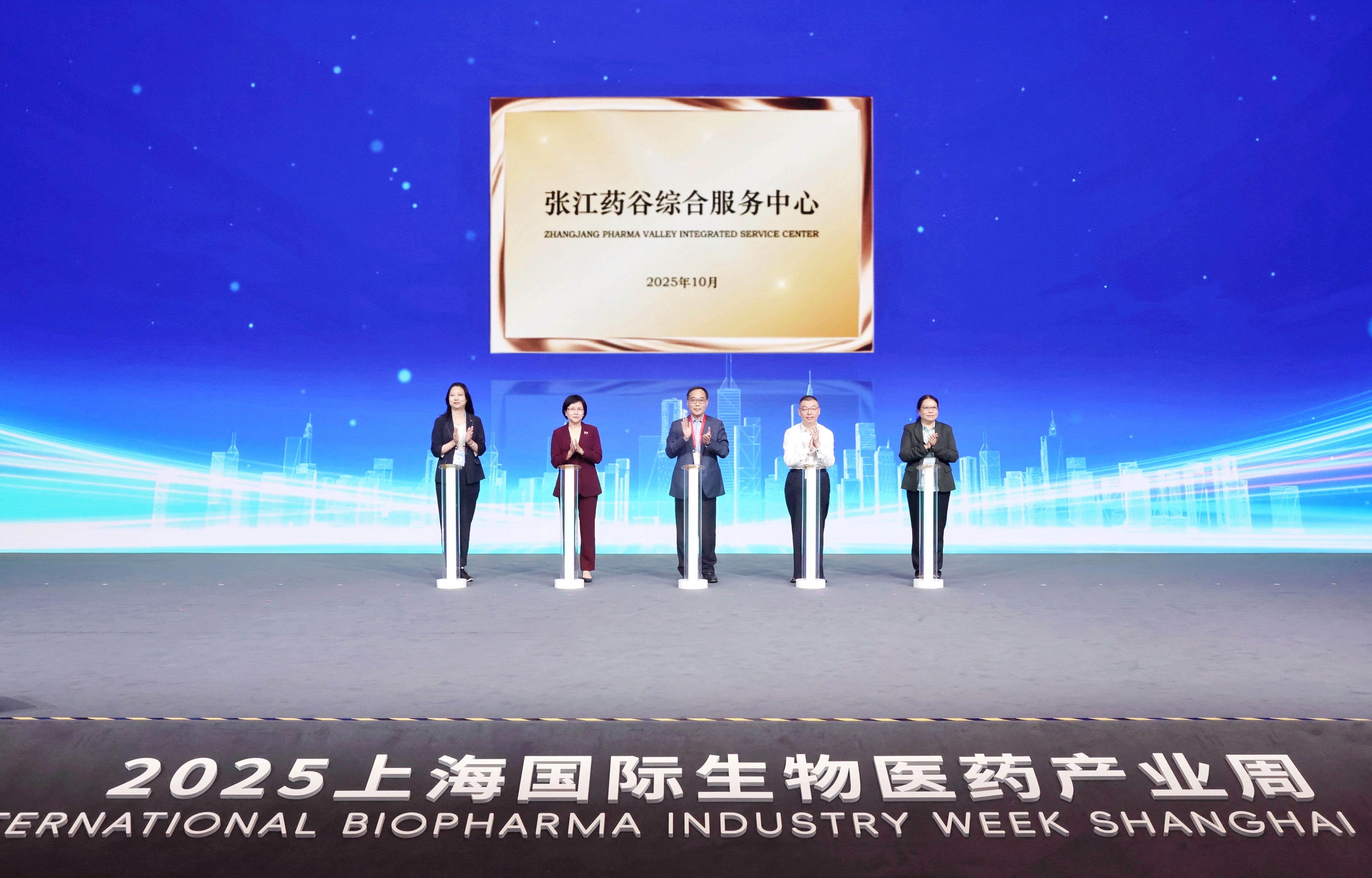
Core Insights - The 2025 Zhangjiang Pharmaceutical Valley Global Promotion Conference and International Innovation Conference was held in Shanghai, emphasizing the importance of the biopharmaceutical industry as a key sector in Shanghai's economic development [1] Group 1: Industry Development - The biopharmaceutical industry is one of Shanghai's three leading industries and a focal point for the new round of technological revolution and competition [1] - Pudong is striving to create a world-class biopharmaceutical industry cluster by enhancing innovation capabilities and promoting the emergence of "First-in-class," "First-in-China," and "First-in-Human" innovative products [1][2] - In the first half of this year, Pudong achieved a biopharmaceutical industry scale of 220 billion yuan, with an annual compound growth rate of 14% [3] Group 2: Policy and Strategic Initiatives - The Shanghai government is aligning with international standards to build a vibrant biopharmaceutical industry cluster, focusing on innovation as the driving force [2] - The State Council issued guidelines to enhance the innovation vitality and global competitiveness of China's pharmaceutical industry [2] - A comprehensive implementation plan for the high-end medical device industry in Pudong was announced, emphasizing "technology innovation + system innovation" as a dual driving force [4] Group 3: Innovation and Achievements - Zhangjiang Pharmaceutical Valley has approved 29 new Class I domestic drugs, with several innovative drugs set to launch in 2025, including the first humanized ultra-long-acting GLP-1 receptor agonist and the first gene therapy drug [4] - In the field of innovative medical devices, 38 innovative device products have been approved, with recent launches filling domestic technology gaps [4] - The establishment of the Pudong New Area Biopharmaceutical Industry Development Expert Committee aims to provide intellectual support for the construction of a world-class biopharmaceutical industry cluster [5]
做全球创新药械的首发“福地”,上海为企业提供哪些加速包
Di Yi Cai Jing· 2025-10-16 06:52
Core Insights - Shanghai has approved a total of 30 domestically developed Class 1 innovative drugs from 2021 to September 2025, leading the nation in drug and medical device innovation [1] - The Shanghai government is committed to accelerating the entire chain of biopharmaceutical innovation, including basic research, incubation, clinical trials, regulatory approval, production, and application [1] - The establishment of various funds, including a 225 billion yuan biopharmaceutical industry mother fund and a 150 billion yuan future industry fund, aims to support long-term investments in the biopharmaceutical sector [3][4] Investment and Funding - The Shanghai National Investment Biopharmaceutical Industry Ecosystem Cooperation Fund was signed during the event, emphasizing the importance of patient capital in the high-risk, high-investment biopharmaceutical industry [2] - As of October 2023, the total investment decision in biopharmaceutical sub-funds by the Shanghai biopharmaceutical mother fund and other funds has reached approximately 6.6 billion yuan, with a market selection of 22 sub-funds [4] - The funds focus on innovative drug and medical device supply chains, brain-computer interfaces, synthetic biology, and other cutting-edge technologies [4] Industry Development - The Zhangjiang Pharma Valley has approved 30 Class 1 innovative drugs and 37 innovative medical devices, showcasing significant progress in the biopharmaceutical sector [9] - The Shanghai region has attracted over 50% of the capital for the biopharmaceutical industry, facilitating both research and commercialization efforts [9] - The connection between original innovation and application is emphasized, with institutions acting as bridges to transition basic research into viable drug products [10] Future Directions - The focus for the next 5-10 years will be on transforming original innovation capabilities into drug forms, which is seen as a critical development direction [10] - A comprehensive service center has been established to support the entire process from idea generation to approval and industrialization [10]
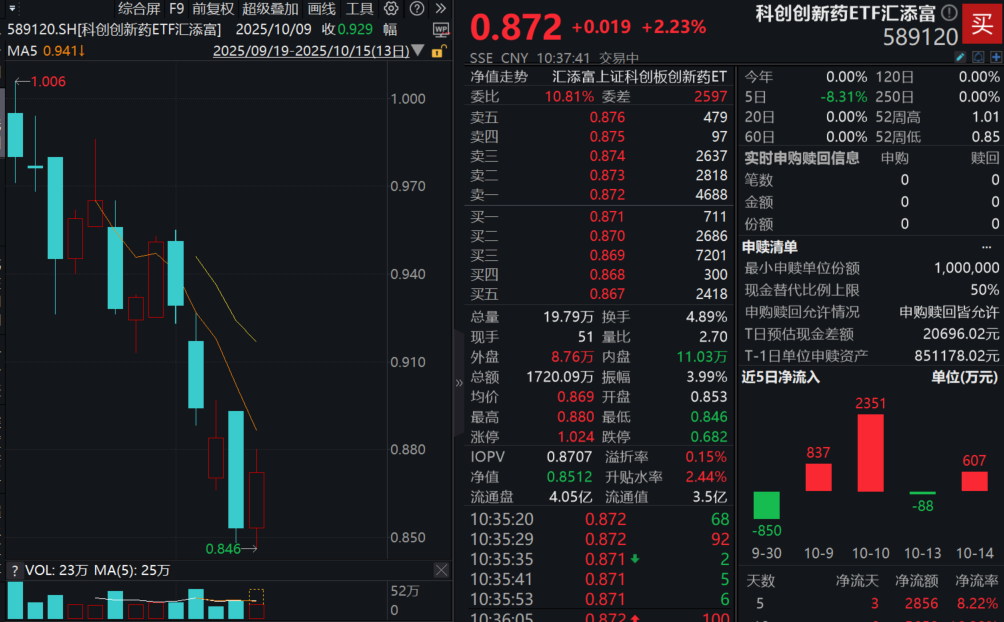
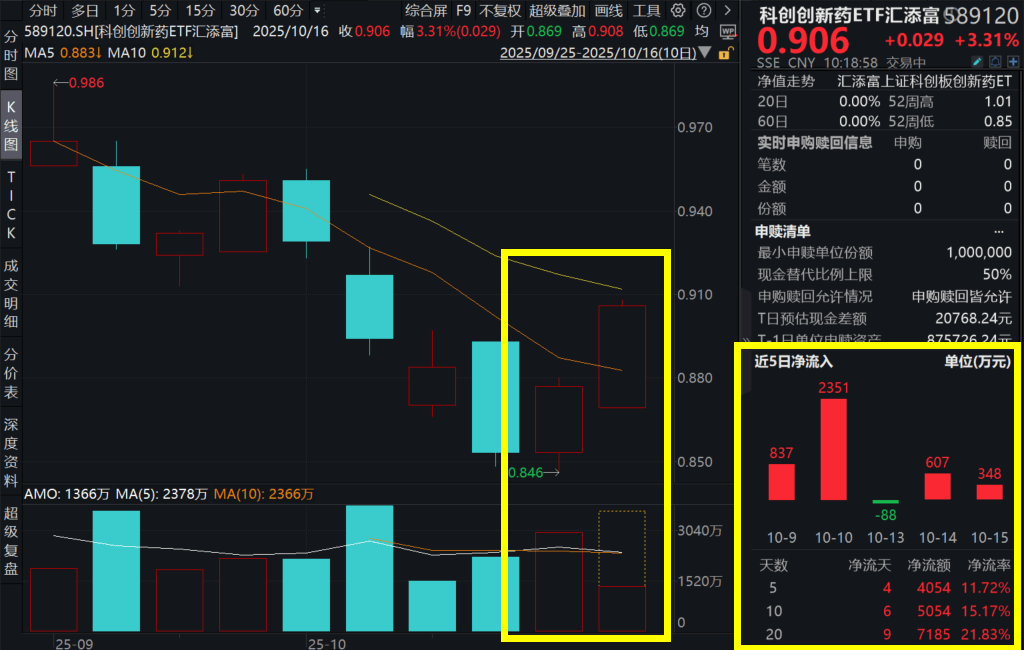
科创创新药板块连续反弹,三生国健20CM涨停,获超800万美元分红款!科创创新药ETF汇添富(589120)涨超2%,机构:创新药仍是未来的投资主线
Sou Hu Cai Jing· 2025-10-16 03:08
Core Viewpoint - The innovation drug sector in China is experiencing significant growth, driven by increased investment, favorable policies, and a strong pipeline of new drugs entering clinical trials, positioning it for a robust future in both domestic and international markets [6][8][10]. Group 1: Market Performance - As of October 16, the Science and Technology Innovation Drug ETF (Huitianfu, 589120) saw a notable increase of 3.31%, maintaining a rise of over 2% despite a slight pullback [1]. - The ETF has attracted over 40 million yuan in net inflows over the past five days, indicating strong investor interest [1]. - Key constituent stocks such as Sangfor Technology and Yifang Bio have shown significant gains, with Sangfor hitting the daily limit up and Yifang Bio rising by 8.61% [2][3]. Group 2: Industry Trends - The number of License-out transactions in China reached 72 in the first half of 2025, surpassing half of the total for 2024, with a total transaction value 16% higher than the previous year [5]. - The innovation drug sector is primarily driven by business development (BD) expectations, with a significant portion of annual BD activity occurring in the fourth quarter [6]. - The Chinese innovation drug market is expected to see a recovery in confidence as more BD deals materialize, particularly as companies prepare for the upcoming European Society for Medical Oncology (ESMO) conference [6][7]. Group 3: R&D and Financial Outlook - Since 2015, Chinese innovation drug companies have significantly increased R&D investments, leading to a rise in the number of original innovative drugs entering clinical trials, with 704 drugs expected to enter Phase I trials in 2024 [8]. - The revenue of innovation drug companies has been steadily increasing, with projections indicating that one-third of these companies will achieve profitability by 2025, and 70% will reach breakeven by 2026 [8]. - The Chinese government's support for innovation drugs through favorable policies and increased funding is expected to enhance the sector's growth, with healthcare spending on innovation drugs projected to rise from 50 billion yuan in 2022 to 120 billion yuan in 2024 [9]. Group 4: Competitive Landscape - The impending patent cliff for multinational corporations (MNCs) is expected to create a demand for new products, with 190 drugs losing patent protection by 2030, including 69 with annual sales exceeding 1 billion dollars [10]. - Chinese innovation drug companies are well-positioned to fill this gap due to their high R&D efficiency and rich technological outcomes, making them attractive partners for MNCs [10].




聚焦抗癌药管线 加科思-B(01167)出售非核心项目
智通财经网· 2025-10-16 01:47
Core Viewpoint - The company is focusing on its long-term strategic direction of oncology innovation by divesting non-oncology assets, which will optimize resource allocation and enhance organizational efficiency [1][3]. Group 1: Investment and Strategic Moves - The company announced a capital increase and equity transfer agreement where Haisheng Capital will acquire 80% of its subsidiary, Beijing Jike Ruikang Pharmaceutical Technology Co., Ltd., for RMB 200 million [1]. - After the transaction, the ownership structure will be 10% for the company, 80% for Haisheng Capital, and 10% for an industry partner [1]. - The divestment aligns with the company's strategy to focus on its oncology pipeline, particularly in KRAS and iADC directions [1][3]. Group 2: Product Development and Clinical Trials - The company's KRAS G12C inhibitor, Glecirasib, has been approved for second-line treatment of KRAS G12C mutated non-small cell lung cancer (NSCLC) in China, marking a significant commercial breakthrough [2]. - Glecirasib is partnered with Elysium, which paid RMB 200 million upfront and an additional RMB 50 million milestone payment this year [2]. - The company is conducting registration trials for Glecirasib in combination with SHP2 inhibitor JAB-3312 for first-line treatment of KRAS G12C mutated NSCLC [2]. Group 3: Future Prospects and Market Position - The company is advancing its second-generation product, EGFR-KRAS G12D tADC, expected to submit an IND application in the second half of 2026 [3]. - Market analysts believe the company's pipeline value and long-term growth potential are not fully reflected in its current stock price, with a market cap comparison indicating significant undervaluation [3]. - The chairman and associated parties have significantly increased their holdings, signaling strong confidence in the company's long-term development [3].
城记|“3F”创新产品持续涌现 浦东打造生物医药“核爆点”
Xin Hua Cai Jing· 2025-10-15 12:30
Core Insights - The Zhangjiang Pharma Valley is positioning itself as a global hub for innovative pharmaceuticals and medical devices, aiming to become the first choice for scientists and a pioneer in institutional reforms by 2025 [1][2][10] Industry Overview - The biopharmaceutical industry is one of Shanghai's three leading industries and a focal point of the new technological revolution and competition [2] - Pudong is tasked with building a world-class biopharmaceutical industry cluster, enhancing its innovation capabilities [2][10] Current Developments - Pudong hosts over 4,000 biopharmaceutical companies, including 9 of the top 10 global pharmaceutical firms and 10 of the top 20 medical device companies [3] - There are nearly 2,000 research pipelines in development, with Pudong accounting for 14% of the national new drug approvals and business development transaction amounts [3][11] - Zhangjiang Pharma Valley has approved 29 first-class domestic new drugs, with several innovative drugs set to launch in 2025 [3][4] Innovation Achievements - In the field of innovative medical devices, 38 products have been approved, with significant advancements in cardiac electrophysiology [3][4] - The establishment of a comprehensive service center aims to provide full-chain services from consultation to industry exchange, enhancing the platform's capabilities [4] Policy Initiatives - The "Implementation Plan for Promoting the High-Quality Development of the High-end Medical Device Industry" aims for an industrial output value of 30 billion yuan within three years [5] - Pudong has a solid foundation in high-end medical devices, with 468 research and production enterprises and a significant share of the city's industrial output [5][6] Strategic Focus Areas - Pudong is focusing on integrating artificial intelligence, medical engineering, and cross-industry collaborations to enhance the development of medical devices [7][8] - The region is also exploring international market expansion, with over 60 companies successfully exporting products [6] Future Aspirations - The establishment of a global "0 to 1" innovation R&D center in Pudong reflects the area's attractiveness for innovative drug development [9][10] - Pudong aims to leverage its unique advantages in integrated circuits, biopharmaceuticals, and artificial intelligence to create a new paradigm of deep integration between technological and industrial innovation [10]

10月15日医疗健康(980016)指数涨1.78%,成份股华海药业(600521)领涨
Sou Hu Cai Jing· 2025-10-15 09:53
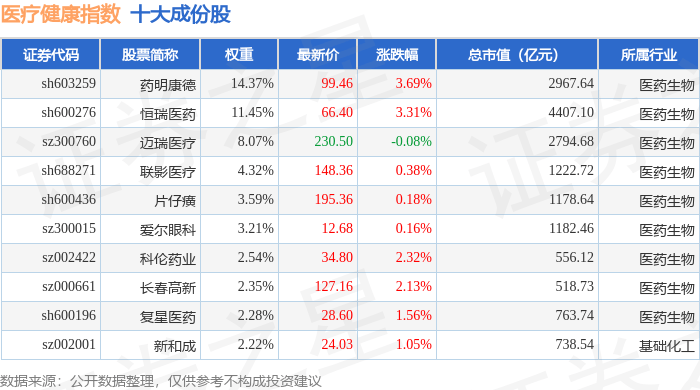
Core Insights - The Medical Health Index (980016) closed at 6759.45 points, up 1.78%, with a trading volume of 27.946 billion yuan and a turnover rate of 1.0% [1] - Among the index constituents, 40 stocks rose, with Huahai Pharmaceutical leading at a 7.59% increase, while 9 stocks fell, with BGI Genomics leading the decline at 2.93% [1] Index Performance - The Medical Health Index saw a net inflow of 1.063 billion yuan from main funds, while retail investors experienced a net outflow of 392 million yuan [1] - The top ten constituents of the index include major companies such as WuXi AppTec, Hengrui Medicine, and Mindray Medical, with varying market capitalizations and price changes [1] Fund Flow Analysis - Huahai Pharmaceutical had a main fund net inflow of 163 million yuan, while retail investors saw a net outflow of 76.6 million yuan [2] - Other notable companies with significant fund flows include Aier Eye Hospital and Hengrui Medicine, both experiencing mixed inflows and outflows from different investor categories [2]





上海国资,要投10家GP
投资界· 2025-10-15 07:52
Core Viewpoint - Shanghai is actively developing its biopharmaceutical industry, aiming to create a world-class industrial cluster with significant investment and growth potential [4][8]. Investment Initiatives - Shanghai Guotou Company has established a biopharmaceutical industry mother fund with a total scale of 22.5 billion yuan, focusing on early-stage investments and long-term support for hard technology [6]. - The Shanghai Future Industry Fund, with a total scale of 15 billion yuan, aims to leverage fiscal funds to promote original innovation and technology transformation [6]. - By October 2025, these funds have collectively decided on investments of nearly 6 billion yuan in biopharmaceutical sub-funds, with a market selection of 18 sub-funds [6]. Industry Growth - The biopharmaceutical industry in Shanghai has shown continuous growth, increasing from 761.71 billion yuan in 2021 to an estimated 1 trillion yuan in 2025, with a compound annual growth rate of 8.94% [9]. - In the first half of 2025, the industry reached 500.56 billion yuan, indicating strong momentum towards surpassing the 1 trillion yuan mark [9]. Company Landscape - As of the end of 2024, there are 2,183 regulated biopharmaceutical enterprises in Shanghai, with leading companies like United Imaging Healthcare and Innovent Biologics maintaining significant market positions [10]. - Notably, 19 of the top 20 global pharmaceutical and medical device companies have established headquarters or R&D centers in Shanghai, highlighting the city's attractiveness for high-caliber projects [10]. Collaborative Efforts - A recent signing ceremony involved 10 institutions, including major investment firms, indicating a robust collaborative environment within the biopharmaceutical sector [4][6]. - The establishment of industrial clusters in areas like Pudong and Minhang is aimed at enhancing resource concentration and fostering innovation [10].
荣昌生物大涨超6%,全球首创双靶点新药获受理!科创创新药ETF汇添富(589120)涨超2%!ESMO大会召开在即,BD叙事值得期待
Xin Lang Cai Jing· 2025-10-15 02:57
Core Viewpoint - The A-share market is experiencing a rebound, particularly in the innovative drug sector, with significant inflows into the ETF focused on this area, indicating growing investor interest and confidence in the sector [1][5]. Group 1: Market Performance - As of 10:23 on October 15, the Kexin Innovative Drug ETF (589120) saw a rise of nearly 3%, currently up over 2% [1]. - The ETF recorded a net inflow of over 6 million yuan for the day, with a cumulative inflow of over 56 million yuan in the past 10 days [1]. Group 2: Stock Performance - Most component stocks of the Kexin Innovative Drug ETF experienced gains, with Rongchang Bio rising over 6%, Maiwei Bio over 5%, and several others including Ailis and Borui Pharma rising over 3% [3]. - The top-performing stocks by estimated weight include Baiji Shenzhou (9.89%), Ailis (8.60%), and Baili Tianheng (8.16%) [4]. Group 3: Industry Developments - Rongchang Bio announced that its innovative drug, Tai Tasi Pi, for treating primary immunoglobulin A nephropathy, has received acceptance for market application from the National Medical Products Administration (NMPA) [5]. - The upcoming European Society for Medical Oncology (ESMO) conference from October 17 to 21 in Berlin is anticipated to showcase new data on domestic innovative drugs, which could create new business development (BD) opportunities [5][6]. Group 4: Regulatory and Market Insights - Analysts suggest that the impact of tariff policies on China's pharmaceutical industry is limited, with the market having already priced in the effects of drug tariffs [5]. - The number of overseas BD transactions by Chinese innovative drug companies is expected to continue growing, with significant increases in both the number and total transaction value from 2022 to 2025 [6].