阿迪达斯

Search documents
迪卡侬背叛了工人阶级
36氪· 2025-12-05 10:28
Core Viewpoint - Decathlon, once celebrated for its affordability in the Chinese market, is now shifting towards a price increase strategy, moving away from its original value proposition of cost-effectiveness [4][19]. Pricing Strategy - From 2022 to 2024, Decathlon's average product price in China is expected to rise from 128 to 196 yuan, marking a 52% increase, with some products seeing price hikes of up to 100% [5][21]. - The introduction of a 69,999 yuan road bike exemplifies this shift towards higher pricing [6][21]. Brand Positioning - Decathlon's unique positioning as a sports goods retailer, originally focused on high cost-performance, is now being challenged as it attempts to transition into a recognized sports brand [20][21]. - The company has historically operated as a dealer of its own brands, with over 90% of its sales coming from private labels, allowing it to maintain lower prices compared to competitors [14][16]. Market Challenges - The company faces significant competition from cheaper alternatives and niche brands that have emerged in the market, making it difficult to maintain its previous pricing advantage [31][33]. - The shift in consumer preferences towards specialized brands has further complicated Decathlon's market position, as it struggles to compete with both low-cost alternatives and high-end brands [32][33]. Strategic Shift - Decathlon's "North Star Strategy" aims to upgrade its brand image from mass-market to high-end, which includes a reduction in the number of private labels and a focus on enhancing customer experience [22][24]. - The company is also attempting to increase the proportion of high-end products in its offerings, with a target of 10%-20% [26][27]. Financial Performance - Since 2021, Decathlon's revenue growth has stagnated, and profit levels have declined, indicating a disconnect between consumer perception and actual purchasing behavior [28][27]. - The company is under pressure to adapt to changing market dynamics, as evidenced by its efforts to understand and cater to the needs of the middle class [27][28]. Conclusion - Decathlon's transition from a budget-friendly retailer to a higher-end brand is fraught with challenges, as it must navigate a competitive landscape that includes both low-cost alternatives and specialized brands [36][44].

安踏李宁,争抢彪马?
投中网· 2025-12-05 02:18
Core Viewpoint - The article discusses the potential acquisition of the German sports brand Puma, highlighting various interested parties, including Anta Sports and Li Ning, amid Puma's ongoing financial struggles and market challenges [5][12][14]. Group 1: Acquisition Interest - Anta Sports is reportedly one of the potential bidders for Puma, possibly collaborating with a private equity fund, similar to its previous acquisition of Amer Sports [5]. - Other potential bidders include Li Ning, Asics, Authentic Brands Group, and private equity firm CVC, with Li Ning already in discussions with banks regarding financing [6][14]. - The Pino family, Puma's controlling entity, is seeking a higher valuation for the brand, complicating negotiations with potential buyers [17]. Group 2: Puma's Financial Struggles - Puma has faced significant challenges, including a projected net loss for the first time since its IPO, with expected losses between €120 million and €180 million (approximately ¥985 million to ¥1.478 billion) [13]. - The company's sales have declined, with a 10.4% year-over-year drop in third-quarter sales to €1.9557 billion, and a gross margin decrease to 45.2% [13]. - Inventory levels have risen by 17.3% year-over-year, reaching €2.1241 billion, indicating operational inefficiencies [13]. Group 3: Market Context - The global sports brand landscape is undergoing significant changes, with new competitors like Under Armour and Lululemon intensifying competition for established brands like Adidas and Puma [12]. - Puma's strategy has shifted towards lifestyle and streetwear, but the brand has struggled to maintain momentum after initial successes, such as the collaboration with Rihanna that generated €8.465 billion (approximately ¥720 billion) in revenue [12]. - The article notes that the current environment for mergers and acquisitions is favorable, with expectations of increased activity in the coming years, which may influence Puma's sale [17]. Group 4: Potential Synergies - Anta Sports is seen as a likely buyer due to its history of acquiring international sports brands and its strategic focus on multi-brand management and globalization [18]. - The combination of Puma's brand recognition and European market presence with Anta's strengths in professional sports and supply chain could create significant synergies [19].

NIKE Stock Falls 11% in 3 Months: A Buy Opportunity or Value Trap?
ZACKS· 2025-12-04 17:41
Core Viewpoint - NIKE Inc. is facing significant challenges due to channel disruption, margin pressure, and uneven regional recovery, leading to a decline in stock performance and profitability [2][3][27]. Financial Performance - NIKE's stock has dropped approximately 11.1% over the past three months, slightly outperforming the Shoes and Retail Apparel industry's decline of 12.1% but underperforming the broader sector's dip of 7.2% and the S&P 500 index's growth of 6.9% [4][5]. - The company anticipates a low-single-digit revenue decline for Q2 fiscal 2026, impacted by reduced promotions and a reset in digital demand [8][12]. - The Zacks Consensus Estimate indicates a 2.4% year-over-year sales decline and a 24.1% drop in earnings per share (EPS) for fiscal 2026, with a projected recovery in fiscal 2027 showing 5% sales growth and 54.2% EPS growth [17]. Operational Challenges - Greater China remains a significant operational challenge, characterized by weak store traffic, sluggish sell-through, and a highly promotional digital marketplace, negatively affecting revenue quality and margins [3][13]. - NIKE's classic footwear franchises are still in a reset phase, further hindering overall performance [3][13]. - The company is experiencing persistent margin pressure due to higher input costs, increased wholesale discounting, and rising tariffs, with gross margins expected to decline by 300-375 basis points in Q2 fiscal 2026 [14]. Strategic Initiatives - NIKE is focusing on cleaning up inventory and repositioning its digital business towards higher full-price selling, which is expected to reinforce long-term brand health [21]. - The company is implementing a strategic "Sport Offense" reorganization aimed at enhancing product focus, accelerating innovation, and strengthening brand storytelling across key sports [20]. Valuation Concerns - NIKE's current forward 12-month price-to-earnings (P/E) ratio stands at 31.33X, which is higher than the industry average of 27.13X and the S&P 500's average of 23.44X, raising concerns about whether the stock's valuation is justified [23][24]. - The elevated valuation reflects high investor expectations for growth, but the company may be vulnerable in a cautious market environment [26]. Long-term Outlook - Despite near-term pressures, NIKE's long-term fundamentals remain strong, with momentum in performance categories and early signs of wholesale recovery [20][28]. - The company's strategic initiatives and brand strength suggest potential for a durable rebound once market conditions stabilize [22][28].


阿迪达斯在投资者上诉案中胜诉
Xin Lang Cai Jing· 2025-12-04 15:41
Core Viewpoint - Adidas has won a ruling from the U.S. Ninth Circuit Court of Appeals, dismissing allegations that it misled investors regarding risks associated with its partnership with Yeezy, which had led to a decline in stock price following the termination of the collaboration [1] Group 1 - The termination of the partnership with Ye resulted in a drop in Adidas's stock price [1] - The U.S. Ninth Circuit Court of Appeals ruled in favor of Adidas, rejecting claims of investor misrepresentation related to the Yeezy collaboration [1]

望远镜系列30之2025Q3财报总结:全年确定性渐强,期待库存周期切换和Nike修复共振β
Changjiang Securities· 2025-12-04 14:08
Investment Rating - The investment rating for the textile, apparel, and luxury goods industry is "Positive" and maintained [9] Core Insights - The report summarizes the Q3 2025 financial performance of overseas sports brands, highlighting sales performance, profitability, and inventory status, indicating a gradual improvement in overall performance [2][4] - Revenue performance among major footwear and apparel companies shows divergence, with some brands experiencing strong growth while others face challenges [5][6] - The outlook for the industry suggests a gradual recovery in demand and inventory replenishment, particularly for brands like Adidas and On, while Nike continues to face headwinds [8][36] Revenue Performance - Revenue growth varied significantly among companies in Q3 2025, with Adidas (+12%), On (+35%), and Amer Sports (+30%) showing strong growth, while Nike and VF both reported a decline of -1% [5][19] - The overall revenue performance in Q3 2025 improved compared to Q2, despite some brands continuing to face pressure [5][6] Guidance - The visibility for the full year has improved, with brands like UA restoring full-year guidance, indicating a positive trend despite expected performance divergence [6][26] - Strong growth trends are expected to continue for On and Amer Sports, while Nike and VF are projected to see declines but with signs of improvement [6][31] Inventory - The industry is entering a phase of inventory replenishment, with moderate recovery in demand observed in the U.S. and Europe, although challenges remain in certain markets [7][36] - U.S. apparel inventory levels are in a destocking phase, with wholesale inventory ratios declining since 2023, while retail inventory levels have stabilized [7][36] Future Outlook - The industry is expected to gradually transition into a replenishment phase, with demand showing signs of recovery, particularly in the U.S. apparel sector [8][36] - Brands like Adidas are actively seeking to replenish inventory for growth, while Nike continues to destock amid ongoing challenges [8][36]


Is Lululemon Athletica Stock Underperforming the Nasdaq?
Yahoo Finance· 2025-12-04 03:20
Company Overview - Lululemon Athletica Inc. is a lifestyle-inspired athletic apparel company based in Vancouver, Canada, specializing in yoga, running, training, and other active pursuits with a market cap of $21.6 billion [1] Market Position - Lululemon is categorized as a "large-cap stock" due to its market cap exceeding $10 billion, indicating its substantial size and influence in the activewear industry [2] Stock Performance - LULU stock has experienced a significant decline of 56.9% from its 52-week high of $423.32 on January 30, and has dropped 8.2% over the past three months, contrasting with the Nasdaq Composite's 9.1% increase during the same period [3] - Year-to-date, LULU stock prices have plummeted 52.3%, and over the past 52 weeks, they have decreased by 46.5%, while the Nasdaq has gained 21.5% in 2025 and 20.4% over the past year [4] - The stock has remained below its 50-day moving average since mid-February and below its 200-day moving average since late March, indicating a bearish trend [4] Financial Results - Following the release of its Q2 results on September 4, LULU stock prices fell 18.6% in a single trading session. The company's international sales increased by 22% year-over-year, while net revenues in the Americas grew only 1% [5] - Comparable sales in the Americas dropped by 4% compared to the same quarter last year, with overall net revenues rising 6.5% year-over-year to $2.5 billion, which missed consensus estimates by 36 basis points [5] - The company's EPS decreased by 1.6% year-over-year to $3.10, but exceeded consensus estimates by a notable margin [5] Competitive Analysis - Lululemon has underperformed compared to its peer, Adidas AG, which saw a 23.4% decline year-to-date and a 24.4% drop over the past year [6]

京东奥莱即将在宿迁开业 阿迪达斯、COACH等百余大牌入驻
Sou Hu Cai Jing· 2025-12-02 06:36
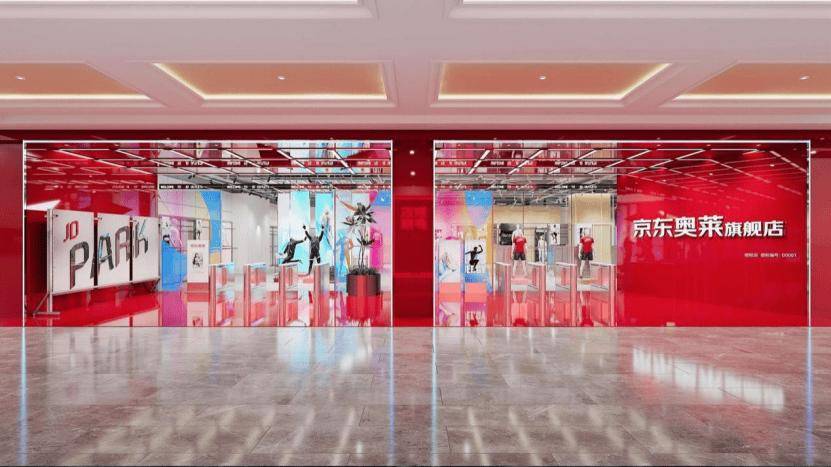
Core Insights - JD Outlet and Suqian have reached a collaboration, with the JD Outlet Suqian Central Mall set to open in early 2026, aiming to become a new fashion consumption landmark and commercial icon for the city [1][5] - The mall will feature nearly 100 well-known brands across various categories, including sportswear, light luxury, men's and women's clothing, and children's apparel, providing a one-stop discount shopping experience for consumers [3][5] Group 1 - The collaboration involves JD, Suqian City, and Hailan Group, focusing on deep cooperation in the field of consumption upgrades, leveraging JD's resource integration capabilities, Hailan's offline operational advantages, and Suqian's policy support [5][7] - The project aims to activate the regional consumption market and inject vitality into the economic and social development of Suqian [5][7] Group 2 - JD Outlet has established 47 stores nationwide since the project's launch, covering cities such as Jiangyin, Qingdao, Shijiazhuang, Foshan, Hefei, and Zibo, reaching over one million consumers [3][5] - The innovative retail model of JD Outlet is expected to provide more convenient and diverse discount shopping experiences for consumers as more stores open across various cities [7]

迪卡侬背叛了工人阶级
3 6 Ke· 2025-12-01 23:36
在中国市场风光了几年,迪卡侬最终还是没禁住打工人的马屁,在开店和打折之间选择了涨价。 按照第三方统计,2022到2024年,迪卡侬中国产品均价从128提到196元,涨幅52%[1],个别抓绒衣涨幅达100%。 去年,迪卡侬更推出一辆69999元的公路自行车,有种不知道五菱宏光MINIEV官方指导价3.58万的美感。 涨价是个正常的经营决策,消费品公司涨价也不是新鲜事,但迪卡侬的特殊性在于,它是一家以性价比路线起家的运动用品公司,沙县小吃突然要转型 Omakase,被消费者骂得晕头转向也能理解。 消费品零售商通常分为两种,一种是纯粹的经销商:用自己的店卖别人的货,比如国内的滔搏体育,80%的收入来自卖耐克和阿迪达斯;二是用自己的店 卖自己的货,比如胖东来和山姆,迪卡侬也在此列。 创办之初,迪卡侬是一个纯粹的体育用品经销商,销售阿迪达斯、标志等品牌的产品。迪卡侬的开创性是在城乡结合部开直营大门店,通过大规模采购和 高周转模式,压低价格。 凭借低廉的价格,迪卡侬在法国大本营一炮打响,但也遇到了一个严重的问题:低价破坏了品牌的价格体系。 对大部分消费品来说,产品定价与品牌形象高度绑定,也与经销商体系的稳定运行息息相关 ...

WISE2025 年度企业发布丨在风浪中,造新船
3 6 Ke· 2025-12-01 10:47
Core Insights - The global market is experiencing increased uncertainty, yet a new order is quietly emerging, characterized by a shift from traditional experiences to innovative approaches driven by technology and AI [2][3] - Companies are actively engaging with real industry needs, transforming AI from a theoretical concept into measurable productivity, thus enhancing operational efficiency across various sectors [4][5] AI Application Breakthroughs - The narrative of the AI industry has shifted from a focus on "technological singularity" to "industrial singularity," emphasizing the integration of AI into various sectors such as manufacturing, energy, healthcare, and retail [4] - Companies demonstrating exceptional execution in AI deployment are proving its value through efficiency gains and cost reductions, making China a leading market for AI application [5] Digital Efficiency Enhancements - The focus of enterprises has transitioned from merely achieving digitalization to ensuring its effectiveness in improving operational quality and reducing marginal costs [10] - A group of digital efficiency practitioners is driving the evolution from process digitization to management and operational digitization, showcasing measurable improvements in various operational aspects [10] Advanced Manufacturing Benchmarks - China's manufacturing sector is undergoing a significant transformation, with advancements in equipment capabilities, material innovation, and automation leading to a more competitive landscape [14] - Companies that excel in core technology, stable production capacity, and green manufacturing are becoming critical players in the global industrial system [14] Consumer Brand Value Resonance - The consumer market is shifting towards value-driven decision-making, where brands that resonate with consumers' lifestyles and long-term expectations are more likely to succeed [18] - Successful brands maintain a stable value proposition amidst changing environments, focusing on cultural expression and community relationships rather than just product features [18] Cross-Border Service Globalization - The complexity of global business is increasing, requiring companies to manage efficiency, compliance, and growth within diverse regulatory frameworks [24] - Chinese cross-border service enterprises are developing new capabilities to navigate these complexities, integrating logistics, digital marketing, and compliance into cohesive operational systems [24] Cultural Content Innovation - The landscape of cultural content is evolving, with companies redefining the role of content in society, moving beyond traditional creation and dissemination to emotional and cognitive engagement [28] - Innovative companies are capturing emerging narratives and establishing new forms of expression that resonate with younger generations [28] Low-Altitude Economy Innovations - The low-altitude economy is transitioning from experimental exploration to systematic development, with a focus on safety and foundational capabilities [32] - The industry is seeing increased application in real economic cycles, with a growing interaction between low-altitude networks and urban governance [32] Industry Ecosystem Empowerment - The restructuring of industries is driven by companies that enhance overall operational efficiency and system resilience across complex supply chains [37] - These companies are not only focused on their core business but also contribute to the broader ecosystem, facilitating innovation and stability [37] Most Valuable Industrial Parks - Industrial parks are becoming critical arenas for the intersection of traditional industries and emerging technologies, playing a key role in shaping future industrial landscapes [40] - These parks are evolving to support comprehensive systems that integrate research, manufacturing, capital, and talent, enhancing overall industry efficiency [40] Most Promising Companies - New companies are emerging in response to gaps within mature industries, addressing overlooked needs and providing simpler, more transparent solutions [45] - These companies represent potential new power centers in the future industrial landscape, focusing on sustainable growth rather than rapid expansion [45]

曾被称为「第二个耐克」的安德玛,为什么近十年业绩滑坡? | 声动早咖啡
声动活泼· 2025-12-01 09:04
Core Insights - Under Armour's partnership with Stephen Curry, which began in 2013, significantly boosted its brand visibility and sales, making it the second-largest sports brand in the U.S. by 2015, surpassing Adidas [4][5] - However, the company has faced stagnation in revenue since 2017, with annual earnings hovering around $5 billion, and has struggled with profitability post-pandemic [5][10] - The shift in consumer preferences towards athleisure wear has left Under Armour's focus on professional sports apparel misaligned with market trends, leading to a decline in brand relevance [6][7] Company History and Growth - Under Armour was founded in 1996 by Kevin Plank, who aimed to create moisture-wicking athletic wear, capturing 70% of the market in the tight-fitting sports apparel segment by 2000 [4] - The brand's initial success was driven by its innovative products and strategic partnerships with professional athletes [4][5] Partnership with Stephen Curry - The collaboration with Curry was pivotal, as it coincided with his rise in the NBA, leading to a 350% increase in basketball shoe sales for Under Armour [5] - Despite the initial success, the partnership ended in November 2023, marking a significant shift for the brand [4] Market Position and Challenges - Under Armour's revenue growth has stagnated, with 65% of its income still coming from sports apparel, while only 25% is from footwear, indicating a lack of diversification [8] - The company has struggled to adapt to the athleisure trend, which has been embraced by competitors like Nike and Adidas [6][7] Internal Management Issues - Under Armour has faced internal turmoil, including leadership changes and allegations of financial mismanagement, which have hindered its operational effectiveness [10][11] - The company's reliance on distributors (70% pre-2015) has created barriers to understanding consumer demand, leading to inventory issues and a damaged brand image due to frequent discounting [9][10] Strategic Missteps - Under Armour's attempts to diversify into various sports categories have not yielded significant returns, resulting in resource dilution [8] - The company has made several costly decisions, such as acquiring MyFitnessPal for $700 million, which ultimately did not pan out, reflecting a lack of long-term strategic planning [11][12]