
京东健康

Search documents
锚定医疗创新,独揽稀缺龙头!港股通医疗ETF华宝(159137)今日重磅上市
Jin Rong Jie· 2026-01-12 00:44
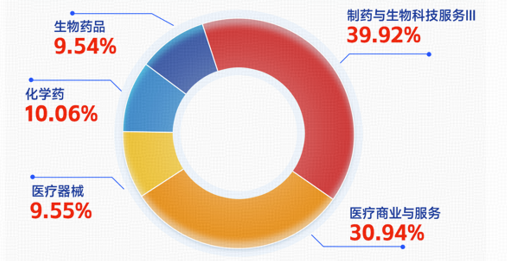
Core Viewpoint - The newly launched Hong Kong Stock Connect Medical ETF by Huabao (159137) is expected to perform actively due to the rising interest in the medical sector and favorable market conditions, coinciding with a strong performance in both the Hong Kong and A-share medical sectors at the beginning of 2026 [1][2]. Group 1: ETF Launch and Market Context - The Hong Kong Stock Connect Medical ETF Huabao (159137) was established on December 31, 2025, and began trading on January 12, 2026 [2]. - The underlying index, the "CSI Hong Kong Stock Connect Medical Theme Index," has seen a 14.25% increase from January 1 to January 9, 2026, and a total annual increase of 48.20% in 2025, indicating a strong recovery in the Hong Kong medical sector [2][4]. - The ETF's launch coincides with a rare "sixteen consecutive days of gains" in the Shanghai Composite Index, reflecting heightened investor enthusiasm [1]. Group 2: Investment Strategy and Composition - The ETF covers four major sectors within the Hong Kong medical field: CXO, medical business and services, medical devices, and biopharmaceuticals, with over 80% of its weight concentrated in leading companies in CXO, internet healthcare, and high-end medical devices [2][4]. - The top ten constituents of the index include major players such as WuXi Biologics (15.28% weight), JD Health (11.84%), and Alibaba Health (5.42%), collectively accounting for 63.89% of the index [4]. Group 3: Market Potential and Valuation - The Hong Kong medical sector is characterized by significant growth potential, driven by an aging population and increasing healthcare demands, with the CXO market expected to grow at a CAGR of 26.56% from 2020 to 2025 [4]. - The index's valuation remains relatively low, with a TTM P/E ratio of 29.43, which is below historical averages, suggesting a favorable entry point for investors [5].

报名 | 《2026医健可持续创新案例推荐榜》案例征集正式启动
第一财经· 2026-01-11 23:36
Core Viewpoint - The "2026 Medical and Health Sustainable Innovation Case Recommendation List" aims to promote sustainable development in the healthcare industry through the integration of artificial intelligence and healthcare, with a focus on technological innovation [1]. Group 1: Categories of Case Collection - The case collection includes four categories: 1. **International Innovation Localization**: Focuses on local production of innovative products, investment in local enterprises, and localization of marketing and services [2]. 2. **Local Innovation Globalization**: Emphasizes product innovation and quality assurance, establishing localized networks overseas, and enhancing brand visibility in international markets [2]. 3. **ESG Innovation Practice**: Involves sustainable market strategies, community services, and a sustainable supply chain [2]. 4. **Healthcare + AI Innovation**: Aims to address industry pain points, improve diagnostic efficiency, and ensure data security while promoting healthcare accessibility [2]. Group 2: Evaluation Committee - The evaluation committee consists of 20 senior professionals from both domestic and foreign healthcare sectors, including executives, policymakers, and experts from investment institutions [4]. Group 3: Timeline for Case Collection and Evaluation - The timeline for the case collection and evaluation process is as follows: - **January to March 2026**: Case collection through self-nomination or committee nomination [9]. - **April to May 2026**: Initial screening and online interviews with shortlisted companies [9]. - **June 2026**: Comprehensive evaluation by the nomination committee [9]. - **July 2026**: Official release of the list at the "AI + Healthcare Industry Sustainable Innovation Forum" during the Shanghai World Artificial Intelligence Conference [9].
医疗“开门红”,注意力给到今日上市、可T+0交易的港股通医疗ETF华宝(159137)了!
Xin Lang Cai Jing· 2026-01-11 22:59
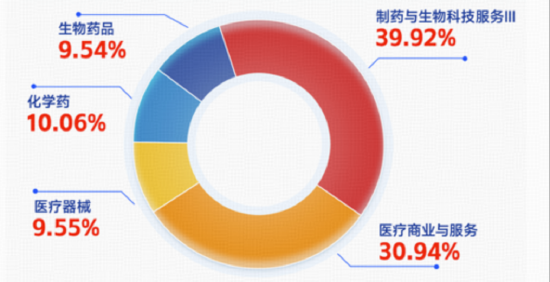
Core Viewpoint - The newly launched Hong Kong Stock Connect Medical ETF, Huabao (159137), is expected to perform actively due to the rising interest in the medical sector and favorable market conditions, coinciding with the recent recovery of the Hong Kong and A-share medical sectors at the beginning of 2026 [1][14]. Group 1: ETF Launch and Market Context - The Hong Kong Stock Connect Medical ETF Huabao (159137) was established on December 31, 2025, and began trading on January 12, 2026 [1][15]. - The Shanghai Composite Index has recently shown a rare "sixteen consecutive days of gains," surpassing the 4100-point mark, indicating high investor enthusiasm [1][14]. - The Hong Kong Stock Connect Medical Theme Index has increased by 14.25% from January 1 to January 9, 2026, and had an annual increase of 48.20% in 2025, reflecting a significant recovery in the medical sector [1][15]. Group 2: ETF Composition and Investment Focus - The ETF tracks the CSI Hong Kong Stock Connect Medical Theme Index, covering four major areas: CXO, medical business and services, medical devices, and biopharmaceuticals, with over 80% of its weight concentrated in leading companies in CXO, internet healthcare, and high-end medical devices [2][15]. - More than 85% of the ETF's components are "Hong Kong exclusive" stocks, including unique offerings like JD Health and Alibaba Health, which provide investors with significant opportunities in the Hong Kong medical sector [2][15]. Group 3: Market Potential and Valuation - The Hong Kong medical sector is characterized as a "golden track" with substantial market potential, driven by an aging population and increasing healthcare demand, supported by a growing GDP per capita [4][19]. - The CSI Hong Kong Stock Connect Medical Theme Index is currently at a historical low, with a drop of over 65% from its peak in 2021, and a price-to-earnings ratio (TTM) of 29.43, which is below 65% of its historical range [6][19]. - The index's configuration offers a compelling cost-performance ratio, making the ETF a noteworthy investment tool for investors [6][19].
京东注重银发经济:破解老龄化社会之问的生态实验
Yang Zi Wan Bao Wang· 2026-01-10 14:44
Core Viewpoint - JD Group is undergoing a strategic transformation from a traditional e-commerce platform to a comprehensive solution provider for the silver economy, addressing the pressing societal question of elder care as the population aged 60 and above exceeds 310 million in China, accounting for 22% of the total population [2] Group 1: Infrastructure Development - The core issue in elder care services is the shortage of professional talent, with a significant gap between 44 million disabled elderly individuals and only about 300,000 certified caregivers. JD has chosen a heavy asset investment approach [4] - By the end of 2023, JD's home service training base in Wanzhou, Chongqing, will be operational, covering 20,000 square meters and providing systematic training for caregivers to offer standardized care for disabled elderly individuals [4] - JD plans to invest 1 billion yuan over the next three years to build a training system, with over 150 standardized training bases and a pioneering "three-level training network" model to enhance professional skills and dignity among workers [4] Group 2: Digital Health Services - JD Health is evolving from product sales to health management, utilizing its self-developed medical model "JD Medical Inquiry" to launch AI doctors and pharmacists, addressing nearly 30% of health consultations during nighttime, which meets the immediate needs of the elderly [5] - In the smart hardware sector, sales of age-friendly medical devices such as dynamic blood glucose monitors and hearing aids have increased by over 100%. JD is creating a health management loop that transitions elderly care from "availability of medication" to "scientific management" [5] Group 3: Community Service Network - The key to implementing the silver economy lies in community integration. JD's partnership with local streets through JD Fresh Kitchen provides elder meal assistance services [6] - In the field of home adaptation for the elderly, JD has co-developed group standards and launched strategic new products, planning to procure over 1 million age-friendly products [6] Group 4: Challenges and Collaborative Solutions - Despite the promising outlook, the elder care industry faces deep-rooted challenges such as limited payment capacity and difficulties in service standardization. JD's strategy may involve ecological collaboration, transforming elder care services into high-frequency service entry points [8] - This approach aims to create a service loop of health management, home adaptation, and daily care, which could reinforce its retail and logistics core business, distinguishing it from traditional elder care providers [8] Group 5: Broader Implications - JD's engagement in the silver economy transcends commercial interests, reflecting a new phase where Chinese tech companies integrate deeply with industrial and societal issues. This model of heavy asset investment in infrastructure, standardization to enhance service quality, and ecological collaboration to create value offers new insights for the industry [9] - When corporate strategies resonate with national development issues, commercial value aligns with social value, highlighting the responsibility of leading enterprises in the face of demographic changes [9]

公募开年力推医药基金!创新药迎“赚美元”新周期?
证券时报· 2026-01-10 12:43
Core Viewpoint - The Chinese innovative drug industry is entering a new phase of "earning dollars," prompting public funds to rapidly launch new pharmaceutical funds in early 2026 [1][3]. Group 1: Fund Launches and Market Activity - In the first week of 2026, there has been a surge in new fund launches focused on innovative drugs, with significant investments directed towards the Hong Kong pharmaceutical sector [3][4]. - Notable new products include the Hua Bao Hong Kong Medical Theme ETF, which raised 331 million yuan and quickly built a stock position of 14.70% [3]. - The Fu Guo Hang Seng Biotechnology ETF also launched, raising over 320 million yuan and focusing on leading Hong Kong pharmaceutical companies [3][4]. Group 2: Performance and Demand for Pharmaceutical Funds - The strong performance of Hong Kong pharmaceutical funds in 2025 has heightened demand from both institutional and retail investors for new pharmaceutical fund offerings [6][7]. - The Hong Kong pharmaceutical theme funds delivered impressive returns in 2025, with some achieving over 113% cumulative returns, significantly influencing investor interest [6][7]. - Despite a market correction at the end of 2025, this has created an opportunity for new funds to lock in low-priced assets, leading to a rebound in fund net values [6]. Group 3: Future Expectations and Market Trends - The innovative drug sector is expected to experience a "performance verification phase" in 2026, with key indicators such as revenue from business development (BD) payments and the sales growth of core innovative drugs being closely monitored [9]. - Fund managers anticipate that 2026 will see more products entering large-scale global Phase III clinical trials, which could enhance market confidence and drive up the global value of innovative drugs [8][9]. - The industry is viewed as transitioning from following innovation to achieving global commercialization, with expectations that more Chinese innovative drug companies will realize overseas commercialization by 2027, leading to a systematic revaluation of the sector [9].

公募开年力推医药基金!创新药迎“赚美元”新周期?
券商中国· 2026-01-10 09:07
Core Viewpoint - The Chinese innovative pharmaceutical industry is entering a "dollar-earning" phase, prompting public funds to rapidly launch new medical funds in early 2026 [2][3]. Group 1: Fund Launches and Market Trends - In the first week of 2026, there has been a surge in new fund launches focused on innovative pharmaceuticals, driven by the industry's transition to global commercialization [2][3]. - Public funds are increasingly targeting the Hong Kong pharmaceutical sector, with new products like the Huabao Hong Kong Medical Theme ETF and the Fuguo Hang Seng Biotechnology ETF being launched to capitalize on this trend [3][4]. - The demand for innovative pharmaceutical funds is being fueled by the strong performance of Hong Kong pharmaceutical funds in 2025, which saw significant returns, such as the Huatai-PineBridge Hong Kong Advantage Select QDII fund achieving a cumulative return of 113% [5][6]. Group 2: Investment Strategies and Expectations - Fund managers believe that the global commercialization of innovative drugs is a key characteristic for the emergence of industry giants, and this transition is expected to lead to a new valuation phase for the sector [2][7]. - The innovative pharmaceutical sector is anticipated to experience a "performance verification phase" in 2026, with key indicators such as the realization of upfront payments and the sales growth of core innovative drugs being closely monitored [8]. - The market is expected to see a systematic valuation reshaping starting in 2027, as more Chinese innovative pharmaceutical companies achieve overseas commercialization [8].

OpenAI上线健康助理,每周2.3亿人AI“看病”背后
Jing Ji Guan Cha Wang· 2026-01-10 00:58
Group 1 - OpenAI has launched ChatGPT Health, a dedicated health assistant that connects users' medical records and health applications for personalized responses [2] - The global digital health market is valued at hundreds of billions, with over 230 million users seeking health information weekly [2] - The AI healthcare market is projected to exceed $500 billion by 2032, driven by innovations in health data integration, conversational interfaces, and real-time data analysis [2] Group 2 - The new health assistant employs an independent data storage mechanism to ensure the security of medical information and can interface with electronic medical records and wearable devices [3] - In China, numerous AI health products are competing, with significant market enthusiasm reflected in stock price surges for AI healthcare companies [3] - The industry anticipates 2026 as a pivotal year for AI health management, with advancements in federated learning and multi-omics analysis expected to enhance personalized preventive medicine [3]

港股站稳26000点 多板块助力市场企稳回升
Zhong Guo Xin Wen Wang· 2026-01-09 14:57
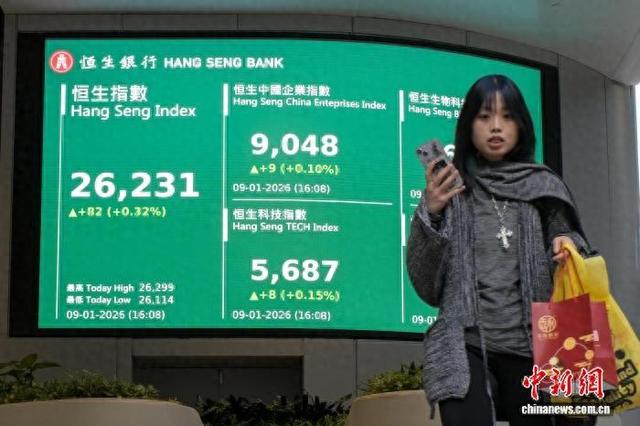
Market Performance - The Hong Kong stock market saw all three major indices rise on January 9, with the Hang Seng Index increasing by 0.32% to close at 26,231.79 points [1][3] - The Hang Seng Technology Index rose by 0.15% to 5,687.14 points, while the National Enterprises Index increased by 0.1% to 9,048.53 points [1][3] Sector Performance - Internet healthcare stocks performed well, with Alibaba Health leading the gains at 4.72%, and Ping An Good Doctor and JD Health both rising over 2.9% [3] - Gold stocks collectively surged, with Shandong Gold rising by 6.12%, and Zhaojin Mining and Lingbao Gold also seeing increases [3] - Non-ferrous metal stocks also moved upward, with Luoyang Molybdenum rising by 4.74%, and China Aluminum and Jiangxi Copper both increasing by over 2% [3] - Apple concept stocks were all in the green, with Lens Technology soaring by 9.01%, and Sunny Optical Technology experiencing slight gains [3] Weekly Market Trends - The Hong Kong stock market exhibited a pattern of "opening strong followed by fluctuations" during the week, with the Hang Seng Index reaching a peak of 26,858.13 points on January 6, marking the highest level since November 14 of the previous year [3] - The Hang Seng Technology Index mirrored this trend, hitting a daily high of 5,875.32 points, also the highest since November 14, 2025 [3] Economic Indicators - Market analysts provided positive interpretations of the rebound in the Hong Kong stock market on January 9, attributing it to favorable economic data from mainland China [3] - The latest Consumer Price Index (CPI) showed a year-on-year increase of 0.8%, meeting expectations, while the Producer Price Index (PPI) also showed improvement, contributing to the market's slight rebound [3]
京东健康破局行业内卷,重塑医疗器械增长逻辑
财联社· 2026-01-09 13:01
Core Viewpoint - The article highlights how JD Health has successfully navigated challenges in the medical device industry by transforming from a "medical device retailer" to a "full lifecycle health management" provider, achieving impressive sales growth and innovation in product offerings [1][3]. Group 1: Sales and Product Innovation - In 2025, JD Health launched nearly 30 new medical device products with sales exceeding 10 million yuan and around 500 products with sales over 1 million yuan, setting a new industry record [1][6]. - Over 3,000 brands achieved sales doubling, with JD Plus users contributing over 40% to sales, indicating strong customer loyalty and engagement [1][3]. Group 2: Service Model and Consumer Pain Points - JD Health's "device as a service" model addresses consumer pain points by providing comprehensive support, including product usage guidance, data analysis, and medical consultations [4][5]. - The company has established a closed-loop health service that integrates medical consultation, testing, and medication delivery, allowing users to manage their health without leaving home [5][11]. Group 3: Strategic Partnerships and AI Integration - JD Health has deepened collaborations with global medical device brands and domestic manufacturers, leading to a 100% growth in trending product categories through global procurement and large-scale purchases [6][12]. - The integration of AI technology has revitalized medical device products, exemplified by the collaboration on continuous glucose monitoring (CGM) devices that provide real-time health data analysis and alerts [7][9]. Group 4: Industry Challenges and Solutions - The medical device industry faces challenges such as "islandization" leading to low repurchase rates and price competition, which JD Health aims to address through its service model that promotes innovation and higher sales [11][12]. - JD Health's approach of "pushing new products and selling at higher prices" offers a breakthrough in the competitive landscape, creating a clear growth path for medical device brands [11][12]. Group 5: Financial Performance and Future Outlook - JD Health's stock price increased by 97.51% in 2025, reflecting strong profit growth, with revenue rising from 19.4 billion yuan to 58.2 billion yuan over five years, and net profit increasing from 750 million yuan to 4.79 billion yuan [12][13]. - The company plans to continue its strategy of "supply + service + AI" to reshape product categories and define value, aiming for sustained growth in the medical device sector [12][13].

OpenAI上线健康助理,AI持续渗透个人健康管理领域
Jing Ji Guan Cha Wang· 2026-01-09 12:57
Group 1 - OpenAI has launched ChatGPT Health, a dedicated health assistant that allows users to connect personal medical records and health applications for tailored responses [1][2] - Over 230 million people globally consult ChatGPT for health-related inquiries each week, indicating strong demand for AI health tools [1][2] - ChatGPT Health features a separate storage mechanism to ensure health conversations and data are isolated from other chat records, emphasizing its role as an auxiliary tool rather than a diagnostic or treatment solution [1][2] Group 2 - Users can securely connect various data sources, including electronic health records and mainstream health apps, enabling personalized health insights based on individual health data [2] - The introduction of ChatGPT Health reflects the deepening penetration of AI into personal health management, potentially alleviating some pressure on healthcare systems [2] - The global AI healthcare market is projected to approach $40 billion by 2025 and exceed $500 billion by 2032, with a compound annual growth rate of over 40% [3] Group 3 - The launch of ChatGPT Health aligns with the trend of integrating fragmented health data into a single conversational interface, lowering the barrier to information access [3] - Major Chinese tech companies are rapidly entering the AI health sector, with various products competing for user attention [3] - The capital market reacted positively to the AI health sector, with significant stock price increases for companies involved in AI healthcare applications [4]