腾景科技

Search documents
收评:三大指数集体收跌 AI应用端、华为算力概念走强
Xin Lang Cai Jing· 2025-11-17 07:12
Market Overview - The market experienced fluctuations with the three major indices narrowing their declines towards the end of the trading session [1][2] - The Shanghai Composite Index closed at 3972.03 points, down 0.46%; the Shenzhen Component Index closed at 13202.00 points, down 0.11%; and the ChiNext Index closed at 3105.20 points, down 0.20% [2] Sector Performance - The CPO concept stocks rebounded near the close, with Tengjing Technology hitting a 20% limit up, and Dekeli, Changxin Bochuang, Guangku Technology, and Zhongji Xuchuang also showing significant gains [1] - Huawei's computing power concept remained strong throughout the day, with Zhongfu Information and Borui Data both hitting a 20% limit up [1] - The AI application sector was active, with stocks like 360, Xuan Ya International, and Aerospace Development reaching their daily limit up [1] - Conversely, the precious metals sector faced adjustments, with Zhaojin Gold leading the declines [1] - The innovative drug sector saw widespread losses, with Kexing Pharmaceutical experiencing significant declines [1] Summary of Declines - Overall, there were more declining stocks than advancing ones, with over 2700 stocks falling [1]
CPO概念震荡反弹 腾景科技20cm涨停
Xin Lang Cai Jing· 2025-11-17 06:48
【CPO概念震荡反弹 腾景科技20cm涨停】智通财经11月17日电,临近尾盘CPO概念震荡反弹,腾景科 技20cm涨停,德科立、长芯博创、光库科技、中际旭创涨幅靠前。消息面上,国信证券研报指出,由 于ASIC芯片出货量加大,测算明年全球800G光模块有望达4000万只,1.6T光模块有望超过700万只。 转自:智通财经 ...

两方面因素催化,科技股迎来反弹!AI应用全面走强
Zhong Guo Zheng Quan Bao· 2025-11-17 05:21
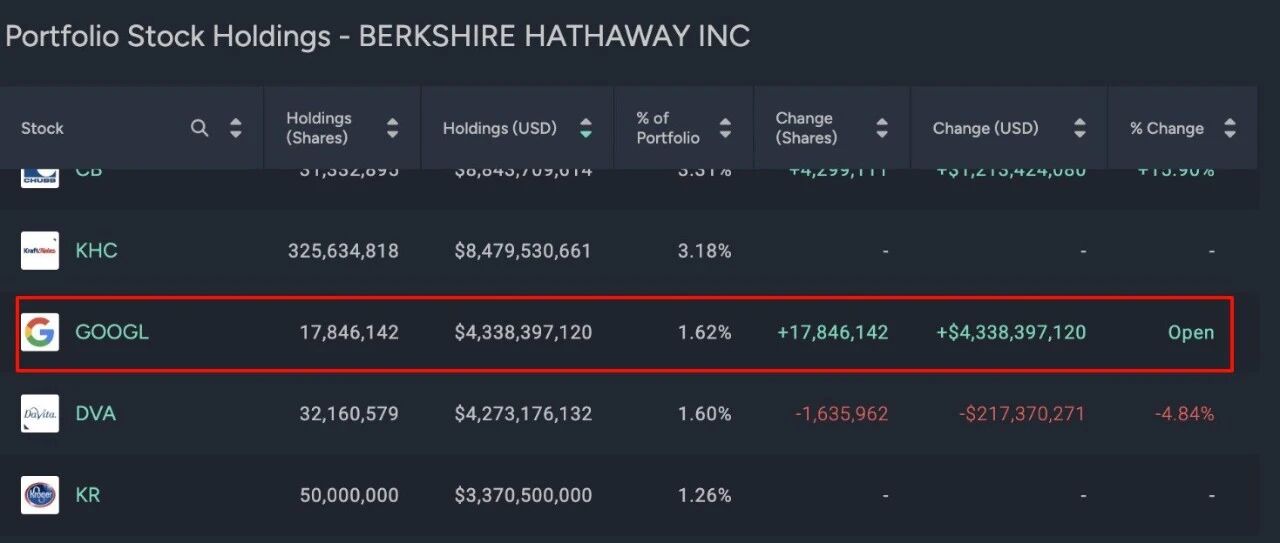
今天上午,科技股迎来反弹,AI应用全面走强,华为盘古、多模态AI、AI智能体等板块大涨。 科技股反弹主要有两方面因素催化: 一是北京时间11月15日,巴菲特旗下伯克希尔·哈撒韦公司披露2025年第三季度持股报告(13F)。在巴菲特宣布将于今年底正式交班后,伯克希尔在第三季 度出手买入美国大型科技股——谷歌-A。据披露,伯克希尔买入谷歌-A将近1785万股,对应季末市值约为43亿美元。这是伯克希尔在第三季度买入最多的 标的,也是唯一新增持股。 今天上午,谷歌概念表现强势,腾景科技涨超12%,中际旭创、长芯博创、胜宏科技等个股上涨。 近期美股科技板块回调,尤其是AI相关龙头股显著下跌,市场上对"AI泡沫"的讨论逐渐增多。有观点认为,当前的AI可类比2000年的互联网泡沫。此次伯 克希尔买入谷歌-A,在一定程度上减缓了市场对"AI泡沫"的担忧。 国信证券表示,2025年的AI行业与2000年的互联网泡沫,在估值基础、盈利能力和投资实质上截然不同。AI是一场将持续数年的"基础性转变"。 二是AI应用方面的利好。11月13日,OpenAI发布GPT—5.1系列模型。此次发布包括两款已上线版本——GPT—5.1 Inst ...


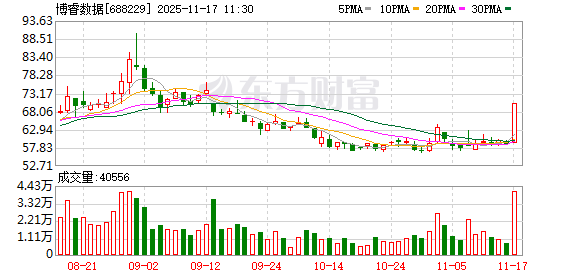
博睿数据涨停 16只科创板股涨超5%
Zheng Quan Shi Bao Wang· 2025-11-17 03:39
Core Viewpoint - The stock of Borui Data has experienced significant price movement, with a notable increase in trading volume and a strong performance compared to other stocks in the Sci-Tech Innovation Board [2][3] Group 1: Stock Performance - As of November 17, Borui Data's stock price reached 70.39 yuan, with a trading volume of 247 million yuan and a turnover rate of 8.51%, showing a price fluctuation of 19.42% [2] - Among the stocks on the Sci-Tech Innovation Board, 277 stocks were reported to be rising, with 16 stocks increasing by over 5%. Notable gainers included Borui Data and Rongbai Technology, both up by 20.00% [2] - Conversely, 313 stocks were reported to be declining, with significant drops from Kangpeng Technology, Yingfang Software, and Electric Wind Power, which fell by 7.93%, 7.33%, and 7.27% respectively [2] Group 2: Financial Data - On the previous trading day, Borui Data saw a net inflow of 2.42 million yuan in main funds, while over the past five days, there was a net outflow of 944,300 yuan [3] - The latest margin trading data as of November 14 indicated a total margin balance of 98.05 million yuan, with a financing balance of 98.05 million yuan, reflecting a decrease of 329,000 yuan or 0.33% from the previous trading day [3] - The company's third-quarter report revealed a total operating income of 101 million yuan, representing a year-on-year decline of 3.92%, while the net profit was -41.75 million yuan, showing a year-on-year increase of 33.90% [3] Group 3: Institutional Ratings - In the past month, Borui Data received a buy rating from one institution, with Zhongyou Securities issuing a report on November 6 that recommended an increase in holdings [3]

A股福建概念股继续强势,红相股份、中富通20CM涨停,海峡创新涨超13%,厦工股份、龙洲股份、平潭发展、日上集团、中国武夷涨停
Ge Long Hui· 2025-11-17 02:43
Core Viewpoint - The Fujian concept stocks in the A-share market continue to strengthen, with several stocks hitting their daily limit up, indicating strong investor interest and potential growth in this sector [1]. Summary by Category Stock Performance - Hongxiang Co., Ltd. (300427) and Zhongfutong (300560) both reached a 20% limit up, showcasing significant market momentum [1]. - Haixia Innovation surged over 13%, while Guoanda (300902) increased by over 11% [1]. - Other notable performers include: - Xiamen Engineering Machinery (600815) up by 10.10% - Longzhou Co., Ltd. (002682) up by 10.03% - Pingtan Development (000592) up by 10.02% - Jomoo (601566) up by 10.02% [2]. Market Capitalization and Year-to-Date Performance - Hongxiang Co., Ltd. has a market capitalization of 4.419 billion, with a year-to-date increase of 47.29% [2]. - Zhongfutong has a market cap of 5.178 billion and a year-to-date increase of 45.61% [2]. - Haixia Innovation boasts a market cap of 11.5 billion and an impressive year-to-date increase of 500.35% [2]. - Other companies like Pingtan Development and Jomoo also show strong year-to-date performances of 317.07% and 70.08%, respectively [2].





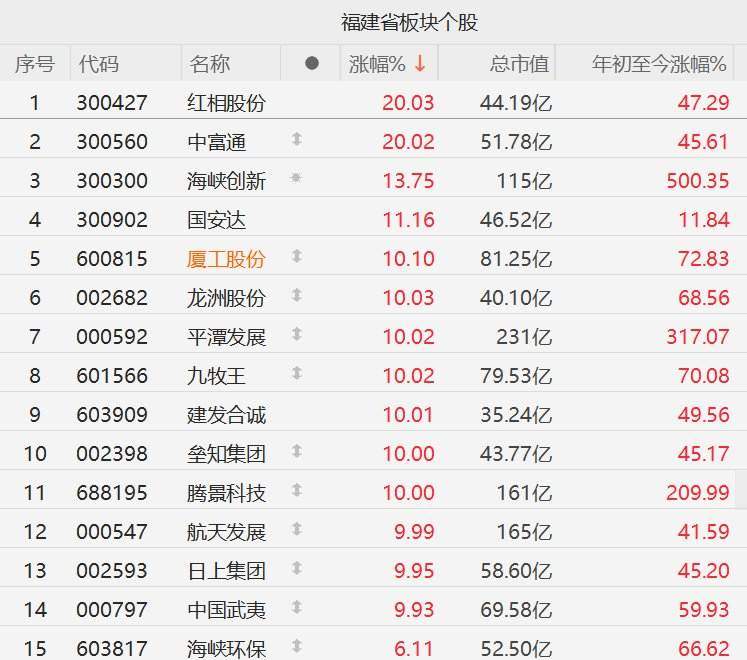
A股福建概念股继续强势,平潭发展、九牧王等涨停
Ge Long Hui· 2025-11-17 02:25
Core Viewpoint - The A-share market in China is experiencing a strong performance from Fujian concept stocks, with several companies hitting their daily price limits and showing significant gains [1] Group 1: Stock Performance - Hongxiang Co. and Zhongfutong both reached the daily limit of 20% increase [1] - Haixia Innovation rose over 13% [1] - Guoan Da increased by over 11% [1] - Other companies such as XG Group, Longzhou Group, Pingtan Development, Jiayi Wang, Jianfa Heceng, Lezhi Group, Tengjing Technology, Aerospace Development, Rishang Group, and China Wuyi all reached a 10% increase [1] - Haixia Environmental saw an increase of over 6% [1]

军工板块拉升,中富通、江龙船艇20%涨停,北方长龙等大涨
Zheng Quan Shi Bao Wang· 2025-11-17 02:13
Core Viewpoint - The military industry sector experienced a strong rally on the 17th, with significant stock price increases for companies such as Zhongfu Tong and Jianglong Shipbuilding, indicating heightened investor interest due to escalating geopolitical uncertainties [1] Industry Summary - The military sector is expected to gain increased attention as geopolitical uncertainties rise, with China's advanced main battle equipment not only meeting domestic demand but also showing competitive strength in international markets [1] - There is a positive outlook for the export of high-end and systematic weaponry from China, which is anticipated to drive a revaluation of core military assets [1] - According to CITIC Securities, the period from 2025 to 2027 is expected to see a strong upward trend in the industry, coinciding with the centenary of the military in 2027 and the transition from the 14th Five-Year Plan to the 15th [1] - The demand side of the industry is expected to present numerous opportunities, with orders showing recovery in the first half of the year and upstream companies reporting good performance in their mid-year reports [1] - The "9.3" military parade showcased several advanced equipment, and the third and fourth quarters are typically peak periods for the delivery of national defense and military products, suggesting a continued recovery in order fundamentals [1] - Looking ahead to the fourth quarter, domestic demand growth in the military sector is expected to accelerate, and military trade orders are likely to continue materializing, leading to a significant increase in overall recovery momentum and sustained expectations for consolidation [1]


光通信模块板块走强
Mei Ri Jing Ji Xin Wen· 2025-11-17 02:08
Group 1 - The optical communication module sector is leading the market with an increase of 2.69% [1] - Tengjing Technology saw a significant rise of 14.55% [1] - Changxin Bochuang increased by 7.23% [1] - Guangku Technology experienced a growth of 5.58% [1] - Companies such as Xingsen Technology, Zhongji Xuchuang, and Xingshuai'er all rose over 4% [1]




人工智能(AI)在农业育种行业的应用现状与商业化前景
QYResearch· 2025-11-17 01:21
Industry Background: Transition to a "Data-Driven" Era in Breeding - Traditional breeding relies heavily on time-consuming field trials and personal experience, typically requiring 7-12 years for completion, which is costly and has a limited success rate. The global breeding industry is undergoing a fundamental shift from "experience-driven" to "data + model-driven" due to the significant decrease in genome sequencing costs, widespread application of high-throughput phenotyping technologies, and continuous enhancement of AI computing power [2]. Core Applications of AI in the Breeding Industry - **Genomic Selection**: This technology analyzes vast amounts of genetic markers to accurately predict key traits such as crop yield, quality, and disease resistance. AI can reduce the breeding cycle from 7-10 years to 4-6 years and improve trait prediction accuracy by 10-25%, while significantly lowering field validation costs. Leading companies like Bayer and KWS have implemented this at scale for major crops [6]. - **Phenotypic Analysis**: AI enhances the efficiency and accuracy of collecting phenotypic data through automated analysis of plant growth, disease severity, and canopy structure using drones and hyperspectral cameras. This technology increases selection efficiency by 5-10 times and provides objective quantitative data for field trials [7]. - **Hybrid Combination Prediction**: AI integrates multi-dimensional data to improve the accuracy of predicting successful hybrid combinations, addressing the issue where over 95% of traditional combinations fail to meet expectations. This allows for the early elimination of ineffective combinations, focusing resources on high-potential materials [8]. - **Environmental Modeling**: AI constructs G×E (genotype × environment) models to predict how different genotypes perform in various environments, facilitating a shift from reliance on multi-site trials to model-driven predictions, thus overcoming geographical limitations in breeding [10]. Global Application Status: From Experimental Exploration to Large-Scale Implementation - The global breeding industry has formed three distinct tiers in AI application: - Leading seed companies like Bayer and Syngenta have established comprehensive data infrastructures and AI breeding systems, creating high technical barriers [12]. - Research institutions such as CGIAR and USDA are driving innovation in AI breeding projects for staple crops, providing theoretical and technical support [13]. - Small and medium enterprises are gaining capabilities through SaaS platforms, allowing them to access advanced breeding tools at lower costs [13]. Commercialization Models and Industry Transformation Directions - Three main commercialization models have emerged in AI breeding: - **SaaS Software Subscription Model**: Targets small and medium breeding companies, offering tiered pricing based on image processing volume or trial area, lowering the application threshold for AI technology [15]. - **Data Analysis Service Model**: Provides specialized services for specific breeding projects, converting professional knowledge into value [15]. - **AI-Driven New Variety Commercialization**: This mainstream model for seed companies enhances breeding efficiency, leading to faster market introduction and more stable traits, ultimately increasing seed sales revenue [15]. Future Prospects: AI Will Reshape the Global Breeding Competitive Landscape - The breeding industry is expected to undergo three distinct development stages driven by AI: - **Short-term (1-3 years)**: Rapid commercialization of single-point AI tools, with phenotypic analysis AI leading the way and genomic selection solidifying its mainstream status [17]. - **Mid-term (3-7 years)**: AI will evolve from single-point tools to a full-process breeding system, with digital field trials becoming common and hybrid combination prediction transitioning into routine production [17]. - **Long-term (7-10 years)**: The deep integration of AI with gene editing technologies will create a closed-loop system, significantly reducing breeding costs by 40-60% and shortening cycles by 30-50% [17]. Domestic Development Status: Breakthroughs in China's AI Breeding Field - The year 2025 is projected to be a landmark year for China's AI breeding, with several innovative achievements: - The Shanghai AI Laboratory, in collaboration with other institutions, launched the first autonomous scientific discovery system in biological breeding, capable of simulating molecular biologist functions [19]. - Zhejiang University and Huawei developed an "AI Breeder" that enhances cotton hybrid breeding efficiency by 20 times and reduces the breeding cycle from 6-8 years to 3-4 years [19]. - The establishment of a unified data platform by the Qiaozhou Bay National Laboratory and Huawei significantly improves breeding efficiency through standardized data collection [19]. Conclusion: AI Initiates the "Second Revolution" in the Breeding Industry - AI is leading the most profound transformation in the breeding industry since the advent of hybrid breeding technology, marking a shift from reliance on experience to data-driven predictions. This revolution fundamentally changes the breeding paradigm from "art" to "science," establishing quantifiable and predictable mathematical models [21]. The integration of AI with gene editing technologies will usher in an era of "precise design" in breeding, redefining competitive dynamics in the global seed industry [21].


巴菲特看上谷歌什么了?谷歌国内供应商梳理
傅里叶的猫· 2025-11-15 05:43
Core Insights - Warren Buffett's Berkshire Hathaway has made a rare investment in Google, increasing its stake by $4.3 billion while reducing holdings in Apple and eliminating DHI [1][2] - Google is investing $40 billion in Texas to build three new data centers, indicating strong confidence in its cash flow and AI capabilities [3][4] Group 1: Google AI Development - Google is one of the few companies with a clear plan to monetize AI, possessing data, proprietary chips, and models, making it a unique player in the AI landscape [4] - The AI-driven search revolution is expected to lead to gradual growth, with Google projecting search revenue growth of approximately 12% and 9% for 2025 and 2026, respectively [7] - Google's search business faces challenges from competitors like OpenAI's GPT series, raising concerns about the retention of commercial queries and long-term revenue [8] Group 2: Cloud Services and Growth Potential - Google Cloud Platform (GCP) is seen as an undervalued asset, with the potential for accelerated growth driven by innovations like the Gemini model and TPU [9] - GCP is projected to grow by approximately 31% to 36% by 2026, with optimistic scenarios suggesting even higher growth if TPU deployment exceeds expectations [10] - The adoption of Gemini has seen significant growth, with 9 million developers utilizing the platform and a notable increase in monthly active users [12] Group 3: Strategic Partnerships - Google has formed significant partnerships, including an $80 billion deal with Anthropic for AI chips, which is expected to generate incremental revenue for Google Cloud [15] - A collaboration with OpenAI allows OpenAI to utilize Google Cloud for model training, diversifying its infrastructure dependencies [15] - The partnership with Oracle enhances access to advanced models like Gemini 2.5, supporting digital transformation across various industries [16] Group 4: Supply Chain and Hardware Developments - Key suppliers for Google include Inveck for liquid cooling solutions and Zhongji Xuchuang for optical modules, both of which are critical for Google's data center operations [18][21] - Google is expected to significantly increase its OCS (Optical Circuit Switch) equipment shipments, with suppliers like Tengjing Technology providing essential optical components [23] - The company is also working with PCB suppliers like SNDL and HDGF to support the production of high-layer PCBs for TPU chips [24]