侨银股份

Search documents
侨银股份:截至目前,公司合作的人形机器人尚在共同研发阶段
Mei Ri Jing Ji Xin Wen· 2025-08-15 07:44
Group 1 - The company is currently in the joint development phase of humanoid robot products [1] - As of August 15, the company responded to investor inquiries regarding the progress of its humanoid robot products [1] - The interaction took place on an investor communication platform [1]
博鳌·观点|侨银股份李长江:物业需要时间去做服务,不要用更多时间去催费
Mei Ri Jing Ji Xin Wen· 2025-08-15 05:31
Core Viewpoint - The property industry is hopeful but requires a change in operational models to better serve owners [2] Group 1: Market Opportunities - Current opportunities for entrepreneurial property companies arise from new models and services [3] - Property companies are encouraged to return to core services, adapting to changes in policies and market conditions [3] - Notable trend of brand property companies, such as Longfor Property and China Overseas Property, voluntarily withdrawing from management projects due to strategic shifts and owner demands [3] Group 2: Challenges Faced - The primary challenge for property companies is the collection rate, leading to operational losses [3] - Continuous pressure to collect fees results in dissatisfaction among owners, complicating service delivery [3][4] Group 3: Service Delivery and Pricing - Effective service requires time and should focus on visible needs such as cleanliness and safety [4] - The concept of "elastic pricing" is recognized, consisting of fixed costs for essential services and variable costs based on service quality [4]

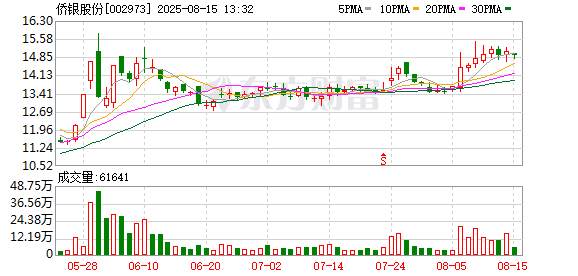
侨银股份(002973)8月14日主力资金净流出1146.31万元
Sou Hu Cai Jing· 2025-08-14 10:06
通过天眼查大数据分析,侨银城市管理股份有限公司共对外投资了215家企业,参与招投标项目2352 次,知识产权方面有商标信息76条,专利信息234条,此外企业还拥有行政许可74个。 来源:金融界 天眼查商业履历信息显示,侨银城市管理股份有限公司,成立于2001年,位于广州市,是一家以从事公 共设施管理业为主的企业。企业注册资本40866.4953万人民币,实缴资本769.5万人民币。公司法定代表 人为郭倍华。 金融界消息 截至2025年8月14日收盘,侨银股份(002973)报收于15.07元,上涨1.07%,换手率 6.96%,成交量15.52万手,成交金额2.32亿元。 资金流向方面,今日主力资金净流出1146.31万元,占比成交额4.95%。其中,超大单净流入141.71万 元、占成交额0.61%,大单净流出1288.02万元、占成交额5.56%,中单净流出流入688.45万元、占成交 额2.97%,小单净流入457.86万元、占成交额1.98%。 侨银股份最新一期业绩显示,截至2025一季报,公司营业总收入9.36亿元、同比减少4.32%,归属净利 润6759.75万元,同比减少29.73%,扣非净利润 ...
环卫无人系列深度1小吨位环卫无人设备经济性渐近,订单呈散点放量趋势
2025-08-13 14:54
Summary of the Conference Call on Sanitation Automation Industry Industry Overview - The conference focused on the sanitation automation industry, particularly the adoption of unmanned sanitation equipment and its economic viability [1][2][3]. Key Points and Arguments 1. **Economic Viability of Small Tonnage Equipment**: - Small tonnage equipment is highlighted as having stronger economic feasibility and is approaching a high cost-performance stage [2]. - Companies such as Fulongma, Jinglv Environment, Qiaoyin Co., and Yuhua Tian are identified as having significant sanitation service revenue, which contributes to their performance elasticity [2]. 2. **Employment Impact**: - The transition to automation in sanitation may create short-term employment pressures, particularly for low-income labor groups [3]. - Long-term trends indicate that aging populations will lead to a labor shortage in the sanitation sector, necessitating automation [4]. 3. **Market Size and Growth**: - The total market size for sanitation equipment is estimated to be around 200 billion, with significant growth potential as automation adoption increases [5]. - The industry is expected to see a 130% growth rate in the coming year, driven by policy support in major cities like Guangzhou and Shenzhen [6]. 4. **Types of Unmanned Equipment**: - Three categories of unmanned sanitation equipment are discussed: small tonnage cleaning devices, L4 level unmanned sanitation vehicles, and humanoid robots for sanitation tasks [10][11][12]. - The economic analysis indicates that small tonnage devices can replace 2-3 workers, achieving cost parity within 3-4 years [12][24]. 5. **Market Dynamics**: - The market is characterized by a fragmented landscape with significant participation from sanitation service companies, equipment manufacturers, and technology firms [18][19]. - Government-led initiatives are prevalent, with many cities implementing policies to promote the use of unmanned sanitation equipment [16][17]. 6. **Future Projections**: - The market for small tonnage unmanned devices is projected to reach approximately 575 billion, while L4 level vehicles could reach 761 billion, indicating a combined market potential exceeding 1 trillion [15]. - The report anticipates that small tonnage equipment will lead the market in the next 1-2 years due to its economic advantages [28]. Additional Important Insights - The aging workforce in sanitation services is a critical factor driving the need for automation [4][5]. - The report emphasizes the importance of policy support in facilitating the adoption of unmanned sanitation technologies [16][17]. - Companies are encouraged to leverage technological advancements to enhance operational efficiency and reduce costs [27][28]. This summary encapsulates the key insights from the conference call regarding the sanitation automation industry, highlighting its economic potential, market dynamics, and the implications of workforce changes due to automation.


小吨位环卫无人设备经济性渐近,订单呈散点放量趋势
2025-08-12 15:05
Summary of the Conference Call on the Sanitation Industry Industry Overview - The sanitation industry is facing challenges such as aging workforce and rising labor costs, making automation technology a pressing need for long-term development. The market size for sanitation equipment is expected to reach 200 billion yuan [1][5][15]. Key Insights and Arguments - In the first half of 2025, the number of projects applying for unmanned sanitation equipment exceeded 90, doubling from 2024, with an expected industry growth rate of 130% for the year, primarily driven by policy support [1][6]. - Unmanned technology significantly enhances corporate performance, with some companies experiencing performance elasticity exceeding 70%. Beneficiaries include companies like Fulongma, Jinjing Environment, Qiaoyin Co., and Yuhua Tian [1][7]. - Small-tonnage intelligent sanitation equipment (under 3 tons) is suitable for closed or semi-closed environments, capable of replacing 2-3 workers. Initial pricing at 300,000 yuan can achieve economic parity in 3-4 years, while a reduction to 200,000 yuan accelerates this to 2-3 years [1][13]. - Large-tonnage L4 unmanned sanitation vehicles (over 6 tons) are designed for open municipal roads, with initial costs around 1 million yuan. Economic viability is not apparent in the short term and requires a price drop to around 600,000 yuan to achieve economic parity in 2-3 years [1][13]. Market Potential - The current operational ratio of unmanned equipment is estimated at 20%, with the small equipment market space around 57.5 billion yuan and large equipment around 76.1 billion yuan, totaling over 100 billion yuan. In a neutral optimistic scenario, the market could reach 200-250 billion yuan [1][15]. - The sanitation unmanned equipment market is expected to approach 10 billion yuan by 2025, with major players including Fulongma, Jingyu, Qiaoyin, Yuhua Tian, Yufeng, and Yutong [2][15]. Current Application Status - By 2024, 82 projects were mandated to apply unmanned sanitation equipment, with over 90 projects in the first half of 2025, indicating a doubling growth rate. Key cities like Guangzhou and Shenzhen have policies requiring smart equipment in environmental service contracts [6][9]. Economic Impact on Companies - The introduction of small-tonnage unmanned equipment significantly impacts operational profitability. For instance, Fulongma shows a 177% elasticity in operational profit contribution, followed by Yuhua Tian at 85% and Qiaoyin at 72% [19]. Development Trends - The sanitation industry is undergoing a necessary upgrade from electrification to automation and unmanned technology. The aging workforce and rising labor costs necessitate this shift, with policies driving the adoption of unmanned orders [8][25]. - The market space is substantial, and the industry is at a critical juncture for adopting unmanned technology, with significant policy support from major cities [15][25]. Company Progress - Companies like Yinfeng Environment and Yutong Heavy Industry have made significant advancements in unmanned sanitation technology, with product launches and pilot applications in major cities [17][18]. Conclusion - The sanitation unmanned equipment market is poised for significant growth, driven by policy support and technological advancements. Companies that adapt to this trend are likely to benefit from enhanced operational efficiency and reduced costs, making it a crucial area for investment and development in the coming years [27].
两部门最新发文!事关学前教育资金 政策部署下这些标的有望受益(附概念股)
Zhi Tong Cai Jing· 2025-08-11 23:29
Group 1 - The State Council has issued an opinion to gradually implement free preschool education, starting from the autumn semester, exempting tuition fees for children in the last year of kindergarten, funded by both central and local finances [1] - The Ministry of Finance and the Ministry of Education have revised the funding management measures to support preschool education, ensuring that eligible public kindergartens will not charge tuition fees [1] - The funding for the tuition exemption policy will be shared between central and local governments, with the central government covering 80% for the first tier, 60% for the second tier, and 50% for the third to fifth tiers [1] Group 2 - The implementation of free preschool education is part of a broader fertility support policy aimed at reducing the economic burden on families and promoting a fertility-friendly environment [2] - In 2023, total investment in preschool education reached 538.2 billion yuan, with families bearing approximately 36% of the costs, indicating a high education expenditure burden on households [2] - The proportion of inclusive kindergartens is expected to reach 87.26% in 2024, with a gross enrollment rate of 92%, although disparities remain in rural and low-income areas [2] Group 3 - Companies are also playing a significant role in creating a fertility-friendly society, with over ten companies implementing measures to encourage employee childbirth since 2021 [3] - The recent policy on free preschool education aligns with the government's focus on improving people's livelihoods and expanding the scope of free education [3] - The estimated annual fiscal investment required for the free preschool education policy is around 45 billion yuan, potentially sourced from the rapid growth in central government education spending [3] Group 4 - China Oriental Education has forecasted a 45%-50% year-on-year increase in net profit for the first half of 2025, driven by a 7% increase in new student registrations [4] - New Oriental has maintained a target price of 46 HKD per share, with a projected revenue growth of 10% and 14% for the 2026/2027 fiscal years [4] - China Education Holdings reported a revenue increase of 11.8% to 3.673 billion yuan, attributed to a rise in student numbers, although net profit decreased by 9.7% [5]
小吨位环卫无人设备经济性渐近,订单呈散点放量趋势 | 投研报告
Zhong Guo Neng Yuan Wang· 2025-08-08 02:59
Core Viewpoint - The report highlights the accelerating growth of orders for automated sanitation equipment, indicating a trend of scattered volume increase in the market for unmanned sanitation solutions [1][4]. Investment Highlights - The automation and intelligence of urban sanitation operations are achieved through unmanned equipment, categorized into small-tonnage and large-tonnage devices, as well as humanoid robots for closed-loop scenarios [2]. - Small-tonnage unmanned devices are expected to be more economical, with one unit plus one operator potentially replacing 3-4 workers, leading to significant cost savings [2]. - The market for unmanned sanitation equipment is projected to reach a scale of hundreds of billions, with varying estimates based on the adoption rate of unmanned operations [3]. Market Space Estimation - The market space for small and large-tonnage unmanned devices is estimated at 575 billion to 1,522 billion yuan, depending on the adoption rate of 20%, 30%, or 40% [3]. - The report emphasizes the need for active participation and strategic positioning by various stakeholders in the unmanned sanitation sector to address labor shortages and enhance mechanization rates [4]. Order Growth and Trends - The number of awarded projects for automated sanitation is expected to increase significantly, with 82 projects worth 4.87 billion yuan in 2024 and over 90 projects worth 5.58 billion yuan in the first half of 2025 [1][4]. - The estimated total for awarded projects in 2025 is projected to exceed 180, with a total value of approximately 11.16 billion yuan, reflecting a year-on-year growth of about 129% [1][4]. Economic Analysis - The economic viability of small-tonnage unmanned devices is highlighted, with a price point of 300,000 yuan per unit, which could become economically advantageous as prices decrease to 200,000 yuan [2]. - Large-tonnage unmanned vehicles currently lack economic feasibility but could become viable if prices drop to 600,000 yuan [2]. Company Participation - Various companies are actively developing and deploying unmanned sanitation solutions, including 盈峰环境, 宇通重工, 福龙马, and others, indicating a robust competitive landscape [4]. - The report suggests that the transition to unmanned sanitation will help companies reduce costs and increase profitability, with projected performance elasticity for several companies ranging from 76% to 296% [5].
环卫无人化系列深度1:小吨位环卫无人设备经济性渐近,订单呈散点放量趋势
Soochow Securities· 2025-08-08 01:32
Investment Rating - The report maintains an "Accumulate" rating for the environmental protection industry [1] Core Viewpoints - The automation and intelligence of urban sanitation operations are being achieved through unmanned sanitation equipment, which can be categorized into small-tonnage, large-tonnage, and humanoid robots [4][10] - Small-tonnage unmanned equipment is expected to be more economical and will likely see earlier market adoption [4][13] - The market potential for unmanned sanitation and driving equipment is estimated to reach a trillion yuan level, with various scenarios predicting market sizes ranging from 575 billion to 1,522 billion yuan depending on the adoption rates [4][15] - The industry is actively engaging in the layout of intelligent and unmanned solutions, addressing labor shortages and aging workforce issues in the sanitation sector [4][18] - Orders for unmanned sanitation equipment are accelerating, showing a trend of scattered volume growth, with significant government contracts [4][40] Summary by Sections 1. Automation and Intelligence in Sanitation - Unmanned sanitation equipment utilizes advanced technologies for automation and intelligence, categorized into small-tonnage, large-tonnage, and humanoid robots [10] - Small-tonnage equipment serves semi-enclosed areas, while large-tonnage equipment is designed for open environments [12] 1.2 Economic Analysis - Small-tonnage unmanned equipment can replace 3-4 workers, with a current price of around 300,000 yuan, becoming economically viable as prices drop to 200,000 yuan [13] - Large-tonnage unmanned vehicles currently lack economic viability but could become competitive if prices decrease to 600,000 yuan [13] 1.3 Market Potential - The market for unmanned sanitation equipment is projected to be substantial, with estimates of 575 billion yuan under conservative assumptions and up to 1,522 billion yuan under optimistic scenarios [15] 2. Active Participation in Unmanned Solutions - Various companies are actively developing and deploying unmanned sanitation solutions, addressing labor challenges and enhancing mechanization rates [18][19] 3. Order Growth Trends - The number of contracts for unmanned sanitation projects is increasing, with projections indicating a 129% year-on-year growth in total contract value for 2025 [40][41]
超10家企业发布鼓励员工生育举措
第一财经· 2025-08-06 17:10
Core Viewpoint - The article discusses the ongoing improvements in China's fertility support system, emphasizing the introduction of free preschool education and child-rearing subsidies as part of a broader strategy to create a fertility-friendly society [3][4][5]. Group 1: Free Preschool Education - The State Council has issued an opinion to implement free preschool education starting from the autumn semester of 2025, eliminating fees for public kindergartens for the last year of preschool [3]. - Private kindergartens will also have their fees reduced in accordance with local public kindergarten standards [3]. - Provinces are required to ensure timely payment of public kindergarten teachers' salaries and establish funding standards for both public and private kindergartens [3][4]. Group 2: Child-Rearing Subsidies - Starting January 1, 2025, a child-rearing subsidy of 3,600 yuan per child per year will be provided for children under three years old [5]. - The implementation of child-rearing subsidies is seen as a direct economic support measure, which may help alleviate the financial burden on families [6]. - International experiences suggest that child-rearing subsidies can positively influence birth rates at a macro level [5]. Group 3: Local Initiatives - Various local governments are actively enhancing their fertility support measures, such as Beijing's initiatives to strengthen reproductive services and support systems [7]. - In Panzhihua, a detailed implementation plan for assisted reproductive subsidies has been introduced to reduce economic burdens on families seeking such services [7]. - Local governments are also working on establishing provincial implementation plans for child-rearing subsidies, with updates expected soon [7]. Group 4: Role of Enterprises - Companies are increasingly adopting measures to encourage employee childbirth, contributing to a societal atmosphere that supports fertility [8]. - Over ten companies have announced initiatives to support employee childbirth since 2021, which can enhance corporate reputation and employee cohesion [8].

超10家企业发布鼓励员工生育举措
Di Yi Cai Jing Zi Xun· 2025-08-06 16:53
Core Viewpoint - The article discusses the ongoing improvements in China's fertility support system, emphasizing the introduction of free preschool education and child-rearing subsidies as part of a broader strategy to create a fertility-friendly society [2][3][4]. Group 1: Free Preschool Education - The State Council has issued an opinion to gradually implement free preschool education starting from the autumn semester of 2025, eliminating fees for public kindergartens for the final year of preschool [2]. - Private kindergartens will also have their fees reduced in accordance with local public kindergarten standards [2]. - Provinces are required to ensure the timely and adequate payment of public kindergarten teachers' salaries and to establish funding standards for both public and private kindergartens [2][3]. Group 2: Child-Rearing Subsidies - Starting January 1, 2025, a child-rearing subsidy of 3,600 yuan per child per year will be provided for children under three years old [4]. - The implementation of child-rearing subsidies is seen as a direct economic support measure, which, along with other forms of support, aims to alleviate the financial burden on families [4]. Group 3: Local Initiatives - Various local governments have begun to implement and enhance fertility support measures, such as Beijing's initiatives to strengthen reproductive services and support systems [5]. - In Panzhihua, Sichuan, new guidelines for assisted reproductive subsidies have been introduced to reduce the economic burden on families seeking such services [5]. Group 4: Corporate Involvement - Since 2021, over ten companies have announced measures to encourage employee childbirth, contributing to a societal atmosphere that promotes fertility [6]. - Corporate initiatives not only provide tangible benefits but also enhance the company's reputation and employee cohesion [6].