康龙化成

Search documents
医疗服务行业周报 12.1-12.5:医药卫生事业稳定发展,老龄化下需考虑支付意愿-20251206
Xiangcai Securities· 2025-12-06 15:20
Investment Rating - The report maintains a "Buy" rating for the medical services industry [6][10][63] Core Insights - The medical and health sector is experiencing stable development, but the willingness to pay must be considered due to aging demographics [5][6][60] - The medical services sector has shown a decline in performance, with the medical services sub-sector index down 1.37% this week [2][24] - The PE ratio for the medical services sector is currently at 31.14X, with a recent decrease of 0.48X, while the PB ratio is at 3.14X, down 0.04X from the previous week [4][30] Summary by Sections Industry Performance - The medical and biological sector fell by 0.74%, ranking 21st among 31 primary industries [2][12] - The medical services sub-sector index closed at 6326.63 points, down 1.37% [24][30] Company Performance - Top-performing companies in the medical services sector include Baihua Pharmaceutical (+6.5%), ST Zhongzhu (+5.2%), and Innovation Medical (+2.5%) [3][28] - Underperforming companies include Chengda Pharmaceutical (-12.4%), MediX (-7.1%), and YaoKang Bio (-6.5%) [3][28] Valuation Metrics - The medical services sector's PE ratio is 31.14X, with a one-year maximum of 41.13X and a minimum of 28.46X [4][30] - The PB ratio stands at 3.14X, with a one-year maximum of 4.00X and a minimum of 2.48X [4][30] Market Trends - The report highlights that the aging population is increasing medical demand, but payment willingness is a critical factor [6][62] - The report suggests focusing on leading companies like Aier Eye Hospital and innovative companies in the CXO sector such as WuXi AppTec and Haoyuan Pharmaceutical [9][62]
CXO景气度跟踪专题:融资明确上行,管线突破新高
Orient Securities· 2025-12-05 14:19
Investment Rating - The report maintains a "Buy" rating for certain stocks in the CXO sector, indicating a positive outlook for the industry [58]. Core Insights - The global market is showing signs of recovery, with domestic financing on the rise, particularly in the healthcare sector. In Q3 2025, global financing reached $20.6 billion, marking a 39% increase and the highest in nearly four years. Domestic financing also surged to 18.2 billion yuan, up 97% [2][21]. - The IPO landscape is experiencing a divergence, with overseas markets facing challenges while domestic IPOs are rebounding. The domestic biotech IPOs have seen significant growth, with a 665% year-on-year increase in fundraising [30][34]. - The research and development sector is under pressure globally, but domestic R&D is showing rapid improvement, with new clinical trials reaching historical highs. In the first eleven months of 2025, the number of new clinical trials in China increased by 20% [41][52]. Summary by Sections Financing Sector - Global financing in the healthcare sector is recovering, with Q3 2025 showing a significant rebound. The total financing for the first ten months of 2025 has already surpassed the entire year of 2024 [14][21]. - Domestic financing trends mirror global patterns, with a notable increase in Q3 2025, indicating a clear upward trajectory [21][22]. IPO Trends - The overseas IPO market is stabilizing after a downturn, while domestic IPOs are experiencing a resurgence, particularly in the biotech sector, driven by a favorable secondary market [30][34]. - The first eleven months of 2025 saw a dramatic increase in fundraising from domestic biotech IPOs, highlighting a strong recovery [34][36]. R&D Developments - Globally, the number of new clinical trials is declining, but the domestic market is witnessing a significant turnaround, with new drug IND applications showing stability and growth [41][47]. - The number of new clinical trials in China has reached a historical high, with a notable increase in Phase II trials, indicating a robust pipeline for future drug development [52][53].


药明康德三季报“高增长”背后的隐忧:非经常性收益撑起八成利润,国内业务停滞
Xin Lang Cai Jing· 2025-12-05 10:23
Core Viewpoint - WuXi AppTec reported a significant increase in revenue and net profit for the first three quarters of 2025, but underlying issues such as reliance on non-recurring income, stagnant domestic growth, and reduced R&D investment pose risks to its financial health [1][6]. Group 1: Financial Performance - The company achieved a revenue of 32.857 billion yuan, representing an 18.61% year-on-year growth [1][6]. - Net profit reached 12.076 billion yuan, showing a substantial increase of 84.84% compared to the previous year [1][6]. - Non-recurring gains contributed 2.553 billion yuan to net profit, indicating a reliance on non-core income sources [2][7]. Group 2: Profit Structure Concerns - The growth in net profit is heavily influenced by non-recurring income, which accounted for over 40% of the total, raising sustainability concerns [2][8]. - After excluding non-recurring items, the adjusted net profit growth rate fell to 42.51%, lagging behind peers like Kelaiying and Kanglong Huacheng [2][7]. Group 3: Geographic Revenue Disparities - Revenue from Chinese clients grew only 0.5%, indicating stagnation in the domestic market, while revenue from U.S. clients surged by 31.9% and European revenue increased by 13.5% [3][9]. - The company's heavy reliance on the U.S. market exposes it to geopolitical risks, particularly with potential regulatory changes like the U.S. Biosecurity Act [3][9]. Group 4: Business and Financial Pressures - Internal business segments showed uneven performance, with strong growth in chemical and TIDES businesses, while testing services remained flat and other segments declined by over 10% [4][10]. - R&D expenses decreased by 13.46%, which could impact long-term competitiveness in the innovation-driven pharmaceutical industry [4][10]. - Financial pressures are evident, with financial expenses shifting from a net gain to a loss of 191 million yuan, and short-term borrowings increasing by 324.9% compared to the end of 2024 [4][10]. Group 5: Strategic Challenges Ahead - The company faces a critical juncture: whether to continue relying on non-recurring income or to enhance core business competitiveness and profitability [5][11]. - The ability to adapt to geopolitical fluctuations and diversify its client base will be crucial for sustaining innovation and project conversion efficiency [5][11].
11月份四成债基上涨 富国臻利纯债定开债领涨
Zhong Guo Jing Ji Wang· 2025-12-03 23:17
Core Viewpoint - In November, 43% of the 7,431 comparable bond funds reported performance increases, with 3,193 funds rising, 254 remaining flat, and 3,984 declining [1] Group 1: Fund Performance - The top-performing bond funds in November included ICBC Balanced Return 6-Month Holding Period Bond A, with a rise of 2.25%, and others like Fortune Zhenli Pure Bond Fund and ICBC Balanced Return 6-Month Holding Period Bond C, with increases of 2.24% and 2.23% respectively [1] - The worst performers were Huachen Stable Bond C and A, which saw declines of 5.57% and 5.54% respectively [3][6] Group 2: Fund Manager Background - The fund managers of ICBC Balanced Return 6-Month Holding Period Bond A and C, Huang Shiyuan and Lü Yan, have extensive experience in investment management, with Huang serving as Deputy Director of Pension Investment Center and Lü as Assistant Fund Manager [1][2] - Fortune Zhenli Pure Bond Fund's manager, Wu Lei, has over 8 years of experience in managing public funds and has held various positions in securities firms [2] Group 3: Fund Holdings - ICBC Balanced Return 6-Month Holding Period Bond's main assets are government bonds and financial bonds, with top holdings including various government bonds and perpetual bonds from Postal Savings Bank and Shanghai Pudong Development Bank [2] - Fortune Zhenli Pure Bond Fund has 49.52% of its net asset value in financial bonds, with significant holdings in medium-term notes and corporate bonds [2] - The top holdings of Renbao Xinli Bond include government bonds, with a diversified stock portfolio featuring companies like Zhongwei Company and Nanjing Bank [3]

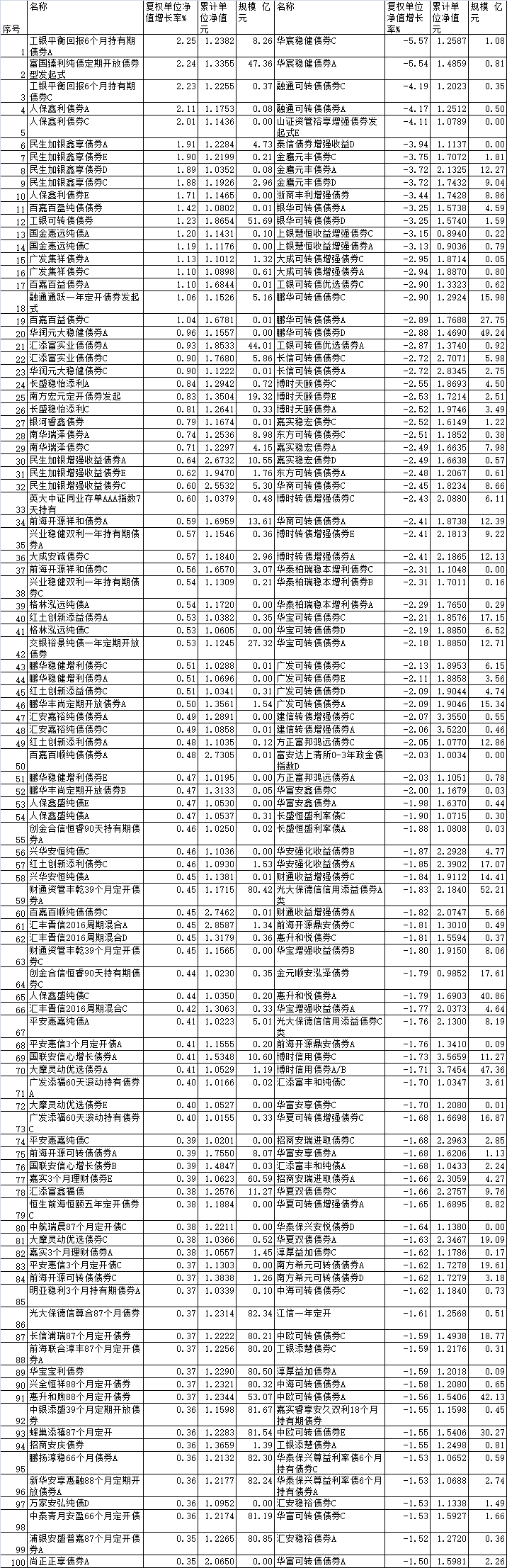
创新药遭遇“窜天猴” 两个月大涨30% 1只实验猴卖12万元仍“有价无猴”
Mei Ri Jing Ji Xin Wen· 2025-12-02 13:09
Core Insights - The price of experimental monkeys, specifically the crab-eating macaque, has surged above 100,000 yuan, marking a significant increase of over 30% from previous prices, leading to a budget shortfall for companies [1][2] - The supply of experimental monkeys is critically low, with a reported annual demand-supply gap of approximately 10,000 monkeys in China, exacerbated by the increasing reliance on these animals for drug safety evaluations [10][11] - The cyclical nature of monkey prices is influenced by a seven-year breeding cycle, making it difficult for breeding companies to respond to market demands in a timely manner [6][7] Price Trends - The price of crab-eating macaques has fluctuated dramatically over the past decade, with a 14-fold increase since 2017, and current prices are expected to stabilize between 70,000 to 150,000 yuan in the next two to three years [2][5] - The peak price reached 200,000 yuan in 2022 and 2023, but has since decreased to around 100,000 yuan, still significantly impacting the cost structure of drug development projects [3][6] Supply Chain Dynamics - The concentration of monkey breeding facilities has increased, with major CRO companies acquiring a significant portion of the available monkeys, leading to a tighter market for smaller companies seeking to procure these animals [9][10] - The breeding cycle for crab-eating macaques is lengthy, taking approximately 6 to 7 years from birth to maturity, which complicates the ability of breeding companies to scale up production in response to rising demand [6][7] Industry Implications - The high cost of experimental monkeys now constitutes a core part of the toxicology testing budget, with estimates suggesting that a single project may require four to five million yuan just for safety evaluation experiments [3][4] - The ongoing demand for innovative drug development, particularly in areas such as antibody drugs and gene therapy, continues to drive the need for crab-eating macaques in preclinical testing [7][11] Future Outlook - The industry is facing a potential decline in self-sustaining breeding capacity, with projections indicating that the annual production of self-bred crab-eating macaques may fall below 10,000 in the next two to three years if current trends continue [7][10] - Companies are urged to consider long-term strategies for breeding and procurement to mitigate the impact of fluctuating prices and supply shortages in the future [6][9]
康龙化成(300759) - H股公告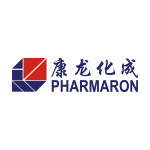
2025-12-02 10:06
致:香港交易及結算所有限公司 公司名稱: 康龍化成(北京)新藥技術股份有限公司 (於中華人民共和國註冊成立的股份有限公司) 呈交日期: 2025年12月2日 股份發行人及根據《上市規則》第十九B章上市的香港預託證券發行人的證券變動月報表 截至月份: 2025年11月30日 狀態: 新提交 | 2. 股份分類 | 普通股 | 股份類別 | A | | 於香港聯交所上市 (註1) | | 否 | | | --- | --- | --- | --- | --- | --- | --- | --- | --- | | 證券代號 (如上市) | 300759 | 說明 | | A 股 (深圳證券交易所) | | | | | | | | 法定/註冊股份數目 | | 面值 | | | 法定/註冊股本 | | | 上月底結存 | | | 1,476,658,400 | RMB | | 1 RMB | | 1,476,658,400 | | 增加 / 減少 (-) | | | 0 | | | RMB | | 0 | | 本月底結存 | | | 1,476,658,400 | RMB | | 1 RMB | | 1,476,65 ...
CRO概念下跌1.78%,16股主力资金净流出超千万元
Zheng Quan Shi Bao Wang· 2025-12-02 09:06
Group 1: Market Performance - The CRO concept index declined by 1.78%, ranking among the top declines in the concept sector, with notable declines from companies such as Aopumai, Yinos, and Medisi [1] - Among the CRO concept stocks, six companies experienced price increases, with Haipruy, Hehua Co., and Dongfang Ocean rising by 0.75%, 0.52%, and 0.39% respectively [1] Group 2: Capital Flow - The CRO concept sector saw a net outflow of 907 million yuan, with 53 stocks experiencing net outflows, and 16 stocks seeing outflows exceeding 10 million yuan [3] - WuXi AppTec had the highest net outflow of 447 million yuan, followed by Tigermed, Kanglong Chemical, and Medisi with net outflows of 69.78 million yuan, 47.47 million yuan, and 38.39 million yuan respectively [3] - The stocks with the highest net inflows included Dian Diagnostics, Hanyu Pharmaceutical, and Dongfang Ocean, with net inflows of 19.93 million yuan, 17.26 million yuan, and 13.49 million yuan respectively [3][5]

康龙化成(03759) - 截至2025年11月30日止月份之股份发行人的证券变动月报表
2025-12-02 08:32
股份發行人及根據《上市規則》第十九B章上市的香港預託證券發行人的證券變動月報表 截至月份: 2025年11月30日 狀態: 新提交 致:香港交易及結算所有限公司 公司名稱: 康龍化成(北京)新藥技術股份有限公司 (於中華人民共和國註冊成立的股份有限公司) 呈交日期: 2025年12月2日 I. 法定/註冊股本變動 | 1. 股份分類 | 普通股 | 股份類別 | H | | | 於香港聯交所上市 (註1) | | 是 | | | --- | --- | --- | --- | --- | --- | --- | --- | --- | --- | | 證券代號 (如上市) | 03759 | 說明 | H股 | | | | | | | | | | 法定/註冊股份數目 | | | 面值 | | | 法定/註冊股本 | | | 上月底結存 | | | 301,537,125 | RMB | | 1 | RMB | | 301,537,125 | | 增加 / 減少 (-) | | | 0 | | | | RMB | | 0 | | 本月底結存 | | | 301,537,125 | RMB | | 1 | RMB ...
流感概念反复活跃,医疗创新ETF(516820.SH)过去20日净流入近1亿
Xin Lang Cai Jing· 2025-12-02 05:23
Core Viewpoint - The flu epidemic level in China is rising, leading to increased activity in the anti-flu concept stocks, with Haiwang Biological hitting the daily limit up [1] Group 1: Market Activity - The Medical Innovation ETF (516820.SH) is down 0.81%, with mixed performance among constituent stocks; Dong'e Ejiao (000423) leads with a 0.91% increase, while Kanghong Pharmaceutical (002773) falls by 2.43% [1] - The latest data from the Chinese Center for Disease Control and Prevention shows that the flu positivity rate among outpatient and emergency cases is close to 45%, indicating a medium epidemic level, with some provinces reaching a high epidemic level [1] - The Medical Innovation ETF has seen a net outflow of 2.582 million yuan recently, but over the past 20 trading days, there have been 14 days of net inflow totaling 99.49 million yuan [1] Group 2: Investment Insights - Guosen Securities notes that the current valuations in the medical device and pharmacy sectors already reflect risks from domestic and international policies, suggesting a focus on undervalued stocks with potential highlights or marginal changes [1] - The Medical Innovation ETF selects 30 pharmaceutical blue-chip stocks, covering key sectors such as innovative drugs (34%), CXO (17%), medical devices (13%), and consumer healthcare (11%), indicating a potential for short-term gains in lower-valued medical core assets [1] - The pharmaceutical sector is experiencing significant differentiation, with innovative drug valuations being high (historically at the 88th percentile), while CXO, medical devices, and consumer healthcare sectors show potential for rebound [1]
创新药遭遇“窜天猴”:两个月大涨30%,1只实验猴卖12万元
Mei Ri Jing Ji Xin Wen· 2025-12-01 22:50
Core Viewpoint - The price of non-human primates, particularly the crab-eating macaque, has surged significantly, with prices rising from over 90,000 yuan to 120,000 yuan in just two months, indicating a budget shortfall of over 1 million yuan for companies seeking to purchase these animals for drug safety evaluations [2][4][6]. Price Trends - The price of crab-eating macaques has experienced a dramatic increase, with a 30% rise recently, following a previous peak of over 200,000 yuan in 2022, and a subsequent drop to a low of 65,000 yuan [2][4]. - Industry experts predict that the price will fluctuate between 70,000 yuan and 150,000 yuan over the next two to three years [2][4]. Supply and Demand Dynamics - There is a notable shortage of available macaques, with many companies struggling to find suitable sources despite the rising prices [4][17]. - The demand for crab-eating macaques has surged, with usage in domestic laboratories increasing from 18,140 in 2017 to 28,026 in 2019, a growth of 54.5% [11]. - The annual supply-demand gap for crab-eating macaques in China is estimated to be around 10,000 animals, with a significant focus on maintaining a balanced ratio of male to female macaques for breeding purposes [17]. Industry Structure and Challenges - The breeding cycle for crab-eating macaques is lengthy, taking approximately six to seven years from birth to maturity, which complicates the ability to meet rising demand [12][14]. - The concentration of resources among leading Contract Research Organizations (CROs) has further limited the availability of macaques, as these companies have acquired a significant portion of the existing supply [16][17]. - The current market dynamics have led to a stagnation in the breeding of macaques, with many companies opting to sell available macaques rather than invest in breeding programs [14][16]. Regulatory and Ethical Considerations - Recent developments in the U.S., where the CDC plans to halt all internal research involving monkeys, have sparked discussions about the future of animal testing in biomedical research [21][22]. - The reliance on non-human primates for critical research underscores the ethical dilemmas faced by the industry, as the demand for innovative therapies continues to grow [21][23].