百纳千成

Search documents
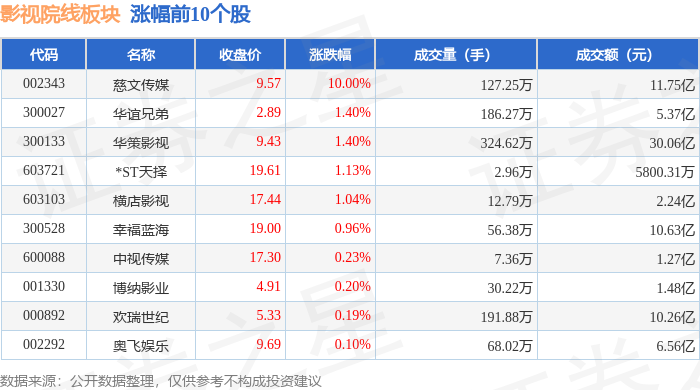
影视院线板块8月19日跌0.49%,百纳千成领跌,主力资金净流出8.78亿元
Zheng Xing Xing Ye Ri Bao· 2025-08-19 08:37
证券之星消息,8月19日影视院线板块较上一交易日下跌0.49%,百纳千成领跌。当日上证指数报收于 3727.29,下跌0.02%。深证成指报收于11821.63,下跌0.12%。影视院线板块个股涨跌见下表: | 代码 | 名称 | 收盘价 | 涨跌幅 | 成交量(手) | 成交额(元) | | | --- | --- | --- | --- | --- | --- | --- | | 002343 | 窓文传媒 | 9.57 | 10.00% | 127.25万 | | 11.75 Z | | 300027 | 华谊兄弟 | 68.7 | 1.40% | 186.27万 | | = 5.37亿 | | 300133 | 华策影视 | 9.43 | 1.40% | 324.62万 | | 30.06亿 | | 603721 | *ST天择 | 19.61 | 1.13% | - 2.96万 | | 5800.31万 | | 603103 | 横店影视 | 17.44 | 1.04% | 12.79万 | | 2.24亿 | | 300528 | 辛福蓝海 | 19.00 | 0.96% | 56.38万 | | ...


A股昨日创多项纪录 全市场超4000股上涨
Mei Ri Shang Bao· 2025-08-19 05:58
Market Overview - A-shares market experienced a significant surge, with multiple indices reaching new highs, and the total market capitalization surpassing 100 trillion yuan for the first time in history [1] - The Shanghai Composite Index rose by 0.85%, the Shenzhen Component Index increased by 1.73%, and the ChiNext Index gained 2.84%, with total market turnover exceeding 2.8 trillion yuan, marking a new high for the year [1] Securities Sector - The securities sector continued its strong performance, with an overall increase of 1.15%, and 41 out of 50 constituent stocks rising [2] - Positive earnings reports from major securities firms indicated a net profit growth of over 25% year-on-year for the first half of 2023 [2] - The sector is expected to see further upward potential due to a "lagging" characteristic in performance compared to historical data, with the SW securities index only rising 10% year-to-date [3] Liquid Cooling Server Sector - The liquid cooling server concept stocks saw a significant increase, with an overall rise of 6.31%, and 116 out of 121 constituent stocks gaining [4] - The market for liquid cooling servers in China is projected to grow at a compound annual growth rate of 46.8% from 2024 to 2029, with the market size expected to exceed 16.2 billion USD by 2029 [5] Film and Television Industry - The film and television production sector experienced a notable surge, with several stocks hitting the daily limit up, driven by positive market sentiment and potential policy support [6][7] - The overall increase in the film and television sector was 5.88%, with only one out of twenty constituent stocks declining [7] - The industry is believed to be at the beginning of a new recovery phase, with expectations for improved business models and a gradual restoration of high-quality content production [8]


慈文传媒涨停二连板!政策利好引爆影视板块,长剧制作公司率先受益,暑期档票房破百亿添助力
Sou Hu Cai Jing· 2025-08-19 03:05
Core Viewpoint - The recent policy changes from the National Radio and Television Administration (NRTA) are expected to significantly benefit the film and television industry, particularly long-form drama production companies, by addressing longstanding systemic barriers [1][3]. Group 1: Policy Impact - The "21 Measures" policy from the NRTA aims to eliminate restrictions such as the 40-episode cap, seasonal broadcast intervals, and the proportion of historical dramas, while also shortening review periods [1][3]. - The immediate market reaction was positive, with the cultural media index rising by 3.11% and a net capital inflow of 10.257 billion yuan on August 18 [2]. Group 2: Company Performance - Companies like Ciweng Media experienced significant stock price increases, with a second consecutive day of trading at the daily limit due to the favorable policy environment [1][2]. - Ciweng Media's recent projects, including the suspense drama "Dark Tide" and various short dramas aimed at international markets, have contributed to its strong market performance [2]. Group 3: Market Dynamics - The cancellation of seasonal broadcast intervals is seen as crucial for the continuity of high-quality IP development, allowing successful series to maintain audience engagement [3]. - The summer box office surpassed 10 billion yuan, matching the previous year's performance, with a notable increase in audience attendance, reaching approximately 270 million viewers [4].

微短剧爆火,高增长潜力概念股出炉
Zheng Quan Shi Bao Wang· 2025-08-19 01:01
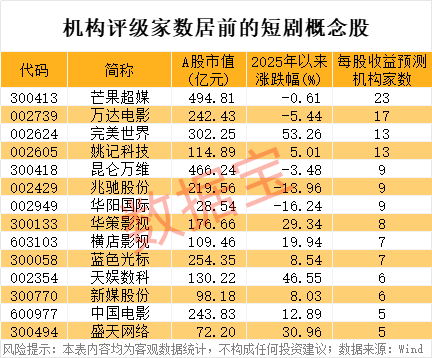
Group 1: Market Performance - The A-share market reached a transaction volume of 2.81 trillion yuan on August 18, marking a new high in nearly 10 months [1] - The Beizheng 50 Index surged by 6.79%, with a year-to-date increase of 51.92%, reaching a historical high [1][2] - Five stocks on the Beizheng Exchange hit the "30cm" limit up, with only five out of 271 stocks declining on the same day [2] Group 2: Industry Insights - The micro-short drama industry is expected to surpass a market size of 1 trillion yuan by 2027, with a projected market size of 505 billion yuan in 2024 [3][4] - The overseas short drama market is also growing, with the first quarter of 2025 seeing revenues exceeding 2.4 billion yuan, led by the US, Japan, and Southeast Asia [3][4] Group 3: Company Developments - A total of 50 A-share companies are involved in the short drama business, with several actively expanding their operations [5] - Companies like Mango Super Media have successfully released multiple short dramas overseas, achieving good broadcasting results [5] - The market capitalization of short drama concept stocks reached 634 billion yuan, with an average increase of 18.84% this year [5][6] Group 4: Institutional Attention - Fourteen short drama concept stocks received positive ratings from five or more institutions, with Mango Super Media receiving the highest number of ratings at 23 [6] - Only three stocks are expected to achieve a net profit growth rate exceeding 20% in the next two years, namely Perfect World, Wanda Film, and Tianyu Shuke [6]
“广电21条”:破40集上限、松绑古装剧,长剧要“翻身”了?
Hu Xiu· 2025-08-19 00:00
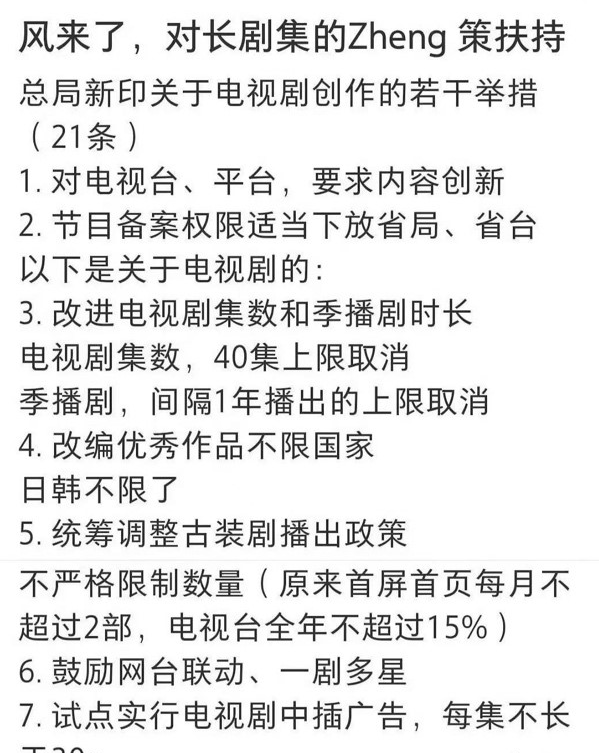
Core Viewpoint - The recent surge in the film and television sector is closely linked to the "21 Measures" issued by the National Radio and Television Administration (NRTA), which aims to revitalize the industry by addressing key pain points such as the limitation on the number of episodes and the scheduling of seasonal dramas [1][10][19]. Industry Impact - The NRTA's "21 Measures" include lifting the 40-episode cap, removing the one-year interval requirement for seasonal dramas, and relaxing restrictions on the broadcast ratio of historical dramas, which are expected to significantly benefit the industry [10][11][19]. - The measures have been described as a "timely rain" for the industry, which has faced challenges such as tightened procurement by platforms and a decline in both production and viewership [3][9][19]. Market Reaction - On August 18, the cultural media index rose by 3.11%, with net inflows exceeding 10.257 billion yuan, indicating strong market confidence in the sector following the announcement of the "21 Measures" [4][7]. - Several companies, including Huazhi Shumedia, Huace Film & TV, and Ciweng Media, saw their stock prices hit the daily limit, reflecting investor optimism [4][7]. Production and Content Creation - The industry is witnessing a resurgence in production activity, with multiple film crews accelerating their preparations for new projects, as indicated by increased restaurant bookings in production hubs like Hengdian [3][20]. - The measures are expected to encourage the development of high-quality IPs, allowing for continuous and high-quality content creation, which is crucial for revitalizing the long-form drama market [13][19]. Long-term Trends - The decline in the number of dramas produced has been alarming, with a drop from 429 dramas in 2014 to only 115 in 2024, a decrease of 73% [9][17]. - The rise of short dramas has created a competitive environment for long dramas, with platforms reallocating resources towards shorter formats [9][19]. Future Outlook - The "21 Measures" are anticipated to stimulate both supply and demand in the market, potentially leading to a more vibrant and profitable industry landscape [8][19]. - Companies are optimistic that the new policies will attract capital back into long-form dramas, which have been neglected in favor of shorter formats [18][19].


“广电21条”发布,影视股批量涨停,长剧要“翻身”了?
Mei Ri Jing Ji Xin Wen· 2025-08-18 23:34
Core Viewpoint - The recent surge in the film and television sector is closely linked to the "21 Measures" issued by the National Radio and Television Administration, which aims to revitalize the industry by addressing key pain points such as the cap on episode counts and restrictions on seasonal broadcasts [1][5]. Group 1: Industry Response - On August 18, the film and television sector saw a significant stock price increase, with the cultural media index rising by 3.11% and a net capital inflow of over 10.257 billion [2][3]. - Major companies like Huazhi Shumedia, Huace Film & TV, and others experienced stock price surges, indicating a positive market reaction to the new policies [2][3]. - The industry has been facing challenges such as reduced production and audience loss, making the new policies a timely relief [1][3]. Group 2: Policy Implications - The "21 Measures" include lifting the 40-episode cap, removing seasonal broadcast intervals, and relaxing restrictions on historical dramas, which are expected to stimulate content creation and market activity [5][6]. - The measures are anticipated to benefit long-form drama production companies, allowing them to explore previously restricted themes [4][6]. - The policies aim to enhance the creative space for producers while providing consumers with more choices, thus stimulating market demand [3][6]. Group 3: Market Dynamics - The television industry has seen a decline in production, with the number of dramas receiving distribution licenses dropping from 429 in 2014 to just 115 in 2024, a decrease of 73% [3][8]. - The rise of micro-dramas has intensified competition for long-form dramas, with micro-drama users reaching 666 million in 2024, reflecting a 14.8% growth [4][8]. - The new policies are expected to encourage a shift back to long-form content, as production companies are now more inclined to invest in high-quality IPs [6][8]. Group 4: Future Outlook - The industry anticipates a revival, with many production teams accelerating their project launches in response to the new policies [9]. - The measures are seen as a catalyst for attracting capital back into the long-form drama sector, which has been struggling with reduced investment [8][9]. - Overall, the "21 Measures" are viewed as a significant step towards revitalizing the film and television industry, fostering a healthier and more dynamic market environment [8][9].

“广电21条”松绑集数、古装剧等限制,影视股批量涨停
Mei Ri Jing Ji Xin Wen· 2025-08-18 22:30
Core Viewpoint - The recent surge in the film and television sector is closely linked to the "21 Measures" issued by the National Radio and Television Administration, which aims to revitalize the industry by addressing key pain points such as the cap on episode counts and restrictions on seasonal broadcasts [1][3][6]. Industry Impact - The "21 Measures" include lifting the 40-episode cap, removing the one-year interval requirement for seasonal dramas, and relaxing the broadcasting ratio for historical dramas, which are expected to significantly benefit long-form drama production companies [8][10]. - The measures have been described as a "timely rain" for the industry, which has faced challenges such as tightened procurement by platforms and a decline in both production and viewership [3][6][11]. Market Response - On August 18, the cultural media index rose by 3.11%, with net inflows exceeding 10.257 billion, indicating strong market confidence in the sector following the announcement of the "21 Measures" [4][6]. - Major companies such as Huazhi Shumedia, Huace Film & TV, and Ciweng Media saw their stock prices hit the daily limit, reflecting investor optimism [4][6]. Production Trends - The industry has been experiencing a decline in production, with the number of dramas receiving distribution licenses dropping from 429 in 2014 to just 115 in 2024, a staggering 73% decrease [6][11]. - The rise of micro-dramas has further squeezed the space for long-form dramas, with micro-drama users reaching 662 million in 2024, growing at a rate of 14.8% [7][11]. Future Outlook - The "21 Measures" are expected to stimulate both supply and demand in the market, allowing for more creative freedom and a broader selection for consumers, which could lead to a revival of the long-form drama market [6][10]. - Industry insiders anticipate that the measures will encourage the production of high-quality content and attract capital back into the long-form drama sector, which has been neglected in favor of shorter formats [10][11].
“广电21条”:破40集上限、松绑古装剧!影视股批量涨停,长剧要“翻身”了,“我们在加速开机”
Mei Ri Jing Ji Xin Wen· 2025-08-18 17:25
Core Viewpoint - The recent surge in the film and television sector is closely linked to the "21 Measures" issued by the National Radio and Television Administration (NRTA), which aims to revitalize the industry by addressing key pain points such as the 40-episode limit and restrictions on seasonal dramas [1][4][10]. Group 1: Industry Impact - The NRTA's "21 Measures" include lifting the 40-episode cap, removing the one-year interval requirement for seasonal dramas, and relaxing the broadcast ratio for historical dramas, which are expected to significantly benefit the industry [1][10]. - The film and television industry has faced multiple challenges, including tightened procurement by platforms and a decline in production, leading to a situation where short dramas are squeezing the space for long dramas [4][8]. - The measures are seen as a "timely rain" for the industry, with many production companies accelerating their project preparations in response to the positive news [4][12]. Group 2: Market Response - On August 18, the cultural media index rose by 3.11%, with a net inflow of over 10.2 billion yuan into the film and television sector, indicating strong market confidence following the announcement [5][8]. - Major stocks in the sector, including Huazhi Shumedia (300426.SZ) and Huace Film & TV (300133.SZ), experienced significant gains, with several stocks hitting the daily limit [5][8]. - The NRTA's measures are expected to stimulate both supply and demand sides of the market, enhancing creative space and consumer choice [8][12]. Group 3: Future Prospects - The adjustments in policy are anticipated to lead to a resurgence in long dramas, particularly benefiting companies focused on high-quality IP development [9][12]. - The industry has seen a significant decline in production, with the number of dramas receiving distribution licenses dropping from 429 in 2014 to just 115 in 2024, a decrease of 73% [8][13]. - The measures are expected to attract capital back into the long drama sector, which has been overshadowed by the rise of short dramas, thus potentially reversing the current downward trend in production [12][13].
破40集上限、松绑古装剧!影视股批量涨停,长剧盼来翻身仗?业内人士透露:正在加速开机
Mei Ri Jing Ji Xin Wen· 2025-08-18 16:22
Core Viewpoint - The recent surge in the film and television sector is closely linked to the "21 Measures" issued by the National Radio and Television Administration (NRTA), which aims to revitalize the industry by addressing key pain points such as the cap on episode counts and restrictions on seasonal broadcasts [1][3][8]. Industry Impact - The NRTA's "21 Measures" include lifting the 40-episode cap, removing the one-year interval requirement for seasonal dramas, and relaxing restrictions on the broadcast ratio of historical dramas, which are expected to significantly benefit the industry [1][8]. - Following the announcement, the film and television stocks experienced a collective surge, with the cultural media index rising by 3.11% and a net inflow of over 10.257 billion yuan into the sector [4][6]. Market Dynamics - The industry has faced challenges such as tightened procurement by platforms, increased restrictions on episode counts, and capital withdrawal, leading to a decline in both production and viewership [3][7]. - The introduction of the "21 Measures" is seen as a timely intervention, with industry insiders expressing optimism about the potential for increased production and creative freedom [3][9]. Company Opportunities - Companies like Baidu Qiancheng and Huanrui Century are expected to be among the first to benefit from the new policies, allowing them to explore previously restricted themes and formats [7][9]. - The measures are anticipated to stimulate the production of high-quality long dramas, which have been under pressure from the rise of short dramas [7][9]. Future Outlook - The NRTA's initiatives are viewed as a means to rejuvenate the long drama market, with expectations of increased investment and production activity in the coming months [9][14]. - Industry experts believe that the adjustments will lead to a more favorable environment for high-quality IP development, potentially reversing the trend of declining production numbers [9][14].
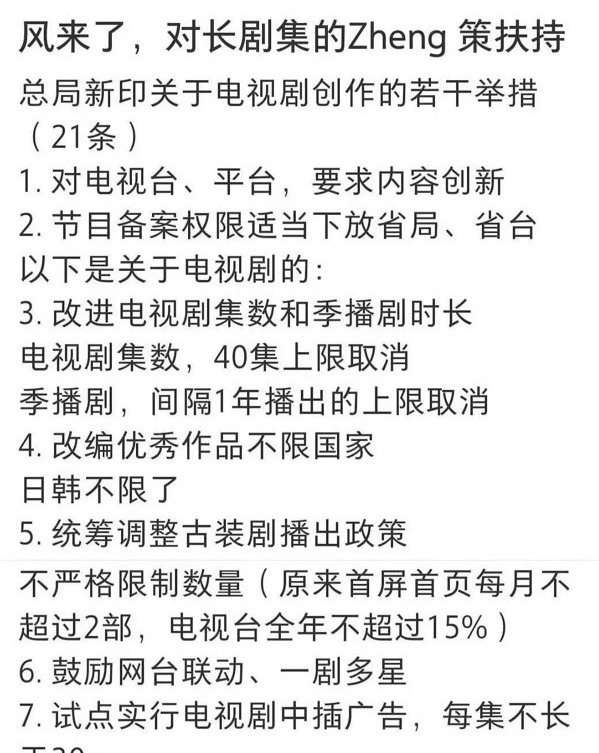
今夜,大利好!
中国基金报· 2025-08-18 16:07
Core Viewpoint - The article highlights the positive impact of the recent measures implemented by the National Radio and Television Administration (NRTA) in China, which aim to enhance the supply of quality audiovisual content, leading to a significant surge in the stock prices of companies in the film and television sector [3][5]. Group 1: Policy Measures - The NRTA has introduced several initiatives to enrich television content, including the "Content Renewal Plan" to boost content innovation and improve management policies for drama series [5]. - The measures also focus on enhancing the production and promotion of ultra-high-definition programs, encouraging the introduction of outstanding foreign programs, and strengthening copyright protection [5]. Group 2: Market Reaction - Following the announcement of the NRTA's measures, the film and television sector in the A-share market experienced a collective surge, with stocks like Huazhi Shumedia and Huace Film & TV reaching their daily limit [5]. - Analysts suggest that the policy changes could signal a turning point for the industry, similar to the lifting of gaming license restrictions in late 2022, potentially leading to improved business models and accelerated project launches [6]. Group 3: Future Outlook - The film and television industry is expected to enter a positive cycle characterized by supply recovery, demand release, performance improvement, and valuation restoration [6]. - The rise of short dramas as mainstream content is anticipated to create a more mature industry chain, driving advertising revenue and new consumption patterns [6].