智谱

Search documents
豆包千问疯狂撒钱,月之暗面疯狂搞钱丨36氪独家
36氪· 2026-02-18 13:05
Core Insights - The article discusses the significant financing activities and valuation increases in the AI industry, particularly focusing on the company "月之暗面" (Moon's Dark Side), which is set to complete a financing round exceeding $700 million with a valuation between $10 billion and $12 billion [4][7][15]. Financing Activities - "月之暗面" has attracted interest from multiple institutions, including European funds, indicating a strong demand for investment in AI models [7][14]. - The recent financing round has been characterized as highly competitive, with investors eager to secure shares due to the rapid increase in valuation [9][14]. - The company has seen its valuation increase by over 2.2 times in just two months, reflecting the growing enthusiasm in the AI sector [16]. Market Dynamics - The surge in valuations for companies like "智谱" (Zhipu) and "MiniMax" post-IPO has fueled investor interest in "月之暗面," as these companies have seen their market values rise significantly [13][15]. - The article notes that "智谱" reached a market cap of over 220 billion HKD, while "MiniMax" exceeded 260 billion HKD, both increasing four to five times since their IPOs [13]. - The competitive landscape is intensifying, with major tech firms like ByteDance, Alibaba, and Tencent actively investing in user acquisition strategies, further driving the urgency for smaller AI companies to secure funding [16][17]. Investment Sentiment - The article highlights a shift in investment strategies, with firms now focusing on rolling financing to quickly elevate valuations [16]. - The willingness of investors to pay high valuations is seen as a positive signal for startups in the AI sector, indicating a robust market outlook [20]. - The need for substantial funding, estimated at 3 to 5 billion RMB annually for foundational model development, underscores the financial pressures faced by AI companies to maintain their competitive edge [19].

两个春节,一年时间:战火烧红整条AI产业链
Di Yi Cai Jing· 2026-02-18 09:58
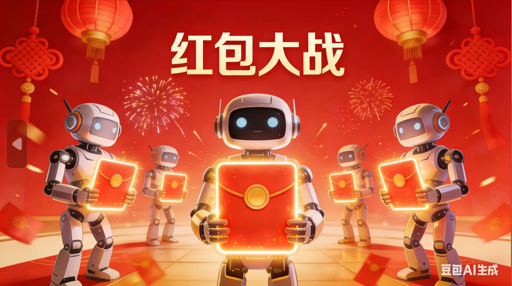
Core Viewpoint - The competition among major tech companies for national-level traffic entry points during the Spring Festival is intense, with no clear winner emerging from this year's "red envelope war" [1][16]. Group 1: Competition Overview - Major players in the competition include Alibaba, ByteDance, Tencent, and Baidu, each deploying significant financial resources to attract AI users [3][19]. - Alibaba's Qianwen announced a 30 billion yuan "Spring Festival invitation plan," while Tencent's Yuanbao offered 1 billion yuan in cash red envelopes, and Baidu provided 500 million yuan in red envelopes for users of its Wenxin assistant [3][19]. - ByteDance did not disclose specific amounts but indicated it would distribute over 100,000 tech gifts and cash red envelopes during the Spring Festival [3][19]. Group 2: Company Strategies and Ecosystems - Alibaba benefits from a robust ecosystem supported by its large models and diverse application scenarios, including its open-source models that compete internationally [4][20]. - Qianwen's user engagement exceeded expectations, leading to an actual investment surpassing the planned 30 billion yuan due to high user participation [4][20]. - ByteDance's Doubao has gained a competitive edge with a higher daily active user count compared to its rivals, achieving 1.9 billion AI interactions on New Year's Eve [4][20]. Group 3: Model Capabilities and Market Position - Tencent's underlying model capabilities are perceived as weaker compared to Alibaba and ByteDance, lacking a leading position in major model rankings [5][21]. - Baidu's strategy focuses on integrating its Wenxin assistant into its existing app with over 700 million monthly active users, offering incentives to encourage user transition to AI [5][21]. - The competitive landscape has raised entry barriers for other companies, necessitating substantial financial investments to compete effectively [6][22]. Group 4: Future Trends and Developments - The emergence of intelligent agents, such as NetEase Youdao's LobsterAI, indicates a shift towards new AI application forms, with significant expectations for their future role in AI applications [8][24]. - The gap between Chinese and American large models has narrowed, with the difference in capabilities reduced from six months to approximately three months [13][28]. - Chinese companies are expected to maintain a competitive advantage in terms of cost-effectiveness in AI investments compared to their American counterparts [15][32].



徐新,一笔回报50亿
Xin Lang Cai Jing· 2026-02-18 09:47
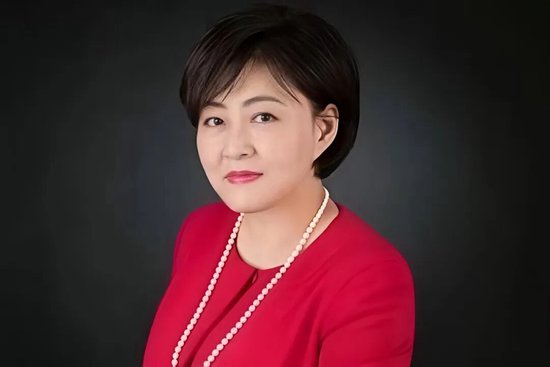
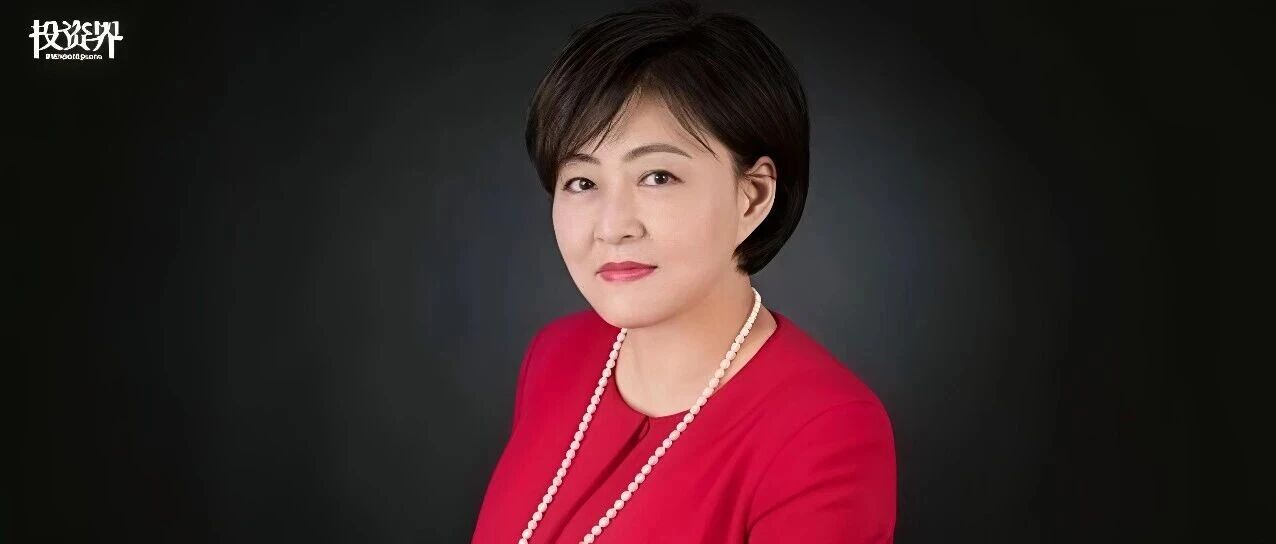
丰收缩影。 作者/杨文静 报道/投资界PEdaily 这也许是春节期间最沸腾一幕——智谱和MiniMax在港股涨疯了。 其中,智谱在节前5天涨超130%,除夕当日更是开盘就一举飙升至最高540港元,最终收盘市值超2200 亿港元,相比IPO首日已经翻了近4倍。 这背后,风投女王徐新身影浮现。 2023年,国产大模型战况正酣,徐新掌舵的今日资本低调地参与了智谱的B3轮融资,重仓2.5亿元。不 到三年,这笔投资水涨船高,按智谱最新市值计算回报约20倍,账面浮盈约50亿元。如此,再次缔造投 资生涯漂亮一战。 这一幕始于春节前夕。 2月9日,一款神秘模型爆红,智谱从当日203.2港元一路上涨至2月11日的312.4港元,市值一度突破1500 亿港元。 直到2月12日凌晨,新一代基座模型GLM-5正式发布,智谱当日股价涨幅28.68%;次日再次高开,股价 最终定格于485港元,总市值超2100亿港元。 但这还没有结束。 除夕当天,港股更是将这个"全球大模型第一股"推向前所未有的高点——当日高开522港元,最终股价 定格在508港元,总市值达2264.88亿港元。 这意味着,智谱在春节前的6个交易日一口气涨超150%,市 ...
两个春节,一年时间:战火烧红整条AI产业链 | 海斌访谈
Di Yi Cai Jing· 2026-02-18 09:41
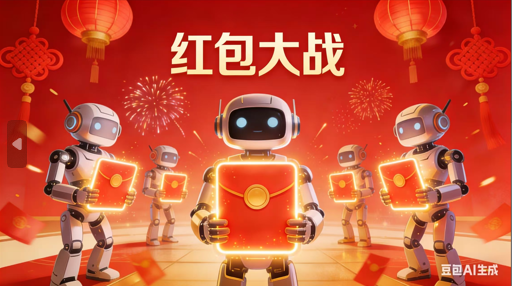
Core Viewpoint - The competition among major tech companies for national-level traffic entry points during the Spring Festival is intense, with no clear winner emerging from this year's events [1][3][6]. Group 1: Competition Overview - Major players in the competition include Alibaba, ByteDance, Tencent, and Baidu, each deploying significant financial resources to attract AI users [3][5]. - Alibaba's Qianwen launched a 30 billion yuan "Spring Festival invitation plan," while Tencent offered 1 billion yuan in cash red envelopes through its Yuanbao app [3][4]. - ByteDance's Doubao and Baidu's Wenxin Assistant also participated, with Doubao reporting 1.9 billion AI interactions on New Year's Eve [4][13]. Group 2: Company Strategies - Alibaba leverages its extensive ecosystem and open-source models to compete effectively in both domestic and international markets [3][5]. - ByteDance's Doubao has gained a first-mover advantage with a higher daily active user count compared to its competitors [3][5]. - Tencent's model capabilities are perceived as weaker, but the company remains confident in its ability to compete in the AI space [5][6]. Group 3: Market Dynamics - The competition has raised the entry barrier for other companies, requiring substantial investment to compete for national-level traffic [5][6]. - The rapid iteration of large models in China has narrowed the gap with U.S. counterparts, with the difference in capabilities reduced to about three months [13][14]. - Chinese companies are increasingly efficient in their AI investments, achieving competitive intelligence levels with lower costs compared to U.S. firms [15]. Group 4: Future Trends - The emergence of intelligent agents, such as LobsterAI, indicates a shift towards more specialized applications of AI technology [8][9]. - The evolution of intelligent agents is expected to progress through various stages, from single-app functionalities to cross-platform interactions [10][11]. - The competitive landscape suggests that smaller companies may find opportunities by leveraging multiple AI models rather than being tied to a single one [9].
徐新,一笔回报50亿
投资界· 2026-02-18 07:34
Core Viewpoint - The article highlights the explosive growth of AI companies, particularly focusing on the stock performance of Zhipu and MiniMax, showcasing significant returns for investors and the emergence of AI as a wealth-generating sector in China [2][3][11]. Group 1: Zhipu's Stock Performance - Zhipu's stock surged over 130% in the five days leading up to the Lunar New Year, reaching a peak of 540 HKD on New Year's Eve, with a market capitalization exceeding 2200 billion HKD, nearly quadrupling since its IPO [2][3]. - The stock price increased from 203.2 HKD on February 9 to 312.4 HKD by February 11, with a market value surpassing 1500 billion HKD [3]. - Following the release of the GLM-5 model on February 12, Zhipu's stock rose by 28.68%, closing at 485 HKD and a market cap over 2100 billion HKD [3]. Group 2: Investment Insights - Xu Xin's Today Capital invested 2.5 billion RMB in Zhipu during its B3 financing round, which has yielded a return of approximately 20 times, equating to a paper profit of around 5 billion RMB [2][4]. - Zhipu has completed eight rounds of financing, raising over 8.3 billion RMB, with a diverse group of investors including Tsinghua University’s technology transfer platform [7][8]. - The article notes that the early investors in Zhipu, such as Zhongke Chuangxing, have also seen substantial returns, with some investments reportedly covering multiple funds [7]. Group 3: Employee Participation - As of June 2025, Zhipu has 883 employees, with 452 holding shares, representing 51.2% of the workforce [10]. - Employee stock ownership plans have resulted in significant wealth for employees, with some holding shares valued at over 80 billion HKD [10]. Group 4: Broader AI Market Trends - The article mentions that MiniMax also experienced rapid growth, with its market capitalization exceeding 2600 billion HKD shortly after its IPO [11]. - The success of Zhipu and MiniMax illustrates the potential for AI companies to transition from technology to commercial viability, attracting global investor interest [11][12]. - The article concludes by noting the unprecedented valuations of AI companies globally, highlighting the transformative impact of AI on wealth creation [12].
北京大模型万“码”奔腾春节档
Xin Lang Cai Jing· 2026-02-18 05:55
除夕夜央视春晚上被网友点赞"每一帧都好美"的节目《贺花神》,如同"花"的视觉盛宴。殊不知,这属 于中国人的美学浪漫背后有大模型的助力。2月12日,北京企业字节跳动推出视频生成模型Seedance 2.0。"今年的总台春晚是Seedance 2.0的第一个客户。"火山引擎总裁谭待说,正式上线前,该模型就被 深度应用于多个春晚节目的视觉制作环节。 当中国观众享受春晚的视觉特效时,像Seedance 2.0这样诞生在北京的国产大模型正引发海外开发者和 创作者的疯狂追捧。今年以来,全球迎来新一代大模型的密集发布潮。北京在中国AI企业中一马当 先、万"码"奔腾。 大模型上春晚 解决海外模型解不了的难题 《贺花神》节目使用Seedance 2.0模型,为每位演员的表演定制了"一月一人一景,一花一态一观"的视 觉奇观,让舞台变成可呼吸、可生长的动态空间。歌手张杰演唱《驭风歌》时,身后水墨画上的骏马活 灵活现。不过,水墨风格的素材如此灵动,考验模型对东方美学的理解和泛化能力。此前,一些海外模 型由于不理解中国水墨画构图和逻辑,最终生成的视频出现了变形。 "训练阶段我们用了大量东方美学素材,而且它在镜头语言的控制、复杂交互呈现 ...
豆包千问疯狂撒钱,月之暗面疯狂搞钱 | 智能涌现独家
3 6 Ke· 2026-02-18 01:58
文|周鑫雨 编辑|苏建勋 春节,热钱涌动在中国大模型赛道上。 一端,是狂撒几十亿元发红包、请奶茶,替当家AI应用拉流量的大厂们;另一端,则是股价飞涨、融 资迅猛的大模型六小虎们。 在搞钱的战场上,开年最大的一笔融资,来自月之暗面。 此前彭博社等媒体报道称,近期月之暗面即将完成的超7亿美元融资,由阿里、腾讯、五源资本、九安 医疗等老股东领投,并且已经超募。与此同时,月之暗面已经以100亿-120亿美金的估值,无缝开启了 新一轮融资。 《智能涌现》独家获悉,月之暗面的超7亿美元融资中,股东阵容除了联合领投的老股东们,还包括老 股东高榕创投,以及新增的凯辉基金——这也是凯辉,首次朝大模型公司开枪; 据我们了解,以超100亿美金估值开启的新一轮融资,已经收到了多家机构的意向,包括欧洲背景的海 外基金。 有关上述信息,截至发稿前,月之暗面暂无回应。 用"抢"形容月之暗面这轮融资的局面,一点也不过分。 一名知情人士告诉我们,从2025年下半年,月之暗面开启融资之初,不少机构的LP,就"催着投资"。 这或许是除了2023年初,行业对大模型最大的一次FOMO(错失恐慌症)。 溯其缘由,是自港股IPO以来,智谱和MiniMax ...
估值破百亿!Kimi融资加码,AI竞争格局分化
Sou Hu Cai Jing· 2026-02-17 23:18
阿里腾讯加码。 当一众AI应用扎堆打响超"春节红包战"之际,AI独角兽月之暗面(Moonshot AI)旗下产品Kimi却悄然 放出"大招"——在完成5亿美元C轮融资仅一个多月后,新一轮超7亿美元融资已进入交割收尾阶段。 本轮融资由阿里、腾讯、五源、九安等老股东联合领投,公司估值突破100亿美元大关,正式跻身全球 独角兽行列,为热闹的春节AI赛道注入了不一样的资本信号。 Kimi创近一年行业融资纪录 1月9日,上海AI大模型公司MiniMax(00100.HK)登陆港交所主板,近3个交易日股价已累计上涨 65%,最新市值已经超过2600亿港元。 AI竞争迈入新阶段 作为国内大模型"六小虎"的领军企业之一,Kimi的融资热度折射出行业竞争格局的深刻分化。 近日,摩根大通证券(中国)发布研究报告《中国人工智能行业:全球布局与模型创新驱动新一代领军 者》。报告称,中国人工智能行业正从"百模大战"阶段,迈向以商业化落地能力、模型创新实力及全球 化布局为决定成败之关键的阶段。中国AI市场正在迅速整合,"具备实力且资金充足的模型开发商数量 已从超200家缩减至不足10家"。 短短两个月内,Kimi累计融资规模将超12亿美 ...
阿里腾讯加码!Kimi估值,突破100亿美元
Xin Lang Cai Jing· 2026-02-17 11:30
阿里腾讯加码。 当一众AI应用扎堆打响超"春节红包战"之际,AI独角兽月之暗面(Moonshot AI)旗下产品Kimi却悄然 放出"大招"——在完成5亿美元C轮融资仅一个多月后,新一轮超7亿美元融资已进入交割收尾阶段。 本轮融资由阿里、腾讯、五源、九安等老股东联合领投,公司估值突破100亿美元大关,正式跻身全球 独角兽行列,为热闹的春节AI赛道注入了不一样的资本信号。 Kimi创近一年行业融资纪录 短短两个月内,Kimi累计融资规模将超12亿美元,创下近一年来国内大模型行业最高融资纪录。值得 关注的是,在本轮融资即将落定之际,Kimi已启动下一轮估值100亿—120亿美元的融资计划。 回溯来看,Kimi上一轮5亿美元C轮融资于2025年12月完成并大幅超募,公司现金储备充足。月之暗面 创始人、CEO杨植麟曾在内部全员信中表示,公司账面有超过100亿元人民币的现金储备。 杨植麟在信中称:"相比于二级市场,我们判断还可以从一级市场募集更大量资金。事实上,我们B/C 轮融资金额就超过绝大部分IPO募资及上市公司的定向增发。所以我们短期不着急上市,也不以上市为 目的。" 作为国内大模型"六小虎"的领军企业之一,Ki ...
机器人上春晚,卖爆了
盐财经· 2026-02-17 04:07
Core Viewpoint - The 2026 Spring Festival Gala showcased a high concentration of robots from four Chinese companies, marking a significant moment for the commercialization of humanoid robots and AI technology in China [2][5][25]. Group 1: Robot Companies and Performances - Four companies, Songyan Power, Yushu Technology, Magic Atom, and Galaxy General, presented their robots at the Spring Festival Gala, providing a technology-rich experience for the audience [12][15]. - Songyan Power's robots were featured in a skit with famous comedian Cai Ming, emphasizing their affordability and accessibility, with many models priced below 10,000 yuan [18][15]. - Yushu Technology, a returning participant, showcased a martial arts performance, highlighting their advanced motion control capabilities [20][22]. - Galaxy General, valued at $3 billion, presented a touching microfilm featuring their robots, which can interact naturally with humans [22][24]. - Magic Atom demonstrated their high-dynamic bipedal robots in a musical performance, showcasing their extensive self-research capabilities [22][24]. Group 2: Commercialization and Market Impact - The participation of robots in the Spring Festival Gala serves as a critical endorsement, addressing public concerns about safety and reliability, and opening up B2B and B2C market opportunities [14][26]. - The cost of advertising during the gala ranges from 16.99 million to 44 million yuan, with individual robot performances costing over 100 million yuan, indicating the high stakes involved [12][13]. - The event is seen as a significant milestone for humanoid robots, potentially marking 2026 as a pivotal year for their commercialization [25]. Group 3: AI Integration and Competition - The integration of AI models, such as the Volcano Engine's Doubao model, into robots signifies a deep collaboration between hardware and AI, enhancing the robots' capabilities [28][31]. - Major tech companies like ByteDance and Alibaba are heavily investing in AI, with ByteDance planning to invest over 150 billion yuan and Alibaba 380 billion yuan in the next three years, indicating a fierce competition for AI dominance [57][58]. - The marketing strategies employed by these companies during the gala reflect their ambitions to establish a strong foothold in the AI ecosystem, with a focus on user engagement and long-term brand loyalty [62][64].