
Figure

Search documents
X @CoinDesk
CoinDesk· 2025-08-19 05:17
MARKETS📈: Profitable Blockchain Lender Figure Readies Nasdaq IPO Under FIGR💰 ...
人工智能产业再提速,华宝人工智能ETF矩阵深度布局 | 投研报告
Zhong Guo Neng Yuan Wang· 2025-08-19 01:34
Core Insights - Global AI computing power demand is accelerating, with major tech companies expected to spend over $350 billion on AI-related capital expenditures by 2025, maintaining high spending levels into 2026 [2] - 2025 is projected to be the year of commercialization for AI applications, with significant revenue growth in AI software driven by large models and enhanced capabilities in various applications [2] - The domestic AI industry in China is rapidly catching up, with companies like DeepSeek leading the way in developing autonomous large models and optimizing the direction of major firms [3] Group 1: AI Software and Hardware - AI software, particularly large models, is experiencing rapid revenue growth, supported by the expansion of computing power clusters that enhance intelligence levels [2] - AI hardware is in a phase of rapid iteration, with companies like Tesla and Waymo expanding their robotaxi fleets, and robots from Tesla and Figure being applied in consumer scenarios [2] Group 2: Domestic AI Development - Domestic large models are increasingly focused on self-control of computing power due to chip sanctions, with companies like Huawei and Cambricon working to close the gap with overseas counterparts through software and communication optimizations [3] - Domestic AI applications are advancing, with Meitu launching an AI agent for image processing and brand design, and AI video generation being widely used in advertising and animation [3] Group 3: Investment Opportunities - Huabao's AI ETF matrix is diversifying its investments across various sectors, including overseas computing power, domestic server-focused computing, internet-centric domestic large models, AI in financial technology, and domestic software applications [3]
X @Bloomberg
Bloomberg· 2025-08-18 22:18
Blockchain-based credit company Figure filed publicly for an IPO, joining the rush of crypto-related firms entering the market https://t.co/DUqvCX0CyZ ...
中信建投:看好泛人形机器人在物流分拣场景率先应用 明年有望迎来爆发增长
智通财经网· 2025-08-17 23:48
Core Insights - The report from CITIC Securities highlights that humanoid robots (non-completely humanoid) need to possess multimodal perception and end-to-end large model capabilities to achieve logistics sorting operations [1][2] - Current hardware for humanoid robots has reached the commercialization threshold in logistics scenarios, but domestic embodiment models still require improvement for practical application [2][3] - The economic analysis indicates that the cost-benefit ratio of humanoid robots is now on par with sorting workers, assuming a two-year cost recovery period [3] Economic Analysis - In logistics sorting, a single worker working two shifts (8 hours each) earns an annual salary of 100,000 yuan, while the cost of a humanoid robot is 400,000 yuan, working 20 hours a day with an efficiency of about 80% compared to workers [3] - The cost-benefit ratio of humanoid robots is expected to align with that of human workers as hardware costs decrease and efficiency improves [3] Technological Development - The sorting actions performed by humanoid robots include package detection, grabbing and flipping, barcode recognition, path planning, and delivery positioning, requiring advanced multimodal perception and autonomous decision-making capabilities [2] - The Figure 02 robot, utilizing Helix neural network, processes a package in an average time of 4.05 seconds, comparable to skilled sorting workers who take 3-5 seconds per item [2] - The domestic robot, Zhiyuan Jingling G1, still lags behind skilled workers in sorting speed and quality [2] Future Outlook - In the second half of this year, humanoid robots are expected to transition from demo scenarios to customer trials, with potential for explosive growth in the following year after customer validation [3] - The logistics sector abroad, where labor costs are higher, is anticipated to be the first to adopt these technologies [3] - Companies with strong secondary development capabilities and those leading in commercialization progress are recommended for attention [3]

ROBOT FOLDING LAUNDRY! Figure 02 Humanoid's Newest AI Demo
CNET· 2025-08-17 12:00
Robotics Development & Performance - Figure's humanoid robot Figure 2 demonstrates laundry folding capabilities, showcasing potential for improvement [1][3][4] - Figure dropped OpenAI partnership, developing its own AI system called Helix to power the robot's AI and speech recognition [3] - Figure 2 spent approximately 2 minutes and 13 seconds folding six towels, averaging about 22.17 seconds per towel [4] - Human comparison shows a person folding eight larger towels in 1 minute 49 seconds, averaging 13.63 seconds per towel, making the person roughly 63% faster than the Figure 2 robot [9] Home Robotics & Future Applications - 1X's Neo robot is designed for household tasks, including laundry, and is being tested in employee homes [6][7] - 1X announced a private early access program for Neo in 2025, allowing the public to participate in teaching the robots various tasks [7] Industry Outlook & Considerations - The industry considers the implications of relying on robots for chores, questioning the potential impact on self-care and personal responsibility [11]

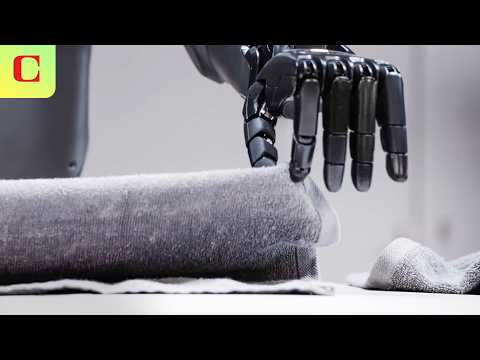
Figure人形机器人首秀灵巧手叠衣服!只增加数据集就搞定
具身智能之心· 2025-08-15 00:05
Core Viewpoint - Figure's humanoid robot has successfully learned to fold clothes using an end-to-end approach without any architectural changes, showcasing its adaptability and advanced capabilities in handling complex tasks [2][21][28]. Group 1: Robot Capabilities - The humanoid robot demonstrated its ability to fold towels smoothly, employing precise finger control and real-time adjustments during the process [7][18]. - This task is considered one of the most challenging dexterous operations for humanoid robots due to the variability and unpredictability of clothing shapes [15][16]. - The robot's performance in folding clothes was achieved using the same model and architecture as its previous task of package sorting, with the only change being the dataset used for training [14][28]. Group 2: Helix Architecture - The Helix architecture, developed after Figure's split from OpenAI, is a unified "visual-language-action" model that allows the robot to perceive, understand, and act like a human [21][22]. - Helix consists of two systems that communicate with each other, enabling the robot to perform various tasks with a single set of neural network weights [22]. - Key components of Helix include visual memory, state history, and force feedback, which enhance the robot's ability to adapt and respond to its environment [23][29]. Group 3: Future Plans - Figure plans to continue improving the robot's flexibility, speed, and generalization capabilities based on the expansion of real-world data [20]. - The company aims to develop the robot's ability to perform a complete set of household tasks, including washing, folding, and potentially hanging clothes [38].
腾讯研究院AI速递 20250814
腾讯研究院· 2025-08-13 16:01
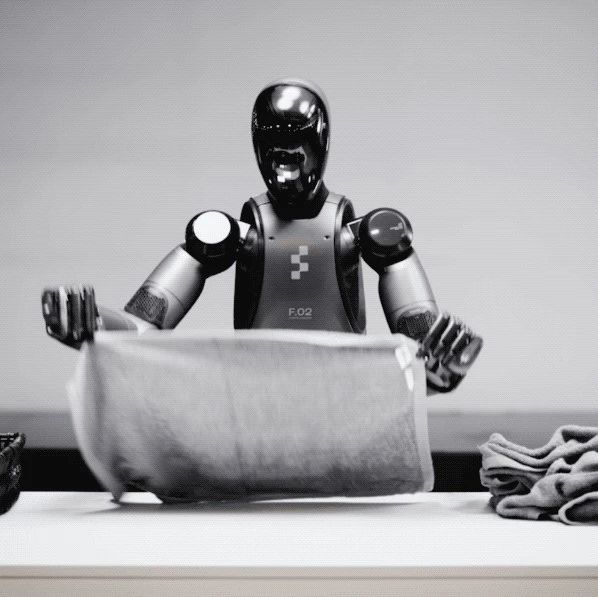
Group 1 - OpenAI and co-founder Sam Altman are backing a new brain-computer interface company, Merge Labs, which is expected to be valued at $850 million, directly competing with Elon Musk's Neuralink [1] - Altman will co-found Merge Labs but will not be involved in daily management, aligning with his vision of human-machine integration from his 2017 blog post [1] - Unlike Neuralink, which has conducted human clinical trials, Merge Labs is in its early stages but aims to develop simpler and more practical brain-computer interfaces leveraging advancements in AI [1] Group 2 - Anthropic announced that Claude Sonnet 4 now supports a context window of up to 1 million tokens, five times its previous capacity, allowing it to handle over 75,000 lines of code or multiple research papers in a single request [2] - Pricing adjustments have been made for the extended context, with costs set at $3 per million tokens for inputs under 200K and $6 for inputs exceeding that, while outputs are priced at $15 and $22.5 respectively [2] - This feature is currently in public beta on Amazon Bedrock and will soon be available on Google Cloud's Vertex AI platform, with early partners indicating it enables true "production-grade AI engineering" capabilities [2] Group 3 - Kunlun Wanwei has open-sourced the Skywork UniPic 2.0 model, creating a unified multimodal framework for understanding, generating, and editing images, achieving "efficient, high-quality, and unified" results [3] - The model consists of three core modules: an image editing module based on SD3.5-Medium, a connector for pre-trained multimodal capabilities, and a Flow-GRPO progressive dual-task reinforcement strategy [3] - The UniPic2-SD3.5M-Kontext-2B model surpasses the image generation metrics of the 12B parameter Flux.dev and outperforms the editing capabilities of the same parameter Flux-Kontakt [3] Group 4 - AI startup Perplexity has made a formal offer to acquire Google's Chrome browser business for $34.5 billion in cash, which is double its own valuation of $18 billion [4] - The timing of the acquisition proposal coincides with Google's ongoing antitrust litigation with the U.S. Department of Justice [4] - Perplexity has committed to maintaining the Chromium open-source project and investing over $3 billion within two years post-acquisition, although Google has expressed no intention to sell Chrome, leading to low market expectations for the deal's success [4] Group 5 - Pika has launched an "audio-driven performance model" that combines static images with audio to generate highly synchronized videos, achieving precise lip-syncing and natural expression changes [5] - This technology can perfectly match the image subject to the audio content, producing 720p HD videos in an average of just 6 seconds, with no length limitations [5] Group 6 - Figure has demonstrated a humanoid robot capable of folding clothes, showcasing that the original logistics sorting capabilities can be enhanced simply by adding data [6] - The robot exhibited human-like behaviors such as eye contact, nodding, and gestures, controlled by an end-to-end visual-language-action model [6] - Folding clothes is a challenging dexterous task for robots due to the deformable and diverse shapes of clothing, but Figure successfully achieved this using the Helix architecture without changing the underlying structure [6] Group 7 - DeepMind's founder Demis Hassabis revealed that Genie 3 not only generates virtual worlds but also allows these worlds to operate in reality, supporting agent training [7] - The team has begun testing the Sima agent within the worlds generated by Genie 3, marking a breakthrough in "AI running in another AI's brain" [7] - Hassabis believes that model evaluation will be crucial for future AI development, with Game Arena serving as an important benchmark due to its features of "immediate feedback" and "adaptive difficulty" [7] Group 8 - Notion's founder Ivan Zhao stated that successful AI products should aim for a score of 7.5, emphasizing the need to create an "AI workspace" that shifts AI from merely providing tools to delivering "the work itself" [8] - He compared AI product development to "brewing beer" rather than "building bridges," indicating that it often only achieves 70-80% of the desired functionality and requires extensive experimentation [8] - Zhao highlighted the importance of balancing craftsmanship and practicality in AI products, noting that excessive pursuit of perfection can detract from commercial value, particularly stressing the significance of context integration in AI applications [8] Group 9 - OpenAI co-founder Greg Brockman noted that AI development is currently experiencing a "return to foundational research" phase, where algorithms are once again the critical bottleneck rather than mere scale expansion [9] - He described the future AI infrastructure as needing to balance "long-duration heavy computation" with "real-time responsiveness," suggesting that homogeneous accelerators are a good starting point [9] - Brockman predicts that the AI ecosystem will exhibit a "blooming" pattern rather than a singular model, and achieving a tenfold economic growth in AI will require deep consideration of application methods by experts across various fields [9]

Figure人形机器人首秀灵巧手叠衣服!神经网络架构不变,只增加数据集就搞定
量子位· 2025-08-13 09:13
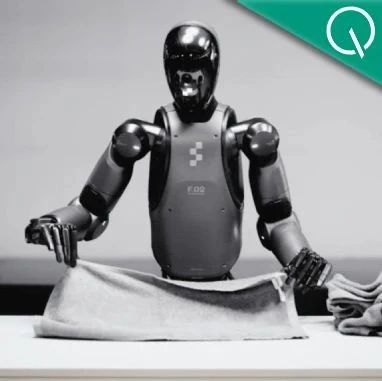
Core Insights - The article discusses the debut of Figure's humanoid robot, which has learned to fold clothes using a neural network without any architectural changes, only by increasing the data input [1][21]. Group 1: Robot Capabilities - The humanoid robot demonstrated its ability to fold towels smoothly and efficiently, showcasing dexterous hand movements and real-time adjustments during the process [6][19]. - This task of folding clothes is considered one of the most challenging dexterous operations for humanoid robots due to the unpredictable nature of clothing [15][16]. - The robot operates in an end-to-end manner, processing visual and language inputs to execute precise motor controls [8][19]. Group 2: Helix Architecture - The Helix architecture is pivotal for the robot's performance, allowing it to autonomously fold clothes without modifying the model or training hyperparameters, relying solely on a new dataset [21][22]. - Helix consists of two systems that communicate with each other, enabling the robot to perform various tasks using a unified model and a single set of neural network weights [23]. - Key components of Helix include visual memory, state history, and force feedback, which enhance the robot's ability to perceive and interact with its environment effectively [24][28][29]. Group 3: Future Developments - Figure plans to enhance the robot's flexibility, speed, and generalization capabilities based on the expansion of real-world data [20]. - The company aims to continue improving the robot's performance in various tasks, building on the success of its current capabilities [20][23].
万万没想到!人形机器人不玩花活秀Demo,转头就靠 “实力” 谋生,卷疯了!
Sou Hu Cai Jing· 2025-08-12 09:00
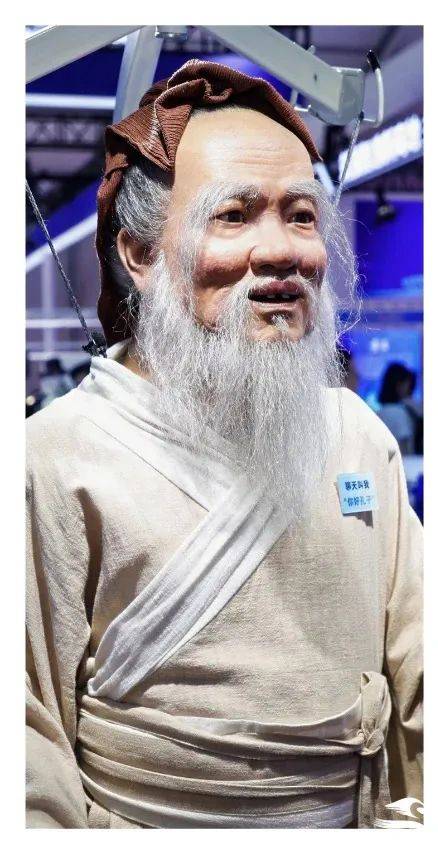
Core Insights - The 2025 World Robot Conference (WRC 2025) showcased a significant shift in humanoid robots from being mere demonstrations to proving their utility in various tasks, indicating a move towards commercialization [4][16][34] - Major tech companies, automotive manufacturers, and internet platforms are increasingly entering the humanoid robot sector, marking a transition from early-stage innovation to systematic involvement driven by practical applications [20][24][26] - Investment in humanoid robot companies has surged, with 18 companies completing 22 financing rounds totaling approximately 76.08 billion RMB from January 1 to August 5, 2025, highlighting the growing interest from large enterprises [21][25] Industry Trends - Humanoid robots are evolving from "showcase" models to functional units capable of performing stable and repeatable tasks, which is essential for industry evaluation and trial [17][19] - The landscape of participants in the humanoid robot sector has shifted, with large enterprises now playing a significant role alongside innovative startups and academic institutions [20][24] - The demand for key components, particularly dexterous hands, is becoming a focal point for the industry, as these components are critical for the practical deployment of humanoid robots [19][27] Investment Landscape - In 2025, major companies like JD.com and Meituan have been particularly active in investing in humanoid robot firms, with JD.com making six investments totaling 22.3 billion RMB and Meituan four investments totaling 19.38 billion RMB [25][26] - The investment trend indicates a strategic focus on integrating robotic applications into existing business models, with companies seeking to solve operational challenges through robotics [25][26] Technological Challenges - The development of dexterous hands for humanoid robots presents a complex system-level challenge, requiring advancements in perception, mechanical structure, and control algorithms [30][31][32] - Current solutions for dexterous hands are still in the exploratory phase, with many prototypes displayed at WRC 2025 remaining in demo status rather than showcasing full functionality [32][34] Future Outlook - The humanoid robot industry is at a critical juncture, with the potential for significant advancements in practical applications, although many companies are still focused on entertainment and demonstration rather than functional utility [34][35] - The market is experiencing a mix of excitement and skepticism, with concerns about overvaluation and the sustainability of numerous startups in the sector [35]

X @Solana
Solana· 2025-08-07 20:02
Market Launch - PreStocks launched tokenized pre-IPO stocks trading on Solana [1] - Private markets are now open, liquid, and onchain [1] Available Markets - Markets include SpaceX, OpenAI, AnthropicAI, Anduril, Kraken, Neuralink, Discord, Epic Games, Figure, Databricks, Perplexity AI, Xai, and more [1]