
中国软件

Search documents
Seedance概念活跃,国投智能领涨超9%!大数据ETF(516700)盘中拉升1.8%,冲击4连阳!
Xin Lang Ji Jin· 2026-02-10 06:33
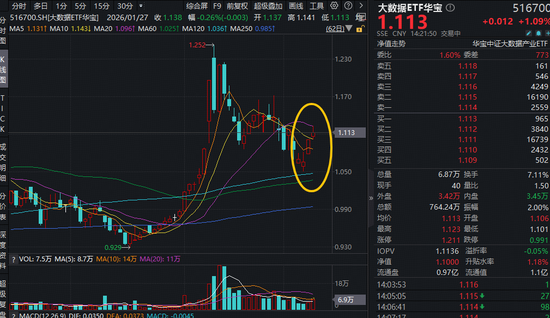
Group 1 - The core focus of the news is the significant rise of the Seedance concept, particularly in the domestic computing and AI application sectors, with the big data ETF Huabao (516700) experiencing a price increase of over 1.8% at one point and currently up by 1.09% [1] - The AI video generation model Seedance 2.0 from ByteDance has gained attention for its ability to generate high-quality videos from text and images, supporting video segments of 5 to 15 seconds with multi-angle shots and dialogue [1][3] - The domestic video generation field is becoming increasingly competitive, similar to the state of large language models in 2025, with companies focusing on differentiated development in specific application scenarios [3] Group 2 - The data center is identified as a core infrastructure for AI, with a high demand in the computing market driving steady growth in the IDC industry [3] - The Huabao big data ETF (516700) tracks the CSI big data industry index, with a significant weight of 40.91% in computing concepts and 37.43% in AI application concepts as of the end of 2025 [3][5] - Key stocks in the ETF include industry leaders such as Zhongke Shuguang, Keda Xunfei, and Inspur Information, with a focus on technology self-reliance and the acceleration of domestic substitution processes [5]


又一家华尔街投行下调中国软件业评级:AI颠覆,估值重构!
Hua Er Jie Jian Wen· 2026-02-10 03:23
Core Insights - The narrative of "SaaSification" in the software industry is being fundamentally challenged by the rapid evolution of generative AI, leading to a reassessment of the standard SaaS model [1][2] - The high valuation premiums previously enjoyed by SaaS companies are diminishing as the market shifts focus from revenue growth to immediate cash flow and profitability [1][4] Group 1: Valuation Changes - UBS reports that the rapid iteration of large language models (LLMs) is prompting a fundamental reevaluation of the "standardized SaaS" model, with a shift from sales-based valuation to P/E or EV/FCF frameworks [1][7] - The transition in valuation paradigms has resulted in downgrades across the software sector, as companies are forced to provide more customized services, aligning their business models closer to low-margin IT services [2][4] Group 2: Profitability Concerns - Despite increased revenue growth in the Chinese software industry since early 2025, profit margins are declining, indicating that AI-driven demand is not directed towards standardized software products [8][9] - The need for extensive customization to meet vague customer demands is leading to a situation where revenue growth does not translate into profit margin expansion, potentially dragging down profitability [8][9] Group 3: Challenges in AI Monetization - UBS identifies three key bottlenecks in software companies' ability to monetize AI: insufficient AI capabilities, an immature digital ecosystem, and credibility issues regarding AI expertise compared to startups and cloud vendors [9][10] - The rapid release of new AI models every 2-3 months necessitates faster iteration and delivery from software companies, which complicates standardization and profit margin expansion [10]

中国软件国际(00354.HK):2月9日南向资金减持341.2万股
Sou Hu Cai Jing· 2026-02-09 21:37
Core Viewpoint - Southbound funds reduced their holdings in China Software International (00354.HK) by 3.412 million shares on February 9, while experiencing a net increase of 36.868 million shares over the past five trading days [1] Group 1: Southbound Fund Activity - Over the last 20 trading days, Southbound funds have increased their holdings in China Software International on 14 occasions, resulting in a total net increase of 65.024 million shares [1] - Currently, Southbound funds hold 896 million shares of China Software International, accounting for 32.78% of the company's total issued ordinary shares [1] Group 2: Company Overview - China Software International is an investment holding company that provides global technology software and information technology services [1] - The company operates through two main segments: Technical Professional Services and Internet Information Technology Services [1] - The primary business focus includes the development of generative artificial intelligence (AIGC), sales of large model software and hardware, and digital transformation consulting services for enterprise resource planning (ERP) [1] - Key products include the "Question Series" solutions, large model application integrated machines, and Lingxi AI application platform [1] - Services are provided to various sectors including water conservancy, transportation, government platforms, military, energy, education, and finance, with operations in both domestic and international markets [1]

习近平在北京考察科技创新工作,雷军唐杰等企业家接受会见
Xin Lang Cai Jing· 2026-02-09 10:32
Core Insights - The National Innovation Center in Beijing has gathered over 700 enterprises, covering key sectors such as CPU, operating systems, databases, complete machines, network security, and application software [5][21]. Group 1: Key Enterprises - Loongson Technology (龙芯中科, 688047) is a leader in domestic CPU with its LoongArch instruction set and has a strong market share in government and terminal markets [6][22]. - Phytium Technology (飞腾信息, 000066) leads in the integration of servers and terminals with its FT series CPUs and has a well-adapted ecosystem [6][22]. - Haiguang Information (海光信息, 688041) focuses on general-purpose CPUs and DCU chips, being a major player in high-performance computing and data center chips [7][22]. - Tongxin Software is a core manufacturer of domestic desktop and server operating systems with a rich adaptation ecosystem [8][23]. - Kylin Software (麒麟软件, 600536) is a key supplier for critical industries such as government and finance with its Galaxy Kylin OS [9][24]. - DM Database (达梦数据库) is recognized as a benchmark for domestic databases with leading transaction processing performance [10][25]. - Renmin University of China Database (人大金仓) has a high penetration rate in government and central enterprise markets with its KingbaseES database [11][26]. - Sugon (中科曙光, 603019) is a leader in server and supercomputing infrastructure with advanced liquid cooling technology [12][27]. - China Great Wall Technology (中国长城, 000066) is a core enterprise in the domestic closed-loop for innovation with its Feiteng platform and terminals [13][28]. - Aisino (亚信安全, 688225) leads in security solutions for innovation environments with strong adaptation capabilities [14][29]. - Sangfor Technologies (深信服, 300454) is a leader in enterprise security and cloud computing solutions [15][29]. - Kingsoft Office (金山办公, 688111) is a leading domestic office software provider with extensive adaptation in innovation [15][29]. - Yonyou Network (用友网络, 600588) is a core manufacturer for enterprise management software transformation in innovation [16][30]. - SMIC (中芯国际) supports domestic chip manufacturing with its advanced 12-inch wafer fabrication capabilities [16][30]. - Unisoc (紫光汉图) provides adaptation and solutions for innovation [16][30].


中国软件(600536.SH):麒麟软件与国外航天公司没有业务合作
Ge Long Hui· 2026-02-09 07:36
格隆汇2月9日丨中国软件(600536.SH)在互动平台表示,麒麟软件与国外航天公司没有业务合作。 ...
AI应用端大涨,东方国信20CM涨停!字节Seedance2.0海内外刷屏,大数据ETF(516700)猛拉3.2%
Xin Lang Cai Jing· 2026-02-09 05:52
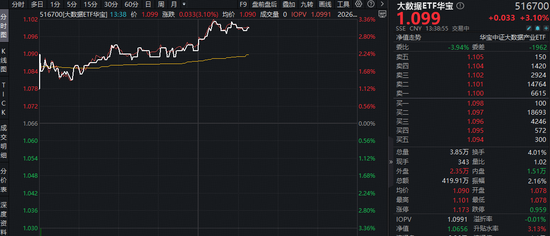
或由于字节跳动Seedance2.0视频生成模型在海内外爆火,今日(2月9日)重点布局国产算力、AI应用 领域的大数据ETF华宝(516700)场内涨幅一度上探3.28%,现涨3.1%,盘中收复5日均线。 成份股方面,东方国信20CM涨停,光环新网涨超10%,易华录、奥飞数据涨逾7%,天下秀、拓尔思、 国网信通等个股大幅跟涨。 | 序号 | 名称 | 旅鉄幅 ▼ | | 两日图 | 申万一级行业 | 申万二级行业 | 申万三级行业 | 总市值 | 成交额 | | --- | --- | --- | --- | --- | --- | --- | --- | --- | --- | | 1 | 东方国信 | 20.02% | | | 计算机 | IT服务Ⅱ | IT服务Ⅲ | 141亿 | 18.57亿 | | 2 | 光环新网 | 10.58% | | | 通信 | | 通信服务 通信应用增值服务 | 2991Z | 31.36亿 | | 3 | 易华录 | 7.93% | | | 计算机 | IT服务II | IT服务Ⅲ | 97亿 | 6.83 亿 | | 4 | 良飞胶据 | 7.84% | | | 通 ...

国家重拳升级虚拟货币监管,对A股的影响(附精选股票)
Sou Hu Cai Jing· 2026-02-08 03:46
Core Viewpoint - The recent regulatory policy issued by the People's Bank of China and eight other departments marks a significant strategic shift in the global financial sovereignty landscape, emphasizing a clear boundary against independent financial systems outside of state control [1] Policy Core - The new notification represents a threefold strategic upgrade from the previous version in 2021, expanding jurisdiction to include offshore activities linked to the renminbi, thereby reinforcing China's monetary sovereignty [2] - The regulatory scope has broadened to include Real World Asset (RWA) tokenization, recognizing its potential while mandating that such activities must rely on specific financial infrastructures within China [3] - The responsibility chain has been extended to hold domestic entities accountable for assisting foreign parties in illegal activities, effectively severing the supply chain for the virtual currency industry within China [4] Impact on A-shares - The policy is expected to trigger a structural re-evaluation of funds and values rather than merely being a negative signal for blockchain concepts [5] - Clear value inflow directions are established, favoring "national team" fintech infrastructure service providers that are closely tied to state-approved digital currency systems [6] - There will be increased demand for cybersecurity and financial compliance technology, as the notification calls for enhanced risk monitoring and data-sharing mechanisms [7] - Mainstream licensed financial institutions may benefit from the reduction of potential risk sources associated with virtual currencies, with some speculative funds possibly flowing into the A-share market [8] Companies Benefiting from Certainty - Companies like Hengsheng Electronics, which is a leader in IT systems for financial institutions, are positioned to benefit from compliance-driven financial infrastructure [9] Facing Pressure for Clearout and Transformation - Companies with unclear main businesses relying on concepts like "digital currency" or "NFTs" will struggle to survive in the market, as scrutiny will increase on their actual applications and revenue support [10] - Companies associated with the "mining" industry must demonstrate a complete business separation to avoid regulatory risks [12] - Firms providing technical services that facilitate cross-border virtual currency activities will face legal risks and must conduct thorough business audits [13] Macro-Level Deep Impact - The policy enhances the "firewall" effect between A-shares and global crypto asset price fluctuations, potentially stabilizing A-share pricing amid global volatility [14] Investor Strategy Reconstruction - Investors are advised to shift from speculative concepts to compliance verification, focusing on whether companies serve recognized financial infrastructures [16] - Attention should be directed towards companies' balance sheets and cash flows rather than just technological narratives [17] - Understanding "financial security" as a core pricing factor is becoming increasingly important in the context of accelerated financial digitalization [18]

2026年中国IT服务进入壁垒、产业链及供需现状洞悉:行业从价格竞争转向价值竞争[图]
Chan Ye Xin Xi Wang· 2026-02-08 01:21
Core Insights - The IT services market in China is projected to reach a total scale of 14,172 billion yuan by 2025, with significant growth across various sectors including energy, finance, telecommunications, government, internet, manufacturing, and others [8][9]. IT Services Industry Overview - IT services encompass a wide range of offerings including information consulting, software upgrades, and hardware maintenance, covering the entire lifecycle of IT systems [1][2]. - Key product categories include hardware integration, software integration, general solutions, industry-specific solutions, and comprehensive IT services [1][2]. Development History of IT Services Industry - The industry began in the 1990s, heavily reliant on hardware sales, with a focus on system integration and basic software development [3][4]. - From the mid-2000s to the end of the 2010s, the industry experienced rapid growth driven by internet proliferation, leading to increased demand for IT outsourcing and operational services [3][4]. - Since the end of the 2010s, the industry has entered a phase of intelligent upgrading, with emerging technologies like cloud computing and AI transforming service models [3][4]. Recent Policy Developments - Recent policies in the IT services sector focus on optimizing computing power, upgrading service outsourcing, and empowering small and medium enterprises [5]. - The Ministry of Industry and Information Technology has issued several action plans aimed at promoting high-quality development in IT services and enhancing international competitiveness [5]. IT Services Industry Chain - The industry chain consists of three main layers: upstream (hardware suppliers and core technology service providers), midstream (system integrators and third-party service providers), and downstream (various application sectors such as finance and government) [6]. Current State of IT Services Industry - The overall market size of IT services in China has shown steady growth from 5,880 billion yuan in 2017 to a projected 14,172 billion yuan in 2025, with all sectors experiencing continuous growth [7][8]. - The internet sector remains a key driver of market growth, while finance and manufacturing also show strong digitalization demands [7][8]. Market Structure of IT Services - By 2025, IT support and maintenance will dominate the market, accounting for 46.47%, followed by IT system integration at 15.88% [9]. Competitive Landscape of IT Services - The IT services industry is characterized by a large number of market participants and a low level of market concentration, with many small to medium-sized enterprises competing in the lower-end market [10][11]. - High-end markets remain less saturated, allowing companies with core advantages to achieve significant profit levels [10][11]. Future Trends in IT Services Industry - AI is becoming a core driver of industry upgrades, with generative AI transforming service delivery from reactive to proactive models [13]. - The shift towards domestic service solutions is emerging as the industry adapts to new demands for secure and controllable IT services [13].


中国软件国际(00354.HK):2月6日南向资金增持2848万股
Sou Hu Cai Jing· 2026-02-06 20:25
Core Viewpoint - Southbound funds have significantly increased their holdings in China Software International, indicating strong investor interest and confidence in the company's future prospects [1] Group 1: Investment Activity - On February 6, southbound funds increased their holdings by 28.48 million shares of China Software International (00354.HK) [1] - Over the past five trading days, there have been four days of net increases in holdings, totaling 39.41 million shares [1] - In the last 20 trading days, there were 15 days of net increases, amounting to 70.15 million shares [1] - Currently, southbound funds hold 899 million shares of China Software International, representing 32.9% of the company's total issued ordinary shares [1] Group 2: Company Overview - China Software International Limited is a global technology software and IT services investment holding company [1] - The company operates through two main divisions: Technology Professional Services and Internet Information Technology Services [1] - The primary business focus includes the development of generative artificial intelligence (AIGC), large model software and hardware sales, and digital transformation consulting services for enterprise resource planning (ERP) [1] - Key products include the "Question Series" solutions, large model application integrated machines, and Lingxi AI application platforms [1] - The company provides services to various sectors, including water conservancy, transportation, government platforms, military, energy, education, and finance, operating in both domestic and international markets [1]
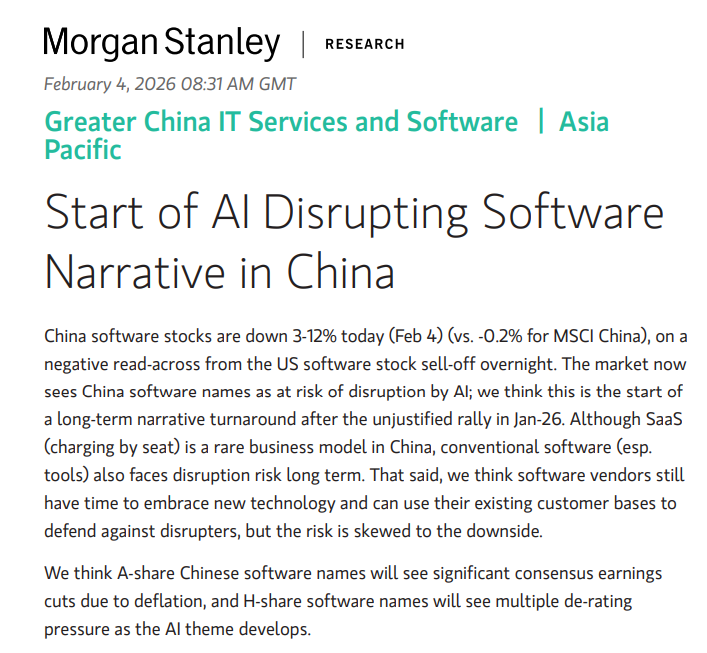
IT 服务与软件 - 人工智能颠覆中国软件叙事的大幕已启- China IT Services and Software-Start of AI Disrupting Software Narrative in China
2026-02-05 02:22
Summary of Conference Call Notes Industry Overview - **Industry**: Greater China IT Services and Software - **Current Market Sentiment**: China software stocks have declined by 3-12% on February 4, 2026, compared to a -0.2% change in MSCI China, indicating a negative sentiment influenced by a sell-off in US software stocks [1][2] Core Insights - **AI Disruption**: The market perceives a risk of AI disrupting China software companies, marking the beginning of a long-term narrative shift after an unjustified rally in January 2026. While SaaS is rare in China, conventional software, especially tools, is also at risk of long-term disruption [1] - **Earnings Consensus**: A-share Chinese software companies are expected to face significant earnings cuts due to deflation, while H-share software companies may experience multiple de-rating pressures as the AI theme evolves [2] Key Company Insights - **Underweight Recommendations**: Key underweight (UW) recommendations include Kingsoft Office, Yonyou, and VenusTech. There is an upside risk due to a lack of institutional participation in the A-share software sector, which could lead to long-term deviations from fundamentals [3] - **Institutional Focus**: Institutional investors are primarily focused on Kingdee (rated Equal-weight), which is facing more selling pressure despite having better fundamentals and valuation compared to its peers [3] Valuation Methodology - **Valuation Models**: - VenusTech and Kingdee International Software Group utilize a 10-year discounted cash flow (DCF) model with a WACC of 10.9% and 9.8% respectively, assuming a terminal growth rate of 3% [6][7] - Yonyou Network Technology also employs a DCF model with a WACC of 9.3% and similar assumptions [9] Risks Identified - **Downside Risks**: - Stricter government policies on cybersecurity and potential cybersecurity events such as information leaks pose significant risks [9] - Intensified competition from other vendors and new entrants, along with the risk of losing market share to cloud vendors, are also highlighted [10][14] - **Upside Risks**: - Faster cloud revenue growth and well-managed implementation offloading could provide upside potential [11][14] Additional Considerations - **Market Dynamics**: The software sector in China is undergoing significant changes, with AI adoption and cloud transitions being critical factors influencing future performance [1][10] - **Institutional Participation**: The lack of institutional participation in A-share software stocks could lead to mispricing and deviations from fundamental values, presenting both risks and opportunities for investors [3] This summary encapsulates the key points from the conference call, focusing on the industry dynamics, company-specific insights, valuation methodologies, and identified risks.