
平安人寿

Search documents
沈思深:30年坚守一线,用品格诠释保险的意义
Jin Rong Jie· 2026-01-15 10:31
Core Viewpoint - The article highlights the journey of Shen Sidshen, a pioneer in the insurance industry, who has dedicated over 30 years to his role at Ping An Life, emphasizing the importance of long-term commitment and professional integrity in the insurance business [1][10]. Group 1: Career Journey - Shen Sidshen started his career at Ping An Life in 1994 as the first insurance agent, demonstrating resilience by reapplying after initially being rejected [3][4]. - He recognized the potential of the insurance industry and sought to explore its opportunities, leveraging his previous experience in sales management [4]. Group 2: Team Management and Development - In 1996, despite rapid team growth, Shen faced challenges due to a lack of experience and management methods, leading to a chaotic environment [5][6]. - He decided to slow down and focus on building a solid foundation for his team, emphasizing the importance of customer trust and long-term relationships [7][9]. - After attending a training program in Hong Kong, he implemented systematic reforms in team management, resulting in a threefold increase in performance [8]. Group 3: Professional Ethics and Client Trust - Shen maintains a strict principle that every insurance policy must be transparent and compliant, fostering trust with clients [9][10]. - He believes that long-term success in the insurance industry relies on adherence to professional ethics and a commitment to client service [10]. Group 4: Evolution of Ping An Life - Over the years, Ping An Life has evolved from a life insurance provider to a comprehensive financial service platform, offering a wide range of solutions including health care, retirement, and family wealth management [10][12]. - The company invests significantly in talent development, creating a learning ecosystem that supports continuous improvement for its agents [8][12]. Group 5: Legacy and Future Aspirations - Shen aims to build a learning-oriented team, attracting talented individuals from diverse backgrounds to enhance the industry [12][13]. - He emphasizes the importance of professionalism and ethical conduct in achieving respect and success in the insurance field [13][14]. - The article concludes with a reflection on the values that have guided Shen's career: foresight, professionalism, courage, determination, and integrity [15][16].



险资出手,今年首次举牌
证券时报· 2026-01-15 04:35
Core Viewpoint - The insurance capital is actively participating in the stock market, with significant investments in listed companies, indicating a continued trend of insurance funds entering the market since 2025 [5][9]. Group 1: Recent Investments - On January 9, 2026, Taiping Life Insurance increased its stake in Shanghai Airport by acquiring 72.424 million shares through block trading, raising its total holdings to 124 million shares, which represents approximately 5.00% of the company's A-share capital [1][3]. - Prior to this acquisition, Taiping Life Insurance and its associated party held 51.9917 million shares, accounting for 2.09% of the A-share capital [3]. - The funds for this acquisition were sourced from insurance funds managed by Taiping Asset, including personal dividend product accounts and traditional insurance product accounts [3]. Group 2: Insurance Capital Trends - In December 2025, Ping An Life also made significant investments, acquiring 20% stakes in Agricultural Bank of China and China Merchants Bank, triggering mandatory disclosure [6]. - The total number of insurance capital acquisitions reached 36 in 2025, surpassing the previous high in 2020 and marking the highest since records began in 2015 [6][8]. - The insurance industry has seen a 35.92% year-on-year increase in equity asset allocation, with the total balance reaching 5.59 trillion yuan by the end of Q3 2025 [8]. Group 3: Future Outlook - A survey of insurance investment officers indicates a strong belief that opportunities in the market outweigh risks, with over 70% planning to increase their equity asset allocation in 2026 [9]. - The trend of increasing equity asset allocation is expected to continue, driven by the downward pressure on interest rates and the need for asset-liability matching [9]. - The insurance sector is adapting to a low-interest environment and regulatory changes, which are facilitating a more aggressive approach to equity investments [8][9].

险企2025理赔年报透视:获赔率超99%,为何“理赔难”呼声仍在
Guo Ji Jin Rong Bao· 2026-01-14 15:16
Core Insights - The insurance industry in China is experiencing an upward trend in both the number of claims and the amount paid out, with claim approval rates remaining high at over 99% [1][2] - Medical insurance continues to have the highest number of claims, while critical illness insurance has the highest payout amounts, indicating a significant protection gap [1][6] Group 1: Claims Performance - In the first 11 months of 2025, the insurance industry reported a premium income of 5.76 trillion yuan, a year-on-year increase of 7.56%, and claims expenditures of 2.21 trillion yuan, up 5.95% [2] - China Life Insurance processed over 62.24 million claims in 2025, with a total payout exceeding 100.4 billion yuan, reflecting a 10% increase [2] - Ping An Life Insurance reported 4.958 million claims with a total payout of 41.51 billion yuan, averaging over 1.1 billion yuan per day [2] Group 2: Claims Efficiency - The claims processing time has significantly improved, with some companies achieving claim settlements in as little as 8 seconds [2][3] - China Life's direct payment service reached 8.17 million people, with claims amounting to over 4.3 billion yuan, showcasing the effectiveness of technology in claims processing [3] - Zhongyou Insurance reported a 370% increase in customer service interactions, with a claims processing time of 1.1 days and an online claims rate exceeding 99% [2] Group 3: Challenges in Claims - Despite improvements, there are ongoing concerns about "claims difficulty," primarily due to issues such as misreporting health conditions, misunderstandings of insurance terms, and incomplete documentation [3][4] - The disparity between consumer understanding of insurance responsibilities and the actual coverage provided by insurance companies contributes to claims disputes [3][4] Group 4: Critical Illness Insurance Gap - There is a notable gap in critical illness insurance coverage, with average treatment costs for cancer ranging from 220,000 to 800,000 yuan, while average payouts for critical illness claims are only around 100,000 yuan [6][7] - The majority of critical illness claims are concentrated in the 41-60 age group, with female claims being more than double that of males [6] - Recommendations for consumers include prioritizing critical illness insurance coverage that is 3 to 5 times their annual income, especially for family breadwinners [7]


险资证券私募入市加速,国寿、新华、平安等旗下私募管理规模大幅跃升
Xin Lang Cai Jing· 2026-01-14 14:36
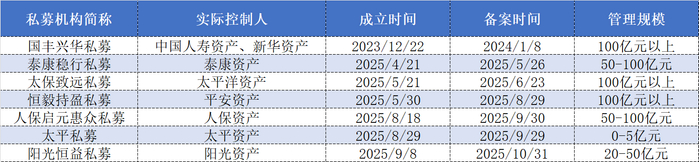
Core Insights - The insurance asset management sector is witnessing significant growth in private equity fund management, with notable increases in fund sizes from major players like Ping An Asset and PICC Asset [1][2][3] Group 1: Fund Management Developments - Ping An Asset's Hengyi Chiying private equity fund management scale has been raised to over 10 billion RMB, with an initial fund size of approximately 30 billion RMB [1] - PICC Asset's PICC Qiyuan Huizhong private equity fund is expected to have an initial investment scale of 10 billion RMB, focusing on long-term stock investments [2] - The first batch of pilot programs began in October 2023, with China Life and Xinhua Insurance approved to establish a 50 billion RMB fund [3] Group 2: Market Participation and Trends - As of January 14, 2025, seven insurance-related private equity funds have completed registration, with several already surpassing the 10 billion RMB mark [3] - The total approved amount for the three batches of pilot programs has reached 222 billion RMB, indicating strong institutional interest in the market [3] - The establishment of private equity funds by insurance companies is a concrete implementation of long-term investment reforms, primarily targeting the secondary stock market [2][3] Group 3: Future Outlook - There are indications that more pilot programs may be approved in the future, which could inject continuous momentum into the market [6] - The entry of long-term capital from these funds is expected to enhance market resilience and support the stable development of the stock market [6] - The Guangdong provincial government has also expressed support for the establishment of private equity funds by insurance companies, further promoting the sector's growth [7]
2025年险企增资共性诉求:提升偿付能力水平
Jin Rong Shi Bao· 2026-01-14 02:37
1月8日,汇丰人寿发布公告称,拟增资5.56亿元,增资资金由该公司唯一股东——汇丰保险(亚 洲)有限公司全额出资。增资后,注册资本将由26.76亿元增至32.32亿元。 这是自2022年汇丰人寿正式成为汇丰保险(亚洲)全资控股的外资独资寿险公司后,第四次增资。 增资的背后,是业务扩张带来的资本需求与战略布局的持续深化。此次增资将直接提升汇丰人寿的偿付 能力水平,进一步增强其资本实力以支持业务扩展和风险管理需求。 据《金融时报》记者不完全统计,2025年,23家保险公司披露增资计划、增资获批公告,合计规模 近470亿元。 人身险公司增资需求更高 从公司类型来看,人身险公司增资需求最旺盛,12家公司拟增资或增资已获监管部门批准,且增资 金额较高。比如,平安人寿以近200亿元增资领跑,注册资本提升至360亿元;中邮人寿紧随其后,中邮 集团、友邦保险联合增资39.8亿元,注册资本升至326.43亿元;国联人寿、中信保诚增资也达到20亿 元。 财产险公司方面,7家公司合计增资超75亿元。其中,众安在线以增资21.5亿元领跑,此次增资采 用在香港联合交易所主板新增发行H股股票的方式。 另外,3家养老险公司也在2025年披 ...
多家上市银行大股东或高管增持落地 或迎来估值修复
Zheng Quan Ri Bao· 2026-01-14 00:08
Core Viewpoint - The recent increase in shareholding by major shareholders and executives in several banks indicates confidence in the banking sector's development and potential valuation recovery [1][2][3]. Group 1: Shareholder Actions - Yunnan Rural Commercial Bank announced that six core executives collectively increased their holdings, buying 192,000 shares at prices between RMB 6.36 and RMB 6.42 per share [2]. - Nanjing Bank's major shareholder, Zijin Group, increased its stake by 123,472,060 shares, representing 1.00% of the total share capital [2]. - Qilu Bank's executives exceeded their planned share purchase, acquiring 771,000 shares for a total of RMB 4.48 million, surpassing the initial target of RMB 3.5 million [2]. Group 2: Market Signals - Analysts suggest that the increase in shareholding sends three key signals: it enhances the capital of listed banks, reflects shareholder confidence in future development, and may serve as a catalyst for valuation recovery [3]. - The actions of insurance companies, such as Ping An Life increasing their holdings in Agricultural Bank and China Merchants Bank, highlight a trend of insurance capital increasing their investments in bank stocks [4]. Group 3: Investment Outlook - The insurance sector is expected to inject over RMB 2 trillion into the market in 2026, with a growing demand for dividend-yielding assets, particularly state-owned banks offering over 4% dividend yields [4]. - Analysts from Galaxy Securities predict that the trend of long-term funds, represented by insurance capital, will continue to favor bank stocks due to their dividend characteristics and stable cash flow [5]. - Overall, the valuation of bank stocks remains low, suggesting potential for further appreciation in the sector [5].



多家上市银行大股东或高管增持落地
Zheng Quan Ri Bao· 2026-01-13 16:51
Core Viewpoint - The recent increase in shareholding by major shareholders and executives in several banks indicates confidence in the banking sector's development and potential for valuation recovery [1][3]. Group 1: Shareholder Actions - Yunnan Rural Commercial Bank announced that six core executives collectively increased their holdings by purchasing 192,000 shares at prices ranging from RMB 6.36 to 6.42 per share [2]. - Nanjing Bank reported that its major shareholder, Zijin Group, increased its stake by 123,472,060 shares, representing 1.00% of the total share capital [2]. - Qilu Bank's executives exceeded their planned share purchase, acquiring 771,000 shares for a total of RMB 4.48 million, surpassing the initial target of RMB 3.5 million [2]. Group 2: Market Signals - Analysts suggest that the increase in shareholding by major shareholders sends three key signals: it enhances the capital of listed banks, reflects confidence in future development and stock performance, and may serve as a catalyst for valuation recovery [3]. - The actions of insurance companies, such as Ping An Life, to increase holdings in major banks highlight a trend of institutional investment in the banking sector, driven by the attractive dividend yields of over 4% [4]. Group 3: Investment Outlook - The insurance sector is expected to inject over RMB 2 trillion into the market in 2026, with a growing demand for high-dividend assets, making state-owned banks attractive long-term investment targets [4]. - Analysts from Galaxy Securities maintain a positive outlook on the banking sector, anticipating continued interest from long-term funds, particularly from insurance capital [5]. - Industry insiders believe that the valuation of bank stocks remains low, suggesting potential for further appreciation [6].
险资新年第一举!太保举牌上海机场,去年险资41次举牌创十年新高
第一财经· 2026-01-13 13:46
Core Viewpoint - In 2026, insurance capital has resumed its trend of significant shareholding increases, with a notable example being the increase in Shanghai Airport shares by Taibao Asset, marking the first major investment of the year [3][4]. Group 1: Recent Trends in Insurance Capital - The past two years have seen a resurgence in insurance capital's shareholding activities, with 41 instances of shareholding increases in 2025, up from 20 in 2024, approaching the historical peak of 62 in 2015 [4][3]. - Analysts attribute this new wave of shareholding to a low-interest-rate environment, which has shifted focus towards dividend stocks and long-term equity investments to enhance return on equity (ROE) [3][7]. Group 2: Characteristics of Recent Shareholding Activities - The current wave of shareholding differs from previous peaks, as it is driven by the need for stable cash returns from high-dividend stocks and the optimization of asset allocation in a declining interest rate environment [7][8]. - The introduction of new accounting standards has created a dilemma for stock investments, leading to a preference for high-dividend stocks that can stabilize profit fluctuations [8][20]. Group 3: Key Players and Their Strategies - The "Ping An Group" has been the most active, participating in 15 shareholding increases, primarily targeting bank and insurance stocks [13][15]. - Other notable participants include Changcheng Life and Ruizhong Life, which have diversified their targets compared to Ping An's focused approach [13][15]. Group 4: Preferred Investment Targets - Bank stocks have been the most favored, with 17 instances of shareholding increases, accounting for 41.5% of the total [15][18]. - The average dividend yield of the targeted companies has increased to approximately 5.0%, making them attractive for long-term investment [19]. Group 5: Future Outlook - The trend of insurance capital increasing shareholdings is expected to continue into 2026, driven by the ongoing demand for high dividend yields and ROE [22]. - Policies encouraging long-term capital market participation are anticipated to provide further opportunities for insurance capital investments [22].

2026首份银行增持公告来了!顶流银行ETF(512800)上探1%,机构:历次春节前银行胜率最高,值得重视
Xin Lang Cai Jing· 2026-01-13 11:44
Core Viewpoint - The banking sector shows resilience with significant stock price increases, driven by executive buybacks and insurance capital inflows, indicating strong confidence in the sector's fundamentals and long-term value [3][12]. Group 1: Market Performance - On January 13, the market experienced a pullback, but the banking sector remained active, with notable gains: Ningbo Bank up over 4%, Hangzhou Bank up over 3%, and several others including CITIC Bank and Chongqing Rural Commercial Bank up over 2% [1][9]. - The top-tier banking ETF (512800) saw an intraday price increase of over 1%, closing up 0.37% and surpassing the 5-day moving average [1][10]. Group 2: Executive Buybacks - The first executive buyback announcement of 2026 was made by Chongqing Rural Commercial Bank, where some directors and executives purchased 192,000 shares from the secondary market, with a maximum investment of 1.23 million yuan [3][12]. - Nanjing Bank reported that its major shareholder, Zijin Group, increased its stake by 123,472,060 shares, representing 1.00% of the total share capital, continuing from previous increases since September 2025 [3][12]. Group 3: Insurance Capital Inflows - Insurance capital has been actively purchasing bank stocks, with Ping An Life announcing it reached a 20% stake in China Merchants Bank H-shares, triggering a mandatory bid [3][12]. - In 2025, insurance capital made 41 stake increases, the highest in nearly a decade, with bank stocks accounting for about 40% of these actions, highlighting their dominance in this area [3][12]. Group 4: Seasonal Trends - Historically, the banking sector has performed well before the Spring Festival, with the Shenwan Banking Index showing over 80% win rate in the past decade, except for 2020 [4][16]. - The average absolute return of the Shenwan Banking Index before the Spring Festival is 4.4%, with an average excess return of 4.9% compared to the Shanghai Composite Index, making it the highest among 31 industry indices [4][16]. Group 5: Future Outlook - Factors expected to drive the banking sector's performance leading up to the Spring Festival in 2026 include continued growth policies, ongoing insurance asset scarcity, and increased market volatility [7][16]. - The banking ETF (512800) is noted for its efficiency in tracking the banking sector, with a current scale of 11.95 billion yuan and an average daily trading volume exceeding 800 million yuan since 2025, making it the largest and most liquid banking ETF in A-shares [7][16].




险资持续“扫货”银行股 后续增持空间依然看好
Zhong Guo Jing Ying Bao· 2026-01-10 09:35
Core Viewpoint - Recently, Ping An Life has announced increased holdings in Agricultural Bank and China Merchants Bank H-shares, reflecting a broader trend among insurance companies to invest in bank stocks, particularly H-shares, due to their attractive dividend yields and valuation discounts [1][2]. Group 1: Investment Activities - Ping An Life announced that it has increased its stake in China Merchants Bank H-shares to 20% as of December 31, 2025, with a book value of 43.956 billion yuan, representing 0.78% of total assets [1]. - Similarly, Ping An Life has increased its stake in Agricultural Bank H-shares to 20% as of December 30, 2025, with a book value of 32.428 billion yuan, accounting for 0.58% of total assets [1]. - Multiple life insurance companies, including Ping An Life, have been actively acquiring shares in various banks, particularly H-share listed banks, throughout 2025 [1]. Group 2: Reasons for Increased Investment - The increase in insurance capital allocation to bank stocks, especially H-shares, is driven by favorable policies encouraging long-term capital market entry and the stable nature of bank stocks, which offer high dividends [2]. - The current low interest rate environment and "asset shortage" have highlighted the advantages of bank stocks as high-dividend, low-volatility investments, making them attractive to insurance funds [2]. - H-shares of banks are generally priced at a 15%-30% discount compared to their A-share counterparts, enhancing their appeal due to higher post-tax dividend yields [2][3]. Group 3: Impact of Increased Holdings - The rising shareholding of insurance funds in banks is expected to influence corporate governance and business strategies, promoting more sustainable dividend policies and enhancing governance structures [4]. - Insurance funds are likely to push for more rigid and tiered dividend policies, potentially increasing the average cash dividend payout ratio by 3-5 percentage points [4][5]. - The collaboration between insurance companies and banks is anticipated to deepen, leading to optimized financial services and improved operational efficiencies [5]. Group 4: Future Outlook - Analysts predict that there remains significant room for insurance capital to increase its holdings in banks, driven by ongoing regulatory encouragement and the need for asset allocation [5]. - The focus of insurance capital is expected to shift towards banks with clear dividend returns and strong asset quality, with H-shares likely remaining a primary target due to their cost-effectiveness [5].