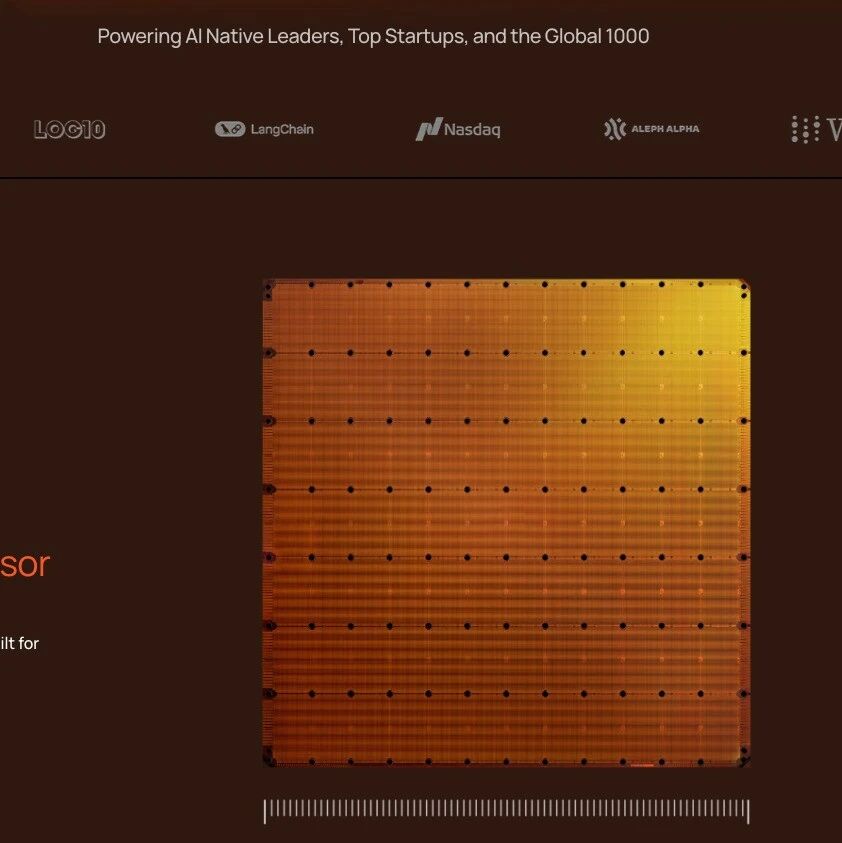
Cerebras Systems

Search documents
英伟达正在憋芯片大招
半导体行业观察· 2026-01-17 02:57
Core Viewpoint - The acquisition of Groq by Nvidia signifies a strategic shift in AI inference technology, moving away from traditional GPU architectures towards more specialized processing units designed for low-precision mathematical operations essential for GenAI and machine learning [1][3]. Group 1: Nvidia and Groq Acquisition - The acquisition of Groq for $20 billion is notable given Groq's previous valuation of $6.9 billion after its last funding round, indicating a significant premium paid by Nvidia [3]. - Groq's Learning Processing Unit (LPU) technology and key engineers were acquired, which Nvidia aims to integrate into its future AI hardware offerings [3][4]. - The deal raises questions about Groq's investors' motivations for selling, especially given Groq's competitive position against Nvidia in the AI inference market [2][3]. Group 2: Market Context and Competition - Nvidia's GPUs dominate both training and inference markets, while competitors like AMD, Google (with TPU), and AWS (with Trainium) are also significant players [2]. - The AI hardware landscape is evolving, with companies like Cerebras and Groq emerging as challengers to Nvidia's dominance, particularly in low-latency, high-throughput AI inference [2][5]. - The investment landscape for AI hardware is substantial, with OpenAI committing around $30 billion for AI hardware capacity, highlighting the competitive pressures in the market [5]. Group 3: Strategic Implications - The acquisition serves both defensive and offensive purposes for Nvidia, as it seeks to prevent Groq's technology from falling into the hands of competitors [4][6]. - There are concerns about potential antitrust issues arising from Nvidia's acquisition strategy, especially if Groq's remaining operations do not continue LPU development [7]. - The structure of the acquisition reflects Nvidia's cautious approach to regulatory scrutiny, opting to retain some equity in Groq to mitigate perceptions of a complete takeover [6]. Group 4: Future Developments - Nvidia may leverage Groq's technology to develop a more powerful inference machine that is not solely reliant on existing GPU architectures [9]. - The integration of technologies from Groq and Enfabrica could signal a broader shift in Nvidia's product roadmap, potentially reshaping the AI hardware landscape [9][8].


OpenAI与Cerebras达成AI算力合作,协议规模或超100亿美元;XSKY发布AI数据方案AIMesh,大幅降低AI推理硬件投入成本丨AIGC日报
创业邦· 2026-01-16 01:55
Group 1 - OpenAI has signed a multi-year agreement with Cerebras Systems for AI computing power, with a scale exceeding $10 billion, aiming for 750 MW capacity to be deployed by 2028 [2] - OpenAI's former research vice president is returning as the CTO of Thinking Machines, following the dismissal of the previous CTO due to unethical behavior [2] - The Ministry of Agriculture and Rural Affairs has approved the establishment of a key laboratory for intelligent harvesting robots in Nanjing, aiming to become a leading base for research and talent development in agricultural robotics [2] Group 2 - XSKY has launched the AIMesh AI data solution, which significantly reduces hardware costs for AI inference, improving sequential read bandwidth by 30% and write bandwidth by over 50% compared to industry standards [2]

OpenAI牵手“英伟达挑战者”,签下超百亿美元芯片大单
Zheng Quan Shi Bao Wang· 2026-01-15 13:20
Core Insights - Cerebras Systems has signed a strategic partnership with OpenAI worth over $10 billion, which will provide up to 750 megawatts of computing power by 2028 for training and running generative AI models [1] - This collaboration is a significant milestone for Cerebras as it prepares for its initial public offering (IPO) [1] Partnership Details - The partnership will diversify Cerebras' customer base, which is currently heavily reliant on a single client, G42, contributing 87% of its revenue in the first half of 2024 [2] - OpenAI's infrastructure will benefit from Cerebras' low-latency inference solutions, enhancing response speed and user interaction for real-time AI technologies [2] - Previous collaborations between Cerebras and OpenAI have laid the groundwork for this large-scale agreement, ensuring compatibility between their technologies [2] Company Background - Founded in 2015, Cerebras focuses on creating specialized computer systems for complex AI deep learning applications, with a team experienced in semiconductor and high-performance computing [4] - Cerebras aims to challenge Nvidia's dominance in the AI computing space by offering a differentiated approach with its wafer-scale chips and full-stack solutions [4] Financial Context - Cerebras filed for an IPO in September 2024, reporting a significant revenue increase to nearly $70 million in Q2 2024, up from approximately $6 million in the same period of 2023, although net losses widened [5] - The company withdrew its IPO application in October 2024, planning to resubmit after updating its financial data and strategic plans [5] - Cerebras secured $1.1 billion in Series G funding in September 2024, raising its post-money valuation to $8.1 billion [5] Market Implications - The partnership with OpenAI highlights the urgent demand for high-performance computing infrastructure among leading AI companies [7] - The deep integration between chip manufacturers and application companies is expected to become a key trend in the industry as AI technology continues to evolve [7]
Nvidia Rival Cerebras Systems To Power OpenAI With Massive 750 Megawatt Computing Power - Advanced Micro Devices (NASDAQ:AMD), NVIDIA (NASDAQ:NVDA)
Benzinga· 2026-01-15 09:28
Group 1 - OpenAI has signed a deal with Cerebras Systems to acquire 750 megawatts of computing power through 2028, enhancing its deployment of gpt-oss open-weight models on Cerebras hardware [1] - The deal is estimated to be worth over $10 billion, which would diversify Cerebras' revenue sources, previously reliant on G42, accounting for 87% of its revenue in the first half of 2024 [2] - Cerebras' CEO, Andrew Feldman, emphasized the strategy of building large customer relationships by starting with one satisfied customer before expanding to others [3] Group 2 - Cerebras had previously postponed its IPO plans despite achieving an $8 billion valuation, with indications that an IPO announcement may occur before next year [4] - Cerebras is reportedly seeking to raise around $1 billion in a funding round, which would value the company at $22 billion pre-investment [5] - OpenAI is actively expanding its AI capabilities, including the acquisition of healthcare technology startup Torch, indicating a commitment to broadening its AI solutions across various sectors [5]

放弃英伟达“乐高模式”:OpenAI豪赌晶圆级架构,百亿美元押注Cerebras单芯片算力革命
Zhi Tong Cai Jing· 2026-01-15 01:09
智通财经获悉,2026年1月14日,美股市场在多重负面因素的共振下经历了剧烈波动,三大股指集体收 跌,纳斯达克指数以约1%的跌幅领跌大盘。作为市场核心驱动力的科技板块成为当日跌势的重灾区, 尤其是半导体行业遭遇了地缘政治与竞争格局改变的双重打击。值得注意的是,OpenAI与AI芯片初创 公司Cerebras Systems达成的一项价值100亿美元、涉及750兆瓦算力供应的重磅交易,在客观上对科技 股的跌势起到了推波助澜的作用。 与此同时,该公司通过运营自有数据中心展示其硬件组件的性能优势,并构建稳定的经常性收入体系。 此次与OpenAI达成的高规格战略合作协议,不仅验证了其技术实力,更使Cerebras有望参与分享当前全 球正在投入人工智能计算新基础设施建设的数百亿美元市场机遇。 Cerebras创始人兼首席执行官安德鲁·费尔德曼强调,AI推理阶段——即模型响应查询的过程——对于技 术进步具有关键意义,而这也正是其产品的核心竞争力所在。 在接受采访时,费尔德曼进一步阐释:"我们选择创新且差异化的架构设计,不仅因为其能实现更快的 响应速度,更在于它能为合作伙伴创造显著价值。此次与OpenAI等头部机构达成的战 ...
放弃英伟达“乐高模式”:OpenAI豪赌晶圆级架构,百亿美元押注Cerebras单芯片算力革命!
Zhi Tong Cai Jing· 2026-01-15 00:44
2026年1月14日,美股市场在多重负面因素的共振下经历了剧烈波动,三大股指集体收跌,纳斯达克指 数以约1%的跌幅领跌大盘。作为市场核心驱动力的科技板块成为当日跌势的重灾区,尤其是半导体行 业遭遇了地缘政治与竞争格局改变的双重打击。值得注意的是,OpenAI与AI芯片初创公司Cerebras Systems达成的一项价值100亿美元、涉及750兆瓦算力供应的重磅交易,在客观上对科技股的跌势起到 了推波助澜的作用。 具体来说,OpenAI与Cerebras达成多年期战略合作,将通过后者提供的硬件获得相当于750兆瓦功耗规 模的算力支持,以加速人工智能基础设施的快速扩建。根据两家公司周三发布的联合声明,OpenAI已 将Cerebras纳入其计算供应商体系,此举旨在实现AI模型运行时更短的响应时间。该基础设施将采取分 阶段建设模式,预计在2028年前完成全部部署,并由Cerebras负责托管运营。尽管具体交易条款尚未披 露,但知情人士透露,此次合作协议的总规模已超过100亿美元。 OpenAI联合创始人兼总裁格雷格.布罗克曼表示:"通过此次合作,ChatGPT将不仅成为能力最强的AI平 台,更将实现速度上的全面领 ...
美股三大指数集体收跌,热门中概股多数下跌,携程跌超17%
Feng Huang Wang· 2026-01-14 23:20
Market Overview - On January 15, US stock indices collectively declined, with the Nasdaq index experiencing the largest drop. Technology stocks weakened as investors shifted funds to defensive sectors, while bank stocks continued to fall after mixed quarterly earnings reports [1] - The financial sector, which had seen significant gains in 2025, has been retreating this week amid concerns over President Trump's proposed credit card interest rate cap, which could squeeze consumer credit space and harm financial industry profits [1] - Major banks like Wells Fargo saw a 4.6% drop in stock price after reporting quarterly profits and revenues below market expectations, while Bank of America and Citigroup also saw declines despite better-than-expected earnings [1][3] Economic Data - In November, the US PPI increased by 3% year-over-year, surpassing the expected 2.7%, while the core PPI also exceeded expectations at 3% year-over-year [2] - The Federal Reserve's Beige Book indicated that economic activity has recently grown in most regions, with stable employment conditions, but inflation pressures remain, supporting the Fed's decision to maintain interest rates in the short term [2] Sector Performance - The Dow Jones fell by 42.36 points (0.09%) to 49,149.63, the Nasdaq dropped by 238.12 points (1.00%) to 23,471.75, and the S&P 500 decreased by 36.75 points (0.53%) to 6,926.99 [3] - Among the 11 sectors in the S&P 500, consumer discretionary fell by 1.75%, technology by 1.45%, while the energy sector rose by 2.26% [3] Stock Performance - Major tech stocks experienced declines, with Google A down 0.04%, Apple down 0.42%, Nvidia down 1.44%, Tesla down 1.79%, Microsoft down 2.4%, and Amazon down 2.45% [4] - Energy stocks rose due to concerns over potential disruptions in Iranian oil supply, with Marathon Oil up 3%, Occidental Petroleum up 2.33%, and ExxonMobil up 2.9% [4] Company News - Google announced the testing of a new AI tool called "Personal Intelligence" within its Gemini application, which integrates information from various apps to provide personalized responses [6] - OpenAI signed a multi-year agreement with Cerebras Systems for over $10 billion in computing power to support its expanding AI infrastructure, aiming to enhance response speeds and unlock new application scenarios [6]
OpenAI与Cerebras达成百亿美元算力合作
Jin Rong Jie· 2026-01-14 21:41
Core Insights - OpenAI has signed a multi-year agreement with Cerebras Systems to acquire computing power equivalent to 750 megawatts to support its rapidly expanding AI infrastructure [1] - The deal is reported to exceed $10 billion, indicating a significant investment in enhancing computational capabilities [1] - OpenAI's co-founder and president stated that the speed improvements will help unlock "next-generation application scenarios" and enable access to AI for the next billion users [1] - Cerebras employs ultra-large-scale chips to process information, taking a different technological path compared to mainstream solutions [1] - The company aims to broaden the application of its technology to challenge market leader Nvidia [1]
芯片制造商Cerebras洽谈新一轮融资 拟募资10亿美元 投后估值达220亿美元
Jin Rong Jie· 2026-01-14 08:35
Cerebras方面对此拒绝置评。 去年,Cerebras曾面临多项可能影响其公开市场融资的问题。公司营收绝大部分依赖中东地区的单一客 户——阿联酋人工智能巨头G42的母公司Group 42 Holding。G42曾委托Cerebras为其建造三台超级计算 机。 来源:环球市场播报 据知情人士透露,人工智能芯片初创企业Cerebras Systems正在洽谈一笔规模约10亿美元的融资,本轮 融资前公司估值达220亿美元。该芯片制造商正筹备于今年启动上市流程。 这一估值较其2025年9月的上一轮私募融资估值实现大幅跃升——彼时Cerebras完成11亿美元融资,估 值为81亿美元,投资方包括富达管理研究公司与Atreides Management。 一位知情人士表示,该初创公司有望在未来数月内挂牌上市。Cerebras原本计划更早推进上市,但在去 年9月宣布搁置这一计划,转而通过私募方式募资。 三位知情人士透露,Cerebras预计将在未来几天官宣一家备受瞩目的新客户,此举有望降低公司对42集 团控股公司的业务依赖度。 此次融资及对应的新估值出炉之前,英伟达已于12月下旬与Cerebras的竞争对手Groq达成 ...
速递|估值飙升170%:AI芯片Cerebras拟以220亿美元估值,融资10亿美元
Z Potentials· 2026-01-14 03:55
Core Viewpoint - Cerebras Systems, an AI chip startup, is negotiating to raise approximately $1 billion, with a pre-funding valuation of $22 billion, and is preparing for an IPO this year [1]. Group 1: Company Valuation and Funding - The company's valuation has significantly increased from its last private valuation of $8.1 billion in September 2025, when it raised $1.1 billion from investors like Fidelity Management and Atreides Management [1]. - Cerebras is expected to announce a new high-profile client soon, which will reduce its reliance on Group 42, its main customer [2]. Group 2: Market Context and Competition - The new funding and valuation come after Nvidia agreed to a $20 billion non-exclusive technology licensing deal with Groq, a competitor of Cerebras, indicating strong market demand for specialized chips that can run AI applications quickly and cost-effectively [2]. - Cerebras, like Groq, develops and sells custom chips for training and running AI models, highlighting ongoing investor interest in startups competing in the specialized chip market for AI [2].