明源云

Search documents
2025智慧物业软件TOP10榜单与行业变革趋势深度解析
Sou Hu Cai Jing· 2025-07-21 11:01
Core Insights - The article emphasizes that smart property management is a key driver for enhancing community governance efficiency and optimizing resident living experiences amid the global digital transformation wave [1] Group 1: Market Trends and Predictions - The global smart property market is expected to expand at a compound annual growth rate (CAGR) of 7.3% from 2025 to 2031, with China's market share continuing to grow [4] - Smart property management is not just a tool but a cornerstone for reconstructing community governance models and defining future lifestyles [4] Group 2: Technology and Innovation - AIoT is driving full-scene intelligence in property management, integrating management tools into community service platforms [4] - The article highlights the importance of green transformation, energy conservation, and sustainable development in property management [4] Group 3: Software Solutions and Case Studies - Mingyuan Cloud Property Management System is noted for its comprehensive coverage capabilities [4] - Tencent Cloud Smart Property is recognized as a leader in ecological integration [4] - You Ni Smart Home Property System is highlighted as an innovator in three-end collaboration [4] - Property通 Management System is identified as an expert in group data control [4] Group 4: Key Features and Benefits - New Window Property Management System offers integrated management across finance, taxation, and banking, enhancing operational efficiency [5] - AI-driven features such as intelligent order dispatch improve response times by 65%, while automated payment reminders increase payment rates to over 82% [5] - The system supports various scenarios including residential complexes, commercial complexes, and industrial parks [5] Group 5: Strategic Opportunities - Property companies are encouraged to prioritize technology investment in AIoT and blockchain to build technological barriers [5] - Collaborating with tech giants and vertical service providers is essential for building community ecosystems [5] - Transitioning from "managing properties" to "operating communities" is crucial for unlocking commercial value from data and scenarios [5]


32家港股公司回购 腾讯控股回购5.00亿港元



Zheng Quan Shi Bao Wang· 2025-07-03 01:22
Summary of Key Points Group 1: Core Insights - On July 2, 32 Hong Kong-listed companies conducted share buybacks, totaling 25.43 million shares and an aggregate amount of HKD 762 million [1] - Tencent Holdings led the buybacks with 996,000 shares repurchased for HKD 500 million, marking a year-to-date total of HKD 37.04 billion [1] - AIA Group and Kang Hsin Pharmaceutical also made significant buybacks, with AIA repurchasing 3 million shares for HKD 214 million and Kang Hsin repurchasing 840,000 shares for HKD 9.46 million [1] Group 2: Buyback Details - The highest buyback amount on July 2 was from Tencent Holdings at HKD 500 million, followed by AIA Group at HKD 214 million [1] - In terms of share volume, the most shares were repurchased by Founder Holdings with 4.92 million shares, followed by Ying Group and China Electric Power at 4 million and 3.2 million shares, respectively [1] - Year-to-date, Tencent Holdings has conducted multiple buybacks totaling HKD 37.04 billion, indicating a strong commitment to returning capital to shareholders [1]
2025上半年不动产行业AI应用爆发,明源云成关键推手
Zhong Guo Chan Ye Jing Ji Xin Xi Wang· 2025-07-02 04:20
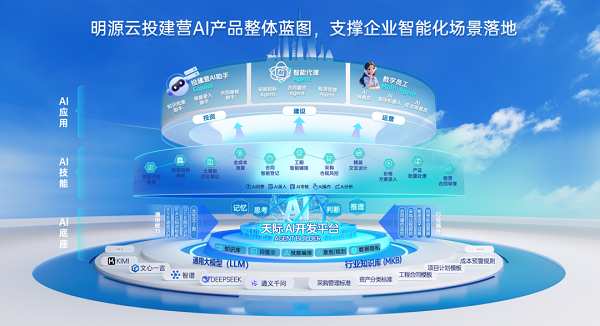
Group 1: AI Integration in Real Estate - Mingyuan Cloud has integrated the DeepSeek large model, achieving over 2,500 project applications across real estate, home furnishing, and automotive industries, with a daily inference usage exceeding 120,000 [2] - The "AI Capability Three-Step" strategy proposed by Mingyuan Cloud allows real estate companies to enhance efficiency and reduce costs throughout investment management, project construction, and rental/sales operations [2] - Mingyuan Cloud has launched a series of AI products for marketing, including AI Creative Workshop, AI Live Broadcast, AI Salesperson, and AI Traffic Flow, transforming every aspect of marketing [2] Group 2: Partnerships and Collaborations - LianTou Real Estate and Mingyuan Cloud have integrated AI into real estate marketing, creating a digital marketing system that covers the entire customer lifecycle [4] - China Resources Land and Mingyuan Cloud have developed an integrated media matrix for customer acquisition across platforms like Douyin, Xiaohongshu, and Video Number [4] - Poly and Run have upgraded their direct sales capabilities through AI, achieving a 30-fold increase in exposure and a 25% increase in lead generation while reducing project costs by nearly 300,000 [5] Group 3: Digital Transformation in Project Management - Guangzhou Industrial Investment Group and Mingyuan Cloud aim to create a digital benchmark in engineering construction, focusing on quality, safety, planning, cost, design, and documentation [6] - Guiyang Investment Control and Mingyuan Cloud are developing a project management platform to enhance management efficiency and precision [6] - Suqian City Investment and Mingyuan Cloud are leveraging digital transformation for efficient management of state-owned assets, providing comprehensive oversight of asset operations [6] Group 4: International Expansion and Events - Mingyuan Cloud's overseas company MytePro has launched its Tokyo office, marking a significant step in its global business expansion [12] - MytePro hosted an event in Hong Kong focusing on AI's role in driving digital transformation in the real estate and construction sectors, attracting various industry stakeholders [12] - Mingyuan Cloud has organized numerous forums and events across China, engaging over 600 leaders from state-owned enterprises to discuss key development topics in the real estate sector [11]
AI4E论坛在杭召开:凝聚行业发展新共识 以AI+工业工程引领未来
Zhong Zheng Wang· 2025-06-29 10:51
Core Insights - The "AI for Engineering (AI4E)" forum held in Hangzhou attracted around 300 professionals from AI and engineering sectors, emphasizing the importance of AI in industrial software and its transformative potential in enhancing manufacturing efficiency and competitiveness [1][2] Industry Developments - The forum highlighted the rapid advancements in AI technologies, including large language models and reinforcement learning, and their application in various engineering fields such as shipbuilding, aviation, and electronics [2] - The establishment of the "Artificial Intelligence Industrial Software Alliance" aims to leverage AI models to drive core technology development and application in industrial software, fostering innovation and collaboration across academia and industry [2][3] Technological Innovations - AI CAD is progressively replacing traditional CAD software, significantly improving design efficiency and quality, as demonstrated by a case where a design task was reduced from 35 days with 6 people to just 1 week with 2 people [3] - AI-driven CAE methods are enhancing simulation accuracy and efficiency, enabling engineers to identify optimal solutions in complex design scenarios [3] - The introduction of AI in EDA, particularly in lithography calculations, is providing new opportunities for the semiconductor industry, improving design efficiency and precision [3] Digital Transformation - AI is facilitating the digital transformation of manufacturing, with practices such as automated production scheduling and optimization through AI algorithms, leading to enhanced productivity and cost reduction [4] - In the real estate sector, AI applications are automating and intelligentizing business processes, with significant economic and social benefits anticipated from these advancements [4] Project Initiatives - The "Technology Empowerment, Co-creating the Future" AI project roadshow featured 11 projects, showcasing the supportive business environment and policies in Qiantang New District to foster AI enterprise growth [5]
为建设“好房子”赋能,明源云AI产品打造新增长极
Zheng Quan Shi Bao Wang· 2025-06-26 07:46
Core Viewpoint - The real estate industry is transitioning towards a focus on quality and sustainability, driven by the "good house" concept, with government support in standards, technology, and projects [1][2]. Group 1: Industry Transformation - The "good house" initiative aims to create safe, comfortable, green, and smart housing, marking a new development path for the real estate sector [2]. - The implementation of the National Standard for Residential Projects sets baseline requirements for the construction of "good houses" [2]. - The demand for "good houses" is expected to activate new growth momentum in the real estate industry, supported by policies in planning, land, finance, and other areas [2]. Group 2: Marketing and Sales Challenges - The transition to "good houses" necessitates improved marketing strategies to effectively communicate unique features to potential buyers [3]. - There is a need for enhanced marketing capabilities to meet the higher demands for design, construction, and operation of "good houses" [3]. - AI technology can assist in capturing operational data and providing maintenance suggestions, improving overall efficiency [3]. Group 3: AI Integration in Real Estate - Mingyuan Cloud is leveraging AI technology to enhance real estate services, with plans to develop specialized AI models based on extensive industry data [4]. - The company has signed contracts worth approximately 28 million RMB for its AI products, covering nearly 1,000 real estate projects [4]. - Mingyuan Cloud focuses on integrating industry data with AI capabilities to improve application efficiency and reduce development redundancy [5]. Group 4: Future Growth and Market Expansion - The company anticipates rapid growth in its AI product offerings, with projected contract values potentially exceeding 100 million RMB by 2026 [7]. - The goal is to increase market penetration of AI products and expand market share through differentiated competitive strategies [7]. - Mingyuan Cloud aims to cover over 10,000 real estate projects with its AI solutions in the future [7].
售楼处“偷”了我的“脸”?
虎嗅APP· 2025-06-23 23:45
Core Viewpoint - The article discusses the pervasive use of facial recognition technology in real estate sales offices in China, highlighting privacy concerns and the lack of compliance with new regulations aimed at protecting personal data [3][4]. Group 1: Surveillance in Real Estate Sales Offices - Real estate sales offices are equipped with numerous cameras, often without clear signage indicating their presence or purpose [5][9]. - Visitors often feel the need to disguise themselves to avoid having their facial data collected and recorded, which can affect their ability to choose different agents [6][12]. - The cameras are used to track visitors and determine if they are first-time clients, with facial data typically stored for 1 to 3 months [6][12]. Group 2: Compliance Issues - The new regulations require clear signage and consent for facial recognition data collection, which many sales offices fail to provide [8][14]. - There are reports of companies collecting facial data without proper consent, leading to administrative penalties [20][21]. - Experts argue that the current practices violate the principle of necessity, as the purpose of data collection is not clearly communicated to clients [14][21]. Group 3: Industry Practices and Implications - Real estate developers use facial recognition to differentiate between direct clients and those referred by agents, impacting commission structures [13][22]. - The technology is seen as a "secret weapon" to control commission costs and ensure that sales staff benefit from direct sales [13][22]. - There are alternative methods suggested for verifying client identity that do not rely on facial recognition, such as using access cards or QR codes [23].

售楼处“偷”了我的“脸”?
Hu Xiu· 2025-06-23 10:54
Core Viewpoint - The implementation of facial recognition technology in real estate sales offices raises significant privacy concerns, as developers collect and utilize visitors' facial data without proper consent, leading to potential violations of new regulations aimed at protecting personal information [2][17][26]. Group 1: Privacy Concerns - Many real estate sales offices are equipped with numerous cameras that capture visitors' facial information, often without clear signage indicating surveillance [5][7][8]. - Visitors often feel compelled to disguise themselves to avoid being recorded, as their facial data is used to determine commission eligibility for real estate agents [3][5][12]. - The lack of transparency regarding the purpose of data collection and the absence of explicit consent from visitors violate the principles outlined in the newly implemented regulations [10][17][25]. Group 2: Regulatory Compliance - The new regulations, effective June 1, 2025, require clear signage and justification for the use of facial recognition technology in public spaces, which many sales offices fail to comply with [2][7][17]. - Instances of companies being penalized for unauthorized data collection highlight the ongoing regulatory scrutiny in this area, with fines imposed for non-compliance [23][24]. Group 3: Industry Practices - Real estate developers utilize facial recognition systems to differentiate between direct clients and those referred by agents, impacting commission structures and creating a competitive environment among agents [15][26]. - The technology is marketed as a solution to industry challenges, but its implementation often lacks ethical considerations regarding consumer rights and privacy [18][20][26]. - Alternative methods for client identification, such as access cards or QR codes, could reduce reliance on facial recognition while still meeting business needs [27].
35家港股公司回购 斥资9.38亿港元


Zheng Quan Shi Bao Wang· 2025-06-19 01:44
Summary of Key Points Core Viewpoint - On June 18, 35 Hong Kong-listed companies conducted share buybacks, totaling 26.35 million shares and an aggregate amount of HKD 938 million [1][2]. Group 1: Buyback Details - Tencent Holdings repurchased 990,000 shares for HKD 501 million, with a highest price of HKD 510.00 and a lowest price of HKD 503.50, bringing its total buyback amount for the year to HKD 32.54 billion [1][2]. - AIA Group repurchased 5.21 million shares for HKD 354 million, with a highest price of HKD 68.65 and a lowest price of HKD 67.70, totaling HKD 13.64 billion in buybacks for the year [1][2]. - Techtronic Industries repurchased 250,000 shares for HKD 21.77 million, with a highest price of HKD 87.60 and a lowest price of HKD 86.60, totaling HKD 99.37 million in buybacks for the year [1][2]. Group 2: Buyback Rankings - The highest buyback amount on June 18 was from Tencent Holdings at HKD 501 million, followed by AIA Group at HKD 354 million [1][2]. - In terms of share quantity, the most shares repurchased on June 18 were by Pacific Basin Shipping at 6 million shares, followed by AIA Group and COSCO Shipping at 5.21 million and 5 million shares, respectively [1][2].
产业互联网助力企业数字化转型
Zhong Guo Zheng Quan Bao· 2025-06-18 20:58
Core Insights - The development of AI is creating new opportunities across various industries, with large models driving the digital ecosystem forward [1] - The industrial internet is becoming a key driver for digital transformation in many sectors, enhancing efficiency and intelligence in products and services [1] Group 1: Company Developments - Meiyun Zhishu, an industrial software company incubated by Midea Group, leverages AI technologies to provide digital consulting services and industrial software solutions across verticals like automotive and electronics [2] - Xuanwu Cloud, a CRM service provider, is enhancing its AI capabilities to create impactful products, such as its Xuantong AI, which improves marketing efficiency for consumer goods companies [3] - Mingyuan Cloud, a digital solution provider for the real estate ecosystem, is accelerating its "AI+SaaS" product innovation to drive business growth and enhance customer engagement [3] Group 2: Industry Trends - The integration of AI in industrial internet is significantly supporting digital transformation and improving production efficiency across various sectors [4] - Companies like Meiyun Zhishu are sharing their digital experiences with other manufacturers, helping them implement AI solutions to enhance operational efficiency [4] - The collaboration between industry and academia is being emphasized, with companies like Gechuang Dongzhi partnering with universities to foster AI research and application [6][7] Group 3: Talent Development - There is a notable talent shortage in the AI and digitalization sectors, prompting companies to collaborate with educational institutions to bridge the gap [6] - Meiyun Zhishu is actively working with nearly 200 universities to create a comprehensive talent innovation platform that integrates education and industry needs [7]

新财富·港股特辑|明源云:擎领不动产数智革新,共筑价值共生新未来
新财富· 2025-06-12 07:33
Core Viewpoint - Hong Kong serves as a global financial hub, providing a bridge for mainland enterprises to connect with global capital, showcasing resilience amid challenges like Federal Reserve interest rate hikes and geopolitical fluctuations [1] Group 1: Company Overview - Mingyuan Cloud (0909.HK) is a leading digital solution provider in the real estate ecosystem in China, focusing on digital technology to assist industry upgrades [1][3] - The company offers cloud services and localized software, including customer relationship management, project construction, asset management, and the Tianji PaaS platform, catering to the digital needs of the real estate sector [3] Group 2: Business Performance - In 2024, the asset management and operation product line achieved a 14.2% year-on-year growth, indicating strong potential in the existing real estate operation market [3] - The company has significantly increased its R&D investment in AI technology, launching innovative products like "AI Creative Factory" and "AI Salesperson" to enhance operational efficiency [5] Group 3: Innovation and Market Expansion - The "AI Creative Factory" enables rapid generation of high-quality marketing videos, transforming traditional content production methods [5][6] - The "AI Salesperson" utilizes deep learning to identify high-potential leads and engage them proactively, improving conversion rates and reducing customer acquisition costs [5][6] - Mingyuan Cloud has accelerated its international expansion since 2024, establishing teams in key markets like Hong Kong, Singapore, Malaysia, Indonesia, and Japan, with a cumulative contract value nearing ten million RMB [8] Group 4: Investor Relations - The investor relations (IR) team plays a crucial role in connecting the company with the capital market, effectively communicating corporate value and building investor trust [10] - In 2024, the IR team conducted over 100 investor communication activities, enhancing market understanding of the company's AI commercialization progress [12][14] - The company maintains high ESG ratings, reflecting its commitment to sustainable development and social responsibility [15][16] Group 5: Shareholder Returns - Mingyuan Cloud actively engages in share buybacks and special dividends, repurchasing 34.46 million shares for approximately 60.67 million RMB and distributing special dividends totaling about 180 million RMB in 2024 [18] - The company aims to enhance operational efficiency and profitability while exploring sustainable investor return mechanisms [18]