比亚迪

Search documents
阿里巴巴被传列入美国国防部制裁名单 美股跌超3%
Xin Lang Cai Jing· 2026-02-13 15:08
受此消息影响,阿里巴巴美股下跌2%,报155.55美元;港股当日亦跌2%,收报155.4港元。 来源:观点地产网 观点网讯:2月13日,据媒体报道,美国特朗普政府最快将于当地时间2月13日将阿里巴巴等多家中国企 业列入"1260H清单"。 最新消息显示,除阿里巴巴外,百度、比亚迪、华虹半导体等共8家中国企业亦在此次拟列入名单之 列。 免责声明:本文内容与数据由观点根据公开信息整理,不构成投资建议,使用前请核实。 根据公开资料整理,美国国防部的1260H清单虽未直接实施制裁,但会向美国政府机构及供应商传递对 相关企业的风险提示。 此前腾讯、宁德时代已被列入该名单。 ...
X @BSCN


BSCN· 2026-02-13 14:06
🚨JUST IN: PENTAGON BLACKLISTS ALIBABA AND MAJOR CHINESE COMPANIES SUPPORTING MILITARYThe U.S. Department of Defense has added six major Chinese companies, including tech and EV giants, to its military-linked blacklist.Designated firms face heightened scrutiny, U.S. investment restrictions, and potential federal contracting bans.The Chinese firms included are:Alibaba ( $BABA)BYD ( $BYDDY)Baidu ( $BIDU)COSCO (https://t.co/AZeXGlOBWu)Huawei (private)NIO Inc ( $NIO) ...
打败你(恒生科技)的不是天真,是字节
Xin Lang Cai Jing· 2026-02-13 13:02
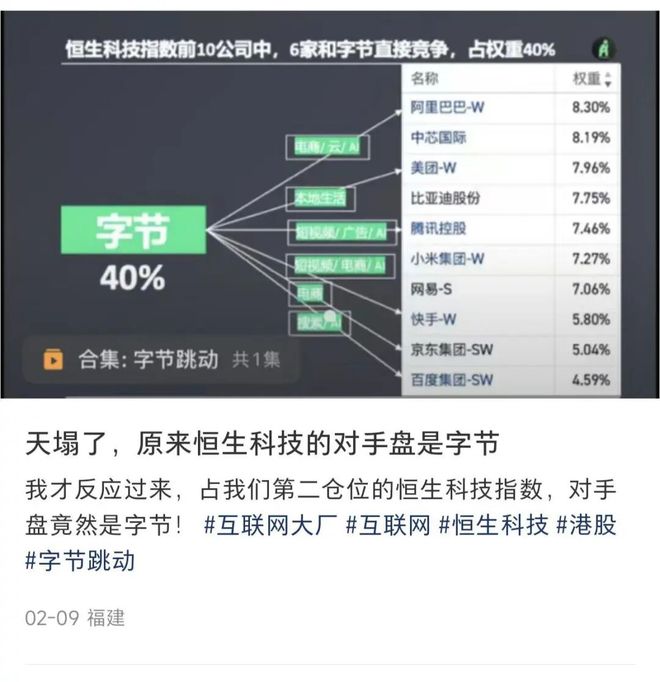
Core Viewpoint - The article discusses the dominance of ByteDance in the tech industry, particularly in the context of the Hang Seng Tech Index, highlighting how its aggressive strategies and innovative approaches have outpaced traditional competitors like Tencent and Alibaba [1][19][22]. Group 1: Competitive Landscape - ByteDance is described as a formidable competitor that has effectively created a "red ocean" in various sectors, challenging established players without being a publicly listed company [1][19]. - Among the top 10 companies in the Hang Seng Tech Index, 6 are in direct competition with ByteDance, collectively holding a 40% weight in the index [2]. - The article emphasizes that ByteDance's approach to competition is not merely about financial strength but about its relentless drive and adaptability in the market [1][19]. Group 2: Market Disruption - ByteDance's entry into e-commerce through Douyin (TikTok) has significantly impacted Alibaba, with Douyin's GMV projected to approach 4 trillion yuan by 2025, capturing a substantial market share [6][9]. - The article argues that ByteDance's innovative model of combining content with e-commerce is more effective than Alibaba's traditional search-based approach, leading to a shift in consumer behavior [6][9]. - The dominance of ByteDance in various sectors, including short videos, news, and AI, is highlighted, indicating its broad market influence [7][9]. Group 3: Management and Leadership - The core competitive advantage of ByteDance is attributed to its founder, Zhang Yiming, whose unique management style and continuous learning mindset set the company apart from its competitors [11][12]. - Zhang's approach to management emphasizes equality, flexibility, and a focus on talent density, allowing for a more dynamic and innovative corporate culture [12][13]. - The article suggests that ByteDance's ability to maintain efficiency and cross multiple sectors is a testament to its superior management capabilities compared to other tech giants [13][19]. Group 4: Industry Implications - The article posits that the ongoing competition in the tech industry is not just between companies but also a challenge for companies to adapt and innovate continuously [22][23]. - It warns that companies in the Hang Seng Tech Index must either learn from ByteDance's strategies or risk being outpaced and potentially eliminated from the market [22][23]. - The narrative concludes that the future of the tech industry will be shaped by companies that embrace change and innovation, with ByteDance leading the charge [22][23].


华金汽车首次覆盖浙江华远:紧固件和座椅锁驱动增长,深耕技术持续开拓新品
Quan Jing Wang· 2026-02-13 10:46
Core Viewpoint - Zhejiang Huayuan is a high-tech enterprise in the field of customized automotive connection components, showing strong growth potential through steady growth in its core businesses of special fasteners and seat locks, along with advancements in new energy and intelligent technology [1] Group 1: Business Overview - The company focuses on the research, production, and sales of customized automotive system connection components, with core products including special fasteners and seat locks, applicable in key areas such as vehicle body chassis, power systems, safety systems, and intelligent electronic systems [1] - Zhejiang Huayuan has established a comprehensive supply and sales service network for automotive fasteners and seat locks, with city service centers in Guangzhou, Shanghai, and Chongqing, an office in Singapore, and a dedicated delivery warehouse in Bulgaria [1] Group 2: Supply Chain Integration - The company is deeply integrated into the automotive parts supply chain, serving as a first-tier supplier to major automakers such as Volkswagen China, GAC Honda, Changan Mazda, Great Wall Motors, and Changan Ford [2] - In the lock business, products are supplied to brands like Lincoln, Cadillac, GAC Honda, SAIC General, Changan Ford, and Dongfeng Nissan through first-tier suppliers [2] - Zhejiang Huayuan is expanding its product boundaries into the new energy and intelligent automotive sectors, entering the supply chains of major domestic new energy vehicle manufacturers like NIO, Xpeng, GAC Aion, BYD, and Li Auto [2] Group 3: R&D and Product Development - The company has accumulated extensive R&D experience, with over 10 series of locks and more than 100 varieties currently in production, along with various technical reserves under development [3] - Products exceed industry standards in key performance indicators such as static strength, operational durability, lateral stiffness, and locking force, meeting the stringent requirements of leading automakers [3] - The company possesses high-precision processing capabilities of 0.01mm, utilizing combined processes like cold heading and machining for efficient production of screw and gear products [3] Group 4: Financial Performance - In the first three quarters of 2025, the company achieved total revenue of 541 million yuan, a year-on-year increase of 18.64%, and a net profit attributable to shareholders of 79 million yuan, up 29.30% year-on-year [4] - The shipment volume of aluminum alloy precision connection components for various sensors reached 10.86 million pieces in the first half of 2025, a year-on-year increase of 445% [4] - The company has completed investment in production lines for screw products and is progressing towards mass production, with new electric lock products already in mass production for brands like Xpeng and Dongfeng [4]
锚定8.1亿美元外资目标,西安明确2026“投资任务书”
2 1 Shi Ji Jing Ji Bao Dao· 2026-02-13 10:17
Core Insights - Xi'an's economy in 2025 shows "asymmetric" characteristics with a GDP exceeding 1.3 trillion yuan, returning to the top 20 cities in China, while fixed asset investment declines by 15.3% [1] - The city has announced investment attraction plans and major project layouts, which have garnered market attention [1] Investment and Economic Performance - In 2025, Xi'an's actual use of domestic capital reached 141 billion yuan, a year-on-year increase of 7.5%; actual foreign investment was 816 million USD, up 11.1%, outpacing the provincial growth rate of 4.7% [1] - The quality of foreign investment continues to improve, with foreign and Hong Kong, Macao, and Taiwan investments totaling 24.28 billion yuan, a growth of 72.1% [1] - Major multinational companies such as Samsung, Micron, and Pepsi are increasing their investments in Xi'an [1] Key Projects and Initiatives - Xi'an has developed a targeted investment guide focusing on key industrial chains, successfully attracting 105 key projects, including significant projects from BYD and China Eastern Airlines [2] - The city is revitalizing state-owned industrial platforms, with 110 state-owned industrial parks being optimized, and the issuance of public REITs and ABS projects [2] - In 2025, 103 state-owned industrial parks achieved over 5 billion yuan in revenue, with an average turnover rate of 77.66%, an increase of 13.66 percentage points from 2024 [2] Strategic Planning for Future Growth - Xi'an aims to enhance its investment attraction strategy by revising positive and negative lists to guide compliant investment practices [3] - The city plans to attract over 110 industrial chain projects and more than 510 projects with over 100 million yuan in investment by 2026 [3] - The target for actual foreign investment in 2026 is set at 816 million USD, maintaining growth at the national average level [4]
一区超万亿、两区超6千亿 这三区集中深圳近6成GDP
2 1 Shi Ji Jing Ji Bao Dao· 2026-02-13 09:33
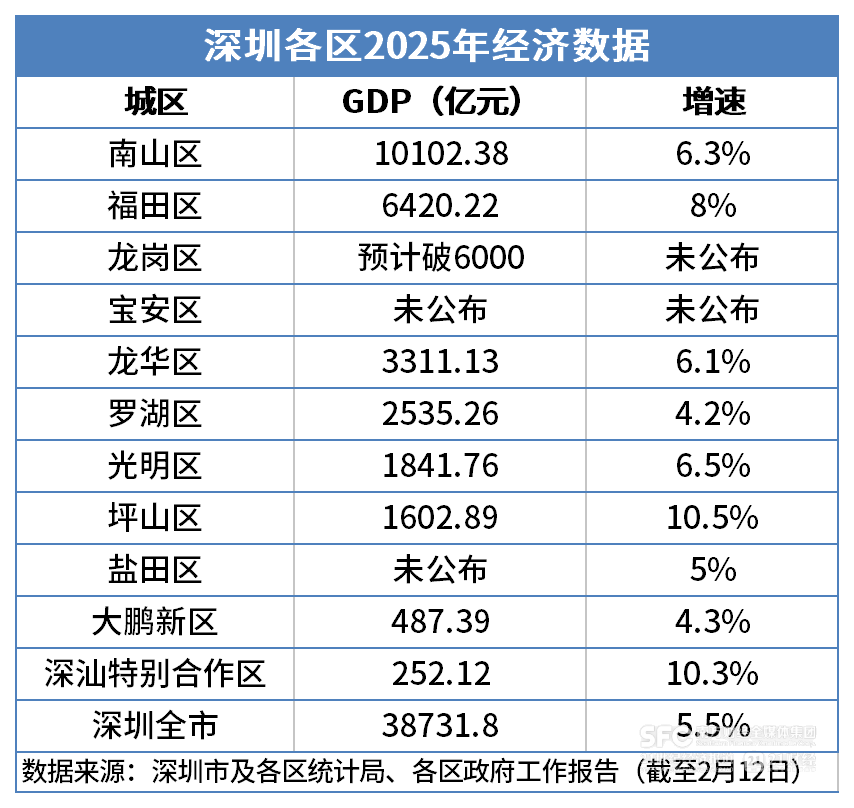
Core Insights - The article highlights the economic growth of various cities in China, particularly focusing on Shenzhen, which has seen significant GDP increases and the emergence of new "trillion-yuan cities" [1][3]. Economic Growth and City Rankings - The number of cities with a GDP exceeding 1 trillion yuan is set to increase from 27 in 2024 to 29 in 2025, with Wenzhou and Dalian making the list [1]. - Beijing has joined the ranks of "5 trillion cities," while Shenzhen leads the four first-tier cities with a growth rate of 5.5%, aiming for a GDP exceeding 5 trillion yuan by 2025 [1]. District Performance in Shenzhen - Nanshan District has achieved a GDP of 10,102.38 billion yuan, becoming the first district in China to surpass the trillion-yuan mark [3][5]. - Futian and Longgang districts are also significant, with Futian's GDP reaching 6,420.22 billion yuan and Longgang expected to exceed 6,000 billion yuan [2][9]. - Nanshan contributes over 25% of Shenzhen's total economic output despite its small area of 185 square kilometers [3]. GDP Growth Rates - Among the districts, Pingshan (10.5%) and Shenshan (10.3%) have shown remarkable growth rates, focusing on high-value industries such as automotive and pharmaceuticals [10][11]. - The overall GDP of Shenzhen is projected to reach 38,731.8 billion yuan by 2025, with several districts outperforming the city average [2][10]. Sectoral Contributions - Nanshan is home to over 200 listed companies, contributing significantly to Shenzhen's economy, with a total market value expected to exceed 65 trillion yuan by 2025 [5][6]. - Futian's modern service sector is projected to grow, with a value of 4,754.98 billion yuan, accounting for 82.2% of its tertiary industry [6][7]. Industrial Focus and Innovation - Pingshan is concentrating on developing a "6+3" industrial cluster, focusing on smart connected vehicles, semiconductors, and biomedicine, with strategic emerging industries expected to account for 88% of its industrial output [11][12]. - The Shenshan Special Cooperation Zone is also leveraging the presence of BYD to enhance its automotive industry, with multiple projects set to launch by 2025 [12][13].
【快讯】每日快讯(2026年2月13日)
乘联分会· 2026-02-13 08:47
Domestic News - The State Administration for Market Regulation released the "Compliance Guidelines for Pricing Behavior in the Automotive Industry," highlighting legal risks associated with misleading pricing practices [5] - The Ministry of Industry and Information Technology is soliciting public opinions on five mandatory national standards, including "Safety Requirements for Autonomous Driving Systems in Intelligent Connected Vehicles" [6] - The Ministry of Commerce announced that consumers purchasing new cars during the 9-day Spring Festival holiday can apply for vehicle trade-in subsidies [7] - Sichuan Province will provide subsidies up to 15,000 yuan for consumers who replace their vehicles with new energy or low-emission cars [8] - Shenzhen is launching a pilot program for "Vehicle-Road-Cloud Integration" in intelligent connected vehicles [9] - Xiaomi's charging network has over 1.7 million charging stations, marking a 66.7% year-on-year increase [10] - GAC Group has surpassed 2,000 self-operated charging stations, covering 211 cities nationwide [11] - Tesla has deepened localization in China by launching WeChat in-car features for its Model 3 and Model Y [12][13] International News - Canada plans to add 8,000 electric vehicle charging stations, investing over 84.4 million CAD to enhance its existing network of over 30,000 stations [14] - Tata Motors and Stellantis signed a memorandum of understanding to explore further collaboration in manufacturing and supply chain in India and overseas [15] - Ford plans to launch five new models priced under $40,000 in the U.S. by 2030, starting with an electric four-door pickup [16] - Toyota will introduce its first electric vehicle manufactured in the U.S. by the end of this year [17] Commercial Vehicles - FAW Jiefang's first product from its Indonesian KD factory has successfully rolled off the assembly line, marking a significant step in local manufacturing capabilities [18] - Beijing's 2026 Comprehensive Transportation Governance Action Plan aims to promote low-carbon transportation and increase the coverage of charging facilities for electric vehicles [19] - Qingling has signed a KD project agreement with local manufacturers in Africa, planning an initial production capacity of 20,000 units [20] - BYD is upgrading its Shark 6 pickup for the Australian market with a 2.0T plug-in hybrid system to enhance towing capacity [21]




China's Great Wall Motor restarts its European grand tour with hybrids, gas-powered cars
Reuters· 2026-02-13 08:45
Core Viewpoint - Great Wall Motor (GWM) is re-entering the European market with a focus on hybrids and combustion-engine vehicles, aiming to double its overseas sales to 1 million vehicles by 2030, despite previous setbacks in the region [1]. Group 1: Market Strategy - GWM plans to establish a European factory with a production capacity of 300,000 cars per year by 2030, necessitating a nearly hundredfold increase in sales [1]. - The company aims to appeal to European markets by introducing a range of vehicles, including the Ora 5 electric vehicle and models from its Haval SUV brand, while also considering sedans and station wagons [1]. - GWM is focusing on enhancing resale values, which are crucial for European consumers, and is actively recruiting new dealers in the region [1]. Group 2: Competitive Landscape - The European market has evolved since GWM's initial entry in 2021, with other Chinese brands like BYD and Chery gaining traction, while European automakers are launching more affordable models [1]. - GWM's sales in Europe fell by 25.4% in 2024 and nearly 30% in 2025, totaling just 3,500 cars sold [1]. - The company faces a challenging environment as European brands have become more competitive, making it harder for GWM to regain market share [1]. Group 3: Sales Performance - GWM's total vehicle sales increased by 7.3% year-on-year to 1.32 million vehicles, with overseas sales rising by 11.7% to 506,066 vehicles, driven by growth in markets like Australia and Latin America [1]. - The U.S. market remains inaccessible for Chinese automakers, and limited access in India and Japan poses challenges for GWM in achieving its 2030 sales target without a strong presence in Europe [1]. - Analysts suggest that GWM's target of 1 million vehicles is pragmatic, provided the company maintains a consistent approach in the European market [1].

2026车企新车规划盘点 这些新车值得关注
Zhong Guo Zhi Liang Xin Wen Wang· 2026-02-13 06:54
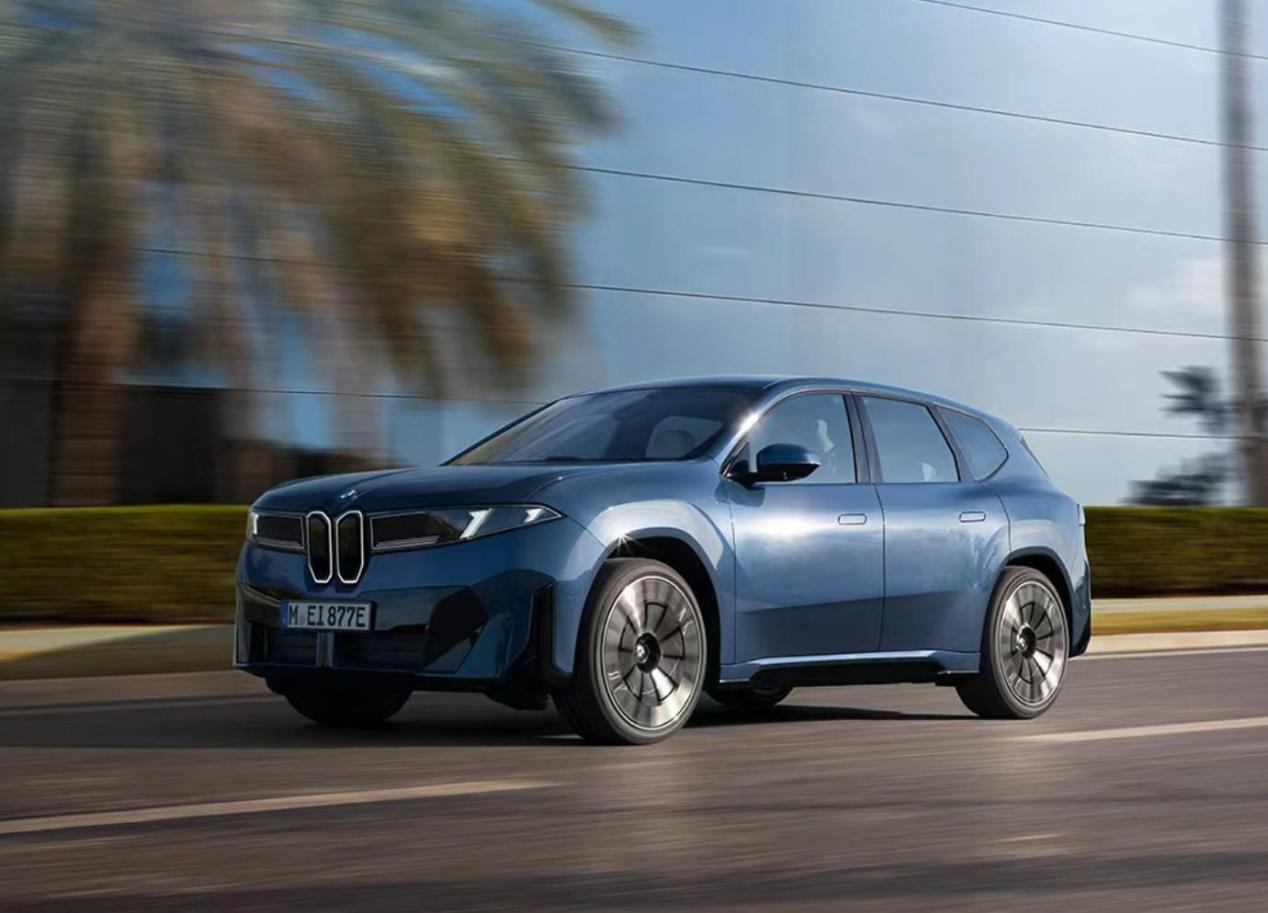
Industry Overview - The domestic automotive industry is entering a new phase focused on quality and efficiency, moving away from price competition to technology innovation and product upgrades to attract consumers [1] - In 2025, domestic passenger car production and sales are expected to reach new highs, with various automakers announcing new vehicle plans across different segments [1] BMW Group - BMW Group plans to launch approximately 20 new models across its three brands by 2026, including the locally produced BMW iX3 long-wheelbase version [2] - The new models will incorporate advanced technologies such as BMW's new generation electric drive technology and AI integration [2][4] Mercedes-Benz - Mercedes-Benz will introduce over 15 new and updated products in 2026, adhering to a strategy of "oil-electric homogeneity" and "oil-electric intelligence" [5] - The lineup will include new models like the long-wheelbase pure electric GLC SUV and the next-generation S-Class sedan [5][7] FAW-Volkswagen - FAW-Volkswagen plans to launch up to 13 new models in 2026, covering fuel, hybrid, and pure electric vehicles [9] - New models will include the all-new Sagitar S, Tayron S, and several Audi models, with a focus on advanced intelligent cockpit and driving assistance systems [9] SAIC Volkswagen - SAIC Volkswagen aims to release at least 7 new energy vehicles in 2026, emphasizing a strategy of "oil-electric co-progression" [11] - The ID.ERA 9X will be the first model in the new ID.ERA series, marking a significant step in the brand's transition to new energy [11] BYD - BYD plans to launch multiple new models across its various brands in 2026, including flagship models in the Dynasty and Ocean series [13] - The company will hold 12 product launch events throughout the year, covering high-end SUVs, performance supercars, and sedans [13] Geely - Geely is expected to introduce over 10 new energy models in 2026, covering various segments such as sedans, SUVs, and MPVs [15] - The Galaxy series will see the addition of new mid-to-large sedans and SUVs, while the Zeekr brand will focus on high-end models [15] Leap Motor - Leap Motor plans to launch 4 new models targeting the mainstream and high-end markets, including a small pure electric SUV and a flagship MPV [17] NIO - NIO will introduce several new models across its three brands, including the flagship ES9 SUV and the L80, a "super five-seat SUV" [18] XPeng Motors - XPeng Motors will launch 7 new "dual-energy" models in 2026, including the new AI luxury SUV [20] - The company emphasizes the integration of self-developed technologies in its new models [20] Hongmeng Zhixing - Hongmeng Zhixing plans to launch 12 new models in 2026, covering a wide price range from family cars to ultra-luxury vehicles [22] - The lineup will include new SUVs and MPVs, with a focus on differentiating market segments [22]

规则在变,赢家重排:解析2025储能产业十大关键节点
中关村储能产业技术联盟· 2026-02-13 05:34
Group 1 - Inner Mongolia has surpassed California to become the world's largest regional energy storage market by 2025, driven by strong demand from large-scale wind and solar projects, indicating China's competitive advantage has expanded from manufacturing to large-scale project delivery and grid integration capabilities [4][6] - The energy storage sector is transitioning to a fully market-oriented era, with the National Development and Reform Commission and the National Energy Administration implementing new market rules that will shift energy storage operations from fixed arbitrage to algorithm-driven trading, enhancing revenue opportunities [6][7] - The release of the first national policy on virtual power plants marks a new phase of market-oriented development, with clear targets for capacity growth, indicating that user-side energy storage will increasingly participate in diversified trading for additional revenue [7][8] Group 2 - Chinese companies are accelerating overseas capacity layout to navigate stringent trade barriers in Europe and the US, shifting from merely exporting products to exporting capabilities, which enhances their global supply chain influence [10][11] - The mainstream energy storage cell specifications are evolving from 300Ah+ to 500Ah and 600Ah levels, leading to a surge in demand for large-capacity cells while smaller cell production is declining, indicating a shift in market competition towards system longevity and safety [11][12] - Grid-forming energy storage is becoming a standard requirement for large-scale renewable energy bases, with specific performance criteria set for stability, indicating a transition of energy storage from auxiliary equipment to critical stability components [13][14] Group 3 - AI technology is becoming a core driver for enhancing the value of energy storage assets, with applications in safety, trading, and operational efficiency, marking a shift towards a "software-defined" era in the industry [14][15] - The price of lithium carbonate has rebounded significantly, rising from approximately 60,000 yuan/ton to 120,000 yuan/ton within the year, indicating a shift in the cost structure of the industry and increasing pressure on downstream enterprises [15][17] - The implementation of mandatory national safety standards for electrochemical energy storage systems is raising safety thresholds, leading to a shift from reactive to proactive safety measures, which may accelerate the exit of less capable manufacturers from the market [19][20] Group 4 - A notable trend in the capital market is the "listing wave" in Hong Kong, with leading companies like CATL and others planning or executing listings, reflecting a revaluation of their global compliance and delivery capabilities [21][23] - This wave of listings not only signifies global capital's recognition of Chinese energy storage leaders but also highlights the need for stringent information disclosure and risk narratives to meet international investor scrutiny [23]