Nvidia

Search documents
黄仁勋彻底杀疯了!英伟达财报炸裂,Q4营收狂增73%
Xin Lang Cai Jing· 2026-02-26 02:49
炒股就看金麒麟分析师研报,权威,专业,及时,全面,助您挖掘潜力主题机会! 来源:华尔街见闻 在最近Anthropic一系列产品发布和Citrini的"末日报告"加剧投资者恐慌之际,人工智能(AI)热潮经受 住直接检验,英伟达带来"炸场"的业绩,证明AI产生的需求持续强劲。 美东时间25日周三,英伟达公布,在截至2026年1月31日的公司2026财年第四财季("四季度"),营收 达创纪录的681亿美元,同比大增约七成,贡献超九成营收的核心业务数据中心也创单季收入新高,均 较分析师预期水平高逾3%。 四季度英伟达的盈利同样强劲。非GAAP口径下,调整后的每股收益(EPS)同比增长超八成,较分析 师预期高约5.9%,毛利率也超预期攀升至75.2%,创一年半来新高。 更令投资者鼓舞的是,英伟达的2027财年第一财季(一季度)指引也强于预期。营收料再创新高,指引 区间中值较分析师预期中值高7.1%,甚至比买方的乐观预期高4%,同比增速较四季度加快至近77%。 英伟达指出,该指引不含中国市场的数据中心计算收入。 本周三的业绩电话会上,英伟达CEO黄仁勋还上调了此前作出的芯片收入预期,称我们将超越5000亿美 元的目标。供 ...


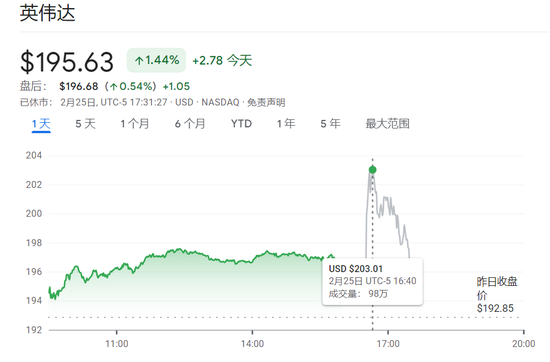
日进22.6亿!英伟达营收暴涨73%再破纪录,盘后股价重返200美元
Xin Lang Cai Jing· 2026-02-26 02:48
炒股就看金麒麟分析师研报,权威,专业,及时,全面,助您挖掘潜力主题机会! 来源:量子位 超越英伟达的依然是TA自己—— 2026财年,英伟达最后一份季度财报出炉。不出意料,又是连破三个纪录: 这份成绩可以说让资本市场吃了"定心丸","AI鬼故事"的阴霾一扫而空……财报后,英伟达盘后股价一 度涨超3.7%。 英伟达最新季度财报 从财务指标入手,"猛涨"依旧是英伟达财报的基调。 2026财年(即2025年)第四季度,公司营业收入为681亿美元(约4678亿元),同比增长73%,环比增 长20%。 单季度营收达681亿美元(约4678亿元),同比增长73%,环比增长20%。 数据中心季度营收623亿美元(约4280亿元),同比增长75%,环比增长22%。 公司全年营收2159亿美元(约14831亿元),同比增长65%。 2026财年全年营收2159亿美元(约14831亿元),同比增长65%。 透过业务基本盘进一步感知,还是从数据中心、游戏、专业可视化,以及汽车四个方面去展开。 英伟达业务的绝对核心数据中心,第四财季营收623亿美元,同比增长75%,环比增长22%;全年营收 1937亿美元,同比增长68%。 数据中心 ...
14834亿!英伟达炸裂年报:日赚超20亿,中国H20收入4亿,黄仁勋爆料Groq和OpenAI
Xin Lang Cai Jing· 2026-02-26 02:48
炒股就看金麒麟分析师研报,权威,专业,及时,全面,助您挖掘潜力主题机会! 来源:芯东西 黄仁勋:"算力就是营收。" 作者 | 陈骏达 编辑 | 心缘 芯东西2月26日报道,今天,英伟达公布了截至今年1月25日的2026财年第四季度财报以及2026财年全年 业绩。本财季,英伟达营收和净利润双双超越华尔街预期,营收达681.3亿美元(约合人民币4680.2亿 元),同比增长73%,环比增长20%;净利润(非GAAP)达395.5亿美元(约合人民币2716.9亿元), 同比增长79%,环比增长25%。 2026财年全年,英伟达营收达到2159.4亿美元(约合人民币14834.0亿元),同比增长65%;净利润则达 到1200.8亿美元(约合人民币8248.9亿元),同比增长65%。 英伟达创始人兼CEO黄仁勋判断,Agentic AI的拐点已经到来,企业对Agent的采用率正在飙升,"在这 个AI的新世界里,算力就是营收,没有算力,就无法生成Token,而没有Token,就无法实现营收增 长"。这几乎在说"算力就是金钱"。 黄仁勋透露:"我们正与OpenAI继续努力达成合作协议,并相信我们即将达成协议。"黄仁勋还给G ...
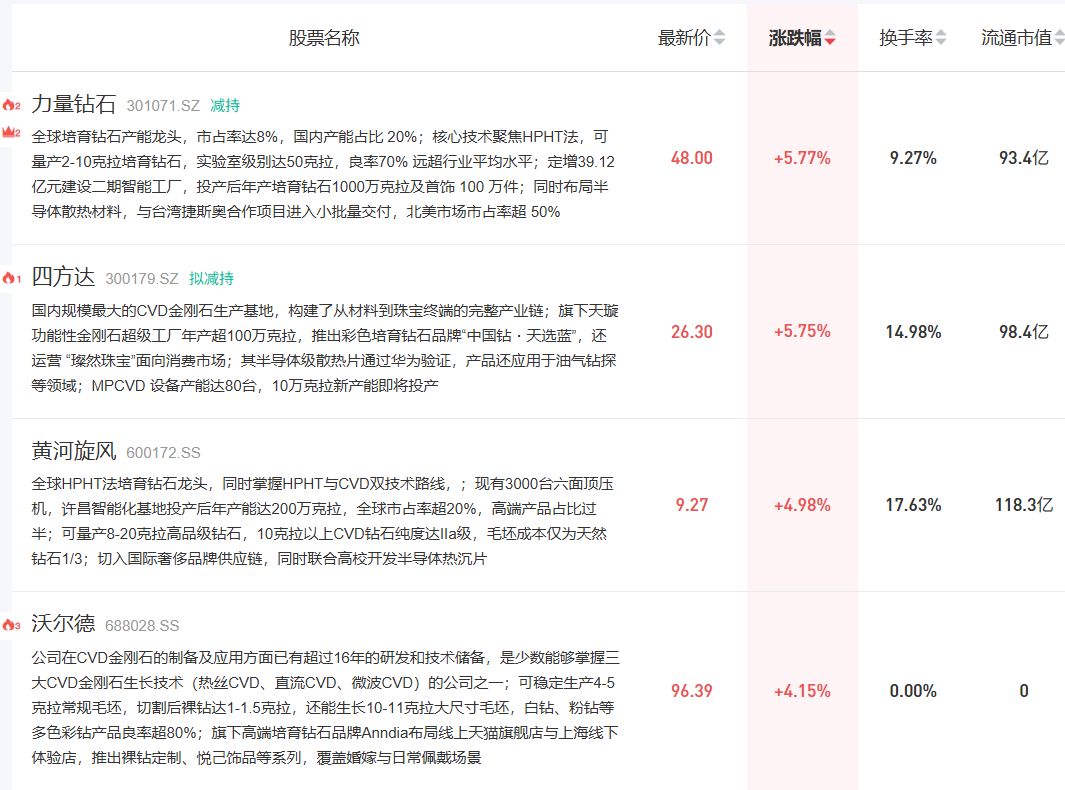
【大涨解读】培育钻石:未来服务器散热“终极方案”之一,英伟达已开始布局,未来有望打开百亿市场空间
Xuan Gu Bao· 2026-02-26 02:41
一、行情 2月26日,培育钻石板块早盘一度大涨,力量钻石、四方达、黄河旋风、沃尔德大幅冲高。 | 股票名称 | 最新价 = | 涨跌幅令 | 换手率 = | 流通市值令 | | --- | --- | --- | --- | --- | | ◇ 力量钻石 301071.SZ 减持 | | | | | | 全球培育钻石产能龙头,市占率达8%,国内产能占比 20%;核心技术聚焦HPHT法,可 | | | | | | 量产2-10克拉培育钻石,实验室级别达50克拉,良率70% 远超行业平均水平;定增39.12 | 48.00 | +5.77% | 9.27% | 93.4亿 | | 亿元建设二期智能工厂,投产后年产培育钻石1000万克拉及首饰 100 万件:同时布局半 | | | | | | 导体散热材料,与台湾捷斯奥合作项目进入小批量交付,北美市场市占率超 50% | | | | | | め: 四方达 300179.SZ 拟减持 | | | | | | 国内规模最大的CVD金刚石生产基地,构建了从材料到珠宝终端的完整产业链;旗下天璇 | 26.30 | +5.75% | 14.98% | | | 功能性金刚石超级 ...


英伟达财报与业绩指引双双超预期,科创半导体ETF、半导体设备ETF华夏回调蓄势
Mei Ri Jing Ji Xin Wen· 2026-02-26 02:37
科创半导体ETF(588170)及其联接基金(A类:024417;C类:024418):跟踪指数是科创板唯一的 半导体设备主题指数,其中先进封装含量在全市场中最高(约50%),聚焦于科技创新前沿的硬核设备 公司。 半导体设备ETF华夏(562590)及其联接基金(A类:020356;C类:020357),跟踪中证半导体材料 设备主题指数,其中半导体设备的含量在全市场指数中最高(约63%),直接受益于全球芯片涨价潮 对"卖铲人"(设备商)的确定性需求。 截至2月26日9点56分,高"设备"含量的科创半导体ETF(588170)跌0.85%,半导体设备ETF华夏 (562590)跌1.38%。个股方面,欧莱新材领涨7.85%,神工股份上涨2.04%,和林微纳上涨1.43%;中 船特气领跌4.94%,中微公司下跌2.61%,华海清科下跌2.05%。 消息面上,英伟达当季总营收同比增长 73%,从去年同期的 393 亿美元增至 681.3 亿美元。目前公司超 过 91% 的收入来自数据中心部门,该部门主营市场领先的 AI 芯片。业绩指引同样好于预期。英伟达 预计第一财季营收为 780 亿美元,上下浮动 2%。分析师预 ...
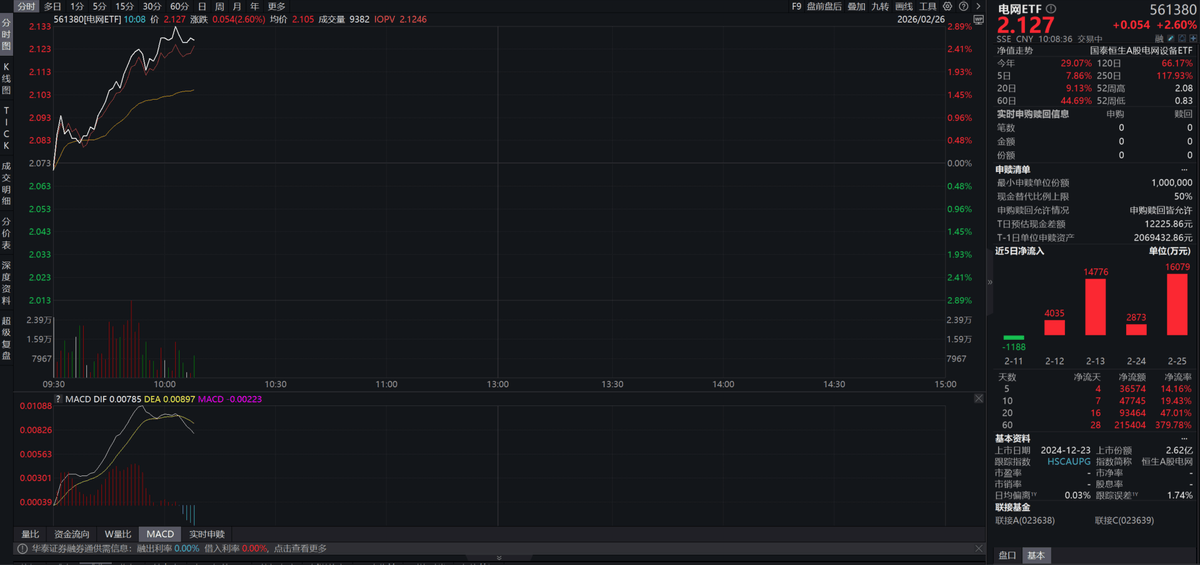
英伟达业绩炸裂,AI高景气引爆电力需求,关注电网ETF(561380)
Sou Hu Cai Jing· 2026-02-26 02:36
北京时间2月26日,英伟达发布2026财年第四季度财报,营收、净利润及下一季度指引全面超越市场预期,再次验证AI算力需求的旺盛程度远超想象。更为 关键的是,公司电话会透露,客户已部署9GW的Blackwell基础设施,并强调"性能/瓦"是选择架构的关键。 这一数据背后隐藏着一个正在发酵的长期逻辑——AI算力的爆发正在转化为实实在在的电力需求,北美电网正面临前所未有的压力。在国内,"十五五"期间 国家电网固定资产投资预计达4万亿元,较"十四五"增长40%。 内外需求共振下,电网产业链正迎来"制度+投资"双轮驱动的长周期景气,受此催化,电网ETF(561380)涨超2%,近20日净流入超9亿元,把握一键布局 发电、输电、配电及用电全产业链机遇。 【英伟达财报隐含的信号:AI算力=电力需求】 英伟达财报不仅展示了AI芯片的强劲需求,更透露了一个关键数据——客户已部署9GW的Blackwell基础设施。这标志着AI算力正在转化为实实在在的电力 负荷,单机柜功率密度飙升,电网压力与日俱增。 业绩再超预期,网络业务成亮点。FY4Q26英伟达数据中心业务623.14亿美元,同比+75%,其中Networking业务109. ...
Nvidia CEO predicts 'pretty big breakthrough' for artificial general intelligence
Youtube· 2026-02-26 02:15
Group 1 - The article discusses the concept of super intelligence in AI, noting that in narrow applications, AI has already achieved super intelligence, while in broader contexts, it is still developing [1] - It predicts significant breakthroughs in artificial general intelligence (AGI) within the current year, highlighting the advancements in AI tools like OpenAI's codecs and agents that are proving to be highly effective in problem-solving [2]
英伟达黄仁勋:年内将寻机进行资本运作
Ge Long Hui A P P· 2026-02-26 02:09
格隆汇2月26日|美东时间周三盘后,在英伟达财报电话会上,公司CEO黄仁勋表示,公司仍在持续开 展股票回购和股息分红,并将在年内寻找合适的时机,把握独特的投资机会,推进相关资本运作。他还 指出,生态系统投资将始终是公司资本配置的核心环节,同时我们也会持续推进战略投资。 ...
5 biggest takeaways from Nvidia's Q4 earnings — from the new Vera Rubin chips to addressing an emerging risk
Business Insider· 2026-02-26 02:06
Core Viewpoint - Nvidia's recent earnings report highlights its strong position in the AI sector, surpassing Wall Street expectations and indicating sustained momentum in the AI boom [1][2]. Group 1: Nvidia's Role in AI - Nvidia is positioning itself as the backbone of the AI industry, with significant partnerships, including a multibillion-dollar deal with OpenAI and collaborations with Meta [3][4]. - The company aims to ensure that all forms of AI, from large language models to robotics, are built on its platform, capitalizing on the new computing era [4]. Group 2: Future Developments - Nvidia is integrating Groq's low-latency AI inference technology into its architecture, with more details expected at the upcoming GTC conference [5][6]. - Early samples of the next-generation Vera Rubin chips have been shipped, with broader shipments anticipated in the second half of 2026, promising significant performance improvements over the current Blackwell model [8][9]. Group 3: Strategic Investments and Partnerships - Nvidia is close to finalizing a deal with OpenAI, part of a larger AI infrastructure initiative potentially worth $100 billion, aimed at strengthening the AI ecosystem [13][15]. - The company's strategy involves investing in AI firms like Anthropic and OpenAI to ensure that future software and hardware developments are built on Nvidia's platform [14].
Nvidia's Jensen Huang is the latest tech CEO to cheer the potential of data centers in outer space
MarketWatch· 2026-02-26 02:01
Core Insights - The demand for artificial intelligence applications is leading to a shortage of not only chips but also space and power for major AI companies [1] Group 1: Industry Challenges - Companies are facing difficulties in securing adequate physical space to support the rapid development of AI technologies [1] - There is a significant struggle to obtain sufficient power resources necessary for running AI applications effectively [1]