
Waymo

Search documents
旧金山大停电引发Alphabet(GOOGL.US)旗下Waymo自动驾驶汽车陷入瘫痪,被迫全线升级应急系统
Zhi Tong Cai Jing· 2025-12-24 09:29
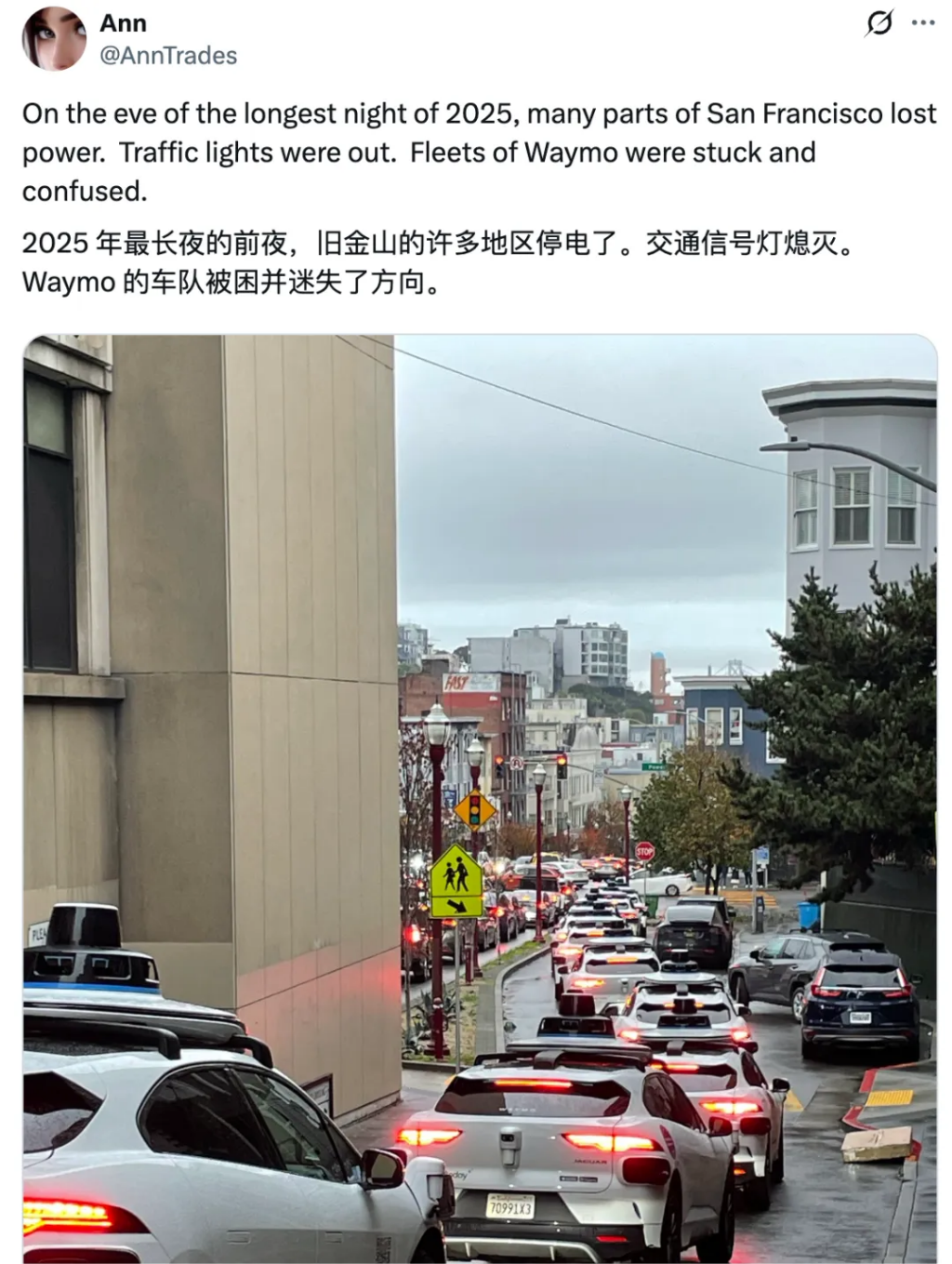
Alphabet(GOOGL.US)旗下自动驾驶公司Waymo周二表示,将更新用于操作其自动驾驶汽车的软件,并 改进其紧急响应协议。上周六,其无人驾驶出租车因大规模停电在旧金山部分地区停滞,导致交通混乱 和城市部分区域堵塞。 当地时间12月20日晚间,太平洋燃气电力公司一个变电站发生火灾,导致旧金山约三分之一地区停电, 影响了约13万居民,并迫使一些企业暂时关闭。Waymo随后暂停了服务。 社交媒体上发布的多个视频显示,由于停电导致交通信号灯停止工作,Waymo的无人驾驶出租车滞留 在十字路口,危险警示灯闪烁。 Waymo表示,其自动驾驶汽车的设计能够处理信号灯熄灭的十字路口的状况,但车辆可能偶尔会请求 进行确认检查。 Waymo表示,这些确认协议在早期部署阶段是合理的,但公司目前正在完善它们,以适应其当前的运 营规模。Waymo正在实施全车队的软件更新,为车辆提供"特定的停电场景信息,使其能够更果断地导 航"。 Waymo还表示,将结合此次事件的教训改进其紧急响应协议。 Waymo在旧金山湾区、洛杉矶、亚利桑那州凤凰城都市区、得克萨斯州奥斯汀和佐治亚州亚特兰大运 营着超过2500辆汽车。该公司表示,已于周日 ...
Waymo to strengthen fleet software after power outage caused traffic jams
Invezz· 2025-12-24 08:59
Core Insights - Waymo plans to enhance its automated driving software to better handle large-scale power outages, similar to the recent blackout in San Francisco, aiming to minimize delays when multiple vehicles require human oversight [1] Group 1 - The update will focus on improving the management of automated vehicles during power outages [1] - The initiative is a response to challenges faced during the San Francisco blackout, indicating a proactive approach to operational efficiency [1] - The goal is to reduce the need for human intervention in situations where multiple vehicles are affected by outages [1]


大摩重磅机器人年鉴(六):自动驾驶正处于爆发前夜,中国已取得领先
Hua Er Jie Jian Wen· 2025-12-24 07:32
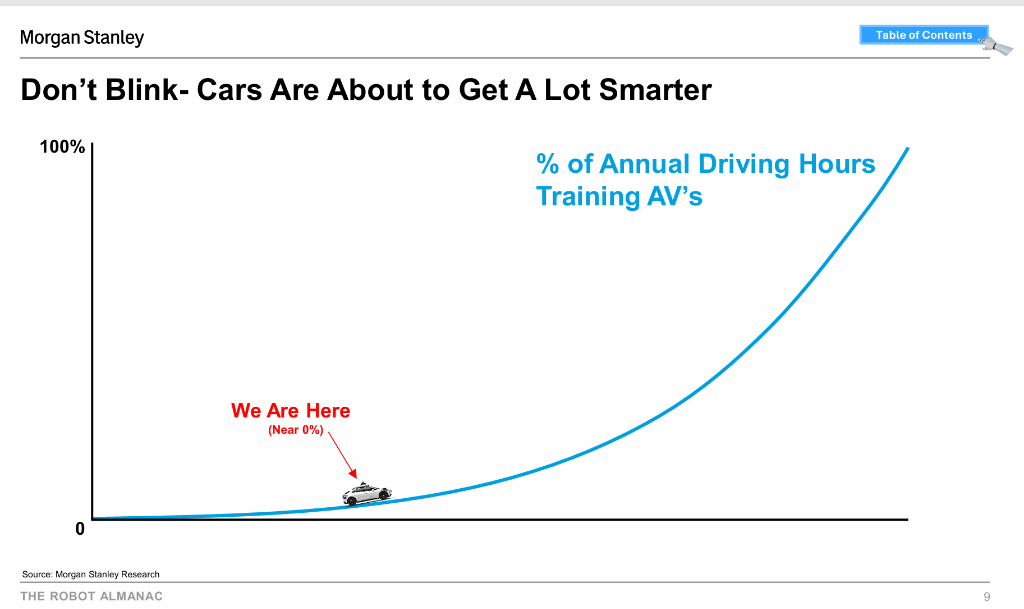
Core Insights - The global automotive industry is at a significant turning point, with autonomous driving technology poised for explosive growth, transitioning from traditional driving models [1] - China is leading the global race in autonomous driving, holding approximately 60% of the L2+ autonomous vehicle market share, driven by its success in electric vehicles and data collection capabilities [1][5][8] Group 1: Market Dynamics - The competition in the U.S. market is intensifying, particularly between Waymo and Tesla, with Waymo rapidly expanding its operations to major cities and Tesla focusing on a low-cost, vision-based approach [2][11] - The report compares the current sensor technology debate to the historical "War of the Currents," suggesting that different technological paths may coexist in the long term [2][18] Group 2: Future Projections - Morgan Stanley predicts a significant increase in the adoption of autonomous vehicles, estimating 2.2 million robotaxis by 2030, 245 million by 2040, and 722 million by 2050 [2][23] - The report emphasizes that autonomous driving will serve as the "ultimate accelerator" for the electric vehicle industry, fundamentally transforming transportation and economic models [2] Group 3: Technological Advancements - The concept of "data probes" is highlighted, indicating that electric vehicles act as mobile data collectors, enhancing AI algorithms through continuous data collection and improvement [8] - The report notes that the cost advantages of Chinese manufacturers, such as Xiaomi, demonstrate their competitive edge in the autonomous driving race [5] Group 4: Competitive Landscape - In the U.S., two distinct paths for autonomous driving technology are emerging: Waymo's sensor redundancy approach and Tesla's sensor parsimony strategy, each with its own advantages and challenges [11][16] - The report mentions various emerging companies globally, such as Wayve in the UK and WeRide in China, which are accelerating the development of autonomous driving technologies [26]

旧金山大停电致Robotaxi“瘫痪”堵路后,Waymo紧急升级软件:赋予车辆更多自主权
Hua Er Jie Jian Wen· 2025-12-24 07:27
Core Insights - Waymo announced a systematic upgrade to its autonomous vehicle fleet to enhance emergency response capabilities in extreme infrastructure failure situations, following a significant power outage in San Francisco that exposed vulnerabilities in autonomous driving technology [1][4]. Group 1: Incident Overview - A large-scale power outage occurred in the San Francisco Bay Area, affecting approximately 130,000 users and causing traffic signal failures, which led to Waymo's autonomous taxis becoming traffic "obstacles" [2][6]. - Videos circulated on social media showed multiple Waymo vehicles stalling at intersections, prompting human drivers to navigate around them, highlighting the challenges faced by autonomous vehicles in such scenarios [2][6]. Group 2: Emergency Measures - Waymo is implementing three immediate measures to improve system performance, including fleet-wide technology updates, enhanced emergency response protocols, and coordination with the San Francisco city government [4][5]. - The first measure involves providing vehicles with more contextual information about regional power outages to enable decisive actions at intersections [5]. - The second measure focuses on improving emergency response protocols and collaborating with the mayor's team to strengthen emergency preparedness [5]. - The third measure includes updating training for emergency personnel to learn from this and other large-scale events, ensuring that the fleet can safely park and return to the garage without exacerbating congestion during peak recovery times [5][6]. Group 3: Business Expansion and Challenges - Beyond the San Francisco Bay Area, Waymo offers paid ride services in cities like Austin, Phoenix, Atlanta, and Los Angeles, completing approximately 450,000 paid rides weekly [6]. - The company estimates that by December, it will have provided 14 million rides in 2025, with a goal of surpassing 20 million total rides since its launch in 2020 [6]. - Waymo emphasizes its commitment to developing the Waymo Driver for real-world scenarios, including infrastructure failures, while acknowledging that the recent outage provides valuable lessons for the entire autonomous driving industry [6].
小马智行港股上市,能解决4.3亿元研发换来4.4亿元亏损的困境吗?
Sou Hu Cai Jing· 2025-12-24 05:08
Core Viewpoint - The article discusses the challenges faced by Xiaoma Zhixing (Pony.ai) following its dual listing in Hong Kong, highlighting its financial struggles despite revenue growth in the autonomous driving sector [2][5]. Financial Performance - In Q3 2025, Xiaoma Zhixing reported revenue of 181 million RMB (approximately 25.4 million USD), a year-on-year increase of 72.0% [5][12]. - The company experienced a net loss of 438 million RMB, which represents a 46.3% increase compared to the previous year, indicating deteriorating profitability [5][12]. - Non-GAAP net loss also increased by 32.85%, with losses outpacing revenue growth, reflecting inadequate cost control [5][12]. Research and Development Costs - R&D expenses reached 430 million RMB in Q3 2025, accounting for over 230% of total revenue, which is a significant factor contributing to the increased losses [6][12]. - The high R&D costs are attributed to the need for continuous investment in technology to maintain a competitive edge in the L4 autonomous driving sector [6][12]. Cash Flow and Financial Pressure - Xiaoma Zhixing reported a negative cash flow from operating activities, with a total free cash flow outflow of 173.6 million USD in the first nine months of 2025, indicating significant financial pressure [6][12]. - The company’s high cash burn rate raises concerns about its ability to sustain operations without further financing [8][12]. Commercialization Challenges - The company achieved a breakthrough in its Robotaxi business, with the seventh-generation model in Guangzhou reaching a positive unit economic model, generating an average daily revenue of 299 RMB [12][13]. - However, this success is not easily replicable in other cities due to varying operational conditions and regulatory environments [12][13]. Competitive Landscape - Xiaoma Zhixing faces intense competition from domestic rivals like Baidu and WeRide, as well as international players such as Waymo and Cruise, which adds pressure to its commercialization efforts [12][13]. - The entry of traditional automakers into the autonomous driving space further compresses the market for independent companies [12][13]. Market Sentiment and IPO Performance - Despite raising 7.7 billion HKD through its dual listing, market confidence remains low, as evidenced by the stock price dropping below the IPO price shortly after listing [8][11]. - Concerns about the company's profitability timeline, with estimates ranging from three to seven years, contribute to investor skepticism [11][12]. Industry Context - The article positions Xiaoma Zhixing's struggles as reflective of the broader autonomous driving industry, which is transitioning from a "burning cash" model to one focused on sustainable profitability [18][19]. - The ongoing challenges in achieving scalable profitability will not only impact Xiaoma Zhixing but also serve as a critical reference point for the entire domestic autonomous driving sector [19].

Waymo to Update Software Across Fleet After San Francisco Power Outage
WSJ· 2025-12-24 04:02
Core Viewpoint - The self-driving car startup owned by Alphabet is set to update its software across all vehicles to enhance navigation capabilities during power outages, following incidents where vehicles became immobilized in San Francisco [1] Group 1 - The software update aims to address navigation issues that arose during power outages, indicating a proactive approach to improving vehicle reliability [1] - The decision comes after reports of vehicles freezing in San Francisco, highlighting the need for better contingency planning in adverse conditions [1]

Waymo will update driverless fleet after San Francisco blackout to improve navigation during outages
CNBC· 2025-12-24 03:03
Core Insights - Waymo paused its driverless car service in San Francisco due to a power outage that affected approximately 130,000 customers, with 21,000 still without power the following morning [2][3] - The company is implementing fleet-wide updates to enhance vehicle responses during infrastructure failures and is improving emergency response protocols [4] Company Response - Waymo is taking three immediate steps: updating its fleet for better context during outages, enhancing emergency response protocols, and updating first responder training based on learnings from the incident [4] - The company has served 14 million trips in 2025 and is on track to exceed 20 million total trips since its launch in 2020 [4] Operational Impact - The power outage led to widespread gridlock in San Francisco, with multiple Waymo vehicles reported stalled in traffic [3] - Waymo directed its fleet to pull over and park appropriately to avoid adding to congestion and obstructing emergency vehicles during recovery efforts [3] Future Preparedness - Waymo is collaborating with local authorities to improve emergency preparedness and response in future incidents [4] - The company emphasizes its commitment to road safety and its ongoing service to residents and visitors in San Francisco [5]

Waymo就太平洋天然气和电力公司停电事件发表声明
Ge Long Hui A P P· 2025-12-24 02:02
格隆汇12月24日|Waymo公司就太平洋天然气和电力公司(PG&E)停电事件发表声明:停电规模之大以 及受影响交通信号灯数量之多是导致全市交通瘫痪的主要原因。应对如此规模的事件对自动驾驶技术来 说是一项挑战。目前正在对车队进行全面更新,为驾驶员提供具体的停电情况信息,使其能够做出更果 断的决策。将改进我们的应急响应规程。 ...


Waymo vows to improve emergency response protocols after San Francisco power outage
Reuters· 2025-12-24 01:50
Core Insights - Waymo, a unit of Alphabet, announced plans to enhance its first responder engagement and improve emergency response protocols [1] - The company will implement updates to enable its vehicles to navigate intersections more decisively [1] Group 1 - Waymo is focusing on expanding its collaboration with first responders to improve safety and efficiency during emergencies [1] - The updates to emergency response protocols aim to streamline interactions between Waymo's autonomous vehicles and emergency services [1] - Enhancements in intersection navigation are expected to increase the overall effectiveness of Waymo's autonomous driving technology [1]
L4级Robotaxi的护城河一夜崩塌
3 6 Ke· 2025-12-24 00:39
Core Viewpoint - The discussion at the Horizon Ecological Conference highlighted the potential for a unified development paradigm that could bridge the gap between L2 and L4 autonomous driving systems, suggesting that the distinction between these levels may become obsolete [1][3]. Group 1: Unified Development Paradigm - The idea presented is to use L2 architecture and sensors to achieve L4 capabilities, which could lead to the collapse of barriers for L4 Robotaxi companies [1]. - The current approach of L4 Robotaxi companies relies on limited ODD areas and redundant safety measures through hardware and software, which may be challenged by a unified approach [1][4]. Group 2: Contrasting Approaches - The core conflict lies in whether the same architecture can be used for both assisted driving and Robotaxi services, with Tesla and Waymo representing opposing views [2]. - Waymo's strategy involves high-precision maps and multiple sensors to ensure safety, but this comes with high costs and challenges in scalability [2]. - Tesla advocates for a more flexible and cost-effective deployment by unifying the underlying technology for assisted driving and Robotaxi, although it currently lacks the safety levels of Waymo [2][3]. Group 3: Future Implications - If the unified approach is validated, it could significantly undermine the competitive advantages of traditional Robotaxi players who rely on heavy sensor use [4]. - Companies like Horizon and Hello Robotaxi are already moving towards this unified paradigm, indicating a shift in the Robotaxi landscape [4][5]. - The competition will increasingly focus on data accumulation rather than sensor redundancy, positioning data owners and algorithm companies as the most competitive players [5]. Group 4: Expansion and Performance Metrics - Reports indicate that by December 2025, Waymo plans to deploy 2,500 Robotaxi vehicles across the U.S., while Tesla's Robotaxi registrations have surged from under 100 to over 1,000 in just four months [5]. - Morgan Stanley's report highlights that Waymo's average accident-free mileage is approximately 360,000 miles, compared to Tesla's 50,000 miles in Austin [5]. Group 5: Future Outlook - The fundamental differences between data-driven approaches and traditional sensor-heavy methods suggest that Tesla's growth may outpace Waymo's, potentially leading to a collapse of Waymo's system [6]. - There are rumors that Waymo may be shifting towards a data-driven model similar to Tesla's [7].
