优衣库

Search documents
为什么我们的衣服越来越难买了?
3 6 Ke· 2025-05-13 11:54
Core Viewpoint - The fashion industry is experiencing significant challenges, with high return rates and a decline in quality due to price wars and a focus on fast fashion [1][2][24]. Group 1: Industry Challenges - The average return rate for women's clothing e-commerce has exceeded 50%, indicating widespread dissatisfaction among consumers [1]. - The industry is facing a decline in quality as brands prioritize low-cost, high-volume production, leading to a prevalence of imitation and poor craftsmanship [2][9]. - Many industry players are struggling financially, with reports of significant losses and a shrinking customer base [24][25]. Group 2: Consumer Behavior - Consumers are increasingly dissatisfied with the quality of available clothing, often feeling that good options have disappeared [1][3]. - There is a trend towards purchasing cheaper, less distinctive clothing, with many consumers expecting low prices as a norm [8][24]. - Younger generations are accustomed to shopping online based on images, leading to unrealistic expectations regarding the quality of clothing [8][27]. Group 3: Production and Design - The production process has become simplified, with many brands opting for quick, low-cost solutions rather than investing in quality materials and craftsmanship [14][15]. - The cost of developing high-quality garments is substantial, often requiring significant investment in design and materials, which many brands are unable to afford [14][28]. - A large percentage of factories are unable to produce high-quality clothing, with estimates suggesting that 95% of factories do not meet quality standards [20][21]. Group 4: Market Dynamics - The market is characterized by intense competition, with many brands engaging in price wars that undermine profitability [24][25]. - The shift towards e-commerce has changed the dynamics of the fashion industry, with many traditional retailers struggling to adapt [22][24]. - Brands are increasingly reliant on advertising and promotional spending to gain visibility in a crowded market, often at the expense of product quality [28][29].


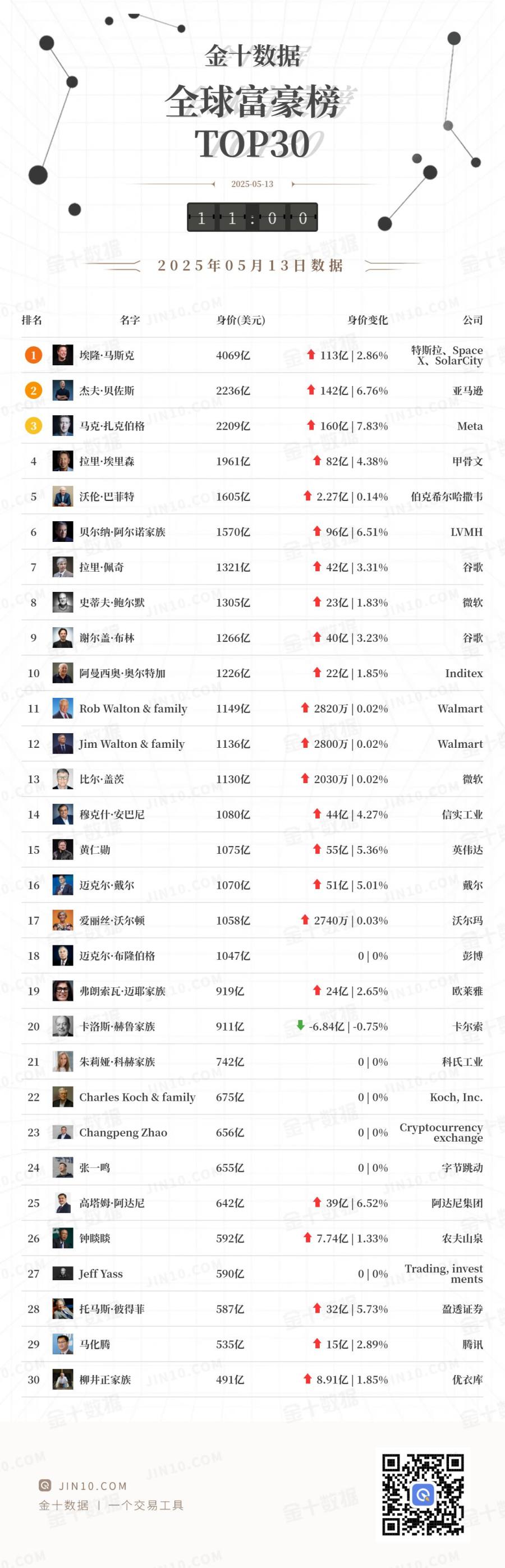
金十图示:2025年05月13日(周二)全球富豪榜



news flash· 2025-05-13 03:03
0.com TINTO.com JIHTO.com 金十数据 | 一个交易工具 n.coM . Comment . In.com . Comment . Com | 排名 | 名字 | 身价(美元) | 身价变化 | 公司 | | --- | --- | --- | --- | --- | | | 埃隆·马斯克 | 4069亿 | 113亿 2.86% | | | 2 | 杰夫·贝佐斯 | 2236亿 | 1 142亿 6.76% | 亚马逊 | | | 马克·扎克伯格 | 2209亿 | 1 160亿 7.83% | Meta | | 4 | 拉里·埃里森 | 1961亿 | 1 82亿 4.38% | 甲骨文 | | 5 | 沃伦·巴菲特 | 1605亿 | 1 2.27亿 0.14% | 伯克希尔哈撒韦 | | 6 | 贝尔纳·阿尔诺家族 | 1570亿 | 1 96亿 6.51% | LVMH | | 7 | 拉里·佩奇 | 1321亿 | 1 42亿 3.31% | 谷歌 | | 8 | 史蒂夫·鲍尔默 | 1305亿 | 1 23亿 1.83% | 微软 | | 9 | 谢尔盖·布林 | 1266 ...
2025母亲节,品牌们都在如何叫“妈”?
3 6 Ke· 2025-05-13 00:15
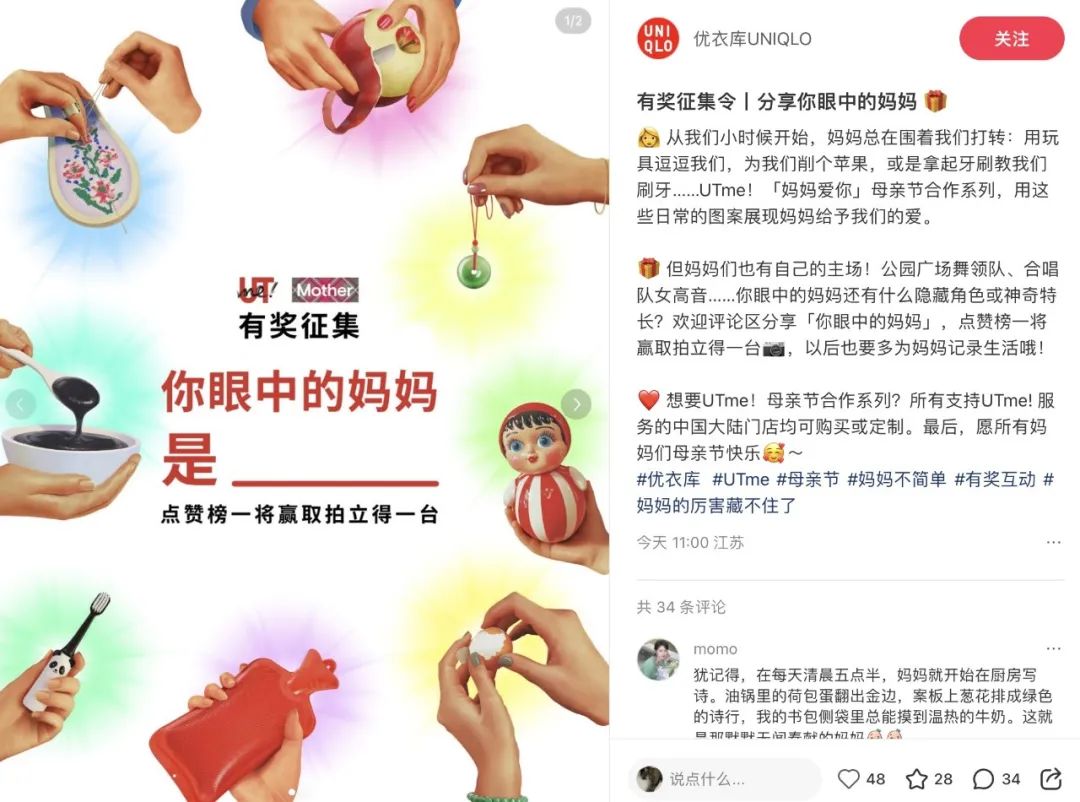
Group 1 - The core idea of this year's Mother's Day marketing is a shift from traditional narratives of mothers' sacrifices to a more authentic representation of mothers, focusing on their individual identities and the expectations society places on them [1][2][10] - Brands are employing various strategies, such as engaging children to share stories about their mothers, to create a more personal connection with consumers [2][8][11] - The campaign by "沪上阿姨" emphasizes the importance of recognizing mothers as individuals beyond their roles, encouraging the public to share their mothers' names and stories [10][11] Group 2 - The marketing efforts include innovative activities, such as "倪妈说" by 伊利, which features a mother figure sharing relatable advice with younger generations, blending emotional storytelling with product promotion [13][20][22] - Babycare's campaign challenges traditional views on parenting responsibilities, advocating for a societal shift in recognizing parenting as a shared duty rather than solely a mother's role [27][29][30] - Brands like 兰蔻 and 优衣库 are focusing on experiential marketing, creating opportunities for families to spend quality time together, thus reinforcing emotional connections with their products [34][36][38] Group 3 - The overall trend in Mother's Day marketing reflects a deeper societal reflection on the roles of mothers, aiming to present a more nuanced view of motherhood that resonates with contemporary values [30][40] - Brands are encouraged to move beyond superficial marketing tactics and genuinely address consumer needs through consistent product design and marketing strategies [39][40]
大侠后宫:“现在的人能有多抽象??”哈哈哈哈哈这算哪门子行为艺术!!
猿大侠· 2025-05-12 04:05
Core Viewpoint - The article discusses various humorous and relatable anecdotes about job experiences, highlighting the challenges and quirks of different occupations, particularly in service and part-time roles [1]. Group 1: Job Experiences - A service worker shares a story about breaking multiple items while working, leading to a decision to resign due to feeling inadequate [34]. - A part-time worker describes a light workload at a wedding service job, contrasting it with more stressful experiences in other roles [35]. - An anecdote about a worker in a convenience store expresses frustration over complicated prize redemption processes, leading to resignation [35]. Group 2: Student Life and Education - A suggestion is made to allow university students to monitor high school exams, which could benefit both high school students and university students [29]. - The article humorously proposes that high school exams be held at universities to enhance the potential of high school students while giving university students a break [30]. Group 3: Humor and Relatability - The article includes various humorous comments and observations about everyday life, such as the absurdity of certain situations and the challenges of communication in different contexts [43][47]. - Anecdotes about misunderstandings and funny interactions in service roles are shared, emphasizing the lighter side of work experiences [37][41].

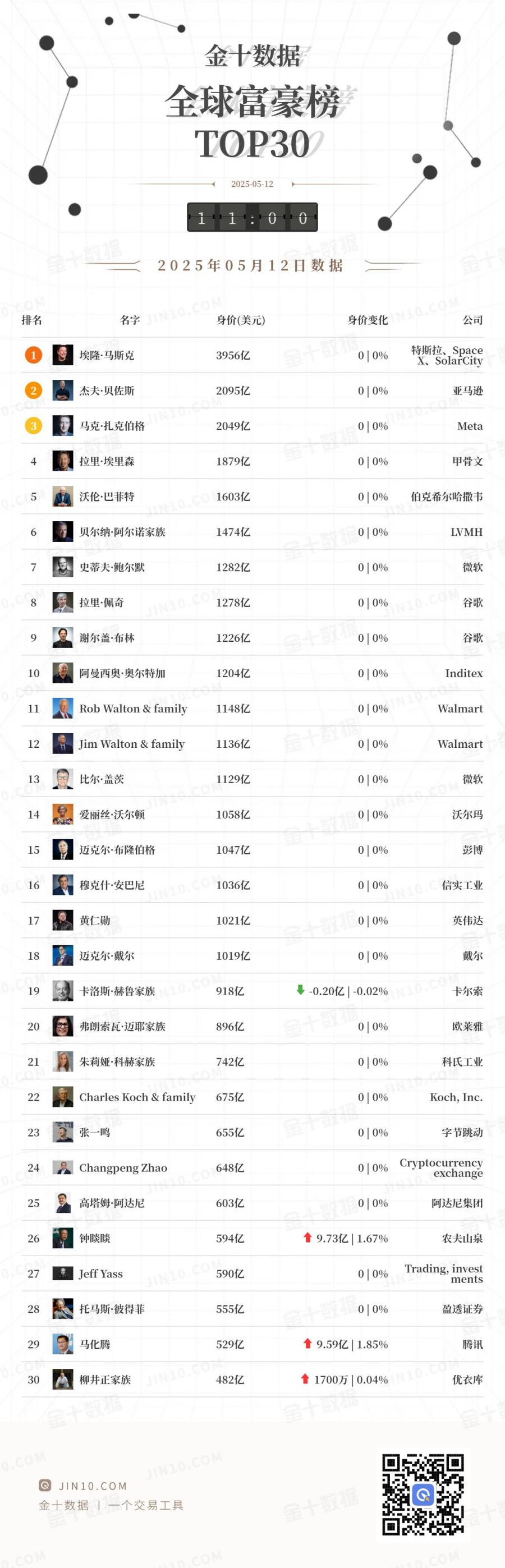
金十图示:2025年05月12日(周一)全球富豪榜

news flash· 2025-05-12 03:03
金十图示:2025年05月12日(周一)全球富豪榜 | 排名 | 名字 | 身价(美元) | 身价变化 | 公司 | | --- | --- | --- | --- | --- | | | 埃隆·马斯克 | 3956亿 | 0 0% | 特斯拉、Spa | | 2 | 杰夫·贝佐斯 | 2095亿 | 0 0% | 亚马逊 | | | 马克·扎克伯格 | 2049亿 | 0 0% | Meta | | 4 | 拉里·埃里森 | 1879亿 | 0 0% | 甲骨文 | | 5 | 沃伦·巴菲特 | 1603亿 | 0 0% | 伯克希尔哈撒韦 | | 6 | 贝尔纳·阿尔诺家族 | 1474亿 | 0 0% | LVMH | | 7 | 史蒂夫·鲍尔默 | 1282亿 | 0 0% | 微软 | | 8 | 拉里·佩奇 | 1278亿 | 0 0% | 谷歌 | | 9 | 谢尔盖·布林 | 1226亿 | 0 0% | 谷歌 | | 10 | 阿曼西奥·奥尔特加 | 1204亿 | 0 0% | Inditex | | II | Rob Walton & family | 1148亿 | 0 0% | Wa ...
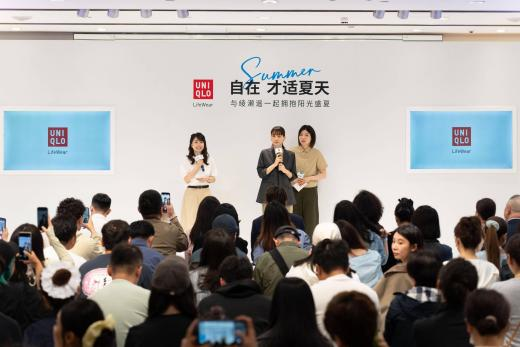
优衣库携手绫濑遥开启LifeWear夏日新主张
Guan Cha Zhe Wang· 2025-05-11 00:53
Core Viewpoint - Uniqlo introduces the summer 2025 theme "Comfort is Suitable for Summer," emphasizing lightweight, breathable, and unrestricted clothing that reflects a relaxed state of mind for consumers [1][3]. Group 1: Product Offerings - The "Cup" tank top series provides 360° support, combining fashion and comfort with built-in padding, allowing for versatile styling across different occasions [3]. - The UV-CUT sun protection clothing is tailored to meet the diverse sun protection needs of Chinese female consumers, featuring a new slim-fit design that is lightweight, breathable, and comfortable for various activities [3]. - AIRism clothing offers year-round comfort with advanced AIRism fiber technology, providing a cooling, smooth, stretchy, breathable, quick-drying, and odor-resistant experience, setting a trend for base layers [3]. Group 2: Brand Philosophy - Uniqlo's brand ambassador, Haruka Ayase, embodies the "LifeWear" philosophy, which emphasizes that clothing goes beyond fashion, providing a sense of physical and mental relief in today's fast-paced life [3]. - The introduction of "Comfort is Suitable for Summer" reflects Uniqlo's commitment to integrating the LifeWear concept with local lifestyles, continuously exploring diverse clothing needs and emotional connections with consumers [3][4]. Group 3: Future Plans - Uniqlo aims to collaborate with Chinese consumers to create more versatile clothing options that cater to various scenarios, promoting a sense of "comfortable breathing" in everyday life [4].
大侠后宫:“现在的人能有多抽象??”哈哈哈哈哈这算哪门子行为艺术!!
猿大侠· 2025-05-09 03:34
Core Viewpoint - The article discusses various humorous and relatable experiences of individuals in different jobs, highlighting the challenges and absurdities faced in the workplace. Group 1 - The article features anecdotes from various jobs, including a server who broke multiple items and felt unfit for the job [35] - It mentions a part-time worker who faced difficulties in a sanitation role due to a misunderstanding with a supervisor [36] - The narrative includes a humorous take on a cashier's experience with a complicated reward system [36] Group 2 - The article reflects on the absurdity of job expectations, such as a worker being required to stand for long periods without sitting [36] - It showcases the light-hearted nature of job-related frustrations, with individuals sharing their reasons for leaving various positions [36][35] - The commentary on the experiences of part-time workers emphasizes the commonality of feeling out of place in certain roles [36]

一年卖近70亿的蕉内,最大对手不是优衣库|厚雪专访
36氪未来消费· 2025-05-08 06:41
Core Viewpoint - The article discusses the growth and strategic positioning of the company Bananai, emphasizing its differentiation in the clothing market and the challenges it faces from competitors, particularly white-label brands, rather than established players like Uniqlo [2][5][8]. Group 1: Company Growth and Strategy - Bananai achieved a remarkable growth rate of 300% and became a top player in the underwear market, with a projected GMV of nearly 7 billion in 2024 [2][5]. - The company has expanded from being an underwear brand to a comprehensive clothing brand, aiming to establish itself as a significant player in the slow fashion segment rather than merely a competitor to Uniqlo [5][10]. - The founder, Zang Chongyu, emphasizes the importance of physical differentiation in products, such as the introduction of tagless underwear, which has helped the brand stand out in a crowded market [3][38]. Group 2: Market Positioning and Competition - Bananai's primary competition is not Uniqlo but rather white-label brands, which pose a significant threat due to market saturation and consumer downgrading [14][16]. - The brand aims to maintain its pricing strategy despite market changes, focusing on delivering quality and value to its customers [17][18]. - Zang Chongyu believes that the long-term survival of a brand is more critical than short-term explosive growth, advocating for a sustainable growth strategy [6][22]. Group 3: Brand Identity and Consumer Engagement - Bananai seeks to redefine comfort through its "body sensation science" approach, which has been a core concept since its inception [11][12]. - The company is focused on creating a unique brand identity that resonates with consumers, moving beyond the traditional associations of comfort to a more engaging and interesting brand narrative [25][27]. - The founder expresses a desire for the brand to be perceived as "cool," emphasizing the importance of being relevant and appealing to a broad audience [26][27]. Group 4: Future Outlook and Challenges - The company recognizes the need for a balanced online and offline presence, stating that "without offline, there is no future" and "without e-commerce, there is no growth" [44]. - Bananai is committed to enhancing its retail capabilities and expanding its physical store presence to better communicate its brand identity [39][42]. - The focus for the next few years will be on achieving synergy between online and offline channels while continuing to innovate in product development [43][44].
DTC运营专家刘颖:“低头捡钢镚”不可耻,标杆店学会盈利很关键
3 6 Ke· 2025-05-07 09:37
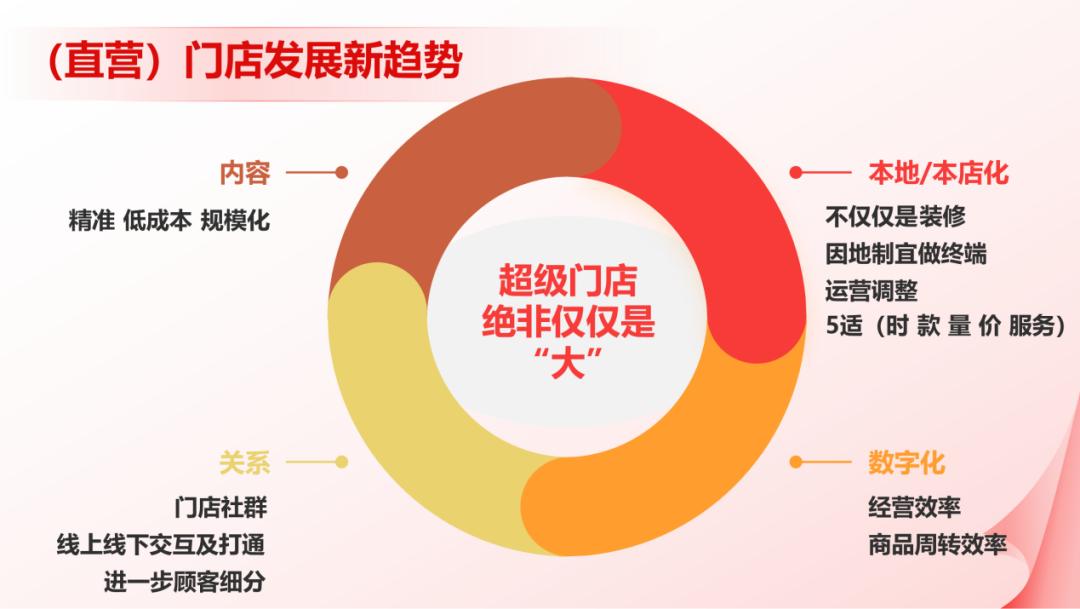
Core Insights - The discussion around Direct-to-Consumer (DTC) strategies is becoming quieter in a low-growth economic cycle, raising questions about whether DTC is merely a scapegoat for poor brand management or if the challenges of implementing DTC offline are genuinely significant [1] - Brands like Anta have successfully transitioned to DTC, surpassing Nike in domestic market share and expanding internationally, while new brands like Bosie struggle with offline operations despite significant investments [1] - The challenges faced by different types of brands in executing DTC strategies vary significantly, with mature brands often hindered by organizational inertia, high-growth brands facing management capacity issues, and new brands lacking retail operational experience [3][4] Brand Challenges in DTC Implementation - Mature brands are often reluctant to embrace DTC due to existing interests and organizational inertia, making it difficult to alter supply chains and management models [3] - High-growth brands encounter management challenges during rapid expansion, particularly when scaling from 30 to 100 stores, leading to inefficiencies and resource wastage [4] - New brands often lack operational experience and financial planning, resulting in significant losses when attempting to establish offline presence [4] Importance of Customer Acquisition and Retention - Both customer acquisition and retention are crucial for offline DTC success, with new customers providing initial revenue and existing customers contributing to sustained profitability [5] - The positioning of flagship stores should focus on brand image, market trends, and customer experience rather than solely on sales metrics [5] Store Location and Planning - The primary goal of establishing a flagship store is not size but alignment with the brand's current development needs and a viable profit model [6] - Store location should be carefully considered, taking into account the city, shopping district, and specific site, with a focus on customer traffic rather than just square footage [8] Steps to Create Profitable DTC Stores - Successful DTC stores require a service model that aligns with brand positioning, effective product display, and a focus on customer engagement through digital tools [9][11] - Employee performance and operational efficiency are critical, necessitating clear performance metrics and standardized operating procedures [12][13] Conclusion - Brands must foster emotional connections with customers to elevate transactions into relationships, embodying the essence of a user-centered DTC strategy [16]

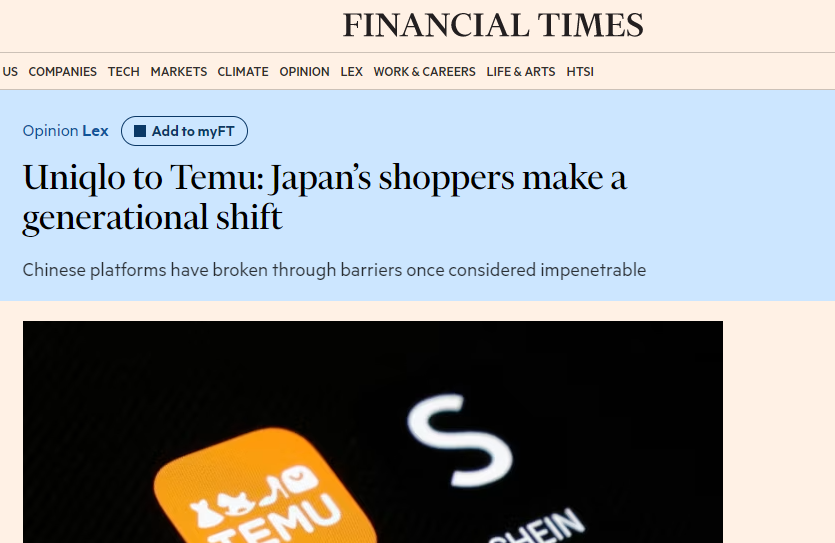
从优衣库到 Temu:中国电商用数月追平欧美巨头10年布局
Huan Qiu Wang· 2025-05-07 08:28
Group 1 - The Japanese market, known for its price sensitivity, is becoming a new battleground for Chinese e-commerce platforms like Temu and SHEIN, which are dominating shopping rankings with ultra-low prices [1][5] - Temu offers products at significantly lower prices, such as a dress priced at 1,500 yen (approximately 70 RMB), which is one-third the price of similar products from Uniqlo, directly impacting local retailers [5] - The rise of Chinese e-commerce is also attributed to generational changes in Japanese consumer preferences, with a decline in the belief that domestic brands are superior, dropping from 56% in 2010 to 37% in 2020 among the 18-29 age group [5] Group 2 - Chinese products are shedding the "low price, low quality" label, gaining a reputation for quality, which is further supported by the economic downturn in Japan and generational shifts in consumer behavior [6] - The rapid success of Chinese platforms in Japan contrasts with foreign companies like Rakuten, which has taken decades to adapt to the local market, while Chinese platforms achieved significant market penetration in just months [5][6] - By July 2023, Temu had over 15 million users in Japan within six months of entry, and over 50% of new sellers on Amazon Japan are now Chinese merchants, indicating a deepening presence in the world's third-largest economy [5]