萤石网络

Search documents
市场洞察:人口老龄化加速,养老机器人如何赋能智能康养?
Tou Bao Yan Jiu Yuan· 2025-06-27 13:02
Investment Rating - The report does not explicitly state an investment rating for the industry Core Insights - China has entered a moderate aging society with 21.1% of the population aged 60 and above as of 2023, and the shortage of elderly care workers has reached 5.5 million by 2024 [2][5] - The international standard for elderly care robots (IEC 63310) was released in February 2025, promoting high-quality development in the global elderly care robot industry [3] - There are approximately 120-150 companies in China focused on the research and manufacturing of elderly care robots, indicating the industry is in its early development stage [4] Summary by Sections Aging Population and Market Demand - By 2024, the elderly population aged 60 and above in China is projected to reach 310 million, accounting for 22% of the total population, with those aged 65 and above reaching 220 million, or 15.6% [2][5] - The demand for elderly care services is increasing due to the growing elderly population and the significant shortage of care workers [2] Elderly Care Robot Market Size - The market size for elderly care robots in China is expected to reach approximately 7.9 billion yuan in 2024, with projections of 18.3 billion yuan by 2030, reflecting a compound annual growth rate of around 15% [20][21] - The market is segmented into rehabilitation robots (60%), nursing robots (34%), and companion robots (6%) [21] Functional Capabilities of Elderly Care Robots - Elderly care robots provide various functionalities including information management, monitoring, communication support, activity support, emotional interaction, and mobility assistance [11][12] - These robots enhance care efficiency and enable personalized health management for the elderly [11] Key Players in the Industry - The industry includes core component suppliers, technology providers, and manufacturers of elderly care robots, with notable companies such as Shenyang Xinsong Robot Automation Co., Ltd. and Beijing DAI Robot Technology Co., Ltd. [25][26] Commercialization Challenges - High costs and low cost-performance ratios hinder the widespread adoption of elderly care robots, with prices ranging from 35,000 yuan to over 1 million yen (approximately 51,000 yuan) for various models [28] - The need for high-quality data for deep learning algorithms poses a challenge, as many elderly care institutions lack sufficient data collection capabilities [29] - Consumer awareness and acceptance of elderly care robots remain low, particularly among older adults, which affects market penetration [30] - Technical maturity issues, such as the accuracy of human-robot interaction and motion control, need to be addressed for better functionality [31] - The existing policy framework lacks comprehensive standards and support for the elderly care robot market [32]
萤石网络20250625
2025-06-26 14:09
Summary of the Conference Call for Yingzi Network Company Overview - **Company**: Yingzi Network - **Industry**: Smart Home and IoT (Internet of Things) Key Points and Arguments Business Segments and Performance - The impact of the operator business contraction on the company has lessened, with this segment now accounting for only 7% of total revenue, primarily driven by camera sales [2][3] - The company is exploring growth opportunities through market segmentation, targeting younger demographics with sub-brands like "Jin Xiaodou" and focusing on portable 4G cameras and visual communication cameras [2][6] - Overseas business growth is outpacing domestic growth, with a significant increase in contribution to overall revenue. The U.S. business is minimally affected by sanctions on Hikvision, focusing on early sales products and cloud value-added services [2][11] Product Innovations and Launches - The flagship product Y5,000 in the smart home entry business features AI capabilities and has received 130,000 pre-orders, aiming for cash flow transformation this year [2][7][8] - The company is expanding its product lines to include smart service robots and wearables as part of its third growth curve, with a focus on integrating hardware and software [2][9] Financial Performance and Strategy - The smart home camera business is expected to see a slight revenue decline in 2024 due to the contraction of the operator business, but its impact on the overall revenue base is expected to be less significant [3] - C-end value-added services, particularly cloud storage and AI services, are showing significant growth in paid user numbers and average revenue per user [4][10] - The company aims to maintain stable gross and net profit margins despite various influencing factors, including channel structure and market competition [4][16] Market Expansion and Future Outlook - The company is actively expanding into overseas markets, particularly in Europe, Central and South America, and Southeast Asia, with plans to diversify product offerings beyond single categories [2][12] - The C-end cloud service strategy will continue to focus on integrating hardware and software, with an emphasis on cloud storage and AI value-added services [10][12] Technological Developments - The AI platform is being enhanced with third-party models to improve interaction capabilities across various products, including cameras and companion robots [14] - The company is testing AI elderly care services, with plans to launch an app in the second half of the year [4][10] Retail and E-commerce Strategy - The company is transitioning its retail strategy, with successful pilot stores achieving profitability, and plans to expand this model in 2026 [15][16] - Online business growth is significant, but high traffic costs are a concern; the company is working to optimize ROI and cost rates in e-commerce [4][16] Additional Important Insights - The company is focusing on emotional value services for younger consumers through its Jin Xiaodou app, which operates independently [2][6] - The introduction of portable products and specific use-case cameras (e.g., for elderly care) indicates a targeted approach to market needs [6][7] - The overall business growth remains steady, with a strong performance in online sales during promotional periods [15]

从技术狂欢到盈利拷问,中国AI2.0的集体造血焦虑
Hu Xiu· 2025-06-25 08:19
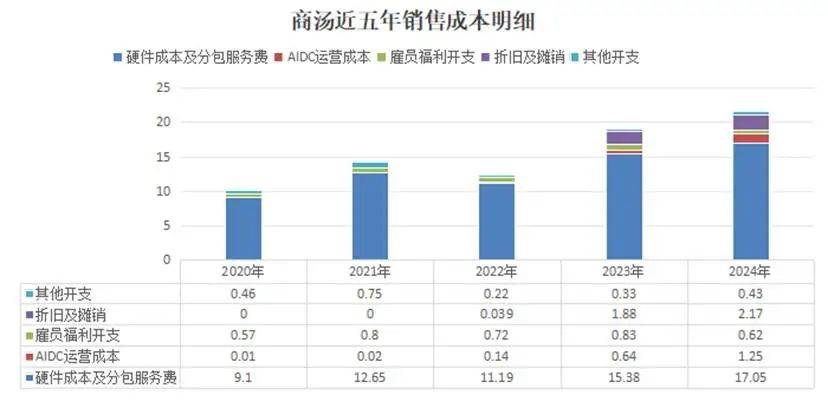
Core Insights - The report shifts focus from demand to supply in the AI 2.0 landscape, analyzing various companies like SenseTime, Black Sesame Intelligence, Qunhe Technology, and others, highlighting their different strategies and challenges in achieving profitability and sustainable growth [1][2][3]. Group 1: SenseTime - SenseTime has transitioned from a government-focused AI 1.0 company to a more diversified AI 2.0 entity, with a significant shift towards generative AI, achieving a revenue of 3.772 billion yuan in 2024, marking a 10.75% year-on-year growth [5][10]. - The company's revenue structure has evolved, with traditional AI contributing only 30% of total revenue by 2024, while generative AI has surged to 63.7% of total revenue, growing by 103.1% year-on-year [7][10]. - Despite revenue growth, SenseTime faces challenges such as declining gross margins, which fell from 70.6% in 2020 to 42.9% in 2024, and cumulative losses of 46.4 billion yuan over five years [16][20]. Group 2: Black Sesame Intelligence - Black Sesame Intelligence focuses on providing cost-effective smart automotive chips and solutions, with 92.4% of its 2024 revenue (4.38 billion yuan) coming from automotive products [27][32]. - The company has improved its gross margin significantly, achieving a gross profit of 195 million yuan in 2024, up 153% year-on-year, with a gross margin of 41.14% [36]. - However, high R&D costs have led to continued losses, with an adjusted net loss of 1.304 billion yuan in 2024, remaining stable compared to the previous year [39]. Group 3: Yingshi Network - Yingshi Network, a subsidiary of Hikvision, has upgraded its business model to focus on AI and IoT, achieving a revenue of 5.442 billion yuan in 2024, a 12.41% increase [45]. - The company’s core product remains smart home cameras, which contributed 54% of total revenue, but growth in this segment has plateaued [46]. - Yingshi's cloud platform services have seen significant growth, nearly doubling from 5.38 billion yuan in 2021 to 10.52 billion yuan in 2024, with a gross margin of 76% [49][50]. Group 4: Qunhe Technology - Qunhe Technology, known for its space design software, reported a revenue of 664 million yuan in 2023, with a 10.48% year-on-year growth [66]. - The company has established itself as a leading provider in the space design software market, holding a 22.2% market share [79]. - Despite revenue growth, Qunhe Technology continues to operate at a loss, with an adjusted loss of 94 million yuan in Q3 2024 [78]. Group 5: Innovation Qizhi - Innovation Qizhi focuses on AI solutions for the manufacturing sector, achieving a revenue of 1.222 billion yuan in 2024, a 30.21% decline year-on-year [85]. - The company has maintained strict cost control, with total operating expenses at 66.3% of revenue, but still reported a loss of 117 million yuan in 2024 [90][94]. - The decline in revenue is attributed to challenges in the manufacturing and financial services sectors, which are critical to its business model [87].

萤石网络: 中国国际金融股份有限公司关于杭州萤石网络股份有限公司核心技术人员离职的核查意见
Zheng Quan Zhi Xing· 2025-06-24 16:28
Core Opinion - The departure of core technical personnel, specifically Mr. Jin Jingyang, will not have a substantial impact on the company's core competitiveness and ongoing operational capabilities [3][4]. Departure Details - Mr. Jin Jingyang resigned for personal reasons and has completed the necessary departure procedures. He no longer holds any position within the company [1]. - Mr. Jin Jingyang was involved in the company's technology research and development during his tenure, and all work handovers have been completed [2]. R&D and Patent Involvement - During his time at the company, Mr. Jin Jingyang participated in the development and application of patents, all of which are considered work-related and owned by the company. There are no disputes regarding intellectual property [2]. - The company has a robust R&D team, with personnel numbers increasing from 1,232 in 2022 to 1,463 projected by the end of 2024, indicating a strong capacity for innovation [2]. Company Measures - The company has ensured that all R&D projects are proceeding normally and that the existing team structure is intact, with sufficient backup personnel to support ongoing and future projects [3]. - The company emphasizes continuous improvement in R&D management and talent acquisition to enhance sustainable innovation capabilities [3]. Underwriter's Verification - The underwriter has verified that Mr. Jin Jingyang's departure will not affect the company's technology development or production operations, confirming that the company's R&D activities remain on track [4].
萤石网络(688475) - 中国国际金融股份有限公司关于杭州萤石网络股份有限公司核心技术人员离职的核查意见
2025-06-24 08:31
中国国际金融股份有限公司 核心技术人员离职的核查意见 关于杭州萤石网络股份有限公司 中国国际金融股份有限公司(以下简称"中金公司"、"保荐机构")作为杭州萤石网 络股份有限公司(以下简称"萤石网络"或"公司")首次公开发行股票并在科创板上市项 目的保荐机构,根据《证券发行上市保荐业务管理办法》《上海证券交易所科创板股票 上市规则》《科创板上市公司持续监管办法(试行)》及《上海证券交易所上市公司自律 监管指引第 11 号——持续督导》等相关法律、法规和规范性文件的规定,对公司核心 技术人员离职的事项进行了核查,具体核查情况及核查意见如下: (一)核心技术人员具体情况 金静阳先生,1978 年 4 月出生,中国国籍,无境外永久居留权,哈尔滨工业大学 计算机科学与技术本科学历。金静阳先生于 2016 年 1 月至 2017 年 12 月,任杭州萤石 网络有限公司研发总监;2018 年 1 月至今,任杭州萤石软件有限公司研发总监。 截至本核查意见出具日,金静阳先生未直接或间接持有公司股份。 (二)参与的研发项目及专利情况 金静阳先生在职期间参与了公司的技术研发工作,目前已完成工作交接,公司的产 品与技术研发工作均正常 ...
萤石网络(688475) - 关于核心技术人员离职的公告
2025-06-24 08:30
证券代码:688475 证券简称:萤石网络 公告编号:2025-020 杭州萤石网络股份有限公司 关于核心技术人员离职的公告 本公司董事会及全体董事保证本公告内容不存在任何虚假记载、误导性陈述 或者重大遗漏,并对其内容的真实性、准确性和完整性依法承担法律责任。 重要内容提示: 一、 核心技术人员离职的具体情况 金静阳先生因个人原因辞去所任职务,并于近日办理完毕离职手续。离职后, 金静阳先生不再担任公司任何职务。公司对金静阳先生在任职期间为公司发展所 做出的努力和贡献表示衷心感谢。 (一)核心技术人员具体情况 杭州萤石网络股份有限公司(以下简称"萤石网络"或"公司")核心 技术人员金静阳先生因个人原因辞去所任职务,并于近日办理完毕离 职手续。离职后,金静阳先生不再担任公司任何职务。 金静阳先生与公司签有《保密协议》《竞业禁止承诺》,不存在涉及专 利等知识产权的纠纷或潜在纠纷,也不存在影响公司知识产权完整性 的情况。 金静阳先生已完成工作交接,公司的产品与技术研发工作均正常进行, 本次核心技术人员离职不会对公司核心竞争力及持续经营能力产生实 质性影响。 金静阳先生,1978 年 4 月出生,中国国籍,无境外永久居 ...
采用国产算力推进AI基建!科创板人工智能ETF(588930)现涨1.29%,连续2个交易日获得资金净流入
Mei Ri Jing Ji Xin Wen· 2025-06-24 02:51
Group 1 - The A-share market experienced a significant rise on June 24, with AI-themed stocks showing strong performance, particularly in the Sci-Tech Innovation Board where stocks like Cambricon Technologies surged over 7% [1] - The Sci-Tech Innovation Board AI ETF (588930) saw a net inflow of over 50 million yuan in the past 20 trading days, indicating high market enthusiasm for AI investments [1] - A recent tender announcement for the "Xinjiang Jiangsu Wan Card Hub Intelligent Computing Center Project" aims to build facilities for intelligent manufacturing and AI training, utilizing 4,500 domestically produced Ascend 910C-2 servers to support AI inference training needs [1] Group 2 - According to Minsheng Securities, the AI sector is at a critical turning point in its development, showcasing significant investment value as AI agents lead a software revolution [2] - The widespread application of AI technology is reshaping traditional industries such as fintech, education, smart vehicles, and intelligent manufacturing, enhancing efficiency and optimizing processes [2] - Policy support is strengthening, with the central bank's eight financial opening measures announced at the 2025 Lujiazui Forum, which include initiatives for digital currency and blockchain, creating a favorable environment for digital financial innovation [2]
全国已有433款大模型完成备案,科创板人工智能ETF(588930)涨近1.5%,寒武纪-U涨超5%
2 1 Shi Ji Jing Ji Bao Dao· 2025-06-24 02:20
Group 1 - The ChiNext Index rose over 1% on June 24, with the Shanghai Composite Index increasing by 0.22% and the Shenzhen Component Index rising by 0.71% [1] - The Sci-Tech Innovation Board Artificial Intelligence ETF (588930) experienced a morning surge, increasing by 1.48%, with significant gains in constituent stocks such as Cambricon Technologies (up over 5%) and others [1] - The ETF has seen a net inflow of over 20 million yuan in the past two days, indicating strong investor interest [1] Group 2 - According to Dongfang Securities, ongoing policy uncertainty is expected to drive the localization of supply chains, benefiting companies in semiconductor equipment, materials, and EDA sectors [2] - Domestic wafer manufacturers and memory chip producers are likely to increase their procurement of localized products to ensure supply chain security and capacity construction [2] - Industrial growth in the AI sector is highlighted by the emergence of innovative applications such as HarmonyOS intelligent agents and Agentic AI, with significant advancements in chip production expected by 2025 [2]

计算机行业周报:MiniMax开源MiniMax-M1,Midjourney发布视频生成模型V1-20250622
SINOLINK SECURITIES· 2025-06-22 12:10
Investment Rating - The report suggests a focus on leading domestic generative model companies such as iFlytek, and highlights potential in AI hardware applications with recommendations for companies like Yingshi Network and Hongsoft Technology [2] Core Insights - The report indicates that AI-related functionalities can enhance user engagement and payment rates in consumer applications, recommending attention to companies like Kingsoft Office and Wanjing Technology [2] - The current market is characterized by a chaotic fundamental environment, with some high-frequency data showing resilience, while investor sentiment remains cautious about future expectations [11][12] - The report anticipates that the second half of the year may yield better operational performance due to base effects, new technology/product launches, and policy implementations [11][12] Summary by Sections Industry Perspective - The report notes that OpenAI has received a contract worth up to $200 million from the U.S. Department of Defense to develop advanced AI capabilities [11] - MiniMax has launched several innovations, including the MiniMax-M1 model and the MiniMaxAgent, which have garnered industry attention for their cost-effectiveness and capabilities [11] - The report emphasizes the importance of risk appetite in influencing market valuations, with a potential shift towards theme-based investments [11] Subsector Insights - High-growth sectors identified for 2025 include AI computing power and LiDAR, while accelerating sectors include AI applications [10][12] - Stable growth sectors encompass software outsourcing, financial IT, and the Huawei supply chain, with upward trends expected in quantum computing and data elements [12] - The report highlights that the education IT and cybersecurity sectors are at an inflection point for growth, while industrial software and medical IT face some pressure [12] Market Review - From June 16 to June 20, 2025, the computer industry index (Shenwan) fell by 1.83%, underperforming the CSI 300 index by 1.37 percentage points [13] - The report notes that the computer sector's performance was in the middle range among 31 Shenwan primary industry indices during this period [13] Upcoming Events - Key upcoming events include the Huawei Developer Conference and the Shenzhen International Consumer Electronics Show, which may present opportunities in related industries [25]
MiniMax宣布连续5天发布重要更新,科创AIETF(588790)逆市上涨,奥比中光领涨
Xin Lang Cai Jing· 2025-06-18 02:24
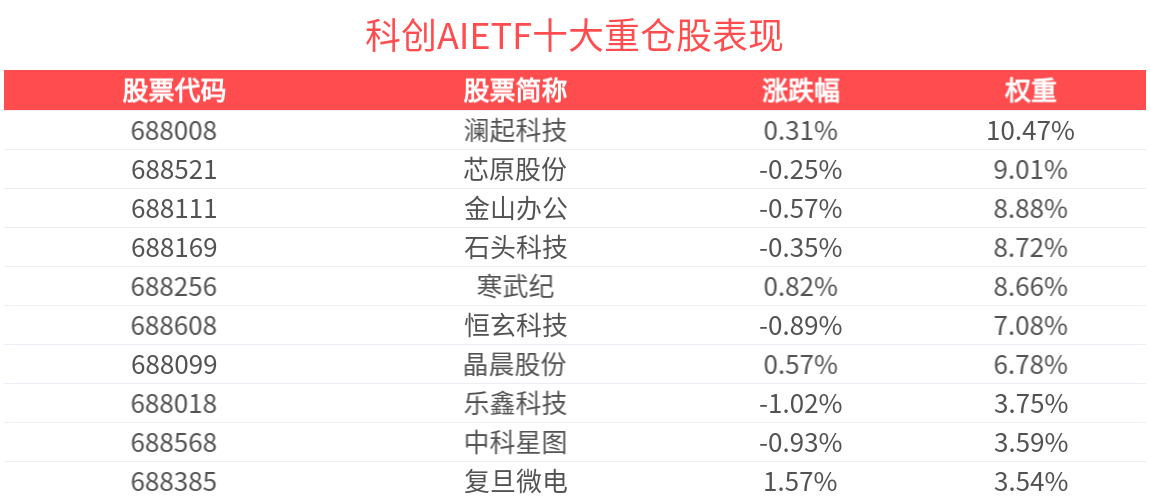
截至2025年6月18日 09:59,上证科创板人工智能指数(950180)下跌0.04%。成分股方面涨跌互现,奥比中光(688322)领涨1.80%,有方科技(688159)上涨 1.73%,复旦微电(688385)上涨1.57%;优刻得(688158)领跌2.76%,当虹科技(688039)下跌1.46%,萤石网络(688475)下跌1.34%。科创AIETF(588790)上涨 0.18%,最新价报0.56元。流动性方面,科创AIETF盘中换手0.72%,成交2489.79万元。拉长时间看,截至6月17日,科创AIETF近1年日均成交2.64亿元,居 可比基金第一。 6月17日,MiniMax宣布将连续五天发布重要更新,第一弹是开源首个推理模型MiniMax-M1,其多项基准测试比肩DeepSeek-R1、Qwen3等开源模型,接近 海外的最领先模型,但算力成本仅约53万美元。 海通国际持续强调之前的观点,即"科技自立自强已经成为目前我国科技的主旋律",而从AI的发展来看,我国AI研发能力和应用落地能力均达到世界先进水 平,未来对计算机板块促进作用或持续加大。持续看好计算机板块。 从收益能力看,截至20 ...