饿了么

Search documents
杭州硕丰自有资金投资有限公司:外卖大战降温,专家吁多管齐下破内卷
Sou Hu Cai Jing· 2025-08-10 17:46
Group 1 - The competition among food delivery platforms in China has intensified, leading to a "subsidy war" characterized by extremely low prices, such as 0 RMB milk tea and 1 RMB hamburgers, but recent regulatory actions have started to cool this competition [1][3] - Delivery riders and merchants are experiencing increased pressure; while order volumes and incomes have surged temporarily, the intense workload is causing physical strain, and the exit of subsidies may lead to challenges for new riders [3] - A medium-tier fast food company's management reported a 12%-15% decline in dine-in customer traffic due to delivery subsidies, with delivery orders increasing from 15% to 22% of total sales, resulting in losses of approximately 8 RMB per order [3] Group 2 - The phenomenon of "involution" in platform economics is twofold: platforms compete for user traffic through substantial subsidies, while merchants are compelled to offer discounts to gain visibility on these platforms [4] - Experts emphasize the need for regulatory measures to prevent "involution" in competition, suggesting that the government should utilize existing laws to regulate predatory pricing and promote fair competition [4] - Recommendations for companies include avoiding short-sighted subsidy wars and instead focusing on differentiated development through improved service quality and technological innovation to gain competitive advantages [4]

经济观察丨外卖大战降温 专家吁多管齐下破内卷
Zhong Guo Xin Wen Wang· 2025-08-10 06:59
Group 1 - The external delivery platform subsidy war is cooling down following a meeting with China's State Administration for Market Regulation, which emphasized the need to avoid irrational promotions [1] - The "involution" competition issue remains a concern, as delivery riders and merchants face increased pressure despite short-term gains in order volume and income [1][2] - A medium-sized fast-food company's management reported a 12%-15% decline in dine-in customer flow due to delivery subsidies, with delivery orders increasing from 15% to 22% [1] Group 2 - Over-competition and "involution" can harm market efficiency and fairness, with subsidies failing to cultivate user habits or expand overall market size [2] - The subsidy war may accelerate the "Matthew effect," where financially strong platforms use extensive subsidies to squeeze out competitors, leading to increased market concentration [2] - The dual "involution" in platform economics involves both competition among platforms for user traffic and merchants being forced to participate in subsidies to gain private traffic [2] Group 3 - Recommendations for government regulation include flexible enforcement, such as reminders to platforms to standardize competitive behavior, and utilizing existing laws to regulate predatory pricing [3] - Platforms are advised to avoid short-sighted subsidy competition and instead pursue differentiated development paths through service quality improvement and technological innovation [3]

赔本赚吆喝外卖大战“卷”坏商家 官方出手“反内卷”保护餐饮业
Yang Shi Xin Wen Ke Hu Duan· 2025-08-10 05:28
Core Viewpoint - The ongoing "subsidy war" among major food delivery platforms has led to record-breaking order volumes, but many restaurant operators report that their profits are being severely squeezed, resulting in financial losses despite increased sales [1][38][40]. Group 1: Impact on Restaurant Profitability - Many restaurants participating in the subsidy programs are experiencing reduced actual income after accounting for costs, with some reporting that their revenue barely covers expenses [5][9][12]. - For example, a tea shop in Yichang reported a net income of only 5.05 yuan from a 19.4 yuan order after deducting various fees, which is nearly equal to the cost of the product [1]. - A dessert shop in Hefei indicated that their actual revenue from online sales was only 6,082 yuan out of a gross sales figure of 11,207 yuan, leading to a loss when fixed costs were considered [5][12]. Group 2: Competitive Pressure and Market Dynamics - Restaurants face a dilemma: participating in subsidies to attract customers or opting out and risking a loss of business to competitors who do participate [7][27]. - A fast-food restaurant in Changsha noted that while their order volume increased significantly, the average income per order decreased by 6.12 yuan, which directly impacts their profit margins [29][31]. - The competitive landscape has shifted, with many restaurants feeling pressured to engage in promotional activities to maintain visibility on delivery platforms, despite the financial strain it imposes [37][40]. Group 3: Structural Issues in the Industry - The complex commission structures and promotional requirements imposed by delivery platforms create a challenging environment for restaurant operators, often leading to a situation where they are effectively "working for the platform" rather than earning a sustainable profit [33][48]. - The reliance on delivery platforms has resulted in a significant decline in dine-in customers, further complicating the financial viability of traditional restaurants [35][37]. - The ongoing subsidy competition has raised concerns about the long-term sustainability of the restaurant industry, as many operators are forced to compromise on quality and service to remain competitive [54][58]. Group 4: Regulatory Response and Future Outlook - In response to the unsustainable practices in the industry, regulatory bodies have begun to intervene, aiming to establish fair competition and protect the interests of restaurants and consumers [49][63]. - Recent statements from major delivery platforms indicate a shift towards more rational subsidy practices, with a focus on creating a healthier market environment [62][64]. - The industry is at a crossroads, with stakeholders advocating for a transition from price competition to value and service competition to ensure long-term viability [60][64].
外卖大战降温 专家吁多管齐下破内卷
Zhong Guo Xin Wen Wang· 2025-08-10 00:41
Core Viewpoint - The competition among food delivery platforms in China is cooling down following regulatory interventions, but the underlying issue of "involution" in competition remains a concern [1][2]. Group 1: Impact of Subsidy Wars - The recent subsidy wars led to a significant increase in order volume, but delivery riders reported heightened stress and physical exhaustion due to the intense workload [1]. - A mid-tier fast-food company's management noted a 12%-15% decline in dine-in customer traffic due to subsidies, with the proportion of delivery orders rising from 15% to 22% [1]. - Platforms are pressuring merchants to offer additional discounts, resulting in losses of approximately 8 RMB per order for some businesses, which could jeopardize the financial stability of small and medium-sized restaurants in the long term [1]. Group 2: Market Dynamics and Competition - Experts argue that excessive competition and "involution" harm market efficiency and fairness, with subsidies failing to cultivate genuine user habits or expand overall market size [2]. - The "Matthew effect" may be accelerated by subsidy wars, where financially strong platforms dominate the market, leading to increased market concentration [2]. - The dual nature of "involution" in platform economies is highlighted, where platforms compete for user traffic through large subsidies, while merchants are compelled to participate in these subsidies to gain visibility [2]. Group 3: Regulatory and Strategic Recommendations - Recommendations for government regulation include flexible enforcement, such as reminders to platforms to standardize competitive behavior, and utilizing existing legal frameworks to regulate predatory pricing [3]. - Platforms are advised to avoid short-sighted subsidy competition and instead pursue differentiated development strategies by enhancing service quality and technological innovation to gain competitive advantages [3].
外卖大战降温,专家吁多管齐下破内卷
Xin Lang Cai Jing· 2025-08-10 00:13
Group 1 - The core issue of the article revolves around the "involution" competition in the food delivery industry, highlighted by the recent discussions among major platforms like Meituan, Ele.me, and JD.com, which have committed to ending irrational promotions [1][3] - The intense competition has led to significant pressure on delivery riders and merchants, with riders experiencing increased order volumes but also physical strain, while merchants face declining dine-in traffic and increased losses per order due to platform demands for further discounts [3][4] - Experts emphasize that excessive competition harms market efficiency and fairness, with subsidies failing to cultivate user habits or expand market size, instead leading to a substitution effect between online and offline businesses [3][4] Group 2 - The phenomenon of "double involution" in platform economies is characterized by both inter-platform competition for user traffic through large subsidies and intra-platform merchants being forced to participate in subsidies to attract private traffic [4] - Recommendations for addressing involution competition include flexible regulatory approaches, such as platform reminders to standardize competitive behavior and the use of existing legal frameworks to regulate predatory pricing [4][5] - Experts suggest that platforms should shift from short-sighted subsidy competition to differentiated development strategies, focusing on service quality and technological innovation to gain competitive advantages [5]

反内卷才能赢未来
Chang Sha Wan Bao· 2025-08-09 23:52
Core Viewpoint - The article discusses the phenomenon of "involution" in various industries in China, highlighting the negative impacts of excessive price competition and the resulting decline in product quality and innovation [2][4][5]. Group 1: Involution in Various Industries - The external environment has led to severe price wars across multiple sectors, including the automotive, food delivery, and renewable energy industries, with price reductions reaching as high as 45% in the electric vehicle market [2][3]. - The food delivery platforms like Meituan and Ele.me are engaged in a subsidy war, resulting in profits for certain products, such as milk tea, dropping below 1 yuan, and in some cases, leading to negative profit margins [3][4]. - In the automotive sector, profit margins have plummeted to 3.9%, forcing companies to engage in aggressive price cuts to stimulate sales, creating a vicious cycle of declining sales and further price reductions [3][4]. Group 2: Consequences of Involution - Involution leads to a reduction in necessary operational costs, which ultimately harms research and development investments, resulting in a cycle of innovation stagnation and product homogenization [4][5]. - The excessive competition has created systemic risks, with the potential for overcapacity and a decline in industry competitiveness, ultimately harming consumer rights and high-quality development [5][6]. - The government has recognized the issue, with multiple meetings emphasizing the need to prevent "involution" and regulate low-price competition among enterprises [6][7]. Group 3: Government and Industry Response - The National Market Supervision Administration has begun addressing the issue by engaging with major platforms to regulate promotional activities and encourage rational competition [8]. - Industry self-regulation is showing positive signs, with leading automotive companies taking steps to stabilize supply chains and various associations urging food delivery platforms to cease irrational subsidies [8][9]. - The focus is shifting from price competition to value creation, with an emphasis on innovation and differentiation to enhance market competitiveness and consumer experience [9].
(经济观察)外卖大战降温 专家吁多管齐下破内卷
Zhong Guo Xin Wen Wang· 2025-08-09 15:20
Group 1 - The subsidy war among food delivery platforms in China is cooling down following a joint statement from Meituan, Ele.me, and JD.com, which committed to avoiding irrational promotions after being interviewed by the State Administration for Market Regulation [1] - Delivery riders and merchants are facing pressure; while order volumes and incomes have increased in the short term, the high intensity of work is causing physical and mental strain [1] - A mid-tier fast food company's management reported a 12%-15% decline in dine-in customer flow due to delivery subsidies, with delivery orders increasing from 15% to 22% of total sales [1] Group 2 - Over-competition and "involution" in the market can harm efficiency and fairness, with subsidies failing to cultivate user habits or expand market size, primarily substituting online for offline business [2] - The subsidy war may accelerate the "Matthew effect," where financially strong platforms use extensive subsidies to squeeze out competitors, leading to increased market concentration [2] - The "double involution" in platform economics involves both competition among platforms for user traffic and merchants being forced to participate in subsidies to gain private traffic [2] Group 3 - Recommendations for government regulation include flexible enforcement, such as reminding platforms to standardize competitive behavior, and utilizing existing laws to regulate predatory pricing [3] - Platforms are advised to avoid short-sighted subsidy competition and instead pursue differentiated development paths by enhancing service quality and technological innovation to gain competitive advantages [3]
助力夜经济 亚奥国际嗨啤节开幕
Bei Jing Shang Bao· 2025-08-09 12:45
Group 1 - The "2025 Cool Asia International Beer Festival and Shuanghe Sheng Five-Star Craft Beer Festival" is being held at Beichenhui Shopping Mall from August 9 to August 24, providing a "beer + food" leisure and interactive experience [1] - The event features multiple products from Shuanghe Sheng Beer, including German wheat beer, Shuanghe Sheng Wu Yutai jasmine tea beer, and IPA [1] - The festival is organized by a subsidiary of Yiqing Holdings, showcasing various brands such as Beibingyang soda, Hongxing Erguotou, Longhui wine, and Yili classic pastries, aiming to inject vitality into Beijing's summer nights [1] Group 2 - The summer season is identified as a peak time for tourism and a golden window for developing the night economy, with Ele.me reporting a 120% month-on-month increase in night orders in Beijing since July [1] - Traditional late-night food orders, such as lobster and barbecue, have seen a month-on-month increase of over 80%, while local snacks, regional dishes, stews, and noodles have experienced a growth of over 140% [1] - To capitalize on the night consumption opportunities, many restaurants are extending operating hours and launching late-night themed menus to further unleash consumer potential [1]
【民生调查局】外卖补贴大战背后:骑手日工作超12小时,餐饮商家每单亏8元
Zhong Guo Xin Wen Wang· 2025-08-09 06:09
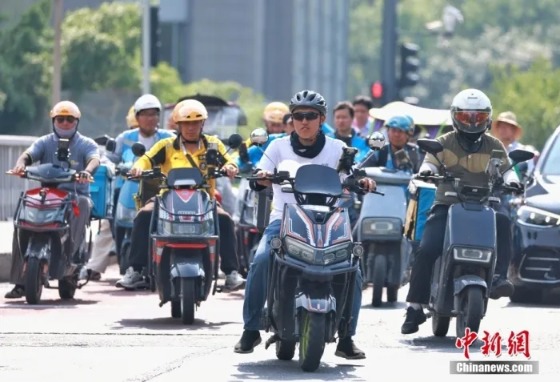
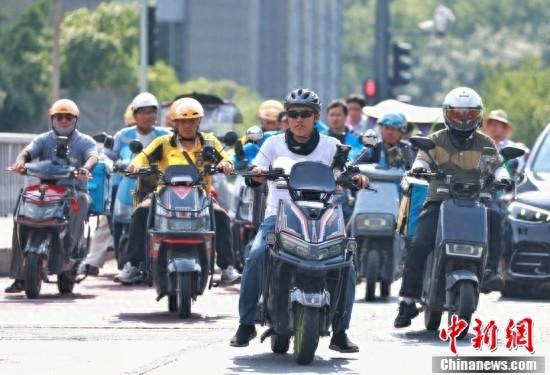
这里是民生调查局,见人所未见,调查民生之变。关注你想关注的、你没关注的,调查你想 看的、未看到的。 中新网北京8月9日电(左雨晴)"我等个奶茶等了一个多小时。"立秋这天,奶茶店爆单,奶茶店员和外卖 小哥成了热搜里"立秋第一杯奶茶的受害者"。 晚上六点,正值外卖点单的高峰期,"85后"外卖骑手赵彰(化名)同时打开美团、京东、饿了么三个平台 接单,并祈祷不同平台派送的单子尽量能在一个方向。另一边,餐饮店员面对着不断新增的外卖订单, 被外卖骑手催到崩溃。 今年以来,各平台掀起新一轮"外卖大战"。这场持续数月的"狂欢",对平台、餐饮商家和外卖骑手,究 竟意味着什么?中国新闻网《民生调查局》进行了采访调查。 外卖骑手:每日工作超12小时 "单量明显增加"是外卖骑手最直观的感受。 "去年没有补贴的时候是限单,骑手每天限制不能超过45单或者50单,现在是限低,每天不能低于40单 或者45单。" 编者按: 赵彰告诉记者,他从2020年年底来到北京,各平台的外卖都送过。"我在骑手里属于比较'极端'的,跑 起来稍微拼命一点。" 资料图:外卖小哥顶着烈日在北京街头骑车配送。 中新社记者 贾天勇 摄 外卖订单激增下,赵彰的收入也水涨 ...
外卖补贴大战背后:骑手日工作超12小时 餐饮商家每单亏8元
Zhong Guo Xin Wen Wang· 2025-08-09 03:00
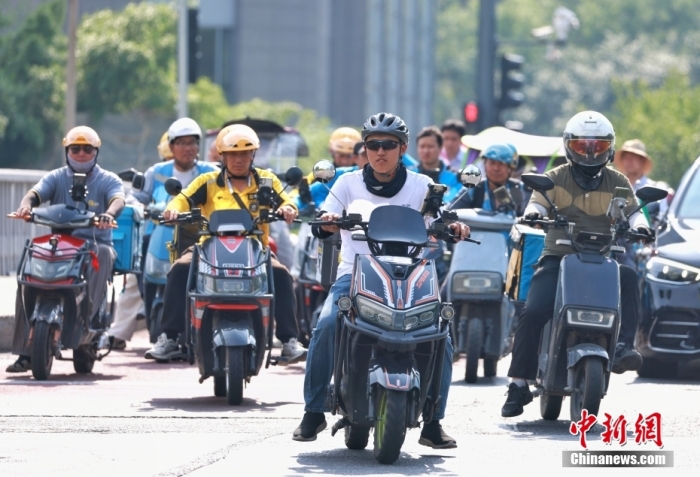
资料图:外卖小哥顶着烈日在北京街头骑车配送。中新社记者贾天勇摄 01 外卖骑手:每日工作超12小时 "单量明显增加"是外卖骑手最直观的感受。 "去年没有补贴的时候是限单,骑手每天限制不能超过45单或者50单,现在是限低,每天不能低于40单 或者45单。" 赵彰告诉记者,他从2020年年底来到北京,各平台的外卖都送过。"我在骑手里属于比较'极端'的,跑 起来稍微拼命一点。" 外卖订单激增下,赵彰的收入也水涨船高,上个月他跑了约2600单。"订单跟去年比几乎翻倍,我现在 的收入是去年同期的1.5倍,月收入差不多有2万多元。" "我等个奶茶等了一个多小时。"立秋这天,奶茶店爆单,奶茶店员和外卖小哥成了热搜里"立秋第一杯 奶茶的受害者"。 晚上六点,正值外卖点单的高峰期,"85后"外卖骑手赵彰(化名)同时打开美团、京东、饿了么三个平 台接单,并祈祷不同平台派送的单子尽量能在一个方向。另一边,餐饮店员面对着不断新增的外卖订 单,被外卖骑手催到崩溃。 今年以来,各平台掀起新一轮"外卖大战"。这场持续数月的"狂欢",对平台、餐饮商家和外卖骑手,究 竟意味着什么?中国新闻网《民生调查局》进行了采访调查。 不过,赵彰收入提升并 ...