宝钢股份

Search documents
2025年11月中国钢材进出口数量分别为50万吨和998万吨
Chan Ye Xin Xi Wang· 2025-12-27 03:08
Group 1 - The core viewpoint of the article highlights the trends in China's steel import and export activities, indicating a slight increase in imports and a notable increase in exports in November 2025 [1] - In November 2025, China's steel imports amounted to 500,000 tons, representing a year-on-year increase of 4.9%, while the import value was $80.9 million, showing a year-on-year decrease of 6.3% [1] - In the same month, China's steel exports reached 9.98 million tons, which is a year-on-year increase of 7.6%, with an export value of $6.945 billion, reflecting a year-on-year growth of 4.3% [1] Group 2 - The article references a report by Zhiyan Consulting titled "Analysis of the Competitive Landscape and Investment Development Research of China's Steel Deep Processing Industry from 2026 to 2032," indicating ongoing research and analysis in the steel industry [1] - A list of publicly listed companies in the steel sector is provided, including names such as Vanadium Titanium Co., CITIC Special Steel, and Baosteel, among others, suggesting a diverse market landscape [1]


研判2025!中国电池箱体行业产业链上下游、发展现状、竞争格局及发展趋势分析:新能源汽车+储能双轮驱动,电池箱体行业规模快速增长[图]
Chan Ye Xin Xi Wang· 2025-12-27 02:29
Core Viewpoint - The battery box industry in China is experiencing significant growth, projected to increase from 7.5 billion yuan in 2021 to 27.5 billion yuan in 2024, driven by the demand from the electric vehicle and energy storage sectors [1][7]. Industry Overview - The battery box is a protective structure for battery packs, designed for support, connection, heat dissipation, and ease of installation and maintenance. It can be categorized by application (electric vehicles, energy storage systems, portable devices), material (metal, plastic), structure (modular, integrated), installation method (built-in, external), and battery type (lithium-ion, lead-acid) [3][4]. Market Size and Growth - The market size for battery boxes in China is expected to reach 35.188 billion yuan by 2025, continuing the upward trend fueled by the booming demand in the electric vehicle and energy storage sectors [1][7]. - The production of aluminum alloy, a key material for battery boxes, is projected to reach 16.141 million tons in 2024, reflecting a year-on-year increase of 9.6% [5][6]. Competitive Landscape - The battery box industry is primarily composed of two types of competitors: those focused on electric vehicle battery box production, such as He Sheng Co. and New Aluminum Era, and traditional automotive parts manufacturers like Lingyun Co. and Huayu Automotive, which are expanding into the battery box market [9][10]. - Leading companies are capturing a significant market share, while smaller firms often resort to price competition, which may hinder their long-term sustainability [13]. Industry Trends - Lightweight materials are becoming increasingly important in the industry, as the weight of battery systems significantly impacts energy efficiency in electric vehicles. The battery box, as a non-cell component, plays a crucial role in achieving this lightweight goal [11]. - The demand for battery boxes is expected to grow in tandem with the electric vehicle market, as they are essential components of the vehicle's power system [12]. - The concentration of market share is rising, with leading companies like He Sheng Co. and New Aluminum Era dominating the industry, while smaller players struggle to maintain competitiveness [13].

笃“实”夯基现代化产业体系建设持续推进
Xin Lang Cai Jing· 2025-12-26 21:02
Group 1 - The modernization of the industrial system is the material and technical foundation of Chinese-style modernization, with advancements in industrial, agricultural, service sectors, and infrastructure development [1] - The Central Economic Work Conference emphasized the continuous promotion of the modernization of the industrial system by 2025, focusing on innovation-driven growth and nurturing new momentum [1][3] - The current focus is on leading new quality productivity development through technological innovation, reinforcing the real economy to gain strategic advantages in future development and international competition [1][2] Group 2 - The domestic and international environments are complex, necessitating a focus on the real economy for modern industrial system construction, supported by policies aimed at stabilizing growth in key industries [2] - The agricultural sector has shown resilience, achieving a stable grain output of over 1.4 trillion jin, despite natural disasters [3] - In November, 30 out of 41 major industrial sectors reported year-on-year growth in added value, indicating steady progress in the industrial economy [3] Group 3 - The integration of technological and industrial innovation is advancing, with more research outcomes transitioning from laboratories to production lines, supported by the establishment of over 2,400 pilot platforms nationwide [7][8] - Key industrial enterprises have improved their CNC rate to 68.5%, and the comprehensive utilization rate of industrial solid waste has reached 57% [8] - The number of high-tech enterprises in the country has reached 504,000, with over 140,000 specialized and innovative small and medium-sized enterprises cultivated, enhancing the innovation capacity of enterprises [9] Group 4 - The integration of industries is a crucial path for building a modern industrial system, with a focus on enhancing economic efficiency and creating new industries and business models [10] - The acceleration of the integration between the real economy and the digital economy is evident, with over 7,000 advanced intelligent factories established [11][12] - The government is promoting the deep integration of manufacturing and service industries, with policies aimed at enhancing the development of modern services alongside advanced manufacturing [12][13]
笃“实”夯基 现代化产业体系建设持续推进
Xin Lang Cai Jing· 2025-12-26 19:59
Group 1 - The modernization of the industrial system is the material and technical foundation for Chinese-style modernization, with advancements in industry, agriculture, services, and infrastructure development [1] - The Central Economic Work Conference emphasized the continuous promotion of the modernization of the industrial system by 2025, focusing on innovation-driven growth and nurturing new momentum [1] - The current emphasis is on leading new quality productivity development through technological innovation, reinforcing the real economy to gain strategic advantages in future development and international competition [1] Group 2 - The focus on the real economy is crucial for building a modern industrial system, as evidenced by the significant market share of Shandong Zhonghang Taida Composite Materials Co., which has over 30% in the national hot press market [2] - The State Council has issued guidelines to ensure financial services support the real economy, with various departments implementing growth stabilization plans for key industries like steel and automotive [2] - The resilience of the real economy is highlighted by the agricultural sector achieving a stable grain output of over 1.4 trillion jin, despite natural disasters [3] Group 3 - The integration of technological and industrial innovation is essential for enhancing productivity and creating a modern industrial system that is competitive and self-sufficient [6] - The number of high-tech enterprises in China has reached 504,000, with over 140,000 specialized and innovative small and medium-sized enterprises, indicating a strengthening of the innovation主体 [8] - The shift towards digital and intelligent manufacturing is accelerating, with over 7,000 advanced intelligent factories established and more than 100 million devices connected to industrial internet platforms [10] Group 4 - The integration of the primary, secondary, and tertiary industries is necessary for the construction of a modern industrial system, as highlighted by the ongoing efforts to promote service-oriented manufacturing and the deep integration of manufacturing with service industries [12] - The Central Economic Work Conference has outlined plans to enhance the quality and capacity of the service industry, which is expected to further support the modernization of the industrial system [12] - The future outlook for economic development is optimistic, driven by active factor flows and innovation, with a focus on intelligent, green, and integrated development directions [12]
全场景“医”路护航!通用技术宝石花医疗为中国企业出海做好医疗健康保障
Sou Hu Cai Jing· 2025-12-26 15:24
Core Viewpoint - The article discusses the importance of providing healthcare support for Chinese employees working abroad as part of the Belt and Road Initiative, highlighting the efforts of the General Technology Group and its subsidiary, Baoshihua International Medical Health Company, in establishing a comprehensive overseas health保障体系 [1][3]. Group 1: Challenges Faced by Chinese Enterprises Abroad - Chinese enterprises face a "health dilemma" when operating overseas, which includes managing safety and social responsibilities while dealing with uneven distribution of medical resources and insufficient emergency medical response [3]. - The presence of multiple health risks, such as infectious diseases and complex working environments, poses a constant threat to the health and safety of overseas employees [3]. Group 2: Services and Achievements of Baoshihua International - Baoshihua International has served over 74 overseas institutions and nearly 100,000 Chinese employees, establishing a health defense line for them [4]. - During the global pandemic, the company successfully repatriated 12,000 Chinese employees and received multiple commendations for its efforts [4]. Group 3: Strategic Development and Future Plans - The company is focused on high-quality and stable development during the 14th Five-Year Plan period, with a core structure based on "two platforms and four business lines" [5]. - Baoshihua International aims to enhance its overseas medical service capabilities and expand international medical cooperation through its platforms [5]. - The company is also developing advanced medical services, including cross-border air medical rescue and innovative health management projects, to ensure the safety of employees in critical conditions [5]. Group 4: Commitment to Quality and Collaboration - Baoshihua International emphasizes the principle of "benevolence as the foundation, quality of state-owned enterprises" and aims to improve comprehensive medical health service capabilities for Chinese enterprises abroad [6]. - The company seeks to integrate into the international medical community and learn from peers to build a collaborative ecosystem for "products + services + standards" [6].
2025年终经济观察丨笃“实”夯基 现代化产业体系建设持续推进
Xin Lang Cai Jing· 2025-12-26 14:58
Group 1 - The modernization of the industrial system is the material and technical foundation of Chinese-style modernization, with advancements in industrial, agricultural, service sectors, and infrastructure development [1] - The Central Economic Work Conference emphasized the continuous promotion of the modernization of the industrial system by 2025, focusing on innovation-driven growth and nurturing new momentum [1] - Companies are increasingly leveraging technological innovation to lead the development of new productive forces, reinforcing the real economy for strategic advantages in future development and international competition [1] Group 2 - The focus on the real economy is crucial for building a modern industrial system, as evidenced by the significant market share of Shandong Zhonghang Taida Composite Materials Co., which has over 30% in the national hot press market [2] - The government has issued guidelines to enhance financial support for the real economy, with various departments collaborating on growth stabilization plans for key industries like steel and automotive [2] Group 3 - The resilience of the real economy is highlighted by the agricultural sector achieving a stable grain output of over 1.4 trillion jin, despite natural disasters [3] - In November, 30 out of 41 major industrial sectors reported year-on-year growth in value added, indicating steady progress in the industrial economy [3] - The service sector contributed 3.1 percentage points to GDP growth in the first three quarters, reflecting an increase in quality and efficiency [3] Group 4 - The integration of technology and industry is essential for enhancing industrial innovation capabilities, addressing issues of "large but not strong" and "complete but not refined" in certain sectors [6] - The establishment of over 2,400 pilot platforms nationwide supports the development of new productive forces, with 241 key platforms identified for nurturing innovation [6] Group 5 - Traditional industries are accelerating their transformation, with the CNC rate in key industrial processes reaching 68.5% and the comprehensive utilization rate of industrial solid waste at 57% [7] - The number of high-tech enterprises in China has reached 504,000, with over 140,000 specialized and innovative small and medium-sized enterprises cultivated, enhancing the innovation capacity of the industrial system [8] Group 6 - The integration of industries is a significant pathway for building a modern industrial system, with a focus on improving economic efficiency and creating new industries and business models [9] - The acceleration of the integration between the real economy and digital economy is evident, with over 7,000 advanced smart factories established and more than 100 million devices connected to key industrial internet platforms [10] Group 7 - The shift from merely selling equipment to providing engineering design and energy-saving services is exemplified by Shaanxi Blower (Group) Co., which has expanded its business to over 100 countries [12] - The government is promoting the deep integration of manufacturing and service industries, aiming for a collaborative development model across the three industrial sectors [12]
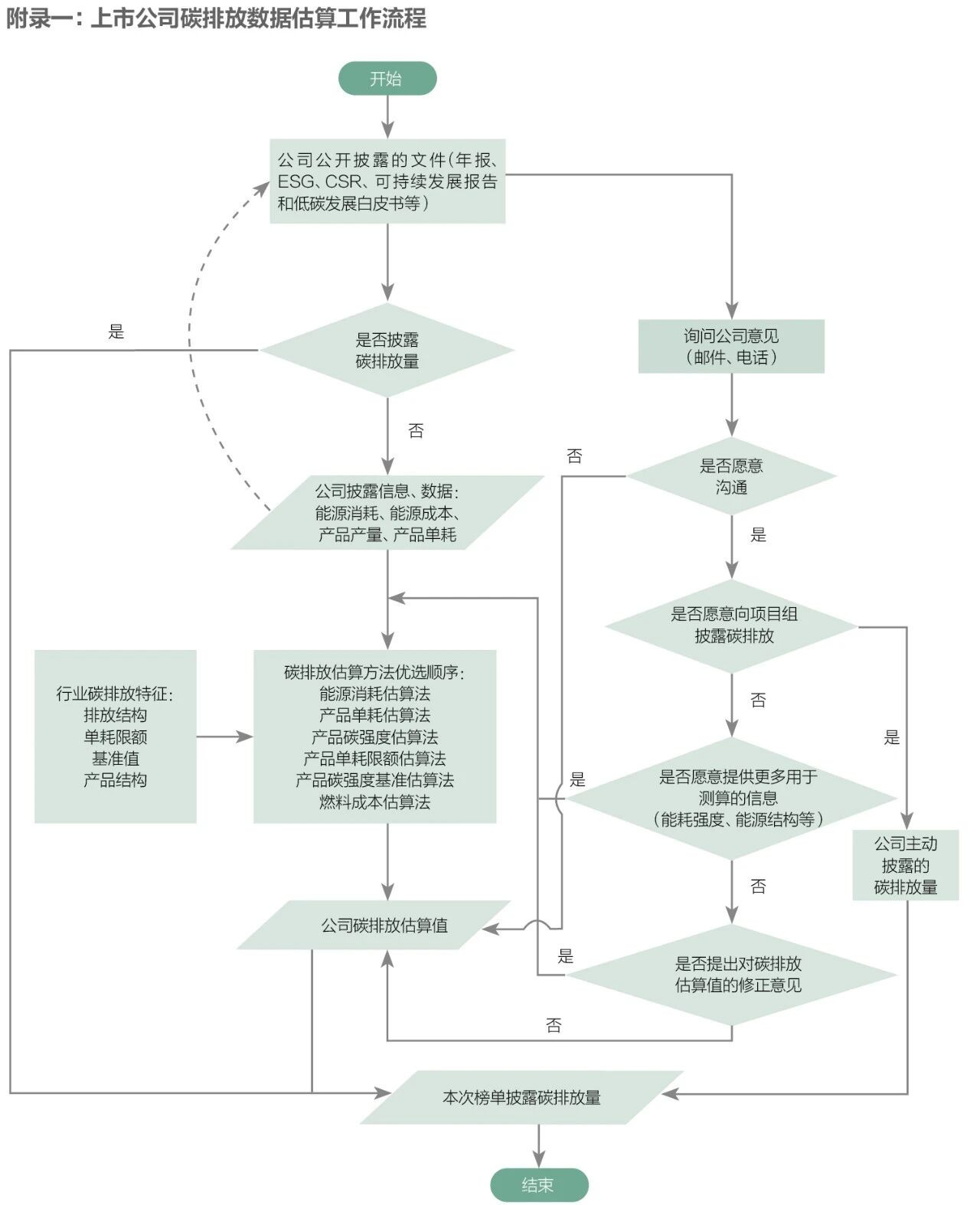
2025上市公司碳排放排行榜暨双碳领导力榜
Cai Jing Wang· 2025-12-26 14:51
Core Insights - The total carbon emissions of the top 100 listed companies in China for 2024 are projected to be 5.134 billion tons, a decrease of 2.7 million tons compared to 2023, indicating a potential peak in emissions [1][6][11] - The disclosure rate of carbon emissions among these companies has increased from 43% in 2021 to an expected 80% by 2025, reflecting a growing awareness and commitment to carbon reduction [1][5][23] Group 1: Carbon Emissions Overview - The carbon emissions of the top 100 listed companies in 2024 are 5.134 billion tons, which is a 0.52% decrease from 5.161 billion tons in 2023 [6][11] - The top ten companies account for approximately 38% of the total emissions, highlighting the concentration of emissions among a few major players [2][6] - The threshold for inclusion in the carbon emissions ranking has decreased to 10.3128 million tons in 2024, down from 11.5329 million tons in 2023, indicating a reduction in emissions intensity among leading high-carbon companies [6][11] Group 2: Industry Emission Trends - The power industry remains the largest contributor to carbon emissions, accounting for approximately 2.29 billion tons in 2024, maintaining a significant share of the total emissions [15] - The cement industry follows with emissions of about 770 million tons, continuing a downward trend for four consecutive years [15] - The steel industry has seen a notable decrease in emissions, returning to levels close to those of 2022, with emissions around 580 million tons [15][18] Group 3: Carbon Efficiency Metrics - The average carbon efficiency of the top 100 companies in 2024 is 0.399 million yuan per ton, remaining stable compared to 0.40 million yuan per ton in 2023 [20][21] - The carbon efficiency has improved by 10.83% from 2021 to 2024, indicating a positive trend in decoupling economic output from carbon emissions [20] - Seven industries have shown improvements in carbon efficiency, with the chemical industry achieving the most significant increase, reaching 0.39 million yuan per ton, the highest in three years [20][21] Group 4: Disclosure and Transparency - In 2024, 80 companies disclosed their carbon emissions data, an increase from 65 in 2023, achieving the highest disclosure rate in four years [23] - The disclosure rate for the power industry is 77.42%, while the cement industry leads with 85.71%, consistently above the average [26] - A-share companies have seen a significant rise in disclosure rates, from 16.67% in 2021 to 70.97% in 2024, indicating improved transparency in carbon reporting [26][27]





2025年终经济观察|笃“实”夯基 现代化产业体系建设持续推进
Zhong Guo Jin Rong Xin Xi Wang· 2025-12-26 11:52
Group 1 - The modern industrial system is the material and technical foundation of Chinese-style modernization, with advancements in industry, agriculture, services, and infrastructure development [1] - The Central Economic Work Conference emphasized the continuous promotion of the modern industrial system by 2025, focusing on innovation-driven growth and nurturing new momentum [1][2] - The integration of technological and industrial innovation is deepening, with a focus on advanced manufacturing as the backbone of the modern industrial system [1][3] Group 2 - The domestic and international environment is complex, necessitating a focus on the real economy for the construction of a modern industrial system [2] - The State Council has issued guidelines to enhance financial services for the real economy, with increased support for key industries such as steel and automotive [2] - The resilience of the real economy is highlighted by the stable grain production exceeding 1.4 trillion jin and growth in 30 out of 41 industrial sectors in November [3] Group 3 - The integration of new technologies is crucial for enhancing industrial competitiveness, addressing issues of "large but not strong" and "complete but not refined" in certain sectors [6] - The number of high-tech enterprises has reached 504,000, with over 140,000 specialized and innovative small and medium-sized enterprises cultivated [9] - The construction of over 2,400 pilot platforms supports the seamless connection between innovation and industry [7] Group 4 - The integration of digital and physical economies is accelerating, with over 7,000 advanced intelligent factories established and more than 100 million devices connected to industrial internet platforms [11] - The focus on service-oriented manufacturing is growing, with policies promoting the deep integration of manufacturing and service industries [12] - The future outlook for economic development is optimistic, driven by active factor flows and innovation, with a commitment to intelligent, green, and integrated development [12]
2025年终经济观察丨笃“实”夯基 现代化产业体系建设持续推进
Xin Hua Wang· 2025-12-26 10:58
Group 1 - The modern industrial system is the material and technical foundation of Chinese-style modernization, with significant advancements in industry, agriculture, services, and infrastructure development [1] - The Central Economic Work Conference emphasized the continuous promotion of the modern industrial system by 2025, focusing on innovation-driven growth and nurturing new momentum [1] - Companies are leveraging technological innovation to lead the development of new productive forces, reinforcing the real economy for strategic advantages in future development and international competition [1] Group 2 - The focus on the real economy is crucial for building a modern industrial system, with policies aimed at supporting industries such as steel and automotive to stabilize growth [2] - The resilience of the real economy is highlighted by the agricultural sector achieving a stable harvest of over 1.4 trillion jin, and 30 out of 41 industrial sectors showing year-on-year growth in value added [3] - The service sector contributed 3.1 percentage points to GDP growth in the first three quarters, indicating a continuous improvement in quality and efficiency [3] Group 3 - The integration of technology and industry is essential for enhancing industrial innovation capabilities, with a focus on improving total factor productivity and creating a competitive modern industrial system [6] - Over 2,400 pilot platforms have been established nationwide to support the development of new productive forces, with 241 key platforms identified for further cultivation [6] - Traditional industries are accelerating their transformation, with the CNC rate in key industrial enterprises reaching 68.5% and the comprehensive utilization rate of industrial solid waste at 57% [7] Group 4 - The integration of the digital economy and the real economy is accelerating, with smart manufacturing technologies being adopted in various sectors [10] - More than 7,000 advanced and over 500 excellent smart factories have been established, with over 100 million devices connected to key industrial internet platforms [11] - The government is promoting the deep integration of manufacturing and service industries, with policies aimed at enhancing the quality and capacity of the service sector [11]
【26日资金路线图】有色金属板块净流入逾183亿元居首 龙虎榜机构抢筹多股
Zheng Quan Shi Bao· 2025-12-26 10:49
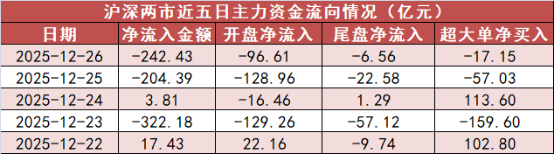
Market Overview - The A-share market showed mixed results on December 26, with the Shanghai Composite Index closing at 3963.68 points, up 0.1%, and the Shenzhen Component Index at 13603.89 points, up 0.54% [1] - Total trading volume in the A-share market reached 21812.64 billion yuan, an increase of 2372.04 billion yuan compared to the previous trading day [1] Capital Flow - The main capital outflow in the A-share market was 242.43 billion yuan, with an opening net outflow of 96.61 billion yuan and a closing net outflow of 6.56 billion yuan [2] - The CSI 300 index experienced a net outflow of 54.39 billion yuan, while the ChiNext saw a net outflow of 133.96 billion yuan and the STAR Market had a net outflow of 20.89 billion yuan [4] Sector Performance - The non-ferrous metals sector led with a net inflow of 183.35 billion yuan, marking a 2.35% increase [6] - Other sectors with net inflows included non-bank financials (40.67 billion yuan), power equipment (16.91 billion yuan), steel (8.29 billion yuan), and agriculture, forestry, animal husbandry, and fishery (2.00 billion yuan) [7] Individual Stock Activity - The stock with the highest net inflow was Sungrow Power Supply, attracting 23.72 billion yuan [8] - Institutions showed significant interest in several stocks, with notable net purchases in Aerospace Development (48.18 million yuan) and Demingli (20.50 million yuan) [10][11] Institutional Focus - Recent institutional ratings highlighted several stocks, including Jiu Mining Energy with a target price of 16.27 yuan, indicating a potential upside of 21.15% from its closing price [13]