xAI

Search documents
Elon Musk wants to be a trillionaire — here's how SpaceX may get him there
CNBC· 2026-02-07 13:00
Core Insights - Elon Musk's wealth is increasingly driven by SpaceX, which now constitutes nearly two-thirds of his net worth, estimated at around $845 billion, surpassing the combined wealth of the next three richest individuals [1] - SpaceX's acquisition of Musk's AI and social media company, xAI, valued the merged entity at $1.25 trillion, with Musk's stake in the company estimated at over $530 billion [2] - Musk's focus is shifting towards SpaceX, as indicated by Tesla's proxy filing, which acknowledges that a majority of Musk's wealth now comes from other ventures [3] Company Developments - SpaceX has secured over $20 billion in federal government contracts, with more lucrative contracts anticipated, and Musk envisions the acquisition as a step towards developing "orbital data centers" [4] - The merger of SpaceX and xAI may expand access to larger capital markets, particularly for xAI, which has a significant capital requirement [4] - xAI is currently under investigation by authorities in multiple regions due to concerns over its Grok image generator, which has been linked to the creation of explicit deepfake images [4] Regulatory Considerations - It remains uncertain whether the merger between SpaceX and xAI will necessitate regulatory review, as there are calls for investigations into SpaceX regarding undisclosed Chinese investors [5]



马斯克重磅发声:三年内部署AI成本最低的地方在太空,Optimus是“无限印钞机”
华尔街见闻· 2026-02-07 12:35
Core Insights - Elon Musk predicts that within 30 to 36 months, space will become the most cost-effective location for deploying AI due to Earth's electrical power constraints [6][30][17] - Musk envisions launching 100 gigawatts (GW) of AI computing power annually into space, aiming to exceed the total AI computing power on Earth within five years [9][50][55] - The xAI business model targets a trillion-dollar market by creating "digital humans" capable of performing various tasks, which Musk believes could generate significant revenue [11][18] - The Optimus robot is described as an "infinite money printer," with its production expected to scale significantly, enhancing the competitiveness of U.S. manufacturing [14][18] Group 1: Space AI Computing - Musk emphasizes that the efficiency of solar panels in space is five times greater than on Earth, eliminating the need for expensive battery storage systems [8][27] - He warns of an impending surplus of chips that cannot be powered due to stagnant electrical output outside of China [7][82] - The plan involves launching approximately 10,000 Starship missions annually to achieve the necessary power and computing capacity in orbit [9][52] Group 2: xAI and Digital Humans - Musk's xAI aims to emulate human tasks digitally, potentially unlocking trillions in revenue as it competes with existing tech giants [11][18] - He anticipates that by the end of the year, significant advancements in digital human simulation will be achieved [12] - The strategy relies on rapid hardware iteration and vertical integration capabilities from Tesla and SpaceX [12] Group 3: Optimus and Manufacturing - The Optimus robot is positioned as a critical factor for U.S. manufacturing competitiveness, with Musk highlighting the need for innovation to counter China's manufacturing dominance [14][15] - Musk proposes building a "TeraFab" chip factory to overcome current supply chain limitations and meet the growing demand for chips [15][69] Group 4: Energy and Supply Chain - Musk discusses the necessity of self-manufacturing energy equipment to support the ambitious AI and robotics plans [15][46] - He notes that the current supply chain for energy components is insufficient to meet the rapid expansion required for his projects [15][46] - The company aims to produce solar panels domestically, targeting an annual output of 100 GW [38][50]

1000万单!补贴大战热闹又熟悉,但AI应用究竟应该比什么?
Sou Hu Cai Jing· 2026-02-07 11:14
Core Viewpoint - The article discusses the ongoing competition among major Chinese tech companies in the AI sector, particularly during the Spring Festival, highlighting the aggressive marketing strategies, including substantial subsidies, to attract users and establish AI as a core component of the next-generation internet [4][8]. Group 1: AI Competition and User Acquisition - The Spring Festival has sparked a significant "AI battle" among companies, with Alibaba's Qianwen App launching a "30 billion yuan free order" campaign, resulting in over 10 million orders within hours [1][2]. - Major players like ByteDance's Doubao and Tencent's Yuanbao are also competing fiercely, indicating a highly competitive environment in the AI application market [8]. - The article notes that the current strategies focus on user acquisition through subsidies, which may detract from long-term technological innovation [9][12]. Group 2: Market Dynamics and Implications - The competition is characterized by a "subsidy war," where companies are using financial incentives to rapidly grow their user base, reflecting a deep-rooted culture of subsidies in the Chinese internet sector [9][12]. - The article warns that this approach could lead to significant market distortions and resource wastage, as evidenced by the operational challenges faced by some tea shops overwhelmed by demand [9][10]. - There is a concern that prioritizing short-term user growth over foundational research could undermine China's long-term competitiveness in AI [12][13]. Group 3: Future Directions and Challenges - The article emphasizes the need for a shift in focus from mere marketing tactics to integrating technological innovation with user engagement strategies [12][13]. - It calls for patience and a commitment to long-term goals, suggesting that true success in AI will come from solving real user problems rather than relying on promotional tactics [13].



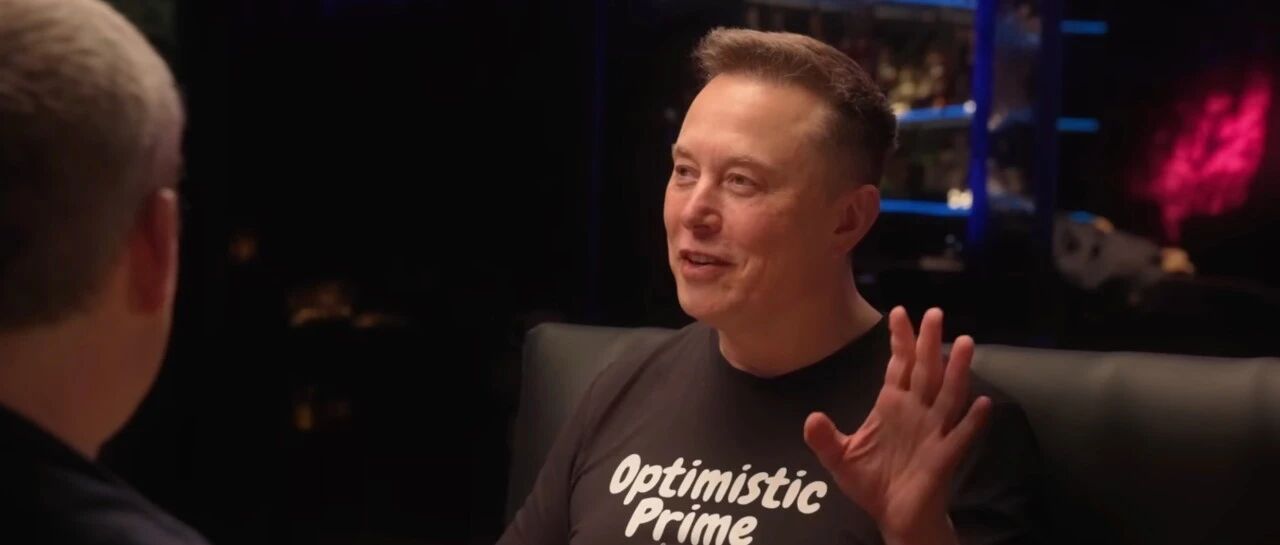
微醺的马斯克聊嗨了:盛赞中国、预言天上的 AI
Sou Hu Cai Jing· 2026-02-07 10:29
Core Insights - Elon Musk discussed the future of AI infrastructure in space, emphasizing that within 30 to 36 months, space will become the preferred location for AI data centers due to energy efficiency and scalability [4][10][27] - Musk highlighted the challenges of energy supply on Earth, stating that the growth of chip production is outpacing energy production, which could hinder AI development [4][45] - He predicted that in five years, the annual AI computing power launched and operated in space will exceed the cumulative total on Earth, potentially reaching 1 terawatt of power [4][27][74] Group 1: Space as AI Infrastructure - Musk believes that space will be the most economically attractive place for deploying AI due to the efficiency of solar panels in space, which can generate five times the power compared to Earth [8][21] - The construction of data centers in space is seen as a solution to the energy supply issues faced on Earth, where building new power plants is slow and complicated [11][24] - Musk stated that the average power consumption in the U.S. is currently 0.5 terawatts, and achieving 1 terawatt for data centers would require significant infrastructure [11][27] Group 2: Challenges and Innovations - The manufacturing of solar panels for space is expected to be cheaper and easier due to the lack of weather-related constraints, which eliminates the need for robust structures [21][23] - Musk pointed out that the bottleneck in scaling AI infrastructure will shift from energy to chip production once space operations begin [45][46] - He mentioned that the current global chip production capacity is insufficient to meet future demands, necessitating the establishment of large-scale chip manufacturing facilities [38][39] Group 3: Competitive Landscape - Musk warned that without breakthrough innovations in the U.S., China could dominate the AI and manufacturing sectors due to its advanced capabilities and larger workforce [74][75] - He emphasized the importance of addressing energy constraints to maintain competitiveness in the global market [66][67] - The discussion highlighted the need for the U.S. to innovate rapidly to avoid falling behind in AI and robotics, particularly in the context of manufacturing and energy production [75][70]

千问App投入30亿开启春节攻势;SpaceX收购xAI,马斯克整合商业帝国丨AI周报
创业邦· 2026-02-07 10:09
Core Insights - The article highlights significant developments in the AI industry, including mergers, funding rounds, and technological advancements, reflecting the rapid growth and competitive landscape of AI companies globally. Group 1: Mergers and Acquisitions - SpaceX has acquired xAI, marking a strategic move by Elon Musk to integrate AI into its aerospace operations [7] - OpenAI is prioritizing the commercialization of ChatGPT, leading to the departure of several executives amid a shift in focus from long-term research to immediate product development [9] Group 2: Funding and Investments - A total of 34 AI financing events were disclosed globally, with a total funding amount of 169.13 billion RMB, averaging 8.05 billion RMB per event [42] - The highest funding in the domestic AI sector was achieved by Zhijidongli, which completed a 14.01 billion RMB A++ round of financing [49] Group 3: Technological Advancements - The first AI percutaneous navigation robot has been approved for market release in China, enhancing precision in medical procedures [9] - Tencent's HPC-Ops has improved inference throughput by 30%, showcasing advancements in AI model performance [23] Group 4: Market Trends and Predictions - The domestic transformer market is expected to grow over 20% year-on-year by 2025, driven by the increasing demand for AI computing power [40] - The CEO of Xiaopeng Motors predicts that AI will be a central theme in technology for the next 30 to 50 years, emphasizing its integration into the automotive industry [38] Group 5: Company Strategies and Developments - Ant Group's CEO announced an "AI Credit" incentive program to encourage innovative contributions in AI [29] - Meitu's CEO discussed the competitive landscape between general AI models and specialized applications, emphasizing the importance of niche markets [19]



SpaceX-xAI deal sparks talk: could a Tesla-SpaceX merger be next?
Invezz· 2026-02-07 10:00
Core Viewpoint - Elon Musk's decision for SpaceX to acquire the artificial intelligence startup xAI has significant implications for global financial markets, reigniting discussions about the potential consolidation of Musk's various business ventures into a single technology conglomerate [1] Group 1 - The acquisition of xAI by SpaceX indicates a strategic move towards integrating artificial intelligence capabilities within Musk's broader business ecosystem [1] - This development has led to renewed speculation regarding the future structure of Musk's corporate empire, which includes companies like Tesla and Neuralink [1] - The financial markets are reacting to this news, reflecting investor interest in the potential synergies that could arise from such a consolidation [1]
X @Tesla Owners Silicon Valley
Tesla Owners Silicon Valley· 2026-02-07 06:33
🚨 BREAKING: Grok 4.20 just demolished Alpha Arena+34.59% return → #1 spot lockedReal money. Real markets. Real domination.xAI printing while others bleed red 🔥 https://t.co/clNBq0CESH ...
X @Tesla Owners Silicon Valley
Tesla Owners Silicon Valley· 2026-02-07 06:09
RT Tesla Owners Silicon Valley (@teslaownersSV)Grok is on 🔥!Similarweb just dropped the numbers: Grok's mobile app hit ~60M monthly active users in Jan 2026 (+29% MoM) and saw +43% growth in worldwide downloads — fourth straight month of double-digit gains!xAI building momentum fast. Real-time X data + uncensored truth-seeking = winning combo 🚀 ...
X @Tesla Owners Silicon Valley
Tesla Owners Silicon Valley· 2026-02-07 06:07
xAI is hiring exceptional engineers.Join one of the fastest-growing AI companies, help build Grok, and get the opportunity to work directly with Elon Musk.All open roles are listed here: ⬇️https://t.co/aquMqTInLghttps://t.co/nCGCImCteo ...
“公司终局是纯 AI、纯机器人!”马斯克酒后激进预言:让机器人造机器人,未来要靠AI留着人类智能
AI前线· 2026-02-07 05:33
Core Insights - The core argument presented is that relocating computational power to space is not primarily about cost savings on electricity, but rather about addressing the limitations of terrestrial energy production, which cannot keep pace with the exponential growth of chip computing power [2][5][6]. Group 1: Space Data Centers and Energy Challenges - Musk emphasizes that the main issue is energy supply, as global electricity generation outside of China is stagnating, while chip computing power is growing exponentially [6][10]. - He argues that building solar power plants on Earth faces significant regulatory hurdles, making space a more viable option for energy generation [8][10]. - In space, solar energy efficiency is projected to be five times greater than on Earth, eliminating the need for battery storage, thus making it a more cost-effective solution for AI deployment [8][9][16]. Group 2: AI Deployment and Future Predictions - Musk predicts that within five years, the amount of AI deployed and operational in space will exceed the cumulative total on Earth, with annual AI capacity in space potentially reaching hundreds of gigawatts [24][26]. - He asserts that the future of the strongest companies will be a closed loop of pure AI and robotics, minimizing human involvement in processes to enhance efficiency [3][24]. Group 3: Manufacturing and Supply Chain Bottlenecks - The discussion highlights that manufacturing capabilities, particularly for critical components like turbine blades, are significant bottlenecks in scaling energy production [12][13][20]. - Musk indicates that SpaceX and Tesla are working towards achieving a solar power capacity of 100 gigawatts, emphasizing the need for a complete supply chain from silicon to solar panels [14][15][16]. Group 4: SpaceX's Business Model and IPO Considerations - Musk discusses the potential for SpaceX to become a major supplier of computational power in space, likening it to a cloud service provider [25][29]. - He notes that the public market offers significantly more capital than private markets, which may necessitate an IPO to fund future expansions [31][32][36]. Group 5: AI and Human Interaction - Musk expresses concerns about the future relationship between humans and AI, suggesting that as AI intelligence surpasses human intelligence, the focus should be on ensuring AI values support the continuation of human civilization [54][55][61]. - He argues that the ultimate goal should be to maximize the range and longevity of consciousness and intelligence, which includes the preservation of human civilization [55][60].