LVMH

Search documents
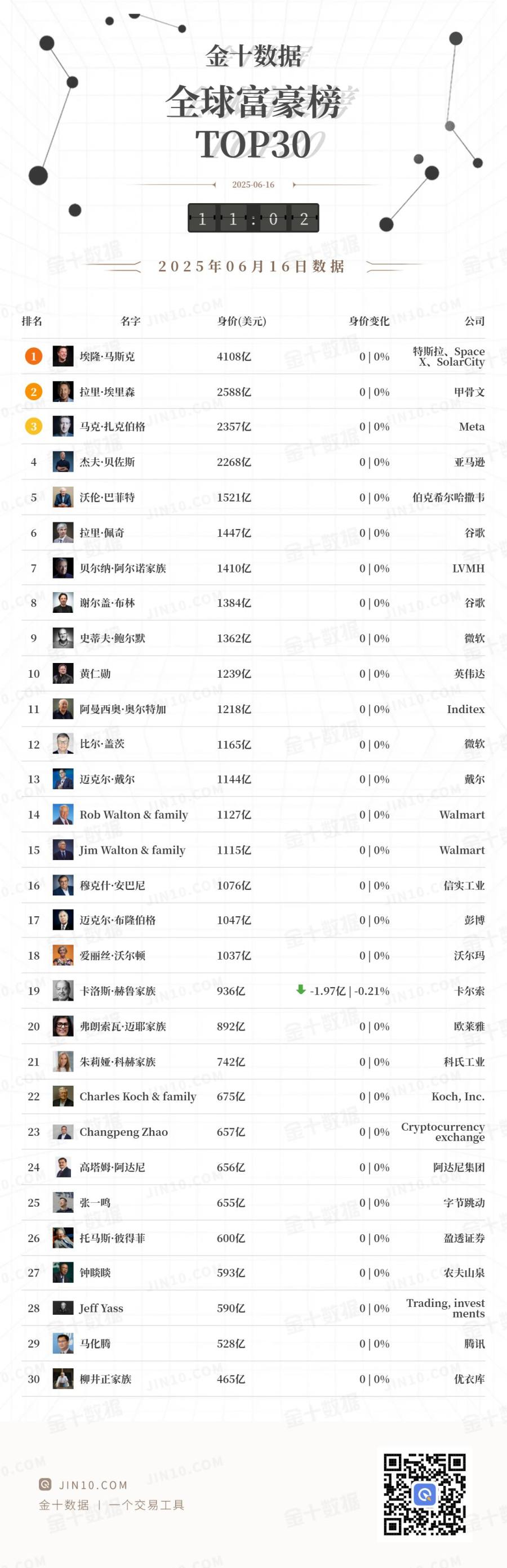
金十图示:2025年06月16日(周一)全球富豪榜



news flash· 2025-06-16 03:08
金十图示:2025年06月16日(周一)全球富豪榜 | 排名 | 名字 | 身价(美元) | 身价变化 | 公司 | | --- | --- | --- | --- | --- | | 1 | 埃隆·马斯克 | 4108亿 | 0 0% | 特斯拉、Spa | | 2 | 拉里·埃里森 | 2588亿 | 0 0% | 甲骨文 | | 3 | 马克·扎克伯格 | 2357亿 | 0 0% | Meta | | 4 | 杰夫·贝佐斯 | 2268亿 | 0 0% | 亚马逊 | | 5 | 沃伦·巴菲特 | -0 1521亿 | 0 0% | 伯克希尔哈撒韦 | | 6 | 拉里·佩奇 | 1447亿 | 0 0% | 谷歌 | | 7 | 贝尔纳·阿尔诺家族 | 1410亿 | 0 0% | LVMH | | 8 | 谢尔盖·布林 | 1384亿 | 0 0% | 谷歌 | | 9 | 史蒂夫·鲍尔默 | 1362亿 | 0 0% | 微软 | | 10 | 黄仁勋 | 1239亿 | 0 0% | 英伟达 | | 11 | 阿曼西奥·奥尔特加 | 1218亿 | 0 0% | Inditex | | 12 ...

高盛:股票雷达-市场忽视了 S899,逆势买入的机会
Goldman Sachs· 2025-06-15 16:03
Investment Ratings - Umicore upgraded to Buy from Neutral with a price target implying approximately 35% upside [10] - Aker BP downgraded to Sell due to negative oil view and rising leverage [11] - LVMH maintained Buy rating despite a numbers cut and below consensus earnings view [12][14] - Adecco added to Conviction List with a positive outlook on temp staffing trends [15] - BT Group reiterated Buy rating with a 65% upside potential due to market consolidation [16] Core Insights - The S899 bill may deter foreign investment in the US, potentially leading to a decline in foreign investors' appetite for US assets and further USD weakness [9][10] - Earnings for the STOXX 600 could be revised down by 1-2% in the first year and by as much as 5% over four years due to S899 [9] - The luxury sector, particularly LVMH, is expected to recover despite current earnings challenges, driven by strategic changes and new product launches [12][14] - Utilities are entering a growth phase with increased investment and power demand, particularly in stable, regulated networks [8] Summary by Sections Section S899 - The S899 bill includes provisions that exempt over 50% US ownership, which has raised concerns among investors regarding high US revenue exposure without ownership considerations [1] - Modifications to the bill are anticipated by the upcoming US long weekend, indicating ongoing negotiations [1] European Financials - Positive feedback from the European Financials Conference highlighted resilience in the insurance sector and strong performance in banks, with UBS being a notable session [8] Healthcare Sector - The healthcare sector is seeing positive sentiment around drug pricing policies and advancements in anti-obesity drugs, with several companies rated as Buy [21] China Industrials - Insights from meetings with Chinese companies indicate a positive local demand outlook post-stimulus, with a focus on innovation in new economy sectors [8][23] Utilities - RWE and E.ON are positioned for potential upside due to regulatory reviews and market dynamics, with RWE's EPS estimates potentially increasing by approximately 25% [38][40]
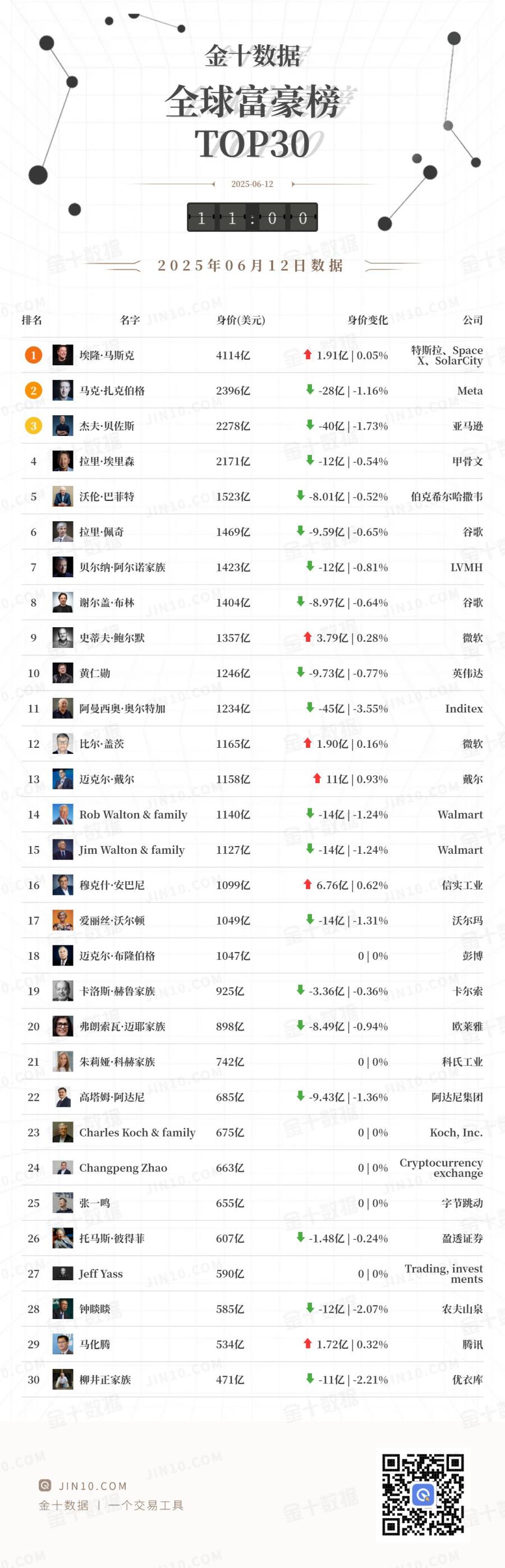
金十图示:2025年06月12日(周四)全球富豪榜
news flash· 2025-06-12 03:07
Core Insights - The article presents a ranking of the world's wealthiest individuals, highlighting their net worth and changes over a specific period. Group 1: Wealth Rankings - Elon Musk leads the list with a net worth of $411.4 billion, experiencing an increase of $1.91 million (0.05%) [1] - Mark Zuckerberg ranks second with a net worth of $239.6 billion, down by $28 million (-1.16%) [1] - Jeff Bezos follows in third place with a net worth of $227.8 billion, decreasing by $40 million (-1.73%) [1] - Larry Ellison is fourth with a net worth of $217.1 billion, down by $12 million (-0.54%) [1] - Warren Buffett ranks fifth with a net worth of $152.3 billion, decreasing by $8.01 million (-0.52%) [1] Group 2: Additional Notable Figures - Larry Page has a net worth of $146.9 billion, down by $9.59 million (-0.65%) [1] - The Bernard Arnault family is valued at $142.3 billion, decreasing by $12 million (-0.81%) [1] - Sergey Brin's net worth stands at $140.4 billion, down by $8.97 million (-0.64%) [1] - Steve Ballmer has a net worth of $135.7 billion, increasing by $3.79 million (0.28%) [1] - Jensen Huang is valued at $124.6 billion, decreasing by $9.73 million (-0.77%) [1]


深度:如何构建品牌稀缺性?
Hu Xiu· 2025-06-12 01:42
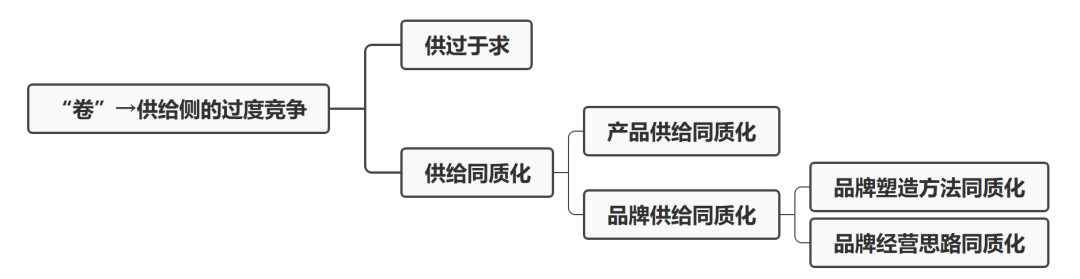
Core Viewpoint - The concept of "competition" in the consumer goods sector has intensified, evolving from mere growth to a survival mode, affecting even niche categories that were previously less competitive [1][4]. Group 1: Nature of Competition - The essence of "competition" is characterized by oversupply and supply homogenization, driven by excessive competition on the supply side [4]. - Two main factors contribute to this phenomenon: oversupply due to a high number of competitors and the homogenization of supply, where many brands follow similar paths, leading to a crowded market [4][6]. Group 2: Brand Homogenization - The trend of brand homogenization has become more pronounced in recent years, with brands increasingly adopting similar strategies and methods, resulting in a lack of differentiation [8][9]. - The rise of e-commerce has lowered the barriers for brand creation, leading to an explosion of brands and consequently, a homogenization of brand offerings [8][9]. Group 3: Building Brand Scarcity - To escape the cycle of homogenization, brands need to focus on creating scarcity through unique brand positioning and innovative strategies [10][11]. - The differentiation of brands can be achieved by understanding the dual nature of branding: as a tool for business strategy and as a result of consumer perception [12][14]. Group 4: Positioning Theory - The essence of consumer goods business is rooted in "concept" and the competition for consumer mindshare through effective positioning [20]. - Many brands tend to adopt a simplistic approach to positioning, focusing solely on product categories, which can lead to a lack of differentiation in a saturated market [21][22]. Group 5: Multi-Dimensional Brand Image - A multi-dimensional brand image is more difficult to replicate and can provide a competitive edge, as seen in successful brands like Apple [37][38]. - Building a multi-dimensional brand requires a cohesive narrative and alignment with business strategies to create a strong brand identity [38].
lululemon涨价,是中国给的底气?
3 6 Ke· 2025-06-11 23:27
Core Viewpoint - Lululemon is facing significant challenges in maintaining growth, particularly in its core North American market, leading to a substantial drop in stock price after disappointing earnings and lowered guidance [3][4][5]. Group 1: Financial Performance - Lululemon's first-quarter revenue in North America grew by only 3% year-over-year, with comparable sales down by 2%, indicating a decline in customer retention [5][6]. - The company's net profit for the quarter decreased by 2.13% to $315 million, marking the first decline since the pandemic's impact in 2020 [6]. - Analysts have expressed skepticism about Lululemon's ability to recover in North America, with Morgan Stanley cutting its price target from $389 to $303 per share [7]. Group 2: Market Dynamics - The brand is losing its core customers, particularly as U.S. middle-class consumers reduce spending on high-end athletic apparel [6][11]. - In China, while revenue grew by 21%, comparable sales only increased by 7%, suggesting a slowdown in growth despite the market's overall performance [9][12]. - Lululemon's expansion plans have fallen short, with only three new stores opened in China this year, compared to an initial target of 40-50 [9]. Group 3: Competitive Landscape - Lululemon faces increasing competition from brands like Alo Yoga, Vuori, and Gymshark, as well as established players like Nike and Adidas, which are capturing market share among younger consumers [11][12]. - The brand's recent shift towards a more fashion-oriented image has diluted its core identity, leading to concerns about product differentiation and market positioning [18]. Group 4: Strategic Responses - To mitigate financial impacts, Lululemon is optimizing procurement and negotiating with suppliers to reduce costs, while also planning to raise prices on some products [12][13]. - The company is attempting to diversify its product offerings, including men's apparel and footwear, but has struggled to achieve significant growth in these categories [14][16].


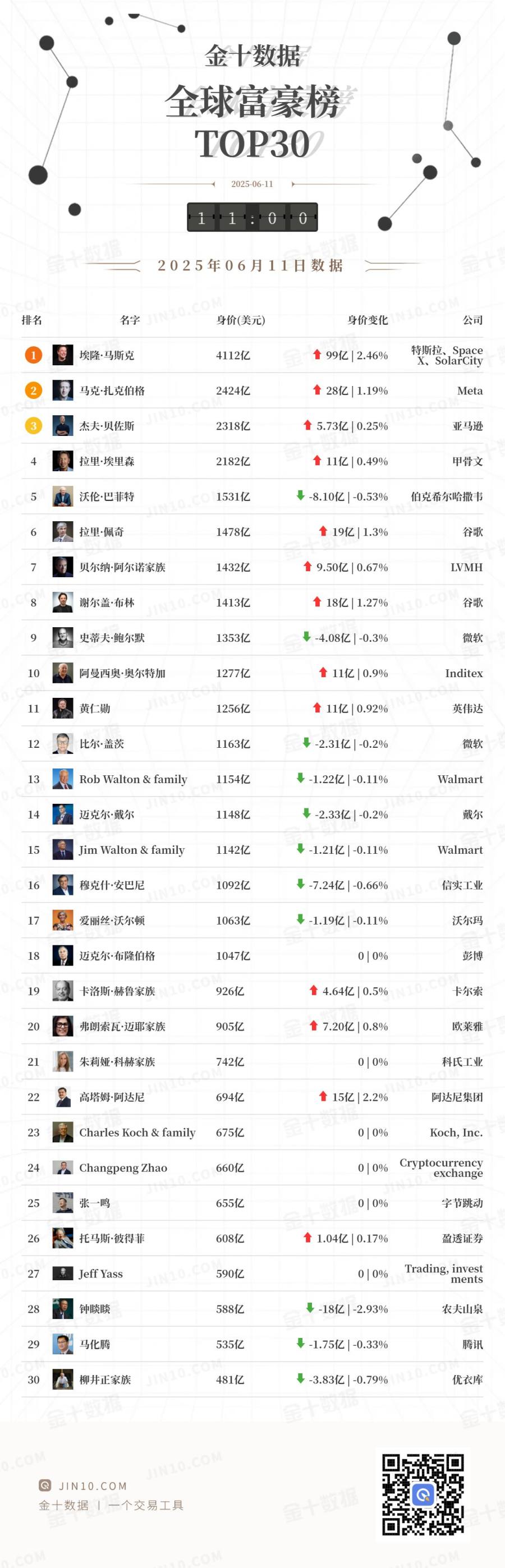
金十图示:2025年06月11日(周三)全球富豪榜
news flash· 2025-06-11 03:10
| 12 | 比尔·盖茨 | 1163亿 | -2.31亿 -0.2% | 微软 | | --- | --- | --- | --- | --- | | 13 | Rob Walton & family | 1154亿 | + -1.22亿 -0.11% | Walmart | | 14 | 迈克尔·戴尔 | 1148亿 | + -2.33亿 -0.2% | 戴尔 | | 15 | Jim Walton & family | 1142亿 | + -1.21亿 -0.11% | Walmart | | 16 | 穆克什·安巴尼 | 1092亿 | + -7.24亿 -0.66% | 信实工业 | | 17 | 爱丽丝·沃尔顿 | 1063亿 | 4-1.19亿 -0.11% | 沃尔玛 | | 18 | 迈克尔·布隆伯格 | 1047亿 | 0 0% | 或博 | | 19 | 卡洛斯·赫鲁家族 | 926亿 | 1 4.64亿 0.5% | 卡尔索 | | 20 | 弗朗索瓦·迈耶家族 | 905亿 | 1 7.20亿 0.8% | 欧莱雅 | | 21 | 朱莉娅·科赫家族 | 742FL | 0 0% | ...
闪购会、推低价入门产品线:当增长放缓后,奢侈品如何应对
Di Yi Cai Jing· 2025-06-10 09:49
Core Insights - The luxury goods industry is experiencing a gradual slowdown in growth, partly due to brands continuously raising prices over the past few years [1][3] - Consumers have noticed an increase in the frequency of luxury goods sales events, indicating a shift in market dynamics [1] Industry Trends - Since 2020, most luxury brands have been increasing prices at a double-digit annual rate, surpassing inflation, which cannot solely be attributed to supply chain and labor cost increases [3] - High pricing has suppressed consumer demand, leading to a consensus that excessive pricing is detrimental to overall industry performance [3] Company Strategies - Burberry has begun to adjust its pricing strategy, reducing the average price of some bags by 5% [4] - YSL has also lowered the price of its popular Loulou handbag by approximately 10% [4] - Some brands are opting for discreet sales strategies, such as flash sales and VIP private sales, to manage unsold inventory while maintaining brand image [4] - LVMH has introduced more affordable product lines, such as the upgraded Neverfull bag, to attract consumers [4] Consumer Behavior - Consumers are increasingly engaging with sales associates, indicating a shift in how luxury brands interact with their customer base [1] - The trend of brands offering significant discounts during private sales events suggests a response to changing consumer expectations and purchasing power [1][4]
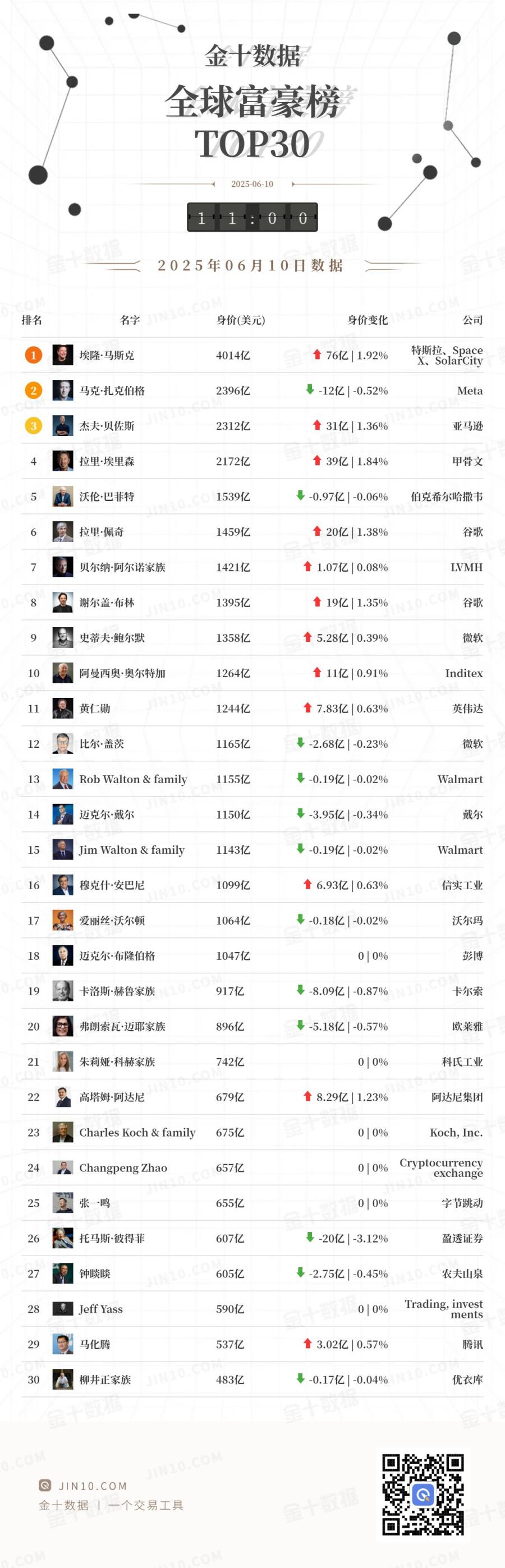
金十图示:2025年06月10日(周二)全球富豪榜
news flash· 2025-06-10 03:02
金十图示:2025年06月10日(周二)全球富豪榜 | 排名 | 名字 | 身价(美元) | 身价变化 | 公司 | | --- | --- | --- | --- | --- | | | 埃隆·马斯克 | 4014亿 | ↑ 76亿 1.92% | | | 2 | 马克·扎克伯格 | 2396亿 | + -12亿 -0.52% | Meta | | | 杰夫·贝佐斯 | 2312亿 | 1 31亿 1.36% | 亚马逊 | | 4 | 拉里·埃里森 | 2172亿 | 1 39亿 1.84% | 甲骨文 | | 5 | 沃伦·巴菲特 | 0 1539亿 | + -0.97亿 -0.06% | 伯克希尔哈撒韦 | | 6 | 拉里·佩奇 | 1459亿 | 1 20亿 1.38% | 谷歌 | | 7 | 贝尔纳·阿尔诺家族 | 1421亿 | 1 1.07亿 0.08% | LVMH | | 8 | 谢尔盖·布林 | 1395亿 | 1 19亿 1.35% | 谷歌 | | 9 | 史蒂夫·鲍尔默 | 1358亿 | 1 5.28亿 0.39% | 微软 | | 10 | 阿曼西奥·奥尔特加 | 1264 ...
华尔街到陆家嘴精选丨大摩预警美元会暴跌!花旗:美股可逢低买入!高通缘何高价收购芯片公司Alphawave?数据标注巨头Scale AI有多吸引人?
Di Yi Cai Jing Zi Xun· 2025-06-10 00:58
Group 1: Tax Legislation and Corporate Response - Approximately 70 multinational company executives gathered in Washington to lobby against Section 899 of the "Big Beautiful" tax bill, which would impose additional taxes on companies from "tax policy punitive" countries, affecting most EU countries, the UK, Australia, and Canada [1] - Nearly 200 foreign companies operating in the U.S., including Shell, Toyota, SAP, and LVMH, expressed concerns over the potential impact of this tax, which could threaten 8.4 million jobs in the U.S. [1] - The tax provision is projected to raise $116 billion for the U.S. over the next decade, but the overall tax bill is expected to increase the national debt by $2.4 trillion by 2034 [1] Group 2: Market Outlook and Currency Trends - Morgan Stanley warned that the U.S. dollar could depreciate by 9% over the next year due to anticipated interest rate cuts by the Federal Reserve, potentially reaching levels not seen since the onset of the pandemic [3] - The dollar index has already fallen nearly 10% since its peak in January, with expectations that a weaker dollar will strengthen safe-haven currencies like the euro and yen [3] - The recent decline in the dollar index below 99 is attributed to easing inflation concerns and rising expectations for rate cuts, with limited factors supporting a dollar rebound [4] Group 3: Corporate Acquisitions and Strategic Moves - Qualcomm announced the acquisition of UK semiconductor company Alphawave for approximately $2.4 billion, representing a 96% premium over Alphawave's pre-announcement closing price [6] - This acquisition is seen as strategically significant for Qualcomm, enhancing its capabilities in data center and AI sectors, despite the high valuation compared to public market levels [6] - Meta is reportedly negotiating a multi-billion dollar investment in AI data labeling company Scale AI, which could become one of the largest private financings in history, aimed at bolstering Meta's competitive position in AI [8] Group 4: AI Industry Developments - Scale AI, valued at $14 billion with projected revenues of $2 billion by 2025, is expanding its services from traditional data labeling to specialized fields like healthcare and law [8] - The investment from Meta is expected to enhance Scale AI's market position and assist Meta in catching up with competitors like Google and OpenAI in the AI space [9] - The demand for high-quality data is critical in the AI era, with well-analyzed data being viewed as a valuable asset, indicating strong growth potential in the AI sector [9]


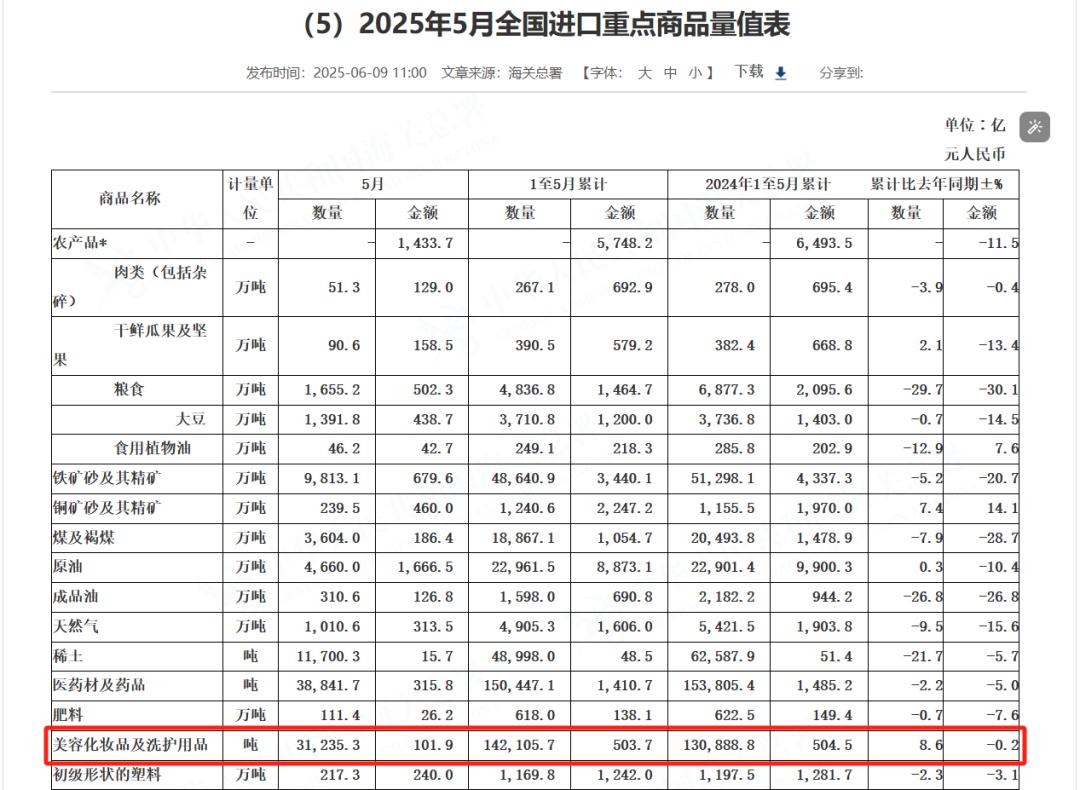
进口化妆品金额创5年最低
3 6 Ke· 2025-06-10 00:38
Core Insights - The import of beauty and cosmetic products in China is facing significant challenges, with a decline in import value despite an increase in quantity in May 2025 [1][4][13] - The total import value of cosmetics for the first five months of 2025 is reported to be the lowest in the past five years, indicating a tough market environment for international beauty brands [9][11] Import Data Summary - In May 2025, the import quantity of cosmetics reached 31,235.3 tons, a year-on-year increase of 7.7%, while the import value was 10.19 billion yuan, showing a decline of 4.9% [1][4] - Cumulatively, from January to May 2025, the import quantity was 142,105.7 tons, an increase of 8.6% year-on-year, but the import value was 50.37 billion yuan, reflecting a slight decrease of 0.2% [3][9] Market Trends - The current market dynamics show a trend where the quantity of imported cosmetics is increasing while the value is decreasing, highlighting a shift in consumer behavior towards more cautious spending [4][14] - International beauty brands are struggling in the Chinese market, with many high-end brands closing stores or exiting the market due to declining consumer confidence and spending [16][20] Consumer Behavior - Consumers are increasingly opting for mid-range and affordable alternatives, leading to a decline in sales for high-end cosmetics [20][21] - The focus on value and quality has become paramount for consumers, prompting international brands to reassess their strategies in the Chinese market [21][22]