中国科学院

Search documents
【新华社】学习贯彻党的二十届四中全会精神中央宣讲团在中国科学院宣讲
Xin Hua She· 2025-11-06 09:57
Core Points - The report emphasizes the importance of studying and implementing the spirit of the Fourth Plenary Session of the 20th Central Committee of the Communist Party of China, highlighting its significance for the modernization process during the "14th Five-Year Plan" period [1] - The report outlines the guiding ideology, major principles, main goals, strategic tasks, significant measures, and fundamental guarantees for economic and social development during the "14th Five-Year Plan" [1] Group 1 - The need to rapidly promote the learning and implementation of the plenary session's spirit, aligning thoughts and actions with the decisions of the Central Committee led by Xi Jinping [1] - The importance of strengthening party leadership and ensuring high standards in the planning and compilation of the "14th Five-Year Plan" [1] - The focus on scientific validation of key areas and careful planning of major reform initiatives to drive mission-oriented foundational research [1] Group 2 - The goal to accelerate breakthroughs in key core technologies and produce significant, original, and leading scientific achievements [1] - The aim to seize technological high ground to support the construction of a strong nation and the great rejuvenation of the nation [1] - Engagement with frontline researchers and young students to foster interaction and collaboration in scientific endeavors [1]
学习贯彻党的二十届四中全会精神|学习贯彻党的二十届四中全会精神中央宣讲团在中国科学院宣讲
Xin Hua She· 2025-11-06 09:47
Core Viewpoint - The report emphasizes the importance of implementing the spirit of the 20th Central Committee's Fourth Plenary Session, focusing on the significant role of the "14th Five-Year Plan" in achieving socialist modernization [1] Group 1: Major Significance and Goals - The report elaborates on the major significance of the 20th Central Committee's Fourth Plenary Session and its implications for the "14th Five-Year Plan" [1] - It outlines the guiding ideology, major principles, primary goals, strategic tasks, significant measures, and fundamental guarantees for economic and social development during the "14th Five-Year Plan" period [1] Group 2: Implementation and Action - There is a call to rapidly promote the learning and implementation of the session's spirit, aligning thoughts and actions with the decisions of the Central Committee led by Xi Jinping [1] - The report stresses the need for high standards in the preparation of the "14th Five-Year Plan," including scientific validation of key areas and careful planning of major reform initiatives [1] Group 3: Technological Development - The report highlights the importance of strengthening mission-driven foundational research and accelerating breakthroughs in key core technologies [1] - It aims to produce a series of critical, original, and leading technological achievements to support national construction and the rejuvenation of the nation [1]
【新华社】播撒科学的种子!中国科学院第八届科学节举办
Xin Hua She· 2025-11-04 03:23
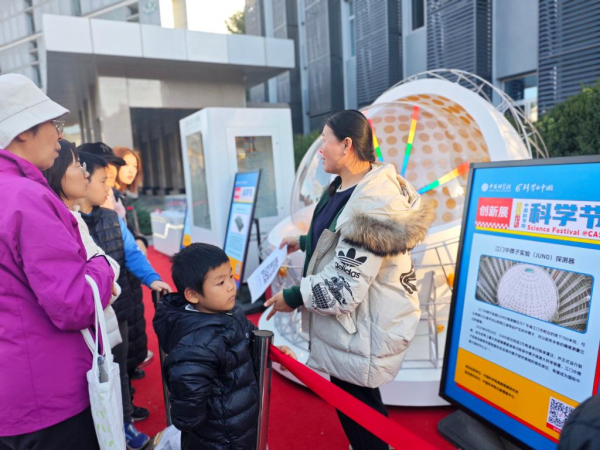
Core Points - The annual Science Festival of the Chinese Academy of Sciences (CAS) showcases various scientific innovations and engages the public, especially youth, in interactive activities [1][2][4] - The theme of this year's festival is "Hi, Science! - Curious Exploration of the Unknown, Science Connecting the Future," highlighting significant achievements in fields like neutrino experiments and quantum computing [1][2] - The festival is not limited to Beijing, with events held nationwide, emphasizing the importance of science in both urban and rural settings [2][4] Group 1 - The festival features engaging activities such as the "Creative Blind Box Show," science performances, and interactive exhibits that make science accessible and entertaining [1][2] - The event coincides with the 76th anniversary of CAS and the 70th anniversary of its academic divisions, reflecting the integration of national strategic scientific strength with the enhancement of public scientific literacy [4] - The festival serves as a platform for fostering curiosity and knowledge among children and teenagers, which is essential for driving technological self-reliance and innovation in the future [2][4]

天基太阳能开启清洁能源新赛道
Ke Ji Ri Bao· 2025-11-03 23:55
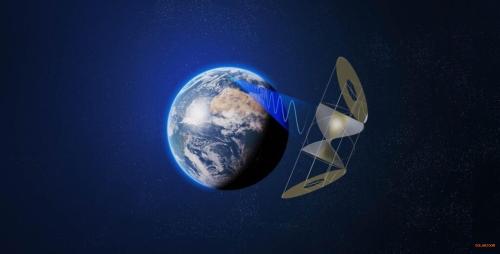
Core Viewpoint - The increasing electrification of human life and advancements in big data and AI are driving unprecedented global energy demand, positioning space-based solar power (SBSP) as a potential pathway to a clean and abundant energy future [1][2]. Group 1: Advantages of Space-Based Solar Power - SBSP can provide stable and reliable baseload power, which has traditionally relied on fossil fuels or nuclear energy [3]. - The intensity of sunlight in space is 5-10 times greater than on Earth, allowing for higher energy generation efficiency and significant land resource savings [2][3]. - A NASA study predicts that a model of SBSP could generate power 99% of the time in a year [3]. Group 2: Global Developments and Investments - A global "space race" for sustainable energy is underway, with countries and private enterprises increasing investments in SBSP [4]. - In August 2023, the California Institute of Technology successfully demonstrated a prototype for space-based solar energy transmission [4]. - China aims to achieve breakthroughs in SBSP by 2028, with ongoing projects in Chongqing and Xi'an [4]. - The European Space Agency has initiated the SOLARIS pre-research program with a budget of €60 million to develop core technologies for SBSP [4]. Group 3: Technological Challenges - Key challenges include high launch costs, as building a large SBSP system will require numerous launches despite decreasing satellite launch costs [7]. - Efficiently transmitting gigawatt-level power back to Earth remains a significant technical hurdle [7]. - The need for autonomous robots to assemble and maintain large space structures in orbit is another critical challenge [7].

科技创新世界潮 | 天基太阳能开启清洁能源新赛道
Ke Ji Ri Bao· 2025-11-03 15:19
Core Insights - The increasing electrification of human life and rapid advancements in big data and AI technologies are driving unprecedented growth in global energy demand. Space-based solar power (SBSP) may offer a new path toward a truly clean and abundant energy future [1][3]. Technological and Economic Feasibility - With decreasing launch costs and advancements in large-scale manufacturing technologies, SBSP has become technically and economically feasible. However, key technical challenges remain, such as further reducing launch costs and improving the efficiency of power transmission to Earth [3][8]. Advantages of Space-Based Solar Power - SBSP can provide stable and reliable baseload power, which was previously only achievable through fossil fuels or nuclear energy. The intensity of sunlight in space is 5-10 times greater than on Earth, allowing for higher energy generation efficiency and significant land resource savings [4][5]. - A recent NASA study predicts that a model of SBSP could generate power 99% of the time in a year. This high energy density could also reduce material consumption, enhancing sustainability and alleviating resource pressure [5]. Global Competition and Developments - A "space race" for sustainable energy is underway, with countries and private enterprises increasing investments in SBSP. In August 2023, Caltech's SBSP prototype successfully demonstrated wireless energy transmission in space [6]. - China is advancing its kilometer-scale array construction, aiming for breakthroughs by 2028, with ongoing projects in Chongqing and Xi'an [6]. - The European Space Agency launched the SOLARIS pre-research program in January 2023, planning to invest €60 million over three years to tackle core technologies [6]. - The UK has adopted the CASSIOPeiA concept for SBSP demonstration projects, with plans to deliver commercial systems within six years [6]. - Japan is focusing on SBSP as a key development direction, successfully conducting long-distance microwave transmission experiments [7]. Technical Challenges - Despite the promising outlook for SBSP, several key technical hurdles must be overcome. The challenge of launch costs remains significant, as constructing larger SBSP stations will require numerous launches [8]. - Current wireless power transmission has achieved distances of several kilometers, but efficiently and stably transmitting gigawatt-level power back to Earth presents major technical bottlenecks [8]. - The need for autonomous robots to accurately assemble and maintain large space structures in orbit is another critical technical challenge that needs to be addressed [8].

180余项科普活动汇聚一园,中国科学院第八届科学节举行
Bei Jing Ri Bao Ke Hu Duan· 2025-11-03 06:31
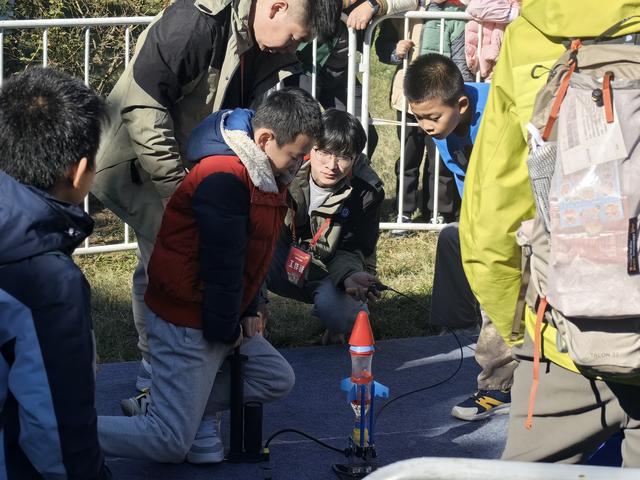
Core Points - The event showcased over 180 science popularization exhibits and activities, attracting significant public interest [1][3] - Interactive projects included a water rocket powered by water and compressed air, and a wooden satellite model that rotates using solar energy [3] - The National Botanical Garden serves as a science museum, featuring rare botanical specimens and opportunities for visitors to engage in hands-on activities [3] Summary by Categories - **Exhibits and Activities** - The event featured a variety of science exhibits, including a bionic fish and a ping-pong cannon utilizing Bernoulli's principle [1] - The "air cannon" attracted many young visitors, demonstrating the principles of air pressure and motion [1] - **Interactive Science Projects** - A water rocket launched to over ten meters high, showcasing the principles of propulsion using water and compressed air [3] - A wooden satellite model powered by solar panels demonstrated renewable energy applications [3] - **Educational Value** - The National Botanical Garden is highlighted as a significant educational resource, housing some of the earliest introduced species in Beijing and unique geological specimens [3] - The event aimed to create a festive atmosphere around science, with various institutions under the Chinese Academy of Sciences participating in diverse educational activities [3]
【新华社】燃料从“铀”到“钍”!我国实现钍基熔盐堆研发突破
Xin Hua She· 2025-11-03 03:16
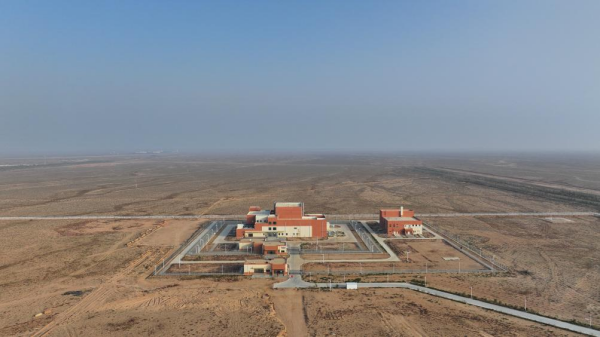
Core Insights - The establishment of a 2 MW liquid fuel thorium molten salt experimental reactor marks a significant advancement in nuclear fuel diversification from uranium to thorium, making it the only operational molten salt reactor globally that incorporates thorium fuel [2][3] Group 1: Technological Advancements - The thorium molten salt reactor utilizes thorium as fuel and high-temperature molten salt as a coolant, offering advantages such as no water cooling, operation at atmospheric pressure, and high-temperature output [2][3] - The project began in 2011 under the Chinese Academy of Sciences, focusing on advanced nuclear fission energy systems, with a collaborative team overcoming numerous technical challenges to transition from laboratory research to engineering validation [3] Group 2: Future Goals - The team aims to establish a 100 MW thorium molten salt reactor demonstration project by 2035, accelerating technology iteration and engineering transformation to provide a safe and reliable thorium-based energy generation pathway for the country [4]
天宫迎来小鼠“乘客”
Ke Ji Ri Bao· 2025-11-03 02:55
Group 1: Space Applications and Research - The Chinese Academy of Sciences is leading a project involving six scientific experiments in life sciences, fluid sciences, and materials sciences, with a total weight of 63.2 kilograms sent aboard the Shenzhou 21 manned spacecraft [1] - This mission marks the first time mice have been sent to the Chinese space station, which are important model organisms for life sciences research due to their high genetic homology with humans, small size, short reproductive cycle, and ease of genetic editing [1] - The project aims to study the effects of microgravity and confinement on mouse behavior, which is crucial for understanding the key technologies for breeding and monitoring small mammals in space [1] Group 2: Lithium-Ion Battery Research - The "Electrochemical Optical In-Situ Research of Lithium-Ion Batteries for Space Applications" project, developed by the Dalian Institute of Chemical Physics and the Astronaut Research and Training Center, focuses on in-situ optical observation experiments of lithium-ion batteries in microgravity [3] - The research aims to capture the entire process of lithium dendrite growth in microgravity, which is essential for the development and reliable application of lithium-ion batteries in future space missions [3] - Lithium-ion batteries are highlighted as a crucial power source for various space missions due to their lightweight and long lifespan [2]
【科技日报】以科学之名,启探索之门
Ke Ji Ri Bao· 2025-11-03 02:33
Group 1 - The core theme of the event is "Hi, Science! - Curious Exploration of the Unknown, Science Connects the Future," showcasing major technological innovations and achievements from the Chinese Academy of Sciences, aimed at stimulating public curiosity, especially among youth [3] - The event features six main sections: "Hi Theater," "Innovation Exhibition," "Creative Workshop," "Zero Distance," "Science Beauty," and "Science and Technology Gathering," designed to engage the public with various scientific experiences [1] - Attendees can interact with scientists, participate in hands-on activities, and learn about significant research outcomes such as the Jiangmen Neutrino Experiment and superconducting quantum computers [1][3] Group 2 - The "Creative Workshop" section includes demonstrations of advanced technologies like a dexterous hand that can control robots through data collection gloves, showcasing applications in research, service, and industry [2] - The "Zero Distance" section allows participants to engage directly with scientists, learning about plant specimen preparation and the role of various crops in agricultural development [3] - The event includes performances that blend science with entertainment, such as science-themed plays and talks by academicians, making science accessible and appealing to a broader audience [2]
走近大国重器 | “看”清太阳磁场的奥秘
Zhong Yang Ji Wei Guo Jia Jian Wei Wang Zhan· 2025-11-03 00:10
Core Viewpoint - The AIMS telescope, a significant scientific instrument for measuring solar magnetic fields, has been officially launched and is expected to enhance understanding of solar phenomena and their impact on Earth [7][15]. Group 1: AIMS Telescope Overview - The AIMS telescope is the world's first mid-infrared solar magnetic field observation device, recently passing acceptance tests and officially entering operation [7][15]. - It is located at an altitude of approximately 4000 meters in the Qaidam Basin, chosen for its optimal observational conditions after extensive site evaluations [14]. Group 2: Scientific Significance - Understanding solar magnetic fields is crucial for deciphering solar phenomena, which have implications for various aspects of life on Earth, including climate prediction and infrastructure safety [10][11]. - The AIMS telescope improves measurement precision from 100 Gauss to 10 Gauss, allowing for more accurate observations of solar magnetic fields [12][13]. Group 3: Development and Innovation - The project took over a decade to develop, with a focus on creating a high-spectral-resolution imaging system that is domestically produced [12][13]. - The team faced numerous challenges, including harsh environmental conditions and the need for self-sufficiency in technology development [20]. Group 4: Collaborative Efforts - The AIMS telescope works in conjunction with space-based solar observation satellites, enhancing the overall efficiency and quality of solar observations through a "ground-space collaboration" approach [17][18]. - This collaboration allows for comprehensive tracking of solar activities and their effects on Earth, contributing to improved space weather forecasting [18].