
峰飞航空

Search documents
峰飞航空“凯瑞鸥”飞越琼州海峡 完成吨级eVTOL首次跨海峡飞行
Zheng Quan Shi Bao Wang· 2025-12-31 03:53
人民财讯12月31日电,12月31日,峰飞航空"凯瑞鸥"航空器从海口明珠岛起飞,仅用9分钟横跨23公里 琼州海峡,并降落在广东湛江徐闻港,实现全国首例吨级无人驾驶eVTOL(电动垂直起降飞行器)跨琼州 海峡运输场景验证。此次飞行由海南控股、海南机场(600515)集团、海南翼航通航、鹏城低空,联合 峰飞航空等企业共同发起,是海南自贸港封关后首场标志性低空产业活动。 ...

超15万家企业“抢跑”低空经济 应用场景成商业化落地关键
Xin Lang Cai Jing· 2025-12-26 19:59
Core Insights - The low-altitude economy market in China is expected to reach 1.5 trillion yuan by 2025 and exceed 2 trillion yuan by 2030, indicating strong growth momentum [1] - As of November 2025, there are 154,300 existing low-altitude economy-related enterprises in China, with 42,900 registered in 2025 alone, marking a year-on-year increase of 152.94% [1] - Despite rapid expansion, the low-altitude economy faces challenges such as low financing amounts, inadequate infrastructure, and a high proportion of newly established companies [1][5] Policy and Development - 2025 is identified as a critical turning point for the low-altitude economy, with the establishment of the Low Altitude Economy Development Department by the National Development and Reform Commission [2] - Over 30 provinces have included low-altitude economy initiatives in their government work reports, providing subsidies for various sectors including low-altitude logistics and infrastructure [2] - Specific plans, such as those from Hangzhou and Shanghai, aim to develop comprehensive low-altitude economic frameworks and achieve significant industry scale by 2027 [2][3] Financing and Investment - The low-altitude economy sector has seen 52 financing cases by mid-2025, with a total financing amount exceeding 1.7 billion yuan, reflecting a year-on-year growth of 48.6% [3] - Notable companies like Wolant Aviation and Yufeng Future have successfully completed multiple rounds of financing, indicating investor confidence in the eVTOL market [3] Challenges and Obstacles - The eVTOL industry faces high R&D costs and long development cycles, with many leading companies struggling with limited financing [6] - Current business models in the low-altitude economy are not fully developed, with many applications still in the early stages of commercialization [6][10] - Infrastructure development is insufficient, with challenges related to quantity and structural balance, as well as a lack of unified standards [7][8] Recommendations for Development - Increased government support is needed for early-stage eVTOL companies, including financial assistance and infrastructure development [8] - A focus on local demand and unified industry standards is essential for the sustainable growth of the low-altitude economy [8][10] - The industry must transition from basic flight capabilities to stable, cost-effective operations, and develop a comprehensive urban service system [11]
通用航空ETF南方(159283.SZ)涨2.69%
Jin Rong Jie· 2025-12-24 03:37
Core Viewpoint - The low-altitude economy is accelerating towards a large-scale development phase, supported by policy, technological breakthroughs, and industry collaboration, indicating a strong investment logic in the sector [1][2]. Group 1: Policy Developments - The Central Air Traffic Management Office issued regulatory documents in November, establishing standards for national and provincial platforms, which provide institutional support for achieving a market scale of 1.5 trillion [1]. - The establishment of a comprehensive regulatory service platform for low-altitude flight is a significant step towards the commercialization of the low-altitude economy [1]. Group 2: Technological Advancements - Leading companies like Peak Aviation have introduced the world's first zero-carbon water airport solution, while EHang has completed the first urban manned flight in the Middle East, showcasing rapid advancements in eVTOL technology [1]. - The maturity of core technologies in air traffic management, power systems, and aircraft manufacturing is expected to facilitate the commercialization of low-altitude logistics and manned transportation [1]. Group 3: Industry Collaboration - The Jiangxi Aviation Industry Conference and Hunan General Aviation Expo attracted nearly a thousand institutions, resulting in over 4.4 billion in signed agreements, highlighting the collaborative innovation potential within the industry [1]. - The participation of numerous institutions in industry events indicates a growing ecosystem and synergy among stakeholders in the low-altitude economy [1]. Group 4: Market Opportunities - Short-term catalysts include the commercialization of emergency aviation and breakthroughs in safety certification for logistics drones, which are expected to stimulate market activity [2]. - Long-term growth is anticipated as the penetration rate of low-altitude application scenarios, such as urban transportation and logistics delivery, increases, opening up new market opportunities [2]. - The Southern General Aviation ETF (159283.SZ) serves as a convenient tool for investors to capture the benefits of the low-altitude economy's development [2].
中国eVTOL正迎来史无前例的“出海”订单爆发
2 1 Shi Ji Jing Ji Bao Dao· 2025-12-17 23:24
Core Insights - The global low-altitude economy is evolving, with significant contracts signed by Chinese eVTOL companies in the Middle East and Southeast Asia, indicating growing international recognition of China's low-altitude economic development [1][9] - Chinese eVTOL companies are leveraging core technological breakthroughs, progress in airworthiness certification, scenario-based solutions, and dual support from capital and policy to expand their presence globally [1][9] Group 1: Major Contracts and Orders - The UAE has signed a $1 billion deal with Times Technology for 350 E20 eVTOLs, while Thailand has contracted Volant for 500 VE25-100 eVTOLs worth $1.75 billion [1][9] - Xiaopeng Heavens secured a record order of 600 flying cars in Dubai, marking the largest overseas order in the industry [4][13] Group 2: Market Dynamics and Strategy - The Middle East is identified as a strategic hub for eVTOL development, with countries like the UAE and Saudi Arabia incorporating low-altitude economy into their national development strategies [2][11] - Volant's president emphasized that their success is not based on low pricing but on the competitiveness of "Chinese manufacturing" in the same price range as Western counterparts [2][11] Group 3: Technological and Regulatory Developments - Times Technology's E20 eVTOL is currently undergoing airworthiness certification, with plans for the first batch of deliveries focused on Abu Dhabi [3][12] - Peak Flying Aviation has also made strides in the Middle East, securing a deal for 50 eVTOLs, including the V2000CG and V2000EM models, with deliveries expected by the end of 2025 [3][12] Group 4: Expansion into Southeast Asia - EHang completed a successful urban unmanned passenger flight demonstration in Bangkok, marking a milestone for urban air mobility in Southeast Asia [5][14] - EHang plans to deploy over 100 eVTOLs in more than 20 sandbox areas in Thailand by the end of 2026, following successful operations in Indonesia and other countries [6][14] Group 5: Industry Trends and Future Outlook - Chinese eVTOL companies are moving beyond merely selling aircraft to participating in the co-construction of ecological standards and infrastructure, aiming for localized integration [7][15] - The rapid pace of international expansion, large order volumes, and deep cooperation levels of Chinese eVTOL companies have exceeded market expectations, driven by technological advancements and supportive policies [6][15]
中国eVTOL,正迎来史无前例的“出海”订单爆发
2 1 Shi Ji Jing Ji Bao Dao· 2025-12-17 12:01
Core Viewpoint - The global low-altitude economy is evolving, with Chinese eVTOL companies experiencing unprecedented overseas order growth, particularly in the Middle East and Southeast Asia, indicating a strong recognition of Chinese low-altitude economic development in international markets [1][6]. Group 1: Overseas Orders and Collaborations - Chinese eVTOL companies have secured significant overseas orders, including a $1 billion deal for 350 E20 eVTOLs from the UAE and a $1.75 billion contract for 500 VE25-100 eVTOLs from Thailand [1][2]. - Volant announced a procurement agreement for 30 VE25-100 eVTOLs with a Dubai aviation finance company, aiming to expand into the Middle East and European markets [2]. - Yufeng Future received an order for 100 eVTOLs from Saudi Arabia, focusing on low-altitude cargo and offshore energy transport [2]. Group 2: Technological and Regulatory Progress - The E20 eVTOL's airworthiness certification application has been accepted by the Civil Aviation Administration of China, entering the compliance verification stage [3]. - The first batch of E20 eVTOLs is planned for delivery after obtaining airworthiness certification, with operations initially focused on Abu Dhabi [3]. - Peak Flying has also made strides in the Middle East, securing a deal for 50 eVTOLs, including the V2000CG and V2000EM models, with deliveries expected by the end of 2025 [3]. Group 3: Market Potential and Strategic Importance - The Middle East is identified as a strategic hub for eVTOL development due to its concentration of high-net-worth individuals and supportive government policies [1][4]. - Southeast Asia is viewed as a natural testing ground for eVTOLs, with urgent needs for inter-island commuting and emergency rescue services [5]. - The region's geographical challenges make eVTOLs an ideal solution for efficient point-to-point connectivity [4][5]. Group 4: Future Outlook and Industry Dynamics - Chinese eVTOL companies are not only selling aircraft but are also engaging in building local ecosystems, collaborating with local aviation service providers and government agencies to establish standards and infrastructure [6]. - The rapid pace of international expansion, large order volumes, and deep collaborations have exceeded market expectations, driven by technological advancements, policy support, and market demand [6]. - As airworthiness certifications are achieved and operational data accumulates, Chinese eVTOLs are expected to play an increasingly significant role in the global low-altitude economy [6].

瞭望 | “电动中国”越见清晰
Xin Hua She· 2025-12-15 09:26
Group 1: Core Vision of "Electric China" - The core logic of "Electric China" is to reshape the energy foundation with green energy, construct a mobile energy network through transportation electrification, and achieve a societal leap in intelligence through equipment smartization [1][5][11] - The vision is driven by breakthroughs in battery technologies such as solid-state batteries, sodium-ion batteries, and perovskite batteries, which collectively accelerate the realization of the "Electric China" vision [1][15] Group 2: Energy Transition and Historical Context - The transition of energy power has historically influenced the rise and fall of great powers, with coal and oil being pivotal in the first and second industrial revolutions respectively [2] - The current technological revolution and industrial transformation are marked by the competition between the US and China, particularly in artificial intelligence, which is increasingly tied to energy [2][3] Group 3: China's Advantages in Energy and AI - China possesses significant advantages in STEM talent and AI research, with a large pool of graduates and nearly half of the world's AI researchers, which positions it favorably in the AI competition [3] - The low-cost clean energy in China's western regions significantly reduces electricity costs for large data centers, providing a competitive edge in AI development [3] Group 4: Development of New Energy Sources - China has made substantial progress in renewable energy, contributing over half of the global new installed capacity in renewable energy in 2023, with wind and solar power leading the world [6] - The construction of major hydropower projects, such as the Yarlung Tsangpo River downstream hydropower project, is set to enhance China's energy capacity significantly [6] Group 5: Growth of the New Energy Vehicle Industry - The new energy vehicle (NEV) industry in China has transitioned from a follower to a leader, becoming the largest market and technology source globally, with significant growth in production and market share [7][8] - In October 2025, NEV sales reached 1.715 million units, marking a 20% year-on-year increase and surpassing 50% of total new car sales for the first time [8] Group 6: Expansion into Low-Altitude and Maritime Sectors - The "Electric China" vision is expanding into low-altitude air transport, with significant developments in electric vertical take-off and landing (eVTOL) aircraft, indicating a new economic frontier [9] - The maritime sector is also seeing a shift towards electric vessels, with nearly 900 electric ships expected to be operational by 2025, showcasing the feasibility and economic viability of electric technology in shipping [10] Group 7: Intelligent Upgrading of Society - The integration of smart technology across various sectors, including smart cities and smart agriculture, is creating a new operational paradigm that enhances energy efficiency and decision-making [11] - The vision aims to create a fully integrated system where energy flows create value, transportation networks are interconnected, and devices contribute to a smarter society [11] Group 8: Technological Innovation and Policy Support - The realization of the "Electric China" vision requires both institutional innovation and breakthroughs in core technologies, necessitating a multi-faceted approach involving policy guidance, enterprise innovation, and research collaboration [12][15] - The focus on developing solid-state batteries, sodium-ion batteries, and perovskite solar cells is critical for advancing the energy transition and maintaining competitive advantages [15]



人工智能时代,设计理念如何凸显人的价值
财富FORTUNE· 2025-12-02 14:36
Core Insights - The article discusses the intersection of anxiety and anticipation in the current era, highlighting the transformative potential of digital technologies like artificial intelligence (AI) while also addressing the challenges posed by climate change and increased energy demands [1] Group 1: Conference Overview - The "Design Brainstorming Conference" held by Fortune on December 2 at MGM Macau focused on the theme "Future in Progress: Shaping Tomorrow's Blueprint," gathering over thirty top designers and futurists to discuss the role of design in the tech era [3] - Key discussions included new paradigms of design in the AI age, the value of human input, and the desired characteristics of future tech products [3] Group 2: Key Speakers and Their Insights - Mauro Porcini, Chief Design Officer of Samsung, emphasized that brand leadership in the new era relies on an innovation formula: "AI × (Emotional Intelligence + Human Imagination)" [3] - Ole Scheeren, a renowned architect, advocated for viewing architecture as a living organism that generates stories post-completion, enhancing user engagement [4] - André Fu, a prominent interior designer, noted a shift in hotel design from grandeur to a focus on comfort and genuine hospitality, emphasizing emotional connections over luxury materials [5] Group 3: Future Perspectives - Futurist Monika Bielskyte proposed using "story worlds" as a design approach to address real-world challenges, moving beyond traditional sci-fi concepts [6] - She criticized the binary views of technology as either utopian or dystopian, arguing for a more integrated approach that considers social, ethical, and ecological dimensions [6] - The conference also featured discussions on China's eVTOL industry and advancements in medical technology, showcasing the rapid development and commercialization of innovative solutions [9]

eVTOL“爆单”,下一步是从意向到确认
2 1 Shi Ji Jing Ji Bao Dao· 2025-12-02 00:35
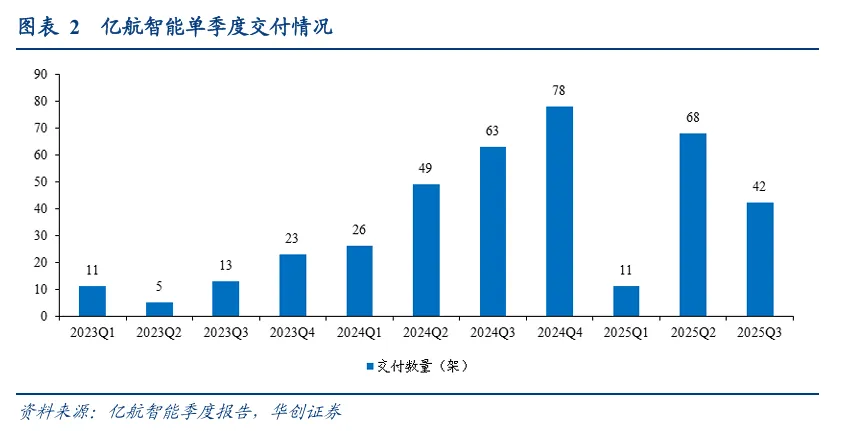
Core Insights - The eVTOL industry is witnessing a significant increase in confirmed orders, indicating a shift from mere intentions to actual commitments [1][2] - Major eVTOL companies, including沃飞长空 and 沃兰特航空, have secured substantial orders, reflecting a growing demand for next-generation aerial mobility solutions [3][5] Order Trends - In November 2025 alone, seven eVTOL companies reported new orders, with notable agreements including 370 units from 天翎科 and 95 units from 沃兰特航空, totaling approximately 2.375 billion yuan [3][4] - The majority of these orders are still classified as intent rather than confirmed, highlighting a strategic positioning by buyers to secure future capacity [4] Market Dynamics - The surge in intent orders is driven by a pressing need for buyers to lock in future aerial transport capabilities, as evidenced by the saturation of current aircraft manufacturers like Airbus and Boeing [4] - The transition from prototype to commercial product for eVTOLs hinges on obtaining the Type Certificate (TC), which is essential for legal production and sales [4][6] Confirmed Orders - Confirmed orders have started to emerge, with沃兰特航空 and 峰飞航空 reporting significant agreements, including 300 confirmed orders out of 2000 total commercial orders [5][7] - 亿航智能 has begun deliveries, having shipped 121 units in the first three quarters of the year, indicating progress in the eVTOL market [7]
eVTOL“爆单” 下一步是从意向到确认
2 1 Shi Ji Jing Ji Bao Dao· 2025-12-02 00:22
Core Insights - The eVTOL industry is witnessing a significant increase in confirmed orders, indicating a shift from mere intentions to actual commitments [1][2] - The surge in orders reflects a strategic positioning by buyers to secure future aerial mobility capabilities amid a competitive landscape [4][5] Group 1: Order Trends - In November 2025, multiple eVTOL companies, including沃飞长空 and 零重力飞机, signed procurement agreements, with notable orders such as 50 units from 华龙航空 [1][3] - A total of 370 eVTOL units were ordered during the 8th China International Import Expo, with significant contributions from various companies [3] - The total order value for eVTOLs in November reached approximately 23.75 billion yuan, with multiple companies securing substantial agreements [3] Group 2: Transition from Intentions to Confirmations - The majority of current orders are still intentions rather than confirmed orders, highlighting the urgency of buyers to lock in future capacity [4] - The transition from intention to confirmation is critical, with only a few companies like 亿航智能 and 峰飞航空 having obtained the necessary certifications to proceed with production [4][6] - As of late 2025, the confirmed orders for eVTOLs have reached 300 units for 峰飞航空, with an overall intention-to-confirmation conversion rate of 15% [7] Group 3: Certification and Delivery - The certification process, particularly the Type Certificate (TC), is essential for eVTOLs to move from prototype to commercial product [4][9] - 亿航智能 has begun deliveries, with 121 units delivered in the first three quarters of the year, indicating progress in the operational phase [7] - Special scenarios, such as emergency rescue operations, may allow for preliminary operations under "special flight" conditions, facilitating technology maturation and order conversion [9]
低空经济行业信用研究(简版报告):战略性新兴产业
Lian He Zi Xin· 2025-12-01 12:13
本版为简版报告,如希望获取详版报告,请联系文末投资人服务。 战略性新兴产业—低空经济行 业信用研究(简版报告) 1. 低空经济应用场景将遵循"先物后人、从特殊到一般"的路线快速拓展; 2. 低空物流将实现规模化运营,城市空中交通将实现商业化运营; 3. eVTOL、飞行汽车等新型低空飞行器将成为未来低空出行的主流工具; 4. 低空经济行业内企业主要包括低空经济整机企业、零部件企业、运营服务企业,信用评级 覆盖 AA+、AA-、AAA、AA 和 A+等,近三年来信用水平总体保持稳定; 5. 低空经济整机企业信用特征总体表现为高成长性、高经营风险和高财务风险,对其信用分 析思路为首要看团队,其次看产品,再次看产业链整合能力,继而看资本实力,最后看资金保障 能力。 www.lhratings.com 研究报告 1 联合资信 研究中心 工商一部 | 邓博文 李小建 崔濛骁 金剑 李天娇 孙巧莉 李子昕 核心观点: 详版正文目录 | 一、低空经济行业发展现状及趋势 | | --- | | (一)低空经济的定义及行业特征 | | 1. 低空经济的定义 . | | 2. 低空经济行业特征 | | (二)低空经济相关产业政策 ...