西测测试

Search documents
军工电子板块1月20日跌3.67%,西测测试领跌,主力资金净流出59.05亿元
Zheng Xing Xing Ye Ri Bao· 2026-01-20 09:00
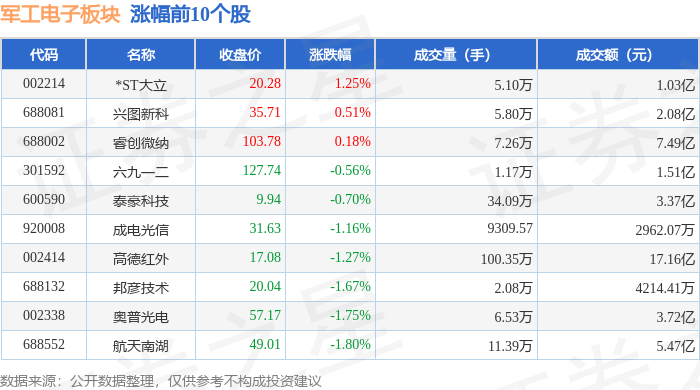
Market Overview - The military electronics sector experienced a decline of 3.67% on January 20, with Xicet Testing leading the drop [1] - The Shanghai Composite Index closed at 4113.65, down 0.01%, while the Shenzhen Component Index closed at 14155.63, down 0.97% [1] Stock Performance - Notable stock performances in the military electronics sector included: - *ST Dali (002214): Closed at 20.28, up 1.25% with a trading volume of 51,000 shares and a turnover of 103 million yuan - Xicet Testing (301306): Closed at 116.45, down 12.11% with a trading volume of 118,600 shares and a turnover of 1.463 billion yuan - Shenglu Communication (002446): Closed at 10.82, down 8.92% with a trading volume of 1.8396 million shares and a turnover of 2.039 billion yuan [1][2] Capital Flow - The military electronics sector saw a net outflow of 5.905 billion yuan from institutional investors, while retail investors had a net inflow of 5.209 billion yuan [2] - The capital flow for specific stocks included: - Aerospace South Lake (688552): Net inflow of 32.9088 million yuan from institutional investors - Xicet Testing (301306): Net outflow of 463.963 million yuan from retail investors [3]


商业航天上演过山车行情 板块加速“去伪存真”
Di Yi Cai Jing· 2026-01-20 08:52
Core Viewpoint - The commercial aerospace sector experienced a significant downturn on January 20, with many stocks hitting their daily limit down, marking the end of a month-long rally. The sector's volatility is attributed to a combination of policy changes, clarifications of business relevance, and recent launch failures [1][2][3] Market Performance - As of January 20, the commercial aerospace sector index (BK0963) fell over 3.2%, with individual stocks like Xice Testing (301306.SZ) and Aerospace Hongtu (688066.SH) dropping more than 11%. A total of 11 stocks hit their daily limit down, while others like Aerospace HuanYu (688523.SH) and Shenglu Communication (002446.SZ) saw declines exceeding 8% [2][3] - The index has decreased from above 3100 points on January 12 to around 2790 points, ending a rapid rise that began in late November 2025 when it climbed from approximately 1900 points. By December 2025, at least 10 stocks had doubled in price [2][3] Factors Influencing Market Changes - The recent market correction is influenced by multiple factors, including over 20 listed companies issuing risk warnings or clarifications about their lack of substantial involvement in commercial aerospace. For instance, Aerospace Hongtu stated that a strategic cooperation agreement signed in July 2023 has not led to any significant business collaboration [3][6] - The sector faced setbacks with launch failures, including the Long March 3B rocket's mission failure and the unsuccessful maiden flight of the private commercial rocket by Star River Power [3][4] Policy and Industry Developments - The previous surge in the sector was driven by favorable policies, such as China's application for 203,000 new satellites, marking a significant resource declaration in the global aerospace sector. Additionally, the Shanghai Stock Exchange announced that commercial rocket companies could apply for IPOs under specific standards [4][5] - Recent developments indicate that several companies with core technology capabilities are in the IPO preparation stage, although many have not yet gone public [6][9] Financial Challenges - Financial data reveals that companies in the sector are facing significant challenges. For example, Blue Arrow Aerospace reported net losses of 8.21 billion yuan in 2022 and projected losses of 12.16 billion yuan in 2023, with cumulative losses exceeding 35 billion yuan over three and a half years [7][8] - The commercial viability of the sector is constrained by the need for low-cost and high-reliability technologies, where domestic capabilities still lag behind international competitors like SpaceX [8][9] Investor Sentiment and Future Outlook - Despite the recent downturn, long-term prospects for the commercial aerospace sector remain positive, with investors encouraged to focus on companies with core technological capabilities and commercial potential. The market is transitioning from speculative enthusiasm to more cautious value assessment [9][10] - Analysts suggest that the current market dynamics may resemble those of the new energy sector, with ongoing policy support and potential for profitability improvements, indicating that the sector may continue to experience fluctuations in the short to medium term [9][10]
商业航天上演过山车行情,板块加速“去伪存真”
Di Yi Cai Jing· 2026-01-20 08:48
Core Viewpoint - The commercial aerospace sector experienced a significant downturn on January 20, with many stocks hitting their daily limit down, marking the end of a month-long rally. The sector's volatility is attributed to a combination of policy changes, clarifications of business relevance, and recent launch failures [1][2][3]. Market Performance - As of January 20, the commercial aerospace sector index (BK0963) fell over 3.2%, with individual stocks like Xice Testing (301306.SZ) and Aerospace Hongtu (688066.SH) dropping more than 11%. A total of 11 stocks hit their daily limit down, while others like Aerospace Huanyu (688523.SH) and Shenglu Communication (002446.SZ) saw declines exceeding 8% [2][3]. - The index has decreased from above 3100 points on January 12 to around 2790 points, ending a rapid rise that began in late November 2025, during which at least 10 stocks doubled in price [2][3]. Factors Influencing Market Changes - The recent market cooling is attributed to multiple factors, including over 20 companies issuing risk warnings or clarifications about their lack of substantial involvement in commercial aerospace. For instance, Aerospace Hongtu stated that its strategic cooperation with a space technology company has not led to any significant business collaboration [3][6]. - The sector faced setbacks with launch failures, including the Long March 3B rocket and the private commercial rocket from Star River Power, which both experienced mission failures [3][4]. Policy and Industry Developments - The previous surge in the sector was driven by favorable policies, such as China's application for 203,000 new satellites, the largest in recent years, and the Shanghai Stock Exchange's announcement allowing commercial rocket companies to apply for IPOs under specific standards [4][5]. - Recent developments indicate that several companies with core technology capabilities are in the IPO preparation stage, although many have not yet gone public [6][7]. Financial Challenges - Financial data reveals significant challenges for companies in the sector. For example, Blue Arrow Aerospace reported net losses of 8.21 billion yuan in 2022, 12.16 billion yuan in 2023, and 9.16 billion yuan in 2024, with a total loss exceeding 35 billion yuan over three and a half years [7][8]. - The commercial viability of these companies is hindered by their early-stage development and the high costs associated with rocket technology, which still lag behind international competitors [8]. Future Outlook - Despite the recent downturn, long-term prospects for the commercial aerospace sector remain positive, with industry experts suggesting that the current market correction may help identify companies with genuine technological capabilities and commercial potential [9]. - Analysts believe that the sector may experience a recovery similar to the renewable energy market, driven by ongoing policy support and potential improvements in profitability [9].


001270,天地板
Shang Hai Zheng Quan Bao· 2026-01-20 06:49
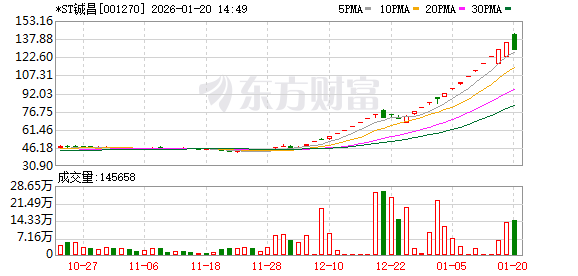
Group 1 - The commercial aerospace sector experienced a downward trend on January 20, with multiple stocks, including *ST Chengchang and Aerospace Power, hitting the daily limit down. Stocks like Superjet Co. and Xicet Testing fell over 13%, while Zhenlei Technology and Aerospace Micro dropped over 11% [2][3] - *ST Chengchang opened with a rapid rise to the daily limit but later experienced significant volatility, ultimately hitting the limit down. As of the report, *ST Chengchang was priced at 128.66 yuan per share [2][3] - The Shenzhen Stock Exchange issued a regulatory notice regarding *ST Chengchang's stock price volatility, leading to a suspension for investigation and a risk warning announcement. Following its resumption on January 16, the stock continued to hit the daily limit up, with some investors engaging in abnormal trading behaviors [2][3] Group 2 - The company *ST Chengchang was established in November 2010 and specializes in the research, production, sales, and technical services of microwave and millimeter-wave analog phased array T/R chips [7]


【盘中播报】沪指跌0.15% 国防军工行业跌幅最大
Zheng Quan Shi Bao Wang· 2026-01-20 06:35
(文章来源:证券时报网) 证券时报·数据宝统计,截至下午13:57,今日沪指跌0.15%,A股成交量1319.92亿股,成交金额22891.62 亿元,比上一个交易日增加2.20%。个股方面,2010只个股上涨,其中涨停61只,3315只个股下跌,其 中跌停22只。从申万行业来看,房地产、石油石化、基础化工等涨幅最大,涨幅分别为1.89%、 1.33%、1.07%;国防军工、通信、计算机等跌幅最大,跌幅分别为3.42%、2.78%、2.07%。(数据宝) | 综合 | | | | 南京新百 | | | --- | --- | --- | --- | --- | --- | | 计算机 | -2.07 | 1536.79 | -10.09 | 航天宏图 | -12.39 | | 通信 | -2.78 | 1186.52 | 1.08 | 通宇通讯 | -10.01 | | 国防军工 | -3.42 | 1357.00 | 11.48 | 西测测试 | -10.62 | 今日各行业表现(截至下午13:57) | 申万行业 | 行业涨跌(%) | 成交额(亿元) | 比上日(%) | 领涨(跌)股 | 涨跌幅(%) ...
西测测试:无人机等低空经济方面检测业务占比非常小
Jin Rong Jie· 2026-01-20 01:16
Core Viewpoint - The company is recognized as one of the leading third-party testing institutions in China, providing comprehensive testing services primarily focused on environmental reliability, electromagnetic compatibility, component testing, and electrical assembly services [1] Group 1 - The company offers specialized technical services for clients in the aerospace and aviation sectors [1] - Current testing services are mainly concentrated in environmental reliability testing, electromagnetic compatibility testing, component testing, and electrical assembly [1] - The share of testing services related to low-altitude economy, such as drones, is currently very small [1]
西测测试(301306.SZ):无人机等低空经济方面相关检测业务占比非常小
Ge Long Hui· 2026-01-20 01:04
Core Viewpoint - The company, Xicetest (301306.SZ), is recognized as one of the leading third-party testing institutions in China, providing comprehensive testing services primarily in the aerospace and aviation sectors [1] Group 1: Company Overview - The company specializes in environmental reliability testing, electromagnetic compatibility testing, component testing, and electrical assembly services [1] - The current focus remains on traditional testing services, with a minimal share of business related to low-altitude economy sectors such as drone testing [1]
商业航天产业布局“竞速赛”开启 多地各显其能
Shang Hai Zheng Quan Bao· 2026-01-16 00:19
近年来,我国商业航天产业规模年均增长20%以上,预计到2030年可达7万亿元至10万亿元。随着2025 年底商业航天被正式纳入国家航天发展总体布局,其战略地位与广阔前景吸引了各地争相布局。 当前,以政策规划、产业生态、重大项目为抓手的商业航天产业"竞速赛"已然开启——北京、上海、深 圳等一线城市依托强大的技术、资金和人才资源聚集头部企业;陕西、四川等中西部省份则凭借深厚 的"国家队"底蕴与差异化路径强势崛起,共同勾勒出中国商业航天多点开花、特色发展的产业新图景。 一线城市集聚优势产业资源 一季度,北京、上海、深圳将举行商业航天展会。展会是产业布局的风向标,既展示当地相关产业基 础,也传递筑巢引凤、加快产业发展的信号。 第三届北京商业航天产业高质量发展大会暨2026北京国际商业航天展览会将于1月23日至25日召开,预 计超300家全球企业参展参会,包括中国星网、航天科技、蓝箭航天等国内巨头,完整覆盖卫星制造与 应用、火箭发射与服务、前沿材料器件、产业支撑生态的全产业链。 展览的举办地——北京亦庄是重要的商业航天产业集聚区。这里集聚了180余家企业,其中商业火箭企 业集聚度达全国75%,星座建设运营及卫星总体制造 ...
商业航天 多地各显其能 产业布局“竞速赛”开启
Shang Hai Zheng Quan Bao· 2026-01-15 18:01
Core Insights - The commercial aerospace industry in China is experiencing significant growth, with an annual increase of over 20%, projected to reach between 7 trillion to 10 trillion yuan by 2030. The formal inclusion of commercial aerospace in the national space development plan by the end of 2025 highlights its strategic importance and potential [1]. Group 1: Industry Growth and Events - Major cities like Beijing, Shanghai, and Shenzhen are hosting commercial aerospace exhibitions, which serve as indicators of industry development and resource aggregation [1][2]. - The third Beijing Commercial Aerospace Industry High-Quality Development Conference and the 2026 Beijing International Commercial Aerospace Exhibition will take place from January 23 to 25, featuring over 300 global companies, including major domestic players [1][2]. Group 2: Regional Development and Policies - Beijing's Yizhuang area is a key hub for the commercial aerospace industry, housing over 180 companies, with a significant concentration of commercial rocket enterprises [2]. - Recent policies in Beijing and Shanghai aim to accelerate the development of the commercial aerospace sector, including action plans for innovation and advanced manufacturing clusters [3]. Group 3: Regional Strategies and Goals - Shaanxi and Sichuan provinces are leveraging their unique resources to develop differentiated paths in the commercial aerospace sector, with Shaanxi aiming to establish a 100 billion yuan industry by 2030 [4]. - Shaanxi's action plan includes the establishment of over 200 enterprises in the commercial aerospace sector by 2030, supported by a robust industrial ecosystem [4][5]. - Chengdu is also actively developing its commercial aerospace capabilities, with plans to reach a scale of 50 billion yuan by 2027, focusing on satellite applications and core electronic components [5][6].


A股三大股指涨跌互现:半导体产业链午后走强,两市成交额不足3万亿元
Xin Lang Cai Jing· 2026-01-15 07:36
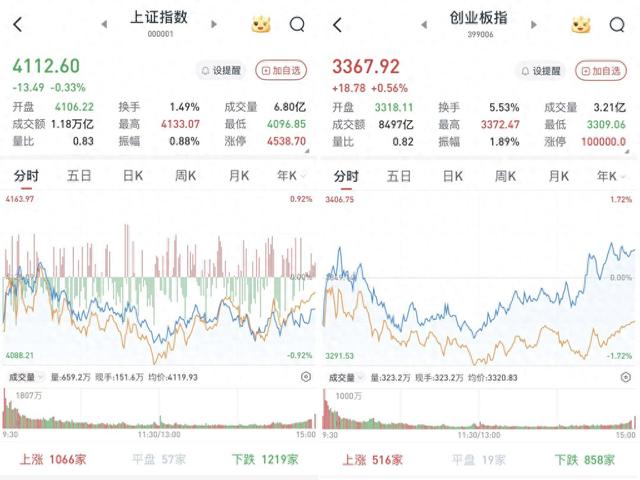
Market Overview - A-shares experienced a collective decline on January 15, with the Shanghai Composite Index closing at 4112.6 points, down 0.33% [2] - The total trading volume in the Shanghai and Shenzhen markets was 29,055 billion yuan, significantly lower than the previous day's 39,413 billion yuan, a decrease of 10,358 billion yuan [3] Sector Performance - The semiconductor sector showed strong performance in the afternoon, with stocks like Blue Arrow Electronics and Silicon Power rising by over 10% [5] - Basic chemicals led the market, with several stocks, including Seven Color Chemicals and Lingpai Technology, also seeing gains of over 10% [5] - Energy metals and consumer electronics sectors were active, while AI applications and commercial aerospace stocks saw significant declines [2] Stock Movements - A total of 85 stocks in the markets rose by over 9%, while 127 stocks fell by more than 9% [4] - Media stocks experienced substantial declines, with companies like Tianlong Group and Zhidema falling by over 10% [6] - Defense and military stocks continued to drop, with several stocks hitting their daily limit down [6] Market Sentiment and Predictions - Analysts suggest that the A-share market is entering a phase of volatility after a period of rapid gains, with a focus on structural investment opportunities [7] - The market is expected to experience short-term fluctuations due to profit-taking and regulatory measures, but the medium-term upward trend remains intact [8] - The overall trading activity in the equity market remains high, with daily trading volumes exceeding historical averages, indicating strong investor interest [8][9]