Perplexity

Search documents
1万亿,今年硅谷初创融资创纪录
3 6 Ke· 2025-12-31 02:22
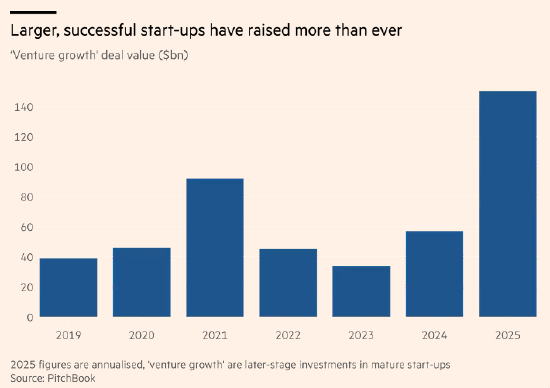
Core Insights - The hottest startups in Silicon Valley have raised $150 billion (approximately 1.05 trillion RMB) this year, driven by financial backers advising them to build "fortress-like" balance sheets to protect against a potential cooling of AI investment in the coming year [1][3] - The funding surge is attributed to unprecedented large deals, including SoftBank's $41 billion investment in OpenAI and $13 billion in Anthropic, as well as Meta's over $14 billion investment in Scale AI [3][5] Group 1 - The influx of capital is expected to help startups shield themselves from potential future investment downturns while also fueling their growth [3][4] - Investors are encouraging startups to build sufficient reserves while enthusiasm for the potential of AI-driven economic transformation remains high [3][4] - The average time between funding rounds for top-performing AI startups has decreased significantly, with some seeking funding every few months despite many smaller startups facing dwindling funding sources [5] Group 2 - The rapid growth of leading AI companies is a key driver of the funding boom, with companies like Anysphere seeing their valuation soar from $2.6 billion at the beginning of the year to $27 billion by November [5][6] - Cost pressures, particularly for companies developing cutting-edge AI models requiring substantial computational power and expensive chips, have led to increased funding frequency [6] - The funding frenzy has prompted many venture capital firms to accelerate their fundraising efforts, with notable firms like Thrive Capital and Andreessen Horowitz starting new fundraising processes [6]


AI造富速度太快!数月走完马斯克十年路,硅谷风投:真正问题是哪家能生存下来
Sou Hu Cai Jing· 2025-12-30 11:11
Core Insights - The rapid wealth creation in the AI sector has led to a new wave of billionaires, with some achieving valuations of over $10 billion in just a few months without any significant product launches [2][3] Group 1: Company Valuations and Founders - Mira Murati, a former OpenAI executive, founded "Mind Machine Labs" and achieved a valuation of over $10 billion within six months, raising approximately $2 billion in seed funding [3] - Another former OpenAI executive, Ilya Sutskever, founded "Safe Superintelligence," which reached a valuation of $32 billion without releasing any products [3] - Founders of Scale AI, Alexander Wang and Lucy Guo, became billionaires after their company received a $14.3 billion investment from Meta [3] - The founders of AI programming startup Cursor saw their company's valuation rise to $27 billion, significantly increasing their wealth [3] Group 2: Emerging Wealth Trends - A larger "nine-figure club" of entrepreneurs with assets in the hundreds of millions is emerging, including companies like Perplexity, Mercor, Figure AI, and Harvey [4] - The speed of wealth accumulation in AI is compared to Elon Musk's journey, which took over a decade, highlighting the rapid valuation increases driven by investor competition [5] - There are 13 self-made billionaires in their 20s this year, marking a historical high in the tech industry [5] Group 3: Future Outlook and Survival - The majority of new AI billionaires have seen their startup stocks become highly valuable as company valuations soared [6] - There is speculation about which companies will survive in the long term, with concerns about distinguishing between real billionaires and those with paper wealth [6]

数十亿美金收购在赌什么?Manus倒向Meta的N个关键解读
3 6 Ke· 2025-12-30 10:38
Core Viewpoint - Meta has completed the acquisition of the AI company Manus for a transaction amount of several billion dollars, which has shocked the tech community, especially given Manus's recent valuation of $2 billion for its next funding round [1][3]. Group 1: Acquisition Details - The acquisition amount is reported to be in the range of $2 billion to $3 billion, making it Meta's third-largest acquisition to date, following WhatsApp and Scale AI [3][4]. - Manus will continue to operate independently post-acquisition, with its CEO, Xiao Hong, becoming Meta's Vice President responsible for general-purpose AI agents [3][4]. - The rapid negotiation process, taking only about ten days, indicates a strong consensus on the valuation between Meta and Manus [3][5]. Group 2: Strategic Importance of Manus - Meta views Manus as a critical component in its AI strategy, aiming to integrate its capabilities into Meta's extensive social and enterprise service platforms [5][6]. - Manus has demonstrated exceptional commercial growth, achieving an annual recurring revenue (ARR) of over $125 million within just eight months of launching its first product [5][6]. - The technology behind Manus has been validated under high-load conditions, processing over 147 trillion tokens and supporting more than 80 million virtual machines, showcasing its operational resilience [5][6]. Group 3: Market Context and Timing - The acquisition reflects Meta's urgency to adapt in a competitive AI landscape, drawing parallels to its previous strategic acquisitions during the early mobile internet era [6][7]. - The current market conditions and Manus's rapid growth made this acquisition a timely decision for both parties, with Manus achieving a valuation increase from $14 million to $2-3 billion in under three years [11][12]. - The deal has sparked discussions about the challenges faced by AI startups, particularly regarding profit margins and competition with larger firms [10][12]. Group 4: Investor Perspectives - Investors view the acquisition as a win-win situation, providing substantial returns for both the founders and early investors, with some expecting returns of 5-12 times their initial investments [11][12]. - There is speculation about the future of Manus's founding team within Meta, with differing opinions on whether they will remain long-term or if this marks the end of their entrepreneurial journey [12][13]. - The acquisition is seen as a milestone for the AI agent industry and a symbol of the global competitiveness of a new generation of Chinese entrepreneurs [13].

AI领域重大并购!Meta斥资数十亿美元,收购中国背景Manus!
证券时报· 2025-12-30 09:07
Core Viewpoint - Meta has acquired the Singapore-based AI startup Manus, with the acquisition amount reportedly reaching several billion dollars, making it Meta's third-largest acquisition after WhatsApp and Scale AI [1][7]. Group 1: Reasons for Acquisition - The acquisition recognizes Manus's work in the general AI Agent field, focusing on building universal AI Agents to help users efficiently complete research, automation, and complex tasks [3]. - Manus has processed over 147 trillion tokens and created over 80 million virtual machines since its launch, indicating significant user demand and operational capacity [3]. - The partnership with Meta is expected to strengthen Manus's strategic position in AI applications, transforming advanced AI capabilities into scalable and reliable systems [3]. Group 2: Manus Overview - Manus, launched by the startup "蝴蝶效应," is recognized as the world's first universal Agent product capable of autonomous execution for tasks like resume screening and stock analysis [5]. - Following its rapid rise in popularity, Manus faced challenges, including withdrawal from the Chinese market and a significant reduction in its workforce, with the core team relocating to Singapore [6]. - Manus's parent company raised $75 million in Series B funding to expand into overseas markets, including the U.S., Japan, and the Middle East [6]. Group 3: Meta's AI Strategy - The acquisition is part of Meta's broader strategy in artificial intelligence, which includes previous acquisitions like Scale AI and the establishment of the Meta Superintelligence Labs [9]. - Meta has made significant investments in AI, with plans to allocate thousands of billions for building large-scale computing clusters, including the Hyperion project [12]. - Meta's vision differs from competitors by focusing on "Personalized Super Intelligence," aiming to provide this technology directly to billions of users [12].

AI时代造就年轻亿万富翁:创业不到三年就暴富,马斯克都比不上
Feng Huang Wang· 2025-12-30 03:07
新晋AI亿万富豪包括Scale AI联合创始人汪滔(Alexandr Wang)与郭如意(Lucy Guo),他们创建的这家数 据标注公司在今年6月获得了Meta的143亿美元投资。AI编程创业公司Cursor的四位创始人迈克尔·特鲁 埃尔(Michael Truell)、苏阿莱赫·阿西夫(Sualeh Asif)、阿曼·桑格尔(Aman Sanger)与阿尔维德·伦纳马克 (Arvid Lunnemark)也在上个月公司融资估值达270亿美元时跻身亿万富豪行列。 凤凰网科技讯 北京时间12月30日,据《纽约时报》报道,AI热潮已经让英伟达CEO黄仁勋(Jensen Huang)和OpenAI CEO萨姆·奥特曼(Sam Altman)等知名亿万富翁变得更加富有。与此同时,它还造就了 一批来自小型创业公司的新年轻亿万富翁,至少在纸面上是如此。 这些年轻富翁可能会成为未来的硅谷权势人物,就像以往科技热潮造就的富有高管一样。例如,上世纪 90年代末互联网泡沫时期涌现的富豪们就曾投资或协助引领了随后的科技浪潮。 硅谷风险投资公司Sapphire Ventures的合伙人贾伊·达斯(Jai Das)将新晋亿万富豪比作 ...

泡沫担忧加剧,但AI创企今年仍累计融资1500亿美元
Xin Lang Cai Jing· 2025-12-29 13:49
硅谷最炙手可热的初创企业今年已筹集了1500亿美元资金,其金融支持者建议它们建立"堡垒资产负债 表",以防2026年人工智能投资热潮转向破裂时能保护自己。 PitchBook数据显示,美国最大的私营公司在2025年筹集了创纪录的资金,打破了2021年920亿美元的历 史最高纪录,投资者争相支持OpenAI和Anthropic等顶级人工智能集团。 风险投资家和行业专家表示,随着公开市场开始担忧人工智能基础设施的巨额支出,这笔资金将有助于 创始人抵御投资低迷,同时也将推动增长。 "你应该趁着阳光明媚晒干草,"曾投资OpenAI、Databricks和SpaceX的Coatue合伙人卢卡斯·斯威舍 (Lucas Swisher)表示。"2026年可能会带来意想不到的事情……当市场提供选择时,就建立一个堡垒 资产负债表。" "(对于初创企业创始人来说)最大的风险是你没有筹集到足够的资金,融资环境枯竭,你的业务可能 归零,"富兰克林邓普顿(Franklin Templeton)风险投资联席主管瑞安·比格斯(Ryan Biggs)表示。"或 者你可以接受一点点股权稀释,如果业务成功了,这真的无关紧要:无论哪种方式,你仍然 ...
2025年消费级AI现状报告:产品亮点、遗憾与未来趋势
3 6 Ke· 2025-12-29 09:20
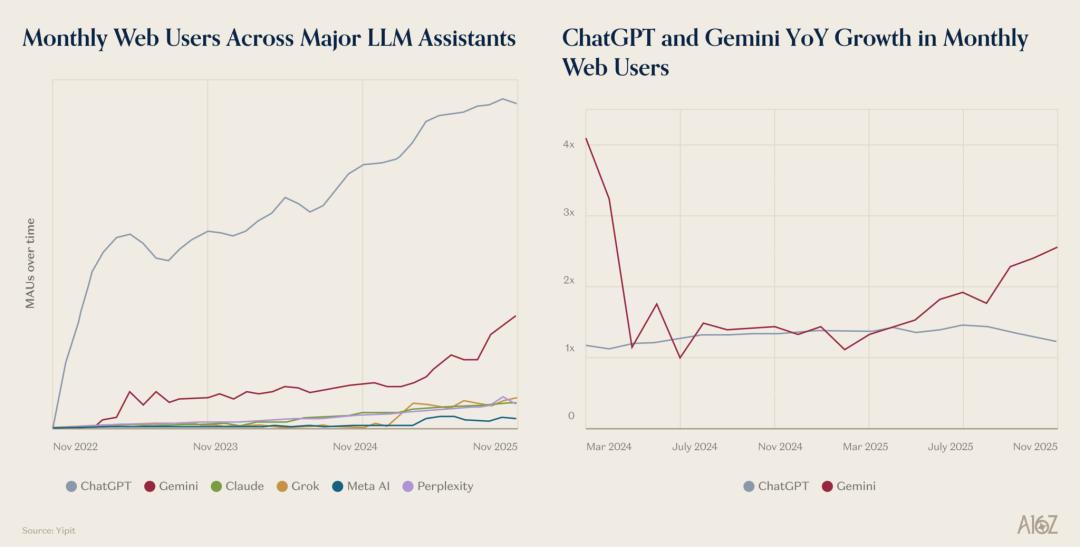
Core Insights - In 2025, consumer AI has transitioned from experimental phases to mainstream applications, but the market remains highly concentrated, with ChatGPT leading and over 90% of users sticking to a single AI product [1][2] - The report by Andreessen Horowitz highlights both the successes and failures of major players while identifying opportunities for startups in the consumer AI space [1][2] AI Product Releases - 2025 saw a surge in consumer AI product launches, with OpenAI introducing numerous features including GPT-4o image generation and group chat capabilities, while Gemini released popular models like Nano Banana and Veo [2] - Other labs such as Anthropic, Perplexity, xAI, and Meta also launched new consumer-focused tools across various domains [2] User Engagement and Market Dynamics - AI usage is on the rise, but most consumers continue to use only one product; less than 10% of ChatGPT's weekly active users explore alternatives [2][3] - Spending on AI products is similarly concentrated, with only 9% of consumers subscribing to multiple services [2] User Growth and Retention - ChatGPT achieved the fastest milestone of reaching 100 million weekly active users, with an estimated 800-900 million users across platforms [3] - Gemini's user base is about 34% of ChatGPT's on the web and 40% on mobile, with significant growth rates of 155% compared to ChatGPT's 23% [3][4] Paid User Metrics - Gemini's paid subscription service saw a nearly 300% increase, while ChatGPT's growth was 155%; however, both have similar retention rates for paid users [4] Product Experience and Innovation - ChatGPT's new features, such as "Connectors" for accessing various office applications, aim to enhance user experience, but some functionalities have faced performance issues [8][10] - Google's Gemini has made strides with products like NotebookLM, which has seen user growth exceeding 100% year-over-year [11][13] Competitive Landscape - Anthropic focuses on "prosumer" users with tools like Claude, which has introduced features to compete with ChatGPT [14][15] - Perplexity targets "productivity hackers" with tools like Comet and has seen significant user growth and revenue increases [16] Startup Opportunities - Despite the dominance of major players, there is optimism for startups in the consumer AI sector, as they can carve out niches that larger companies may overlook [21]

AI 替代岗位,构成违法解雇?
2 1 Shi Ji Jing Ji Bao Dao· 2025-12-28 23:22
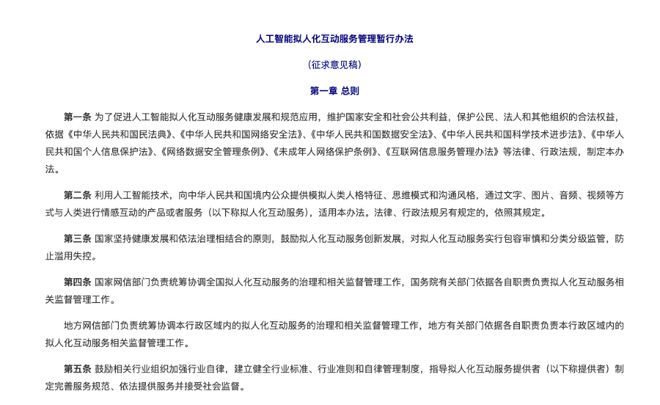
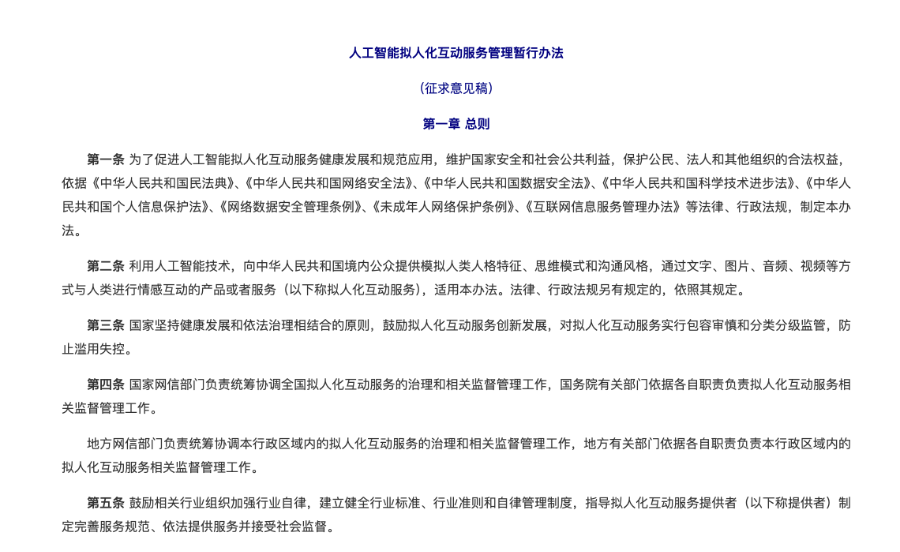
Group 1: AI and Copyright Issues - A group of six authors, including John Carreyrou, has filed a lawsuit against six AI companies, alleging unauthorized use of copyrighted books for training large models [2] - In a previous case, Anthropic settled for $1.5 billion after being found guilty of similar copyright infringement, with eligible authors receiving approximately $3,000 each [2] - The current plaintiffs are dissatisfied with the collective lawsuit format, believing it favors defendants and allows them to settle easily [2] Group 2: Labor Law and AI - A recent arbitration case in Beijing ruled that terminating an employee due to their position being replaced by AI constitutes illegal dismissal [3][4] - The case involved an employee whose role in data collection was eliminated as the company transitioned to an AI-driven model [3] - The arbitration committee determined that the company was attempting to shift the costs and risks of technological change onto the employee, which was deemed unlawful [4] Group 3: AI Emotional Support Regulations - The National Internet Information Office has proposed new regulations for AI emotional support services, focusing on user interaction and data protection [5] - The draft requires clear labeling for non-human interactions and mandates user notifications after two hours of continuous use [5] - It emphasizes strict data usage policies, prohibiting the use of user interaction data for model training without explicit consent [5] Group 4: Cybersecurity and Platform Governance - OpenAI acknowledged challenges in defending its AI browser, Atlas, against prompt injection attacks, despite implementing new security measures [7] - Kuaishou experienced a significant security breach, leading to the temporary suspension of its live streaming feature due to an influx of inappropriate content [9] - The incident raised concerns about the platform's security capabilities, resulting in a more than 3% drop in its stock price [9]

AI 替代岗位 构成违法解雇?|南财合规周报
2 1 Shi Ji Jing Ji Bao Dao· 2025-12-28 14:25
Group 1: AI and Copyright Issues - A group of six authors, including John Carreyrou, has filed a lawsuit against six AI companies, alleging unauthorized use of copyrighted books for training large models [2] - In a previous case, Anthropic reached a $1.5 billion settlement with authors over similar copyright infringement claims, with each eligible author receiving approximately $3,000 [2] - The current lawsuit emphasizes that large language model companies should not be able to settle numerous high-value infringement claims at a low cost [2] Group 2: Labor Law and AI Replacement - A case in Beijing ruled that terminating an employee due to their position being replaced by AI constitutes illegal dismissal [3][4] - The employee, Liu, contested the termination after his role in data collection was eliminated in favor of an AI-driven model [3] - The arbitration committee determined that the company attempted to shift the costs and risks of technological advancement onto the employee, which was deemed unlawful [4] Group 3: AI Emotional Support Regulations - The National Internet Information Office proposed new regulations for AI emotional support services, focusing on user interaction and data protection [5] - The draft requires clear identification of non-human interactions and mandates user notifications for prolonged usage [5] - Strict guidelines on training data usage were introduced, prohibiting the use of user interaction data for model training without explicit consent [5] Group 4: Cybersecurity and Platform Governance - OpenAI acknowledged the challenges in defending its AI browser, Atlas, against prompt injection attacks, despite implementing automated defense strategies [7] - Kuaishou experienced a significant security breach, leading to a temporary shutdown of its live streaming feature due to an influx of inappropriate content [9] - The incident raised concerns about the platform's security capabilities, resulting in a more than 3% drop in its stock price [9] Group 5: Content Moderation and Platform Responsibility - The Lijiang Cultural and Tourism Bureau criticized Xiaohongshu for inadequate content moderation, leading to false claims against businesses [8] - Xiaohongshu responded by emphasizing its commitment to authentic user experiences and providing channels for businesses to report disputes [8] - Ongoing investigations have not yet confirmed any violations in user-generated content, but the platform continues to monitor for potential issues [8]
AI 替代岗位,构成违法解雇?|南财合规周报
2 1 Shi Ji Jing Ji Bao Dao· 2025-12-28 13:16
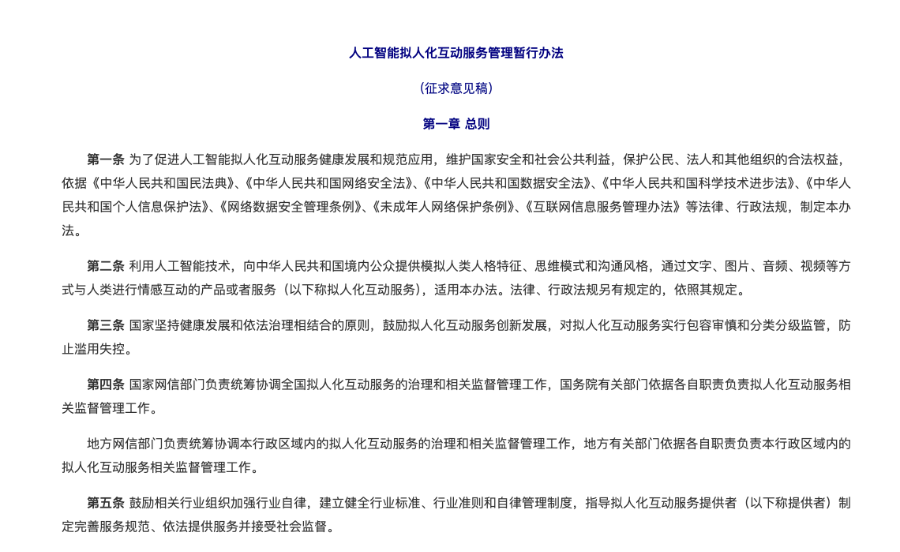
Group 1: AI and Copyright Issues - A group of six authors, including John Carreyrou, has filed a lawsuit against six AI companies, alleging unauthorized use of copyrighted books for training large models [2] - In a previous case, Anthropic settled for $1.5 billion after being found guilty of similar copyright infringement, with eligible authors receiving approximately $3,000 each [2] - The current lawsuit emphasizes that large language model companies should not easily settle high-value infringement claims at a low cost [2] Group 2: Labor Law and AI - Beijing's labor arbitration case determined that terminating an employee due to their position being replaced by AI constitutes illegal dismissal [3] - The case involved an employee whose role in data collection was eliminated as the company transitioned to an AI-driven model [3] - The arbitration committee ruled that the company's attempt to transfer the costs and risks of technological change to the employee was invalid [3] Group 3: AI Emotional Support Regulations - The National Internet Information Office proposed new regulations for AI emotional support services, focusing on user interaction and data protection [4] - The draft requires clear identification of non-human interactions and mandates user alerts after two hours of continuous use [5] - It also stipulates that systems must detect emotional distress and involve human intervention in extreme cases, ensuring the protection of minors and vulnerable users [5] Group 4: Cybersecurity Concerns - OpenAI acknowledged the challenges in defending its AI browser, Atlas, against prompt injection attacks, despite implementing new security measures [7] - The company has created automated attackers to identify vulnerabilities, but admits that certain types of attacks may never be fully resolved [7] - Kuaishou experienced a significant security breach, leading to a temporary shutdown of its live streaming feature and a subsequent drop in stock price by over 3% [10]