Waymo

Search documents
Google (GOOGL) Cloud Revenue Just Surged 48% And May Have Delivered Knockout Blow To OpenAI
247Wallst· 2026-02-16 20:22
Core Insights - The competitive landscape between OpenAI and Alphabet is shifting, with Alphabet gaining an edge in several areas despite OpenAI's early lead in artificial intelligence [1][4] - There is a significant performance divergence between companies associated with OpenAI and those linked to Alphabet, with Oracle down 50.3% while Alphabet-associated stocks like Celestica, Lumentum, and Broadcom have performed well [2][7] - Media coverage of OpenAI has been excessively negative, particularly regarding its plans to raise substantial capital, which may not reflect the actual financial situation [2][9] Group 1: Competitive Dynamics - OpenAI was initially the leader in AI but is now facing strong competition from Alphabet, which has made a notable resurgence [1][4] - Companies linked to OpenAI, such as Oracle, have seen significant declines, while those associated with Alphabet have experienced positive momentum [2][7] - The media narrative surrounding OpenAI is largely negative, which contrasts with the underlying financial expectations that Wall Street has already factored in [2][9] Group 2: Investment Opportunities - The current negative sentiment towards OpenAI-related stocks may present investment opportunities, as the market may not accurately reflect the financial realities [12][17] - Alphabet's strong performance and positive narratives, including its stakes in companies like SpaceX and Waymo, contribute to its favorable market position [15][16] - The potential for OpenAI to raise $100 billion and pursue an IPO could provide it with the necessary capital to remain competitive in the AI sector [11][17]



特斯拉为何不用激光雷达?
半导体行业观察· 2026-02-16 01:58
在解决自动驾驶问题的这场高风险竞赛中,多年来已经出现了深刻的哲学和技术分歧。 一边是几乎整个汽车和科技行业,他们倡导一种叫做传感器融合的概念——一种双保险的方法,将 摄像头、雷达和激光雷达结合起来,构建一个冗余的、多层次的世界视图。 而另一边,特斯拉孤军奋战,大胆而有争议地押注于单一模式——纯粹的、基于摄像头的视觉。 特斯拉主动移除并禁用车辆上的雷达等硬件的决定遭到了广泛的质疑,但这一举措源于其对人工智 能和自然智能本质的深刻理解和根本信念。要理解特斯拉为何做出这样的抉择,首先必须了解特斯 拉究竟摒弃了什么。 什么是传感器融合? 传感器融合的概念相当简单。它旨在利用不同类型传感器的独特优势,构建一个统一且高度鲁棒的 车辆周围环境模型。每种传感器都有其自身的优缺点,理论上,融合它们可以弥补每种传感器的不 足。 摄像头能够提供最丰富、最高分辨率的数据,像人眼一样感知世界的色彩和纹理。它们可以读取路 标上的文字,识别交通信号灯的颜色,并理解复杂的视觉环境。它们的主要缺点是容易受到恶劣天 气和弱光环境的影响,而且难以测量相对速度。 雷达在测量物体距离和速度方面表现出色,即使在恶劣天气下也能正常工作。它可以轻松穿透雨、 ...


X @Herbert Ong
Herbert Ong· 2026-02-16 00:28
Good real-world feedback.Waymo builds expensive hardware-heavy vehicles. Tesla upgrades millions of cars with software.Tesla’s focus on vision + fleet learning is built for that kind of scale. $TSLATengyu Ma (@tengyuma):trying Waymo. surprisingly loud inside on highway; also can hear the lidar when stopped. Only drive on in the right most lane like the sloth mode of FSD; super limited pickup/drop-off spots. And super expensive ...More Tesla robotaxi please!! ...
落地租车火了,新能源车型租车预订量暴增600%;同比增长1倍!2026年1月新能源汽车出口超30万辆丨汽车交通日报
创业邦· 2026-02-14 10:16
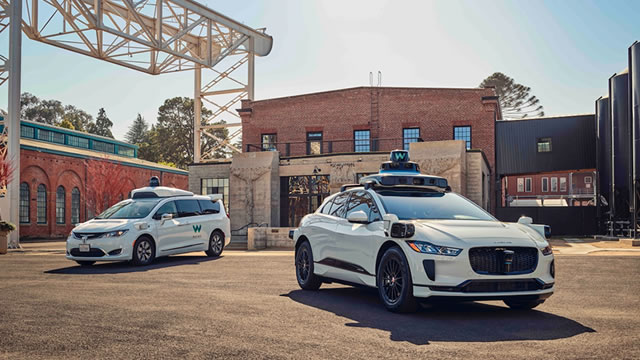
Group 1 - The car rental market is experiencing a surge in demand, particularly for new energy vehicles, with rental bookings increasing by 600% during the Spring Festival period compared to the previous year [2] - Mercedes-Benz China announced significant personnel changes, including the departure of CEO Duan Jianjun and the appointment of Li Desi as the new CEO, effective March 1, 2026 [2] - In January 2026, the export of new energy vehicles exceeded 300,000 units, marking a year-on-year increase of 100%, while domestic sales saw a decline of 18.9% [3] Group 2 - Waymo has begun deploying its sixth-generation Ojai autonomous taxis, which are designed to be more cost-effective and better equipped to handle adverse weather conditions, with plans to expand service to other cities later this year [3]

【联合发布】商用车周报(2026年2月第2周)
乘联分会· 2026-02-14 08:39
Group 1: Low-altitude Economy and Digital Infrastructure - The Ministry of Industry and Information Technology and four other departments aim to establish a "digital foundation" for the low-altitude economy, targeting a 90% coverage of the national low-altitude public air route communication network by 2027 [4][5] - Key tasks include enhancing 5G network coverage below 300 meters and integrating satellite communication to support logistics and urban governance applications [5] - The low-altitude economy is projected to reach a scale of 3.5 trillion yuan by 2035, with over 200 billion yuan in new investments anticipated [5] Group 2: Electric Vehicle Market and Policy Changes - The establishment of a national unified electricity market is transforming electric vehicles from mere "electric terminals" to "mobile energy storage units," enhancing grid flexibility and creating new revenue models for vehicle owners [6][7] - Canada plans to eliminate the 100% additional tax on Chinese electric vehicles, allowing an annual quota of 49,000 vehicles to enter the market, which will gradually increase to 70,000 [18][21] - The Canadian government will also restart subsidy programs, investing 2.3 billion CAD to assist consumers with new vehicle costs and 1.5 billion CAD for charging infrastructure [21] Group 3: Automotive Industry Developments - FAW Jiefang is expanding its strategic cooperation and local production overseas, including a partnership with Cainiao Group to build a global auto parts e-commerce platform [8][9] - The company has launched its first locally produced LN 4×4 truck in Indonesia, with plans to invest up to 10 billion yuan in wealth management to enhance capital efficiency [9] - Shaanxi Automobile has officially changed its name to Shanxi Tongxi New Energy Vehicle Co., with a shift in control to Xi Heavy Automobile, marking a strategic pivot towards becoming a leader in new energy heavy trucks [10][11] Group 4: Autonomous Driving Collaborations - Autonomous driving companies are shifting from technology development to large-scale deployment through partnerships with automotive and mobility platforms, focusing on markets in China, the US, and the Middle East [12][13] - Notable collaborations include Pony.ai with Toyota for mass production of autonomous vehicles and Baidu's partnership with Uber for commercial operations in Dubai [13] - Waymo is expanding its autonomous taxi services in Nashville and plans to deploy 1,200 self-driving taxis in the Middle East by 2027 [13] Group 5: New Energy Heavy Trucks and Market Trends - The latest product announcements indicate a significant increase in the proportion of new energy heavy trucks, which now account for 40.3% of the market, with a notable rise in battery-swappable models [17] - The shift in purchasing decisions among light commercial vehicle users is moving towards a comprehensive evaluation of total cost of ownership (TCO) rather than just initial purchase price [23][24]

早到2分钟算违约!中国自动驾驶攻入“最难搞”的新加坡,凭什么?
Feng Huang Wang Cai Jing· 2026-02-13 23:27
Core Insights - The article discusses the challenges and opportunities for Chinese autonomous driving companies, particularly focusing on the experiences of Mushroom Car Union in Singapore and the competitive landscape in the autonomous driving sector [1][2]. Group 1: Market Opportunities - Singapore is viewed as a high-standard market for autonomous driving, with strict punctuality requirements for public transport, such as a maximum of 2 minutes early and 5 minutes late [5][6]. - Mushroom Car Union has secured a project for L4 level autonomous buses in Singapore, indicating a significant step in its international expansion and collaboration with global leaders like LG Electronics [2][3]. - The company aims to integrate its autonomous buses into Singapore's public transport network, which is seen as a critical move to demonstrate its technology's viability [5][6]. Group 2: Employment and Social Impact - The introduction of autonomous buses is not perceived as a threat to human drivers but rather as a solution to the shortage of bus drivers, particularly in regions like Singapore where there is a significant gap in driver availability [10][11]. - The company emphasizes that its autonomous buses will enhance public transport by providing better punctuality and reducing operational costs, ultimately benefiting users [9][10]. - There is a focus on human-centered design in the development of autonomous buses, with features aimed at improving accessibility for elderly and disabled passengers [12]. Group 3: Technological Development - Mushroom Car Union has developed a technology that combines visual and solid-state LiDAR systems, achieving over 50% improvement in perception distance and a 70% reduction in false detection rates [6][7]. - The company has accumulated over 5 million kilometers of operational data, which supports its technological advancements and operational capabilities [6]. - The transition to fully autonomous driving is seen as a long-term goal, with current operations involving remote safety operators who intervene only in extreme situations [14][15]. Group 4: Industry Trends - The autonomous driving industry is experiencing a shift from purely technology-driven narratives to a focus on practical implementation and profitability [2]. - The article highlights the need for companies to navigate the challenges of regulatory environments and public acceptance as they expand internationally [8][9]. - The industry is undergoing a "de-bubbling" phase, where companies must refine their focus and address key issues such as efficiency and safety [14].
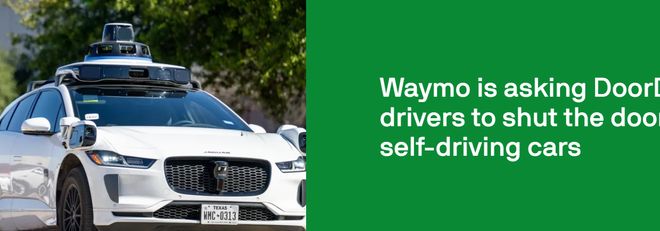
Waymo is hiring gig workers to close car doors, revealing how autonomous tech quietly relies on human labor
Fastcompany· 2026-02-13 16:21
Core Insights - Waymo, a subsidiary of Alphabet, is utilizing DoorDash drivers to assist with closing vehicle doors after passengers exit, highlighting the reliance on human intervention in the operation of self-driving cars [1] Group 1: Company Operations - Waymo has initiated a pilot program in Atlanta that involves hiring DoorDash drivers for the task of closing car doors, which is a basic function that the autonomous vehicles currently cannot perform independently [1] - The compensation for DoorDash drivers includes a guaranteed payment of $6.25, with an additional $5 provided upon verification of task completion, totaling $11.25 for the service [1] Group 2: Industry Implications - The situation underscores the challenges faced by companies in the autonomous vehicle sector, where despite advancements in technology, human assistance is still necessary for certain operational tasks [1] - Waymo has indicated that automated door closures are expected to be integrated into future vehicle models, suggesting ongoing development in enhancing the autonomy of their self-driving cars [1]

误差仅容5分钟,这家公司要征服海外自动驾驶高地
Feng Huang Wang· 2026-02-13 15:22
Core Insights - The article discusses the challenges and opportunities for Chinese autonomous driving companies, particularly focusing on the experience of Mushroom Car Union in Singapore and the competitive landscape in the autonomous driving sector [1][2]. Group 1: Market Opportunities - The Middle East is seen as a hot market for autonomous driving, while Singapore presents stringent conditions for operation, such as strict punctuality requirements for buses [1][4]. - Mushroom Car Union has chosen to enter the Singapore market, which is characterized by high standards for public transport and a supportive regulatory environment [4][6]. - The company has secured a project for L4 level autonomous buses in Singapore, indicating a significant step in its international expansion [2][4]. Group 2: Technological Capabilities - Mushroom Car Union has developed a technology that integrates visual and solid-state LiDAR, achieving over 50% improvement in perception distance and a 70% reduction in false detection rates [8][12]. - The company has accumulated over 5 million kilometers of operational data in China, enhancing its technical maturity and product engineering capabilities [8][12]. Group 3: Employment and Social Impact - The introduction of autonomous buses is not seen as a threat to human drivers but rather as a solution to the shortage of bus drivers, particularly in Singapore where there is a significant gap in driver availability [10][14]. - The company aims to enhance the user experience by incorporating features that cater to the elderly and disabled, making autonomous buses more appealing compared to traditional options [15][12]. Group 4: Future Vision - The long-term goal of Mushroom Car Union is to become a leading global provider of autonomous driving solutions, focusing on public transportation and leveraging international partnerships [18]. - The company acknowledges the need for remote safety operators initially, transitioning towards fully autonomous operations as technology advances [17][16].
早到2分钟算违约!中国自动驾驶攻入“最难搞”的新加坡,凭什么?
凤凰网财经· 2026-02-13 12:05
Core Insights - The article discusses the challenges and opportunities for Chinese autonomous driving companies, particularly focusing on the international expansion of Mushroom Car Union, which has chosen Singapore as a key market despite its stringent regulations [1][4]. Group 1: Market Opportunities and Challenges - Singapore is viewed as a high-standard market for autonomous driving, with strict punctuality requirements for public transport, comparable to that of metro systems [6][8]. - The company has secured a project for L4 autonomous buses in Singapore, indicating a significant step in its international strategy [2][4]. - The overall investment landscape for autonomous driving has shifted, with a decline in funding from 932 billion yuan in 2021 to an expected 350 billion yuan by 2025, emphasizing the need for verifiable operational capabilities [2]. Group 2: Technological Advancements - Mushroom Car Union has developed a technology that integrates visual and solid-state LiDAR, achieving over 50% improvement in perception distance and a 70% reduction in false detection rates [8][10]. - The company has accumulated over 5 million kilometers of operational data in China, which supports its technological maturity and readiness for international deployment [8]. Group 3: Employment and Social Impact - The introduction of autonomous buses is not seen as a threat to human drivers but rather as a solution to the shortage of bus drivers in Singapore, where there is a reported shortfall of over 2,000 drivers [16][19]. - The company aims to enhance public transport by making it more user-friendly, particularly for the elderly and disabled, through thoughtful design features [20]. Group 4: Future Vision and Goals - The long-term goal of Mushroom Car Union is to become a leading global provider of autonomous driving solutions, focusing on public transport and leveraging partnerships to expand its capabilities [28]. - The company acknowledges the need for a gradual transition towards fully autonomous systems, with remote monitoring as a stepping stone [23][24].
离谱!Waymo无人车遇关门难题,花重金请外卖员上门救急
Huan Qiu Wang Zi Xun· 2026-02-13 07:53
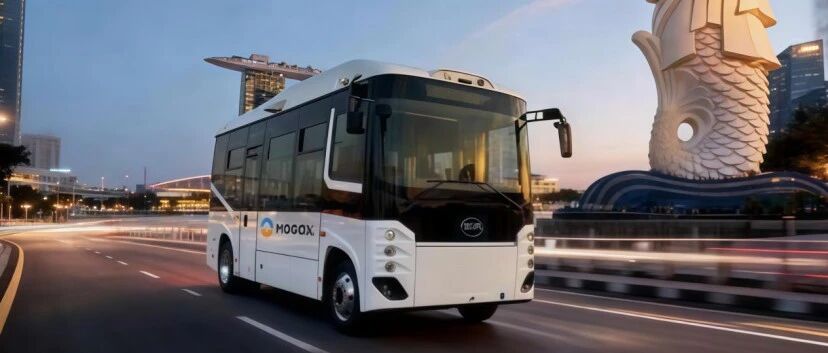
Core Insights - Waymo, a subsidiary of Alphabet, has faced operational challenges with its autonomous vehicles due to a door issue that causes the vehicles to stop functioning if a passenger does not close the door properly [1][3] - To address this problem, Waymo has partnered with DoorDash to employ delivery drivers to close the doors of its vehicles, highlighting the operational inefficiencies in its current system [3] Group 1: Operational Challenges - Waymo's autonomous vehicles have been deployed in six cities for passenger operations but are experiencing a significant issue where the vehicles become inoperable if the doors are not securely closed [1][3] - The company has confirmed that it is paying DoorDash drivers $6.25 for a short trip to close the doors of Waymo vehicles, with an additional $5 bonus for confirmation of the task [3] Group 2: Partnership and Solutions - The collaboration with DoorDash is part of a pilot project in Atlanta aimed at improving the operational efficiency of Waymo's autonomous fleet [3] - Waymo previously partnered with a roadside assistance platform in Los Angeles, paying up to $24 for similar door-closing services, indicating the extent of the issue [3] - Future models of Waymo vehicles are planned to include an automatic door-closing feature to fundamentally resolve the door issue [3]