
三六零

Search documents
对话360集团孙浩:将大模型“嵌入”智能硬件,360如何把握“下个风口”?
Xin Lang Ke Ji· 2025-11-26 07:29
Core Insights - 360 Group has launched the 360 Smart Brain Visual Model, marking its entry into the SMB market and expanding its capabilities in the AI and IoT sectors [2][8] - The new visual model aims to enhance the value of IoT data through multi-modal integration, addressing limitations of traditional deep learning algorithms [3][5] - The introduction of the visual model is seen as a significant step towards achieving general artificial intelligence, enabling machines to understand images and videos beyond mere data collection [3][6] Group 1 - The 360 Smart Brain Visual Model is designed to integrate with smart hardware, enhancing their capabilities and providing deeper insights into data [2][5] - The model focuses on three main capabilities: Open Object Detection (OVD), Image Captioning, and Visual Question Answering (VQA), which can be applied in various scenarios such as store inspections and equipment checks [3][4] - The launch of the visual model is part of 360's strategy to leverage its existing technology and experience in AI to penetrate the SMB market, addressing challenges faced by small and medium enterprises in digital transformation [7][8] Group 2 - The visual model's multi-modal capabilities are expected to reduce costs and improve the efficiency of AI applications in vertical industries, particularly in security and surveillance [3][8] - 360 Group's founder emphasized that the emergence of large models signifies the arrival of a new era in artificial intelligence, capable of understanding complex visual data [3][6] - The company plans to continue exploring AI applications in security, aiming to empower SMBs with affordable and effective digital solutions [8]


AI应用成资金新偏好,软件ETF(159852)高效布局AI应用投资机遇
Xin Lang Cai Jing· 2025-11-26 02:54
Group 1 - The software development sector experienced a rise, with the CSI Software Service Index increasing by 0.65% as of 10:14 AM on November 26, 2025, with notable gains from stocks like Shiji Information and Aerospace Information [1] - The software industry plays a crucial role in the AI industry chain, primarily in the midstream technology layer and downstream application layer, providing essential AI frameworks, development platforms, and algorithm models [1] - AI technology has become the core driving force in the computer and software development industry, with major cloud companies like Amazon, Microsoft, Google, and Meta investing over $110 billion in AI infrastructure in Q3 2025 [1] Group 2 - The top ten weighted stocks in the CSI Software Service Index account for 63.09% of the index, including companies like iFlytek, Kingsoft Office, and Tonghuashun [1] - The software ETF (159852) tracks the CSI Software Service Index, providing an accessible investment tool for the computer software industry [2] - Investors can also consider the software ETF linked fund (012620) to capitalize on AI software investment opportunities [2]
8万个虚拟人,撑起一个IPO
投中网· 2025-11-26 01:33
Core Viewpoint - Nanjing Silicon-based Intelligent Technology Group Co., Ltd. (Silicon-based Intelligence) has submitted its prospectus for an IPO on the Hong Kong Stock Exchange, aiming to become the first digital human stock in Hong Kong, with a post-investment valuation of 3.15 billion yuan after completing nine rounds of financing [5][6][7]. Group 1: Company Overview - Silicon-based Intelligence was founded in 2017 and has become the largest digital human company in China, achieving commercialization in over 40 industries, including finance and e-commerce, with the highest market share in the digital human sector [6]. - The company has received investments from notable firms such as Tencent, Sequoia China, and others, reflecting strong backing from top-tier venture capital and private equity [14][16]. Group 2: Business Development - The company has diversified its business into five areas: intelligent voice, digital human video, live streaming, intelligent interaction, and fully automated content production, with projected revenues of 223 million, 531 million, and 655 million yuan for 2022, 2023, and 2024 respectively, indicating a compound annual growth rate of 71.5% [12]. - Despite rapid revenue growth, Silicon-based Intelligence faced losses in previous years, with adjusted net losses of 46.22 million, 29.41 million, and 35.24 million yuan from 2022 to 2024. However, it achieved a net profit of 5.29 million yuan in the first half of 2025 [13]. Group 3: Market Position and Strategy - As of 2024, Silicon-based Intelligence holds a 32.2% market share in the domestic digital human solutions market, ranking first among all providers in China and second globally [10]. - The company has strategically focused on large clients, which has led to a decrease in gross margin from 45.8% in 2023 to 31.6% in the first half of 2025 due to competitive pricing strategies [13]. Group 4: Future Outlook - The funds raised from the IPO will primarily be used to enhance research and development capabilities, marketing, global acquisitions, and general corporate purposes [13]. - The founder, Si Mahuapeng, has set an ambitious goal to provide 100 million "silicon-based labor forces" to the global population of 8.2 billion by 2025, showcasing the company's long-term vision [10].

今天,盘面出现几大现象
Mei Ri Jing Ji Xin Wen· 2025-11-26 00:09
Market Performance - The A-share market indices collectively strengthened, with the Shanghai Composite Index rising by 0.87%, Shenzhen Component Index by 1.53%, and ChiNext Index by 1.77% [1] - The total market turnover reached 1.8261 trillion yuan, an increase of 85.8 billion yuan compared to the previous day, marking the first time since August 13 that turnover has been below 2 trillion yuan for eight consecutive trading days [1] - The number of rising stocks was 4,300, while 993 stocks declined, with a median increase of 0.95% in individual stock prices [1] Sector Analysis - The AI application sector has shown strength, but the overall performance did not see reinforcement on the day, with core stocks shifting frequently among different companies [2] - There is a noticeable rebound in individual stocks that have been oversold, particularly in the AI hardware supply chain and new energy sectors [3] - Core stocks in the Nvidia supply chain experienced a general rise followed by a pullback [4] Investment Insights - The market's turnover remaining below 2 trillion yuan has suppressed the sustainability of sector performance and core stocks [4] - The recovery of stocks within sectors is contingent on the presence of catalytic factors, which can accelerate the recovery of individual stocks [5] - Institutional participation is crucial for sustained market momentum, with the AI industry chain leading in gains, followed by internet, components, and communication equipment sectors [6] Company Highlights - Alibaba Group reported a strong second-quarter financial performance for fiscal year 2026, with cloud revenue reaching 39.824 billion yuan, a year-on-year increase of 34%, driven by robust AI demand [8] - The defense and military industry sector did not see significant reinforcement, with noticeable divergence among sub-sectors, particularly in the shipbuilding sector [8] - The commercial aerospace sector experienced a pullback after a strong performance, attributed to profit-taking [9] Future Outlook - The commercial aerospace industry is expected to see significant growth, with projections of satellite launches increasing by 100%-200% annually during the 14th Five-Year Plan period [9] - The National Space Administration's action plan aims for high-quality development in the commercial aerospace sector by 2027, focusing on efficient collaboration and enhanced industry governance [9] - The overall market is currently in a repair phase, with a focus on the pressure points of the Shanghai Composite Index from the previous week [10]
计算机行业资金流出榜:中科曙光等6股净流出资金超亿元
Zheng Quan Shi Bao Wang· 2025-11-25 09:05
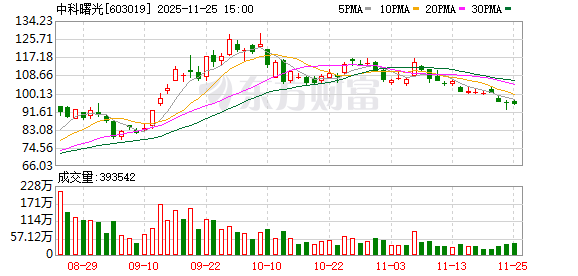
Market Overview - The Shanghai Composite Index rose by 0.87% on November 25, with 29 out of the 31 sectors experiencing gains, led by the communication and media sectors, which increased by 3.54% and 2.85% respectively [2] - The computer sector also saw an increase of 1.10% [2] Capital Flow - The net inflow of capital in the two markets was 13.215 billion yuan, with 19 sectors receiving net inflows [2] - The electronics sector had the highest net inflow of 5 billion yuan, followed closely by the communication sector with a net inflow of 4.881 billion yuan [2] Computer Sector Performance - In the computer sector, 336 stocks were tracked, with 273 stocks rising and 53 stocks declining [3] - The top three stocks with the highest net inflow were Rongji Software (4.25 billion yuan), South Network Digital (4.06 billion yuan), and Dahua Intelligent (1.90 billion yuan) [3] - The sector experienced a net outflow of 3.072 billion yuan, with the largest outflows from Zhongke Shuguang (7.75 billion yuan), Sanliu Ling (4.34 billion yuan), and Nanwei Software (2.04 billion yuan) [3][5] Top Gainers in Computer Sector - The top gainers in the computer sector included: - Rongji Software: +10.03%, turnover rate 47.81%, net inflow 425.13 million yuan - South Network Digital: +19.99%, turnover rate 55.02%, net inflow 406.37 million yuan - Dahua Intelligent: +10.02%, turnover rate 12.05%, net inflow 190.23 million yuan [4] Top Losers in Computer Sector - The top losers in the computer sector included: - Zhongke Shuguang: -0.44%, turnover rate 2.69%, net outflow -775.37 million yuan - Sanliu Ling: +1.15%, turnover rate 7.60%, net outflow -433.98 million yuan - Nanwei Software: -2.29%, turnover rate 22.81%, net outflow -204.03 million yuan [5]




主力个股资金流出前20:蓝色光标流出6.68亿元、省广集团流出4.91亿元




Jin Rong Jie· 2025-11-25 03:36
Core Insights - The main focus of the article is on the significant outflow of capital from various stocks as of November 25, with specific amounts listed for the top 20 stocks experiencing the largest withdrawals [1] Group 1: Major Stocks with Capital Outflow - BlueFocus Communication Group saw a capital outflow of 668 million yuan [1] - Provincial Advertising Group experienced a withdrawal of 491 million yuan [1] - Industrial Fulian had a capital outflow of 467 million yuan [1] - 360 Security Technology faced a withdrawal of 325 million yuan [1] - Aerospace Development saw an outflow of 320 million yuan [1] Group 2: Additional Stocks with Notable Withdrawals - Guofeng New Materials had a capital outflow of 309 million yuan [1] - Zhongke Shuguang experienced a withdrawal of 305 million yuan [1] - Ganfeng Lithium saw an outflow of 292 million yuan [1] - Great Wall Military Industry faced a capital withdrawal of 210 million yuan [1] - Shida Group had an outflow of 208 million yuan [1] Group 3: Other Stocks in the Top 20 - GAC Group experienced a capital outflow of 201 million yuan [1] - Pingtan Development saw a withdrawal of 196 million yuan [1] - Data Port had an outflow of 193 million yuan [1] - China Shipbuilding Defense experienced a capital withdrawal of 182 million yuan [1] - Gree Electric Appliances saw an outflow of 180 million yuan [1] - Shiji Information faced a capital withdrawal of 168 million yuan [1] - Rongjie Co. experienced an outflow of 159 million yuan [1] - Tianqi Lithium saw a withdrawal of 153 million yuan [1] - Tianci Materials had a capital outflow of 152 million yuan [1] - Guomai Technology experienced a withdrawal of 148 million yuan [1]
主力资金流入前20:蓝色光标流入11.43亿元、数据港流入8.06亿元
Jin Rong Jie· 2025-11-25 03:24
Group 1 - The top 20 stocks with significant capital inflow as of November 24 include BlueFocus (1.143 billion yuan), DataPort (806 million yuan), and 360 (794 million yuan) [1] - Other notable stocks in the top 20 by capital inflow are Provincial Advertising Group (587 million yuan), China Shipbuilding (440 million yuan), and Zhangjiang Hi-Tech (403 million yuan) [1] - Additional companies with substantial inflows include Changxin Bochuang (357 million yuan), China Shipbuilding Defense (347 million yuan), and Leike Defense (317 million yuan) [1] Group 2 - The list also features Huajian Group (286 million yuan), Aerospace Development (269 million yuan), and ZTE Corporation (259 million yuan) [1] - Other companies in the top 20 include GAC Group (253 million yuan), Changying Precision (253 million yuan), and Great Wall Military Industry (248 million yuan) [1] - The final entries in the top 20 are Zhongfu Circuit (248 million yuan), Leo Group (243 million yuan), Kunlun Wanwei (240 million yuan), Midea Group (233 million yuan), and Nanwei Software (223 million yuan) [1]


3D打印新材料问世,有望应用到固态电池领域(附概念股)
Zheng Quan Shi Bao Wang· 2025-11-25 01:04
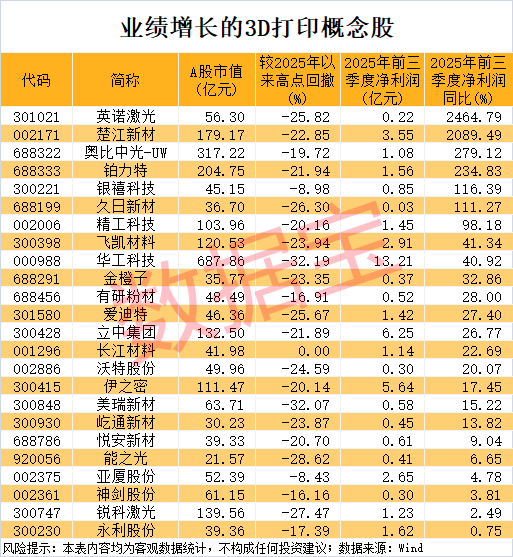
Group 1: Market Overview - The A-share market experienced a recovery on November 24, with significant rebounds in military and AI sectors, while lithium mining stocks faced severe declines [2] - Dapeng Industrial, which debuted on the Beijing Stock Exchange, saw its stock price drop by 48.05% from its peak on the first trading day [2] - Over 40 companies in the A-share market are involved in the 3D printing industry, indicating a growing interest and investment in this sector [5][6] Group 2: 3D Printing Material Innovations - A new type of 3D printing material developed by a research team at the University of Virginia is compatible with the human immune system, potentially advancing medical technologies such as organ transplantation and drug delivery [3] - The new material, which modifies the properties of polyethylene glycol (PEG), exhibits enhanced elasticity and strength, making it suitable for use in biomedical applications [3][4] - This innovative material shows promise as a high-performance solid electrolyte in advanced battery technologies, with ongoing exploration of its applications in solid-state batteries [4] Group 3: Financial Performance of 3D Printing Stocks - In the first three quarters of the year, 24 3D printing concept stocks reported net profit growth, with notable performers including Inno Laser and Chuangjiang New Materials [7] - Among these stocks, six have a rolling P/E ratio below 30, indicating potential value opportunities for investors [7][8] - The average pullback from the year-to-date highs for these 24 stocks is 21.22%, suggesting a correction phase in the market [7]
阿里千问引爆下载热潮 资金涌入AI应用板块
Zhong Guo Zheng Quan Bao· 2025-11-24 21:49
Core Viewpoint - The AI application sector is experiencing significant growth, driven by the surge in downloads of Alibaba's Qianwen app, indicating a positive trend in the commercialization of AI applications and benefiting related industries such as data centers and computing equipment [1][2]. Group 1: Market Performance - The AI application sector saw a collective rise, with several stocks related to Alibaba experiencing notable increases, including BlueFocus (300058) up over 15% and 360 (601360) hitting the daily limit [2]. - Active trading was observed in the AI application sector, with Vision China (000681) achieving a transaction volume of 5.614 billion yuan and a turnover rate of 32.12% [2]. - Major inflows of funds were noted, with iFLYTEK (002230) seeing a net inflow of 372 million yuan, while Inspur Information (000977) and Tianyu Digital Science (002354) had net inflows of 202 million yuan and 238 million yuan, respectively [2]. Group 2: Company Developments - Alibaba announced that its Qianwen app surpassed 10 million downloads within a week of public testing, reflecting strong consumer interest in AI applications [2]. - Ant Group launched a multimodal AI assistant named "Lingguang," which achieved over 1 million downloads within four days, topping the free tools category in the Apple App Store in China [3]. - Tencent's Hunyuan model team released the HunyuanVideo 1.5, a video generation model capable of producing 5-10 second high-definition videos [3]. Group 3: Industry Outlook - Analysts express optimism regarding the commercialization prospects of AI applications, anticipating a significant breakthrough as model capabilities continue to improve [7]. - The upstream AI industry remains robust, with expectations of sustained high growth in computing power and AI chip demand, which will drive the need for storage and data centers [7]. - Alibaba's new AI products and models are expected to create increased demand for AI infrastructure, with a focus on data center operations and related equipment [7]. Group 4: Investment Insights - Concerns about an AI bubble in international markets have led some analysts to suggest that the Chinese market may offer diversification opportunities for investors [5]. - JR Research highlighted that leading Chinese AI companies are narrowing the gap with global leaders without excessive spending on AI infrastructure, making investments in Alibaba potentially advantageous [5]. - Alibaba's strong fundamentals and superior free cash flow margins position it favorably for rational investment, with projected capital expenditures totaling 55.4 billion dollars from fiscal years 2026 to 2028 [5].

阿里千问引爆下载热潮资金涌入AI应用板块
Zhong Guo Zheng Quan Bao· 2025-11-24 20:13
Core Viewpoint - The AI application sector is experiencing significant growth, driven by the rising download numbers of Alibaba's Qianwen app, indicating a strong commercial potential for AI applications and related industries [1][2]. Group 1: AI Application Sector Performance - On November 24, the AI application sector saw a collective rise, with multiple Alibaba-related stocks experiencing notable increases, such as BlueFocus up over 15% and 360 reaching its daily limit [1]. - The trading activity in the AI application sector was robust, with Visual China achieving a transaction volume of 5.614 billion yuan and a turnover rate of 32.12% [1]. - Major inflows of capital were noted, with Keda Xunfei seeing a net inflow of 372 million yuan, while Inspur Information and Tianyu Digital Science had net inflows of 202 million yuan and 238 million yuan, respectively [1]. Group 2: Developments from Major Companies - Ant Group launched its multimodal AI assistant "Lingguang," which reached over 1 million downloads within four days, topping the free tools category in the Apple App Store in China [2]. - Tencent's Hunyuan model team announced the open-source release of HunyuanVideo 1.5, a video generation model capable of producing 5-10 second high-definition videos [2]. Group 3: Market Sentiment and Investment Trends - Discussions around an AI bubble are intensifying, with Google CEO Sundar Pichai acknowledging the presence of both rational and irrational factors in AI investments [2]. - Nvidia's CEO Jensen Huang dismissed concerns about an AI bubble, citing strong revenue expectations that support the legitimacy of AI investments [2]. Group 4: Economic Impact and Investment Opportunities - AI-related capital expenditures have surpassed U.S. consumer spending, becoming a key driver of economic growth, with AI stocks contributing significantly to the S&P 500 index returns [3]. - Major tech companies like Amazon, Google, Meta, and Microsoft are projected to invest approximately $400 billion in AI this year, primarily for data center construction, raising questions about the sustainability of returns [3]. - Research indicates that Chinese AI companies are narrowing the gap with global leaders without excessive spending on AI infrastructure, presenting a potential risk diversification opportunity for investors [3]. - Alibaba's strong fundamentals and superior free cash flow margins position it favorably for rational investment, with projected capital expenditures totaling $55.4 billion from FY2026 to FY2028 [3]. Group 5: Optimism for AI Commercialization - Industry experts are optimistic about the commercialization prospects of AI applications, anticipating a significant acceleration in the formation of an AI industry ecosystem [4]. - The upstream AI industry remains robust, with expectations for high growth in computing power and demand for AI chips, storage, and data centers [4]. - Alibaba's new AI products and models are expected to drive increased demand for AI infrastructure, benefiting its partners in data center operations and related fields [4].