
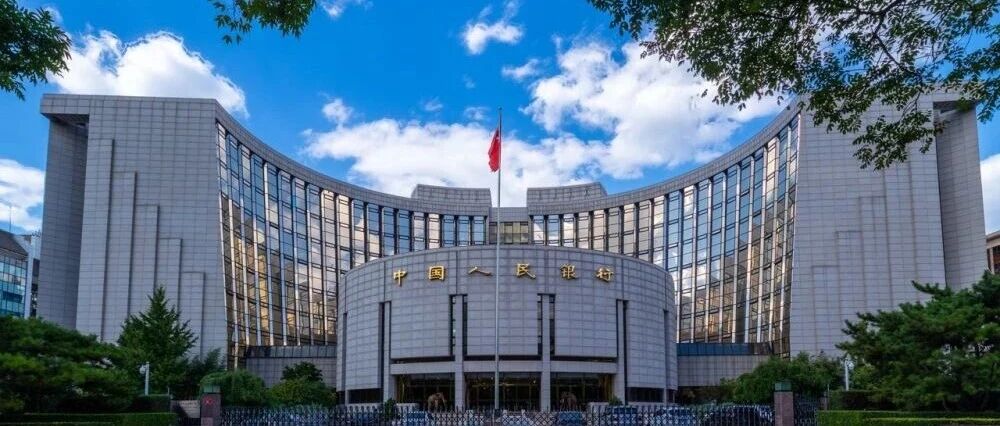
中国人民银行

Search documents
央行、外汇局最新会议!继续实施适度宽松的货币政策
证券时报· 2026-01-06 11:47
Core Viewpoint - The People's Bank of China (PBOC) emphasizes the continuation of a moderately accommodative monetary policy, enhancing counter-cyclical and cross-cyclical adjustments to support high-quality economic development and financial stability [2][4]. Group 1: PBOC's Key Work for 2026 - The PBOC will focus on seven key areas in 2026, including the effective use of various monetary policy tools such as reserve requirement ratio (RRR) cuts and interest rate reductions [2][4]. - The PBOC aims to maintain liquidity and ensure a relatively loose financing environment, guiding reasonable growth in total financial volume and balanced credit allocation [4]. - The central bank will work to stabilize the RMB exchange rate at a reasonable and balanced level while preventing excessive fluctuations [4]. Group 2: Enhancing Financial Services - The PBOC plans to improve the financial policy framework to support key areas such as domestic demand, technological innovation, and small and micro enterprises [5]. - There will be a focus on high-quality development of the bond market, particularly in the "technology board" sector, and increasing credit support for consumer services [5]. - The PBOC will enhance macro-prudential management and financial stability tools to mitigate risks in key financial sectors [5]. Group 3: Financial Reform and Opening Up - The PBOC will continue to optimize mechanisms like "Bond Connect" and "Swap Connect" to facilitate international financial cooperation [5]. - Support will be provided for the construction of Shanghai as an international financial center and the consolidation of Hong Kong's status [5]. - The PBOC encourages more eligible foreign entities to issue panda bonds, enhancing cross-border financial services [5]. Group 4: Foreign Exchange Management - The State Administration of Foreign Exchange (SAFE) emphasizes building a more convenient, open, secure, and intelligent foreign exchange management system [8]. - Key tasks for 2026 include deepening foreign exchange facilitation reforms and supporting the development of new trade formats like cross-border e-commerce [8]. - SAFE will implement policies for overseas lending and domestic foreign exchange loan management to ensure the safety and liquidity of foreign exchange reserves [10].

央行召开重磅会议,部署2026年重点工作!
Zheng Quan Ri Bao Wang· 2026-01-06 11:23
五是持续深化金融改革和对外开放。加强对银行间债券市场、货币市场、外汇市场、票据市场、黄金市 场及有关衍生品的监督管理。强化金融基础设施统筹监管。深化金融市场高水平开放,继续优化"债券 通""互换通"机制安排。支持上海国际金融中心建设,巩固和提升香港国际金融中心地位,维护香港金 融市场的稳定和繁荣发展。发挥好央行间货币互换作用,便利贸易投资项下人民币使用,推动金融机构 改进跨境金融服务。完善人民币跨境使用基础设施。欢迎更多符合条件的境外主体发行熊猫债。扩大快 速支付系统互联范围,推进二维码互联互通合作。 1月6日,中国人民银行发布消息,2026年中国人民银行工作会议1月5日—6日召开。会议以习近平新时 代中国特色社会主义思想为指导,深入学习贯彻党的二十届四中全会和中央经济工作会议精神,总结 2025年工作,分析当前形势,研究中国人民银行"十五五"改革发展规划,部署2026年工作。 六是积极推动全球金融治理改革。统筹开展多双边货币金融合作。继续深化与国际货币基金组织、多边 开发机构等国际组织合作,依托二十国集团等多边平台,推进全球宏观政策协调,参与国际金融规则制 定。支持国际货币基金组织上海中心建设。 七是进一步 ...
央行重磅会议定调2026年工作重点,货币政策延续适度宽松基调
Xin Lang Cai Jing· 2026-01-06 11:22
记者 辛圆 据中国人民银行网站消息,2026年中国人民银行工作会议1月5日-6日召开。会议总结2025年工作,分析 当前形势,研究中国人民银行"十五五"改革发展规划,部署2026年工作。 会议在部署今年工作时提到,要继续实施好适度宽松的货币政策。把促进经济高质量发展、物价合理回 升作为货币政策的重要考量,灵活高效运用降准降息等多种货币政策工具,保持流动性充裕,保持社会 融资条件相对宽松,引导金融总量合理增长、信贷投放均衡,使社会融资规模、货币供应量增长同经济 增长和价格总水平预期目标相匹配。 去年12月召开的央行四季度货币政策例会也提到,继续实施适度宽松的货币政策,加大逆周期和跨周期 调节力度,更好发挥货币政策工具的总量和结构双重功能,加强货币财政政策协同配合,促进经济稳定 增长和物价合理回升。 招联首席研究员董希淼对智通财经表示,从货币政策看,为继续保持适度宽松的基调,并配合财政政策 发力,2026年货币政策将有进一步加大实施力度的空间和可能。 董希淼预计,2026年存款利率和政策利率将进一步下降,贷款市场报价利率(LPR)有望稳中有降,更 加注重发挥结构性货币政策工具作用,引导金融资源更多流向科技创新、绿 ...
人民银行召开2026年工作会议:继续实施好适度宽松的货币政策
Bei Jing Shang Bao· 2026-01-06 10:48
会议强调,2026年继续实施好适度宽松的货币政策。把促进经济高质量发展、物价合理回升作为货币政 策的重要考量,灵活高效运用降准降息等多种货币政策工具,保持流动性充裕,保持社会融资条件相对 宽松,引导金融总量合理增长、信贷投放均衡,使社会融资规模、货币供应量增长同经济增长和价格总 水平预期目标相匹配。畅通货币政策传导机制,发挥好政策利率引导作用,做好利率政策执行和监督, 促进社会综合融资成本低位运行。有序扩大明示企业贷款综合融资成本工作覆盖面,推动明示个人贷款 综合融资成本。保持人民币汇率在合理均衡水平上的基本稳定,防范汇率超调风险。 会议指出,2025年,人民银行坚持专业务实精准,适度宽松的货币政策发力显效。强化中国人民银行政 策与市场关切的交集度和针对性,及时推出一揽子货币政策,综合运用降低存款准备金率、公开市场操 作等多种货币政策工具,保持流动性充裕。下调政策利率、结构性货币政策工具利率和个人住房公积金 贷款利率,促进降低社会综合融资成本。强化货币政策执行和监督,完善利率自律管理。不断完善货币 政策框架,引导货币市场利率围绕政策利率更平稳运行,加强市场沟通和预期引导。 北京商报讯(记者 廖蒙)1月6日,据 ...
人民银行:扩大快速支付系统互联范围,推进二维码互联互通合作
Bei Jing Shang Bao· 2026-01-06 10:48
Core Viewpoint - The People's Bank of China (PBOC) emphasizes the need for continued financial reform and opening up in 2026, focusing on enhancing supervision and management across various financial markets and supporting the development of international financial centers [1] Group 1: Financial Reform and Supervision - The PBOC plans to strengthen supervision and management of interbank bond markets, money markets, foreign exchange markets, bill markets, gold markets, and related derivatives [1] - There will be a focus on enhancing the overall regulatory framework for financial infrastructure [1] Group 2: International Financial Centers - The PBOC aims to deepen high-level opening of financial markets and optimize mechanisms like "Bond Connect" and "Swap Connect" [1] - Support will be provided for the construction of the Shanghai International Financial Center while maintaining the stability and prosperity of the Hong Kong financial market [1] Group 3: Cross-Border Financial Services - The PBOC will facilitate the use of the Renminbi in trade and investment by enhancing the role of central bank currency swaps and improving cross-border financial services [1] - There will be efforts to improve the infrastructure for cross-border use of the Renminbi and welcome more eligible foreign entities to issue Panda bonds [1] - Expansion of the rapid payment system's interconnectivity and promotion of QR code interoperability cooperation are also planned [1]
央行部署今年重点工作
财联社· 2026-01-06 10:33
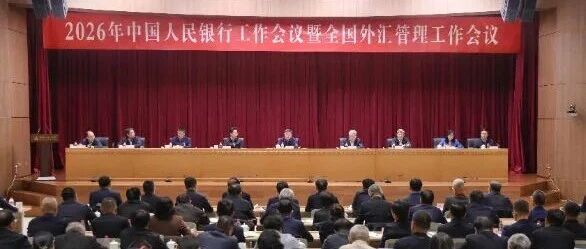
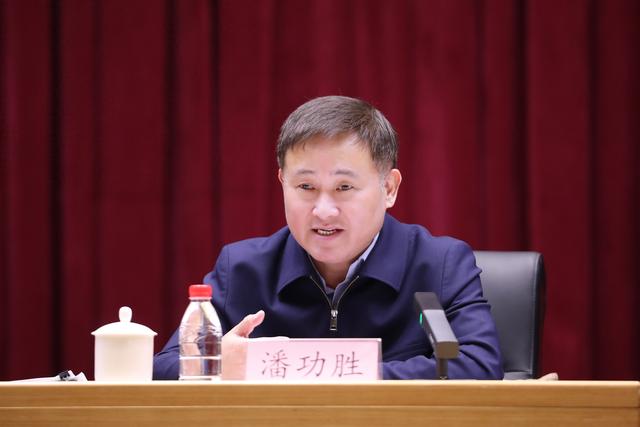
据央行网站,2026年中国人民银行工作会议1月5日-6日召开。会议以习近平新时代中国特色社会主义思想为指导,深入学习贯彻党的二十届四中全会 和中央经济工作会议精神,总结2025年工作,分析当前形势,研究中国人民银行"十五五"改革发展规划,部署2026年工作。中国人民银行党委书 记、行长潘功胜出席会议并讲话,朱鹤新、曲吉山、宣昌能、陆磊、陶玲、邹澜出席会议。 会议认为,2025年以来,面对复杂严峻的国内外经济金融形势,中国人民银行坚决落实党中央、国务院决策部署,在执行好存量货币政策基础上, 推出新的一揽子货币政策措施,有力支持实体经济稳定增长和金融市场平稳运行,持续深化金融供给侧结构性改革,稳妥处置重点领域金融风险, 积极推动全球金融治理改革完善,纵深推进全面从严治党,各项工作迈上新台阶。 一是坚持宏观思维,从系统视角统筹谋划中国人民银行重大业务和改革事项。加快完善中央银行制度,组织研究制定"六大核心要素"建设重点工作、 货币政策和宏观审慎政策框架构建、金融市场建设发展、人民币国际化等,制定具体工作方案并动态评估完善。 二是坚持专业务实精准,适度宽松的货币政策发力显效。强化中国人民银行政策与市场关切的交集度和针 ...
金融大家评 | 中银证券全球首席经济学家管涛:数字人民币2.0时代的“变”与“不变”
清华金融评论· 2026-01-06 10:32
Core Viewpoint - The People's Bank of China (PBOC) is set to launch an action plan to enhance the management and service system of the digital renminbi, transitioning from the 1.0 era of digital cash to the 2.0 era of digital deposit currency, effective January 1, 2026 [2]. Group 1: China's Digital Currency Leadership - China has been a pioneer in digital currency exploration, having initiated theoretical research and closed testing of the digital renminbi in 2014, with pilot programs starting in 2019 [4]. - The digital renminbi ecosystem has been preliminarily established, showcasing a unique development path led by the central bank, integrating commercial financial institutions and existing payment systems [4]. - The digital renminbi utilizes blockchain technology while maintaining its status as a central bank liability, ensuring it remains equivalent to the fiat renminbi [4]. Group 2: Transition from 1.0 to 2.0 - The transition from digital renminbi 1.0 to 2.0 retains core successful elements, particularly the dual-layer operational structure, which has been recognized globally as a standard for digital currencies [5]. - The action plan emphasizes a separation of management and operational functions to ensure comprehensive regulatory coverage [6]. - The digital renminbi 2.0 will maintain a hybrid architecture that combines account-based management with blockchain efficiency, allowing for lower costs and higher efficiency in digital currency payment services [7]. Group 3: Innovations in Digital Renminbi 2.0 - The digital renminbi will evolve from a non-interest-bearing digital cash to an interest-bearing digital deposit currency, allowing banks to manage digital renminbi wallet balances as part of their asset-liability operations [9]. - The digital renminbi wallet balances will be valued as "renminbi," ensuring consistency and interoperability across different banks and payment institutions [10]. - The integration of digital currency with smart contracts and blockchain technology aims to enhance the digital payment landscape, moving from electronic to digital payments [11]. Group 4: Blockchain and Financial Infrastructure - The application of blockchain technology will support various financial services, including cross-border payments and the digitization of real-world assets [12]. - The establishment of the digital renminbi international operation center in Shanghai will facilitate the development of a cross-border digital payment platform and a blockchain service platform [13]. - The multi-central bank digital currency bridge aims to address jurisdictional issues and enhance regulatory compliance through distributed ledger technology [13].

中国人民银行:2026年将继续实施好适度宽松的货币政策
Xin Hua Wang· 2026-01-06 10:19
【纠错】 【责任编辑:张樵苏】 1月5日至6日召开的2026年中国人民银行工作会议,从多个方面提出了2026年的重点工作。中国人 民银行明确表示,2026年将进一步完善金融"五篇大文章"政策框架,高质量建设和发展债券市场"科技 板",用好服务消费与养老再贷款,推动加大服务消费领域信贷投放,提升金融机构中小微企业金融服 务能力。(记者吴雨、任军) 中国人民银行1月6日对外公布了2026年的重点工作。中国人民银行介绍,2026年将继续实施好适度 宽松的货币政策,灵活高效运用降准降息等多种货币政策工具,保持社会融资条件相对宽松。提升金融 服务实体经济高质量发展质效,加强对扩大内需、科技创新、中小微企业等重点领域的金融支持。 ...
央行:灵活高效运用降准降息等多种货币政策工具,保持流动性充裕
Xin Lang Cai Jing· 2026-01-06 10:13
Core Viewpoint - The People's Bank of China (PBOC) is committed to implementing a series of monetary policy measures to support stable economic growth and financial market stability, while also focusing on financial reform and international cooperation [2][7]. Group 1: Monetary Policy and Economic Support - The PBOC has introduced a new package of monetary policy measures to support the real economy and stabilize financial markets since 2025, including lowering reserve requirements and interest rates [2][3]. - The central bank aims to maintain ample liquidity and reduce overall financing costs for society, with specific measures targeting personal housing loans and structural monetary policy tools [3][4]. - The PBOC emphasizes the importance of macroeconomic policy coordination and aims to enhance the effectiveness of monetary policy in promoting high-quality economic development [7][9]. Group 2: Financial Risk Management - Financial risks in key areas have been effectively mitigated, with the PBOC taking steps to support the resolution of debt risks associated with financing platforms [4][9]. - The establishment of the PBOC's Macro-Prudential and Financial Stability Committee aims to strengthen the financial stability framework and enhance risk management capabilities [4][10]. - Continuous monitoring and regulation of the bond market and other financial markets are prioritized to maintain stability and prevent illegal activities [4][10]. Group 3: Financial Reform and Opening Up - The PBOC is advancing financial reform and opening up by improving the management of foreign investment in financial institutions and enhancing cross-border use of the Renminbi [5][10]. - The central bank is also focused on strengthening the regulatory framework for various financial markets, including the bond and foreign exchange markets, to facilitate international cooperation [10][11]. - Efforts to support the development of the Shanghai International Financial Center and maintain Hong Kong's financial market stability are highlighted [10][11]. Group 4: Governance and Internal Management - The PBOC is committed to strict governance and internal management, emphasizing the importance of adhering to the principles of the Communist Party and enhancing the quality of its internal operations [6][8]. - Continuous improvement of legislative frameworks and financial management practices is a priority, including the implementation of policies to combat financial crimes and enhance credit systems [11][12]. - The PBOC aims to foster a culture of accountability and transparency within its operations, ensuring effective oversight and management of resources [6][11].
央行:深化金融市场高水平开放,继续优化“债券通”“互换通”机制安排
Xin Lang Cai Jing· 2026-01-06 10:13
Core Viewpoint - The People's Bank of China emphasizes the importance of deepening financial reform and opening up in 2026, focusing on enhancing supervision and management across various financial markets and supporting the development of international financial centers [1] Group 1: Financial Market Supervision - Strengthening supervision and management of interbank bond market, money market, foreign exchange market, bill market, gold market, and related derivatives [1] - Enhancing overall regulatory coordination of financial infrastructure [1] Group 2: Financial Market Opening - Continuing to optimize the "Bond Connect" and "Swap Connect" mechanisms [1] - Supporting the construction of the Shanghai International Financial Center and maintaining the stability and prosperity of Hong Kong's financial market [1] Group 3: Cross-Border Financial Services - Facilitating the use of the Renminbi in trade and investment through central bank currency swap agreements [1] - Improving infrastructure for cross-border use of the Renminbi and welcoming more qualified foreign entities to issue Panda bonds [1] Group 4: Payment Systems - Expanding the interconnectivity of rapid payment systems and promoting cooperation on QR code interoperability [1]